user profile avatar

Leah Pasternak

1x

Finalist

Bio

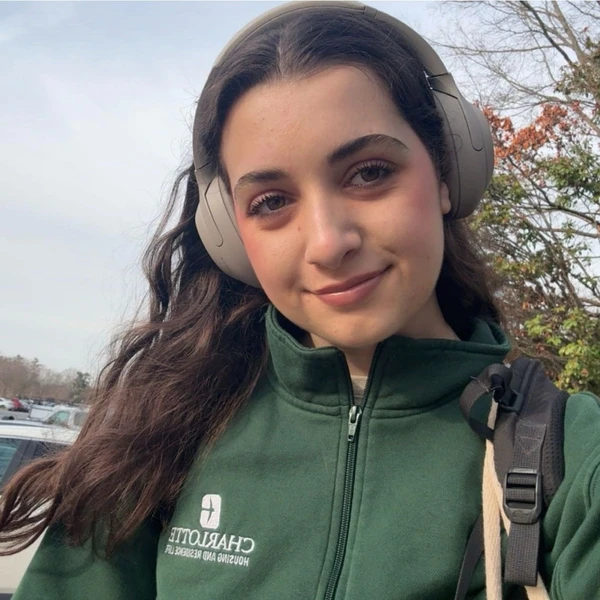
Hey! My name is Leah Pasternak. I'm a rising senior at the University of North Carolina at Charlotte, working on a Bachelor of Arts in Communication Studies with an Organizational Communication concentration. In addition, I have a double minor in journalism and dance. When I am not a university student, I enjoy working on artistic projects, engaging with my body through dance, or laughing alongside my loved ones.My academic journey at UNC Charlotte and my work experience have equipped me with strong communication skills, organizational skills, and public speaking. Currently, I work as a sales associate for Kirkland's Home while classes are not in session and as a housing ambassador for UNC Charlotte throughout the academic year. I am passionate about helping others, expressing my imagination through a creative mindset, and making sure everyone's voice is heard. Whether I'm collaborating on a team project, working one-on-one with someone, or engaging in leadership roles, I strive to create inclusive environments where people feel seen, valued, and empowered. Creativity is at the core of everything I do—from problem-solving to storytelling to designing meaningful experiences. I enjoy turning ideas into impact and am always looking for new ways to connect, inspire, and make a difference.

Education

University of North Carolina at Charlotte

Bachelor's degree program
2023 - 2027
  • Majors:
    • Communication, Journalism, and Related Programs, Other
Sun Valley High

High School
2019 - 2023

Miscellaneous

  • Desired degree level:

    Master's degree program

  • Graduate schools of interest:

  • Transfer schools of interest:

  • Majors of interest:

  • Not planning to go to medical school
  • Career

    • Dream career field:

      Public Relations and Communications

    • Dream career goals:

    • Housing Ambassador

      The University of North Carolina at Charlotte
      2025 – Present1 year
    • Sale Associate

      Kirklands Home Decor
      2022 – Present4 years

    Sports

    Dancing

    2009 – Present17 years

    Arts

    • Steps N' Motion

      Dance
      2009 – Present
    Special Needs Advocacy Inc. Teresa Politano Memorial Scholarship
    I've always found that people's stories fascinate me. I've learned how important it is to listen to people and make them feel seen, whether it's through dance, working with children as a teacher assistant, or participating on campus as a Housing Ambassador. Because journalism is really about telling true stories that matter, those events impacted my interest in the field. As I study communication, I'm strengthening my interviewing, media production, and storytelling skills. I've begun to realize how much responsibility journalists have, not only to inform, but to do it in an honest and thoughtful manner, thanks to my classes and projects. Stories that get little attention, such as those on mental health, social pressures, and young people dealing with expectations and identity, really fascinate me. My professional goal is to use journalism to positively change society by providing a voice to those who might not otherwise be heard. I believe that when people see their experiences shown in media, it can make them feel less alone and more understood. For example, I've written about how social media can influence eating disorders, and I want to keep writing about topics that have a more deep, intimate impact on people. Stories like these have the power to spark dialogue and effect change. Also, I want to focus on gaining my audience's trust. Many people feel cut off from the news these days due to the amount of false information. I want to be a trustworthy journalist who takes the time to investigate, confirm, and convey facts in a clear and truthful way. In addition, I want my art to feel human rather than cold. Instead than merely having folks read the stories, I want them to feel something. I want to use journalism to unite people. I want my work to have an impact, whether it be by showcasing common experiences, bringing attention to significant topics, or just compassionately and empathetically telling a tale. That impact counts to me, even if it's only making someone feel seen or encouraging them to think differently. As I grow in this industry, I also want to push myself to cover a wide range of topics and groups and go beyond of my comfort zone. I want to approach each topic with respect and curiosity, and I want to learn from the people I interview. I'm excited to contribute to the ongoing growth of journalism, especially in a way that values connection and authenticity. In the long run, I want my work to not only educate people but also motivate them to have a deeper concern for other people and the environment.
    Ethel Hayes Destigmatization of Mental Health Scholarship
    I have always lived with mental health; it has never been an abstract idea in my life. Long before I could explain why eating felt frightening rather than filling, I was born with ARFID (Avoidant/Restrictive eating Intake Disorder). I developed bulimia later in life. Along with that, I received a diagnosis of anxiety disorder and clinical depression. I felt like my whole world was smaller than everyone else's for years. Meals turned into battlefields. My mind was racing. There were moments when life felt like a marathon with no finish line. However, living with these illnesses has shaped me in ways that go well beyond hardship. It has influenced the goals I have, relationships, and perspective. First of all, it has greatly increased my awareness of invisible conflicts. Dramatic symptoms are not always present in mental illnesses. It could look like a trustworthy friend or an especially gifted person. I handle the world in a different way because of this. I listen. I ask more. I am aware that empathy is an action as much as a feeling. I have personally witnessed the strength that comes when someone decides to see past your silent struggles. My goals have also changed as a result of my experience. I want to tell meaningful stories, not merely achieve. I want to write for businesses and organizations in a way that highlights actual people. Their development, resiliency, and complexity. I understand what it's like to be reduced to a stereotype or a diagnosis. Storytelling is important to me because of this. Humanity is brought back with stories. They serve as a reminder that there is a complete, emotional person behind every title, whether it be leader, employee, or student. My relationships have also changed as a result of my mental health. I learned how lonely silence can be from depression. I learned how draining overthinking can be from anxiety. My eating issues have shown me how shame bends reality. I therefore place a high priority on patience and honesty. I've found that love is consistency rather than big gestures. It is posing the question, "How are you really?" and remaining long enough to hear the response. Vulnerability now feels more like a connection than a sign of weakness. Above all, my experience has redefined strength. I used to think that being strong meant fighting without giving up. I now define strength as the readiness to ask for assistance, face negative coping strategies, and make the daily, imperfect decision to choose recovery. Healing and growth are not linear. I now have greater empathy for both myself and other people as because of accepting that reality. It has not been easy to deal with bulimia, depression, anxiety, and ARFID. I felt like they defined me during certain seasons. But as time has gone on, I've come to understand that they inform me rather than define me. They have given me resilience, emotional intelligence, and a deep appreciation for the complexity of the human mind. My world was first limited by mental health. It is being grown once more by recovery. The manner I love, the goals I pursue, and what I aim to create are all shaped by that hard-won and continuous growth.
    Justin Burnell Memorial Scholarship
    Writing has always been the place where I feel most honest. I'm a bisexual communication studies student, a dancer, and a Housing Ambassador on campus. I tend to be active, involved, and in regular communication with others. However, as a bisexual woman growing up, I experienced a lot of miscommunication in ways I wasn't always sure how to express. People's views of bisexuality tend to be vague. I've been told it's "just a phase," asked when I would "pick a side," or made to feel as though who I was seeing at the moment determined who I was. Even though that type of erasure is slight, it nonetheless persists. I have sometimes minimized myself to steer clear of awkward situations. When someone made a joke, I would remain silent. To make my identity easier to comprehend to others, I would simplify it. The discomfort never felt as heavy as the silence did over time. Writing became the place where I didn’t have to shrink. When I lacked the confidence to correct someone verbally, I wrote about it instead. I wrote myself into visibility when I felt invisible. The page never asked if I was "straight enough" or "queer enough." It just held the truth. I was able to process my experience of living in two different worlds and transform it into something useful rather than unpleasant through writing. I'm driven to write because I understand what it's like to look for yourself in stories and find nothing. Representation is more than just seeing someone who resembles you; it's about someone else expressing your feelings, uncertainties, and complexity. As a communication student, I've discovered how deeply stories influence culture. Who receives empathy and who is ignored depends on the stories we tell. I wish to add to the telling of tales that increase empathy. LGBTQ+ storytelling is really important to me, but I'm especially passionate about using writing in professional settings. I want to work for businesses and organizations, helping them in communicating their stories through employee success stories and meaningful storytelling. People who have overcome challenges, developed into leaders, and created something greater than themselves can be found in any workplace. All too frequently, such tales remain inside. I wish to make them visible. Employee success stories are cultural reflections rather than only promotional materials. They reflect a company's core principles, which include innovation, growth, inclusion, and resilience. I have a strong interest in showing businesses where people are empowered to be really themselves since I know what it's like to wonder if you belong. I want to help organizations in humanizing their missions through journalism-style profiles, internal communications, feature articles, and brand storytelling. My goal is to become a storyteller who combines strategy and authenticity. My motivation stems from my understanding of how powerful it is to be noticed and how life-changing it can be to witness another person's path mirrored back to you. My personal struggles have equipped me with empathy and emotional intelligence, which are critical skills for telling someone else's narrative in an honest and true way. Making writing that feels human is my goal regardless of whether I'm writing about identity, perseverance, or career advancement. I want readers, whether they are coworkers, customers, or members of the community, to feel motivated, understood, and connected. Culture is formed by stories, which is why I write. I write because I understand what it's like to feel like you don't belong. And I want to dedicate my professional life to helping people and organizations in sharing narratives that inspire others to feel appreciated, seen, and empowered to grow.