Hobbies and interests
Field Hockey
Lacrosse
Basketball
Dance
Alpine Skiing
Community Service And Volunteering
Volunteering
Mental Health
Nutrition and Health
Athletic Training
Weightlifting
Beach
Coaching
Crafting
Leah Harman
1x
Finalist
Leah Harman
1x
FinalistBio
The doctor’s office always felt cold and rushed. The crinkly exam table paper, the buzzing lights, and my legs swinging while I waited for someone to come in. Most visits felt rushed, and I usually left thinking no one really cared how I was doing. That changed after my second ACL tear, when I met a nurse who completely shifted how I viewed healthcare.
At the Hospital for Special Surgery, I expected another quick appointment like usual. Instead, this nurse asked about my day and how I was doing, not just about my knee. She even joked about my socks. Something that small turned into making me laugh and instantly feel more comfortable. She listened, encouraged me, and treated me like a whole person. Her compassion didn’t fix my injury, but it changed how I approached recovery. After that, my mom and I always hoped she would be the one to call us in.
Because of her, I want to be the nurse who supports patients when they’re struggling the most. Being a student athlete has taught me perseverance, teamwork, and how important encouragement is when things get hard. Working with veterans through my family’s nonprofit and helping younger athletes has helped me grow as a leader and understand how to care for people in a real, personal way.
My goal is to bring that same comfort to others. I want to make healthcare feel less intimidating and more genuine, just like that nurse did for me.
Education
Putnam Valley High School
High SchoolPutnam Valley High School
High SchoolMiscellaneous
Desired degree level:
Bachelor's degree program
Majors of interest:
- Registered Nursing, Nursing Administration, Nursing Research and Clinical Nursing
- Practical Nursing, Vocational Nursing and Nursing Assistants
Career
Dream career field:
Hospital & Health Care
Dream career goals:
Nurse
Lifeguard
Putnam Valley Parks and Recreation2023 – Present3 years
Sports
Field Hockey
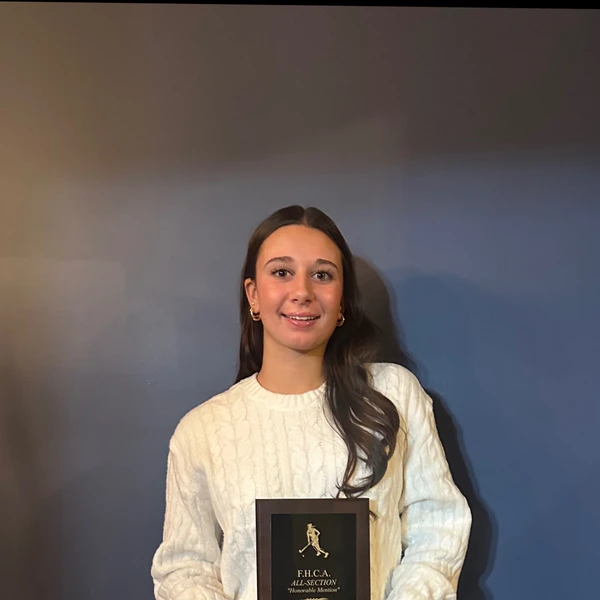
Varsity2022 – Present4 years
Awards
- All League
- All Section HM
Research
Medicine
Albany University — Researcher2024 – Present
Arts
Clan na hEireann School of Irish Dance
Dance2014 – 2025
Public services
Volunteering
HERoes In Deed — volunteer2014 – Present
Future Interests
Advocacy
Volunteering
Philanthropy
Women in Healthcare Scholarship
For most of my life, my identity was built around sports. Practices, games, and competition shaped my daily routine and sense of purpose. That identity was challenged when I tore my ACL, twice in four years. What I initially believed would be a purely physical recovery quickly became something much more complex. I learned that healing is not just physical, but deeply mental and emotional as well.
I struggled with fear of reinjury, frustration from being unable to play, and a loss of confidence that affected how I saw myself as both an athlete and a person. At times, the mental weight of recovery felt more overwhelming than the physical pain. What ultimately helped me push through was not just physical therapy, but the support system around me; people who encouraged me, listened to me, and reminded me of my strength when I could not see it myself.
Those experiences showed me that recovery is not just about treating an injury, but about supporting the whole person. I began to understand how critical mental health is in the healing process, and how powerful it is when someone feels seen. After my second tear, I met a nurse who helped make that change. She found a way to connect with me through my socks. I don’t even remember what she said but I immediately laughed and felt at ease. She always listened, encouraged me, and treated me as a whole person. Her compassion didn’t heal my injury, but it transformed the way I approached recovery. From that day on, sitting in the waiting room, my mom and I hoped she would be the one who called us in.
This realization led me to explore the connection between mental health and physical recovery more deeply. I designed and conducted my own research project examining how motivation, confidence, and fear of reinjury impact ACL recovery. By creating and analyzing survey data that I gathered from more than 200 ACL pediatric athletes across the country, I saw clear patterns; patients with stronger mental resilience and support systems often experienced more positive recovery outcomes. This reinforced my interest in pursuing a career where I can address both the physical and emotional needs of patients.
Beyond my personal experiences, I have been actively involved in community service through organizations such as HERoes in Deed, United for the Troops and Wreaths Across America. I have also worked with younger students, helping them develop both academically and athletically. These experiences have strengthened my empathy, patience, and communication skills. More importantly, they have shown me the impact that support, encouragement, and understanding can have on someone during challenging times.
In the fall, I will be attending the University of Connecticut to pursue a degree in nursing. During my time there, I plan to expand my perspective on healthcare in the summer months through study abroad opportunities, including programs in Ireland focused on applied nursing research, in Belgium centered on end-of-life care and Rwanda supporting women’s reproductive health. These opportunities will allow me to better understand how mental health, culture, and access to care intersect on a global level, and will prepare me to serve diverse patient populations with greater empathy and awareness.
I believe I deserve this scholarship because my experiences have shaped a clear purpose. I want to serve others through compassionate, patient-centered care. I have already taken meaningful steps toward this goal through my research, community involvement, and personal growth. This scholarship would support my continued education and allow me to further develop into a healthcare professional who prioritizes both physical healing and mental well-being.
Beverly J. Patterson Scholarship
For most of my life, my identity was built around sports. Practices, games, and competition shaped my daily routine and sense of purpose. That identity was challenged when I tore my ACL, twice. What I initially believed would be a purely physical recovery quickly became something much more complex. I learned that healing is not just physical, but deeply mental and emotional as well.
During my recovery, I struggled with fear of reinjury, frustration from being unable to play, and a loss of confidence that affected how I saw myself as both an athlete and a person. At times, the mental weight of recovery felt more overwhelming than the physical pain. What ultimately helped me push through was not just physical therapy, but the support system around me; people who encouraged me, listened to me, and reminded me of my strength when I could not see it myself.
That experience fundamentally changed how I view healthcare. It showed me that recovery is not just about treating an injury, but about supporting the whole person. I began to understand how critical mental health is in the healing process, and how powerful it is when someone feels seen, heard, and supported.
This realization led me to explore the connection between mental health and physical recovery more deeply. I designed and conducted my own research project examining how motivation, confidence, and fear of reinjury impact ACL recovery. By creating and analyzing survey data, I saw clear patterns: patients with stronger mental resilience and support systems often experienced more positive recovery outcomes. This reinforced my interest in pursuing a career where I can address both the physical and emotional needs of patients.
Beyond my personal experiences, I have been actively involved in community service through organizations such as HERoes in Deed and Wreaths Across America. I have also worked with younger students, helping them develop both academically and athletically. These experiences have strengthened my empathy, patience, and communication skills. More importantly, they have shown me the impact that support, encouragement, and understanding can have on someone during challenging times.
In the fall, I will be attending the University of Connecticut to pursue a degree in nursing. During my time there, I plan to expand my perspective on healthcare through study abroad opportunities, including programs in Ireland focused on applied nursing research, as well as future experiences in Belgium centered on end-of-life care and Rwanda focusing on labor, delivery and postpartum care. These opportunities will allow me to better understand how mental health, culture, and access to care intersect on a global level, and will prepare me to serve diverse patient populations with greater empathy and awareness.
I plan to pursue a career in nursing, where I can combine my passion for healthcare with my commitment to supporting others. I am especially interested in working with patients recovering from injuries or illness, where both physical and mental resilience play a critical role. I want to be the person who not only provides medical care, but also offers reassurance, motivation, and genuine human connection; just as others did for me during my recovery.
I believe I deserve this scholarship because my experiences have shaped a clear purpose: to serve others through compassionate, patient-centered care. I have already taken meaningful steps toward this goal through my research, community involvement, and personal growth. This scholarship would support my continued education and allow me to further develop into a healthcare professional who prioritizes both physical healing and mental well-being.
Maureen C. Pace Memorial Nursing Scholarship
One of the biggest challenges in healthcare today is not a lack of skill, knowledge, or innovation. It is the loss of connection between provider and patient.
Modern healthcare is efficient, fast-paced, and highly advanced. But in that efficiency, something critical can get lost. Patients can begin to feel like a diagnosis instead of a person, a time slot instead of a story. I know this not from observation, but from experience.
Two ACL tears and three knee surgeries in four years turned healthcare into a constant in my life. Appointment after appointment began to blur together; bright lights, quick explanations, and conversations that felt more directed at charts than at me. I understood the pace. I knew the doctors were busy. But understanding it did not make it any less overwhelming. I often left feeling confused, anxious, and unsure of what came next.
Then, in the middle of one of those routine visits, something small happened that changed everything.
A nurse noticed my socks and made a casual comment. I don’t even remember what she said exactly. It turned into a short conversation, nothing groundbreaking, nothing clinical. But in that moment, the entire dynamic shifted. For the first time, I felt like more than my injury. My nerves eased, I started asking questions, and I felt comfortable enough to actually engage in what was happening to me. What lasted only a few minutes had a lasting impact.
That moment forced me to recognize something I had been feeling all along: communication in healthcare is not just about delivering information. It is about creating trust. When patients do not feel seen or heard, they are less likely to ask questions, less likely to fully understand their care, and more likely to leave feeling uncertain. Throughout my recovery, I experienced this firsthand; walking out of appointments still unsure about timelines, restrictions, or expectations. That uncertainty did not just affect my physical recovery. It affected my confidence in the process itself.
At the same time, my involvement with veteran organizations, including HERoes In Deed, deepened my understanding of this issue from another perspective. Many have experienced complex physical trauma, but also emotional and psychological challenges that are not always immediately addressed. I saw how powerful it is when someone takes the time to listen; not just to symptoms, but to experiences. I also saw the consequences when that does not happen. Healing is not just clinical; it is personal.
These experiences have shaped how I hope to address one of healthcare’s most persistent challenges. As I pursue a career in nursing, I want to prioritize patient-centered communication in a way that is intentional, not incidental. I do not believe meaningful connection requires more time, just more awareness. It can be as simple as asking a question that is not on a chart, noticing a detail others overlook, or taking an extra moment to ensure a patient truly understands what is happening to them.
I want my patients to feel comfortable speaking up, asking questions, and participating in their own care. I want them to leave interactions not only informed, but reassured. I understand how deeply identity and confidence are tied to physical health. Addressing that requires more than treatment alone.
The healthcare system will continue to evolve, becoming faster and more advanced. But if connection continues to be overlooked, a critical gap will remain. My goal is to help close that gap, one interaction at a time.
Because sometimes, the smallest moments, like a comment about a pair of socks, are the ones patients remember the most.