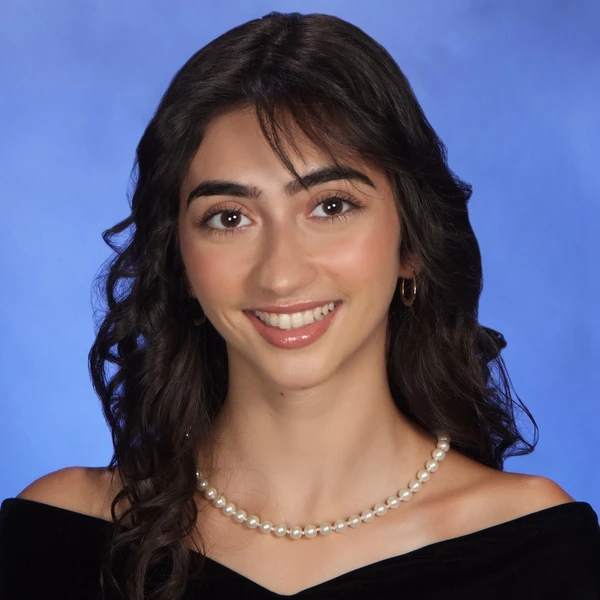
I am a first-year student at Penn State studying international relations, I am driven by a desire to understand how systems of power, history, and identity shape our world. As a Palestinian-American, my understanding of global politics has never been abstract, it has always been very personal. My career goal is to work in diplomacy or international policy, where I can contribute to advancing justice, peace, and dignity, particularly for communities whose voices are often overlooked in global discourse.
My identity is deeply rooted in my family’s history. My grandfather is a survivor of the Nakba of 1948. He was a child when British and Israeli forces forced his family out of their home in Yaffa at gunpoint, telling them it no longer belonged to them. They fled to Amman, Jordan, carrying only what they could. Because my great-grandfather was a pharmacist, they were among the few who had the means to leave safely. To this day, my grandfather still holds the original deed to that house which is written in Arabic, a deep, physical reminder of a life interrupted. That home is now a police station in what is now called Israel.
Growing up with this story shaped how I see justice, not necessarily as an abstract principle, but as something denied, something remembered, and something worth pursuing. It has fueled my commitment to studying international relations and has inspired me to pursue a career where I can advocate for equitable policies and meaningful dialogue between nations. Beyond my personal connection to the levant, I have also sought to understand the broader histories of the regions I affiliate with. Algeria’s struggle for independence, particularly the Algerian War of Independence, reflects a powerful legacy of resistance against colonial rule and the pursuit of national self-determination. Similarly, Palestinian history is marked not only by displacement, but by resilience expressed through literature, culture, and political activism. These histories have only reinforced my belief that dignity and self-determination are universal rights.
At Penn State, I have found academic growth, but I have also felt the absence of a strong Arab community. This is part of what draws me to New York University, where the presence of an active Arab Student Association represents visibility and the opportunity to engage in meaningful cultural and political dialogue. I anticipate transferring and being in a space where my identity is recognized and shared would empower me to further develop my voice and advocacy.
Ultimately, my goal is to bridge divides whether it be cultural, political, or ideological, through a career in international relations. I want to contribute to a world where stories like my grandfather’s are understood as part of a larger call for justice and dignity for all.