Hobbies and interests
Concerts
Anime
Baking
Comedy
Reading
How-To
Education
Health
Psychology
I read books multiple times per week
Lauris English
1x
FinalistLauris English
1x
FinalistBio
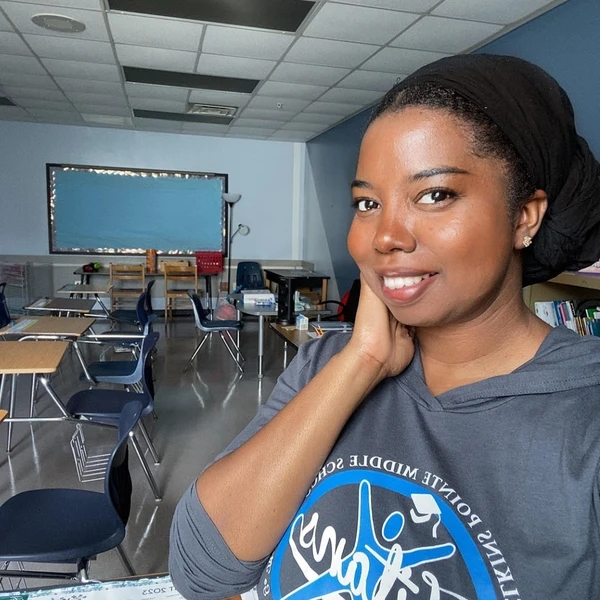
Nice to meet you my name is Lauris English. I hold a Bachelor's degree in Psychology and a Master's in Marriage and Family Therapy. I am currently pursuing a Master of Arts in Teaching Special Education. As a special education teacher working with students with autism, I approach teaching through a therapeutic lens—supporting not only academic growth but also emotional and behavioral development. I’m passionate about creating positive, lasting change in the lives of my students by helping them build both the skills and confidence they need to succeed.
Education
Kennesaw State University
Master's degree programMajors:
- Special Education and Teaching
Valdosta State University
Master's degree programMajors:
- Clinical, Counseling and Applied Psychology
Valdosta State University
Bachelor's degree programMajors:
- Psychology, General
Pebblebrook High School
High SchoolMiscellaneous
Desired degree level:
Doctoral degree program (PhD, MD, JD, etc.)
Graduate schools of interest:
Transfer schools of interest:
Majors of interest:
Career
Dream career field:
Education
Dream career goals:
Educator
Fulton County School System2022 – Present4 years
Arts
Valdosta State Choir
Music2005 – 2007
Public services
Volunteering
Turner Chapel Food and Clothing — Volunteer2020 – Present
Future Interests
Volunteering
Philanthropy
Entrepreneurship
Charles Cheesman's Student Debt Reduction Scholarship
My name is Lauris English, and I am a passionate special education teacher committed to creating inclusive, supportive learning environments for students with autism and other exceptionalities. I hold a Bachelor’s degree in Psychology and a Master’s degree in Marriage and Family Therapy. Currently, I am pursuing a Master of Arts in Teaching Special Education (PK–12), which has deepened both my instructional strategies and my understanding of how therapeutic approaches can enhance student outcomes. My educational journey has been driven by my commitment to helping children thrive not only academically, but emotionally and socially.
My career is centered around working in inclusive classrooms where I teach through a therapeutic lens. I believe that emotional safety and trust are essential for learning, especially for students who experience behavioral challenges or communication barriers. One of the most powerful experiences in my teaching career involved working with a student named Brady, who initially exhibited aggressive behaviors when asked to engage in academic tasks. Through patience, consistency, and relationship-building, I helped Brady move from fear-based reactions to confident participation in the classroom. Witnessing that transformation reaffirmed why I do this work: to help children discover their voice, their confidence, and their sense of belonging.
Beyond the classroom, I am involved in my community through mentoring, advocacy, and connecting families with mental health and educational resources. I often support parents in navigating special education systems, understanding IEPs, and locating services that support the whole child. I view my role as an educator as one that extends beyond the school walls . I aim to uplift families and empower them as active partners in their child’s development.
One of my proudest accomplishments is the impact I’ve made by bridging my background in psychology and family therapy with my classroom practice. This unique combination allows me to support not only students, but paraprofessionals, caregivers, and fellow educators with empathy and evidence-based tools.
If awarded funding to pay down my student loans, the money I save would be reinvested into my personal and professional goals. I would use it to pursue specialized certifications in trauma-informed education, purchase sensory and academic tools for my classroom, and begin planning a long-term dream: opening a holistic learning and resource center for children with disabilities and their families. Reducing my financial burden would allow me to focus more energy on what matters most : creating lasting, positive change in the lives of my students and in the communities I serve.
Reimagining Education Scholarship
If I could create a class that all K–12 students were required to take, it would be called "Emotional Intelligence & Life Skills." This course would focus on building students' self-awareness, empathy, communication, conflict resolution, resilience, and practical life skills like financial literacy, goal setting, and time management. The class would grow with students, becoming more complex and relevant as they matured, ensuring that lessons were age appropriate and directly applicable to their real lives.
As a special education teacher, I have seen firsthand how academic success alone does not guarantee a child’s ability to thrive in school, relationships, or life. Many students, especially those with behavioral or emotional challenges struggle not because they lack intelligence, but because they lack the tools to manage emotions, respond to conflict, or advocate for themselves. A structured class dedicated to emotional intelligence and life readiness would help fill that gap for all students, regardless of background, ability, or future career path.
The curriculum would include mindfulness, journaling, self-regulation strategies, peer collaboration, problem-solving scenarios, and real-world simulations. Students would practice everything from understanding their emotions and setting boundaries to writing resumes and resolving disagreements respectfully. The goal would not just be to teach soft skills but to help students internalize them, preparing them to navigate both school and life with confidence and self-awareness.
The long-term impact of this class could be transformative. It would help reduce bullying and increase empathy in school communities. Students would be more likely to recognize and manage their own emotions, reducing disruptive behaviors and enhancing academic focus. They would also leave school better prepared for adult responsibilities like managing money, maintaining healthy relationships, and handling setbacks with resilience.
Most importantly, it would cultivate a generation of emotionally intelligent individuals who value both success and well-being. In a world where mental health crises and interpersonal conflicts are increasingly common, giving students the tools to understand themselves and relate to others is no longer optional ... it’s essential.
By integrating emotional intelligence and life skills into the fabric of every student’s education, we wouldn’t just be preparing students for tests we’d be preparing them for life. This class would affirm that who a student is matters just as much as what they know, and it would help them walk into adulthood with not only knowledge but confidence, compassion, and character.
By making emotional intelligence and life skills a required class, we equip students with the tools they need to thrive both personally and professionally. This course would foster a generation that values empathy, resilience, and lifelong growth.
RonranGlee Special Needs Teacher Literary Scholarship
"I have learned that the purpose of teaching is to bring the student to his or her sense of his or her own presence." – Professor Harold Bloom
When I first read this quote, it resonated with me deeply. To me, Bloom’s words suggest that teaching is not merely about transferring knowledge or achieving standards; it is about helping students recognize their worth, their voice, and their place in the world. This is especially meaningful in special education, where students often face internal and external challenges that overshadow their true potential. As a special education teacher, I see my role as a guide. One who helps students discover their strengths, embrace their uniqueness, and stand confidently in their own presence.
My passion for special education stems from moments of transformation like those small, powerful shifts when a child moves from isolation to connection, from resistance to engagement, from silence to self-expression. One of those moments occurred with Brady, a young student on the autism spectrum who struggled with severe behavioral challenges when confronted with schoolwork or unfamiliar staff. Brady communicated through hitting, biting, and kicking, not because he wanted to cause harm, but because he lacked the tools to express frustration and fear.
Instead of seeing Brady's behaviors as defiance, I saw them as a cry for connection. I began to build trust with him, playing alongside him, respecting his boundaries, and slowly introducing structure with safety and predictability. Over time, he began to accept my presence. He smiled. He sat beside me. And eventually, he picked up a task, completed it, and proudly said, “I did it.”
In that moment, Brady experienced his own presence. He recognized his ability, his autonomy, and his belonging. That is the heart of my mission: to create spaces where students feel empowered, not judged; supported, not pushed; and seen, not just supervised. I aim to guide my students to that inner moment of realization the moment they feel, “I can do this. I matter. I am here.”
My work is more than a profession it’s a calling. Every day, I walk into my classroom with the belief that each child has value, even when they cannot yet see it for themselves. I meet them where they are, and I journey with them step by step until they stand in the full light of their own presence.
Fairy Tale: “The Whispering Woods”
Once upon a time, in the heart of the Whispering Woods, there lived a gentle guide named Miss Lauris. The forest was filled with magical children who had incredible powers. Some could see colors in music, others spoke with their hands, and some moved like the wind. However, their powers were hidden beneath layers of fear, confusion, and silence.
One day, Miss Lauris met a small dragon named Brady, who breathed fire whenever anyone came too close. The villagers called him wild, but Miss Lauris saw his heart. Instead of running, she sat beside him and listened. She brought him warm tea, built him a fireproof workbook, and invited him to play “Chase the Wind”, a game of tag that made him laugh and shine.
Little by little, Brady let her in. His fire turned to words. His growl turned to laughter. And one day, he roared not in fear, but in pride, “I can fly!”
Miss Lauris smiled, knowing her magic was never in her wand, but in her belief that even the fiercest dragons deserve to be understood. And that every child, with love and patience, can learn to fly.
And so, they soared together into a future where presence was power, and every child could say with joy, “I am here.”
B.R.I.G.H.T (Be.Radiant.Ignite.Growth.Heroic.Teaching) Scholarship
As a special education teacher, I’ve encountered many students with unique challenges that require more than just academic instruction .They also need empathy, structure, and a trusted connection. One child who left a lasting impact on me was Brady, a bright and energetic young boy on the autism spectrum who displayed significant behavioral challenges when confronted with academic demands or unfamiliar staff. His behaviors included hitting, biting, kicking, and verbal outbursts, especially when overwhelmed or asked to engage in schoolwork.
When I first met Brady, he had already developed a pattern of resistance to any structured activity. Attempts to introduce tasks were met with immediate aggression. Transitions between activities were often explosive, and any unfamiliar adult whether a substitute teacher, speech therapist, or paraprofessional became a trigger. His fear of the unknown and discomfort with pressure made it difficult for him to participate in even the simplest academic tasks. Despite the daily incidents, I never saw Brady as a “difficult child.” I saw a child in distress, communicating the only way he knew how.
The first step in supporting Brady was to build rapport slowly and intentionally. I understood that before Brady could learn from me, he had to trust me. I started by meeting him where he was. If he wanted to stack blocks or line up cars, I joined him on the floor. I let him lead our interactions while narrating his actions to build language and comfort. I didn’t demand eye contact or compliance; I focused on consistency, calm presence, and unconditional acceptance.
Over time, Brady began to seek me out. He would smile when I entered the room and allowed me to sit closer. I introduced short, play-based activities with small academic components matching games with preferred images or puzzle pieces that revealed letters or numbers. Instead of forcing participation, I embedded choice, giving him a sense of control. I used a visual schedule, first-then language, and a calm tone to support transitions and reduce anxiety.
A critical turning point came when Brady tolerated working alongside a paraprofessional he had previously avoided. We practiced a “warm hand-off” routine where I stayed present as new staff were introduced gradually. We used social stories and role-play to explain what to expect. The more Brady felt safe and prepared, the fewer behaviors occurred. He began sitting for longer periods, tolerating guided work, and even requesting breaks using visuals instead of acting out.
What touched me the most was a moment late in the year when Brady walked into class, pointed to his schedule, and said, “Work with teacher, then iPad.” It was a simple sentence, but it represented incredible growth. The child who once lashed out at the sight of a worksheet was now initiating work with support, using language to advocate for himself, and forming trusting bonds with adults.
Brady taught me that behavior is communication, and connection is the most powerful tool we have as educators. He reminded me that progress doesn't always look like a completed worksheet or a perfect day . It looks like safety, trust, and growth over time. Through patience, consistency, and a child-centered approach, I was able to help Brady access learning in a way that honored who he was and how he experienced the world.
That experience reinforced my passion for teaching through a therapeutic lens and reminded me why I chose this profession. To impact a child’s life is not to fix them but it’s to believe in them until they believe in themselves. And that, to me, is the greatest success of all.
Dr. Jade Education Scholarship
Living the life of my dreams means waking up each day fulfilled, knowing I am using my gifts to create lasting change in the lives of others. As a Black woman with a Bachelor's in Psychology, a Master's in Marriage and Family Therapy, and as a current special education teacher pursuing my Master of Arts in Teaching, I’ve committed my life to helping others , especially students with disabilities and their families.
In my dream life, I’ve created a holistic education and wellness center specifically designed to support children with autism and other learning differences. This center combines therapeutic services, academic support, family counseling, and community outreach all under one roof. It’s a place where students feel seen, supported, and empowered. Parents find relief in knowing their child’s needs are understood and met, and educators and paraprofessionals are trained not only in research-based practices but in compassion and cultural awareness.
Professionally, I see myself leading professional development trainings, speaking at national conferences, and mentoring future educators and therapists , particularly Black women like myself who often navigate systemic barriers in both academia and the workplace. My dream includes contributing to policy reform, ensuring that special education and mental health services are more equitable and accessible.
Personally, the life of my dreams includes peace, stability, and joy. I envision a warm home filled with love, creativity, and laughter, a place that reflects the healing and wholeness I strive to bring to others. I want to travel the world, immerse myself in new cultures, and continue growing spiritually and intellectually. Most importantly, I want to remain grounded, always remembering where I came from and who I’m doing this for.
To live the life of my dreams is not simply to achieve success but to create significance. It is to honor those who came before me, uplift those walking beside me, and inspire those who will come after me. Education has opened doors I never thought possible, and I plan to keep walking through them .Not just for myself, but for every student, parent, and educator who needs someone to believe in them.
In living the life of my dreams, I aim to transform education into a powerful tool for healing, equity, and generational change. Through dedication, compassion, and purpose, I hope to inspire others to believe in their own potential and pursue lives of meaning and impact.
It is my belief that together we can empower others , educate minds and heal with purpose.