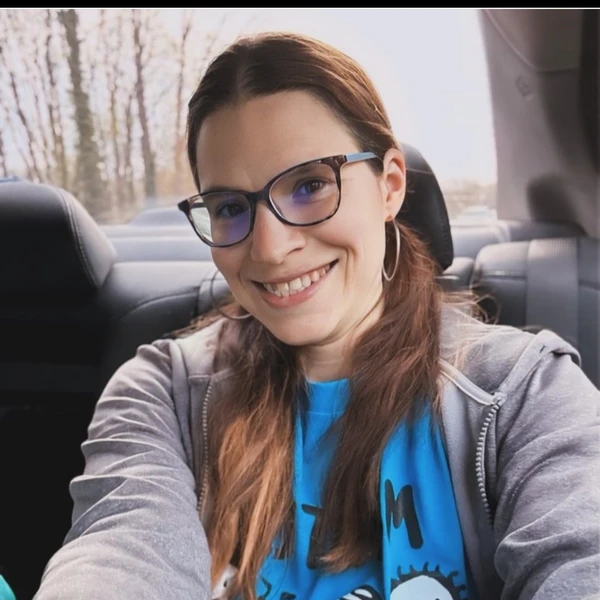
When you hear the words "mental health", what comes to mind? Growing up, the phrase carried negative connotations. It was whispered about, avoided, or used to label someone as “crazy.” If I had been asked as a child to draw a picture of mental illness, I probably would have sketched a stereotype—someone homeless, someone struggling with addiction, someone talking to themselves. As an innocent child, I had no idea how incomplete, unfair, and painfully shallow that understanding was. Years later, as a mother, I learned just how wrong I had been.
My daughter began middle school as a bright, joyful, smiley little girl. With her blonde hair, blue eyes, and a grin that lit up every room, I often called her my sunshine. She was curious, creative, and full of life. But somewhere in the middle of those years, something shifted. It wasn’t sudden or dramatic. It was subtle at first-small changes in mood, in eating habits, in the way she talked about herself. I didn’t recognize them for what they were. I assumed it was normal growing up, stress, hormones, the usual turbulence of adolescence. The words mental illness never crossed my mind.
By the time she was fourteen, we were facing our first hospitalization and our first diagnosis: anorexia nervosa. That moment marked the beginning of a journey I never asked for but had no choice but to walk. There were long, exhausting battles around meals, constant monitoring, and the painful realization that the child I loved was fighting something far bigger than either of us understood. When she was finally declared “better” at sixteen, I felt relief—but it was short‑lived. My little girl had changed, and that battle with anorexia was only the beginning.
In the years that followed, she faced depression, PTSD, self-harm, suicidal thoughts, repeated crises, and attempts to take her own life. Each challenge brought its own fear, heartbreak, and steep learning curve. I found myself navigating a maze of therapists, psychiatrists, treatment programs, safety plans, and emergency interventions. I learned new vocabulary I never wanted to know. I learned how to stay calm while my insides were shaking. I learned how to advocate fiercely in rooms where decisions about my child’s safety were being made. I learned about skin checks, and I learned how to thoroughly search her room without leaving any evidence I'd been there as I looked for hidden blades and pills that she might be saving for her next attempt. I learned how to distinguish between a surface cut and one that required a trip to the ER for stitches. I learned how lonely it feels to drive home alone after leaving your child in a facility because it was the safest option available. I learned how to cry in secret so the rest of my children wouldn't see how close I myself was to drowning.
But most of all, I learned how deeply misunderstood mental health truly is.
The world often sees the behaviors but not the pain. It sees the symptoms but not the suffering. It sees the diagnosis but not the child behind it. I had to unlearn everything I thought I knew about mental illness and replace it with compassion, patience, and a willingness to sit with that discomfort. I had to learn that mental health struggles don’t look like the stereotypes I grew up with. They look like straight‑A students. They look like kids with loving families. They look like the friend who always makes you laugh. They look like my daughter—my sunshine—who was fighting battles no one could see.
Raising a child with complex mental health needs reshaped me. It taught me resilience I didn’t know I had. It taught me that love sometimes means staying up all night, sometimes means asking hard questions, and sometimes means making decisions your child may not understand in the moment. It taught me that healing is not linear and that progress can be measured in the smallest victories: a meal finished, a moment of honesty, a day without crisis. It taught me to celebrate each new day as the last.
It also taught me that mental health is not a character flaw or a personal failure. It is health—no less real than a diagnosis of diabetes or asthma or a broken bone. And yet, the stigma persists. I felt it in the silence of people who didn’t know what to say. I felt it in the judgment of those who believed they understood. I felt it in the isolation that comes from carrying a burden most people never see.
But I also discovered community—other parents, families, and survivors—who understood without explanation. People who knew the language of fear and hope intertwined. People who reminded me that we were not alone.
Today, when I hear the words "mental health", I no longer think of the stereotypes from my childhood. I think of my daughter. I think of her courage, her vulnerability, and her strength. I think of the countless families walking similar paths, often quietly and invisibly. I think of the importance of compassion, education, and breaking the silence that keeps so many people suffering in the dark.
Mental health is no longer a distant concept. It is woven into the fabric of my life. It has challenged me, changed me, and taught me more about love than anything else ever could. And while the journey is ongoing, one truth remains constant: my daughter is still my sunshine. Even on the hardest days, her light is there—sometimes dimmed, sometimes flickering, but always present. And I will keep walking beside her, learning, supporting, and loving her through every step of her healing.
As a future occupational therapist, I will have the privilege of addressing my clients in a holistic way—one that considers more than just their physical health. While I would give anything to take away the pain my daughter has faced, I am grateful for the lessons she has taught me and continues to teach me every day.