Hobbies and interests
Medicine
Biology
Biomedical Sciences
Biochemistry
Chemistry
Research
Volunteering
Community Service And Volunteering
Church
Laura Oyuela
1x
FinalistLaura Oyuela
1x
FinalistBio
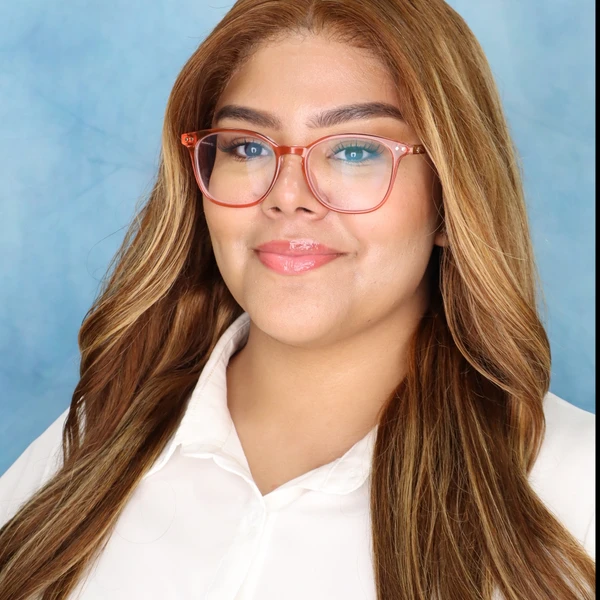
A first-generation college graduate entering the Rutgers Biomedical Sciences Master’s Program on the Biomedical Research Scholars Pre-PhD track. Earned a B.A. in Chemistry with a Biology minor from Rutgers University–Newark while conducting immunology research on T cell-mediated responses to malaria. Gained experience in flow cytometry, ELISA, animal handling, and scientific communication through multiple presentations. Committed to advancing research in infectious disease and pursuing a Ph.D. to improve health outcomes in underrepresented communities.
Education
Rutgers University-Newark
Master's degree programMajors:
- Biological and Biomedical Sciences, Other
Rutgers University-Newark
Bachelor's degree programMajors:
- Chemistry
Miscellaneous
Desired degree level:
Master's degree program
Graduate schools of interest:
Transfer schools of interest:
Majors of interest:
- Biological and Biomedical Sciences, Other
Career
Dream career field:
Research
Dream career goals:
Physician Scientist
Undergraduate Researcher
Rutgers University2024 – 20251 year
Sports
Basketball
Varsity2018 – 20191 year
Research
Microbiological Sciences and Immunology
Rutgers — Undergraduate researcher2024 – 2025
Arts
Elementary School
Dance2013 – 2015
Public services
Volunteering
Interlingual — Making care packages2024 – 2025
Future Interests
Advocacy
Volunteering
GUTS- Olivia Rodrigo Fan Scholarship
One lyric from Olivia Rodrigo’s GUTS that deeply resonates with my teenage experience is from her song “teenage dream”:
“They all say that it gets better, it gets better the more you grow. Yeah, they all say that it gets better, it gets better, but what if I don’t?”
This lyric captures the uncertainty and emotional weight I felt throughout my adolescence. While many adults around me offered comfort by saying “things will get better,” there were times I questioned whether that promise would ever apply to me. Growing up in a household where mental health was not acknowledged made it hard to process my feelings. I struggled with depression, anxiety, and the pressure to perform, all while trying to find my identity and place in the world. On the outside, I was the student who smiled, worked hard, and checked all the boxes. On the inside, I often felt isolated and overwhelmed.
Rodrigo’s lyric reflects that quiet fear many teenagers experience: the fear that maybe things will not improve, that maybe we are the exception to the rule. I remember carrying that fear with me through many sleepless nights, wondering if the sadness and confusion were just part of life or something broken inside me. It wasn’t until I started seeking help and leaning into my faith that I realized healing is not linear, and growing up does not magically make everything easier. But it does make you stronger, more self-aware, and more compassionate toward yourself and others.
Adolescence is filled with contradictions. You are expected to make adult decisions while still being treated like a child. You are told to express yourself but often punished for doing so. Olivia’s lyric gave a voice to that in-between space where you want to believe in better days, but you’re not quite sure how to get there. That sense of emotional limbo defined much of my teenage experience. I felt the weight of expectations but didn’t yet have the tools to manage them in a healthy way.
Now, as a young adult and graduate student, I look back at that time not with shame, but with compassion. I am proud of the girl who kept going even when she wasn’t sure what “better” looked like. The lyric from “teenage dream” reminds me how far I’ve come and how many young people still need to hear that it’s okay to doubt, to struggle, and to ask for help. For me, growing up meant learning that “better” doesn’t mean perfect. It means being brave enough to hope, even when things are uncertain.
Rodrigo’s music resonates because it gives young people permission to be honest about their fears and growing pains. Her lyric captured the heart of what made adolescence so confusing and transformative for me. The feeling of waiting for things to make sense, all while learning how to hold on through the chaos. It’s a reminder that those messy years matter. They shape who we become, and they deserve to be spoken about with honesty and care.
Build and Bless Leadership Scholarship
My Christian faith is the foundation of my leadership style. It teaches me that leadership is not about power or recognition, but about service, compassion, and humility. I strive to lead as Christ led with patience, empathy, and a heart committed to the well-being of others. Faith reminds me that every person has inherent value, and as a leader, it is my responsibility to create spaces where people feel seen, heard, and supported.
One moment that deeply shaped my approach to leadership happened during my time as a Peer Advisor in college. In this role, I was responsible for guiding students through academic challenges, connecting them with campus resources, and supporting them through personal struggles. What made this experience truly meaningful to me was the number of students who came to me not just for help with classes, but because they felt isolated, overwhelmed, or unsure of their purpose.
As someone who has struggled with mental health and has grown through faith, I understood their pain in a personal way. I leaned on prayer before our meetings, asking God for the wisdom to listen well and speak with kindness. I reminded myself that leadership through faith does not always mean preaching scripture, but living out its values with consistency and integrity. I chose to lead by example, showing others that strength often looks like vulnerability and that it is okay to ask for help.
In one particular instance, a student confided in me about wanting to drop out of school due to stress and family pressures. Instead of trying to fix everything, I listened and affirmed their feelings. I shared part of my own testimony and how my faith helped me through similar trials. I invited them to consider their worth beyond academic performance, and we worked together to create a plan of small, manageable goals. Months later, that same student told me our conversation was the reason they stayed in school. That moment reaffirmed my belief that leadership rooted in faith can change lives quietly but powerfully.
This experience has shaped my vision for the future in a profound way. As I continue my education and pursue a career in medicine, I want to carry this same spirit of faith-filled leadership into every room I enter. I hope to be the kind of physician who not only treats illness, but also encourages the whole person spiritually, emotionally, and physically. My faith gives me the strength to serve others even when it is hard, and it reminds me that leadership is a lifelong calling that begins with compassion and courage.
Love Island Fan Scholarship
“Bare to the Bone” is a new Love Island challenge centered on true emotional intimacy and vulnerability, rather than physical attraction or competitive flirtation. The goal is to help Islanders connect on a deeper level by encouraging them to reveal the emotional truths and experiences that have shaped who they are in relationships. The challenge begins with a private reflection exercise called “My Truths.” Each Islander receives a journal the night before the challenge and is asked to respond to five prompts, such as: “What do I fear most in a relationship?” or “What’s something I’ve never told anyone because I thought it would make me unlovable?” The entries are submitted anonymously into the Heart Vault, allowing Islanders to be honest without immediate judgment. The next day, all contestants gather for a group circle in a cozy, fireside setting, designed to feel emotionally safe and intimate. One by one, anonymous journal entries are read aloud by the host. Couples then try to guess which Islander wrote the confession. Once revealed, the writer is invited to share the story behind their entry. Their current partner, or a fellow Islander if they’re single, is asked to respond thoughtfully—either by offering support, asking a follow-up question, or reflecting on how the story resonated with them. This exchange builds emotional safety, trust, and empathy within couples and the group as a whole. Instead of traditional scoring, couples who show strong emotional understanding and reciprocal vulnerability earn symbolic “Emotional Intimacy Tokens.” At the end of the challenge, the pair with the most tokens receives a reward: a quiet, off-camera sunset picnic where they answer relationship-deepening questions rather than engaging in physical intimacy. This challenge gives viewers a new side of the show, one that emphasizes emotional growth and authentic connection. Later in the season, Islanders receive their original “My Truths” journals back and are asked to write one “New Truth” reflecting how they’ve grown emotionally since that day. These new truths may be shared in a follow-up circle called “Now You Know Me,” tying the journey together. Bare to the Bone redefines Love Island’s notion of intimacy, proving that emotional courage can be just as magnetic as physical chemistry.
Online ADHD Diagnosis Mental Health Scholarship for Women
Mental health has had a profound impact on both my academic performance and personal life throughout my educational journey. As someone who grew up in a household where mental health was dismissed or misunderstood, I learned early on how difficult it can be to seek help when your support system doesn’t believe in it. My experiences with depression, anxiety, PTSD, and ADHD deeply affected my motivation, focus, and self-worth during the start of college. These struggles translated into a rocky academic beginning, where I earned a 2.0 GPA and constantly doubted my ability to succeed.
However, what I lacked in support at home, I eventually sought and built for myself through persistence and a commitment to healing. I began attending therapy regularly and got the medical help I needed. I no longer carry shame about being medicated or needing support. In fact, I now embrace it as part of who I am and how I stay healthy. This shift in mindset empowered me to take charge of my own life and advocate for others as well.
During undergrad, I became a Peer Advisor, where I supported students through academic and personal struggles. I often guided them toward campus mental health resources and created a safe, nonjudgmental space where they could be heard, something I wished I had during my earlier years. Through that role, I realized how common it is for students to suffer silently and how desperately they need accessible, stigma-free mental health support. I became a vocal advocate for normalizing mental healthcare, especially within communities where it’s often overlooked or stigmatized.
Taking care of my mental health has become a priority, not a luxury. I maintain regular therapy appointments, practice self-reflection, and stay on top of my treatment plan. I’ve learned to set boundaries, ask for help, and build routines that support my well-being. These practices have not only improved my academic performance, reflected by my 3.8 undergraduate GPA and acceptance into a biomedical master’s program, but have also transformed how I show up for myself and others.
Now as a graduate student pursuing a career in medicine, my goal is to carry this advocacy forward. I want to become a physician who understands that a patient’s mental health is just as important as their physical well-being. My own lived experience gives me a deeper level of empathy and a personal drive to reduce barriers to mental healthcare, especially in marginalized or underserved communities.
Mental health isn't something I put on the back burner to chase success. It is the foundation that makes success sustainable. My journey has shown me that thriving academically and personally isn’t about perfection, but about being honest with yourself, asking for support, and taking the steps to heal and grow.
Learner Tutoring Innovators of Color in STEM Scholarship
I am pursuing a graduate degree because I want to become a biomedical researcher who advances health equity and increases representation in STEM. This degree will give me the academic foundation, research training, and mentorship opportunities I need to reach that goal. As a first-generation college graduate and the first in my family to pursue a degree in STEM, my path has been shaped by resilience, purpose, and a desire to uplift others like me. I earned a B.A. in Chemistry with a Biology minor from Rutgers University–Newark while working full-time to support myself and my family. I took a gap year during the pandemic to be the sole provider for my household, and despite these responsibilities, I completed my degree with a 3.8 GPA in my final semester and a passion for biomedical research.
Through the Pathways for Junior Scientists and Undergraduate Summer Research programs at Rutgers New Jersey Medical School, I conducted immunology research in the Center for Immunity and Inflammation under Dr. Robin Stephens. My work focused on understanding T cell-mediated immunity during heterologous malaria infection, a topic that is often overlooked despite its relevance to people in regions with high disease burden. I presented my research at multiple oral and poster sessions and gained hands-on experience with techniques like flow cytometry, ELISA, animal handling, and data analysis. These experiences helped me grow not only as a researcher but also as a scientific communicator.
My motivation for entering science goes beyond academic interest. It is rooted in personal experience and community impact. In high school, I was part of a robotics team that represented one of the few diverse, low-income schools at competitions. At one event, staff falsely accused us of stealing food, even though we had waited in line and paid. We were the only group accused and the only visibly diverse team there. Our team had little funding, and we were quickly overlooked and excluded from advancing in the tournament. That moment stayed with me. It showed me how students of color in STEM are too often underestimated, unheard, and unseen. I realized that representation matters, not just in classrooms or research labs, but in every part of the STEM pipeline.
Because of that experience, I now mentor high school students at the same school I graduated from in Newark. I know how powerful it can be to see someone who looks like you succeed in science. I want students to know that they belong in these spaces, even if others tell them otherwise. Mentorship has become just as important to me as my academic goals, because I believe progress in science must include progress in equity and opportunity.
This is why I am pursuing a graduate degree: to become a stronger scientist, a better mentor, and an advocate for inclusive research that makes a real difference. As I begin the Rutgers Biomedical Sciences Master’s Program on the Biomedical Research Scholars Pre-PhD track, I bring with me research experience, academic determination, and a commitment to building a more inclusive future in science.