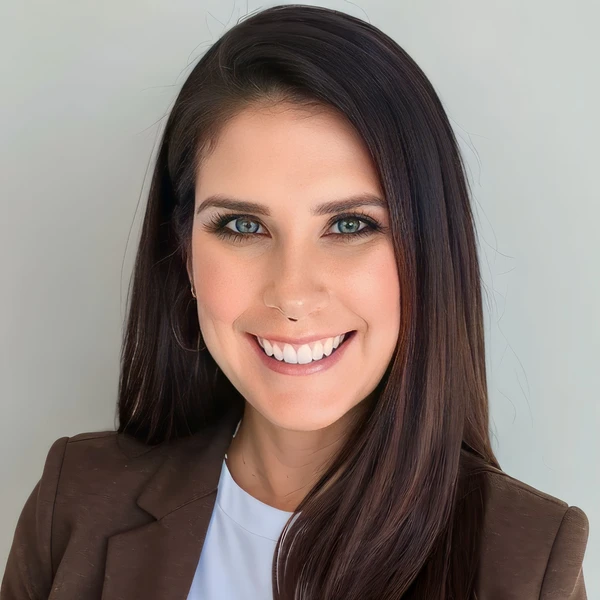
Hobbies and interests
Military Sciences
Research
Singing
Hiking And Backpacking
Spending Time With Friends and Family
Yoga
Volunteering
Health Sciences
Animals
Anatomy
Biochemistry
Reading
Adventure
Action
Drama
Cultural
I read books daily
Laura Hentig
1x
Finalist
Laura Hentig
1x
FinalistBio
Laura Hentig is a non-traditional, first-generation student and Registered Medical Assistant who works full-time in neurosurgery while serving as a caregiver to her medically retired combat veteran husband. She pairs hands-on patient care with research and writing, including a first-author, PubMed-indexed publication on patient and caregiver perspectives and outcomes following low-dose IV ketamine for C-PTSD, TBI, and treatment-resistant depression. Motivated by the realities military families face when navigating complex care, she is pursuing public health and clinical operations work focused on improving access, coordination, and outcomes for patients and caregivers. She’s committed to building support systems that are practical, compassionate, and measurable.
LinkedIn: www.linkedin.com/in/lhentig
PubMed: https://pubmed.ncbi.nlm.nih.gov/40729226/
Education
Yale University
Master's degree programMajors:
- Public Health
University of Colorado Colorado Springs
Bachelor's degree programMajors:
- Health Professions and Related Clinical Sciences, Other
Miscellaneous
Desired degree level:
Master's degree program
Graduate schools of interest:
Transfer schools of interest:
Majors of interest:
- Behavioral Sciences
- Cognitive Science
- Health Professions and Related Clinical Sciences, Other
- Human Biology
- Medicine
- Nutrition Sciences
Career
Dream career field:
Medicine
Dream career goals:
To become a clinical operations leader (Director/VP level) who designs and runs high-quality, equitable clinical trials and care programs—especially in neurology—improving access, reducing system barriers for patients and caregivers (including military-connected families), and translating evidence into real-world impact.
Registered Medical Assistant
Spectrum Health Neurology2017 – 20192 yearsRegistered Medical Assistant
Beacon Medical Group Neurosurgery2019 – Present7 years
Research
Biological and Biomedical Sciences, Other
Rhode Island Veteran Affairs — Undergraduate Research Assistant2025 – PresentNeurobiology and Neurosciences
Johns Hopkins University — Research Assistant2025 – PresentBiological and Biomedical Sciences, Other
National Institutes of Health — Undergraduate Research Assistant2023 – Present
Public services
Volunteering
Vitas Healthcare — Proactive Caller2025 – 2025Volunteering
Allelon Hospice — Pen Pal2025 – Present
Future Interests
Advocacy
Volunteering
Bryent Smothermon PTSD Awareness Scholarship
My experience with military service-related PTSD comes from being the wife and caregiver of my husband, who is a medically disabled Army veteran and former combat medic. He served in Afghanistan, and even though he came home, the effects of what he went through did not just stay overseas. PTSD became part of our everyday life in ways I did not fully understand until I was living beside it.
Before this, I understood PTSD mostly from a healthcare perspective. I knew the symptoms, and I knew it was serious, but being married to someone with service-related PTSD has taught me something different. It has shown me how much PTSD can affect a person’s whole life. It can affect sleep, trust, appointments, crowds, stress, and even simple plans that other people may not think twice about. It has also shown me how much military families carry quietly.
Through this experience, I have learned that I am stronger than I used to give myself credit for. I have learned how to stay calm, how to adjust plans, how to recognize when something may be too much, and how to advocate when my husband needs support. I have also learned that caregiving is not always something people see. From the outside, it may look like I am just going to work, going to school, and living my life. But behind that, I am also helping manage appointments, medications, health concerns, and the emotional weight that comes with PTSD and military-related trauma.
This experience has changed the way I see veterans and their families. It has made me more patient and more aware that many people are dealing with things that are not obvious. It has also made me frustrated at times because the systems meant to help veterans and caregivers can be hard to navigate. Families often have to figure out authorizations, appointments, treatment options, and benefits while already dealing with stress at home. I believe veterans deserve better than having to fight through complicated systems after already serving their country.
I am currently beginning my Executive Master of Public Health at Yale University, and my goal is to use my education to help improve healthcare systems for veterans, caregivers, and families. I have worked in healthcare for more than a decade, currently in neurosurgery, and I have seen how important coordination and access are. When care is delayed or confusing, patients and families feel it immediately.
In the future, I hope to work in public health, clinical research operations, or veteran-focused healthcare programs. I want to help support research and programs that improve access to mental health care, caregiver support, and long-term resources for veterans living with PTSD. I also want to use my personal experience to bring a caregiver’s perspective into conversations where it is often missing.
Living with service-related PTSD in my family has taught me that military service does not only affect the person who served. It affects spouses, families, routines, and futures. It has taught me patience, advocacy, and the importance of showing up even when things are hard. My hope is to take what I have lived and use it to help other veterans and families feel less alone and better supported.
Bick First Generation Scholarship
Being a first-generation student means becoming the person I once needed to see. It means stepping into spaces that no one in my immediate family had walked through before and learning how to navigate them while still carrying responsibilities outside of school. For me, being first-generation has meant figuring out financial aid, degree requirements, applications, deadlines, and academic expectations without a family roadmap. It has also meant proving to myself that I belonged, even when I did not always feel like I did.
My path has not been traditional. I am a non-traditional student, a full-time healthcare professional, and a caregiver to my husband, a medically disabled Army veteran and former combat medic. While working full-time in neurosurgery, I completed my bachelor’s degree in Healthcare Science and graduated cum laude with a 3.65 GPA. There were many moments when I felt stretched thin between work, school, caregiving, and life at home, but I kept going because my education has always represented something bigger than a degree. It represents stability, growth, service, and the chance to create a future that my younger self did not know was possible.
One of the biggest challenges I have faced is learning to keep moving forward even when the road feels uncertain. I have had to balance long workdays, coursework, caregiving responsibilities, and my own health while still showing up for my goals. There were times when I questioned whether I was capable of doing all of it. But each challenge taught me resilience. I learned how to ask for help, how to adjust when things became overwhelming, and how to keep choosing my future even when it would have been easier to stop.
My dream is to use my education to improve healthcare systems for patients, veterans, caregivers, and families who often feel overlooked. I have spent over a decade working in healthcare, and I have seen how confusing and difficult the system can be for people trying to access care. As I begin my Executive Master of Public Health at Yale University, I want to build the skills to make healthcare more accessible, coordinated, and compassionate. I am especially interested in clinical research operations, veteran health, caregiver outcomes, and public health programs that make care easier to navigate.
What drives me is the belief that people deserve care, dignity, and support, regardless of their background or circumstances. I know what it feels like to fight for a place in higher education, and I want to use that experience to help others feel less alone in complicated systems.
This scholarship would help reduce the financial burden of graduate school and allow me to continue my education while working full-time and supporting my family. More than anything, it would be an investment in a student who has worked hard to get here and is determined to use her education to serve others. Being first-generation has taught me that I may be the first in my family, but I do not want to be the last.
TRAM Resilience Scholarship
Living with a physical disability has shaped the way I see myself, my education, and the kind of impact I hope to make in healthcare. I have Postural Orthostatic Tachycardia Syndrome, also known as POTS, which affects how my body responds to standing, movement, heat, stress, and fatigue. Some days, it is manageable. Other days, it reminds me that I have to be intentional with my time, energy, and responsibilities. It has taught me that strength does not always look like pushing through without limits. Sometimes strength means adapting, planning ahead, asking for support when needed, and continuing forward even when the path requires extra effort.
My disability has influenced who I am by making me more resilient and more aware of what people carry that others may not see. From the outside, I may look like I am managing everything well. I work full-time in healthcare, serve as a caregiver for my medically disabled husband, volunteer in my community, and continue to pursue my education. But behind that is a lot of planning, determination, and persistence. I have had to learn how to balance my health while still showing up for my patients, my family, my education, and my goals.
Working in healthcare has also given me a deeper understanding of how important access, communication, and compassion are for patients. I have spent more than a decade as a Registered Medical Assistant and currently work in neurosurgery, where I help coordinate referrals, imaging, authorizations, and patient care needs. My own experience with disability has made me more patient-centered because I understand how frustrating it can be when systems are difficult to navigate. I know what it feels like to need support while still wanting to be seen as capable, independent, and driven.
My disability has not taken away my ambition. If anything, it has made my goals more meaningful. I recently graduated with my bachelor’s degree in Healthcare Science with a 3.65 GPA while working full-time, and I am now beginning my Executive Master of Public Health at Yale University. As a first-generation student and non-traditional learner, reaching this point has required sacrifice, discipline, and a strong belief that my experiences can be used for something bigger than myself.
In school, I hope to gain the skills to better understand public health systems, research, policy, and program evaluation. Beyond school, my goal is to work in clinical research operations and public health, especially in areas connected to veteran health, caregiver outcomes, disability, and healthcare access. I want to help improve systems so that patients and families do not feel forgotten, delayed, or overwhelmed by the process of getting care. I also want to advocate for caregivers and people with disabilities, because I know how often they are expected to adapt to systems that were not built with their realities in mind.
My volunteer work with hospice patients has also shaped my goals. Writing cards and making weekly calls may seem small, but it has reminded me that people need to feel seen. Whether I am supporting a patient in neurosurgery, a hospice patient, a veteran family, or a research participant, I want my work to reflect compassion and dignity.
Receiving this scholarship would help reduce the financial burden of graduate school and allow me to continue pursuing my education while managing my health, working full-time, and serving my family and community. My disability has taught me resilience, empathy, and purpose. I plan to carry those lessons into my education and my career so I can help create healthcare systems that are more accessible, more compassionate, and more human.
Audra Dominguez "Be Brave" Scholarship
Bravery is often portrayed as something loud and visible standing on a stage, surviving a single defining moment, or overcoming adversity in a way that feels cinematic. My experience with bravery has been quieter. It has lived in early mornings, exhausted evenings, and the decision to keep moving forward when stopping would have been understandable. I am a non-traditional undergraduate student working full time in a neurosurgery office while pursuing my degree in Healthcare Science. Outside of school and work, I am also a caregiver to my husband, a disabled Army combat medic whose injuries both physical and neurological, have reshaped our lives. There are days when my role as a student feels secondary to survival. Yet it is precisely within this reality that I have learned what resilience truly means
Mental adversity has been my most constant companion. Balancing full-time employment, rigorous coursework, caregiving responsibilities, and chronic sleep disruption has taken a toll on my health. I have experienced anxiety, burnout, and periods of deep exhaustion where my confidence quietly eroded. There were moments when continuing my education felt selfish, when rest seemed more responsible than ambition. But I refused to let circumstances dictate the limits of my future. Instead, I adapted. I changed my academic path to one that honored both my strengths and my reality, transitioning into Healthcare Science and research-focused work that aligned with my lived experience in medicine. I sought out mentors, utilized academic accommodations, and learned to advocate for myself, something that did not come naturally to me as a woman conditioned to endure rather than ask. I learned that perseverance does not mean pushing until you break; it means adjusting your grip and continuing anyway.
Physically, chronic sleep deprivation and stress tested my ability to function at the level my career demanded. I took deliberate steps to protect my health so that I could continue pursuing my goals, seeking medical care, establishing boundaries where possible, and learning to value sustainability over perfection. These choices were not easy. They required admitting vulnerability in environments that often reward stoicism, especially in healthcare. What has kept me moving forward is purpose. Working in neurosurgery, I see daily how illness, injury, and trauma alter the course of lives in an instant. It has reinforced my desire to pursue a Master of Public Health and eventually contribute to clinical research and healthcare operations that improve access, equity, and outcomes, particularly for military families and patients navigating invisible disabilities. My adversity has not distracted me from my goals; it has sharpened them.
Need, for me, is not abstract. I am financing my education while supporting a household affected by disability, with limited flexibility and no safety net. Every scholarship is not just financial support, it is time, breathing room, and the ability to continue without sacrificing my health or my future. Audra Dominguez’s story honors bravery in the face of adversity. I carry that spirit forward in the way I continue to show up, tired, determined, and unwilling to surrender my aspirations. I have learned that strength does not always look like standing tall. Sometimes, it looks like staying seated at the desk, opening the laptop, and choosing—again—to keep going.
Goths Belong in STEM Scholarship
I don’t look like the “expected” face of healthcare, and for a long time I worried that would count against me. I’m an alternative person in a very traditional space, someone who feels most like herself in dark colors, heavy music, and unapologetic self-expression. I also spend my weekdays in a neurosurgery office: coordinating imaging, chasing authorizations, triaging patient questions, chart prepping, and helping people who are scared, in pain, or overwhelmed by a diagnosis. There isn’t a switch where I stop being “alternative” and start being “STEM.” I’m both, all the time.
The challenges haven’t always been loud. Sometimes it’s a look that lingers a little too long, an assumption that I’m not “serious,” or the quiet message that professionalism has one approved aesthetic. As a non-traditional, first-generation student working full-time while carrying a heavy course load, and caregiving for my medically retired husband, those moments could’ve pushed me into shrinking myself. Instead, they pushed me to build something sturdier than other people’s opinions: competence. I learned to let my work speak first. When you consistently show up prepared, communicate clearly, and follow through, people stop guessing who you are and start trusting what you can do.
My alternative identity has also shaped how I care for patients. When you’re used to standing out, you notice who else feels out of place. Patients can feel judged for everything: their history, their anxiety, their bodies, their questions, the way they cope. I try to be the steady presence who doesn’t flinch. In neurosurgery, trust matters, and it’s built in small moments, explaining a plan in plain language, making sure someone understands the next step, and advocating when a patient is getting lost in a system that already feels intimidating. I’ve seen how quickly fear can turn into shutdown, and how much it matters when someone on the care team treats you like a human, not a problem to manage.
Being alternative has also made me comfortable questioning “the way we’ve always done it.” In clinic, that shows up in practical ways: tightening workflows, creating clearer training resources, and paying attention to where communication breaks down. Those details might not sound glamorous, but they’re the difference between a patient getting timely care or falling through the cracks. Impact isn’t always a headline; sometimes it’s a better process that protects real humans.
Looking ahead, I want to bring this mindset into public health and clinical research/operations, especially in neuro-focused work. I’m finishing my bachelor’s in Healthcare Science and preparing for an MPH because I want to help shape systems that actually work for patients, not just on paper. I’m drawn to the gap between “a treatment exists” and “a person can access it.” My goal is to help run ethical, well-designed studies and build patient-centered operations that reduce barriers, strengthen follow-up, and make care more navigable, especially for veterans and other communities who are too often asked to fight the system while they’re already fighting for their health.
Alternative students belong in STEM because we’re used to being underestimated, and we keep going anyway. We bring creativity, grit, and empathy for outsiders. I plan to be part of the future of STEM exactly as I am, and I want the next person who looks like me to feel like they belong from day one.
Ethel Hayes Destigmatization of Mental Health Scholarship
My experience with mental health has taught me that success isn’t only about working harder, it’s about having the stability to keep showing up. For a long time, I thought my challenges were simply a “time management” issue or a personal flaw I needed to out-discipline. But living through periods of insomnia, overwhelm, and emotional burnout, while working full-time in healthcare and caregiving for my medically retired combat veteran husband, forced me to see mental health for what it is: a real, daily determinant of how we function, learn, connect, and heal.
As a student, I’ve learned how quickly mental health shows up in performance. When my sleep is disrupted, everything is harder: concentrating, remembering what I read, regulating emotions, and staying motivated. It’s not dramatic, it’s cumulative. You can still get things done, but it costs more. There were times when I felt like I was constantly pushing a boulder uphill, wondering why “simple” tasks took so much energy. Eventually I had to admit that white-knuckling my way through wasn’t sustainable. That realization changed my approach to school and life. Now, I treat my mental health as part of my academic strategy, not an afterthought. I protect routines, I build structure, I use support and resources when needed, and I stopped believing that struggling means I’m failing.
Caregiving has also shaped my relationship with mental health in a profound way. Loving someone who has been impacted by military service means learning how trauma, stress, and chronic symptoms can reshape a household. It’s taught me patience, but it’s also taught me the importance of boundaries and honest communication. There’s a particular kind of loneliness that can come from carrying a lot while trying to look “fine” on the outside. Over time, I’ve learned to name what’s hard instead of minimizing it, and I’ve become more comfortable asking for help. That has strengthened my relationships. I’m more intentional with the people I let close to me, and I value the kind of connection where you don’t have to perform strength to be loved.
Working in healthcare has deepened my understanding of mental health even further. In neurosurgery, I see patients arrive with pain, fear, uncertainty, and life-altering decisions in front of them. Mental health affects whether they can absorb information, follow through on plans, and trust the process. I’ve seen how anxiety can look like anger, how depression can look like “noncompliance,” and how trauma can make even routine medical experiences feel threatening. That perspective has changed the way I interact with patients: I slow down, explain in plain language, and treat emotional responses with dignity instead of judgment. If someone is overwhelmed, I don’t take it personally, I try to make the next step feel manageable. In my view, this is part of good medicine: creating safety and clarity so people can engage in their care.
These experiences have shaped my goals. I’m pursuing graduate training because I want to work at the intersection of clinical care, public health, and systems improvement. I want to help build healthcare processes that reduce unnecessary stress, especially for people already carrying heavy loads, like veterans, caregivers, and patients with chronic conditions. Mental health is not only about counseling and crisis response (though those matter deeply). It’s also about the systems people have to fight through: delays, confusing communication, fragmented care, and lack of support for families. I want to be part of creating solutions that make care easier to navigate and support more reachable, because I know firsthand how quickly life can become too much when the system adds friction instead of relief.
My understanding of the world has changed, too. I used to believe that if you were “strong,” you would just push through. Now I believe strength looks like self-awareness, asking for support, and refusing to normalize suffering in silence. I also understand how invisible mental health challenges can be. Some of the most capable people I know are carrying anxiety, grief, trauma, or exhaustion while still showing up every day. That awareness has made me gentler and less judgmental, not only toward others, but toward myself.
Ultimately, my mental health journey has given me clarity about the kind of life I want to build. I want a life where achievement doesn’t require self-erasure. I want relationships where honesty is safe. I want a career where I can use both compassion and data to improve real outcomes. And I want to be the kind of person who helps make it normal to talk about mental health, not as a label, but as a reality we all have to learn to care for. Because when we bring what’s heavy into the light, people don’t have to carry it alone, and that changes everything.
Shop Home Med Scholarship
I’m a non-traditional, first-generation college student who works full-time in healthcare while finishing my degree, and I’m also a caregiver to my husband, who is medically retired and disabled from his military service as a combat medic. Those roles don’t exist in separate compartments, they overlap every day. I go from supporting patients in a neurosurgery clinic to supporting the person I love most at home, then back to assignments, deadlines, and exams. It’s a life built on responsibility, but it’s also built on purpose.
Caregiving has shaped me in ways I didn’t expect. Before my husband’s disability became part of our daily reality, I thought caregiving was mostly physical help, appointments, medication reminders, transportation, household tasks. Those things matter, but what I’ve learned is that caregiving is also emotional leadership. It’s being the steady one when symptoms flare, when plans change, or when the world feels heavy. It’s learning how to advocate without becoming combative, how to ask the right questions, and how to keep going through paperwork and systems that weren’t designed for families already stretched thin. It’s also learning humility, accepting that you can’t “fix” everything, but you can show up consistently.
Being a caregiver has made me more patient and more observant. I pay attention to small signals, fatigue, changes in mood, the early signs of a hard day, and I’ve learned that listening closely is sometimes the best form of support. I’ve also learned to communicate more clearly, because in caregiving, misunderstandings cost time and energy you don’t have. These skills have carried into every part of my life, especially my work in healthcare. I can sit with people in uncertainty, explain complex information in plain language, and stay calm in stressful moments because I’ve lived those moments on both sides.
Caregiving has also changed how I define ambition. For me, ambition isn’t just achieving goals, it’s achieving them while carrying responsibility with integrity. There have been times when I’ve had to sacrifice social events, rest, and even my own comfort to keep our household running and keep my education moving forward. But I’ve also learned how to build support systems, use resources, and protect my mental health enough to stay in the game. I’m proud of the resilience I’ve developed, not the kind that pretends everything is fine, but the kind that adapts, asks for help when needed, and keeps showing up anyway.
Most importantly, caregiving has strengthened my commitment to making a difference in healthcare. I’ve seen how much outcomes depend on access, coordination, and the “in-between” parts of care that families are expected to navigate alone. My long-term goal is to continue my education in public health and build a career in clinical operations and research, work that improves systems so patients and caregivers can spend less time fighting logistics and more time focusing on healing and stability. Caring for my husband has shaped me into someone more grounded, more compassionate, and more determined. It has made me a stronger student, a better healthcare professional, and a person who understands that real strength often looks like quiet consistency. I’m building a future that honors the love and responsibility at the center of my life, and I want that future to create more support for families like ours.
Women in Healthcare Scholarship
I chose healthcare because I’m drawn to work that is both intellectually demanding and deeply human. I’ve spent years in neurosurgery as a Registered Medical Assistant, and the experience has shaped the way I think about purpose. In this specialty, patients often arrive scared, in pain, and overwhelmed by decisions they never expected to face. They’re trying to understand MRI results, navigate referrals and authorizations, and make life-changing choices while still juggling jobs, families, and everything else. I wanted a career where I could be part of that moment, where I could help someone feel informed, respected, and supported when life feels uncertain.
Healthcare also fits my strengths. I’m detail-oriented, steady under pressure, and motivated by problem-solving. In clinic, that shows up in the practical work: gathering accurate histories, coordinating care, clarifying next steps, and catching small issues before they become bigger barriers. But it also shows up in the emotional side of care, the part that isn’t measured in charts. I’ve seen how far a patient can go when someone takes the time to explain, listens without rushing, and treats them like a person rather than a task. That is the kind of care I value, and it’s why I’m committed to continuing my education.
As a non-traditional, first-generation student, pursuing a degree in healthcare is also personal. I understand what it’s like to work full-time while fighting for a future that feels bigger than your circumstances. I’m also a caregiver to my medically retired combat veteran husband. That role has given me a front-row seat to the reality that healthcare is not only what happens in the exam room, it’s the systems around it. It’s access, coordination, communication, and whether patients and families can realistically follow through. Caregiving has made me more empathetic, but it has also made me determined to contribute to solutions that reduce burden for people who already have too much on their shoulders.
As a woman in healthcare, I hope to make a positive impact in two ways: by modeling the kind of leadership that protects patient dignity, and by helping improve the systems that shape outcomes. Women bring powerful strengths to this field, communication, collaboration, attention to detail, and the ability to hold both science and compassion at the same time. I want to use those strengths to advocate for patients who feel unheard, to support families navigating complex diagnoses, and to create environments where patients are treated as partners in their care.
Long-term, I’m working toward a career that connects clinical experience with public health and research, especially in clinical operations and systems improvement. I want to help build workflows that reduce delays, strengthen access, and improve the patient experience in measurable ways. In my view, true progress in healthcare isn’t only new technology or new medications; it’s making sure the care we already know works is reachable and sustainable for everyone. I chose healthcare because I believe in service backed by skill. I want to be a woman in this field who helps push care forward, more equitable, more organized, more compassionate, and who makes people feel less alone in some of the hardest moments of their lives.
James T. Godwin Memorial Scholarship
One of the first things I learned about loving a combat medic is that you’re never really “off duty.” My husband is medically retired now, but his instincts are still the same, scan the situation, stay calm, help first, and worry later. A small moment sticks with me more than any big speech about service. We were out on a quiet trail with our dogs, trying to do something normal and peaceful. One of them suddenly yelped and started limping hard. I looked down and saw blood on her paw. My stomach dropped. I went straight into panic, questions flying through my head, heart racing, already imagining worst-case scenarios. My husband didn’t flinch. He crouched down, talked to her in that steady voice that somehow makes the world slow down, and asked me to hand him the little kit he keeps in his backpack. I didn’t even know he’d packed it. Of course he had.
He checked her paw the way you’d expect a medic to: gentle but focused, careful not to cause more pain, taking in details I was missing because I was anxious. He rinsed it, wrapped it securely, and then, this is the part that still makes me smile, he looked up at me and said, “Okay. You can breathe now. We’ve got her.” It wasn’t dramatic. No hero moment. Just quiet competence and care. On the walk back, he explained what he was doing and why, like a teacher, not like someone showing off. “You don’t have to know everything,” he told me. “You just need a plan: stop the bleeding, protect the wound, get home safe.” Then he added, almost casually, “That’s true in a lot of situations.”
That sentence has followed me into every part of my life.
It’s easy to think military strength looks like toughness or pushing through. What I’ve learned from him is that real strength is staying steady when someone else is scared, being the calm in the room, the person who makes the next step feel possible. It’s also being prepared without being paranoid, and helping without needing credit for it. Watching him in that moment didn’t just make me grateful. It made me more intentional about who I want to be. I’m a non-traditional, first-generation student working full-time in healthcare and caring for him as he navigates the long-term impacts of service. Some days feel like a constant series of problem-solving moments, appointments, paperwork, symptoms, deadlines. But that day on the trail reminded me that overwhelm can be met with a plan and compassion. My husband taught me that service is not a chapter you close, it’s a way you move through the world. I carry that with me as I work toward my education and future in public health. I want to build systems that feel more like that moment: steady, clear, human, and supportive, so veterans and their families can breathe, too, and feel like someone’s got them.
Bulkthreads.com's "Let's Aim Higher" Scholarship
I want to build a bridge—between patients and the care they’re supposed to receive, between research findings and real-world practice, and between military-connected families and the support systems that too often feel fragmented or out of reach. Not a bridge made of steel, but one built from clear processes, reliable data, and human-centered design.
I see the need for this bridge every day. In healthcare, good outcomes are not determined only by the quality of a clinician or a treatment plan. They’re shaped by whether a patient can navigate the system: referrals that stall, prior authorizations that delay care, confusing instructions, gaps in communication, and the silent exhaustion of caregivers trying to keep everything together. As a neurosurgery medical assistant, I’ve watched how these barriers compound—especially for people already living with pain, disability, or limited resources. As a caregiver to my medically retired combat veteran husband, I also know what it feels like when “access” exists in theory but becomes a full-time job in practice.
With my education, I want to build a career in clinical operations and public health, work that improves how healthcare systems function for the people inside them. Specifically, I want to help build smarter, more compassionate workflows that reduce delays and administrative burden while maintaining high-quality care. That could look like streamlined referral pathways, better care coordination for complex patients, or data-informed programs that identify where people are falling through the cracks and fix the process before harm happens.
I’m also passionate about building support that recognizes the whole household, not just the patient. Military-connected families and caregivers carry an invisible workload that affects mental health, financial stability, and educational opportunity. I want to help create systems that treat caregiver support as part of healthcare, not an optional add-on, through better navigation resources, coordinated services, and programs designed for real life. Building this future will make a positive impact on me by turning the challenges I’ve lived into skills that serve others. It will also strengthen my community by making care easier to access, easier to understand, and more equitable, so fewer families have to fight for what they need. My goal is simple: to help create a healthcare experience that feels less like a maze and more like a pathway, clear, dignified, and supportive from start to finish.
Best Greens Powder Heroes’ Legacy Scholarship
Growing into a military-connected life through my husband has taught me that service doesn’t end when the uniform comes off. I’m not the child of a service member, I’m a military spouse and caregiver to my medically retired combat veteran husband, and that perspective has shaped the way I understand resilience, sacrifice, and what support truly looks like behind the scenes.
Living alongside the long-term effects of military service is a daily education in patience and persistence. It’s learning how to plan around appointments, paperwork, and unpredictable “hard days.” It’s recognizing that strength can look quiet, like keeping routines steady, advocating for care, and finding ways to make life feel safe and manageable when symptoms or stress flare. It’s also realizing how easily military families can become invisible once service ends, especially when the needs are complex and ongoing.
As a non-traditional, first-generation student working full-time in healthcare, I carry that responsibility into every part of my life. There are days when my roles overlap, caregiver, student, and medical assistant, all at once. I’ve learned to operate with discipline because life requires it, but I’ve also learned the deeper lesson: systems are not always built for families who are doing their best while carrying extra weight. Navigating healthcare, benefits, and support resources can feel like a second job, and it takes a toll emotionally, financially, and academically. The experience has made me empathetic, detail-oriented, and determined to become someone who improves those systems rather than simply surviving within them.
Being part of the military community through my husband has also shown me the power of connection. The most meaningful support often comes from people who understand without being asked to. I try to be that person for others, someone who checks in, shares what I’ve learned about resources, and speaks honestly about the realities of caregiving without shame. Military families are resilient, but resilience shouldn’t be the only plan. Support should be easier to find, easier to access, and built into the structure of care.
These experiences are a major reason I’m pursuing public health. My long-term goal is to work in clinical operations and research in a way that improves access, reduces administrative barriers, and strengthens support for veterans and caregivers. I want to help create programs and processes that make it less exhausting to get help, because when a family is already stretched thin, the system shouldn’t add more strain. Military service shaped my husband’s life, and it shaped mine too. My commitment is to keep showing up, at home, at work, and through my education, so that other veteran families feel seen, supported, and less alone.
Bryent Smothermon PTSD Awareness Scholarship
Service-related PTSD taught me that trauma doesn’t always announce itself in dramatic moments—it often shows up in the quiet routines of a home. It can live in sleep that never fully rests you, in sudden changes in tone, in a nervous system that stays “on” even when the danger is long gone. As a military spouse and caregiver, I’ve learned that PTSD affects more than one person. It reshapes relationships, schedules, plans, and the way you move through the world.
I used to think strength meant pushing through and staying productive no matter what. Living alongside service-related PTSD changed that definition. I’ve learned that strength can look like slowing down, recognizing triggers, and choosing patience when I’d rather fix everything immediately. It looks like giving space without withdrawing, setting boundaries without guilt, and communicating calmly when emotions are running hot. I’ve also learned how quickly shame and stigma can isolate people. There were seasons when we kept things close because it felt easier than explaining to others why loud environments were difficult, why sleep was fragile, or why “just relax” wasn’t helpful advice. PTSD taught me that many people want to support veterans, but they often don’t understand what support looks like in real life.
It also opened my eyes to how complicated the path to care can be. Accessing services is not only about whether help exists—it’s about whether it’s reachable when someone is already exhausted. Appointments, paperwork, wait times, and the emotional effort of retelling hard experiences can become barriers of their own. Through this, I discovered a part of myself I didn’t know was there: I can be a steady advocate even when I’m tired. I’ve learned how to navigate systems, ask better questions, and persist respectfully until we get answers. That persistence has shaped me as a student and as a healthcare professional. It’s one reason I’m pursuing public health: I want to help make the “help” easier to access and easier to sustain.
Because of what I’ve lived, I’m committed to using my experience to support other veterans who are suffering with PTSD, and the families supporting them. On a personal level, I try to be the person who speaks plainly and without judgment. If a veteran or spouse opens up, I don’t rush to solutions. I listen, validate, and share what I’ve learned: that symptoms are not character flaws, that treatment is not weakness, and that progress often happens in small, uneven steps. I also encourage people to build a “support toolkit” that includes professional care when possible, practical coping strategies (sleep routines, grounding techniques, limiting overstimulation), and community, because isolation feeds PTSD.
On a bigger scale, I want my future work to reduce the barriers that keep veterans from getting consistent support. With an MPH, I hope to contribute to programs that improve care navigation, strengthen mental health access, and include caregivers as part of the care plan rather than an afterthought. I want to help build systems that treat PTSD with the seriousness and compassion it deserves, so veterans can reclaim stability, relationships can heal, and families can breathe again. PTSD has taught me that healing is not linear, but it is possible. And it has made my purpose clear: to turn what I’ve learned into steady, practical support for the veteran community.
Dr. Samuel Attoh Legacy Scholarship
Legacy, to me, is the part of you that keeps working after you’ve left the room. It isn’t limited to a name on a building or an award on a shelf, legacy is the systems you strengthen, the people you steady, and the opportunities you create that didn’t exist before. I think about legacy as a ripple effect: the choices you make when no one is watching, the way you treat people when they’re overwhelmed, and the standards you set that others quietly adopt. That matters to me because I’ve learned that the world changes most through consistent, purposeful work, not through a single moment of recognition.
My upbringing shaped me in two big ways: it made me resilient, and it made me intentional about the kind of community I want to build. I didn’t grow up with a perfect “safety net,” and over time I learned that relationships can be complicated and that support is not always automatic. That reality forced me to become self-reliant early, to advocate for myself, to keep going even when I felt alone, and to find stability through education, work ethic, and the people I chose to let into my life. It also taught me something I now carry into every setting: many people are doing their best while quietly managing more than anyone knows.
That perspective has influenced my path in STEM and public health. Working in neurosurgery showed me that health is shaped by far more than biology, it’s shaped by the built environment, access to care, transportation, neighborhood resources, and the stress that comes from living far from support. In other words, where people live and how communities are designed can either protect health or chip away at it. That’s why “place” matters to me, and why I’m drawn to the kind of work that connects data, systems, and real lives. I want to help build solutions that make care easier to access and easier to navigate—because I’ve lived what it feels like when life is already heavy and the system adds weight instead of reducing it.
When I think about continuing or breaking cycles, I’m very clear about both. I want to continue the cycle of perseverance, education, and service, showing up, doing the work, and using my skills to help others. But I also want to break cycles that keep people stuck: silence around mental strain, the idea that asking for help is weakness, and the generational pattern of people feeling like they have to “tough it out” alone. I’m breaking that by building a life rooted in chosen community, honest communication, and meaningful support, at home, at school, and in healthcare spaces. My legacy will be measured by what I leave better than I found it: clearer pathways for patients, stronger support for caregivers, and systems designed with real people in mind. I want the next student, patient, or family standing where I once stood to feel less alone, and to have more doors open in front of them.
Learner Mental Health Empowerment for Health Students Scholarship
Mental health is important to me as a student because it is the foundation everything else sits on, learning, memory, motivation, relationships, and the ability to persist when life gets hard. As a non-traditional student balancing full-time work in healthcare and caregiving for my medically disabled veteran husband, I’ve learned that academic performance isn’t just about discipline or intelligence. It’s about whether your nervous system has room to function. When stress becomes chronic, it shows up everywhere: sleep disruption, difficulty concentrating, irritability, lowered confidence, and the feeling that you’re falling behind even when you’re working your hardest. For students like me, protecting mental health isn’t “self-care culture.” It’s the difference between finishing strong and burning out.
I care about mental health because I’ve seen what happens when people suffer quietly, at home, at school, and in healthcare settings. In medicine, I’ve watched patients face life-changing diagnoses while also trying to manage anxiety, depression, or trauma histories that complicate coping and follow-through. In the military community, I’ve seen the ripple effects of service-related injuries and the emotional toll they place on both the veteran and the caregiver. These experiences have made me deeply aware that mental health is not separate from physical health or academic success. It’s part of the whole picture, and it deserves to be treated that way.
I advocate for mental health in my community in ways that are practical, consistent, and grounded in compassion. In my personal life, I help normalize honest conversations. I check in directly with friends and classmates, especially during high-stress times like finals, because many people are carrying more than they show. I also model healthy boundaries as much as possible: acknowledging when I’m stretched thin, asking for help, and using accommodations appropriately so I can perform at my best without pretending I’m unaffected by the realities of work and caregiving. That kind of openness matters, because it signals to other students that needing support doesn’t mean you’re weak, it means you’re human.
In my professional environment, I advocate by treating mental health as part of patient-centered care. I use plain language, offer reassurance without minimizing concerns, and take extra time when someone is overwhelmed. I’ve learned that simply slowing down, listening fully, and explaining next steps clearly can reduce anxiety and help people feel more in control. When appropriate, I encourage patients and families to lean on their support systems and to speak up about how they’re coping, not just what symptoms they’re having.
I also advocate through the work I choose. My research and public health interests connect strongly to mental well-being, especially sleep health, stress, and the ways systems can either support or exhaust people. I’m pursuing graduate training because I want to contribute to solutions that reduce burden, improve access, and make support easier to reach for students, caregivers, and patients. Mental health matters to me because I’ve lived the reality that resilience isn’t limitless. With the right support and a culture that makes it safe to talk, students can succeed without sacrificing themselves in the process, and I’m committed to being part of that change.
Priscilla Shireen Luke Scholarship
Service has never felt separate from my life, it’s woven into how I move through the world. I give back in the ways I can, consistently, even when time is tight, because I’ve learned that small, steady acts of care are often what keep people going.
Right now, I serve in three main ways: through direct volunteer work, through my daily work in healthcare, and through the less visible work of caregiving. I volunteer with hospice support organizations by writing meaningful, personalized cards to patients and families. It’s a simple practice, but it matters. In hospice, people are often carrying grief, fear, and exhaustion. A thoughtful message reminds someone that they are seen beyond their diagnosis and that they still belong to a community. I’ve learned to write with warmth and dignity, never minimizing what someone is facing, but always leaving room for hope.
In my professional life as a neurosurgery medical assistant, I also see service as a responsibility, not a job description. Patients come into neurosurgery scared, in pain, and overwhelmed by decisions they never expected to make. I support them by explaining processes in plain language, helping them navigate referrals and authorizations, and advocating for clarity when the system is confusing. I pay attention to the details that reduce stress: returning calls promptly, preventing delays, and treating every question like it matters, because it does. When you work on a team caring for patients with complex neurologic conditions, service is often expressed through consistency and follow-through.
The third part of my service is personal. I’m a caregiver to my husband, who is medically disabled from his military service. Caregiving changes how you see the world. It teaches you what systems ask of families when no one is watching, paperwork, appointments, medication changes, sleepless nights, and the emotional weight of being “the stable one” even when you’re tired. It has made me more patient, more resourceful, and more committed to making healthcare easier to navigate for people who are already carrying a lot.
Looking forward, I plan to expand my impact through public health and clinical research. My goal is to earn my MPH and build a career in clinical operations and research, especially at the intersection of neurology and systems improvement. I want to lead and support projects that make care more equitable and more accessible, reducing administrative barriers, improving communication between clinics and patients, and creating interventions that are realistic for people with limited time, transportation, or caregiver support. I’m especially motivated to advocate for military and caregiver communities, because I understand firsthand how quickly families can be pushed to the edge when resources are fragmented.
Priscilla Shireen Luke’s legacy of spreading hope resonates with me because hope is not a vague feeling, it’s something you build through action. I give back by showing up with consistency, compassion, and skill. In the future, I plan to use my training and experience to strengthen the systems people depend on, so fewer families feel alone in the hardest seasons of their lives.
Women in STEM Scholarship
I’m pursuing an MPH at Brown because I want to become a public health professional who can translate complex clinical realities into evidence-based solutions, and then actually implement them. My academic and career goals align closely with this scholarship’s mission: I’m driven by curiosity, I learn best through hands-on problem solving, and I’m committed to contributing to STEM in a way that improves lives.
Academically, my goal is to build advanced competence in epidemiology, biostatistics, and program evaluation so I can ask stronger questions and produce trustworthy answers. Working in neurosurgery has shown me that outcomes are not shaped by medicine alone. They’re shaped by systems: how patients move through referrals, how prior authorizations delay care, how transportation and caregiving responsibilities affect follow-through, and how fragmented communication creates preventable setbacks. These are measurable problems, but they require the right training to study correctly. At Brown, I want to sharpen my ability to design studies, analyze data responsibly, and evaluate interventions with the same attention to detail that clinical work demands.
My curiosity tends to show up in the “why” behind patterns I see every day. Why do certain patients fall through cracks more often than others? Why do some workflows reduce burden while others quietly increase it? How can we build programs that improve outcomes without asking already-stretched families to carry the system on their backs? As a non-traditional student balancing full-time work and caregiving for my medically disabled veteran husband, I live inside the tension between what healthcare intends to do and what it sometimes does in practice. That perspective fuels my academic goals: I’m not interested in learning methods in the abstract, I want to use them to solve problems that patients and families feel immediately.
Professionally, my career goal is to move into clinical research and clinical operations within neuro/pharma or academic medicine, leading projects that bring scientific rigor and operational clarity together. I’m drawn to roles that sit at the intersection of science, systems, and people, where you need to understand data, regulatory requirements, and the realities of clinical sites. Long-term, I want to help design and run studies that are efficient and ethical, with strong data integrity and more inclusive recruitment. I also want to help build operational workflows that reduce delays and improve continuity of care, because “operations” is not just logistics, it affects access, equity, and ultimately outcomes.
This scholarship’s focus on women in STEM matters to me because I know how powerful it is when women are supported not only to succeed, but to lead. I want to contribute to that community by being a steady presence for others who are navigating demanding paths, especially non-traditional students, caregivers, and women who are returning to school after life has already required a lot of them. My goal at Brown isn’t just to earn a degree; it’s to grow into a scientist-practitioner who uses knowledge with purpose, asks better questions every year, and helps build healthcare systems that work better for the people depending on them.
Dorothy Walker Dearon Scholarship
My academic goal in Brown’s MPH program is to strengthen my ability to turn real-world clinical problems into answers that are measurable, ethical, and useful. I’m coming in with a strong clinical foundation from years as a Registered Medical Assistant in neurosurgery and with growing research experience as an undergraduate research assistant. What I want from graduate training is the next level of skill: advanced epidemiology and biostatistics, study design, and program evaluation so I can move beyond “I see this problem every day” to “I can prove what’s happening, explain why, and help build a solution that actually works.”
I’m especially interested in the space where public health meets complex, chronic conditions neurologic disease, sleep health, and the downstream impacts on families. In clinic, I’ve watched how outcomes are shaped not only by the procedure or medication, but by access barriers, referral and authorization delays, transportation, caregiver capacity, health literacy, and the way systems communicate (or don’t). Those factors are public health. My academic goal is to become highly competent in identifying those system-level breakdowns, selecting the right methods to evaluate them, and designing interventions that can be implemented across real settings not just in ideal conditions.
My career goal is to build a long-term path in clinical research and clinical operations within neuro/pharma and academic medicine. I want to help teams run studies that are efficient and patient-centered, with strong data integrity and clear workflows for sites and participants. I’m drawn to the “bridge” roles, where someone has to understand the clinical environment, the regulatory and operational realities, and the science. Over time, I want to lead cross-functional projects that improve recruitment and retention, support more inclusive enrollment, and shorten the distance between evidence generation and patient benefit. I’m motivated by the idea that good operations is not just logistics, it’s an equity issue and a quality issue.
I’m also deeply committed to the military and caregiver community. As a caregiver to my husband, who is medically disabled from military service, I understand how chronic illness affects not only the patient but the entire household, employment, school, mental health, finances, and long-term stability. One of my professional goals is to contribute to programs and policies that make care easier to navigate for families like ours: reducing administrative burden, improving continuity of care, and building supports that prevent caregivers from being the invisible safety net. I want to be the kind of public health professional who can sit at the table with clinicians, researchers, and administrators and advocate for solutions that reflect what life actually looks like outside the clinic.
Brown’s MPH is the right fit for these goals because I’m looking for rigorous training that stays grounded in impact. I want a program that will challenge me to refine my analytic skills, sharpen my writing and communication, and apply what I learn through practical experiences. My aim is to leave Brown prepared to lead work that improves patient outcomes and strengthens the systems people depend on, especially when life is already heavy.
Susie Green Scholarship for Women Pursuing Education
Making the decision to go back to school was not easy. Imposter syndrome is more real than ever while your going to school as a non-traditional student. But facing my fears and push forward to support my family was my main goal, it gave me reflections in seeing just what I was really capable of. I sit here facing fears as a first generation student, a spouse to a medically disabled combat veteran who knows just what she is capable of. I have done great things with VA research, NIH research, and John's Hopkins Research with military veterans and it's with your support I push further in my academics in obtaining my Masters in Public Health. This has been one of the hardest accomplishments I have done, but with wisdom comes knowing that I can do this even better with the right support. I want to move mountains, one semester at a time. With having the support from my husband and my academic support I know I will do great things. I want to pursue research alongside my military community as well as support clinical research in drug development in operations management. I believe we are coming into a world were research is so important for our community growth, that I wasn't to be able to elevate this forward. Obtaining my bachelors in my 30s has shown me that with age is wisdom and with people who believe in you, your can do great things. I have written a first author paper in my undergrad, I will have a couple of other papers coming out this year as well with my research with the National Institute of Health and the Veterans Affairs as well. These accomplishments haven't been easy but pushing forward, learning who I am as a researcher has given me even more understanding of what I want to accomplish. This pushes me further in academics and I look forward to another chapter of learning and discovering who I am. Imposter syndrome can be overwhelming but it helps you understand who you want to be moving forward. I am grateful for this time in my life to find support in such a stressful time for my family. But knowing who I want to be, steps forward is the best medicine to self doubt. I thank you for talking this time to read and care about my journey. This means the world to myself and my family.