user profile avatar

Laura Brambilla

1x

Finalist

Bio

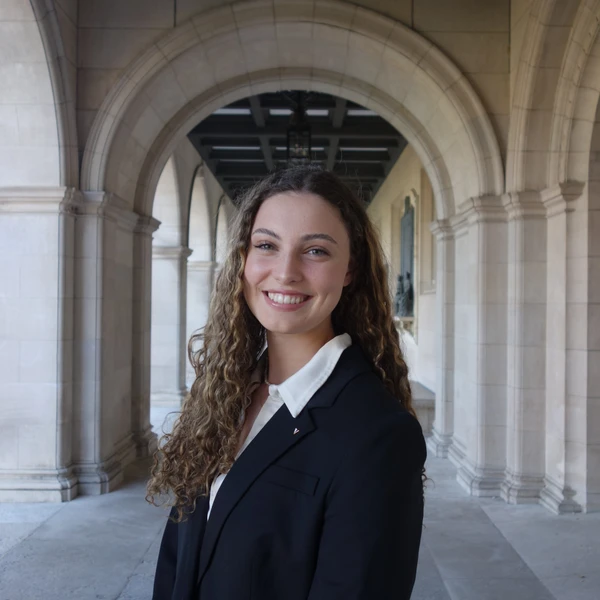
Hi! I am a first-generation American and first-year medical student passionate about serving underserved communities and addressing healthcare disparities. Having lived in five different countries, I’ve developed a deep cultural awareness and adaptability that allow me to connect with people from all walks of life. Being trilingual has further enhanced my ability to communicate and build trust with diverse populations, a skill I plan to bring into my future medical career. My journey, from growing up in rural Italy to moving across the world to countries such as Finland and Mexico, has shaped my resilience, curiosity, and drive to make a difference in people’s lives. Before medical school, I was an NCAA student-athlete at a top academic institution, where I balanced the demands of collegiate athletics with a rigorous premedical curriculum while working throughout my undergraduate education. Managing early morning practices, competitions, coursework, employment, research, and community service taught me discipline, perseverance, and effective time management. More importantly, it reinforced my ability to perform under pressure, work collaboratively toward shared goals, and remain committed to excellence even when faced with significant challenges. Now, as a medical student, I continue to build on these experiences through clinical service, research, and community outreach. I strive to use every experience and skill I have to advocate for others and make healthcare more equitable and accessible for all.

Education

The University of Texas Health Science Center at Houston

Doctoral degree program (PhD, MD, JD, etc.)
2025 - 2029
  • Majors:
    • Health Professions and Related Clinical Sciences, Other
    • Medicine

Washington University in St Louis

Bachelor's degree program
2021 - 2025
  • Majors:
    • Biology, General
  • Minors:
    • Business Administration, Management and Operations

Miscellaneous

  • Desired degree level:

    Doctoral degree program (PhD, MD, JD, etc.)

  • Graduate schools of interest:

  • Transfer schools of interest:

  • Majors of interest:

    • Medicine
  • Planning to go to medical school
  • Career

    • Dream career field:

      • Medicine
    • Dream career goals:

    • Event Staff

      Washington University in St Louis Athletics
      2022 – 20264 years
    • Head Coach 12U Team

      St. Clair County Volleyball Club
      2025 – 2025
    • Patient Transporter

      HCA
      2023 – Present3 years

    Sports

    Volleyball

    Varsity
    2021 – 20254 years

    Awards

    • Academic All Conference
    • "BEAR" Award

    Research

    • Molecular Medicine

      UTHealth Houston Memorial Hermann Childrens — Researcher
      2026 – Present
    • Neurobiology and Neurosciences

      Washington University in St Louis Medical School — Undergraduate Research Assistant
      2022 – 2025

    Arts

    • McGovern Student Ambassadors

      Videography
      2025 – Present

    Public services

    • Volunteering

      YMCA — Volunteer Coach
      2025 – Present
    • Volunteering

      Girl Scouts — Senior Gold Award Recipent
      2012 – 2021
    • Volunteering

      Bear Cubs Running Club — Vice President and Coach
      2022 – 2025
    • Volunteering

      Crisis Text Line — Crisis Counselor
      2023 – Present
    • Volunteering

      HOMES Healthcare for the Homeless — Pre Clinical Volunteer
      2025 – Present
    • Volunteering

      St. Louis Childrens Hospital — Child Life Volunteer
      2022 – 2025

    Future Interests

    Advocacy

    Volunteering

    Philanthropy

    Manny and Sylvia Weiner Medical Scholarship
    “Two months?” my mom asked the physician. “But she's in pain right now!”. I was born in a rural town in the Alps of Italy, with only two primary care physicians. I didn't feel the full effect of what this meant to a community until my grandmother fell and broke her femur. She wasn't able to get into a rehabilitation facility until two months after her surgery. At 91 years old, she was forced to travel three hours away to the second closest rehab center, isolating her from family members who could visit. Unfortunately, this is a common reality for people in rural areas like my hometown. When I immigrated to the United States with my parents in middle school, it seemed like a whole new world. The healthcare system was larger and more accessible, but I soon realized that disparities still existed, just in different ways. These experiences, both abroad and in the U.S., inspired me to pursue medicine with the goal of improving access to care for underserved populations, whether in rural areas, urban centers, or communities abroad. My path to medical school hasn't been without challenges. As immigrants, I watched my parents sacrifice everything they knew in Italy to give my siblings and me a better future. Nothing would stop them, not even the language barrier they faced or the constant uncertainty that came with starting over in a new country. From them, I have learned that everyone deserves a shot at reaching their full potential, and I am grateful I am getting that opportunity. I have also learned important lessons from my time here, especially in my role as a bi-lingual crisis counselor for the Crisis Text Line. As someone who speaks three languages, I knew I had the unique ability to connect deeply and meaningfully with a broader pool of people, and this role has helped me do so. This experience taught me how powerful language can be in building trust and providing comfort during someone’s most difficult moments. It showed me that being able to communicate in multiple languages is not just a skill, but a bridge to understanding and connection. I am grateful for my experience as an immigrant, because it has taught me to do just that. I hope to continue this in my future practice as a physician by creating an environment where every patient feels heard, understood, and respected, regardless of their language, background, or circumstances. I hope to use my voice for good, and represent patients just like me, who came to the United States to do good. As I begin medical school in two weeks, I carry with me the resilience of my parents, the perspective of an immigrant, and an unwavering commitment to my future patients.
    Annie Pringle Memorial Scholarship
    “Who is that?” I asked my mother, pointing to a picture of a woman with big, blonde hair. “That’s your grandmother, Mirella” my mother replies, bringing the picture closer for me to see. The picture had dust settled on it and was clearly taken more than 20 years ago, but I could clearly make out the woman within it. She was sitting on a green leather couch looking at the camera, her eyes and mouth smiling alike. “Why haven’t I met her yet?” I questioned. My mom looked at me, and smiled with sad eyes. I was five at the time, and I didn't know the concept of death yet. All I knew was I had never met that woman before. When I was in sixth grade, my middle school volleyball team hosted a “pink out” night in honor of breast cancer awareness. Before the game started, we cut out pink ribbons to write the name of breast cancer fighters, survivors, and those who had lost their lives to the disease.. As I stood there with a marker in my hand, unsure of what name to write, my mom knelt beside me and softly said, “You can write your grandmother’s name.” I paused, confused for a moment, and then she continued, her voice heavy but calm, “Mirella, your grandmother, died of breast cancer.” It was the first time I fully understood why I had never met the smiling woman in that photograph. That night, I carefully wrote “Mirella” on my pink ribbon, feeling a connection to her for the first time. However, I still didn't comprehend what breast cancer truly was, and how come my grandmother wasn’t one of the many names on the survivor side of the wall. It was not until two years ago that I fully understood how preventable my grandmother's death really was. But before I explain, let me tell you a bit about my background. I was born in a small town in northern Italy, where mountains surround the city center. When I was ten, my parents left all they knew and moved my siblings and I halfway across the world to Dallas, Texas. All the family that I ever knew was still in Italy, and I had no clue how to deal with the modern city living experience. There were no mountains, no pasture, and certainly no familiar faces. Throughout the years growing up here, I began to understand more about healthcare access and education, and it reframed how I saw my grandmother’s story. She had dropped out of school at a young age to raise her children, which was common for women in rural Italy at the time. Because of this, she didn’t recognize that the lump in her breast was abnormal, and she hadn’t seen a doctor since my father was born. In her community, that was the norm. Her death wasn’t just the result of an illness; it was the result of disparities in education, awareness, and access to healthcare, especially for women. This is why I am passionate about educating women on breast health. No one should lose their life simply because they didn’t know what signs to look for or didn’t have access to basic care. In one week, I will begin my medical school journey, where I plan to study to become an oncologist and eventually specialize in breast cancer. My goal is not only to treat the disease but also to focus on prevention and education while empowering women, especially those in underserved communities, to recognize the signs early and seek care without fear or delay. My grandmother’s story is a constant reminder that knowledge can save lives, and it is my hope to dedicate my career to making that difference for other families in order to honor my own.