
Hobbies and interests
Human Resources
Accounting
Bible Study
Mental Health
True Crime
Spending Time With Friends and Family
Shopping And Thrifting
Scrapbooking
Animation
Art
Reading
Business
Christianity
Academic
Drama
Adult Fiction
Leadership
True Story
Spirituality
Social Issues
Self-Help
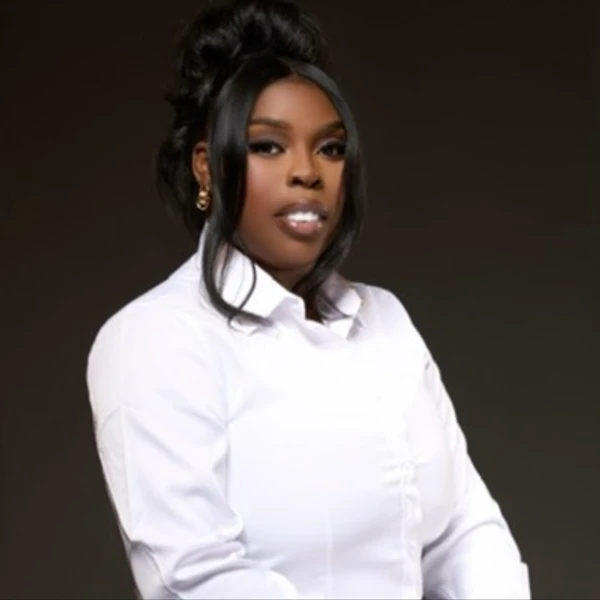
LaTisha King
2x
Finalist
LaTisha King
2x
FinalistBio
Hi, I’m LaTisha!
One of the 5 W’s is always brewing in my brain… Who? What? When? Where?… but especially Why? When something genuinely interests me, especially healthcare, I become resourceful until I find the answer. I don’t just memorize facts. I love understanding the why behind the body, the mind, medicine, and people.
I’m a first-generation college student, proud boy mom x2, BSN Honors student at the University of Alabama at Birmingham. My journey hasn’t been linear. A teen mom at 16, experienced foster care, returned to college at 24, earned my Associate of Science degree, received a Presidential Scholarship, and was accepted into UAB’s School of Nursing. Every detour taught me resilience, faith, and resourcefulness.
I’ve worked in healthcare as a CNA, dialysis tech, pharmacy tech, and now a student nurse. I also create AI-assisted study resources that I share with classmates and on social media because I believe learning should feel encouraging, not intimidating.
My goal is to become an ICU nurse, serve in the U.S. Navy Nurse Corps, become a CRNA, and eventually build assisted living communities that redefine compassionate care.
I don’t see scholarships as handouts. I see them as partnerships. Every donor who invests in me becomes part of every patient I’ll care for, every student I’ll mentor, every business I’ll build, and every opportunity I’ll create for someone who simply needs someone to believe in them. My goal isn’t just to receive opportunities. It’s to multiply them!
Still asking questions. Still finding purpose. Still building the blueprint.
Education
University of Alabama at Birmingham
Bachelor's degree programMajors:
- Registered Nursing, Nursing Administration, Nursing Research and Clinical Nursing
Bishop State Community College
Associate's degree programMajors:
- Biological and Physical Sciences
Miscellaneous
Desired degree level:
Doctoral degree program (PhD, MD, JD, etc.)
Graduate schools of interest:
Transfer schools of interest:
Majors of interest:
Career
Dream career field:
- Facilities Services
Dream career goals:
I don’t simply want a career in nursing. I want to build a legacy that expands access to quality healthcare and transforms how future nurses learn. In the short term, I plan to become a Certified Registered Nurse Anesthetist and serve as a nurse in the U.S. Navy to strengthen my clinical expertise and leadership skills. Long term, I hope to establish assisted living facilities, healthcare organizations, and educational initiatives that improve patient outcomes while creating opportunities for underserved communities. Through innovation, entrepreneurship, mentorship, and advocacy, I want my career to create lasting change that extends far beyond the bedside.
Student Nurse Tech
UAB St. Vincent’s2026 – Present7 monthsPharmacy Technician
Walgreens2023 – 20241 yearCertified Nursing Assistant
Mobile Infirmary Medical Center2021 – 20243 yearsCertified Nursing Assistant
Ashland Place Health & Rehabilitation2019 – 20212 yearsPhlebotomist/ Certified Nursing Assistant
Bio Medical Applications2016 – 20193 years
Research
Registered Nursing, Nursing Administration, Nursing Research and Clinical Nursing
UAB School of Nursing — Student Researcher2024 – PresentClinical/Medical Laboratory Science/Research and Allied Professions
CITI Program / UAB — Trainee2026 – PresentRegistered Nursing, Nursing Administration, Nursing Research and Clinical Nursing
University of Alabama at Birmingham (UAB) School of Nursing Honors Program — BSN Honors Nursing Student Research Participant2026 – Present
Arts
Your Nursing Connect by Tishakayy™
PrintmakingNursing study guides, Educational infographics, Healthcare educational content, Student resource materials2026 – Present
Public services
Volunteering
Self funded — Volunteer and Founder2021 – PresentVolunteering
Birmingham Kitchens — Volunteer2025 – PresentPublic Service (Politics)
UAB School of Nursing — Student volunteer2025 – 2025
Future Interests
Advocacy
Volunteering
Philanthropy
Entrepreneurship
George D. D. Turner Scholarship
I failed my first semester of nursing school by 0.2 points.
Not twenty points. Not two. 0.2.
At the time, I was pregnant, had recently moved to a new city, knew almost no one, and was trying to understand why the study habits that had helped me excel in my prerequisites were suddenly not enough. Nursing school required me to think differently, study differently, and apply information instead of simply remembering it.
Failing hurt, especially by such a small margin. But repeating that semester gave me something I did not have the first time: perspective.
I stopped trying to prove that I could figure everything out alone.
When I returned, I found three friends who became my study group. We study together, motivate one another, celebrate skill checkoffs and passed exams, and remind each other that one difficult grade does not define the nurse we are becoming.
This past summer, our third semester moved at an incredibly fast pace, and we faced our first proctored ATI exam. Because it prepares us for the style of testing we will eventually face on our nursing licensure exam, the pressure surrounding it was different.
My friends and I studied late at night and sometimes started again around five or six in the morning. We would be on group calls reviewing questions when I would suddenly say, “Hold on, y’all. My baby needs me,” or disappear because one of my children needed something.
One day I apologized for interrupting our session again.
One of my friends told me, “Girl, you never have to apologize to us for being a mama. We understand you’re a mama first.”
It was such a simple statement, but I have never forgotten it.
Motherhood does not pause because I have an exam. There are still meals, childcare, bills, appointments, work, school activities, and little people who do not care that Mom has been studying since 5 a.m. They just know they need their mother.
My academic journey has taught me that succeeding as a single mother does not mean handling everything perfectly. Sometimes it means knowing when to ask for help, finding people who understand your circumstances, and continuing after a failure you once thought would derail your plans.
That 0.2 points could have become the reason I decided nursing school was not for me. Instead, it changed the student I became.
Today, I understand how I learn. I have built a support system. I have learned to celebrate progress instead of expecting perfection. Most importantly, my children have watched me fail at something, return to it, and become better.
I do not believe struggling makes me stronger or more deserving than another student. I simply know what my journey has required of me.
Being a single mother has made my educational path more complicated, but it has also given every accomplishment greater meaning. When I eventually walk across that stage, my children will not only see their mother earn a nursing degree.
They will know they were part of how I earned it.
Sherman S. Howard Legacy Foundation Scholarship
I am currently in a season of finding a new church home.
I relocated to Birmingham for nursing school, which meant rebuilding community for myself and my children. While I have not established a permanent church home yet, my relationship with God did not stop because my address changed. I participate in faith-based activities on campus while searching for a church where my family can grow spiritually.
Interestingly, that search has led me right next door.
My elderly neighbor is an usher at her church and frequently invites my family to attend. I have not visited yet, but I have already seen their commitment to our community. They maintain a closet where families can receive donated clothes and shoes, which I contribute to. Recently, members spent hours at a neighborhood gas station filling people’s tanks. My neighbor even invited me to help.
That stayed with me. They were not asking where people worshipped before filling their cars. They saw a burden and found a way to lighten it.
That is the kind of Christianity I understand.
James 2:17 teaches that “faith by itself, if it does not have works, is dead.” During COVID-19, I used my own money to provide hot meals to people experiencing homelessness. Today, as a mother and nursing student, my resources look different. I have learned that money is not the only thing I can give. I can give clothing, knowledge, encouragement, time, and presence.
That lesson also appears in my relationship with my neighbor. She occasionally calls me, sometimes early in the morning or late at night, concerned about her or her husband’s blood pressure or symptoms. I understand my boundaries as a nursing student, but I can help check basic vital signs, recognize concerning symptoms based on my training, and encourage them to seek professional care when necessary.
I never consider those calls an inconvenience.
Service is not always scheduled. Sometimes the opportunity is literally next door.
My faith has also taught me that obedience does not always mean doing more. Psalm 46:10 says, “Be still, and know that I am God.”
That is difficult for someone like me. Give me a problem and I want a plan. Put an obstacle in front of me and I start searching for another route. Yet there have been seasons when God did not ask me to fix something. He asked me to wait.
I am learning that faith requires both. James reminds me to act, while Psalms reminds me to be still. Discernment is learning the difference.
I do not believe I have to force Christianity onto someone for them to experience my faith. I want it reflected in my compassion, patience, integrity, generosity, and service. I am also not afraid to speak openly about loving God because my testimony may encourage someone who needs it.
I do not know whether my neighbor’s church will become my family’s church home. But before attending a service, I have already connected with its mission through a neighbor, a clothing closet, an invitation to serve, and opportunities to care for someone beside me.
Maybe finding a church home is not only about somewhere to sit on Sunday. Maybe it is about finding a community whose faith shows up Monday through Saturday.
For me, following God means learning to go when He says go, serve when He says serve, give what I have when someone needs it, and be still when He says wait.
I am still learning to do all four.
But I am learning that obedience itself is an act of faith.
Marie Jean Baptiste Memorial Scholarship
When I think about the kind of legacy I want to leave behind, I don’t think about titles or accomplishments first. I think about the people whose lives will be different because I chose to serve.
Growing up, I naturally became one of the people my family relied on. Whether it was helping care for loved ones living with diabetes, cerebral palsy, or other life-altering health conditions, I was the person they called. Those experiences taught me responsibility, compassion, and the importance of showing up for others long before I stepped into a nursing classroom.
Today, that role has only grown. Even while earning my Bachelor of Science in Nursing, I’m still the family member everyone calls after a new diagnosis, unexplained symptoms, or a doctor’s appointment. Although I’m not a nurse yet, I help my loved ones better understand medical information, encourage them to advocate for themselves, and remind them when to seek professional care. For me, serving others has never depended on a title. It has always been part of who I am.
That commitment led me into healthcare more than ten years ago. I’ve served patients as a Certified Nursing Assistant, pharmacy technician, phlebotomist, and now as a student nurse. Working in hospitals, rehabilitation centers, assisted living facilities, dialysis clinics, and long-term care has shown me healthcare from many perspectives. No matter the setting, I have learned that patients may not remember every medication or procedure, but they always remember how you made them feel during one of the hardest moments of their lives.
My commitment extends beyond work. I volunteer in Mobile and Birmingham by serving individuals experiencing homelessness, distributing meals, supporting families facing food insecurity, and participating in community health initiatives. Those experiences have taught me that improving health is about far more than treating illness. It requires compassion, education, advocacy, and a willingness to meet people where they are.
As a first-generation college student, I understand that education changes more than one life. While balancing nursing school, work, motherhood, and community service, I am building a future my children can witness firsthand. I want them to see that success is measured not only by personal achievement but by how many lives you positively influence along the way.
After graduation, I plan to serve as a Navy nurse before becoming a Certified Registered Nurse Anesthetist. My long-term goal is to open assisted living facilities that provide compassionate, high-quality care while creating jobs and expanding access to healthcare in underserved communities. Through Your Nursing Connect by Tishakayy™, I also plan to develop innovative educational resources that make nursing concepts easier to understand and help future nurses succeed with confidence.
Marie Jean Baptiste believed education should strengthen families and uplift communities. That belief reflects the life I hope to build. My nursing degree will represent more than personal success. It will be a tool I use to serve others, create opportunities, and leave a legacy of compassion that continues for generations.
Ethel Hayes Destigmatization of Mental Health Scholarship
For a long time, I thought strength looked like independence.
I believed that if I could keep achieving, keep smiling, keep helping everyone else, and keep moving forward, then I was handling life the right way. From the outside, it probably looked like I had everything together.
Inside, I was exhausted.
Like many people, I experienced seasons of loss, instability, unexpected responsibility, and emotional pain that forced me to grow up much faster than I wanted to. I became so focused on surviving that I never stopped to ask whether I was actually healing. I convinced myself that if I stayed busy enough, the weight I carried would eventually disappear.
It didn’t.
One of the greatest lessons my mental health journey has taught me is that functioning and healing are not the same thing.
That realization changed far more than the way I viewed myself. It completely changed the way I see other people.
Before, I was quick to admire the people who seemed to have everything under control. Now I understand that appearances rarely tell the whole story. Some of the strongest people I know are carrying burdens no one else can see. I’ve learned that someone can be successful, dependable, smiling, and still be struggling internally.
That perspective has transformed my relationships.
It has made me slower to judge and quicker to listen. Instead of assuming someone is distant, angry, or unmotivated, I find myself wondering what they may be carrying that I cannot see. I have learned that compassion often begins with curiosity. Asking, “What happened to you?” can be far more meaningful than asking, “What’s wrong with you?”
I’ve also learned that vulnerability creates stronger relationships than perfection ever could.
For years, I believed I had to be the strong one for everyone else. Asking for help felt like admitting failure. Over time, I realized that allowing trusted people to see my struggles didn’t make me weaker. It made my relationships more honest, more authentic, and more supportive. Real connection happens when people feel safe enough to tell the truth about what they’re carrying.
That lesson has also shaped my aspirations.
As a future nurse, I know every patient will have a medical history, but they’ll also have a personal story that may never appear in a chart. Mental health has taught me that healing involves more than treating symptoms. It requires listening without judgment, recognizing invisible struggles, and creating an environment where people feel seen instead of dismissed.
Some of the most important assessments are not found in lab values or vital signs. Sometimes the most important question is whether a patient feels safe enough to be honest.
My journey has also changed what I believe about success.
I no longer measure strength by how much a person can carry alone. I believe strength is having the courage to acknowledge when you’re struggling, the humility to accept support, and the resilience to continue growing through life’s challenges. I believe seeking help is an act of wisdom, not weakness.
Mental health has taught me that every person is fighting a battle that others may never fully understand. That truth has made me a more compassionate daughter, mother, friend, student, and future healthcare professional.
If there is one lesson I will carry with me for the rest of my life, it is this:
Everyone deserves to be treated with dignity, even when their pain is invisible.
My experiences have shaped my goals, strengthened my relationships, and transformed my understanding of the world. They have taught me that healing is not about pretending we have everything together. Healing begins when we replace judgment with compassion, silence with honest conversation, and survival with the courage to truly heal.
That is the perspective I hope to carry into every relationship, every patient interaction, and every chapter of my life.
Barbara Cain Literary Scholarship
As someone who enjoys creating content, traveling, planning events, and always seems to be involved in something, reading isn’t the answer most people expect when asked what I like to do with my free time. But no matter how busy life gets, I almost always have a book tucked away somewhere.
Reading has looked different in every season of my life, but it has always been one of the ways I grow.
My love for books began in elementary school with the Junie B. Jones series. Even though I was reading above that level, I checked those books out every chance I got. My teachers encouraged me to choose something more challenging because they assumed I picked them because they were easy.
They couldn’t have been more wrong.
I loved the humor, the colorful illustrations, and the way every story began.
“Hi, my name is Junie B. Jones. The B stands for Beatrice. Except I don’t like Beatrice. I just like B.”
Before I finished the first page, I was already smiling. Those books taught me that reading wasn’t just educational. It could be joyful.
As I grew older, my bookshelf grew with me.
In middle and high school, I became hooked on the Bluford High series. Those stories explored violence, family struggles, friendships, peer pressure, and difficult choices that reflected situations I had seen in my own community. They challenged me to look beyond people’s actions and consider the experiences that shaped them. Those books quietly taught me empathy long before I understood how important that lesson would become in my own life.
Today, my bookshelf is filled with books on financial literacy, leadership, psychology, personal development, communication, and healthcare because I love learning things I can apply to my own life.
I’ve also realized I’m probably not the average reader.
When I come across a word I don’t know, I highlight it, look up the definition, write it in my notes, and challenge myself to use it in conversation until it becomes part of my vocabulary. I highlight meaningful passages, summarize key ideas, and reflect on how I can apply them to my own life. By the time I finish a book, it looks less like a brand-new copy and more like a conversation between the author and me.
Every book leaves me with something to carry forward. Sometimes it’s a new perspective. Sometimes it’s one new word that slowly becomes part of my everyday vocabulary. I want every book I finish to leave me a little better than when I opened it.
Life is much busier now than it was when I was ten years old. Between nursing school, work, raising two children, and everything else life requires, uninterrupted reading time has become a luxury. Instead of letting that stop me, I’ve adapted. Many of my books now come through audiobooks and educational podcasts during my commute or while running errands. Although the format has changed, my love for learning hasn’t.
Looking back, every stage of my life has been marked by a different bookshelf. Junie B. Jones taught me that reading should be joyful. Bluford High taught me empathy. The books I read today continue challenging me to think differently, communicate better, and keep growing.
I’ve learned that books don’t just fill shelves. They shape the way we see the world, the way we treat people, and the goals we set for ourselves. When I look back at my life, I don’t just remember the books I’ve read.
I remember the person each one helped me become.
Charles B. Brazelton Memorial Scholarship
If you ever borrow my planner, don’t let it fool you.
It looks like the life of someone who has everything under control.
Every appointment has a color. Every deadline has a category. Every trip has an itinerary, a backup itinerary, a packing list, a budget, restaurant options, and probably a weather forecast from three different apps. I don’t just make plans. I build systems.
Then something completely unpredictable happens.
Me.
After spending days creating the perfect plan, I’ll wake up and decide, “Actually…let’s do something completely different.”
Ironically, I don’t appreciate when other people ruin my plans. Only I have permission to do that.
My friends blame it on the fact that I’m a Gemini. Apparently that explains why two versions of me seem to exist at all times. One loves structure, organization, and checklists. The other wakes up ready to chase a random adventure just because it sounds fun. I can’t confirm whether astrology has anything to do with it, but I can confirm both versions of me show up regularly.
That same contradiction follows me into nursing school.
While many students memorize information, my brain immediately starts organizing it. Diseases become stories. Medications become color-coded charts. Complex concepts become flowcharts, memory tricks, patient scenarios, and study guides that somehow need their own table of contents. Give me a pile of information, and my first thought is never, “How do I memorize this?” It’s, “How can I make this easier to understand?”
My classmates often laugh because I rarely explain anything in just one sentence. If you ask me one question, you’re probably getting a diagram, an analogy, and a mini lesson before we’re finished.
Then there’s my relationship with water, which makes even less sense.
I absolutely love it.
Resorts. Pools. Lazy rivers. Tubing. Jet skis. Paddleboarding. I even want to try scuba diving one day.
But ask me to casually swim far into the ocean, and suddenly I’m asking questions nobody else seems concerned about.
“How far out are we going?”
“What exactly touched my leg?”
“Can we admire the ocean from right here instead?”
The ocean and I have a very respectful relationship. I stay on my side, and whatever brushed against my leg stays on its side.
The older I’ve gotten, the more I’ve realized these little contradictions aren’t things to fix. They’re simply parts of who I am.
I’m organized enough to create systems that help people learn, yet flexible enough to adapt when life ignores the plan. I’m curious enough to ask one more question, but practical enough to turn the answer into something useful. I love adventures, as long as they come with a solid backup plan…even if I end up ignoring it.
Those quirks have shaped the student and future nurse I’m becoming. My attention to detail helps me notice things others might overlook. My curiosity pushes me to understand the “why” behind every decision. My creativity allows me to explain difficult concepts in ways that make people feel confident instead of overwhelmed.
I’ve stopped wishing I were less awkward.
My planner probably needs its own planner.
My vacations usually ignore the itinerary I spent hours creating.
I still plan to scuba dive someday while remaining suspicious of anything that touches my leg in the ocean.
It probably doesn’t make much sense to anyone else.
But somehow, it makes perfect sense to me.
Elizabeth Schalk Memorial Scholarship
Growing up, I thought mental illness only affected the person living with it.
As I got older, I realized it reaches much further than that. It changes entire families. It changes the roles people take on, the weight they quietly carry, and the ways they learn to survive.
My life has been shaped by watching people I love struggle with their mental health while also navigating my own experiences with grief, trauma, and loss. Mental illness was never something we openly discussed. Instead, it often showed up through silence, emotional distance, pretending everything was okay, or simply trying to make it through another day. Looking back, I realize many families become experts at functioning while quietly hurting.
Without realizing it, I became the strong one.
I became the problem solver, the dependable friend, the person everyone called when they needed advice or a solution. I learned to stay composed during difficult moments and carry responsibilities that were often bigger than I was. People saw someone who always had it together. What they did not see was how exhausting it became to constantly wear that mask.
As I entered adulthood, I began learning more about mental health and realized that many of the habits I thought were simply part of my personality were often responses to prolonged stress and trauma. I always felt responsible for everyone else. I believed I had to have all the answers. I felt guilty when I rested, and I struggled to ask for help because I was so used to being the one giving it.
I also began to understand why many people who spend years carrying invisible burdens eventually recognize they need support, and why some later receive diagnoses such as anxiety, depression, or ADHD. Every person’s journey is different, but mental and emotional health deserve attention long before someone reaches a breaking point.
That realization changed the way I viewed myself.
Instead of asking, “What’s wrong with me?” I started asking, “What happened to me, and how has it shaped the way I move through the world?”
That question led me to seek professional support, not because I had everything figured out, but because I wanted to understand myself beyond the roles I had spent my life playing. I wanted to discover who I was outside of survival, outside of trauma, and outside of always being the strong one.
That journey has changed the way I care for others.
As a nursing student, I understand that the patient who smiles the most may be carrying the heaviest burden. The family member who insists they are “fine” may be silently struggling too. My experiences have taught me to listen more closely, ask better questions, and remember that every person has a story long before they walk into a hospital room.
As a future registered nurse and eventually a Certified Registered Nurse Anesthetist, I hope to create spaces where patients and families feel safe asking for help without fear of judgment. Mental health deserves the same compassion, respect, and attention as physical health because healing rarely affects just one person. When one person receives support, entire families have the opportunity to heal.
I cannot change the experiences that shaped me or the mental health challenges my family has faced. What I can do is choose how those experiences influence the nurse, mother, friend, and person I continue becoming.
Today, strength means something different.
It is no longer pretending everything is okay.
It is having the courage to ask for help, to heal, and to give myself the same compassion I have always given everyone else.
Learner Online Learning Innovator Scholarship for Veterans
There was a time when I questioned whether I was smart enough for nursing school.
I would spend hours reading textbooks, highlighting pages, and memorizing information, only to forget it when I needed it most. It was frustrating because I wasn’t afraid of hard work. I just hadn’t discovered how I learned best.
Everything changed when I stopped asking, “How do I memorize this?” and started asking, “How do I truly understand this?”
Technology became more than a convenience. It became the bridge between information and understanding.
As a visual learner, I began using online platforms in ways that matched how my brain worked. I relied on Canvas and AI to reinforce course material, watched videos from resources like Simple Nursing and Level Up RN to connect difficult concepts to real patient care, and used YouTube to hear different explanations until a topic finally clicked. I also began using AI, not as a shortcut, but as a study partner. Instead of asking for answers, I asked questions. I had it quiz me, create patient scenarios, explain diseases in simple language, and challenge my clinical reasoning until I understood the “why,” not just the “what.”
Those online resources completely changed the way I approached learning.
Instead of memorizing facts, I started building connections. I created colorful study guides, organized information into charts, turned diseases into stories, and developed memory tricks that helped me understand complex concepts. When I could teach the material to someone else, I knew I had truly learned it.
Eventually, something unexpected happened.
Classmates began asking for my study guides and explanations because they made difficult topics easier to understand. What started as a way to help myself became a way to help others succeed. Technology didn’t just improve my education. It inspired me to create better educational resources for the people learning alongside me.
That experience has also transformed the way I care for patients during clinicals. Instead of simply remembering that a medication treats a disease, I understand why it was prescribed, what complications to monitor for, and how to educate patients in language they can understand. Technology has helped me move beyond memorization and develop the critical thinking skills every nurse needs.
The impact extends far beyond nursing school.
My long-term goal is to become a Certified Registered Nurse Anesthetist while continuing to build educational resources that make healthcare and nursing education easier to understand. I believe education should be accessible, engaging, and practical. Whether I am teaching a nursing student, explaining a diagnosis to a patient’s family, or creating digital learning tools, my goal is always the same: help people feel confident instead of overwhelmed.
Technology did not make me a better student because it gave me answers.
It made me a better student because it taught me how I learn.
Once I discovered that, I stopped studying just to pass exams. I started learning to become the kind of nurse who can think critically, teach compassionately, and continue learning throughout my career. If there is one lesson my educational journey has taught me, it is that the best learners never stop asking questions, and the best educators never stop looking for better ways to help others understand.
Elijah's Helping Hand Scholarship Award
People have always described me as strong.
The dependable friend. The calm one. The person who always finds a way to keep going. For years, I believed that was the greatest compliment someone could receive. Looking back, I realize people were not always seeing strength. Sometimes they were seeing survival.
As I got older, I began to notice something I had never recognized before. The hardest experiences of my life had quietly followed me into every role I would later have. They influenced the way I handled conflict, the way I loved people, the way I parented, the way I worked, and even the way I cared for patients during nursing school.
Spending time in foster care taught me to expect change and rely on myself. Becoming a mother as a teenager convinced me I could never afford to fall apart because someone else depended on me. Losing my brother to violence added another layer of grief that I never slowed down long enough to process. Instead, I stayed busy. I worked. I took care of other people. I kept moving.
From the outside, I looked like I had everything together.
Inside, I had simply become very good at carrying heavy things without letting anyone notice.
The biggest lesson I have learned is that difficult experiences do not disappear just because life moves forward. They quietly introduce themselves in the way we think, love, lead, parent, and care for others until we finally acknowledge them.
For a long time, I believed asking for help meant I was not strong enough. Eventually, I realized I deserved the same care and compassion that I so freely gave to everyone else. Choosing to seek professional support was not about giving up. It was about recognizing that my mental and emotional well-being deserved attention just as much as my physical health.
That decision changed the way I see both myself and the people around me.
Today, I understand that someone can smile while carrying an incredible amount of pain. I know that the strongest person in the room is not always the person who is doing the best. That perspective has made me a more compassionate nursing student because I no longer assume that what I see on the outside tells the whole story.
As a future nurse, I want every patient to feel seen, heard, and safe enough to be honest about what they are carrying. Mental health deserves the same compassion, respect, and attention as any physical illness. Sometimes the most important thing we can do is create a space where people no longer feel like they have to pretend they are okay.
I still hope people describe me as strong.
The difference is that my definition of strength has changed.
Today, strength means asking for help when you need it. It means giving yourself permission to heal instead of simply surviving. It means understanding that vulnerability is not weakness. It is one of the bravest choices a person can make.
If my experiences help even one patient, one parent, one student, or one friend feel less alone in their own struggles, then every difficult chapter of my life will have served a purpose. I want my story to remind others that healing does not begin when life becomes easier. It begins when we finally believe we deserve the same compassion we so willingly give to everyone else.
Sloane Stephens Doc & Glo Scholarship
When I imagine the future, I don’t picture a job title.
I picture a little Black girl walking through the doors of a healthcare facility that she owns. I picture a patient leaving an appointment feeling heard instead of rushed. I picture a nursing student opening a study guide that finally makes everything click after believing they weren’t smart enough to succeed. I picture a family making their first budget, building generational wealth, and realizing they have options they never knew existed.
Those are the moments that inspire me.
My journey hasn’t followed the traditional path to college. I became a mother as a teenager, spent time in foster care, and returned to school years later after realizing that survival and success are not the same thing. When I was younger, I thought earning a paycheck was enough because it helped me make it through another month. As I gained more life experience, I realized I wanted something bigger, not only for myself, but for my children and the communities I serve.
Today, I’m pursuing my Bachelor of Science in Nursing because healthcare allows me to combine compassion, leadership, and problem-solving every single day. But nursing is only the beginning of the impact I hope to make.
My long-term vision reaches far beyond the bedside.
I plan to become a Certified Registered Nurse Anesthetist while continuing to build educational resources that make healthcare and nursing education easier to understand. I want to mentor future nurses who doubt they belong, especially students whose journeys didn’t begin with perfect circumstances. I also hope to serve as a Navy nurse, where I can care for those who have dedicated their lives to serving our country while continuing to grow as a clinician and leader.
Eventually, I plan to open assisted living communities that redefine what quality care looks like. I want residents to receive exceptional medical care, but I also want their families to feel informed, involved, and respected throughout every stage of the journey. Healthcare should never leave people feeling confused or powerless.
My vision doesn’t stop with healthcare.
Growing up, I saw how a lack of financial knowledge could quietly limit opportunities for hardworking families. That’s why I’m equally passionate about teaching financial literacy. I want people to understand budgeting, credit, investing, and long-term financial planning so they can build stability that lasts for generations. Health and financial security are deeply connected, and I believe every family deserves access to both.
Everything I hope to accomplish is rooted in one purpose: creating opportunities that I once had to search for myself.
My children inspire that vision every day. I want them to grow up believing that education is more than a pathway to a career, it’s a tool that creates choices, opens doors, and changes family legacies. I want them to know that where you begin should never determine how far you can go.
Receiving this scholarship would be an investment in much more than my nursing degree. It would be an investment in a future nurse, educator, mentor, entrepreneur, and community leader committed to creating lasting change.
Years from now, I don’t hope people remember me because I earned a certain title or reached a particular milestone.
I hope they remember that I built places where people felt they belonged, created opportunities where they once saw barriers, and left every community stronger than I found it.
Because real success isn’t measured by how high we climb.
It’s measured by how many people we’re able to bring with us.
J&Y Law Yahouda Yahoudai Service Scholarship
I’ve never believed the greatest way to help someone is to do something for them. I believe the greatest gift you can give someone is teaching them how to do it for themselves.
That belief has shaped the way I serve my community.
During the height of the COVID-19 pandemic, I saw more and more people struggling to meet their basic needs. I wasn’t in a position to make large donations or start a nonprofit, but I could provide meals. So I began using my own money to purchase all things needed to cook hot meals and give to those experiencing homelessness. It wasn’t something I did for recognition. I simply asked myself, “What can I do to help?”
As life changed, so did the way I served. Returning to nursing school while raising two children meant every dollar had a purpose. Instead of allowing that to stop me from giving back, I found another way. Today, I volunteer with Birmingham Community Kitchens, serving the same population I once purchased meals for myself. That experience taught me something I’ll never forget: generosity isn’t measured by your bank account. It’s measured by your willingness to keep showing up.
That same mindset followed me into healthcare.
Working in home health, assisted living, rehabilitation, dialysis, pharmacy, and hospitals has taught me that one of the greatest barriers to good health isn’t always access to care it’s access to understanding. Patients often overwhelmed by medical terminology, while families are afraid to admit they don’t understand. I’ve learned that taking just a few extra minutes to explain something in plain language can make as much of a difference as the treatment itself.
That passion naturally followed me into nursing school.
My classmates often tell me they’ll wait for me to explain difficult concepts because I make them easier to understand. I create study guides, draw diagrams, develop memory tricks, and translate complex information into everyday language until it finally clicks. Watching someone’s confidence grow after they understand something they once thought they never would is one of the most rewarding parts of being a nursing student.
Outside the classroom, friends and family regularly call me to help them understand medications, lab results, insurance paperwork, financial aid, or simply what questions they should ask at their next doctor’s appointment. I don’t always know every answer immediately, but I know how to find reliable information. I believe knowledge becomes more valuable when it’s shared.
That belief inspired me to begin building educational resources focused on healthcare, nursing education, and financial literacy so people feel empowered to make informed decisions instead of feeling intimidated by information they don’t understand.
My impact won’t stop at the bedside. I will educate patients, mentor future nurses, and eventually open assisted living communities where residents and their families feel informed, respected, and confident advocating for their own health. I want people to leave my care with more than excellent treatment. I want them to leave with understanding.
Receiving this scholarship would do far more than help pay for my education. It would allow me to continue serving my community while preparing for a career dedicated to empowering others through compassion, education, and service.
I don’t measure my impact by the number of organizations I’ve joined or volunteer hours I’ve completed.
I measure it by one simple question:
Did someone leave our interaction feeling more informed, more confident, or more hopeful than when it began?
If the answer is yes, then I’ve done exactly what I set out to do.
Jerrye Chesnes Memorial Scholarship
When people hear that I’m a mother of two pursuing a nursing degree, they often ask how I do it.
While my journey included returning to school years later, I learned the hardest challenges aren’t always the obvious ones.
The first challenge was returning with a completely different perspective than when I first started college.
Fresh out of high school, I wasn’t focused on building a career. After leaving foster care, my priority was survival. Paying bills and keeping a steady job felt far more urgent than earning a degree. I drifted away from school because life required me to grow up before I had the chance to grow academically.
Years later, after working in home health, assisted living, rehabilitation, dialysis, pharmacy, and hospitals, I finally knew what I wanted. I wasn’t returning because someone told me college was important. I returned because I had found my purpose in nursing.
The second challenge was becoming a student again.
Many of my classmates came straight from high school. Their study habits were fresh. Mine weren’t.
When you’ve been out of school for years, your brain doesn’t immediately switch back into lecture notes, exams, and care plans. I had to relearn how I learned. Sometimes that meant studying longer than the person sitting beside me. I created study guides, taught lessons to myself out loud, and completely changed the way I approached education. I realized that maturity couldn’t replace preparation, but it did give me the discipline to keep going when learning became difficult.
The third challenge was timing.
When I decided to return, I did it strategically. My oldest son had reached an age where I could better coordinate my class schedule around his school day. I began by easing myself back into college with a manageable full-time course load. As my confidence grew, I increased my credit hours because I knew I wasn’t just trying to finish classes anymore. I was building a career that would change my family’s future.
That commitment paid off. I earned my associate degree, received the Presidential Scholarship, and transferred to the University of Alabama at Birmingham to pursue my Bachelor of Science in Nursing.
Then came the fourth challenge.
Just two weeks into my BSN program, I found out I was pregnant.
There is never a “perfect” time to become pregnant during nursing school, but I refused to let that become the reason I quit. I attended class, completed clinicals, welcomed my son into the world, and continued progressing through one of the most rigorous nursing programs in the state. Today, I am proud to be a Nursing Honors student.
The final challenge is one I still face every day.
There is no perfect study schedule when you’re raising children.
I study before sunrise, after bedtime stories, during naps, in waiting rooms, and anytime I find an open hour. I check Canvas notifications almost as often as I check text messages because staying ahead has become part of my daily routine. My education isn’t something I fit into my life. It has become part of how I live.
Returning to school has taught me that perseverance isn’t one big moment. It’s a thousand small decisions to keep showing up when quitting would be easier.
My children may never remember every late night I spent studying or every early morning clinical I attended. But I hope they remember something even more important.
That they watched their mother refuse to let her circumstances decide her future.
And because they watched me return to school, they’ll never question whether it’s possible to rewrite their own story.
Learner Mental Health Empowerment for Health Students Scholarship
People often ask nursing students how we survive.
The truth is, sometimes we don’t feel like we are.
Behind the grades, clinical evaluations, and exam scores are students carrying invisible weight. Some are grieving loved ones. Some are worried about paying rent. Some are raising children between lectures and clinical rotations. Some are simply trying to make it through another day without anyone realizing they’re struggling.
I’ve been that student.
As a first-generation nursing student and mother of two, I’ve learned that mental health isn’t something you think about after you’ve accomplished your goals. It’s what allows you to keep pursuing them in the first place.
Over the past few years, I’ve balanced one of the most demanding nursing programs while raising my children, working in healthcare, navigating financial challenges, grieving the loss of family members, and recently ending a long-term relationship while trying to maintain stability for my children. There were days I questioned how I was going to make it through the next exam, the next clinical, or simply the next week.
Those experiences changed the way I view mental health.
I used to think strength meant handling everything alone. Nursing taught me something different. Real strength is recognizing when you need support, accepting it without shame, and extending that same compassion to others.
That is how I advocate for mental health today.
Sometimes advocacy looks like encouraging a classmate after they fail an exam instead of letting them believe one grade defines them. Sometimes it’s checking in on a friend who suddenly becomes quiet. Sometimes it’s reminding another nursing student to eat, drink water, or take a break after spending hours studying. Small moments of kindness often become someone’s reminder that they aren’t carrying everything alone.
I’ve also learned that advocacy means helping reduce the stigma around asking for help. Healthcare students spend so much time learning how to care for patients that we often neglect ourselves. I believe we should normalize conversations about burnout, stress, grief, and emotional well-being just as much as we discuss medications, lab values, and patient care.
As I continue through nursing school, I hope to expand that impact beyond my immediate circle. I’m developing educational resources that simplify complex nursing concepts because I know academic confidence and mental health are connected. When students feel supported instead of overwhelmed, they become more confident, more resilient, and ultimately better caregivers.
As a future nurse, I want my patients to experience the same compassion. Mental health is woven into every aspect of healthcare. Anxiety affects recovery. Depression influences medication adherence. Loneliness impacts physical health. Every patient deserves a nurse who recognizes that healing involves both the body and the mind.
Mental health matters to me because I’ve learned that success isn’t measured by how much you can carry by yourself. It’s measured by your willingness to keep showing up, to ask for help when you need it, and to become the person who helps someone else keep going.
If my journey has taught me anything, it’s this: people don’t always need someone to solve their problems. Sometimes they simply need someone who notices they’re carrying them.
That is the kind of nurse, advocate, and person I strive to be every day.
VNutrition and Wellness Nursing Scholarship
“Food is medicine” is a phrase I had heard countless times in nursing school, but it didn’t truly resonate with me until it became personal.
For months, something felt off.
I was constantly exhausted. I woke up tired no matter how much I slept. I dealt with frequent headaches, night sweats, and that frustrating feeling of knowing my body was trying to tell me something, even though I couldn’t explain what it was.
Last week, I finally stopped pushing through the symptoms and scheduled an appointment with my doctor.
When my lab results came back, everything started to make sense. My vitamin D was low, and my iron stores were on the lower end of normal. My provider explained that although those numbers might not seem alarming on paper, together they could explain exactly how I had been feeling for months.
That appointment didn’t just answer my questions. It changed the way I think about nutrition.
I’ve always been the person with one of the five W’s brewing in the back of my mind, especially why. Why does one vitamin deficiency affect energy? Why can low iron make someone feel like they’re running on empty? Why does what we eat influence nearly every system in the body?
I went home and did what I always do when something genuinely interests me. I researched. I read. I asked questions. I wanted to understand not just what my lab results meant, but why they mattered. The more I learned, the more I realized that nutrition isn’t simply about eating healthy. It’s about giving every organ, every cell, and every body system what it needs to function the way it was designed to.
One of the biggest lessons I learned is that health isn’t always visible.
Someone can spend hours in the gym, have the physique everyone admires, and still be unhealthy on the inside if their body isn’t receiving the nutrients it needs. On the other hand, someone making small, intentional nutrition changes can dramatically improve their health from the inside out. Looking healthy and being healthy are not always the same thing.
As a future nurse, I want nutrition to be part of every conversation I have with my patients.
I don’t want to simply tell someone to “eat better.” I want to help them understand why their body needs protein after surgery, why iron matters for oxygen delivery, why blood sugar affects wound healing, and why one small change today can prevent chronic disease tomorrow. Education empowers people to take ownership of their health, and I believe that understanding the “why” makes healthy habits far more sustainable than simply following instructions.
I also know that healthier eating isn’t always as easy as choosing a salad. Cost, culture, access to fresh food, transportation, and time all influence the choices people make. My role as a nurse is not to judge those barriers but to help patients navigate them with realistic, achievable solutions that fit their lives.
My own experience reminded me that the body works as one connected system. When one part struggles, everything else can feel the effects. That lesson will stay with me long after graduation.
As a nurse, I hope every patient I care for leaves knowing that nutrition isn’t about perfection or dieting. It’s about understanding your body, preventing illness before it starts, and recognizing that some of the most powerful medicine we have is found not in a prescription bottle, but on our plates.
Arthur and Elana Panos Scholarship
If someone asked me to describe my faith in one word, it would be anchor.
Not because life has been calm, but because it hasn’t.
There have been seasons when I questioned how everything would work out. Becoming a young mother. Losing people I loved. Walking into college as a first-generation student with no roadmap. Working while raising two children and trying to survive one of the most demanding nursing programs in the country. There have been days when I couldn’t see the next step, much less the finish line.
My faith didn’t remove those struggles.
It reminded me that I didn’t have to carry them alone.
I’ve learned that faith isn’t just believing God can perform miracles. Sometimes it’s waking up at 4:30 in the morning for clinicals after a sleepless night with a sick child and trusting that He will provide enough strength for one more day. Sometimes it’s praying before an exam, not for an easy test, but for peace. Sometimes it’s watching doors close only to realize later they were protecting me from paths I wasn’t meant to take.
One lesson my faith has taught me is that every person has inherent value. That belief has shaped the way I treat people long before nursing school. Whether I was working as a caregiver, CNA, pharmacy technician, dialysis technician, or now as a student nurse, I’ve tried to make people feel seen. Healthcare can become task-oriented, but I never want patients to feel like another room number or diagnosis. I want them to know someone genuinely cares.
Jesus met people where they were, with compassion before correction, dignity before judgment. That example has influenced how I want to care for others. Every patient has a story. Every family is carrying something invisible. Sometimes the greatest act of healing isn’t a medication or procedure. It’s taking a few extra minutes to listen.
My faith also influences the leader I hope to become. My long-term goal is to become a Certified Registered Nurse Anesthetist and eventually own assisted living communities that provide exceptional care with dignity, compassion, and integrity. Success, to me, has never been measured by income or titles. It is measured by how many lives are better because I was willing to serve.
Receiving this scholarship would ease the financial burden of nursing school, but more importantly, it would be an investment in someone committed to paying that generosity forward. I hope to mentor future nursing students, create educational resources that make learning less intimidating, and build healthcare environments where both patients and staff feel valued.
I don’t know exactly what every chapter of my life will look like.
But I know the Author.
That certainty has carried me through every difficult season so far, and I believe it will continue guiding me as I build a career rooted in compassion, integrity, and service. Through every patient I care for and every opportunity I’m given, I hope my work reflects the faith that has faithfully carried me.
Women in STEM Scholarship
Why did you choose to further your education in STEM? What impact can this scholarship help you achieve?
The first question that usually comes to my mind isn’t what.
It’s why.
One of the five W’s is always brewing somewhere in my brain, but “why” has always been my favorite. I’ve never been satisfied with surface-level answers. I like getting to the nitty-gritty of how and why things work. Why does the body compensate the way it does? Why can two patients have the same diagnosis but respond to treatment differently? Why do certain medications work for one person but not another? Why do healthcare outcomes vary so greatly between communities?
For me, STEM isn’t simply about science. It’s about curiosity. It’s about asking better questions until you find better answers.
Returning to college at twenty-four gave me the opportunity to turn that curiosity into purpose. After years of working in healthcare before nursing school, every class suddenly had meaning. Pathophysiology wasn’t just another prerequisite. It explained the patients I had already cared for. Pharmacology wasn’t about memorizing medications. It was about understanding the science behind why they work and how they improve someone’s life. Every course connected another piece of the puzzle.
One thing nursing school has taught me is that understanding creates confidence. Once I truly understand the “why,” I can apply that knowledge to almost any patient scenario instead of simply memorizing information for an exam.
That curiosity has also changed how I learn. I began creating colorful, AI-assisted study infographics that break down complex nursing concepts into visual stories that are easier to understand and remember. What started as a way to help myself has grown into a resource I share with classmates and on social media because I believe education should feel empowering, not intimidating. Some of the best innovations aren’t inventions. Sometimes they’re simply better ways to help people learn.
My curiosity extends beyond the classroom. As a BSN Honors student, I’ve had the opportunity to observe doctoral research presentations and dissertation defenses, which opened my eyes to the role nurses play in advancing healthcare through evidence-based practice. It reminded me that the questions we ask today become tomorrow’s discoveries.
After graduation, I plan to begin my career in the intensive care unit before becoming a Certified Registered Nurse Anesthetist. Later, I hope to combine nursing, business, and leadership by creating assisted living communities that redefine compassionate, evidence-based care while continuing to expand educational resources that make healthcare knowledge more accessible to students and the communities I serve.
This scholarship would do more than help fund my education. It would allow me to continue investing my time where I believe it matters most: learning deeply, asking meaningful questions, and creating solutions that improve lives.
People often think STEM is about having the right answers.
I believe it’s about having the courage to keep asking why.
That single question has shaped the way I learn, the way I serve, and the kind of healthcare professional I am becoming. I have no doubt it will continue guiding me long after I graduate.
Michael Rudometkin Memorial Scholarship
People often think selflessness is one extraordinary act that changes someone’s life forever. I don’t. I think it’s found in the small decisions we make every day to put someone else’s needs before our own.
For me, selflessness has never been about recognition. It’s about noticing the people others overlook and asking, “How can I help?”
One of the most meaningful examples happened with my cousin after she lost her mother. As months passed, everyone assumed she would eventually “get over it,” but I noticed she wasn’t simply grieving. She was withdrawing, losing interest in life, and carrying a heaviness that I recognized from my own journey with anxiety and depression. Around that same time, I was completing my psychiatric nursing rotation, learning that mental illness doesn’t always announce itself loudly. Sometimes it hides behind silence, isolation, or a forced smile.
Instead of telling her everything would be okay, I encouraged her to seek professional help. We had honest conversations about therapy, medication, and the courage it takes to ask for support. Today, she’s receiving the help she deserves. I didn’t heal her. I simply helped her realize she didn’t have to suffer alone. That experience reminded me that sometimes the most selfless thing we can do is walk beside someone until they’re ready to take the next step.
I carry that same mindset into nursing school.
Nursing is competitive, but I’ve never believed success is something you keep to yourself. Throughout my program, I’ve spent countless hours creating study guides, breaking down difficult concepts into simpler language, sharing scholarship opportunities, and encouraging classmates who doubted whether they belonged. There have been nights when I stayed on the phone helping someone prepare for an exam after I’d already finished studying myself.
People often ask me why I help when we’re technically competing against each other. My answer is simple: another student’s success doesn’t take away from mine. If my knowledge can help someone become a safer nurse, then sharing it is never a loss.
Long before nursing school, working as a Certified Nursing Assistant taught me what selflessness truly looks like.
It looked like sitting beside patients whose families never came to visit. It looked like listening to the same story for the fifth time because I knew they weren’t looking for conversation as much as connection. It looked like holding a frightened patient’s hand before a procedure or staying a few extra minutes because I could tell they weren’t asking for another blanket. They simply didn’t want to feel alone.
Those moments never earned awards. Most people will never know they happened. But they shaped the nurse and the person I’m becoming.
I’ve learned that helping people isn’t always about solving their problems. Sometimes it’s offering your time when you’re busy, your encouragement when someone is discouraged, your knowledge when someone is struggling, or your presence when someone feels invisible.
That’s the kind of selflessness I hope defines my life.
At the end of my career, I don’t want to be remembered only for the degrees I earned or the businesses I build. I hope people remember that when life became heavy, they could count on me to help carry it. Because I believe the greatest legacy we leave behind isn’t what we accomplish for ourselves, but how many lives are better because we chose to show up for others.
Champions Of A New Path Scholarship
What gives me an advantage over everyone else isn’t that my journey has been easier. It’s that every obstacle I’ve faced has become another perspective I’ll carry into every patient room for the rest of my career.
I have been the first-generation student who had to Google every step because no one in my immediate family had navigated higher education before. I have been the young mother studying after bedtime stories, the healthcare worker caring for others while grieving my own family members, and the nursing student trying to balance clinicals, exams, finances, and motherhood without letting any one responsibility suffer.
Those experiences haven’t made me exceptional because they were difficult. They’ve made me exceptional because they changed how I see people.
Healthcare has taught me that every patient has a story long before they become a diagnosis. My own life has taught me the same lesson.
When I returned to college at twenty-four, I wasn’t searching for the perfect time. I knew it didn’t exist. I completed my prerequisites while working and raising my oldest son, earned my Associate of Science degree, received a Presidential Scholarship to transfer, and was accepted into the University of Alabama at Birmingham School of Nursing. Since then, I’ve maintained a 3.4 GPA while participating in UAB’s BSN Honors Program, where I have the opportunity to observe doctoral research and dissertation defenses alongside PhD students.
Academically, I’m proud of those accomplishments.
But they aren’t what separate me from other applicants.
What separates me is what I’ve chosen to do with what I’ve learned.
Throughout nursing school, I realized that education should not feel intimidating. Many students understand concepts only after someone explains them in a relatable way. Using artificial intelligence as a creative tool, I design educational infographics that transform difficult nursing concepts into visual stories and memorable learning experiences. What started as a way to improve my own grades has grown into a resource I share with classmates and other nursing students because I believe knowledge becomes more powerful when it’s accessible.
I also know what it feels like to be unheard.
As a patient, I have had to advocate for myself when symptoms were minimized. As a nursing student, my mental health coursework and clinical experiences reinforced that healing begins with listening before treating. As a caregiver, I’ve witnessed families searching for answers while trying to remain strong for someone they love.
Those experiences shape how I will practice nursing.
My goal is to begin my career in the ICU before becoming a Certified Registered Nurse Anesthetist. Beyond the bedside, I want to mentor first-generation students, advocate for health equity, expand educational resources through technology, and eventually own assisted living facilities that provide compassionate, evidence-based care to older adults.
When I think about competition, I don’t believe I’m competing to prove I’m more deserving than another student.
I’m competing to show who I already am.
I am someone who has continued showing up through grief, financial hardship, motherhood, and uncertainty.
Someone who has learned that leadership isn’t about having all the answers. It’s about being willing to ask better questions.
Someone who believes education should open doors not only for one person, but for entire families and communities.
This scholarship would certainly relieve financial stress, but its impact would reach much further. It would allow me to continue investing my time where I believe it matters most: becoming the nurse, educator, researcher, entrepreneur, and advocate that my future patients deserve.
My advantage isn’t perfection.
It’s perspective.
Everything I’ve experienced has prepared me to care for people not only with clinical knowledge, but with empathy, resilience, curiosity, and hope. Those qualities cannot be measured by a transcript alone, yet they are the qualities that will define the kind of nurse I become.
Bick First Generation Scholarship
Every milestone I’ve reached in college began with a Google search.
That may sound simple, but it captures what being a first-generation college student has meant for me.
When people hear “first-generation,” they often think about finances. While that has certainly been part of my journey, the greatest challenge has been navigating unfamiliar territory without a roadmap. No one in my immediate family could explain FAFSA, prerequisites, transfer applications, scholarships, or nursing school admissions. Every answer had to be found. Every mistake became my lesson before it could become anyone else’s.
There wasn’t a roadmap waiting for me.
So I decided to build one.
At twenty-four, I returned to college knowing exactly what I wanted my future to look like, even if I didn’t know every step to get there. I completed my prerequisites while working and raising my oldest son, earned my Associate of Science degree, received a Presidential Scholarship to transfer to a university, and was accepted into the University of Alabama at Birmingham School of Nursing.
The accomplishments sound impressive, but they don’t tell the whole story. They don’t show the nights spent studying after bedtime stories, grieving family losses while preparing for exams, managing my own health concerns, or welcoming another baby during nursing school while trying to balance classes, clinicals, and finances.
There were moments when quitting would have been understandable.
But every time life challenged me, I remembered who was watching.
My children.
I don’t want them to inherit my struggles. I want them to inherit my example.
Today, I maintain a 3.4 GPA while participating in UAB’s BSN Honors Program, where I have the privilege of observing doctoral research and dissertation defenses. Those experiences have shown me that great healthcare begins with curiosity, evidence, and a willingness to keep learning. My goal is to become an ICU nurse before pursuing my doctorate as a Certified Registered Nurse Anesthetist.
Beyond the bedside, I also create AI-assisted nursing infographics that transform difficult concepts into engaging, relatable learning tools. As someone who had to teach herself how to navigate higher education, I want other students to feel less overwhelmed and more confident in their own journeys.
People often tell me I’m changing my family’s future.
I believe I’m changing my family’s expectations.
My children won’t grow up wondering whether college is possible. They’ll grow up knowing it’s within reach because they’ll have someone who walked the path first.
This scholarship would ease the financial burden of completing nursing school, but its impact would extend far beyond tuition. It would help me continue building something that lasts.
I wasn’t given a roadmap.
I’m building a blueprint.
A blueprint my children can follow. A blueprint future first-generation students can see themselves in. And a blueprint that proves the first person to do something doesn’t have to be the last.
A Grandmother's Love Single Mom Scholarship
What hardships do you face as a single mom who is pursuing higher education?
When people picture a nursing student, they usually imagine someone studying late into the night or spending long days in clinicals. When they picture a single mother, they imagine someone juggling work and children. My reality is both at the same time.
Every day begins long before class starts. Before I can think about exams or patient care, I am already thinking about daycare drop-offs, school schedules, meals, backpacks, doctor’s appointments, transportation, and whether everyone has what they need before I leave the house. By the time I sit down in a classroom, I have already completed what feels like an entire day’s work.
I am raising two boys while pursuing my Bachelor of Science in Nursing at the University of Alabama at Birmingham. Nursing school is demanding on its own, but adding motherhood means there is no pause button. Patients do not stop needing care because my child is sick. Clinicals do not move because daycare closes early. Exams do not become easier because I spent the night comforting a child with an ear infection instead of sleeping.
One of the hardest parts of this journey has been doing it without a local support system. My family lives hours away, so there is no grandparent to call for last-minute childcare or someone to pick my children up when life happens. Every problem has to be solved by me.
This summer, my childcare assistance unexpectedly ended, placing my education at risk. At nearly the same time, my relationship ended, leaving me to navigate housing uncertainty while trying to finish one of the most rigorous semesters of nursing school. I found myself applying for emergency assistance through my university simply to make sure my children remained in daycare and I could continue attending clinicals. It was humbling, but it also reminded me that asking for help is sometimes what allows you to keep moving forward.
Financially, I carefully piece together scholarships, financial aid, federal student loans, and part-time work as a student nurse technician. Even with those resources, there are still textbooks, uniforms, childcare, transportation, groceries, and everyday expenses that don’t disappear simply because you’re earning a degree. Every dollar has a purpose before it even reaches my account.
Despite those challenges, I have refused to allow my circumstances to dictate my future. I maintain a 3.4 GPA and participate in UAB’s BSN Honors Program, where I have the opportunity to observe doctoral research and better understand how evidence-based practice improves patient outcomes. Every accomplishment represents countless unseen sacrifices made after my children went to sleep.
More importantly, I want my sons to remember this season differently than I will. They may remember coloring while I studied or pretending to take care of stuffed animals while I practiced nursing skills. I will remember wondering how I would pay for daycare, whether my car would make it to clinical, and how I could stretch every hour of the day just a little further.
My hardships have also shaped the kind of nurse I hope to become. I understand what it feels like to walk into an appointment already exhausted before the conversation begins. I understand how financial stress, lack of support, and constant responsibility affect a person’s physical and emotional health. Those experiences have made me more compassionate, more observant, and more determined to advocate for patients whose struggles may not be immediately visible.
This scholarship would do more than ease a financial burden. It would give my family something every single parent hopes for: a little more breathing room. It would allow me to spend less time worrying about how to cover the next unexpected expense and more time preparing to become the nurse I have worked so hard to become.
My children are watching me build a future they cannot fully understand yet. One day, I hope they look back and realize they were never the obstacle to my dreams. They were, and always will be, the reason I kept chasing them.
The Concrete Rose Scholarship Foundation
When I was sixteen, many people assumed they already knew how my story would end. Becoming a teenage mother often comes with labels and lowered expectations. What they couldn’t see was that motherhood didn’t diminish my ambition. It gave it purpose.
After having my son, I was determined not to become another statistic. I graduated high school early because I refused to let my circumstances define my future. I enrolled in community college while balancing motherhood and work, knowing that every class I completed brought me one step closer to the life I envisioned. Eventually, financial responsibilities required me to step away from school and work full-time. At the time, it felt like a setback, but those years gave me maturity, perspective, and an even stronger sense of purpose.
At twenty-four, I chose to return to school. By then, I knew exactly what I wanted to do. I completed my prerequisites, earned my Associate of Science degree, received a Presidential Scholarship to transfer to a university, and was accepted into the University of Alabama at Birmingham School of Nursing. Today, I maintain a 3.4 GPA while participating in UAB’s BSN Honors Program, where I have the opportunity to learn alongside PhD students and observe how research shapes the future of healthcare.
People often tell adults to wait until the “right time” to return to school. My experience taught me that there is rarely a perfect time. Life continues to happen. Bills still come. Children still need you. Loss still hurts. The years will pass whether you pursue your dream or not. My advice is simple: trust God, take the first step, and begin anyway.
Nursing is more than my profession. It is my calling. My goal is to begin my career as an ICU nurse before becoming a Certified Registered Nurse Anesthetist. Long term, I hope to own assisted living facilities that provide exceptional care while creating jobs and opportunities within underserved communities.
I also believe education changes lives. That belief inspired me to begin building Your Nursing Connect, a platform where I create AI-assisted educational infographics and study resources that make complex healthcare concepts engaging, relatable, and easier to understand. I hope to mentor first-generation college students, teenage mothers, and young women of color who may believe their dreams are no longer possible because of their circumstances.
This scholarship would do far more than reduce the financial burden of my education. Although I receive financial aid, scholarships, and federal student loans, I continue balancing tuition, childcare, housing, transportation, and everyday expenses while completing one of the nation’s most rigorous nursing programs. Receiving this support would allow me to focus more fully on becoming the nurse and leader my community deserves.
My story is proof that your starting point does not determine your destination. I want other young women to see that education can rewrite the narrative others have written for them. Mine already has, and I intend to spend the rest of my career helping others believe they can rewrite theirs as well.
Lotus Scholarship
Growing up in a low-income, single-parent household taught me that resilience isn’t something you’re born with. It’s something you build one difficult day at a time. I learned early that opportunities often look different for families without financial security. I became a mother at sixteen, spent time in foster care as a teenager, and later returned to college at twenty-four after years of working in healthcare. Instead of allowing those experiences to define my future, I allowed them to shape my purpose.
Today, I am pursuing my Bachelor of Science in Nursing at the University of Alabama at Birmingham, where I maintain a 3.4 GPA and participate in the BSN Honors Program. I rely on financial aid, scholarships, federal student loans, and part-time work while raising my children and completing rigorous clinical rotations. Even with careful planning, unexpected hardships, including losing childcare assistance and needing emergency financial support from my university, have reminded me that many students are only one setback away from having to pause their dreams.
Those experiences have fueled my determination to create opportunities for others. I am building Your Nursing Connect, an educational platform that uses relatable AI-assisted study resources, mentorship, and community outreach to help students, especially those from underserved backgrounds, succeed in healthcare. My long-term goals include becoming a CRNA, opening assisted living facilities, and returning to the foster care group home where I once lived to mentor youth who need someone to believe in them.
Coming from a low-income background taught me that success is not measured by where you start but by how many people you help along the way. My education is changing my family’s future, and I intend to use it to help change someone else’s as well.
Kayla Nicole Monk Memorial Scholarship
When I returned to college at twenty-four, I already knew where I wanted my education to lead me. Nursing was never a backup plan. After nearly a decade working in healthcare as a CNA, pharmacy technician, dialysis technician, home health aide, and patient care technician, I had seen firsthand how compassionate, knowledgeable providers can change a person’s life. I returned to complete my prerequisites with one goal: earning admission into nursing school. Along the way, I earned my Associate of Science degree, received a Presidential Scholarship to transfer to a university, and was accepted into the University of Alabama at Birmingham School of Nursing.
By the time I returned to school, life had already shaped me in ways many students never experience. I became a mother at sixteen, spent time in foster care as a teenager, and experienced healthcare from both sides, as a caregiver and as a patient. Those experiences didn’t discourage me from pursuing a career in STEAM. They convinced me I belonged in it. Today, I maintain a 3.4 GPA, participate in UAB’s BSN Honors Program, and have the opportunity to learn alongside PhD students by attending research presentations and dissertation defenses. Watching research become real-world healthcare solutions has shown me that nurses don’t just provide care. We educate, innovate, advocate, and improve the future of healthcare.
What excites me most about STEAM is that it allows science and creativity to work together. While learning nursing, I have begun building Your Nursing Connect, an educational platform that uses AI-assisted visual infographics and storytelling to make complex nursing concepts easier and more engaging for students to understand. My goal is to help nursing students succeed while introducing middle and high school students, especially young women and underrepresented minorities, to careers in healthcare through mentorship, educational workshops, and community outreach. I want students to see that learning science doesn’t have to feel intimidating. It can be visual, relatable, and empowering.
My long-term goal is to begin my career in the intensive care unit before becoming a Certified Registered Nurse Anesthetist. Eventually, I plan to own assisted living facilities that provide exceptional care while creating career opportunities for future healthcare professionals. Through every stage of my career, I hope to combine clinical excellence with education, leadership, and innovation to improve health outcomes for underserved communities.
This scholarship would allow me to continue pursuing those goals while easing the financial burden of earning my degree. Although I receive financial aid, scholarships, and federal student loans, I will still graduate with student loan debt. As a student parent living away from family support, I balance rigorous coursework, clinical rotations, work, and raising my children while managing rising living expenses.
Choosing STEAM was never just about earning a degree. It was about gaining the knowledge and skills to solve problems, advocate for patients, educate future healthcare professionals, and create opportunities for others. This scholarship would invest not only in my education, but also in the patients, students, and communities I hope to serve for decades to come. My goal is not simply to succeed in STEAM. It is to use it to create lasting change for others.
Henry Respert Alzheimer's and Dementia Awareness Scholarship
The Other Patient
Before becoming a nursing student, I believed dementia was a disease that primarily affected memory. After spending a year working on a specialized memory care unit in a skilled nursing facility, I realized it affects far more than the person carrying the diagnosis. It changes marriages, parent-child relationships, family dynamics, finances, routines, and identities. Even now, during my nursing education and clinical rotations in acute care, I continue caring for patients with Alzheimer’s disease and other forms of cognitive impairment. Those experiences have permanently shaped how I approach nursing and the kind of healthcare professional I hope to become.
Most people naturally focus on the patient. We ask, “How have you been?” “How are your symptoms?” “How is your memory?” Those are important questions.
But over the years, I found myself asking another question that often went unanswered.
“How are you doing?”
I wasn’t asking the patient. I was asking the spouse who had quietly become a full-time caregiver. I was asking the daughter who now managed medications, finances, appointments, and difficult decisions. I was asking the son who no longer heard his mother recognize his name. Caregivers often become the patient’s voice, scheduler, advocate, transportation, medication manager, and emotional support system overnight. While the patient is living with dementia, the caregiver is also grieving the gradual loss of the person they once knew while carrying tremendous responsibility.
Watching that transformation taught me that dementia never affects just one person.
Working in memory care also changed the way I interpreted patient behaviors. What many people labeled as “combative,” “aggressive,” or “noncompliant,” I learned to view as communication. A resident attempting to leave the unit might simply be searching for home. A patient refusing care might be frightened by unfamiliar surroundings. Someone repeatedly asking the same question was often seeking reassurance rather than information.
That lesson taught me one of the most valuable principles in nursing: meet the patient where they are, not where you wish they were.
Families often struggle with this as well. It is heartbreaking when a loved one no longer remembers your name or mistakes you for someone else. My role was not only caring for the resident but also helping families understand that these changes were manifestations of the disease, not intentional acts meant to hurt them. Simple techniques such as therapeutic communication, maintaining a calm tone, validating emotions instead of arguing about reality, redirecting conversations, minimizing overstimulation, and preserving familiar routines often reduced anxiety for both patients and caregivers.
Those experiences sparked my interest in the importance of continued Alzheimer’s and dementia research. As a first-generation nursing student in the UAB School of Nursing Honors Program, I have been given opportunities to sit in on dissertation defenses and research presentations by PhD students whose work seeks to improve healthcare. Although I have not yet conducted independent research myself, observing those scholars has shown me how evidence-based practice begins long before it reaches the bedside. Every study, every dissertation, and every clinical question has the potential to improve the lives of patients and families.
My long-term goal is to become an ICU nurse and eventually a Certified Registered Nurse Anesthetist. While critical care is the specialty I currently envision, dementia care has changed the nurse I am becoming regardless of where I practice. Every patient deserves dignity, especially those who cannot always advocate for themselves. Every family deserves education, compassion, and support during one of the most difficult journeys they may ever experience.
These experiences have also influenced how I educate others. Outside of clinicals, I create evidence-based nursing infographics that translate complex medical concepts into engaging, easy-to-understand resources for nursing students and community members. Using AI as a creative and organizational tool, I transform textbook information into visual learning materials that make healthcare concepts more approachable without replacing professional medical advice. Education empowers patients, families, and future nurses alike, and I hope to continue expanding these resources throughout my career.
The greatest lesson dementia has taught me is that memories are only one part of being human. A diagnosis may change what someone remembers, but it should never change how we treat them. Behind every patient is a lifetime of experiences, relationships, accomplishments, and love that deserve to be honored. Behind every caregiver is someone quietly carrying a burden that often goes unseen.
As a future nurse, I want every patient to receive compassionate, evidence-based care. But I also want every caregiver to leave knowing they are seen, heard, and supported too. Sometimes the best care we can provide is not only treating the disease, but caring for everyone whose life has been changed by it.
Women’s Health Research & Innovation Scholarship
When my psychiatric nursing class introduced Premenstrual Dysphoric Disorder (PMDD) and Premenstrual Exacerbation (PME), I expected to study the material for an exam. Instead, I left class thinking about myself. As we discussed how PMDD can take an average of twelve years to diagnose and is frequently mistaken for “normal” hormonal changes, I recognized symptoms I had experienced. I have not been diagnosed with PMDD, but learning about it changed how I think about women’s health and how easily women’s concerns can be minimized.
That realization became even more meaningful during my recent annual wellness visit. For months, I had been dealing with fatigue, excessive sleepiness, headaches, night sweats, and concerns about possible PCOS. As a nursing student, I knew there were several conditions that could explain those symptoms, so I advocated for a comprehensive evaluation instead of settling for reassurance alone. I requested additional laboratory testing and discussed my concerns openly with my provider.
That experience reminded me of something many women, especially Black women, know all too well. Sometimes we have to advocate repeatedly before someone truly listens. Too often, women’s symptoms are attributed to stress, hormones, or anxiety before a thorough evaluation is completed. While many healthcare providers deliver excellent care, my own experiences have shown me how important it is for patients to feel heard.
As a first-generation nursing student in the UAB School of Nursing Honors Program, I am learning that excellent healthcare begins with listening before treating. Working alongside PhD researchers has taught me how evidence changes practice, but patients’ lived experiences should shape that evidence as well. Research and compassionate care should never exist separately.
My long-term goal is to become an ICU nurse and eventually a Certified Registered Nurse Anesthetist. Critical care is where I currently see myself building my career. At the same time, my experiences as both a patient and a nursing student have sparked a genuine interest in women’s health. Next semester I begin my obstetric nursing coursework and clinical rotations, and I am excited to see whether that interest grows into a future specialty or simply strengthens the way I care for women regardless of where I practice.
Outside of class, I have also started creating educational nursing infographics using AI as a creative and organizational tool. I transform evidence-based content into colorful, relatable visuals that help nursing students and young people understand complex concepts in a way that is engaging and easier to remember. I have included my PMDD infographic with this application because it reflects my belief that education should be accessible, practical, and empowering. My goal is never to replace professional medical advice, but to encourage people to recognize symptoms, ask informed questions, and advocate for themselves during healthcare visits.
Whether I spend my career in an ICU, an operating room as a CRNA, or discover a passion for women’s health during my upcoming OB rotation, I know one thing will remain the same: I want every patient, especially women and women of color, to feel heard. Improving women’s healthcare is not only about developing new treatments. Sometimes it begins with education, advocacy, and believing women the first time they say something doesn’t feel right.
Christian Fitness Association General Scholarship
Why should you consider me for this scholarship?
If someone had told sixteen-year-old me that one day I would be a nursing student in an honors program, conducting research alongside PhD students while preparing for a career as a critical care nurse, I probably wouldn’t have believed them.
At sixteen, I became a mother. At seventeen, my nine-month-old son, my three younger siblings, and I entered foster care after my mother’s struggle with addiction resulted in us being removed from her custody. College wasn’t something I was focused on. Survival was. When I eventually graduated high school, I enrolled in college because it was simply what everyone expected me to do. No one asked me what I wanted for my future or helped me discover my purpose. I wasn’t ready, so I walked away.
I was twenty-four when I decided to return.
That decision changed the direction of my life.
Going back to school as a nontraditional student wasn’t easy. Life didn’t pause while I pursued my education. It kept happening. I experienced the deaths of several family members, including my brother, whose murder forever changed my family, and later my aunt, who passed away just one week before I gave birth to my youngest son. I also faced my own health concerns, including ongoing monitoring of a pineal gland cyst that requires regular MRIs and specialist appointments. I completed pregnancy while in nursing school, gave birth, recovered, and returned to class because I refused to let another obstacle stop me from finishing what I started.
Today, I am a first-generation college student pursuing my Bachelor of Science in Nursing at the University of Alabama at Birmingham with a 3.4 GPA. I am proud to be part of the UAB School of Nursing Honors Program, where I’ve had opportunities many undergraduate students never experience, including participating in nursing research alongside PhD faculty and doctoral students. Being surrounded by nurse scientists has shown me that nursing extends far beyond the bedside. Research shapes the way we care for patients, improve outcomes, and reduce healthcare disparities. It has inspired me to think not only about the nurse I want to become, but about the changes I hope to help create within healthcare.
Outside the classroom, I work as a Student Nurse Tech while raising my two sons. Before nursing school, I spent years serving patients as a CNA, caregiver, dialysis technician, pharmacy technician, and home health aide. Those experiences confirmed that healthcare isn’t simply the career I chose. It is where I belong.
Financially, earning this degree requires constant sacrifice. I receive financial aid, scholarships, and federal student loans, yet those resources are often only enough to cover tuition. The reality of nursing school includes much more than tuition alone. Clinical uniforms, textbooks, transportation, childcare, licensing requirements, drug screenings, background checks, testing fees, and everyday living expenses continue regardless of whether financial aid has been disbursed.
Like many families across the country, inflation has significantly increased my monthly expenses. Rent, groceries, utilities, fuel, and childcare continue to rise while my budget remains stretched. Living in Birmingham without nearby family or friends means there is no one to help with unexpected expenses or childcare emergencies. Every responsibility falls on me.
Earlier this year, I reached a point where I needed to apply for emergency financial assistance through my university. Unexpected childcare costs and essential household expenses threatened my financial stability while I was trying to remain focused on nursing school. Receiving those emergency funds was humbling, but it reminded me that perseverance sometimes includes having the courage to ask for help. Rather than allowing financial hardship to derail my education, I sought available resources and kept moving forward.
Despite those challenges, I have remained deeply committed to serving others. My clinical experiences have allowed me to care for patients in oncology, behavioral health, and acute care settings. Working with individuals facing cancer, mental illness, and life-threatening conditions has strengthened my desire to begin my nursing career in the intensive care unit before pursuing my long-term goal of becoming a Certified Registered Nurse Anesthetist.
My ambitions extend beyond my own career. I plan to build Your Nursing Connect, a platform dedicated to helping future nursing students navigate nursing school through mentorship, educational resources, and community. I also hope to establish assisted living facilities that provide exceptional care while creating opportunities for healthcare professionals in underserved communities. Having experienced poverty, foster care, financial hardship, and educational barriers firsthand, I understand that success becomes more meaningful when it creates opportunities for someone else.
This scholarship would relieve more than financial pressure. It would allow me to devote more of my energy to becoming the nurse, researcher, mentor, and leader I aspire to be instead of constantly worrying about how to pay for the next expense. Every scholarship represents another opportunity to reduce the student loan debt I will carry upon graduation and begin my career focused on serving patients rather than recovering financially.
My story is not one of perfection. It is one of perseverance.
I have learned that resilience is not measured by how many obstacles someone avoids, but by how many times they choose to continue despite them. Every setback I’ve experienced has strengthened my commitment to building a life defined by service, education, and compassion. I believe that when someone invests in my education, they are investing in generations of patients, students, and families whose lives I will have the privilege to impact.
That is why I believe I should be considered for this scholarship.
Hines Scholarship
When people ask me what college means to me, my answer is simple: it means choices.
Growing up, I rarely saw education presented as a realistic option. Survival came first. At sixteen, I became a mother. At seventeen, my nine-month-old son, my three younger siblings, and I entered foster care after my mother’s struggle with addiction led to us being removed from her custody. For a long time, my future felt like something that happened to me instead of something I could build.
Today, I am a first-generation college student pursuing my Bachelor of Science in Nursing at the University of Alabama at Birmingham with a 3.4 GPA. Every exam I pass and every clinical shift I complete is proof that my story did not end where it began.
Going to college has given me something far greater than a degree. It has given me confidence, stability, and the opportunity to rewrite my family’s legacy. My sons will grow up seeing their mother study late at night, attend clinicals before sunrise, and keep going even when life becomes overwhelming. They’ll know that education is not just something people talk about. It’s something our family accomplishes.
College has also introduced me to possibilities I never knew existed. Through nursing school, I’ve cared for oncology patients, learned from incredible nurses, and discovered my passion for critical care. After graduation, I plan to work in the ICU before becoming a Certified Registered Nurse Anesthetist. Long term, I hope to own assisted living facilities that provide exceptional care while creating career opportunities within underserved communities.
My education is also preparing me to give back in ways that matter personally. I want to build Your Nursing Connect, a platform that helps students, especially those from underrepresented backgrounds, navigate nursing school through mentorship, education, and encouragement. I also plan to return to the group home where I once lived to speak with foster youth each year, showing them that their current circumstances do not determine their future.
None of this has come easily. I work as a Student Nurse Tech while balancing nursing school and raising my children. Like many students, I rely on financial aid, scholarships, and federal student loans to complete my education. I know I will graduate with debt, but I view it as an investment in a career that will allow me to create financial stability for my family and serve others in meaningful ways. Every scholarship I receive reduces that burden and brings me one step closer to beginning my career focused on caring for patients rather than worrying about finances.
College means breaking generational cycles. It means replacing instability with opportunity and showing my children that resilience can change the direction of an entire family. I’m not earning this degree only for myself. I’m earning it for the sixteen-year-old mother who refused to give up, for my sons who deserve a different future, and for every young person who needs proof that where you start does not have to determine where you finish.
Humanize LLC Gives In Honor of Shirley Kelley Scholarship
At seventeen years old, I learned that home isn’t always a place. Sometimes it’s simply the people who make you feel safe.
When my mother’s struggle with cocaine addiction led to repeated failed drug tests, the Department of Human Resources removed me, my nine-month-old son, and my three younger siblings from her care. Before we entered foster care, social workers tried to place us with family. My maternal grandparents were unable to take us because they were battling crack cocaine addiction themselves. Another aunt wanted to help but did not have enough room to meet placement requirements. One by one, every option disappeared.
For nine months, we lived in foster care.
Those months changed how I viewed family forever. As a child, you believe the adults around you will protect you. Instead, I watched addiction become stronger than relationships. My mother eventually completed the requirements to regain custody, and we returned home, but the experience never left me. Today, many of my relatives still struggle with addiction. As an adult and a mother, I have had to set difficult boundaries and choose not to expose my children to environments where drugs and alcohol are present. Those decisions are painful, but protecting my children comes before preserving appearances.
That experience influences every relationship I have. It taught me to value consistency over promises and healthy boundaries over obligation. It shapes the friendships I choose, the standards I have for romantic relationships, and the way I parent my sons. Every day, I work to create the safe, stable home I wished for as a teenager.
It also gave me deep empathy for foster youth, teenage mothers, and families affected by addiction. I know what it feels like to be judged by circumstances you didn’t create. Today, I am a first-generation college student pursuing my Bachelor of Science in Nursing at the University of Alabama at Birmingham while working as a Student Nurse Tech. My experiences help me care for patients without judgment because I understand that every person has a story long before they become a patient.
After graduation, I plan to return to the group home where I once lived. I want to speak with the youth there and show them someone who once sat in their shoes but refused to let that chapter define the rest of her life. My goal is to make those visits an annual tradition by partnering with local foster care organizations to provide mentorship, educational resources, and career exploration opportunities.
I plan to begin my nursing career in critical care before becoming a Certified Registered Nurse Anesthetist. I also hope to own assisted living facilities and build Your Nursing Connect, a platform that mentors future healthcare professionals and encourages students from underrepresented backgrounds to pursue healthcare careers.
Foster care was only nine months of my life, but it shaped the woman I became. It taught me resilience, strengthened my purpose, and inspired me to break generational cycles instead of repeating them. My greatest accomplishment won’t simply be earning a nursing degree. It will be proving that where you begin does not determine where you finish, then reaching back to help someone else believe the same.
Ruthie Brown Scholarship
When I think about student debt, I don’t just think about numbers on a balance sheet. I think about choices. I think about the opportunities people never pursue because they believe they simply can’t afford them. Growing up, college wasn’t something my family planned for. Becoming a first-generation college student meant learning how to navigate financial aid, scholarships, student loans, and higher education on my own.
My journey has been anything but traditional. I became a mother at sixteen, spent nine months in foster care with my infant son and three younger siblings after my mother’s struggle with addiction led to us entering state custody, and later returned to school as an adult learner. Today, I am raising two sons while pursuing my Bachelor of Science in Nursing at the University of Alabama at Birmingham. Every decision I make affects not only my future, but theirs as well.
I currently work as a Student Nurse Tech while attending nursing school full time. To make earning my nursing degree possible, I rely on a combination of financial aid, scholarships, and federal student loans to cover tuition and educational expenses. Even with that support, I know I will graduate with student loan debt. That reality motivates me to apply for scholarships because every award I receive is one less dollar I have to borrow. I budget carefully, work whenever my academic schedule allows, and seek assistance when unexpected hardships arise rather than allowing temporary setbacks to derail years of hard work. I’ve learned that asking for help isn’t a weakness. It’s a responsible financial decision when you’re committed to a long-term goal.
I am equally intentional about preparing for the future. After graduation, I plan to begin my career in critical care before becoming a Certified Registered Nurse Anesthetist. Because graduate school will require another significant investment, I am already working to keep my undergraduate debt as manageable as possible so I can continue pursuing my education without unnecessary financial strain.
Beyond my nursing career, I want financial stability to become an opportunity for others. I plan to own assisted living facilities that provide compassionate care while creating jobs in underserved communities. I am also building Your Nursing Connect, an educational platform that helps nursing students succeed while making healthcare education more accessible. One of my greatest goals is to establish scholarships through that platform for students who come from backgrounds like mine, students with the determination to succeed but not always the financial resources.
Student debt may be part of my journey, but it will never define it. I know I will graduate with federal student loan debt, but I am intentionally working to minimize that burden through employment, scholarships, financial aid, and careful planning. Every scholarship I receive shortens the distance between where I started and where I know I’m going. More importantly, it allows me to spend less time worrying about finances and more time becoming the nurse, mentor, entrepreneur, and mother I aspire to be. My goal isn’t simply to earn a nursing degree. It’s to build generational stability, create opportunities for others, and one day become the person who funds scholarships for students who, like me, only needed someone to believe in their potential.
Charlene K. Howard Chogo Scholarship
Growing up, I rarely saw women who looked like me portrayed as nurses, business owners, military officers, or healthcare leaders. I saw strong Black women who worked tirelessly, sacrificed for their families, and carried responsibilities that often left little room to pursue their own dreams. Their resilience inspired me, but it also showed me how important it is for young women to see examples of what is possible beyond simply surviving.
Today, I strive to be one of those examples.
As a first-generation college student, a Black mother of two, and a nursing student in the BSN Honors Program at the University of Alabama at Birmingham, I understand that representation matters. Every exam I pass, every clinical rotation I complete, and every milestone I reach sends a message to another young woman that motherhood, setbacks, or difficult circumstances do not have to determine the rest of her life. My journey has never been about proving anyone wrong. It has been about showing women who are watching that success is still within reach. I choose to be transparent about my journey because I know someone else may need to hear it. I openly share the realities of balancing nursing school, raising children, financial challenges, and overcoming imposter syndrome because vulnerability often gives other women permission to believe in themselves. Whether I am creating study guides for classmates, encouraging another student before an exam, or sharing my experiences online, my goal is always the same: to remind another woman that she belongs exactly where she is working to be.
My vision for empowering women extends far beyond earning my nursing degree. I plan to begin my career in critical care before becoming a Certified Registered Nurse Anesthetist and commissioning as an officer in the United States Navy Nurse Corps. Beyond the bedside, I am building Your Nursing Connect, a nursing education and mentorship platform created to make healthcare education more accessible and encouraging for future students. While it will provide study resources and educational tools, its greater purpose is mentorship. I hope to partner with high schools, colleges, and community organizations to host workshops and panel discussions featuring women from across healthcare and other professional fields. I want young women, especially those who may not have mentors or healthcare professionals in their families, to meet women who look like them and realize they belong in those careers too. I also want to challenge outdated ideas about gender roles by encouraging young women to pursue whatever career they feel called to, whether that is nursing, medicine, engineering, aviation, business, or another profession where women have historically been underrepresented. Empowerment begins when someone believes they have choices.
Charlene K. Howard dedicated her life to education because she understood that knowledge changes lives. I share that belief wholeheartedly. Education transformed my future, but I hope its impact reaches far beyond my own success. I want my sons to grow up seeing women lead with confidence, compassion, and integrity. I want young girls to know they are more than their circumstances, and I want every woman who hears my story to leave believing that her dreams are worthy of pursuit. To me, women’s empowerment is not measured by titles or accomplishments. It is measured by how many doors we hold open for the women walking behind us. That is the legacy I hope to leave.
Dashanna K. McNeil Memorial Scholarship
When I first entered healthcare, I wasn’t chasing a title. I was simply looking for a way to care for people while providing for my family. I began working as a caregiver and Certified Nursing Assistant, believing I had found my calling. Over the last decade, I have cared for older adults with dementia, rehabilitation patients, hospice patients, home health clients, and individuals recovering from surgery or managing chronic illnesses. Every position taught me something new, but it also revealed the limitations of what I could do without becoming a nurse.
There were countless moments when I wanted to explain a diagnosis more thoroughly, advocate for a patient, recognize subtle changes before they became emergencies, or simply understand the “why” behind a treatment plan. I realized that I didn’t just want to participate in healthcare. I wanted to lead within it.
That realization inspired me to continue my education.
Today, I am a first-generation college student pursuing my Bachelor of Science in Nursing at the University of Alabama at Birmingham. I currently maintain a 3.4 GPA, participate in the BSN Honors Program, and work as a Student Nurse Tech while completing one of the state’s most rigorous nursing programs. Balancing school, clinical rotations, work, and raising two sons has required discipline and sacrifice, but every challenge reminds me why I started.
One of the most rewarding parts of nursing school has been seeing healthcare from a completely different perspective. During my hematology and oncology clinical rotation, I have learned that nursing extends far beyond administering medications or completing tasks. It requires critical thinking, compassion, education, and the ability to build trust during some of the hardest moments in a patient’s life. Watching experienced oncology nurses anticipate complications, educate families, and advocate for their patients has shown me the kind of nurse I hope to become.
Although I currently enjoy oncology, my long-term goal is to begin my career in the Intensive Care Unit. I am drawn to the fast-paced environment where critical thinking, teamwork, and advanced clinical skills directly influence patient outcomes. After gaining several years of ICU experience, I plan to become a Certified Registered Nurse Anesthetist while commissioning as an officer in the United States Navy Nurse Corps. Throughout my career, I also hope to own assisted living facilities that provide high-quality, compassionate care for older adults while creating opportunities to mentor and employ future nurses.
For me, advancing my education has never been about collecting degrees. Every step has been intentional. Each certification, each clinical rotation, and each semester brings me closer to becoming the kind of nurse patients remember long after they leave the hospital.
Dashanna K. McNeil’s life reminds me that nursing is not simply a profession. It is a lifelong commitment to learning, serving, and lifting others. I hope to honor that same commitment by continuing to grow as a clinician, advocating for vulnerable patients, mentoring future nurses, and leaving healthcare better than I found it.
My journey did not begin with a nursing degree, but it has always been leading me toward one. Now, I am building the knowledge and skills to turn years of compassion into a lifetime of impact.
Dr. Mozell Haymon Memorial Scholarship
“God Can Write Straight With a Crooked Line.”
Sobriety has shaped my life, even though I have never struggled with addiction myself.
My earliest understanding of addiction came through my mother. Throughout my childhood she battled cocaine addiction, and when I was seventeen, years of failed drug tests led to the Department of Human Resources removing my family from her care. Overnight, I entered foster care with my nine-month-old son and my three younger siblings.
Those nine months changed the course of my life.
I watched my mother work hard to complete everything required to regain custody of my siblings. She attended meetings, passed drug screens, and fulfilled every requirement. I celebrated her progress because every child wants to believe their parent is getting better. But for my mother, recovery has not been a straight line. Like many people living with addiction, she has experienced periods of sobriety followed by relapse and continues to struggle today. My maternal grandparents also battled crack cocaine addiction and never truly pursued recovery.
Growing up, I realized addiction was never just one person’s struggle. It quietly shaped generations of my family.
For a long time, I wondered if that cycle would define me too.
Instead, it clarified the kind of life I wanted to build.
Today, I love my family, but I have learned that love and boundaries can exist together. For years I believed boundaries meant rejection. As I’ve matured, I’ve realized they are an act of love. I can pray for my family’s healing while protecting the environment my children grow up in. I no longer expose them to gatherings where drugs and excessive alcohol are present because I want them to inherit stability instead of survival.
Their future deserves to look different from my past.
That perspective is also what led me to nursing.
Today I am a first-generation college student pursuing my Bachelor of Science in Nursing at the University of Alabama at Birmingham. My experiences have taught me to look beyond a diagnosis or addiction and see the person first. Every patient is someone’s parent, child, sibling, or spouse. My family’s story reminds me that addiction never affects just one person, and neither does recovery. Healing requires compassion, dignity, accountability, and hope.
As a future registered nurse, I want to care for people without judgment, especially those facing substance use disorders or mental health challenges. I understand that recovery is rarely linear, and sometimes what people need most is someone who refuses to define them by the hardest chapter of their lives.
Dr. Mozell Haymon believed that life begins with sobriety. My family’s story has taught me that recovery can also begin with one courageous decision, one opportunity, and one person choosing a different path. For me, that path has been education.
I cannot choose the family I was born into, but I can choose the legacy I leave behind. Through nursing, I hope to become part of someone else’s recovery story by offering compassionate care and reminding people that their past does not have to determine their future.
God did not erase the crooked lines in my story. He simply wrote something beautiful through them.
STLF Memorial Pay It Forward Scholarship
“Leadership is often imagined as the person holding the microphone. I have learned that leadership usually looks much quieter than that. Sometimes it looks like the person making sure everyone else is cared for first.”
As the oldest of four children raised by a single mother, service was never something I scheduled. It was simply part of daily life. I helped care for my younger siblings, stepped into responsibilities beyond my age, and learned early that leadership meant showing up even when no one asked you to. Looking back, those experiences became my first lessons in servant leadership.
As I grew older, that desire to serve naturally led me into healthcare. Over the last decade, I have worked in assisted living, rehabilitation, home health, and hospital settings as both a caregiver and Certified Nursing Assistant. Outside of work, I have participated in community outreach and volunteer opportunities in both Mobile and Birmingham because I believe healthcare should extend beyond the walls of a hospital. Some of the most meaningful conversations happen long before someone becomes a patient.
One experience that stands out was helping organize and participate in a local community outreach effort that connected families with needed resources while encouraging others to volunteer alongside me. What made the experience meaningful wasn’t the size of the event. It was watching people realize that serving others doesn’t require extraordinary circumstances. It simply requires someone willing to start.
That lesson has stayed with me throughout nursing school.
Today I am a Bachelor of Science in Nursing student at the University of Alabama at Birmingham while raising my children and balancing clinical rotations, coursework, and financial challenges. Even with a demanding schedule, I continue looking for opportunities to serve, whether that means encouraging classmates, helping patients feel seen during clinicals, or volunteering my time when I can. I have learned that service isn’t measured by recognition. It is measured by consistency.
Leadership through service is important because it creates a ripple effect. Every act of kindness inspires another. Every person who feels supported is more likely to support someone else. I have experienced that firsthand from mentors, nurses, teachers, and complete strangers who invested in me when they didn’t have to. Their generosity is one of the reasons I continue pushing toward my goals.
After graduation, I plan to commission as an officer in the U.S. Navy Nurse Corps, gain experience in critical care, become a Certified Registered Nurse Anesthetist, and eventually open assisted living communities that prioritize compassionate, culturally responsive care. I also hope to create educational resources for nursing students, especially students of color, first-generation students, and young mothers who often feel like they don’t belong in healthcare.
To me, paying it forward isn’t about one volunteer event.
It is a lifelong commitment to leave every person, every patient, every student, and every community better than I found them.
That is the kind of leader I hope to continue becoming.
EverGreen Trails of Service Scholarship
Growing up, diabetes was never just a diagnosis in my family. It was part of our everyday life.
My maternal grandmother lived with diabetes, and so did my maternal aunt. As the years passed, I watched my aunt’s diabetes slowly affect every part of her life. What many people think of as “just high blood sugar” became chronic kidney disease, dialysis treatments, hospitalizations, and countless medical appointments. Last year, just one week before I gave birth to my youngest son, she passed away from complications related to diabetes.
Losing her changed me.
Long before I entered nursing school, I was helping care for family members living with chronic illnesses. As both a caregiver and later a Certified Nursing Assistant, I helped my aunt through many stages of her illness, including assisting with her dialysis treatments and daily care. I witnessed firsthand how exhausting chronic disease can be, not only for the person living with it but also for the family walking beside them. Those experiences taught me that healthcare is about much more than treating disease. It is about preserving dignity, providing comfort, and helping people maintain hope even during life’s most difficult seasons.
During my own pregnancy with my youngest son, I was diagnosed with gestational diabetes. Although gestational diabetes is different from Type 2 diabetes, the diagnosis gave me a completely different perspective. For the first time, I wasn’t only the caregiver. I became the patient. I understood what it felt like to monitor my blood sugar, change my eating habits, attend additional appointments, and wonder how my health could affect my baby. That experience gave me an even deeper appreciation for the emotional and physical challenges that come with managing a chronic condition.
My family taught me that diabetes is never just about blood sugar. I watched it slowly take away my aunt’s kidney function, her independence, and eventually her life. It reminded me that chronic disease doesn’t affect just one organ. It changes families. At the same time, I have learned that Type 2 diabetes is one of the few chronic diseases where education, lifestyle changes, early intervention, and consistent healthcare can dramatically improve outcomes. That knowledge gives me hope because it reminds me that healthcare isn’t only about treating complications. It is also about helping prevent them.
Today, I am pursuing my Bachelor of Science in Nursing at the University of Alabama at Birmingham. One of the most meaningful experiences of my education has been completing clinical rotations on a hematology-oncology unit, where I have learned that every diagnosis tells only a small part of someone’s story. Every patient has a family, fears, goals, and a life beyond the hospital room. Those experiences continue to shape the kind of nurse I want to become.
Every experience I have today is preparing me for the future I envision. I plan to commission as an officer in the U.S. Navy Nurse Corps after earning my nursing degree, develop my skills in critical care, and eventually become a Certified Registered Nurse Anesthetist. In the ICU, I know I will care for patients experiencing diabetic emergencies and complications such as kidney failure, wound care challenges, and other life-threatening conditions. More importantly, I want every patient to know they are more than a diagnosis. They are a person deserving of compassion, dignity, and hope.
My grandmother introduced me to the reality of diabetes. My aunt showed me its devastating complications. My own experience with gestational diabetes taught me what it feels like to sit on the other side of healthcare. Together, those experiences have shaped not only the nurse I hope to become, but also the compassion I hope every patient feels when they are in my care.
For me, nursing is not simply about treating disease.
It is about helping people continue living meaningful lives despite it.
MJ Strength in Care Scholarship
“People often ask me why I chose nursing, but the truth is, I think nursing chose me long before I realized it.”
When I first entered healthcare, I wasn’t pursuing a nursing degree. I was simply trying to build a better life for my son. I worked in several healthcare roles and found myself asking questions that went beyond my job responsibilities. I wanted to understand not only what we were doing for patients, but why we were doing it. The more I learned, the more I realized I didn’t just want a job in healthcare. I wanted to be the person patients could depend on during some of the most vulnerable moments of their lives.
That realization led me to nursing school.
Today, I am a full-time Bachelor of Science in Nursing student at the University of Alabama at Birmingham. My path has been anything but traditional. Just two weeks after beginning the program, I found out I was pregnant with my second son. Pregnancy complications required me to take a medical leave and restart the program with a new cohort. At the time, it felt like I was falling behind. Looking back, I realize I wasn’t behind at all. I was simply taking a different path to the same destination, and that experience strengthened my resilience more than any classroom ever could.
One of the experiences that has shaped me most has been my clinical rotation on a hematology-oncology unit.
Before this rotation, cancer was something I understood from lectures and textbooks. Now, I see the people behind the diagnosis. I’ve watched patients receive chemotherapy with remarkable strength while still finding reasons to laugh with their nurses or comfort the family members sitting beside them. I’ve learned that oncology nursing isn’t just about medications and treatment plans. It’s about preserving dignity, offering hope, and recognizing that every patient carries a story far greater than their diagnosis.
I’ve also discovered that nursing is a profession of lifelong learning. During clinicals, I’ve been fascinated by seeing familiar medications used in ways I never expected, reminding me that every patient requires individualized care and that curiosity is just as important as compassion.
This experience has become personal in another way.
Two years ago, doctors discovered a pineal gland cyst during an MRI. Although it has remained stable and only requires annual MRI monitoring and specialist follow-up, living with that uncertainty has changed how I view patients. Waiting for test results, wondering whether anything has changed, and learning to live without having every answer has given me a small glimpse into the emotional side of healthcare. It reminds me that behind every scan, diagnosis, and treatment plan is a person trying to hold on to hope.
Outside of nursing, my greatest joy is being a mother.
My two boys are my greatest motivation. My oldest son has played football, baseball, and basketball since he was four years old. Before nursing school, I never missed a practice or a game. Since moving four hours away from my hometown to pursue my degree, the demands of lectures, clinicals, exams, and studying have meant missing moments I once thought I never would. That has been one of the hardest sacrifices I’ve had to make because I know he still looks for me in the stands.
Even on the hardest days, I remind myself that this season is temporary. I hope my sons remember more than the games I couldn’t attend. I hope they remember watching their mother refuse to quit when life became difficult. I want them to understand that perseverance, faith, and education can change the direction of an entire family.
Every experience I have today is shaping the nurse I hope to become tomorrow. I see myself caring for critically ill patients as a Navy Nurse, continuing my education to become a Certified Registered Nurse Anesthetist, and one day creating assisted living communities where every resident is treated with dignity and compassion. No matter where my career takes me, I want patients to remember how I made them feel just as much as the care I provided.
To me, nursing is more than a profession. It is the privilege of meeting people during some of the hardest moments of their lives and reminding them, through both skill and compassion, that they are never walking through those moments alone.
Dr. Christine Lawther First in the Family Scholarship
Breaking the Pattern
Being a first-generation college student means much more than earning a degree. It means becoming the person who has to create the blueprint that everyone after you can follow.
Growing up, college wasn’t part of the conversation in my family because no one had experienced it. There was no one to explain financial aid, choosing a major, or what a college education could truly make possible. During a brief time I spent in foster care as a teenager, adults enrolled me in community college classes after I graduated high school early. They registered me for courses, but no one ever stopped to ask me what I wanted to become or what I was passionate about. Looking back, I realize I wasn’t ready. I saw college as something I was expected to do instead of something I had chosen for myself.
At the same time, I was a teenage mother with a one-year-old son. I didn’t want to spend his earliest years away from him, so I made the difficult decision to step away from school and go to work. Some people might see that as falling behind, but I see it as gaining perspective. Those years taught me responsibility, resilience, and the value of building a life with purpose instead of simply following a timeline.
Working in healthcare showed me where I belonged. I realized I wanted more than another job. I wanted a career where I could care for people, continue learning, and create long-term stability for my family. I returned to school with a completely different mindset.
Since then, I have earned my associate degree, completed my nursing prerequisites, and transferred to the University of Alabama at Birmingham to pursue my Bachelor of Science in Nursing. The journey has not been easy. I discovered I was pregnant with my second son just two weeks into nursing school, took a medical leave, and restarted the program. Today, I maintain a 3.4 GPA, participate in the BSN Honors Program, and work as a Student Nurse Tech while raising my children.
As the oldest of four siblings, I also carry a responsibility that extends beyond myself. I want my brothers and sister to see that our circumstances do not have to determine our future. Choosing a different path has not always been easy. Sometimes growth is lonely. When you come from an environment where certain patterns have existed for generations, pursuing something different can be misunderstood. I’ve been called “bougie” or told I think I’m better than others simply because I chose education, discipline, and long-term goals over what was familiar.
But I don’t see success as leaving my family behind. I see it as reaching back.
The most meaningful moments are when younger cousins or relatives tell me, “If you did it, maybe I can too.” They aren’t seeing someone who had every advantage. They’re seeing someone who came from the same neighborhoods, the same struggles, and many of the same obstacles, yet chose to keep going.
My long-term goal is to commission as a Navy Nurse, become a Certified Registered Nurse Anesthetist, and eventually own assisted living facilities that provide compassionate care while creating opportunities within underserved communities. I also plan to continue building Your Nursing Connect, a platform that helps nursing students, first-generation college students, and young mothers navigate the journey with the guidance I never had.
Being first-generation isn’t just about earning the first degree in my family.
It’s about becoming the first chapter of a completely different story, so the generations after me begin with possibilities instead of limitations.
Organic Formula Shop Single Parent Scholarship
Everyone celebrates the graduation photo. Few people see the sacrifices that made the picture possible.
Being a single parent and a full-time nursing student has taught me that the hardest part is not the workload. It is carrying the responsibility of building a better future while constantly wondering if you’re missing too much of the present.
I became a mother as a teenager. Like many young parents, I wanted to attend college immediately after high school, but I also wanted to be present for every milestone of my son’s life. I chose to work instead of immediately pursuing a degree because I wasn’t ready to spend long days away from him. Looking back, I don’t regret that decision. Those years allowed me to grow as a mother and helped me realize that earning a college degree wasn’t taking away from my son. It was investing in the future we both deserved.
As my son grew older, I returned to school, completed my prerequisite courses, and earned acceptance into the Bachelor of Science in Nursing program at the University of Alabama at Birmingham. Just two weeks into the program, I found out I was pregnant with my second son. Overnight, the timeline I had carefully planned changed. Pregnancy, childbirth, and a medical leave meant restarting the nursing program from the beginning. My graduation date was pushed back, and imposter syndrome often made me question whether I belonged.
Instead of quitting, I chose to begin again.
Today, I maintain a 3.4 GPA, participate in the BSN Honors Program, excel during clinical rotations, and work as a Student Nurse Tech while raising two children. Those accomplishments are the result of countless early mornings, late nights, and choosing perseverance over comfort.
I now live nearly four hours away from my hometown without nearby family to lean on. Every clinical rotation, daycare pickup, pediatric appointment, grocery trip, and unexpected emergency depends on me finding a solution. During one semester, my youngest son became sick and missed several consecutive days of daycare. Even though his absences were medically necessary, our childcare subsidy was terminated. Suddenly, I was caring for a sick baby while appealing the loss of childcare, trying not to miss clinicals that are difficult to make up, and keeping up with one of the most demanding nursing programs in the country.
Like many student parents, I rely on resources such as SNAP, WIC, and childcare assistance during this temporary season of life. Accepting help wasn’t easy because I’ve always wanted to be the one providing for my family. I eventually realized these programs exist to help parents continue moving forward rather than forcing them to abandon their education.
The greatest challenge, however, isn’t financial.
It’s the guilt.
My oldest son, Zion, is twelve years old. Since he was four, he has played football, baseball, and basketball. Before nursing school, I never missed a practice, a game, or a special moment. I was always in the stands cheering him on because I wanted him to know that no matter what, his mom would be there.
Everything changed when we moved to Birmingham so I could pursue my nursing degree. Between clinical rotations that begin before sunrise, long lecture days, exams, simulations, studying, and caring for my youngest son, nursing school demands more of me than I ever imagined.
This past baseball season, I only made it to one game.
To someone else, that may not seem significant. To me, it felt like I missed an entire chapter of his childhood.
I know he still looks toward the stands hoping to see me. There have been days when I sat in class wondering if he got a hit, if his team won, or if he noticed my empty seat. As a mother, there is no feeling quite like wondering if your child understands why you aren’t there.
There are moments when imposter syndrome convinces me that I’m failing because I can’t be everywhere at once.
Then I remind myself why I’m making these sacrifices.
I’m not choosing nursing school over my children.
I’m choosing a future where they never have to wonder whether college is possible. I’m choosing financial stability, opportunity, and generational change. I’m showing them what resilience looks like when life doesn’t go according to plan.
This scholarship would relieve some of the financial burden of balancing nursing school, childcare, transportation, and everyday living expenses, allowing me to focus even more on completing my degree and being present for my children whenever I can. After graduation, I plan to commission as a Navy Nurse, gain experience in critical care, become a Certified Registered Nurse Anesthetist, and eventually mentor young parents and first-generation college students through Your Nursing Connect, the educational platform I am building to help others navigate nursing school with confidence.
The sacrifices I am making today are temporary.
The memories I miss are painful, but they are not made out of selfish ambition. They are made out of love.
Every lecture I attend, every clinical I complete, every exam I pass, and every difficult decision I make is building a future where my children will have opportunities I never had.
One day, when my sons look back on this season, I hope they won’t remember an empty seat in the stands.
I hope they’ll remember a mother who loved them enough to make temporary sacrifices so they could have a lifetime of possibilities.
Larry Darnell Green Scholarship
Growing up in a single-parent household shaped every part of my educational journey. My mother did the best she could to raise us using the resources available to her, including government assistance. As an adult, I have nothing but gratitude for the sacrifices she made. At the same time, I recognize that when a parent is carrying the weight of an entire household alone, some lessons simply aren’t passed down. We weren’t taught much about college, financial planning, or building long-term careers because those weren’t opportunities my mother had experienced herself. Those became lessons I had to teach myself.
When I became a mother as a teenager, I was determined to build a different future for my son. I enrolled in community college shortly after high school because earning a degree had always been one of my goals. However, I also wanted to experience every milestone of my son’s early years. I was working while raising him, and I wasn’t ready to leave him for long days of school. I stepped away from college, not because I had given up on education, but because, at that stage of life, I believed my son needed me most.
As he grew older and I gained more life experience, my perspective changed. I realized that earning a college degree wasn’t taking time away from my son. It was investing in his future. After working as a Certified Nursing Assistant, completing phlebotomy training, and working as a pharmacy technician, I found my calling in nursing. It combined my passion for serving others with the stability and purpose I wanted to create for my family.
Returning to school wasn’t easy. I completed my prerequisite courses and earned acceptance into the University of Alabama at Birmingham’s Bachelor of Science in Nursing program. Just two weeks into the program, I learned I was pregnant with my second son. Once again, life changed my timeline. I took a medical leave after giving birth and later restarted the program from the beginning. My graduation date changed, but my commitment never did.
Today, my story looks different than it did years ago. I am no longer navigating motherhood alone. I now have a supportive partner, and together we are building the kind of family I always dreamed of creating. Even with that support, I continue unlearning habits I developed as the oldest child in a single-parent household. I am learning that strength doesn’t always mean carrying every burden by yourself. Sometimes it means accepting help, trusting others, and allowing yourself to grow.
Being raised by a single mother taught me resilience. Becoming a young mother taught me responsibility. Returning to school taught me perseverance.
This scholarship would help relieve some of the financial burden of nursing school and allow me to stay focused on earning my BSN, commissioning as a Navy Nurse, working in critical care, and eventually becoming a Certified Registered Nurse Anesthetist. Beyond my career, I plan to give back by mentoring first-generation college students, young parents, and aspiring nurses through Your Nursing Connect, the platform I’m building to make nursing education more approachable and attainable. I want others to know that your starting point does not determine your destination. Sometimes the path is longer than expected, but every step forward still counts.
Shaunterrio Hudson Memorial Scholarship
“Sometimes the most profound acts of care are quiet ones.” That sentence immediately resonated with me because it describes the kind of healthcare professional I hope to become. While dramatic moments often receive the most attention, I have learned that compassion is usually found in the smallest acts, the ones no one else notices.
During my oncology clinical rotation, I cared for a patient receiving chemotherapy. As we talked, she developed a persistent cough that made it difficult for her to rest or even finish a sentence. She quietly asked if I could bring her a cough drop.
It seemed like such a simple request.
When I looked around the unit, I realized we didn’t keep cough drops available for patients. I could have apologized and explained that we didn’t have any, but I kept thinking about how uncomfortable she looked. I stepped away, walked to a vending machine on another floor, purchased a package with my own money, and returned a few minutes later.
When I handed her the cough drops, I never mentioned that I had gone to another floor or paid for them myself. To me, that wasn’t the important part. I simply wanted one small part of her day to be a little easier.
She smiled, looked at me, and said, “Thank you, friend.”
That single word stayed with me.
She didn’t call me “student nurse.” She didn’t remember me because I performed a complicated skill. In that moment, she simply saw someone who cared enough to notice what she needed.
As someone who has worked as a CNA, trained in phlebotomy, worked as a pharmacy technician, and is now a nursing student, I have learned that healthcare is built on collaboration. Every member of the team contributes to healing, but no machine, medication, or procedure can replace genuine human kindness. I have also been on the other side of healthcare as both a patient and a family member, and I know firsthand that people often remember how they were treated long after they forget the details of their hospital stay.
That quiet moment reinforced something I already believed: showing up for someone doesn’t always require extraordinary medical interventions. Sometimes it means paying attention. It means noticing discomfort before it becomes frustration. It means choosing compassion even when no one is watching and expecting nothing in return.
As a mother of two, I think often about the example I am setting for my children. I want them to understand that success is measured by more than degrees, titles, or accomplishments. It is measured by how we treat people when there is nothing to gain in return. Choosing kindness, noticing someone’s unspoken needs, and helping simply because it is the right thing to do are values I hope they carry into their own lives.
Shaunterrio Hudson’s legacy reminds us that healthcare is more than technical skill. It is the willingness to show up with humanity every single day. As I continue my journey toward becoming a registered nurse and, ultimately, a Certified Registered Nurse Anesthetist, I hope every patient I encounter feels what my oncology patient felt that day: not like a diagnosis, a room number, or another task to complete, but like a person worthy of dignity, comfort, and genuine care.
Because in the end, I don’t believe the best healthcare professionals are remembered only for the lives they save. They are remembered for the quiet moments that remind people they were never alone.
Bright Lights Scholarship
For many students, college is an expected next step. For me, it was unfamiliar territory. As a first-generation college student, I didn’t grow up around conversations about FAFSA, college applications, or choosing a major. When I tried attending community college right after high school, I quickly realized I wasn’t just learning course material, I was learning how college itself worked. Even something as simple as completing financial aid paperwork felt overwhelming. My mother wanted to help, but because she had never attended college herself, she couldn’t guide me through a process that was completely new to both of us. I reached out to my aunt, who was taking online college classes, just to help me understand where to begin.
At the same time, I had become a teenage mother. As the oldest sibling, I had always felt a responsibility to help carry the weight at home, and once I had my son, my priorities shifted even more. Providing financial stability felt more urgent than earning a degree, so I stepped away from school and focused on working. At the time, it felt like I had fallen behind everyone else. Looking back, I realize I was simply gaining life experience that would later strengthen my purpose.
When I returned to college, I came back with a different mindset. I completed my prerequisite courses and earned admission into the University of Alabama at Birmingham’s Bachelor of Science in Nursing program, one of the Southeast’s most respected nursing schools. The journey hasn’t been easy. I’ve balanced pregnancy, motherhood, medical leave, clinical rotations, and the everyday responsibilities that come with raising a family while pursuing a demanding degree. Life hasn’t stopped happening simply because I went back to school, but I’ve learned that perseverance isn’t about waiting for life to become easier. It’s about continuing to move forward anyway.
My future plans extend far beyond earning my BSN. Upon graduation, I plan to commission into the U.S. Navy Nurse Corps before beginning my career as an ICU nurse. After gaining critical care experience, I intend to become a Certified Registered Nurse Anesthetist. Long term, I plan to open assisted living facilities that provide exceptional care while creating employment opportunities within underserved communities. I also hope to grow my educational platform, Your Nursing Connect, to help nursing students, especially first-generation students, parents, and women who feel like they started later than everyone else, realize that their journey is still worth pursuing.
This scholarship would relieve some of the financial pressure that comes with balancing school, family, and limited work hours, allowing me to focus more fully on my education and professional development. More importantly, it would be an investment in a future nurse who plans to multiply every opportunity she’s been given. I may be the first in my family to earn a college degree, but I have every intention of making sure I’m not the last. My children, and the young women who see themselves in my story, will grow up knowing that college isn’t just possible. It’s a path they already know how to walk because someone before them cleared the way.
Sola Family Scholarship
Growing up as the oldest child of a single mother taught me responsibility long before I understood what that word truly meant. While other children were simply being kids, I naturally stepped into the role of a second mother, helping care for my younger siblings, taking on responsibilities around the house, and learning early that someone always had to step up. Watching my mom work tirelessly to provide for us shaped the woman I am today. She showed me resilience, sacrifice, and unconditional love.
When I became a teen mom myself, life came full circle. After graduating from high school early, I chose not to immediately pursue college because my son was only one year old. I wanted to be present during the years I could never get back, trusting that my education would still be there when the time was right. Years later, I returned to school and am now pursuing my Bachelor of Science in Nursing. The journey has included setbacks, pregnancy during nursing school, medical leave, and starting over, but each challenge has strengthened my determination.
As an adult, I’ve come to understand my childhood from a completely different perspective. My mom truly did the best she could with the resources, support, and knowledge she had. Raising children alone meant she was constantly trying to survive while making sure we had what we needed. When one person carries the responsibilities of two, some things are inevitably missed. That doesn’t make her a bad mother. It makes her human.
Growing up in a single-parent household also meant there were many life lessons that simply weren’t taught because there wasn’t enough time, energy, or opportunity. Financial literacy, long-term planning, emotional regulation, and navigating adulthood were things I largely had to teach myself later in life. In many ways, adulthood has been a season of relearning, healing, and intentionally filling in the gaps that were never anyone’s fault. Rather than carrying resentment, I’ve chosen to carry gratitude for what my mom gave me and responsibility for continuing to grow beyond it.
Today, those lessons influence how I raise my own children. I want them to inherit more than my love. I want them to inherit knowledge, stability, confidence, and opportunities. My goal isn’t to be a perfect mother because perfection doesn’t exist. My goal is to continue building on the foundation my mom laid so each generation has a little more than the one before it.
Being raised by a single mother didn’t define my limitations. It revealed my strength. It taught me perseverance, compassion, and the importance of showing up for the people you love. Those lessons continue to guide me as a mother, future nurse, and woman determined to build a legacy that honors where I came from while creating a different future for those who come after me.
Arin Kel Memorial Scholarship
If I had the opportunity to start a business with my late brother, it would be a valet trash service that serves apartment communities, senior living communities, and assisted living facilities. More than a business, it would be a living reminder of the kind of man he was and the legacy he left behind.
Losing my brother in 2023 changed my family forever. While completing one of the fastest-paced summer semesters of my prerequisite courses, I suddenly found myself helping my family navigate funeral arrangements after his unexpected death. I was working toward my goal of being accepted into nursing school, and balancing grief with demanding coursework became one of the greatest challenges I had ever faced.
A few years before he passed, I asked each of my siblings what kind of business they would own if money were no obstacle. Although my brother’s answer was different, after losing him I realized this business reflected who he was far better than anything he could have imagined. He lived with our mom and was always the first to handle the everyday responsibilities around the house. He never hesitated to help an elderly neighbor carry groceries, take out the trash, or lend a hand whenever someone needed assistance. Serving others wasn’t something he talked about. It was simply who he was.
That is why our company would intentionally partner with senior apartment communities and assisted living facilities. Every service we provide would reflect his character by helping make daily life a little easier for residents, caregivers, and families.
His death also deeply affected my twelve-year-old son. My brother never missed his games and constantly encouraged him. It wasn’t until conversations with his school counselor that I realized how much that loss had impacted him. Together, my son and I decided this business should one day belong to both him and my brother’s son. More than an inheritance, it will be a reminder of the man they admired and the values he lived by.
As the business grows, I hope to hire young men from our community, providing not only employment but mentorship. My brother had a way of speaking confidence and purpose into young people, and I want our company to continue that legacy by giving others opportunities, encouragement, and someone who believes in them.
Although the business has already been legally established, nursing school has required my full attention, so operations have not yet begun. My nursing career will provide the stability to build this vision, creating generational opportunities for our families while honoring my brother’s life through service.
I cannot build this business with my brother beside me, but I can build it because of him. Every resident we serve, every young man we mentor, and every opportunity created for our sons will ensure that his legacy continues to make a difference long after he is gone.
Learner Math Lover Scholarship
Growing up, I would never have described myself as someone who loved math. I respected it, but I certainly didn’t look forward to it. That changed when I entered nursing school.
One of the biggest challenges in nursing education is dosage calculations. At first, I dreaded those exams. Every problem felt overwhelming because there were so many numbers, conversions, and formulas to remember. But over time, something clicked.
I realized math wasn’t the difficult part.
The formulas don’t change.
The challenge is learning how to analyze a patient scenario, recognize what information matters, and determine which formula applies. Once I understood that, I stopped memorizing problems and started thinking critically.
That’s when I began enjoying it.
As a future nurse, dosage calculations are much more than passing an exam. Every calculation represents a real patient depending on me to administer the correct medication safely. Whether I’m calculating an IV infusion rate, determining the correct amount of medication to draw into a syringe, or converting units before giving an oral medication, math becomes one of the most important patient safety tools I have.
Knowing that responsibility completely changed my perspective.
I discovered that I actually enjoy the challenge of working through a problem step by step until everything makes sense. There is something satisfying about knowing there is a logical answer waiting to be found if I slow down, think critically, and trust the process.
That lesson extends beyond math itself.
Math has taught me patience. It has taught me that every problem has a solution, even if it takes a different approach than the first one I tried. It has taught me to double-check my work, pay attention to details, and never rush through something that affects another person’s well-being.
Those are qualities that make not only a better student but also a safer nurse.
Today, I still wouldn’t call math my favorite subject in the traditional sense. What I love is what math represents. It teaches discipline, logical thinking, accuracy, and accountability. It reminds me that precision matters because behind every equation is a real person trusting me with their care.
For me, math isn’t simply about finding the correct answer. It’s about developing the confidence and critical thinking skills that will one day help me save lives.
Joe Gilroy "Plan Your Work, Work Your Plan" Scholarship
When people first meet me, one of the first things they notice is how organized I am. I never leave home without my pocket-sized notebook tucked into my purse. It’s filled with ideas, goals, reminders, and to-do lists. My phone calendar is just as detailed, with color-coded classes, clinicals, work shifts, appointments, deadlines, and family responsibilities. If it isn’t written down, there’s a good chance I’ll forget it. Planning has always been one of the ways I create order in a busy life.
For years, I believed success meant creating the perfect timeline and following it exactly.
Then life reminded me that even the best plans can change.
At twenty-four, I returned to college determined to build a better future. I had mapped out everything: earning my BSN, commissioning into the United States Navy Nurse Corps, gaining critical care experience, becoming a CRNA, and eventually opening assisted living facilities while creating businesses centered around healthcare education and financial literacy.
Only two weeks into nursing school, while completing my medical processing through MEPS for the Navy, I found out I was pregnant.
In one moment, the timeline I had carefully created no longer existed.
Pregnancy brought unexpected physical and emotional challenges. Despite giving everything I had, I failed my first semester of nursing school. After welcoming my son, I took a medical leave and later returned to restart the nursing program from the very beginning. My graduation date was pushed back. My Navy commissioning timeline changed. I questioned whether I was capable enough to start over and battled imposter syndrome more than I care to admit.
At first, I thought my plan had failed.
Now I realize my plan was simply being rewritten.
Those experiences taught me that planning is not about controlling every outcome. It’s about creating a direction while remaining flexible enough to adapt when life changes. Today, I still love planners, calendars, sticky notes, and systems, but I no longer believe every milestone has to happen on my original schedule. Instead of trying to control the timeline, I’ve learned to stay committed to the destination.
My goals remain the same. I will earn my Bachelor of Science in Nursing from the University of Alabama at Birmingham, commission as a Navy Nurse Corps officer, serve patients with excellence, become a Certified Registered Nurse Anesthetist, and eventually build healthcare businesses that improve access to care while creating opportunities for others.
Reaching those goals requires discipline, scholarships that ease financial burdens, strong mentorship, careful budgeting, and the willingness to keep moving forward even when life doesn’t unfold according to plan.
Joe Gilroy’s motto, “Plan Your Work, Work Your Plan,” means something different to me today than it once did. It doesn’t mean every step has to happen exactly as planned. It means having a vision worth pursuing and continuing to work toward it, even when the route changes. Some days progress looks like checking off ten goals. Other days it looks like taking one small step while trusting God’s timing over my own.
I still carry my little notebook. I still color-code my calendar. I still make plans. The difference is that I’ve learned not to panic when life rewrites them. I simply adjust, keep working, and continue building the future I know I’m called to create.
Taylor Swift Fan Scholarship
Like many people my age, I first became a Taylor Swift fan during her country music era. Long before sold-out stadium tours and worldwide records, I remember singing along to “Picture to Burn,” especially the lyric, “I hate that stupid old pickup truck you never let me drive.” It was fun, honest, and full of personality. Looking back now, what stands out to me isn’t just the song itself, but the authenticity Taylor brought to those early performances.
The performance of “Picture to Burn” remains the most meaningful to me because it reminds me that you don’t have to have the biggest stage to make the biggest impact. Taylor was simply telling stories that felt real to her, and people connected because they saw pieces of their own lives reflected in her music.
That idea has stayed with me far beyond music.
As a nursing student, first-generation college student, and mother of two, I’ve learned that authenticity is one of the greatest qualities a person can have. My journey hasn’t been perfect or linear, but I’ve continued showing up through life’s challenges while pursuing my Bachelor of Science in Nursing. I don’t try to present a polished version of my story. Instead, I’ve learned that people connect most with honesty, perseverance, and genuine compassion.
Taylor Swift’s career is proof that remaining true to yourself can inspire millions of people. Although her music has evolved over the years, she’s continued writing from personal experiences instead of trying to become who others expected her to be. That’s something I hope to carry into my own career.
As a future nurse, I want my patients to feel like they are cared for by someone who is present, sincere, and willing to listen. Technical skills are essential, but so is the ability to make another person feel seen during one of the hardest moments of their life.
The performance of “Picture to Burn” reminds me that lasting impact doesn’t come from perfection. It comes from authenticity. Whether on a stage or at a patient’s bedside, people remember those who show up as themselves and make others feel understood.
Wieland Nurse Appreciation Scholarship
One of the things people rarely think about in healthcare is everything that exists beyond the hospital bed. It’s the family member who spends the night on a sleep sofa so a loved one never feels alone. It’s the waiting room where anxious families wait for updates after surgery. It’s the chair beside a patient’s bed where someone sits, prays, cries, laughs, and hopes. Those spaces become temporary homes during some of life’s most difficult moments, reminding me that healing extends far beyond medicine alone.
I’ve experienced those moments from every perspective imaginable.
I’ve stayed overnight beside loved ones during hospitalizations, celebrated the birth of my children as a patient, and more recently navigated healthcare myself after being diagnosed with a brain tumor. During one MRI appointment, it took more than twelve attempts before an EMT was finally able to establish IV access for contrast. While I never blamed the clinicians, I left with a lesson that has stayed with me ever since. What I remember most wasn’t the repeated needle sticks. It was the compassion, communication, and encouragement they showed throughout the experience. They explained every attempt, reassured me when I became discouraged, and reminded me that I wasn’t facing it alone.
That experience confirmed what years in healthcare had already been teaching me: patients rarely remember every medication or procedure, but they always remember how you made them feel.
Before nursing school, I spent nearly a decade working in healthcare as a Certified Nursing Assistant, phlebotomist, pharmacy technician, and now a student nurse technician while earning my Bachelor of Science in Nursing. Each role has given me a different perspective. As a phlebotomist, I learned that drawing blood is often less about the needle than the trust you build by calmly explaining each step. As a CNA, I discovered that patients often share their biggest fears with the people who spend the most time at their bedside, making communication and teamwork essential. Now, as a nursing student, I appreciate how nurses connect every member of the healthcare team, advocating for patients while coordinating care among physicians, pharmacists, therapists, nursing assistants, and families.
These experiences are why I chose nursing. I wasn’t inspired by one single moment or one individual. I was inspired by every healthcare professional who showed me that compassion is just as important as clinical skill and that extraordinary care is created through collaboration, empathy, and advocacy.
My goal is to become a Certified Registered Nurse Anesthetist, serve as a Navy nurse, and eventually open assisted living facilities that provide exceptional, person-centered care. No matter where my career leads, I want every patient and family to leave feeling respected, informed, and genuinely cared for during one of the most vulnerable times of their lives.
I learned about the Wieland Nurse Appreciation Scholarship through Bold.org.
Eric Maurice Brandon Memorial Scholarship
Nurses have the ability to shape some of the most vulnerable moments in a person’s life. Long after medications are administered or procedures are completed, patients often remember how a nurse made them feel. I believe exceptional nursing is about more than clinical skill. It is about making people feel seen, heard, respected, and cared for during moments that are often filled with fear and uncertainty. That is the kind of nurse I am committed to becoming.
My healthcare journey has allowed me to see patient care from many different perspectives. Over the years, I have worked as a Certified Nursing Assistant, pharmacy technician, phlebotomist, and Student Nurse Tech while pursuing my Bachelor of Science in Nursing at the University of Alabama at Birmingham. I have cared for patients in home health, long-term care, rehabilitation, acute care, hematology-oncology, and during clinical rotations on Bone Marrow Transplant and Trauma Recovery units. Each experience has strengthened both my clinical judgment and my compassion, confirming that nursing is where I can make my greatest impact.
One of the most influential experiences in nursing school was completing UAB’s Veterans Affairs Health Heroes elective. Learning about military healthcare gave me a deeper appreciation for the sacrifices made by our service members and the unique challenges many veterans face, including post-traumatic stress disorder and other invisible wounds. That course confirmed my desire to commission as an officer in the United States Navy Nurse Corps after graduation, where I hope to care for those who have dedicated their lives to serving our country.
Reading Eric Brandon’s story resonated with me because his career reflected selfless service. Whether caring for burn patients, children requiring specialized care, or fellow service members, he chose to meet people where they needed him most. That is the legacy I hope to build throughout my own career.
As an underrepresented minority entering the nursing profession, I also recognize the importance of representation. Patients deserve healthcare providers who understand diverse experiences and can build trust across cultures. I hope my journey encourages young people who look like me to believe they belong in nursing, leadership, research, and military service.
My long-term goal is to become a Certified Registered Nurse Anesthetist, serve in the U.S. Navy, and eventually establish assisted living facilities that provide compassionate, high-quality care for older adults and underserved communities. I also hope to mentor future nurses and continue developing innovative educational resources that make nursing more accessible and engaging for students.
Receiving the Eric Maurice Brandon Memorial Scholarship would be more than financial support. It would be an investment in a future nurse committed to serving others with compassion, integrity, and excellence. I will honor Eric Brandon’s legacy by leading with humility, caring with purpose, and dedicating my career to improving the lives of every patient entrusted to my care.
Eitel Scholarship
I am pursuing a Bachelor of Science in Nursing because I believe nursing is more than a career. It is one of the ways God has called me to serve others.
As a Baptist Christian, my faith has shaped how I view people, purpose, and service. I believe every patient deserves to be treated with dignity because every person is created in God’s image. Whether I am caring for a patient during clinicals, encouraging a classmate before an exam, or serving through faith-based organizations on campus and in my community, I strive to reflect Christ’s love through compassion, humility, and kindness. My goal has never been to force my beliefs on others. Instead, I hope people experience my faith through the way I treat them, the way I serve, and the way I encourage them during difficult moments.
Nursing school has strengthened my faith in ways I never expected. Balancing full-time coursework, clinical rotations, research, work, and the responsibilities of raising two children has often felt overwhelming. There have been moments when I questioned how I would keep going, but time and time again, God has carried me through. Even after being diagnosed with a brain tumor before beginning nursing school, I never lost sight of the calling He placed on my life. That experience reminded me that faith is not the absence of challenges. It is trusting God to walk beside you through them.
One verse that continues to guide me is Esther 4:14: “And who knows but that you have come to your royal position for such a time as this?” Those words remind me that every obstacle, opportunity, and season of growth has a purpose. They encourage me to keep showing up, even on the hardest days, believing that God is preparing me to make a difference in the lives of others.
Receiving this scholarship would ease the financial burden of nursing school and allow me to focus more fully on the calling God has placed on my life. More importantly, it would remind me that God often works through the generosity of others to open doors that once seemed impossible. My hope is to one day become that same blessing for someone else by mentoring future nurses, serving my community, and creating opportunities for students who need someone to believe in them.
I hope people remember me not because I spoke about my faith the most, but because I lived it. Whether caring for patients, supporting classmates, or serving my community, I want my life to reflect Christ’s love through my actions. If I am blessed to receive this scholarship, I will honor that investment by continuing to lead with humility, serve with compassion, and use every opportunity God gives me to make a difference in the lives of others.
Mighty Memorial Scholarship
When I read Mighty’s story, what touched me most wasn’t just that he helped pay for his daughter’s nursing school. It was that he believed in her dream enough to invest in it. That kind of support changes lives.
Growing up, I didn’t have that kind of financial security. I was raised in a low-income household and became a first-generation college student. Even today, I rely on SNAP and WIC while earning my Bachelor of Science in Nursing at the University of Alabama at Birmingham. There were many moments when paying for books or tuition felt overwhelming, but I refused to let my circumstances determine my future. Education became my way of breaking cycles, not just for myself but for my family.
My desire to become a nurse started long before college. Caring for family members with chronic illnesses taught me that compassion can be just as powerful as clinical skill. That passion led me to become a Certified Nursing Assistant and eventually a Student Nurse Technician while maintaining a 3.4 GPA in UAB’s School of Nursing Honors Program. Even after being diagnosed with a brain tumor just months before starting nursing school, I chose to keep moving forward because I knew this was my calling.
If I could create something fun to make the world a better place, I would continue building Your Nursing Connect™, an educational platform I created after struggling in nursing school myself. Early in the program, I was earning exam grades in the 60s and 70s despite studying for hours. I realized I wasn’t struggling because I wasn’t working hard. I was struggling because I wasn’t learning in a way that worked for me.
Instead of relying only on textbooks, I began turning difficult nursing concepts into colorful characters, AI-generated artwork, visual infographics, memory tricks, and storytelling. For example, instead of memorizing liver disease from a list of symptoms, I created a character whose appearance, clothing, and surroundings represented each clinical finding. Every color and object became a memory cue. Each lesson includes a simple explanation anyone could understand alongside the nursing-school version, helping students understand both the concept and the science behind it. My goal is to turn these lessons into animated short films so students experience healthcare concepts instead of simply memorizing them.
The results have been incredible. My exam scores have improved to consistent 85s and above, and classmates who have used my materials have shared that the visuals helped difficult concepts finally make sense while reducing the time they spent searching through multiple study resources. That experience showed me that education can be rigorous, creative, and accessible at the same time.
More than anything, I want to become the person I didn’t always have. I want to invest in future nurses the way Mighty invested in his daughter. I want to mentor students, create scholarships, and build educational tools that help others believe in themselves before they ever believe in a grade. Every opportunity I earn carries the responsibility to create opportunities for someone else. That is the legacy I hope to leave.
Ann and Phil's Scholarship
What Drives Me
Growing up, I learned that survival often came before dreams. I was raised in a low-income household where SNAP and WIC helped put food on the table. College wasn’t something many people around me believed was possible.
As the oldest sibling, I learned responsibility early. I helped care for family members with chronic illnesses, experienced time in foster care as a teenager, and became a young mother while refusing to let go of my dream of earning a college degree. I watched people I loved struggle with poverty, incarceration, illness, and loss. I also witnessed how financial support in my community often went toward helping loved ones survive immediate crises, while investing in higher education felt like a luxury few believed they could afford. Those experiences taught me that when survival comes first, long-term opportunities often feel out of reach. Instead of accepting that reality, I decided I wanted to help change it.
Today, I am a first-generation college student pursuing my Bachelor of Science in Nursing at the University of Alabama at Birmingham. I still rely on SNAP and WIC while working toward my degree because I know education can change not only my life but the trajectory of my family for generations. I have maintained a 3.4 GPA while balancing nursing school, the UAB School of Nursing Honors Program, research, clinical rotations, work as a Student Nurse Technician, and raising my family. Those accomplishments came from refusing to let my circumstances define my future.
My goal is to serve as a nurse in the U.S. Navy, become a Certified Registered Nurse Anesthetist, and eventually build assisted living communities that provide exceptional care while creating jobs and opportunities in underserved areas. I also hope to create scholarship opportunities, mentorship programs, and community partnerships that make higher education and healthcare careers feel attainable for students who rarely see those paths reflected in their own lives. I know what it feels like to question whether college is financially possible. My goal is to become living proof that it is. I measure success by how many people I help bring with me.
I hope to mentor first-generation students, teen parents, and young people from neighborhoods like mine because representation matters most when someone can look at your story and believe, “If she did it, maybe I can too.” Every opportunity I earn carries the responsibility to create opportunities for someone else.
The greatest lesson my upbringing taught me is that breaking cycles requires more than hard work. It requires someone willing to imagine a different future before anyone else can see it. I refuse to let poverty become my legacy. Instead, I want resilience, education, and service to define my family’s next chapter.
Receiving this scholarship would ease the financial burden of nursing school and allow me to continue investing in a future dedicated to serving others. For me, this degree is more than a diploma. It is proof that cycles can be broken, expectations can be rewritten, and one person’s opportunity can become hope for an entire community. My dream has never been simply to earn a degree. It has always been to become the person I once needed and to build a future where more students from backgrounds like mine believe their dreams are possible.
Sara Jane Memorial Scholarship
Some people discover nursing in a classroom. I discovered it long before I ever wore scrubs.
Growing up, I helped care for family members living with chronic illnesses, including diabetes and cerebral palsy. Those early experiences taught me that healing is about more than medications or procedures. It is found in patience, compassion, advocacy, and simply showing up for people on their hardest days. Long before I earned any certifications, I knew caring for others was my calling.
As I grew older, I pursued every opportunity to serve patients. Becoming a Certified Nursing Assistant allowed me to care for individuals in home health, assisted living, rehabilitation, memory care, and acute care. Every setting taught me something different. Home health showed me the importance of preserving dignity and independence. Memory care reminded me that compassion remains even when memories fade. Rehabilitation taught me resilience, while hospital care strengthened my critical thinking during patients’ most vulnerable moments.
My healthcare journey continued as a dialysis technician and phlebotomist, where I built lasting relationships with patients, and as a pharmacy technician, where I gained an appreciation for medication safety and teamwork. Today, I am a first-generation college student pursuing my Bachelor of Science in Nursing at the University of Alabama at Birmingham. I maintain a 3.4 GPA, participate in the UAB School of Nursing Honors Program, work as a Student Nurse Technician, and continue expanding my clinical experience through rotations in hematology-oncology, bone marrow transplant, and trauma recovery. Every role has reinforced that great nurses treat people, not just diagnoses.
About six months before beginning nursing school, I was diagnosed with a brain tumor on my pineal gland. For a moment, I questioned whether the future I had worked so hard for would look different than I imagined. Instead, that diagnosis strengthened my commitment. Experiencing healthcare from both sides reminded me that the nurses patients remember most are the ones who provide hope, reassurance, and compassion when uncertainty feels overwhelming.
Outside of school and work, I volunteer in Birmingham and my hometown of Mobile, serving individuals experiencing homelessness and underserved communities affected by social determinants of health. Those experiences have shown me that healthcare begins long before someone enters a hospital. It starts with listening, building trust, and meeting people where they are.
Like Sara Jane, I hope to dedicate my life to caring for others with excellence and compassion. My long-term goal is to serve as a nurse in the U.S. Navy, become a Certified Registered Nurse Anesthetist, and eventually open assisted living facilities that provide exceptional, person-centered care for older adults. I also hope to mentor future nurses, especially first-generation college students, encouraging them to believe that their circumstances do not determine their future.
Sara Jane devoted forty-eight years to serving others. I don’t know exactly where my career will take me over the next four decades, but I hope people remember me the same way her patients remembered her: not because of the titles I earned, but because of how I cared for them. If my patients feel seen, families feel supported, and future nurses feel inspired because our paths crossed, then I will know I honored both my calling and Sara Jane’s legacy.
Rosa A. Wilson Scholarship
Growing up in poverty, I learned early that where you’re born can shape the opportunities you’re given, but it does not have to determine where you’ll end up. I watched family members struggle with serious health conditions while facing barriers to quality healthcare, and I saw how often people who looked like us had to fight to be heard. As a teenager, I entered foster care, an experience that challenged my sense of stability and forced me to grow up faster than most. Years later, my family experienced another devastating loss when my brother was murdered. Those experiences could have defined my future, but instead they gave me purpose. I learned that resilience isn’t something you’re born with. It’s something you build when life gives you every reason to quit, yet you choose to keep showing up anyway.
Today, I am a first-generation college student pursuing my Bachelor of Science in Nursing at the University of Alabama at Birmingham. There were moments when becoming a nurse felt impossible, but I refused to let my circumstances dictate my future. In a nursing cohort of more than 160 students, I often find myself among few students who share my background. Instead of making me question whether I belong, it reminds me exactly why I do. Every exam I pass and every clinical I complete represents possibility for the little Black girl I once was and for the young women who will come after me.
My story began with obstacles I didn’t choose, but my future will be defined by the purpose I’ve chosen. My goal is to serve as a nurse in the U.S. Navy, become a Certified Registered Nurse Anesthetist, and eventually build assisted living facilities that provide compassionate, culturally responsive care for older adults and underserved communities. My vision extends far beyond the bedside. I want to create organizations that become trusted resources, partner with schools, churches, and community organizations to provide health education and wellness initiatives, and mentor more Black women to pursue careers in healthcare and leadership. I believe lasting change happens when we invest not only in treating illness but also in educating, empowering, and creating opportunities for future generations.
For me, entrepreneurship is another form of advocacy. By building healthcare businesses rooted in compassion, accountability, and equity, I hope to expand access to quality care, create jobs, mentor future healthcare professionals, and reinvest in the communities that shaped me. I don’t want to simply work in healthcare. I want to help transform it.
Advocating for equity means more than acknowledging disparities. It means using my education, leadership, and voice to challenge them. Whether I’m caring for a patient who feels unheard, mentoring a first-generation nursing student, or leading a healthcare organization, I want to remove barriers that continue to affect communities of color. I don’t want to be the exception. I want to help change the expectation.
Success, to me, is about more than degrees or titles. It’s about changing the trajectory of my family, opening doors for others, and showing young Black girls that where they start does not determine where they can go. My mission is to help build a healthcare system where equity is the expectation rather than the exception, while proving that resilience, faith, education, and service can break cycles that once seemed impossible to overcome.