
Hobbies and interests
Music
Art
Science Olympiad
Band
Mathematics
Baking
Gaming
Astronomy
Animals
Volunteering
Singing
Bass
Acting And Theater
Zoology
Advocacy And Activism
Anime
Astrology
Astrophysics
Biochemistry
Birdwatching
Botany
Board Games And Puzzles
Environmental Science and Sustainability
Exploring Nature And Being Outside
Makeup and Beauty
Sustainability
Chemistry
Coffee
Color Guard
Concerts
Studying
Writing
Witchcraft
Video Editing and Production
Trumpet
Science
Research
Social Justice
Theater
Magic
Math
Guitar
Electric Guitar
Gender Studies
Spirituality
Stargazing
Tarot
STEM
Geology
Collecting
Drawing And Illustration
Percussion
Drums
Education
Mythology
National Honor Society (NHS)
Painting and Studio Art
Physics
Pet Care
Sewing
Reading
Fantasy
Mystery
Romance
Adventure
Art
Gothic
Suspense
Literary Fiction
I read books multiple times per month
Jetta Gullickson
1x
Finalist1x
Winner
Jetta Gullickson
1x
Finalist1x
WinnerBio
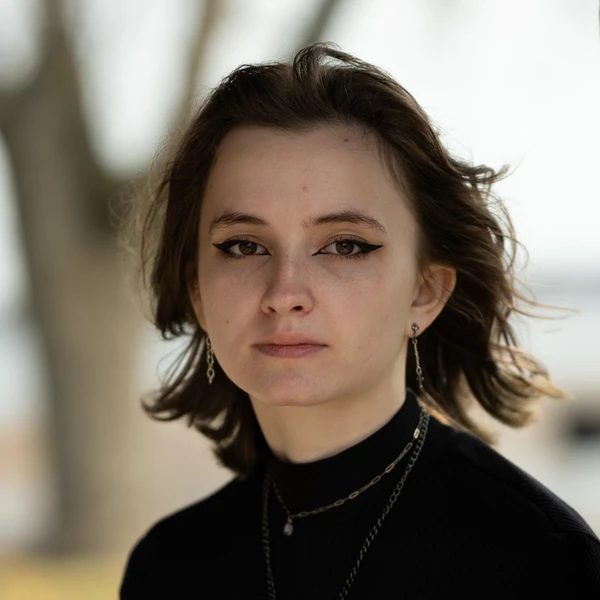
Jetta Gullickson is a first-generation college student pursuing a Bachelor of Science in Astrophysics and a Data Science certificate at the University of Wisconsin-Madison. Her passion for astronomy is driven by a profound desire to answer the universe's biggest questions, ranging from the mysteries of black holes to the nature of dark energy. This is not just a dream; she is already actively contributing to the field through her research work, assisting with projects like optimizing methods for stacking VLASS radio images.
A lifelong artist and musician, Jetta finds a natural connection between the creativity of the arts and the academic rigor of astrophysics. Her years of dedication in band and jazz ensemble have cultivated a unique perspective and the discipline necessary for scientific inquiry. Her goal is to earn a PhD and become a research scientist.
Ultimately, Jetta aims to dedicate her career to discovery, collaborating with like-minded individuals to unravel the secrets of the cosmos.
Education
University of Wisconsin-Madison
Bachelor's degree programMajors:
- Astronomy and Astrophysics
Minors:
- Data Science
Cambridge Senior High School
High SchoolMiscellaneous
Desired degree level:
Doctoral degree program (PhD, MD, JD, etc.)
Graduate schools of interest:
Transfer schools of interest:
Majors of interest:
- Astronomy and Astrophysics
Career
Dream career field:
Astrophysics
Dream career goals:
Baker
Cinnabon2022 – 20242 yearsCommissary Cook
Ian's Pizza2025 – Present1 year
Sports
Volleyball
Junior Varsity2019 – 2019
Research
Astronomy and Astrophysics
UW Madison — Research Assistance2025 – PresentChemistry
Gilbert Group - UW Madison — Research Aid2024 – 2024
Arts
Cambridge High School Color Guard
Visual Arts2020 – 2023Cambridge High School Jazz Ensemble
Music2019 – 2023
Public services
Volunteering
National Honor Society — Member2021 – 2023
Future Interests
Advocacy
Volunteering
Imm Astronomy Scholarship
WinnerThe Big Dipper. A constellation we are shown and taught about as we are children. We are told that if we look up at the night sky at the perfect time, and just focus a little, we can see the pot-like formation shining in the sky. Later, we get introduced to much more: Andromeda, Ursa Major and Minor, the twelve zodiacs. All a bunch of little drawings made up of stars in the night sky. Some leave it at that and just take the occasional glance into our universe to look at its little pieces of art, and yet they don't ever wonder more. Galileo, Newton, da Vinci, Einstein, Hawking, and so many others that we are taught about took it a step further and looked into it. Figured out the story behind those stars and their formations. People have been studying space for centuries, and yet, we still know nothing. We have Einstein's theory of relativity, the Big Bang theory, the knowledge of nuclear fusion, and the effects of gravity. Still, even with all of that, we barely even scratched the surface. We don't know what exactly happens at the end of a black hole's life, if they ever do truly die. We are still learning about the warping of space-time due to objects' gravitational pull, and whether the concept of wormholes or the multiverse is even possible in our world. There are so many what-ifs and questions left unanswered that are unlikely to be solved in my lifetime, but I want to be a part of the journey.
What caused those stars, what caused our galaxy, our universe, or even us? What is currently happening inside our expansive universe? Billions of questions, billions of possible unsolvable answers. Although it's impossible to know unless one tries. I want to be the one who tries, for years, to figure out exactly how one thing works. Have desks and tables overflowing with papers lined with mathematical formulas and various proofs to explain my work, hundreds of tries just in an attempt to get one thing right. I want to live through those years of frustration, hopefully working with a group of like-minded individuals with the equipment to aid us in our findings. Although that stress and dead-ends will be worth it. To find the answer to any of the universe's biggest questions is my dream.
That is why I'm majoring in astronomy. I want to be the one who discovers what exactly happens in a black hole, what exactly is going on beyond the edge of our expanding universe, and what exactly it is expanding into. To learn the secrets of our universe and understand exactly how we got here and what's to come. My ideal job is what I am now, a scholar. But instead of learning through textbooks and lectures, I learn through research, simulations, and experiments. Ten years from now, I am to be a research scientist, whether that's at an observatory, a space agency, or a leading university. Anywhere that allows me to be a key member of a team actively contributing to these discoveries, and, just maybe, that will include mentoring the next generation of scientists who will embody the passion I exhibit now.
Elijah's Helping Hand Scholarship Award
For years now, I've identified myself as being a part of the LGBTQ+ community. Throughout those years, I've encountered various experiences that significantly impact my life, especially affecting my mental health. My experiences from being LGBTQ+ and my mental health are deeply interconnected, and both have shaped my journey in their own unique ways.
Mental health has impacted most of my life. While most teenagers have a similar experience, being part of the LGBTQ+ community has given its own effect on my well-being. Learning to both accept and actively embrace my sexual orientation and gender identity hasn't been easy. There were, and still are, numerous times were I felt isolated, confused, and overall struggled with self-acceptance. Struggling with these things internally has taken a massive toll on my mental health, which led to feelings of anxiety, depression, and significantly low self-esteem.
With that, I am still in high school. High schoolers are one of the most ruthless people. Throughout my education, bullying and discrimination have popped up everywhere, affecting both me and some of my classmates. Seeing this sort of behavior surround me has made a significant impact on my sense of safety and belonging. I have this constant fear of judgment or rejection, making it difficult to be true to myself. Consequently, I feel like I need to hide who I am and suppress my emotions, leading to feeling isolated and lonely.
With that, we still aren't being represented properly in the media. There is still a lack of education about LGBTQ+ topics in schools, leaving me and many others to feel sort of invisible. Having no curriculum that includes us and having limited access to support makes the harmful stereotypes and misunderstandings a lot of prevalent, further alienating us. Schools and society as a whole needs to understand how crucial it is to build up a much more inclusive and affirming environment that not only acknowledge but respects our diversity and identities as LGBTQ+ people.
Unfortunately, though, society is not up to that point yet. As LGBTQ+ individuals continue to struggle, rates of suicide and self-harm are alarming. The increase in mental health issues tied to the societal stigma forces LGBTQ+ youth to be in a vulnerable situation. I, myself, personally know individuals who have contemplated suicide, which in itself has left a large impact on me.
In response to these various challenges, I aim to provide better support to the community, through organizations, online groups, and even my own friends who are supportive. Being able to connect with others who not only understand but try their best to validate my identity has been a huge part of bettering my mental well-being. It is crucial for everyone in the LGBTQ+ community to have access to support. Whether that's through safe spaces, support networks, or other resources to support their mental health, they need help navigating the unique challenges that we as a community face.
With that, my experiences as a young LGBTQ+ individual myself have fundamentally shaped my understanding of mental health and other LGBTQ+ issues. By not only sharing my story but encouraging others to follow suit, we can help advocate for more inclusive policies, while continuing to encourage empathy and acceptance, with the end goal of creating a truly compassionate and affirming society for everyone.
Learner Education Women in Mathematics Scholarship
As a woman that is pursuing a degree in astrophysics, my love for math directly comes from its inherent beauty and ability to unlock the various mysteries of the universe. The concept of mathematics provides a universal language that surpasses both cultural and linguistic barriers and allows us to describe and understand the natural world in a far more precise way.
One of the aspects that draws me much closer to math is its systematic nature. It provides a nice base for critical thinking and problem-solving, as it teaches us to thoroughly analyze any situation and break it down into smaller components in order to find logical connections and conclusions. As someone pursuing a degree in astrophysics, this kind of reasoning is crucial, as we strive to comprehend the vastness of the cosmos and make various efforts to unravel its intricate workings.
Mathematics has also been able to help shape my understanding of the world by offering a deep appreciation for patterns and relationships between objects. Whether these relationships include planetary motion, the behavior of light through telescopes, or exploring the models that describe how galaxies were formed, math has enabled all of society to see the amount of order and symmetry present in the universe.
Moreover, mathematics can act as a powerful tool to predict and model various natural phenomena. This allows us to make sense of such complex systems in nature and to make predictions about how they will behave in the future. By using equations and formulas in all branches of mathematics, we can simulate various astrophysical concepts, such as the movement of celestial bodies, the evolution of stars, or the complex dynamics found inside galaxies. These models serve as valuable tools for astronomers and physicists alike, as it enables us to test our hypotheses, make predictions, and refine our understanding of the universe. By applying these principles to astronomical observations, we can get insight to the past, present, and future of the cosmos, along with bridging the gap between theory and observation, which is instrumental in advancing our knowledge and pushing the boundaries of scientific research.
Furthermore, the principles found in mathematics have taught me the value of having both precise and accurate thinking. The rigorous proofs and calculations present in math have introduced a level of commitment to detail along with a desire for thoroughness in my future scientific pursuits. This sort of mindset is vital to anyone hoping to pursue a future in astrophysics, as even the smallest error can have significant consequences.
Overall, math has become a significant part of my future in studying astrophysics. Its logical nature, patterns, and emphasis on absolute precision have not only helped me understand the world around me but have also shaped the way I go about scientific inquiry. By delving deeper into the realm of mathematics, I am better equipped to explore the various wonders of the universe and contribute to our understanding of its hidden secrets.
Maverick Grill and Saloon Scholarship
Being an independent thinker is one of my most valued characteristics. In the modern day, we as a society rely on each other and influence each other greatly, we are dependent on each other. With social media, it's been taken to a bit of an extreme, as an idol can say a simple sentence and thousands of their fans may instantly change the way they think to correspond with that, to fit in with who they admire. In fact, we become dependent on each other from a young age. Schools rely on partner work in numerous classes. We are taught to help others, ask others, and work with others constantly, sometimes not even having the chance to work and learn by ourselves. With that, there's a social system in school. Starting from as young as elementary, we naturally divide into groups and classify each other. We have the popular kids, the nerds, the athletes, the outcasts, and everything in between. Being sorted into a group at such a young age puts us into a predetermined way of thinking, which we, whether we know it or not, continue to try and fit into for years. The unpopular kids do whatever they can to make it up the social ladder, to fit in, sacrificing some of their self-worth in the process. Our society in the modern world diminishes our ability to be an individual who can think and act on their own accord, with no outside influence to deter us.
Being able to think for myself, and separate my own thinking from that of the common man will aid greatly in the future, especially with critical decision-making. There are people that influence every aspect of life, from what you eat to what job you should have, and other people listen to them. They believe what they see because that's what we're known to do. Others don't look into things for themselves, but just believe what they hear. Having independent thought and looking into every decision solves numerous issues that would occur otherwise. I'm able to decide what college is best for me, despite any comments from others. I can choose what music I listen to, even if it's not of a popular genre or artist. I can choose who I want to be, and what path I want to follow, by figuring it out for myself. If I were to listen to everyone on the internet and try and fit in with what people consider to be normal, cool, and expected, I would be jumping around. My personality would change depending on what's trending. I would have to constantly change my hobbies, my clothes, my beliefs, to fit in with what others believe and what others think. Not caring, not being dependent on the thoughts and acceptance of others eliminates this worry. It eliminates the constant pressure that would drag me down.
Having independent thought in your life allows you to be happy for being whoever you wish to be. That is why it is such a valuable trait, something that we are losing rapidly with the adoption of social media, idols, and the trends that come with it. This is my greatest trait, as it will allow me to decide for myself and learn how to best live my own life.
Richard Neumann Scholarship
One of the largest problems still very prominent in today's world is the issue of access to clean drinking water in communities that are underdeveloped or in poverty. We especially see this in areas such as Africa and Southeast Asia. To be able to accomplish such a task, there are five main steps to go through.
The first step is to research and assess the situation. In order to help the areas in need, we need to research them, including their current sources of water and any potential contamination.
Next is to design and build a system that would both treat and distribute water to the people in the community. An ideal system would include a section to treat water, storage tanks, and a distribution network. We would also need a way to monitor the system to make sure it is working effectively. Such a system would track the water quality, usage, and overall impact on health.
The third step is to educate the communities. In order to ensure the project works long-term, we need to teach the people how to manage and maintain the water system. This may include training and hiring them to operate or clean the system.
The fourth and arguably most important step is funding. This could be partnering with governments, NGOs, or other organizations that have experience and desire to help in this task. We would also need to seek additional funding from investors and potentially even the general public.
The final step is replication. Once we established a working system in one community, it's time to implement it even more. This could even include improving the initial design to be larger for those communities that need it. This step would also include sharing the design with organizations and governments in order to try and ensure the impact of the system reaches a broader audience.
While there are various ways to complete such a task, each community will need a different approach. Along with that, in order for any system to work we need to make sure other things stay organized. This includes making sure the water is being used efficiently and making sure we manage any watershed and groundwater, as we don't want to over-pump the ground or destroy any natural environments that store water on their own.
Overall, water scarcity requires a lot of work from a lot of people. The best way to approach it is to research the root of the issue and develop a plan from there. Depending on the situation, resolutions could range from harvesting rainwater to desalination to treating and reusing wastewater. By implementing any of these solutions, we can get closer to ensuring everyone has access to safe drinking water in order to promote a sustainable environment for communities across the globe.