Hobbies and interests
African American Studies
Animals
Babysitting And Childcare
Baking
Bible Study
Candle Making
Comedy
Cosmetology
Concerts
Economics
Food And Eating
Fashion
Health Sciences
History
Reading
Economics
Adult Fiction
Adventure
Biography
Cultural
Environment
Mystery
History
I read books multiple times per week
Laniya Casey
1x
FinalistLaniya Casey
1x
FinalistBio
I’m a first generation college student, just trying to make my mom proud of me. I’m going to school for Radiology and will continue to study to become a MRI tech. I’m the oldest of 3 siblings so I’m the example for all of them. I want to show them that with hard work you can be and do what ever you set your mom to. Financially aid isn’t enough and I don’t qualify for any loans, even though my mom doesn’t show nor tell me I know it’s hard supporting me through college and taking care my siblings as a single mom. I just want to lighten her load and do this is the reason I’m applying for scholarships. I need help, we need help and hopefully I can receive that. I’m lucky to have gotten this far and with out my mom and God in my life I don’t know where I would be. I just want to get this degree, land a job and buy my mom some land so she can put a house on it. 
Education
Albany State University
Associate's degree programMajors:
- Nuclear and Industrial Radiologic Technologies/Technicians
Minors:
- Allied Health and Medical Assisting Services
Miscellaneous
Desired degree level:
Bachelor's degree program
Graduate schools of interest:
Transfer schools of interest:
Majors of interest:
- Nuclear Engineering
Career
Dream career field:
Health, Wellness, and Fitness
Dream career goals:
Cashier
Chick-fil-A2024 – 20251 year
Sports
Basketball
Club2018 – 20257 years
Research
Bible/Biblical Studies
missionary work2020 – Present
Arts
Henry Street Settlement
Dance2010 – 2016
Public services
Volunteering
J.R Smith Pool recreational center — Pool Attendant2024 – 2025
Future Interests
Advocacy
Volunteering
Philanthropy
Entrepreneurship
Rainbow Futures Scholarship
Growing up as an LGBTQ+ individual, I learned early on what it meant to navigate the world carrying both pride and vulnerability. My identity has shaped not only how I see myself, but also how I understand community, resilience, and the power of visibility. While my journey has been marked with challenges, misunderstandings from family, moments of isolation, and the constant pressure to defend who I am, it has also been defined by growth, courage, and an unshakable commitment to live authentically.
One of the greatest challenges I faced was learning to accept myself fully in environments where acceptance was not guaranteed. I often felt the need to shrink or silence parts of who I was to avoid judgment. There were moments when I questioned whether my dreams were worth pursuing if it meant doing so without being my true self. But those struggles ultimately taught me the importance of self-advocacy and the impact that representation can have, especially for young people searching for a reflection of themselves in the world.
Over time, I found strength in connecting with LGBTQ+ peers, mentors, and community organizations that helped me feel seen and supported. These experiences opened my eyes to the disparities LGBTQ+ individuals continue to face higher rates of homelessness, discrimination in healthcare, barriers to education, and a constant battle for legal protection. Rather than discouraging me, these realities motivated me to become part of the solution.
My aspiration for higher education is not just about earning a degree, but about gaining the knowledge and tools I need to advocate effectively for LGBTQ+ rights. I plan to pursue a degree in a field that will allow me to combine my passion for social justice, public service, and community outreach. Whether through mental health work, public policy, or nonprofit leadership, my goal is to amplify LGBTQ+ voices, expand access to affirming resources, and fight for equality on every level from local community programs to broader legislative change.
Education will allow me to transform lived experience into meaningful action. I hope to create programs that support LGBTQ+ youth, push for inclusive policies in schools and workplaces, and contribute to research that highlights the realities and needs of our community. Ultimately, I want to build spaces where LGBTQ+ individuals can thrive without fear, shame, or limitation.
Receiving this scholarship would make an enormous difference in my ability to pursue these goals. Like many students, I face significant financial barriers that make attending college challenging from tuition costs to housing and transportation expenses. This scholarship would relieve a burden that often feels overwhelming and would allow me to focus fully on my education, leadership development, and advocacy work. Instead of worrying about whether I can afford another semester, I would be able to invest my energy in preparing for a future dedicated to helping others.
With your support, I can continue turning my challenges into purpose. Higher education will not only change my life, it will empower me to help change the lives of others in the LGBTQ+ community and beyond.
Bright Lights Scholarship
The day my grandmother was diagnosed with breast cancer, I felt a mix of fear, helplessness, and determination. Sitting beside her in the hospital room, I realized how fragile life can be and how deeply skilled healthcare professionals can impact not just a patient’s body, but their spirit. That day ignited a calling in me—a desire to combine science, technology, and compassion to help others during their most vulnerable moments. It also reinforced the lessons I had learned growing up in a single-parent household, where resilience, faith, and perseverance were not just values but survival tools.
Being raised by my mother alongside my three siblings taught me the true meaning of hard work. She balanced long hours as a surgical technician with the responsibilities of raising a family, never allowing fatigue or setbacks to diminish her commitment to us. Watching her sacrifice and determination instilled in me a deep respect for service and inspired me to pursue a career in healthcare. I realized early on that my dreams would require both dedication and support and that I wanted to use my journey to uplift others.
My passion for radiology stems from my fascination with the human body, medical technology, and the ability to make a difference quietly yet profoundly. Radiology allows professionals to detect illnesses early, guide treatment decisions, and provide hope to patients and families facing uncertainty. It is a field that demands precision, empathy, and commitment, all qualities I have cultivated through my personal experiences, academic achievements, and volunteer work.
Faith has been my guiding force through challenges. It has given me strength during difficult times, clarity when decisions seemed overwhelming, and gratitude for every opportunity. Faith reminds me that my education and talents are gifts meant to serve a greater purpose. Attending an HBCU is a critical part of my journey, providing a supportive and culturally empowering environment where I can grow academically, personally, and professionally. I am eager to learn from mentors who understand my experiences and to contribute to a community that values resilience, excellence, and service.
Receiving this scholarship would be transformative. It would relieve the financial burden of tuition and educational expenses, allowing me to focus fully on my studies, clinical training, and professional growth. Beyond financial assistance, it would represent a vote of confidence in my potential to succeed and serve. This support would empower me to pursue internships, advanced training, and opportunities that will sharpen my skills and prepare me to make a tangible impact in healthcare.
Looking to the future, I envision a career where technical expertise and compassion intersect. I want to provide accurate diagnoses, comfort patients through challenging times, and mentor young students from underrepresented communities to pursue healthcare careers. This scholarship is not just an investment in my education, it is an investment in the lives I hope to touch, the community I aim to serve, and the legacy of resilience, faith, and service that has shaped me.
Elijah's Helping Hand Scholarship Award
I still remember the sound of my phone buzzing that afternoon—the call that would change everything. My best friend, the person I laughed with, confided in, and trusted with my deepest thoughts, had taken their own life. In an instant, the world became colder, quieter, and infinitely harder to navigate. That day forced me to confront the invisible struggles of mental health, the silent battles that people carry behind smiles, and the devastating consequences when those battles go unnoticed. It was a moment that reshaped who I am, how I connect with others, and the purpose I want to pursue in life.
My best friend was full of life, always the first to joke, the first to support others, the first to offer a hug when someone was down. I remember walking together through the school halls, laughing about small, silly things, never imagining that behind that laughter, they were silently fighting despair. Their death shattered my world and made me realize the urgent need for mental health awareness, compassion, and early support.
This experience profoundly changed how I relate to others. I became more attentive, checking in on friends with thoughtful questions rather than casual greetings, learning that sometimes just being present can save a life. I found solace in my family, leaning on my mom and siblings as we grieved together, realizing that resilience is not about ignoring pain but about feeling it, processing it, and allowing it to transform you into a more empathetic person.
Academically and personally, this loss inspired me to pursue a path where I can make a difference in mental health advocacy. I want to study in a field that equips me to provide support, resources, and education for those struggling in silence. I dream of creating programs in schools and communities where students can speak freely, find help early, and know that someone truly cares. My friend’s life, though tragically cut short, motivates me to ensure that no one else experiences that same hopelessness alone.
This journey has also shaped my broader understanding of the world. I have learned that mental health affects everyone, regardless of age, background, or outward appearance. By transforming my grief into purpose, I have gained a sense of responsibility, not just to honor my friend, but to advocate for a culture that normalizes seeking help, fosters empathy, and values human connection.
Ultimately, my experience with mental health and suicide has made me more resilient, compassionate, and determined. I carry my friend’s memory with me in every step, letting it guide my actions, my goals, and my desire to help others. Through education, advocacy, and awareness, I hope to transform my pain into purpose, ensuring that others do not have to navigate their struggles in silence. Their story fuels my commitment to making a tangible, positive impact in the lives of those who need it most.
Ethel Hayes Destigmatization of Mental Health Scholarship
My understanding of mental health changed forever during my senior year of high school, the year I lost my best friend to suicide. Before that moment, mental health was something I believed I understood in theory but had never felt the full weight of in my own life. Experiencing such a deep and unexpected loss shattered my sense of normalcy, reshaped my relationships, and altered the way I viewed my goals, my community, and the world. It confronted me with questions I had never asked before and emotions I didn’t know how to navigate. Yet through the pain, it also taught me about resilience, compassion, connection, and purpose, lessons that continue to guide me today.
The day I learned about my best friend’s death is a day I will never forget. The shock left me numb. I kept replaying our last conversation, trying to understand what signs I’d missed, what pain they had carried in silence, and why they felt there was no other way out. Grief hit like a wave I didn’t know how to swim through. I felt guilt, anger, confusion, heartbreak, and fear all at once. I didn’t realize that mental health struggles could hide behind someone’s brightest smile. I didn’t understand how someone who brought so much joy to others could be fighting a battle alone.
At first, I tried to push the grief away. I convinced myself I needed to be strong for everyone else. But suppressing my own emotions only made the pain heavier. Eventually, I reached a breaking point where I had no choice but to confront what I was feeling. That is when I learned that healing is not linear, and grief is not something you simply “get over.” It is something you learn to carry, understand, and transform.
Seeking support was one of the hardest steps I took. Opening up to a counselor felt almost impossible like saying out loud what happened would make it real all over again. But counseling became a life-changing experience. It taught me that grief is not something to be ashamed of. It taught me to name my emotions, to understand the cycles of loss, and to give myself permission to feel the heaviness without collapsing underneath it. It also taught me that mental health is not just an individual responsibility, it is a community responsibility.
This experience directly shaped my goals. Before my friend’s death, I was focused on academics and college plans, but I didn’t have a deeper purpose guiding me. After losing them, I developed a clear commitment: I want to dedicate my life to helping others feel seen, supported, and valued. My mental health journey has inspired me to pursue a path where I can advocate for wellness, contribute to emotional safety in my community, and uplift those who are struggling in silence. Whether through a career in healthcare, mental-health advocacy, or community service, I want to be someone who helps prevent others from experiencing the kind of loss that changed my life.
My relationships also transformed in profound ways. Before this tragedy, I often avoided serious emotional conversations, not because I didn’t care, but because I didn’t know how to have them. Losing my best friend made me realize how important it is to check in with the people around you really check in. I became more intentional about showing up for others, asking deeper questions, and creating safe spaces for honest conversations. I learned that small gestures of compassion can make a significant difference. I also learned to reach out when I needed support, instead of isolating myself in difficult moments.
My friendships grew stronger because they became more open, vulnerable, and meaningful. I no longer take moments of connection for granted. I understand now that letting people know they matter can change their entire world, even if you never know it. My loss taught me the power of empathy, how listening with genuine care can help someone feel less alone. It also taught me to value my family more, to lean on them and let them lean on me. Our shared conversations about grief and healing brought us closer together and helped me rebuild a sense of emotional grounding.
Beyond my personal relationships, losing my best friend shaped my understanding of the world. It opened my eyes to the hidden struggles people carry, the stigma surrounding mental health, and the need for more compassionate communities. I realized that many people are afraid to ask for help because they believe it makes them appear weak or burdensome. My friend felt this way, and I wish they had known how loved they were. Because of that, I now believe it is essential to normalize conversations about mental health and to challenge the silence that keeps so many people suffering.
I learned that pain does not always look like pain. Sometimes it looks like laughter, success, or strength. I learned that we must approach others gently because everyone is fighting battles we cannot see. And I learned that mental health support is not optional, it is a necessity.
Through my grief, I also discovered resilience. I learned that healing does not mean forgetting; it means honoring the person you lost by living in a way that reflects what you learned from them. For me, that means pursuing meaningful goals, nurturing loving relationships, and seeing the world through a lens of understanding instead of judgment. It means advocating for mental health awareness so that others feel empowered to seek help early, speak up, and break the silence.
My journey with mental health, shaped by the loss of someone I thought I would grow old with, has transformed every part of who I am. It has given me purpose, deepened my relationships, and expanded my empathy for the world. Though the pain will always remain, so will the lessons. I carry them with gratitude, determination, and the hope that sharing my story may help someone else choose to keep going.
Taylor Swift Fan Scholarship
Taylor Swift’s twelfth studio album, The Life of a Showgirl, stands as a radiant tribute to the endurance, creativity, and emotional transparency that have defined her decades-long career in the spotlight. Through glittering production and introspective lyrics, Swift reveals the duality of performing, how the stage can be both a sanctuary and a battleground. As someone who has grown up witnessing her evolution, I have always admired how she transforms vulnerability into empowerment, and this album captures that essence with striking clarity. Yet among her countless performances, one moment stands out to me as the most profoundly moving: her acoustic rendition of “All Too Well (10 Minute Version)” at the 2021 Red (Taylor’s Version) release event.
Though it predates the era celebrated in The Life of a Showgirl, this performance represents the emotional bravery and artistic growth that ultimately shaped the woman featured in her latest album. Standing alone with her guitar, Swift delivered a stripped down rendition that felt more like a confession than a concert. There were no choreographed dancers, elaborate costumes, or shimmering stage effects just an artist reclaiming her narrative with unmistakable conviction. Her voice cracked at moments, but instead of signaling weakness, those cracks revealed the strength it takes to revisit old wounds in front of millions.
What moved me most was not the heartbreak embedded in the song, but the transformation happening before our eyes. In that performance, Swift wasn’t simply revisiting her past, she was rewriting the emotional terms of it. She shared an experience that many young people, especially young women, deeply relate to: learning to give yourself permission to feel, grieve, heal, and grow. Watching her so openly process her journey made me feel less alone in my own experiences with disappointment and self-doubt.
That same spirit of honesty and resilience threads through The Life of a Showgirl. Whether she addresses the exhaustion of fame, the complicated relationship between persona and self, or the quiet triumph of reclaiming joy, the album embodies the courage she displayed in that acoustic performance. Swift’s willingness to let the world witness her imperfect, unguarded self is what makes her artistry so impactful. It teaches listeners that strength does not require hiding our emotions; instead, it blossoms when we articulate them without fear.
As I reflect on her body of work, I realize that Swift’s most powerful performances are not the most cinematic, but the most sincere. The “All Too Well” acoustic performance remains unforgettable because it gave permission for me and countless others, to embrace honesty, to speak our truths even when our voices shake, and to see beauty in the process of becoming.
In celebrating her own evolution through The Life of a Showgirl, Taylor Swift also celebrates everyone who has ever had to find the balance between performing for the world and honoring their private self. That is why that performance moved me more than any other: it reminded me that the spotlight does not define us, our courage does.
Women in Healthcare Scholarship
Pursuing a degree in healthcare is more than a career choice for me, it is a calling shaped by my lived experiences, my compassion for others, and my desire to serve as a source of healing in a world that often needs more empathy. Growing up, I was always drawn to environments where care, understanding, and human connection were at the center of every interaction. Whether it was accompanying family members to medical appointments or witnessing how a single act of kindness from a healthcare worker could transform someone’s day, I learned early that healthcare professionals hold the unique privilege of influencing lives at the most vulnerable moments. That privilege is one I hope to earn.
As I matured, I began to understand how deeply healthcare impacts entire communities, not just individuals. I saw how disparities in access, education, and resources often determined someone’s health outcomes. These insights, paired with a strong desire to help close those gaps, solidified my decision to pursue a degree in healthcare. I want to be part of the solution, working each day to ensure that every patient feels seen, heard, and valued. My academic path is guided by a commitment to improving both the quality of care and the compassion behind it.
As a woman entering the healthcare field, I carry an additional sense of responsibility and pride. Women have always played a pivotal role in caregiving, advocacy, and medical advancement, often fighting barriers to secure their place in the profession. I hope to continue that legacy by contributing my voice, resilience, and leadership to a field that benefits from diverse perspectives. Representation matters, not only for future healthcare workers who need to see themselves reflected in their role models, but for patients who deserve a provider who understands, respects, and advocates for their experiences.
My goal is to create a positive impact by combining clinical skill with empathy-driven care. I aspire to be the kind of healthcare professional who listens before acting, who honors the dignity of every patient, and who approaches each situation with patience and understanding. I want to help build a future where healthcare is more equitable, culturally aware, and rooted in compassion. Whether I am supporting a patient through a difficult diagnosis, educating a family on treatment options, or simply offering comfort during a stressful moment, I hope to be a steady, reliable presence.
Beyond direct patient care, I also hope to uplift young women who dream of entering the healthcare field. By sharing my journey, mentoring others, and demonstrating leadership, I aim to show that women, regardless of background, belong in every corner of healthcare, from clinical roles to research labs to administrative positions. Empowering the next generation is just as important as serving the patients of today.
Ultimately, I am pursuing a degree in healthcare because I want to make a difference that is both personal and lasting. My passion for helping others, combined with my determination to advocate for more compassionate, inclusive care, drives me forward every day. As a woman in healthcare, I hope to bring healing not only through my work, but through the example I set and the lives I touch along the way.
Sabrina Carpenter Superfan Scholarship
From the first time I heard Sabrina Carpenter’s voice, I felt something shift inside me. What began as simple admiration for an artist soon grew into a deeper source of inspiration, motivation, and personal growth. Sabrina Carpenter is not just a singer I enjoy, she is someone whose career has shaped the way I approach my own goals, creativity, and confidence.
I became a fan during her earlier music era, when she used her storytelling to explore themes of identity and self-discovery. As she continued evolving, so did I. Watching her transition from Disney star to internationally recognized musician reminded me that growth is not only possible but necessary. Her willingness to step outside of the expectations people placed on her taught me that I am allowed to change, redefine myself, and embrace every new version of who I am becoming.
One of the most impactful aspects of Sabrina Carpenter’s career is her authenticity. Whether she is releasing a deeply emotional ballad or a playful pop anthem, she remains unapologetically herself. Her confidence in expressing her personality, humor, vulnerability, and honesty, encouraged me to do the same. I used to struggle with the fear of being judged for my interests or talents. Watching Sabrina fearlessly embrace her quirks helped me understand that genuine self-expression is not only freeing but powerful. Because of her, I learned to value my individuality rather than hide it.
Her work ethic has also influenced me. Sabrina’s growth has been steady, intentional, and fueled by dedication. She built her career step by step, project by project, never expecting overnight success. As a student with big dreams, I often feel overwhelmed by the future, but Sabrina’s journey reminds me that success does not happen all at once. It comes from commitment, patience, and the courage to keep going even when progress feels slow. Whenever I worry that I am not accomplishing enough, I think about how long she has been creating, improving, and expanding her artistry. It reassures me that I am allowed to take my time.
Another meaningful part of Sabrina Carpenter’s influence is the safe space she creates through her music. Songs like “Because I Liked a Boy” and “Skin” deal with judgment, criticism, and online negativity, experiences many young people, including myself, can relate to. Hearing her articulate these feelings made me feel seen and understood during moments when I felt isolated. On the other hand, songs like “Feather” and “Nonsense” remind me to celebrate my confidence, have fun, and not take life so seriously. Her discography reflects the full spectrum of human emotion, showing me that it is okay to feel everything deeply.
Sabrina Carpenter’s career has impacted me by teaching me resilience, confidence, and the importance of authenticity. She inspires me to work hard, embrace who I am, and pursue my dreams with determination. Being her fan is more than following a favorite artist, it is learning from someone who shows, through her own journey, that it is possible to grow, reinvent yourself, and shine in your own unique way. Her influence has helped shape the person I am today, and it continues to guide the person I hope to become.
Jean Ramirez Scholarship
Losing my best friend to suicide during our senior year of high school changed the direction of my life forever. What should have been a time filled with celebration, plans for the future, and a sense of accomplishment instead became the most painful chapter I had ever lived through. Becoming a suicide loss survivor at such a young age forced me to confront grief, confusion, and guilt before I even fully understood adulthood. Yet, even in the darkest moments, I discovered resilience, purpose, and the belief that healing can grow from heartbreak.
The first challenge I faced was the shock of losing someone who had been part of my life for years. I remember walking into school and feeling the silence differently, it was heavier, heavier than anything I had ever felt. Suddenly, every memory became sharper, and every reminder felt like a reopening wound. I struggled to understand why it happened and battled guilt, wondering if I had missed signs or if there was something I could have said that would have changed the outcome. Grief at that age is isolating because everyone else seems to carry on while you remain suspended in loss.
Another challenge was learning how to navigate the emotional aftermath while still trying to keep up with classes, responsibilities, and expectations. I felt broken while trying to pretend I was okay. It was exhausting, and there were moments when I felt like I was drowning in emotions I didn’t know how to name. But slowly, I learned that healing doesn’t come from pretending; it comes from acknowledging the pain and allowing others to support you.
Through this tragedy, I began learning some of the most important lessons of my life. The first was that vulnerability is not a weakness. When I finally reached out, to a teacher, a counselor, and friends, I realized that sharing my feelings didn’t make me fragile. It made me human. I also learned how vital it is to talk openly about mental health. Silence can be dangerous, and I understood that breaking stigma begins with personal conversations. Most importantly, I learned that life is fragile, and kindness is something we should extend freely, because we never know what someone may be carrying silently.
Resilience came slowly, but it arrived. It appeared when I chose to keep going, even when some days felt impossibly heavy. It showed up when I became someone others could talk to without fear of judgment. It grew stronger when I began participating in mental-health awareness efforts and using my voice to encourage openness and support. My resilience is not about forgetting the tragedy, it is about honoring my best friend by choosing to live with intention and compassion.
Hope eventually emerged from this healing. I realized that my experience could help others feel seen and less alone. I learned that pain can transform into purpose. Moving forward, I plan to use my education to continue advocating for mental-health support, emotional awareness, and environments where young people’s struggles are taken seriously. This scholarship will allow me to further that mission.
I am a suicide loss survivor, but I am also someone who has found strength through grief, growth through heartbreak, and purpose through healing. My journey continues to inspire the person I am becoming someone committed to helping others feel less alone.
Special Delivery of Dreams Scholarship
Throughout my life, I have learned that growth often begins in the middle of adversity. One of the most defining challenges I have faced is learning how to navigate the responsibilities and uncertainties of growing up in a single-parent household. My mother raised four children while working long hours as a surgical technician, doing everything in her power to keep our family steady. Watching her push through exhaustion and stress taught me early on that resilience is not just a trait, it is a way of life. However, even with her strength, our home was filled with financial strain, limited resources, and the pressure for each of us to grow up a little faster than most. For years, I struggled with feeling like I had to succeed not just for myself, but for everyone depending on me.
This sense of pressure became the problem I had to overcome: believing that my circumstances limited my future. For a long time, I felt boxed in by what we lacked, money, support, stability, and it took maturity for me to realize that my background was not a barrier, but a foundation. I learned to transform stress into motivation. I learned to advocate for myself, to work hard in school, and to build my own path forward. Most importantly, I learned that where I come from will never determine where I am capable of going.
Unexpectedly, one of the things that grounded me during those stressful years was collecting postal stamps. What started as a small hobby, saving interesting envelopes that came through our mailbox became a quiet, personal refuge. Stamps taught me patience, focus, and appreciation for detail. Each stamp held a story, often from a different state or different part of the world, reminding me that the world was larger than my circumstances. Sorting, organizing, and researching stamps became a way for me to escape the chaos around me and enter a world of history, color, and culture. This simple hobby helped me develop curiosity, discipline, and the ability to find meaning in small things that now influence my academic journey and my future in healthcare.
As a college student pursuing a degree in radiology, I carry all these experiences with me: the pressure I overcame, the lessons from my mother, and even the quiet resilience I found in stamp collecting. I want to use my education to create change not just in my own life, but in my community. Healthcare is deeply personal to me because I have witnessed how lack of access, limited resources, and financial stress can impact families like mine. By entering the radiology field, I hope to provide compassionate, thorough care and eventually work toward increasing access to quality diagnostic services in underserved areas.
This scholarship would not simply relieve financial burden, it would allow me to continue my education without placing more strain on my family. It would give me the opportunity to focus fully on my studies, clinical work, and future career instead of worrying about tuition, textbooks, or housing. With the support of this scholarship, I can continue moving toward my goal of becoming a radiologic technologist who serves patients with empathy, cultural awareness, and a commitment to equity.
Giving back to my community is not just an aspiration, it is a promise. I plan to mentor students who come from backgrounds like mine, volunteer at local health events, and eventually help bridge healthcare gaps for low-income families. I know what it feels like to struggle, to worry, and to wonder if opportunities are meant for people like me.
Dream BIG, Rise HIGHER Scholarship
Education has shaped my goals in ways I could never have predicted, guiding me through challenges, giving me a sense of direction, and showing me the power of knowledge to transform a life. Growing up in a single-parent household with my mother and three siblings, I learned early what it meant to work hard, sacrifice, and persevere. My mother, a surgical technician, balanced long shifts at the hospital with raising four children on her own. There were moments when the weight of responsibility seemed almost too heavy for one person to carry, yet she never allowed struggle to dim her hope for us. She constantly reminded me that education would open doors that circumstances could not close. Her voice became the foundation of my academic journey, shaping both my values and my goals.
Still, finding direction was not always easy. For many years, I only knew that I wanted to help people, I just didn’t know how. That clarity finally came when my grandmother was diagnosed with breast cancer. Watching her navigate doctor appointments, scans, treatments, and difficult conversations changed me. I saw fear in my family, and I also saw moments of relief, moments when the radiology team gave us answers after long periods of uncertainty. Their work was more than imaging; it was reassurance. It was clarity when everything felt blurry. Seeing the impact of the radiology field firsthand helped me discover my direction. I realized that I wanted to be the person who helped families understand what they were facing, who brought comfort through knowledge, and who used medical imaging to save lives. Education didn’t just shape this dream, it revealed it to me.
However, pursuing this path required overcoming obstacles that often felt overwhelming. Financial hardship was a constant challenge. Some months, bills and necessities outweighed income. My mother worked as many hours as she could, sometimes leaving before sunrise and returning long after sunset. As the oldest child, I took on responsibilities at home by helping my siblings with homework, cooking meals, and keeping our house running when my mother was at work. Balancing school, part-time jobs, and family responsibilities tested my determination. There were nights when I was exhausted, studying with heavy eyes, praying for strength and clarity.
Despite these challenges, education became my refuge. It gave me something to hold onto when life felt unstable. Every class I passed reminded me that I was moving closer to a better future. Every lesson gave me skills I could apply later to help others. Education wasn’t just about grades; it was about finding hope, strength, and purpose.
Choosing to attend an HBCU strengthened that purpose even more. At my HBCU, I found a community that looked like me, understood my journey, and affirmed my potential. I found professors who believed deeply in my success and peers who carried their own stories of resilience. The environment taught me that excellence is in our roots, and that leadership is not just about individual achievement but about serving others. My HBCU has become a place where my dreams feel protected and possible.
Through my education, I am learning not only the science of radiology but the importance of empathy, communication, and cultural understanding in healthcare. I am gaining the tools to be a part of a field where representation matters deeply, especially for communities that experience health disparities and limited access to quality medical care. I want to help change that.
My long-term goal is to become a radiologic technologist who advocates for accessible and compassionate healthcare. I want to work in communities where many families, like mine, have felt overlooked or unheard. I want to educate patients on the importance of early detection, preventative screenings, and understanding their own health. Through my work, I hope to create a future where people feel supported, where information empowers instead of intimidates.
Beyond my career, I also want to mentor young students who come from single-parent households or underserved communities. I know what it feels like to question whether your dreams are realistic. I know what it feels like to want a better future but not see a clear path. My story is proof that adversity does not erase possibility. With guidance, support, and determination, those possibilities can become real.
Education has shaped my goals by giving me direction, confidence, and purpose. It helped me push past obstacles and taught me that my challenges do not define me, they prepare me. I now stand on a path that will allow me to build a better life for myself and create opportunities for others. My journey is still unfolding, but thanks to education, I am no longer unsure of where I am going. I am moving forward with clarity, passion, and faith, determined to make a meaningful impact on the world around me.
Zedikiah Randolph Memorial Scholarship
My story begins in a single-parent household built on faith, perseverance, and the belief that hard work can open doors that once seemed impossible. My mother raised four children on her own while working demanding hours as a surgical technician. Watching her navigate long shifts, financial struggles, and the responsibility of caring for our family taught me resilience and purpose. Her example shaped the person I am today and inspired my desire to pursue a career where I can serve others with the same strength and compassion she modeled for us.
My interest in radiology began the moment my grandmother was diagnosed with breast cancer. I sat beside her during her appointments, watching radiologic images reveal what our eyes could not. Those scans were more than medical picture, they were tools that guided her doctors, tracked her progress, and offered our family answers in moments filled with fear. That experience transformed the medical field from something I observed through my mother’s work into something deeply personal. I began to understand how powerful early detection and accurate imaging can be in saving lives, easing anxieties, and supporting families during their most vulnerable moments. That is what led me to choose radiologic technology as my degree program.
Choosing this field also placed me among a small percentage of students who look like me. Black professionals remain underrepresented in radiology; depending on the subspecialty, only about 3–5% of radiologic technologists in the U.S. are Black. Being part of such a small percentage motivates me even more. It means that my presence matters not just for myself, but for the younger students who will follow behind me. Representation in healthcare builds trust, improves communication, and empowers communities to seek care earlier and more confidently. I want to be part of the change that expands who gets to participate in this field.
My goal is to make a meaningful impact on my community by increasing access to education, preventative care, and early detection. Coming from a low-income background, I understand how limited resources and lack of information can affect health outcomes. Many families do not have access to consistent care, transportation, or health literacy support. Through my career in radiology, I hope to work in underserved communities bringing compassionate imaging services, educating families about the importance of routine screenings, and helping people feel seen and respected within the healthcare system.
Beyond working directly with patients, I hope to influence future generations. I want to mentor students, especially young Black women, who may not see themselves represented in medical fields. I plan to visit schools, volunteer with youth programs, and create workshops that explain what careers in healthcare look like and how to reach them. Sometimes all a student needs is someone who looks like them saying, “You can do this.” I want to be that person.
I also hope to help develop programs that prepare minority students for healthcare careers by offering guidance, study support, and scholarship resources. My journey has shown me that talent exists everywhere, but opportunity does not. By creating pathways for young people to enter radiology and other medical professions, we can continue to increase representation and improve health outcomes for entire communities.
Ultimately, my career is fueled by purpose. I chose radiology because it blends science, compassion, and life-changing impact. I chose healthcare because my family’s experiences taught me the importance of early detection and trustworthy care.
I plan to use my education, my experiences, and my voice to uplift my community and to inspire the next generation to walk into spaces where we have always belonged.
Robert F. Lawson Fund for Careers that Care
My journey begins in a home filled with love, sacrifice, and resilience. I was raised by a single mother who worked tirelessly as a surgical technician to support me and my siblings. Watching her balance demanding work hours, household responsibilities, and the emotional weight of raising four children alone profoundly shaped who I am. She taught me that obstacles are not barriers, they are building blocks. Her strength inspired my own, and her determination laid the foundation for my dreams.
My passion for the medical field began through two influential experiences: witnessing my mother’s dedication to patient care and walking alongside my grandmother during her breast cancer battle. Sitting with my grandmother during her appointments opened my eyes to the world of radiology. I remember seeing scans that revealed what our eyes could not, how those images guided her doctors, and how early detection shaped her treatment. That experience turned fear into purpose for me. I began to understand the critical role radiologic technologists play in saving lives, easing anxiety, and helping patients find answers during their most vulnerable moments.
I plan to make a positive impact on the world by using my career in radiology to expand access to compassionate, high-quality diagnostic care. Growing up in a low-income household taught me how limited healthcare access can affect families. Many communities especially minority and underserved populations face barriers to early detection and preventative care. My goal is to work in these communities, ensuring that people receive timely imaging, clear explanations, and compassionate support. I want to be the kind of healthcare professional who not only performs scans but also brings comfort, understanding, and reassurance to every patient I meet.
Beyond clinical care, I hope to become a strong advocate for health equity. I want to help bridge the gap for families who feel overlooked or intimidated by the healthcare system. My long-term dream is to help establish programs that educate young people about careers in healthcare, especially students who come from backgrounds like mine. Whether through mentorship, workshops, or scholarships, I want to help create a pipeline of confident, prepared, and supported students entering medical fields. Representation matters, and I want to be part of a generation that diversifies healthcare and improves trust between providers and the communities they serve.
I am actively working toward these goals through my radiology studies, volunteer work, and commitment to academic excellence. I participate in local health fairs where I help with screenings, pass out health information, and talk with community members about the importance of preventative care. These experiences allow me to apply what I’m learning while connecting directly with the people I hope to serve in the future. I also speak with younger students about college preparation and navigating challenges as a first-generation college student. Every conversation reminds me of how powerful guidance and encouragement can be something I wish I had more of growing up.
My career goals are rooted in gratitude for the people who shaped me, my resilient mother, my strong grandmother, and the healthcare providers who cared for my family. Through radiology, I hope to honor their impact by becoming a source of hope and clarity for others. I want my work to reflect compassion, excellence, and a genuine desire to make the world better, one patient and one community at a time.
I believe that making a positive impact begins with using your story to uplift others. My hardships ignited my passion, my education is building my path, and my purpose is clear: to use my career to serve, advocate, and inspire.
Lotus Scholarship
Growing up in a single-parent, low-income household has shaped my resilience more than anything else. With my mother raising four children on her own while working long shifts as a surgical technician, I learned early what sacrifice, strength, and perseverance look like. There were times when money was tight, and the pressures of helping at home made school challenging, but watching my mother push through every obstacle taught me to do the same. Instead of letting our circumstances limit me, I used them as motivation to build a different future for myself and my siblings.
My passion for healthcare began when my grandmother was diagnosed with breast cancer. Sitting beside her during appointments and seeing the role imaging played in her diagnosis introduced me to radiology in a deeply personal way. It showed me how technology, compassion, and accuracy come together to save lives. That experience, combined with my mother’s work in the medical field, inspired me to pursue radiology as my career.
I plan to use my life experience to positively impact my community by increasing awareness around early detection, preventative care, and access to healthcare resources—especially in underserved areas like the one I grew up in. I want young people from similar backgrounds to know that their challenges do not disqualify them from succeeding in the medical field.
I am actively working toward my goals by pursuing a radiology degree and staying committed to academic excellence. I also volunteer at health fairs, assist with screenings, and speak with students about college readiness and overcoming obstacles as a first-generation college student. These experiences strengthen my purpose and remind me why this work matters.
My hardships built my determination, and I plan to use that strength to uplift my community through compassion, healthcare service, and advocacy.
RELEVANCE Scholarship
Every experience in my life has shaped the person I am becoming, and each challenge has strengthened my desire to pursue a career in healthcare. My journey toward medicine, specifically radiology, began long before I understood the field itself. It started with family hardship, personal responsibility, and a faith that guided me through moments that could have broken me. Instead, they built a purpose within me that I now carry into my education at my HBCU and into the future career I am working toward.
One of the most defining experiences of my life was my grandmother’s breast cancer diagnosis. I was young, but I understood enough to recognize the fear and uncertainty that filled our home. I watched the women in my family, especially my mother, balance strength and heartbreak as they supported my grandmother through appointments, treatments, and moments of pain. It was during this time that I first learned about imaging, early detection, and the role radiology plays in saving lives. While I didn’t yet know that radiology would become my calling, I knew that I wanted to be part of the field that helped families like mine find answers, hope, and time.
Being raised by a single mother with three other children also shaped my drive. My mother worked tirelessly as a surgical technician, and I grew up watching her push through exhaustion to provide for us. She showed me what resilience looks like and what it means to serve others with both skill and compassion. Despite working long hours, she never let us feel unsupported. Her sacrifices taught me to dream boldly, work hard, and pursue a career where I could make a meaningful difference. Seeing her dedication to patient care further affirmed my desire to enter medicine and become someone people can trust during their most vulnerable moments.
My faith has carried me through every challenge. Whenever life felt overwhelming due to financial stress, academic pressure, or grief, I found strength in prayer and trust in God’s plan for me. Faith kept me grounded when my grandmother’s diagnosis felt unbearable, and it continues to guide the way I approach my goals. My faith shapes not only my motivations but also the type of provider I hope to become: one who leads with compassion, patience, and understanding.
Attending an HBCU has further deepened my commitment to making an impact in medicine. Being surrounded by a community that celebrates excellence, culture, resilience, and identity has strengthened my confidence and prepared me to enter a field where representation matters. At my HBCU, I see future doctors, nurses, researchers, and leaders who look like me, people who will change healthcare from the inside. This environment has taught me the importance of mentorship, cultural understanding, and advocating for patients whose needs are too often overlooked. My experiences here remind me daily that I am part of something bigger than myself.
Ultimately, my journey has led me to radiology because it allows me to combine compassion with precision. Radiology gives families answers. It catches diseases early, guides treatment, and provides clarity during frightening moments. My personal challenges have shown me the emotional side of illness, while my education is preparing me for the technical side. Together, they shape a future where I can bring both skill and empathy to the patients I serve.
Every challenge; my grandmother’s cancer, my mother’s sacrifices, my faith, and my HBCU experience, has built the foundation for the healthcare provider I aim to become. These experiences will guide me as I work to bring hope, dignity, and healing to every patient I encounter.
Abbey's Bakery Scholarship
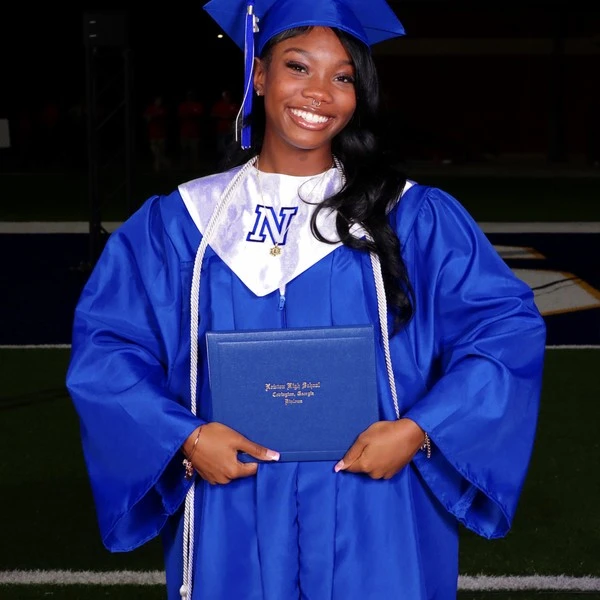
My name is Laniya Casey, and I graduated Newton High School, where I have dedicated my four years to academic excellence, leadership, and service. Growing up in a single-parent household and witnessing my family’s resilience has shaped the person I am becoming. I am determined, compassionate, and deeply committed to helping others. This fall, I plan to attend an HBCU, where I will study Radiologic Technology with the long-term goal of entering the healthcare field. My experiences throughout high school have strengthened not only my career ambitions but also my understanding of the importance of mental health, a topic I have chosen to focus on for this scholarship essay.
During my high school years, I learned that mental health is not something separate from our daily lives, it is deeply connected to how we think, feel, and function. I learned this not through a single event, but through a collection of moments that showed me how fragile and complex the mind can be. Between balancing school, home responsibilities, and preparing for college, I began to understand that even strong, capable people experience moments of stress, anxiety, and self-doubt. For a long time, I believed that pushing through struggles without acknowledging them was the same thing as strength. But as I watched classmates battle anxiety, saw friends overwhelmed by expectations, and felt the weight of my own challenges, I realized that true strength is recognizing when you are not okay and asking for help.
One of the most powerful lessons I learned is that mental health struggles do not always look the same for everyone. Some people withdraw quietly, while others overextend themselves to avoid confronting their emotions. This understanding taught me to check on people even when they appear fine. I also learned that mental health is not something we “fix” once and forget. It requires consistent care, patience, and compassion. High school taught me that small acts of kindness, active listening, and being present can make a profound difference in someone’s emotional well-being.
Most importantly, I learned the value of creating safe spaces. Whether it was offering a quiet place for a friend to talk during lunch or encouraging classmates to speak with counselors, I realized that support can come from anyone not just professionals. This lesson stays with me as I prepare for college because I know that mental health challenges do not disappear after graduation. College brings new responsibilities, new environments, and new pressures that many students are not prepared for. My high school experiences have equipped me with empathy and awareness that I plan to carry forward.
In the years to come, I will apply what I’ve learned by being intentional about taking care of my own mental health and supporting those around me. In college, I plan to be an advocate for mental health by promoting open conversations, participating in campus wellness programs, and encouraging my peers to seek help when they need it. As a future healthcare professional, I also understand how mental well-being influences physical health. This awareness will allow me to interact with patients more compassionately and recognize the signs of emotional distress that often go unnoticed.
High school taught me that mental health is not optional, it is essential. It affects how we learn, how we love, and how we live. By carrying these lessons into college and my future career, I hope to contribute to a world where people feel less alone, more supported, and more willing to care for their minds just as much as their bodies.
Sue & James Wong Memorial Scholarship
Growing up in a single-parent household shaped not only who I am, but also the future I am determined to build. My mother raised four children on her own while working long, demanding shifts as a surgical technician. Watching her balance exhaustion with unconditional love and responsibility taught me lessons that I could never learn in a classroom. This environment is where I learned resilience, self-discipline, and the importance of using my opportunities to create a better future for myself and for others.
Living in a single-parent household came with challenges that strengthened me. Financial stress meant sacrifices. There were moments when she worked overtime to keep the lights on or skipped sleep to be present for us the next morning. I grew up understanding that life does not hand you success; you earn it with grit, late nights, and unwavering belief in your purpose. I learned to be independent early, helping with my siblings and taking responsibility for my education. Although the challenges were real, they shaped me into someone who does not give up easily and who understands the value of compassion because I witnessed it every day.
My path toward healthcare became clearer as I grew older. My mother’s career introduced me to the medical world, and family hardships deepened my connection to it. Watching my grandmother battle breast cancer and my grandfather face a colon cancer diagnosis showed me the emotional weight that illness places on entire families. These experiences were painful, but they also sparked my desire to help people navigate their own health struggles with dignity and support. I wanted to be part of a field where I could use my skills to ease fear, offer hope, and provide care that honors both body and spirit.
This passion led me to pursue radiology. Medical imaging may seem like a behind-the-scenes field, but it plays a powerful role in diagnosis and early detection, often becoming the first step in saving a life. I admire how radiology blends precision, science, and technology with human connection. Behind every image is a person with a family, a story, and a fear of the unknown. I want to be the kind of healthcare professional who not only performs my job with excellence, but also ensures each patient feels safe, informed, and respected.
Through my education, I plan to make a meaningful difference in the world by combining technical skill with empathy. I want to work in communities where access to quality healthcare is limited and help bridge the gaps that leave so many families underserved. I hope to advocate for earlier screenings, educate patients about their health, and provide care that reflects sensitivity, cultural understanding, and compassion. Beyond the hospital setting, I want to mentor young students, especially those from single-parent households, who may feel that their circumstances limit their potential. I want to show them that their story is not an obstacle but a source of strength.
Education is not just a personal achievement for me; it is a responsibility. It represents every sacrifice my mother made, every hardship my family overcame, and every dream I refused to give up on. My goal is to take the strength I gained from my upbringing and pour it back into the world through a career devoted to helping others.
Growing up in a single-parent household taught me resilience. Healthcare gave me purpose. And my future in radiology will allow me to turn those lessons into meaningful impact—one patient, one image, and one act of compassion at a time
Leading Through Humanity & Heart Scholarship
1).Growing up in a single-parent household shaped my values and my commitment to human health and wellness. My mother, a surgical technician and a mother of four, showed me every day what dedication, compassion, and perseverance look like. Watching her balance long hospital shifts with raising our family taught me the importance of resilience and service to others.
My passion for healthcare also comes from personal experiences within my family. My grandmother’s battle with breast cancer and my grandfather’s diagnosis of colon cancer showed me the emotional weight that illness places on patients and loved ones. These experiences opened my eyes to the deep need for compassionate, patient-centered care and made me want to be someone who helps others through some of the hardest moments of their lives.
Now, as a radiology student, I carry those values with me, empathy, strength, and a genuine desire to help people feel seen, supported, and safe. My path is shaped by the people who loved me, the challenges I witnessed, and the belief that every patient deserves care that honors both their health and their humanity.
To me, empathy means the ability to truly understand and connect with another person’s feelings, experiences, and fears. It goes beyond sympathy or polite concern—empathy is the willingness to pause, listen, and recognize the emotional world of someone who may be going through something painful or overwhelming. In healthcare, this mindset is essential, especially in a field like radiology where patients often arrive during moments of uncertainty, anxiety, or life-altering medical evaluations.
2). My understanding of empathy was shaped early in life through the experiences of my family. When my grandmother was diagnosed with breast cancer and later my grandfather with colon cancer, I saw firsthand how critical compassionate care is. The medical teams who supported them did more than treat their conditions. They created moments of calm, explained complicated procedures with patience, and treated my family with dignity. Those moments stayed with me. They taught me that healthcare is not only about science and technology; it is deeply human work.
Being raised by a single mother working as a surgical technician also influenced my perspective. I watched her come home after long shifts and still find the emotional energy to support her children. She shared stories, not details about patients, but lessons about kindness, teamwork, and caring for people at their most vulnerable. Her dedication showed me that empathy is not optional in healthcare; it is the foundation of trust.
As a radiology student, I understand how easy it can be for medical imaging to feel technical or impersonal. Patients may only spend a few minutes with a radiologic technologist, but those minutes matter. Many people come in afraid of what the scan might reveal. Others may be in pain, confused, or overwhelmed. That is where empathy becomes essential. It means greeting each patient with patience, explaining procedures clearly, recognizing their emotions, and creating a space where they feel safe rather than rushed. Even small acts, maintaining a calm tone, offering reassurance, or simply listening. l can transform their entire experience.
Ensuring my work is done through a human-centered lens means prioritizing people over processes. It means remembering that every scan belongs to someone with a life, a family, and fears of their own. In my future career, I will advocate for communication that is respectful and accessible, make sure patients understand what is happening to their bodies, and always approach care with cultural sensitivity and humility. I will treat every patient the way I wanted my grandparents to be treated with dignity, compassion, and genuine care.
Empathy is not just a quality; it is a responsibility. And in radiology, where images can change lives, I want to ensure that every patient also leaves feeling valued as a person, not just a case.
Christina Taylese Singh Memorial Scholarship
When I think about why I chose radiology, my mind always goes back to the day my grandmother told us she had breast cancer. I remember the quiet in the room, the questions none of us knew how to ask, and the fear that came from not knowing what would happen next. That moment changed me. It opened my eyes not only to the realities of illness, but also to the strength people find within themselves when they are faced with something life altering. Walking beside my grandmother through her appointments, treatments, and long days of uncertainty shaped the way I see healthcare. It made radiology more than a field of study to me it made it personal.
During her journey, medical imaging became the language we learned to understand her condition. Every mammogram, MRI, and scan felt like part of a conversation between her body and the doctors trying to help her. I watched how radiologists and technologists became essential guides for our family, explaining what the images showed and what the next steps were. Their work helped us make sense of things that felt overwhelming. That experience showed me the power of radiology not just in diagnosing disease, but in giving families clarity in moments when they feel lost. I want to be part of providing that clarity for others.
Being with my grandmother throughout her cancer journey taught me that healthcare is not just about treatment, it is about connection. I saw how much it meant when someone took the time to be gentle, patient, and kind. Some days, what she remembered most was not her results, but the technician who held her hand when she was anxious or the nurse who made her smile. Those moments taught me that compassion is just as important as clinical skill. In radiology, where patients often come in scared or uncertain, I want to bring that same level of understanding and care.
My grandmother’s experience also made me deeply aware of how early detection can change a person’s entire outcome. I watched the difference it made for her, and I saw how powerful imaging can be in catching illnesses before they become too advanced. That realization is one of the biggest reasons I am committed to radiology. I want to help ensure that people get the screenings they need and the answers they deserve, especially in communities where access to healthcare is limited. My goal is to contribute to closing the gap that often leaves people without the resources or information necessary to protect their health.
Radiology inspires me because it combines the precision of technology with the depth of human care. I love the idea of using imaging to uncover what cannot be seen on the surface and using that knowledge to help doctors guide patients toward healing. At the same time, I am drawn to the human aspect—the chance to comfort patients during difficult moments and reassure them that they are not alone. I want to be someone who makes a frightening experience feel a little more manageable.
Choosing radiology is my way of honoring my grandmother’s strength and transforming the pain of her diagnosis into purpose. Her journey gave me direction, clarity, and a deep desire to help people receive the early detection and compassionate care that she needed. My career goal is to stand beside patients the way I once stood beside her—with hope, empathy, and unwavering support. Radiology is where I know I can make that difference, one image and one patient at a time.
Raise Me Up to DO GOOD Scholarship
Growing up in a single-parent household has shaped my identity, my resilience, and the future I am determined to build. My mother raised me and my three siblings almost entirely on her own, and watching her navigate life with unwavering strength has deeply influenced the person I strive to become. As a surgical technician, she worked long hours, often leaving before sunrise and returning home late in the evening, yet she still managed to be a steady source of love, encouragement, and guidance. Her work ethic taught me that success is not only earned but also sustained through dedication and sacrifice. The lessons I learned from her are what led me to pursue a career in radiology and what continue to push me forward as I work toward my educational and professional goals.
Growing up, finances were always tight, but my mother made sure our home was filled with hope rather than fear. Even when overtime was her only option, she took it without hesitation because she wanted her children to have opportunities she never had. Her commitment to building a better life for us inspired me to dream boldly, even when circumstances felt limiting. I watched her put on her scrubs with pride, knowing she was contributing to the healing of others, and that image stayed with me. It planted the seed that I, too, wanted to enter the medical field, not simply for a job, but for a purpose.
Today, I am pursuing a degree in radiologic technology, a field that allows me to blend technical skill with compassionate care. Radiology plays a crucial role in diagnosing illnesses, guiding treatments, and providing patients with answers during some of their most vulnerable moments. I chose this field because I want to be part of the team that helps uncover those answers. I want to help patients feel seen, supported, and valued, just as my mother made me feel throughout my childhood.
However, continuing my education comes with financial challenges. As a first generation college student from a single income household, I shoulder much of the responsibility for funding my degree. Scholarships like this one offer the support I need to stay focused on my studies without being overwhelmed by financial stress. They bring me one step closer to fulfilling the goals inspired by my mother’s sacrifices.
In the future, I envision myself using my career not only to help individual patients but also to contribute to my community more broadly. I want to use my talent, compassion, and training to make healthcare more accessible and more human. Whether it’s volunteering at local health screenings, mentoring students who want to pursue medical careers, or advocating for earlier imaging access in underserved areas, I want my work to matter beyond the walls of the radiology department. I want to be someone who turns empathy into action.
Looking ahead, I see a future where my experiences and education come together to create change. Being raised by a single mother taught me that strength is most meaningful when it lifts others. My goal is to live out that belief every day by helping patients through moments of fear, supporting families as they wait for answers, and ensuring that compassion remains at the heart of healthcare. My mother’s journey has guided me to this path, and with the support of this scholarship, I am determined to continue building a future that reflects both her perseverance and my purpose.
Dr. Nova Grace Hinman Weinstein Triple Negative Breast Cancer Research Scholarship
My name is Cantanea Bryant, and I am a student driven by purpose, curiosity, and a deep commitment to improving the lives of others through science. For as long as I can remember, I have been fascinated by the way the human body works and inspired by the idea that research can save lives. Over time, that curiosity has evolved into a clear goal: to become a researcher dedicated to discovering innovative treatments and someday, a cure for breast cancer. This goal is not only rooted in academic interest, but also in a deeply personal experience that changed the course of my life.
My research journey truly began when my grandmother was diagnosed with breast cancer. Before her diagnosis, she was the heart of our family,strong, nurturing, and the kind of woman whose presence could brighten a room. Watching her undergo treatments, struggle with pain, and still try to hold onto her strength opened my eyes to the reality of this disease. I saw how breast cancer affects not only the patient, but the entire family. I saw how uncertainty, fear, and hope can exist all at once. Most importantly, I saw how desperately better treatments are needed,treatments that are less harsh, more effective, and more accessible. Her experience lit a fire inside me, one that has guided every academic and career choice I’ve made since.
Because of her, I decided to pursue research that focuses on breast cancer at the cellular and molecular level. I want to understand not just what the disease does, but why it develops, how it spreads, and what mechanisms can be targeted to stop it. My goal is to contribute to a future where early detection is more accurate, treatments are more personalized, and survival rates continue to rise. I want families like mine to have better outcomes, more hope, and more time with the people they love.
My interest in research has also grown from my desire to help communities that are disproportionately affected by breast cancer, including Black women, who face higher mortality rates due to systemic barriers in healthcare. By studying this disease, I hope to also advocate for more equitable medical access and representation in clinical trials. Research is not just about the science; it is about ensuring that the discoveries truly reach the people who need them most.
In the future, I aspire to work in a research laboratory specializing in oncology, where I can contribute to breakthroughs in detection, treatment, and ultimately, prevention. I want to collaborate with scientists, physicians, and public health leaders who share the same mission. Long-term, I hope to lead my own research team focused on developing targeted therapies that minimize side effects and improve survival outcomes. But no matter how far I go in my career, my grandmother will always be the reason behind my dedication. Even though her diagnosis brought hardship, it also brought purpose. She taught me to be strong, to be hopeful, and to use my gifts to help others.
Research is a long and challenging journey, but it is also one filled with meaning. Every experiment, every piece of data, and every discovery has the potential to change someone’s life. That possibility is what motivates me every single day. I am committed to using my education, my passion, and my personal experiences to push forward in the search for a breast cancer cure. My grandmother’s story is the foundation of my purpose, and my research is the way I honor her strength. Through this work, I hope to make a lasting difference for families everywhere who face this disease.
Arthur and Elana Panos Scholarship
Faith has always been the quiet but steady foundation of my life, guiding me through challenges, shaping my values, and helping me develop a sense of purpose. From my earliest memories, I was taught that faith is not only something you speak about, but something you live through your actions. Over the years, this belief has grown with me, strengthening me during moments of grief, grounding me during moments of uncertainty, and motivating me to pursue a career path where I can serve others with compassion and intention. My relationship with God has taught me resilience, patience, and humility, qualities that I know will follow me throughout my life and future career in healthcare.
My faith became especially important during moments when life felt overwhelming. Losing loved ones, watching family members struggle with illness, and navigating challenges as a young Black woman striving for success have all been moments where I leaned into prayer for strength. Each time, I felt God reminding me that my struggles were shaping me, not defeating me. Instead of becoming discouraged, I learned to view obstacles as opportunities for growth. This perspective has been one of the greatest gifts my faith has given me, because it allows me to push forward with hope even when situations feel uncertain.
Through faith, I also learned the importance of empathy. The Bible teaches compassion, service, and love, and those lessons have guided how I interact with the people around me. Whether I am comforting a friend, supporting a family member, or volunteering in my community, I try to show understanding and kindness. My belief in treating others with dignity has shaped my desire to enter the healthcare field, where compassion is just as essential as clinical skill. I want to be someone who patients not only trust medically, but also feel emotionally safe with, and my faith is the reason that matters so deeply to me.
As I continue on my path toward a healthcare career, I know that my faith will remain a guiding force. Healthcare is a field filled with challenges,long hours, emotional situations, and difficult decisions. Yet it is also a field filled with purpose, healing, and moments of profound human connection. My faith will help me navigate the stressful moments with patience and emotional strength. It will remind me that every patient deserves understanding, that every difficult day will pass, and that my commitment to service is bigger than myself. My faith will keep me grounded, helping me focus on why I chose this journey in the first place: to help improve the lives of others.
In addition, my faith gives me a sense of integrity that I carry into every responsibility. I believe in working hard, being honest, and giving my best even when no one is watching. These values will shape the kind of healthcare professional I become. I want patients to feel that they are receiving care from someone who values their well-being, advocates for them, and treats them with genuine respect.
Ultimately, faith has not only guided my past but also inspires my future. It has helped me develop strength, compassion, and purpose,qualities that will define my journey in healthcare. I believe God placed this calling on my heart, and with His guidance, I know I can make a meaningful difference in the lives of others. My faith motivates me to serve, to persevere, and to grow, and I am committed to carrying those beliefs forward into every chapter of my career and life.
Annie Pringle Memorial Scholarship
Breast health education is deeply important to me because it is tied to one of the most personal experiences of my life: my grandmother’s breast cancer diagnosis. Before her illness, I never understood how vital early detection and awareness truly were. I saw breast cancer as something distant, something that happened to other families, never imagining it would affect mine so directly. When my grandmother was diagnosed, the reality of the disease became painfully clear. Her journey changed the way I view health, responsibility, and the urgency of informed education for women everywhere.
Watching my grandmother navigate appointments, treatments, and uncertainty taught me lessons that continue to shape my life today. She was a strong woman, but even strength cannot replace knowledge. Our family often felt lost, overwhelmed by medical terms and unsure of what questions to ask. It was during this time that I realized how powerful education can be. Breast health education does more than inform; it empowers individuals to advocate for themselves. If my grandmother had been more aware of screening guidelines and early warning signs, her diagnosis might have been caught sooner, giving her a better chance.
Because of her experience, I believe breast health education is a necessity, not an option. Many women delay screenings because they fear the results or misunderstand the process. Others dismiss symptoms because they think they are too young or too healthy to worry. Education can break through those beliefs and replace fear with knowledge. It creates space for conversations within families, schools, and communities. When people understand their bodies, their risks, and the resources available to them, they are more likely to seek help early. That awareness can truly be the difference between life and loss.
My grandmother’s diagnosis also shaped my decision to pursue radiology. As I watched her undergo imaging after imaging, I saw how essential radiologic technologists were in identifying changes and guiding treatment. They provided clarity during moments filled with confusion, and their work connected directly to her care. I realized that I wanted to be part of that process for other families. Through radiology, I can contribute to early detection and help provide answers at crucial moments. My career path is a way to honor her strength while also working to prevent other families from experiencing the same pain.
Breast health education matters because it reaches beyond hospitals and clinics; it influences families, communities, and generations. When women are given accessible, accurate information, they can make proactive choices that protect their health. Education can encourage open conversations about family history, genetic risks, and lifestyle factors. It can help individuals recognize changes early and overcome the hesitation that often delays medical care. By promoting breast health education, we help create a culture where prevention is valued and where women feel empowered to seek the care they need without shame or fear.
Breast health education is important to me not only because of what my grandmother endured, but because of the hope it offers to others. Her story motivates me to become an advocate who encourages women to prioritize their health and to trust their instincts. As I continue my education in radiology, I plan to use my knowledge and experience to support awareness in my community. I want to help people understand that early detection saves lives, and that education is a step toward that goal. My grandmother may no longer be here, but her impact continues through my commitment to this cause. By dedicating myself to breast health education, I honor her memory and work toward a future where families face pain ours did.
Harvest Scholarship for Women Dreamers
Everyone has a dream that feels both thrilling and slightly out of reach, and mine is to become a highly skilled radiologist who uses technology, compassion, and curiosity to make healthcare more accessible and more human. This dream sits at the intersection of who raised me, what I witnessed growing up, and who I hope to become. It is my “pie in the sky” vision not because it feels impossible, but because it demands the best version of me, courage, determination, and an unwavering commitment to growth.
My dream was sparked by the two women who shaped my understanding of resilience: my mother, a single mom who worked tirelessly in healthcare to provide for us, and my grandmother, who dedicated her life to caring for others before she passed away. Growing up, I watched my mother navigate long shifts, emotional days, and constant responsibilities with a kind of steady strength that taught me what perseverance truly looks like. I saw her put on her scrubs even when she was exhausted, because serving others mattered to her. My grandmother carried that same spirit, and even though she is no longer here, her legacy continues to guide me.
Together, their examples made me believe that working in healthcare is more than a job, it is a calling. But the moment that transformed my dream into something deeper was witnessing how technology, especially medical imaging, shaped my grandmother’s care. Radiology was the bridge between uncertainty and answers. It provided clarity in moments when everything felt overwhelming. I realized then that becoming a radiologist meant becoming someone who could offer guidance, truth, and hope to families facing some of their hardest days. That realization lit a fire in me that has never gone out.
Reaching this dream will require discipline, sacrifice, and an open mind. I know I will need to succeed in my radiology program, build a strong foundation in anatomy and imaging science, and gain clinical experience that pushes me out of my comfort zone. I will need mentors who challenge me, environments that test me, and opportunities that stretch my abilities beyond what I think I can handle. Most of all, I will need to keep the purpose behind my dream close to me: to carry forward the legacy of the women who raised me and to serve patients with the same compassion they lived by.
Even though my dream feels big, it also feels like the most honest reflection of who I am becoming. I want to step into a future where I can make a real difference, where I can stand beside families during uncertain times, and where I can blend skill with empathy in every interaction. The path will be long, but I’m ready for it. My mother’s strength and my grandmother’s memory remind me every day that I come from a line of women who pushed through barriers. And now, I am ready to push toward my own dream with courage, creativity, and a commitment to growing into the person I am meant to be.
I know there will be moments when the journey feels overwhelming, but those moments will only deepen my commitment. My dream may feel slightly out of reach now, but I believe that the challenges ahead are meant to shape me rather than stop me. Every step I take toward becoming a radiologist brings me closer to a life where I can honor my family, uplift my community, and live with intention. That possibility is what keeps me moving forward with hope and determination. I am ready for what comes next.
Eden Alaine Memorial Scholarship
Losing my grandmother was one of the most painful experiences of my life, this experience shaped me the most. Her diagnosis with breast cancer changed the rhythm of my family’s world, and watching her face such a difficult battle transformed the way I see strength, purpose, and my own future. Even now, her memory guides my decisions, especially my decision to pursue college and become a radiologist. In many ways, her journey continues to shape mine.
When my grandmother was first diagnosed with breast cancer, I remember feeling stunned and unsure of what the future would hold. She had always been the center of our family, the person whose voice could bring comfort and whose presence felt like home. Seeing her weakened by a disease I barely understood forced me to confront emotions I had never experienced before. I watched her try to stay strong for everyone around her, even when chemotherapy drained her energy or the pain made everyday tasks almost impossible. Her courage taught me that strength is not measured by how much we can hold, but by how willing we are to keep going even when life becomes heavy.
I spent countless afternoons sitting with her, listening to her talk about her childhood, her dreams, and the things she wished she had more time to do. Those conversations gave me a deeper appreciation for life and for the moments that often slip by unnoticed. More importantly, they made me realize how fragile health can be and how deeply illness affects not just the body, but the entire family. I watched my grandmother fight with everything she had, and even though she eventually passed away, she left behind a powerful legacy of compassion, resilience, and love.
Grief changed me. It made me quieter for a while, more reflective, and more determined to make meaning out of my pain. As I processed my loss, I realized that I didn’t want to simply move on, I wanted to move forward in a way that honored her. I began to think about the doctors, nurses, and radiologic technologists who cared for her during her illness. Many of them took the time to explain procedures gently, answer questions, and treat her with dignity during moments that could have easily felt overwhelming.
That was when I discovered my passion for radiology. Radiologic technologists played an essential role in my grandmother’s diagnosis and treatment, and I saw firsthand how important their work was. They weren’t just taking images; they were helping to guide decisions, provide clarity, and support families during uncertain times. I realized I wanted to be part of that process for someone else’s loved one. I wanted to help bring answers, comfort, and hope to families facing the same fear and confusion mine once faced.
Choosing to go to college to become a radiologist is more than just a career choice for me, it is a promise to my grandmother. It is my way of turning loss into purpose, pain into motivation, and memory into action. Her journey taught me empathy, patience, and the importance of showing kindness during someone’s most vulnerable moments. Those lessons continue to guide me, both academically and personally.
Although losing my grandmother was incredibly difficult, the experience shaped me into someone stronger, more focused, and more compassionate. It gave me a clear vision of the path I want to take and the kind of impact I hope to have in the world. And because of her, I am committed to building a future in healthcare where I can help bring comfort, clarity, and hope to others.
Nabi Nicole Grant Memorial Scholarship
Faith has always been the foundation I return to when life feels unsteady, but I never understood its true strength until I faced the heartbreak of losing both my grandmother and grandfather within just one year. My grandmother was diagnosed with breast cancer and my grandfather with colon cancer, it shattered the sense of security I had always felt in my family. The experience forced me to confront fear, grief, and uncertainty in a way I never had before, and it demanded a deeper kind of faith than I had ever practiced. Looking back, that period of my life reshaped me, teaching me resilience, patience, and trust in a plan bigger than my own.
When my grandmother was diagnosed with breast cancer, I felt a mixture of disbelief and helplessness. She had always been a source of warmth and strength in my life, the person whose laughter could fill a room and whose advice felt like a guiding compass. Watching her face chemotherapy and pain with dignity was both inspiring and devastating. I prayed constantly, sometimes asking for healing, other times simply asking for peace, strength, or understanding. My faith became the only place where I could put the emotions I didn’t have words for.
Just as my family began adjusting to the rhythm of hospital visits, treatment schedules, and hopeful conversations, my grandfather received his colon cancer diagnosis. The news hit us like a second storm before we had recovered from the first. Suddenly, I felt surrounded by sickness and fear, and the weight of it all made me feel like my world was closing in. I questioned why this was happening and why it had to be both of them. These were the moments when my faith wavered, but they were also the moments when I learned what it truly meant to lean on something greater than myself.
I prayed not just for miracles but for endurance. I prayed for my family as we tried to hold ourselves together, and I prayed for the courage to be present even on the hardest days. My faith allowed me to believe that even in suffering, there was purpose. It gave me the strength to sit beside my grandparents, talk with them, listen to them, and make memories I now treasure deeply. Faith helped me show love rather than fear, even when I was hurting inside.
Losing my grandmother first broke my heart in a way I didn’t know was possible. Losing my grandfather shortly after felt like reopening a wound that had barely started to heal. For a while, I felt lost. But faith reminded me that grief and growth can coexist. I began to understand that faith is not about avoiding pain but surviving it, learning from it, and using it to become stronger.
Their passing pushed me to reflect on the kind of person I want to be. I want to honor their lives by living with the same strength, compassion, and resilience they showed me. Faith helped me reach that understanding, and it continues to guide me through obstacles both big and small. It taught me that even in the darkest moments, hope can still be found, and strength can still be built. Their journeys, though painful, also deepened my sense of empathy and strengthened my desire to uplift others facing hardship, reminding me that faith can transform burdens into lasting purpose.
Trees for Tuition Scholarship Fund
I believe that making the world a better place begins with intentional care for people, for communities, and for the systems meant to support them. My dream of entering the healthcare field is rooted in this belief and in the personal experiences that shaped my understanding of what compassionate care truly means. One of the greatest influences on my path was my grandmother, who passed away from pneumonia. Losing her opened my eyes to the realities of health disparities and the urgent need for accessible, culturally competent care in communities like mine.
Growing up, my grandmother was the heart of our family. She had spent her own life working as a nurse, caring for others with strength and tenderness. When she became sick, I watched her struggle in a system not built for people who looked like us. I saw how delayed treatment, a lack of resources, and gaps in communication contributed to her decline. Her passing was painful, but it solidified my commitment to entering healthcare so I can advocate for families who face the same barriers we did. I want to honor her legacy by becoming the kind of provider who listens, educates, and truly sees every patient.
Attending an HBCU is a vital part of that mission. HBCUs nurture Black students in ways that empower us to lead with confidence, cultural understanding, and purpose. They provide a community where identity is celebrated, not questioned, and where students like me can grow into leaders equipped to serve populations long overlooked. Choosing an HBCU means joining an environment that will strengthen my voice, deepen my understanding of inequities, and prepare me to fight for change with knowledge and compassion.
I am already working to make my community better by volunteering, mentoring younger students, and supporting local health and wellness initiatives. Whether I am helping educate others about prevention, assisting families dealing with illness, or showing up as a dependable support system, I try to embody the values my grandmother lived by. These everyday acts have taught me that change often begins on a small scale before it grows into something larger.
After college, I plan to return to communities like the one that raised me and expand my impact through healthcare advocacy and hands-on patient care. I want to create outreach programs focused on preventative education, early intervention, and support for chronic illnesses that disproportionately affect Black communities. I also hope to inspire young people by showing them that careers in healthcare are not only possible but deeply needed. Representation is powerful, and I want to encourage the next generation of Black healthcare leaders.
Beyond individual patient care, I aim to address the systemic issues that contribute to preventable suffering. Conditions like pneumonia, diabetes, asthma, and hypertension often intersect with social and economic inequality. I want to use my voice to help shape policies that ensure equitable access to care, better communication, and healthier outcomes for all.
Her strength continues to push me forward, reminding me that every act of service matters, even small ones. I want to build a career defined not only by medical skill but by humanity, empathy, and the determination to create meaningful change.
Delories Thompson Scholarship
Growing up, I learned early that purpose is not just something you find, it’s something you build. In my future career, I hope to create meaningful change through healthcare, advocacy, and community work, using my skills to uplift people who come from backgrounds like mine. I want to serve as both a professional and a mentor, helping young Black students see possibilities that society often hides from us. My goal is to build a career rooted in service, leadership, and representation, using every opportunity I earn to open doors for others.
Being Black to me means carrying strength that has been shaped through generations. It means resilience, creativity, and a sense of pride that comes from knowing I am part of a culture that has influenced the world in every way imaginable, through art, history, innovation, and perseverance. It also means understanding that my achievements are not just my own, but part of a larger story of progress.
I chose to attend an HBCU because I wanted to grow in a place where my identity is celebrated, not questioned. At an HBCU, I am surrounded by excellence, history, and community, an environment that pushes me to dream bigger and become the best version of myself.
Private (PVT) Henry Walker Minority Scholarship
If given the opportunity, I would dedicate myself to improving my community by expanding access to health education, mentorship, and support for underserved families. Growing up in a community where resources were limited and many individuals struggled silently with health challenges, academic barriers, and a lack of consistent guidance, I saw firsthand how much difference one person’s care can make. My grandmother, who passed away after battling health complications, was one of the biggest influences on my desire to uplift others. She embodied kindness, resilience, and service, and her life continues to inspire the work I hope to do. Strengthening my community begins with empowering the people in it, and the most effective way to create lasting change is to combine education, compassion, and advocacy.
One of the first ways I would work to improve my community is by creating accessible health education programs for youth and older adults. Proper health knowledge about chronic diseases, mental health, nutrition, or preventive care, is often the dividing line between stability and crisis. My grandmother spent many years navigating medical challenges, and watching her struggle at times due to limited access to information showed me how critical health education is. I want to organize workshops, host informational events, and partner with local healthcare professionals to ensure that everyone, regardless of income or background, has access to life-saving information. No one should suffer because they lacked the resources or support they deserved.
I would also work to strengthen mentorship opportunities for young people. Many students in my community are full of potential but have limited guidance. By developing mentorship programs and connecting students with professionals, college students, and community leaders, I want to help young people see possibilities beyond their immediate circumstances. My grandmother was one of the first people who encouraged me to believe in myself and dream bigger. Her support taught me the power of nurturing someone’s potential, and I want to create a reliable network of mentors so that the next generation receives the same level of encouragement she gave me.
I hope to focus on supporting families dealing with health or financial hardships. When one person in a household is struggling, the entire family feels the impact. I want to partner with local organizations to provide resources such as tutoring for students, support groups for caregivers, and assistance programs that help families meet essential needs. Offering support to families in crisis is important to me because I understand how challenging it can be to hold everything together while coping with grief or medical concerns.
Improving my community matters because it is the place that raised me, shaped me, and taught me the value of resilience. My grandmother was a powerful example of strength and compassion, and honoring her legacy means continuing the work of looking out for others. The challenges I watched people face were not signs of weakness but evidence of a system that needed more resources, more understanding, and more advocates. I want to be one of those advocates. My long-term goal is to build a career in healthcare so I can continue serving communities like mine with the knowledge, empathy, and commitment they deserve.
If given the opportunity, I would use my education, passion, and personal experiences to create meaningful, sustainable improvements in the health, growth, and wellbeing of my community. Strengthening my community is deeply personal to me, and it is one of the most powerful ways I can honor my grandmother’s memory and continue the legacy of care she inspired.
Shanique Gravely Scholarship
When I think about the person who has had the greatest impact on my life, I immediately think of my grandmother. She was a woman whose strength, grace, and resilience shaped who I am and who I hope to become. Losing her to breast cancer was the most devastating experience of my life, yet it also became the moment that transformed my purpose, deepened my compassion, and clarified the path I want to walk. Her life and her loss continue to guide me every day.
My grandmother was the kind of person who made everyone feel seen. She had a gentle way of understanding people, and she never hesitated to offer love, wisdom, comfort, and tough love.Growing up, I spent countless afternoons by her side, listening to her stories about her childhood, her dreams, and the obstacles she faced.
When she was diagnosed with breast cancer, I was young, but old enough to understand that life had suddenly changed. Her strength never wavered, even as treatments wore her down. She fought with everything she had, and she smiled even on her worst days. Watching her battle the disease was painful, but it opened my eyes to the reality of illness, the importance of early detection, and the emotional weight carried by patients and their families. I saw firsthand how much love, patience, and support someone needs during such a difficult journey.
The day she passed away felt like the ground had been pulled from beneath me. Grief reshaped my world, yet it also reshaped my character. It pushed me to reflect on the meaning of resilience, empathy, and service. I realized that the love she poured into me could not end with her life; it had to be carried forward. Her passing was not the end of her influence—it was the beginning of my commitment to honor her through my actions and aspirations.
Her battle with breast cancer sparked something deep within me. It motivated me to learn more about the disease, about healthcare disparities, and about the emotional challenges families face during such struggles. I became passionate about raising awareness for breast cancer, participating in walks, sharing educational resources, and encouraging conversations about prevention and support. These efforts were not just community service—they were personal. They were my way of keeping her memory alive and helping others avoid the heartbreak my family endured.
Most importantly, my grandmother’s journey changed the way I see my future. Her compassion and bravery inspired me to pursue a path where I can make a meaningful difference in people’s lives. Whether I choose a career in healthcare, advocacy, or community leadership, I want my work to reflect the values she taught me: kindness, strength, and a commitment to helping others. Losing her was the most painful moment of my life, but it also revealed the person I want to be—someone who uplifts others the way she uplifted me.
My grandmother may no longer be physically here, but her influence remains woven into the choices I make, the goals I set, and the person I am becoming. Her life showed me what it means to love deeply and live purposefully. Her loss taught me courage, empathy, and determination. She will always be the guiding light behind my ambition. As I continue on my journey, I carry her with me—not as a memory of loss, but as a source of strength, inspiration, and unwavering love.
Kim Moon Bae Underrepresented Students Scholarship
Being a Black woman has shaped my life in ways that go far beyond what people see on the surface. My identity has influenced how I walk into rooms, how I carry myself, and how I envision my future. It has challenged me, inspired me, and given me a sense of purpose that I hold close. For as long as I can remember, I have understood that who I am is both powerful and deeply meaningful. Not only for me, but for those who will come after me.
Growing up, I became aware early on that the world did not always expect much from girls who look like me. Sometimes I felt those expectations in small ways: a dismissive tone, a surprised reaction when I excelled, or the feeling of being overlooked. Other times it came in bigger waves, like being the only Black girl in a class and feeling pressure to prove myself constantly. These moments used to make me feel isolated, but over time, they became the spark that lit my determination. Instead of letting those experiences make me shrink, I decided they would make me rise. I learned to speak with confidence, to show up fully, and to never apologize for being exactly who I am.
My identity also pushed me to pay close attention to the people who paved the way for me. The strength of Black women—whether in my own family or throughout history—has always been a reminder that resilience runs in my blood. Women like my mother, grandmothers, and aunts taught me that grace and power can live in the same place. Their stories remind me that even when doors don’t open easily, I have the right to walk through them. This sense of legacy motivates me every day. I want to honor the sacrifices that came before me by creating opportunities not only for myself, but for others who share my experiences.
Because of this, I have always been drawn to mentorship, service, and advocacy. When I support younger students, or show up for people who feel unseen, I am reminded of the moments when I needed someone to do the same for me. I want to be the kind of person who helps others feel capable and valued. I know what it feels like to doubt yourself simply because society makes you feel like an outsider. My goal is to be that voice for someone else.
As I look ahead, I see my identity continuing to shape my purpose. My career aspirations are not only about personal success—they are about representation, impact, and building a future where Black girls see themselves reflected in places they have every right to be. I want to use my education to break barriers, to challenge stereotypes, and to help create systems where diversity is not an afterthought but a strength. Being a Black woman gives me a perspective rooted in resilience, empathy, and understanding. It makes me want to push harder, dream bigger, and carry the responsibility of making things better for the generations coming behind me.
This scholarship would help me continue on that path. It would be an investment not just in my education, but in the future I hope to create—one where underrepresented voices are heard, respected, and empowered. My identity is not something I try to work around; it is the foundation of who I am and the reason I strive for more. I am proud to be a Black woman, and I plan to carry that pride with me into every space I enter.
Kyla Jo Burridge Memorial Scholarship for Brain Cancer Awareness and Support
My connection to brain cancer began when my younger cousin, Malik, was diagnosed with a malignant brain tumor when he was only ten years old. At the time, I was old enough to understand that something serious was happening but young enough that I struggled to process the fear and confusion around me. Watching Malik change from a playful, imaginative kid into someone who often felt too tired to speak or move left a deep mark on me. His courage, even in moments of pain, taught me how unpredictable and devastating brain cancer can be. It also shaped my belief that every patient and family deserves support, understanding, and hope. Malik’s journey continues to guide me as I pursue opportunities to raise awareness and stand with others navigating this difficult diagnosis.
Because of him, I became committed to doing more than sympathizing—I wanted to take action. In high school, I joined our community’s annual brain tumor walk and eventually became a youth coordinator for the event. I helped organize teams, created informational flyers, and spoke at school assemblies about the importance of funding research. One of my proudest moments was leading a fundraiser that involved local businesses donating a portion of their weekend sales to the National Brain Tumor Society. Our small town raised more money than expected, and several families told me they finally felt seen and supported. These experiences taught me that advocacy starts with empathy but grows through education and consistent effort.
I also volunteered with a local support group that assists families managing long-term neurological illnesses. Although I couldn’t provide medical advice, I offered childcare during meetings, helped set up informational sessions, and listened to parents who needed a safe space to talk. These moments strengthened my emotional resilience and pushed me to think about how I could make a career out of helping families like Malik’s. The more I learned about the gaps in resources, awareness, and accessibility, the more determined I became to dedicate my future to this cause.
Receiving this scholarship would be instrumental in helping me pursue a degree in healthcare with a focus on neuroscience. My goal is to become a clinician who not only understands the scientific complexities of brain cancer but also approaches patients and families with empathy shaped by personal experience. This scholarship would ease the financial pressure of tuition and allow me to participate more fully in research opportunities, internships, and volunteer programs related to neuro-oncology and patient advocacy.
In the future, I hope to contribute both inside and outside the clinical setting. I envision myself working directly with patients, offering compassionate care during diagnosis, treatment, and recovery. I also want to organize community education programs that explain symptoms, treatment options, and the importance of early intervention. Ultimately, I hope to bridge the gap between medical knowledge and community awareness so that no family feels unprepared or alone.
My cousin’s experience changed the way I see illness, resilience, and responsibility. It taught me that awareness saves time, research saves lives, and compassion strengthens families facing the unimaginable. This scholarship would allow me to continue honoring his journey by pursuing a career dedicated to supporting individuals and families affected by brain cancer and working toward a future where better treatments—and one day cures—are within reach. As I move forward, I am committed to continuing my volunteer work, expanding my research involvement, and seeking every opportunity to amplify the voices of families affected by brain cancer. I want my career to reflect not only professional knowledge but a promise to advocate, educate, and inspire change wherever it is needed.
Sammy Hason, Sr. Memorial Scholarship
My commitment to pursuing a career in healthcare is rooted in a deeply personal experience: the loss of my grandmother to pneumonia. She was a nurse who dedicated her life to caring for others, and her compassion and strength shaped how I view both healthcare and service. Watching her fight a respiratory illness that escalated so quickly was heartbreaking, but it also revealed the profound impact that skilled and empathetic healthcare professionals can have on patients and families. Her legacy continues to inspire me, and it guides my vision for how I plan to improve the lives of others, especially those living with lung disease and rare medical conditions.
I plan to improve the lives of others through a patient centered approach that prioritizes empathy,education, and advocacy. My grandmother always emphasized that listening was one of the most powerful tools a nurse could have, and I carry that lesson with me. Many patients, particularly those with chronic respiratory issues or rare disorders, feel unheard or misunderstood. By taking time to understand their experiences, concerns, and fears, I hope to build trust and foster stronger relationships. I want every patient I encounter to feel seen, valued, and supported every step of their treatment.
Education will be a key part of my work. Clear communication can transform a patient’s experience. Lung disease can make patients feel like their own bodies are working against them, and rare disorders often come with confusing terminology. I plan to help patients better understand their diagnoses, treatment options, and self-care strategies. Empowering people with knowledge gives them confidence and helps reduce the fear that often accompanies chronic illness. I want to make healthcare more accessible and less intimidating.
I envision supporting people with lung disease by blending clinical skill with emotional support. Respiratory conditions often limit mobility, independence, and quality of life. I hope to help patients manage their symptoms effectively, prevent complications, and maintain the highest level of function possible. My grandmother’s battle with pneumonia taught me how frightening it is when breathing becomes difficult, and I want to be the kind of provider who can offer both physical relief and emotional reassurance. I want to help reduce the burden these conditions place on individuals and their families.
For individuals with rare medical conditions, I plan to focus on advocacy and persistence. Rare disease patients often face long diagnostic delays, limited research, and feelings of isolation. I want to be someone who listens closely, takes their concerns seriously, and pushes for answers rather than dismissing symptoms. My goal is to be thorough and compassionate, ensuring that these patients receive the attention, resources, and respect they deserve. By staying educated on emerging research and working collaboratively with specialists, I hope to help provide clearer pathways to diagnosis and better-quality care.
Beyond direct patient care, I also plan to contribute to community health initiatives that promote early detection, improve respiratory wellness, and increase awareness of rare diseases. Educating the public about warning signs, environmental risk factors, and preventable complications can make a meaningful difference in long-term outcomes. Through outreach, screenings, and health education events, I hope to uplift underserved communities and help reduce medical disparities.
Ultimately, I plan to improve the lives of others by carrying forward the values my grandmother embodied: compassion, resilience, and dedication to others. Her life and passing showed me the importance of empathetic, knowledgeable healthcare providers. Through my future career, I hope to honor her legacy by offering every patient the care, understanding, and advocacy she believed in so strongly.