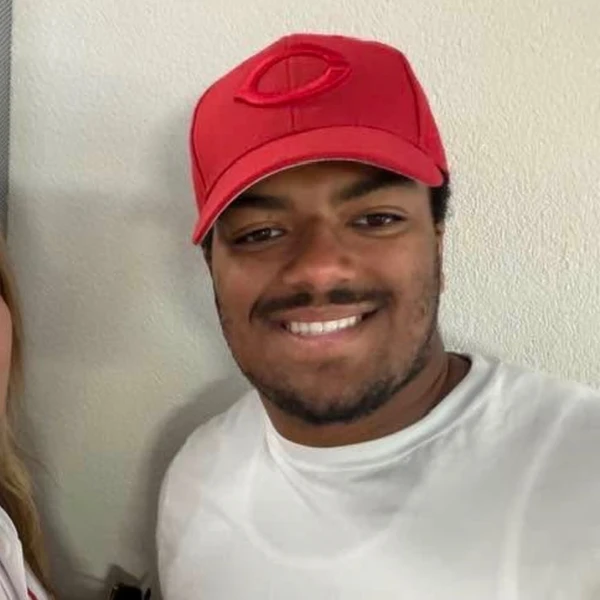
Lamiego Mutongwiza Jr
1x
Finalist1x
Winner
Lamiego Mutongwiza Jr
1x
Finalist1x
WinnerBio
I am a great candidate because I am most passionate about creating businesses that supply people with help for their needs, in order to get back! I am a second generation immigrant and first generation college student planning to graduate. A 4.0 gpa student athlete and full time worker.
Education
The University of Findlay
Bachelor's degree programMajors:
- Marketing
Miscellaneous
Desired degree level:
Bachelor's degree program
Graduate schools of interest:
Transfer schools of interest:
Majors of interest:
Career
Dream career field:
Automotive
Dream career goals:
Sports
Football
Varsity2021 – 20254 years
Awards
- Andy Rudd Award
Julie Holloway Bryant Memorial Scholarship
My name is Lamiego Mutongwiza Jr., though most people call me LJ. I'm a first-year student at the University of Findlay, where I'm pursuing a Business Marketing major with a minor in Entrepreneurship while playing Division I football on a full athletic scholarship. My first language is Shona, the language of my Zimbabwean roots, and English came later — a second tongue I had to learn to navigate the world I was born into.
Growing up in a household where Shona shaped our earliest words, prayers, and family conversations, I came to understand language as more than a tool for communication. It is a carrier of identity. Shona taught me how my family thinks, how we joke, how we honor our elders, and how we understand community — values that don't always translate cleanly into English. When I started school, I quickly realized that my classmates lived in a different linguistic world. There were moments when I'd reach for a Shona word that perfectly captured what I meant, only to fumble through a longer English explanation that lost the heart of what I was trying to say.
The challenges of being bilingual were real. As one of the older kids in a family of eight, with my father on disability and my mother stretched across raising all of us, I often acted as a bridge — translating documents, helping younger siblings with English homework, and explaining things at appointments or school meetings that adults around me couldn't always navigate. Code-switching between Shona at home and English at school sometimes meant I felt like two slightly different people depending on which room I was in. There were also moments in elementary school where I was self-conscious about the rhythm of my speech or the way certain English idioms felt foreign on my tongue.
But the benefits have far outweighed the challenges. Being bilingual taught me to listen more carefully, because I had learned the hard way that words carry weight that doesn't always survive translation. It made me a better teammate on the football field, where communication, empathy, and reading people are just as important as physical talent. It gave me a deeper appreciation for my Zimbabwean heritage and for the sacrifices my parents made so I could become the first in my family to attend college. And it has made me curious — I've now traveled to more than fifteen countries, and every trip reminds me that language is a doorway, not a wall.
Post-graduation, I plan to use my Business Marketing degree and entrepreneurship background to build brands and businesses that serve underrepresented and underserved communities — especially first-generation students and immigrant families like mine. I want to create platforms that tell our stories in our own voices, in whatever language those voices speak. Earning a 4.0 in my first two college semesters and the Andy Rudd Award my senior year of high school showed me that the discipline I built navigating two languages and two worlds is exactly the discipline I'll need to do this work.
Being multilingual didn't make my path easier. It made me stronger, more empathetic, and more determined — and that is a gift I'll carry into everything I build.
Zelaya Creativity Scholarship
THE LAST CLEAN MUG
Marcus could feel his entire morning hinging on a coffee mug.
Not just any mug. The mug. The chipped, navy-blue ceramic one with the faint outline of a college mascot worn down by ten years of dishwashers. The handle was just slightly too small for his hand, which was part of the appeal — it forced him to hold it with intention, like an offering. Every weekday for six years, Marcus had drunk his first cup of coffee out of that mug. He had used it to interview for his first real job. He had been holding it the morning his daughter said her first complete sentence. He had washed it by hand, even when he was exhausted, because the dishwasher had once cracked one of its siblings, and Marcus did not believe in giving sentimental objects two chances at extinction.
This morning, the mug was missing.
Marcus stood in front of the open cabinet at 6:14 a.m., still in his hoodie, staring at a row of perfectly functional alternatives — a mason jar, a tall straight-walled white mug from a wedding he barely remembered, a free promotional cup from a local bank. None of them were the mug. He felt his pulse rise in a way that, he understood intellectually, was insane. There was no professional consequence, no health risk, no social fallout to drinking coffee out of a different mug. He had a presentation at 9. He had not finished the last slide. His three-year-old was upstairs, asleep, in a phase where she only ate yellow foods. The world was on fire in twelve directions.
He just wanted his mug.
He closed his eyes. He thought about Stoicism. He thought about his therapist. He thought about his grandfather, who had immigrated to this country with two suitcases and an iron stomach, and who would have been deeply unimpressed with this moment. None of it helped.
Marcus checked the dishwasher. Not there. He checked the sink. Not there. He checked his daughter's playroom — sometimes she stole mugs to feed imaginary tea to her stuffed animals. Not there. He checked the car. Not there. He stood in the kitchen at 6:21 a.m. and quietly considered the possibility that he had become a person whose emotional regulation lived inside a piece of ceramic he could not even buy a replacement for.
Then his wife shuffled in, hair half-up, eyes still closed, holding the mug. Full. Steaming. From a coffee shop he did not recognize.
"Couldn't sleep," she said, without looking at him. "Took yours. Sorry. Got you a refill on my way back."
She handed him the mug. The coffee was perfect — black, two sugars, the way he had drunk it since college. She kissed him on the side of his face, mumbled something about the laundry, and walked back upstairs.
Marcus stood there, mug warm in his hand, presentation still unfinished, three-year-old still asleep, and felt his shoulders drop about an inch and a half. He had been ready to fight ghosts at 6:14. At 6:23, he was holding the mug, and he was loved.
He sat down. He opened his laptop. The last slide of the deck took him eight minutes.
Sometimes the trivial conflict is just the surface tension of a life that mostly goes well — and the resolution is just someone bringing you coffee before you knew you needed it.
Charles B. Brazelton Memorial Scholarship
My "awkward" thing is my own name.
It is Lamiego Mutongwiza Jr. Most people call me LJ, partly because LJ is what my family started calling me as a kid, and partly because almost no one in America pronounces "Lamiego Mutongwiza" correctly the first time. I have been on locker-room rosters where my last name fills two lines. I have been called "Lambego," "Lamuego," "Mutonquoiza," and a few combinations that I am pretty sure were just sounds. Coaches have apologized in advance before reading my name in pre-game introductions. My name has been autocorrected by Microsoft Word, by Bluebooks, by recruiting databases, and once by the announcer at a high school playoff game who tried his best, then bravely just said, "Number twelve, LJ."
Growing up, this was, honestly, awkward. There is a particular kind of self-consciousness that hits when the homeroom teacher hits a name on the attendance list, pauses, and visibly braces. You learn to raise your hand before they mangle it. You learn to laugh at it before anyone else does. As a kid, I sometimes wished my name was easier to swallow.
Then I got older, and I watched my parents.
My parents brought "Mutongwiza" with them across the Atlantic from Zimbabwe to the United States. They did not soften it. They did not shorten it on official documents. They did not Anglicize it for convenience. They carried it the way you carry something heavy because it matters, not because it is easy. Watching my dad, who is on disability, and my mom, who is single-handedly running a household where four of her eight kids are simultaneously in college, defend that name without ever defending it out loud, taught me something I now carry into every locker room and every classroom I walk into.
The name is not awkward. The world is not used to it. Those are different problems.
Now, when a new coach hesitates over my last name, I help him. I say it slowly. Mu-ton-gwi-za. Then I say it again. I do not flinch. I do not shrink it. The name on my back at the University of Findlay, where I play Division I football on full scholarship and finished my first two college semesters with a 4.0 GPA, is the same name on a graveyard back in Zimbabwe. It is the same name my younger siblings will carry into their own classrooms in a few years. The least I can do is wear it in a way that makes their version easier.
My "different" thing, beyond my name, is probably this: I am a Black, first-generation, Christian, Division I football player from a Zimbabwean immigrant family of eight, with a 4.0 college GPA, the Andy Rudd Award from high school, and a passport with stamps from more than fifteen countries. That combination does not show up at most college parties. It also does not show up in most boardrooms, which is exactly why I plan on bringing it to one. I am majoring in Business Marketing with a minor in Entrepreneurship, and I plan to build a marketing and brand-strategy company for underrepresented founders.
Charles was left-handed and an unlikely shooter. I am Lamiego, Lamiego Junior, LJ, Mutongwiza. I plan on making my "awkward" thing famous.
First Generation College, First Generation Immigrant Scholarship
My sense of purpose was poured into me before I ever picked it up.
I am Lamiego Mutongwiza Jr. — LJ. I am the son of Zimbabwean immigrants, the third of eight children, and a first-generation college student. My father is on disability. My mother is single-handedly running a household where four of us are simultaneously in college. I am at the University of Findlay on a full Division I football scholarship, majoring in Business Marketing with a minor in Entrepreneurship, finishing my first two semesters with a 4.0 GPA after a 3.8 in high school and the Andy Rudd Award my senior year.
Watching my parents pour into a country that did not always pour back, watching my mom organize impossible weeks and still pray over us at night, watching my dad refuse to let his diagnosis cancel his presence — that is where my purpose came from. They taught me that being given much is a quiet command to give much.
So my purpose is this: to be the bridge my parents needed and never had. I plan to build a marketing and brand-strategy company that serves Black founders, immigrant business owners, and first-generation students, recycling capital, attention, and dignity back into the communities that raised me. My faith as a Christian is the engine, and my family is the proof that the work is worth it. I am the first in my family to walk through this door. I plan on holding it open behind me.
First Generation Scholarship For Underprivileged Students
My name is Lamiego Mutongwiza Jr. — most people call me LJ. I am the son of Zimbabwean immigrants, the third of eight children, a Division I football player on full scholarship at the University of Findlay, and a Business Marketing major with a minor in Entrepreneurship. I am a first-generation college student. My father is on disability. My mother is single-handedly running a household where four of her children are simultaneously in college. I finished my first two college semesters with a 4.0 GPA, and in high school I carried a 3.8 GPA and was honored with the Andy Rudd Award my senior year.
That paragraph took me eighteen years and a whole village to be able to write. I plan on spending the rest of my life making sure other first-generation students get to write their version of it.
The biggest barrier first-generation students face is not academic. It is informational and psychological. We do not always know which doors exist, and even when we do, we are not sure we are allowed to walk through them. I learned how to navigate FAFSA, recruiting calls, scholarship applications, and the unspoken etiquette of academic offices entirely in real time. Every step felt like I was trespassing in a building that everyone else had a key to. The first thing I plan to do — and am already doing — is hand out keys.
Practically, that looks like four things.
First, I will keep being available to younger first-generation students in my Zimbabwean diaspora community, my hometown, and at Findlay. I have already started informally helping younger kids with FAFSA, the Common App, scholarship essays, and athletic recruiting. Every win I get becomes a template I can pass down. My younger siblings — four of us in college now — get the most direct version of this. They will not have to learn what I had to learn alone.
Second, I will use my platform as a Black Division I athlete with a 4.0 GPA to model what is possible. Representation is downstream of proximity. When kids who look like me see me show up at their high school, at their church, at their community center, in a college sweatshirt, that proximity changes their internal math. I will keep showing up.
Third, I will build a marketing and brand-strategy company designed in part to mentor first-generation marketers and entrepreneurs. I want it to be a feeder program — paid internships, real client work, and exposure to what's possible — for first-gen kids who want to break into business. The same way coaches recruited me, I want to recruit them.
Fourth, I will write and speak honestly about the real cost of being first-generation. The pride is loud; the loneliness, the impostor syndrome, the financial stress, and the family pressure are quiet. Other first-generation students benefit from hearing the truth, not just the highlight reel. I plan to be honest about both.
My faith as a Christian is the engine of all of this. I do not believe my education is for me. It is for the people behind me — my younger siblings, my cousins back in Zimbabwe, the freshman two years from now who looks at my GPA and decides he can do it too. I am the first in my family to walk through this door. I plan on holding it open as long as I am alive.
Harry & Mary Sheaffer Scholarship
Empathy is not a feeling for me. It is a discipline. And the talents I have been given — football, marketing instincts, an international upbringing, a Christian faith, and a working knowledge of what it costs to be a first-generation college student in an immigrant household — were not given to me to comfort me. They were given to me to use.
I am Lamiego Mutongwiza Jr. — LJ. I am a Division I football player on full scholarship at the University of Findlay, majoring in Business Marketing with a minor in Entrepreneurship. I am the son of Zimbabwean immigrants, the third of eight children, and a first-generation college student. My father is on disability. My mother is single-handedly running a household where four of us are simultaneously in college. I have been blessed to travel to more than fifteen countries, and I finished my first two college semesters with a 4.0 GPA.
That biography is a starter pack for empathy. I have lived in two cultures, watched two languages and two parenting styles negotiate the same dinner table, sat in classrooms where I was the only Black face, and walked through African neighborhoods where I was suddenly the most American person in the room. None of that, by itself, automatically makes me empathetic. But it has made me deeply allergic to flat thinking. I cannot stand it when people compress complex communities — Africa, the immigrant working class, athletes, "the Black community," "the church" — into a single sentence. My talent, more than anything, is at refusing to do that. I plan to spend my life teaching others to refuse it too.
I will use that talent in three concrete ways.
First, through marketing and brand-building. Marketing, at its best, is empathy at scale. It is the discipline of looking at a community and asking, "Who actually lives here, what do they actually need, and how do they want to be spoken to?" I want to start a marketing and brand-strategy company that serves underrepresented entrepreneurs — Black founders, immigrant small-business owners, athletes after sport — and helps them tell their stories with dignity and accuracy. The world becomes more empathetic when more communities get to narrate themselves on their own terms.
Second, through my platform as an athlete. Locker rooms are tiny global communities. I have already been a teammate to people of every background, faith, sexuality, and political persuasion. Football has taught me that you can disagree with a teammate and still go through a wall for him. That is empathy as a daily practice, not as a slogan. I want to keep modeling that — and writing and speaking about it — for younger athletes coming after me.
Third, through mentorship. I am four credits and one off-season into college and there are already younger Zimbabwean kids, first-generation kids in my hometown, and freshmen at Findlay who are watching me. I take that seriously. Empathy is a learned behavior, and the easiest way to teach it is to show up for someone who has not learned it yet.
My faith as a Christian frames all of this. The instruction "love your neighbor as yourself" assumes you have done the work to actually understand who your neighbor is. That work is empathy. That work is my career.
Empathy isn't a posture. It's a job. I am ready to do it.
WCEJ Thornton Foundation Low-Income Scholarship
My higher education is not just an investment in my future. It is a leverage point for an entire family.
I am Lamiego Mutongwiza Jr. — LJ. I am the son of Zimbabwean immigrants, a first-generation college student, and the third of eight children. My father is on disability. My mother is single-handedly running a household where four of her kids are simultaneously in college. I am at the University of Findlay on a full Division I football scholarship, majoring in Business Marketing with a minor in Entrepreneurship. I finished my first two semesters with a 4.0 GPA, and in high school I carried a 3.8 GPA and was honored with the Andy Rudd Award my senior year.
What higher education makes possible for me, more than anything else, is fluency. Fluency in the language of money, business, marketing, contracts, branding, and capital — the language my parents were never given a chance to learn but desperately needed in order to navigate America. Once I am fluent in that language, I become useful to every immigrant entrepreneur, every first-generation classmate, and every Black small-business owner who is trying to survive a system that was not designed for them. Fluency is the leverage. College is where I am earning it.
There are three concrete things my education will let me do.
First, it will let me build a marketing and brand-strategy company that serves underrepresented entrepreneurs — Black founders, immigrant small-business owners, athletes navigating life after sport, first-generation students launching their first ventures. My business and entrepreneurship coursework, combined with the lived experience I bring from a low-income immigrant household, makes me uniquely positioned to do this work. I want to provide high-quality marketing services on a sliding scale to founders who would otherwise be priced out, and to train the next generation of marketers from those same communities.
Second, my education will let me be a financial backbone for my family. Four of us are in college right now. My younger siblings are watching how this season goes, and the more I learn, the more I can help them — from FAFSA renewals, to scholarship applications, to choosing majors, to networking. Eventually, I plan to be the relative who can help with rent, with car notes, with tuition gaps, and with the long-overdue infrastructure projects in our household — the kind of stability my parents poured into us at great cost.
Third, my education will let me model possibility. Representation is downstream of proximity. There are kids in my old neighborhood, in our church, in my old high school, and in my Zimbabwean diaspora community who have never met someone like them at a Division I program with a 4.0 GPA chasing a business career. The simple fact of my existence in those rooms — when I come home in jerseys, in suits, eventually in a startup founder's chair — changes what they think is available to them. That is impact you cannot measure on a balance sheet. It is the kind that compounds.
My faith as a Christian frames all of this. The verse I keep coming back to is "to whom much is given, much will be required." I have been given much — a scholarship, a healthy body, a praying family, a brain that works, a passport that has taken me to more than fifteen countries. I am not interested in taking those gifts to the grave. The point of higher education, for me, is to multiply what I have been given so I can pass it down to people who have not yet been given anything.
I am the first in my family to go to college. I do not plan to be the last to leave a fingerprint behind.
RonranGlee Literary Scholarship
Selected Paragraph (Marcus Aurelius, Meditations, Book IV, §3, public domain translation):
"Men seek retreats for themselves, houses in the country, sea-shores, and mountains; and thou too art wont to desire such things very much. But this is altogether a mark of the most common sort of men, for it is in thy power whenever thou shalt choose to retire into thyself. For nowhere either with more quiet or more freedom from trouble does a man retire than into his own soul, particularly when he has within him such thoughts that by looking into them he is immediately in perfect tranquility; and I affirm that tranquility is nothing else than the good ordering of the mind."
Thesis: Marcus Aurelius is not romanticizing introspection; he is making a hard, almost combative argument that the mind is the only piece of real estate a person actually owns, and that anyone who outsources peace to geography has misunderstood where peace actually lives. The paragraph is a quiet rebuke of escape-thinking and a redirection toward inner discipline as the only durable refuge.
Close reading.
The first sentence is doing a lot of unobtrusive work. By cataloguing the most idyllic forms of physical retreat — country houses, the sea, the mountains — Marcus is steel-manning the reader's instinct. He is not strawmanning the appeal of vacation. He grants it. He even confesses, in the second clause, that "thou too art wont to desire such things very much." The "thou" here is himself; the entire Meditations is a journal addressed to Marcus by Marcus. So the rhetorical move is intimate: I know you want this, because I want this. The paragraph begins with shared appetite, not condescension. That is what makes the redirection that follows land.
The pivot is in the next sentence: "this is altogether a mark of the most common sort of men." That is sharp language. Marcus is drawing a class distinction — not economic, but psychological. The "common sort" is not poor people. It is people who locate the source of their well-being outside themselves, in places, in conditions, in circumstances they cannot fully control. He is implicitly saying: any peace that depends on the seashore is a peace at the mercy of the seashore. Storms come. Travel is interrupted. Bodies age. If your tranquility lives there, your tranquility is a renter, not an owner.
Then comes the offer: "it is in thy power whenever thou shalt choose to retire into thyself." Three words in this sentence are doing the heaviest lifting. "Power," "whenever," and "choose." "Power" reframes interior life as agency, not passivity. "Whenever" collapses time as a barrier — the inner retreat does not require a calendar, a plane ticket, or a season. "Choose" is the demand. Marcus is not promising that tranquility will arrive on its own; he is putting the responsibility back on the reader. The implication is uncomfortable: if you do not have peace, it is not because the world is loud. It is because you have not chosen to retire inward.
The next sentence intensifies the claim by escalating: "nowhere either with more quiet or more freedom from trouble does a man retire than into his own soul." This is not "the soul is also a fine place." It is "the soul is the most quiet, the most free from trouble." The superlatives matter. Marcus is making a competitive claim. He is putting the inner life directly in the ring with the most prized exterior retreats — the country house, the seashore, the mountains — and declaring that the inner life wins.
The qualifying clause that follows — "particularly when he has within him such thoughts that by looking into them he is immediately in perfect tranquility" — quietly imposes a price. The inner retreat is only superior if the soul has been furnished. If your interior is chaos, retreating inward will not help. Stoicism, in Marcus's view, is the ongoing labor of furnishing the soul with right thoughts so that, when you do retire inward, the room is habitable. This is not navel-gazing. It is maintenance.
The final move is the definition: "tranquility is nothing else than the good ordering of the mind." Notice the reductive precision of "nothing else." Marcus is closing every other escape route. Tranquility is not "good circumstances." It is not "nice scenery." It is not even "the absence of stress." It is, full stop, "the good ordering of the mind." Order, not ease. Structure, not silence.
Why this matters now.
I read this paragraph as a Division I football player, a first-generation college student, the son of Zimbabwean immigrants, and the third of eight children with a father on disability and a mother running our entire household. My life is loud by structure: 5 a.m. lifts, classes, film, study halls, team meetings, family responsibilities, faith commitments. There is no seashore I can run to. There is no mountain. The only retreat I have, almost daily, is the one Marcus is describing — a small inner room I have to furnish on purpose with prayer, scripture, breath, and a few well-ordered thoughts about who I am and who I am not. When my freshman year got hard, the difference between the days I survived well and the days I unraveled was not the schedule. It was whether I had been doing the maintenance work on the inner room.
Marcus's underlying claim, then, is not a poetic one. It is an architectural one: build the inner room first; then you will not need the country house at all.
Future Green Leaders Scholarship
My field is marketing. To most people, that does not sound like an environmental field at all — and that is exactly why sustainability has to be a priority inside it.
I am Lamiego Mutongwiza Jr. — LJ. I am a first-generation college student, the son of Zimbabwean immigrants, and I am at the University of Findlay on a full Division I football scholarship, majoring in Business Marketing with a minor in Entrepreneurship. I finished my first two semesters with a 4.0 GPA. I have been blessed to travel to more than fifteen countries, and that international perspective is part of why this question is personal for me.
Marketing, for better and for worse, is one of the most powerful demand-shaping forces on the planet. Every dollar that gets spent in a global economy was, in some way, spent because someone successfully convinced someone else to want a product. That makes marketers complicit in environmental outcomes whether we acknowledge it or not. We have spent decades helping companies sell more disposable goods, faster fashion, more energy-intensive lifestyles, and more landfill-bound packaging. The bill for that work is now being paid by ecosystems, by coastal communities, and disproportionately by countries like Zimbabwe and the rest of sub-Saharan Africa, where I have family. Communities that contributed least to the climate problem are paying the highest price.
That is why sustainability has to be a priority in marketing. Demand is downstream of attention. If marketers shift attention toward durable, repairable, ethically-sourced, and locally-produced goods, demand follows. If we keep shifting attention toward disposability and overconsumption, no amount of policy is going to be able to catch up.
In my career, I plan to play a direct role in this shift in three ways.
First, I want to build a marketing and brand-strategy company that prioritizes sustainable, mission-driven brands — small businesses, immigrant entrepreneurs, regenerative agriculture brands, repair-economy brands, secondhand and rental businesses. Many of these companies have lower environmental impact than the giants that dominate ad spend, but they do not have the marketing budgets to compete for attention. I want to fix that imbalance.
Second, I want to bring rigor to "sustainability marketing" itself. Greenwashing is rampant. Brands routinely overstate their environmental performance because consumers cannot easily verify claims. I want to push for and adopt clearer standards in claims, third-party certifications, and lifecycle communication, so that "sustainable" becomes a measurable promise instead of a vibe. Better marketing, here, means more honest marketing.
Third, I want to use my platform as a Black Division I athlete and entrepreneur to make sustainability culturally legible to communities that have historically been left out of the climate conversation. The environmental movement has often been marketed in a way that excluded Black and immigrant communities. That is a marketing failure. I want to be part of fixing it by partnering with athletes, artists, and small-business owners my generation actually listens to.
My faith as a Christian also frames this for me. Genesis 2 commands us to "tend and keep" the garden — that is stewardship language, not ownership language. The earth is on loan. My career is on loan. The least I can do with both is leave them better than I found them. That is the green leader I plan to become.
Bulkthreads.com's "Let's Aim Higher" Scholarship
What I want to build is not a single product. It is a pipeline.
I am Lamiego Mutongwiza Jr. — LJ. I am a first-generation college student, the son of Zimbabwean immigrants, the third of eight children. My father is on disability. My mother is single-handedly raising us all, four of us currently in college at the same time. I am at the University of Findlay on a full Division I football scholarship, majoring in Business Marketing with a minor in Entrepreneurship, and I finished my first two semesters with a 4.0 GPA. The view from inside my family has shown me exactly what I want to build with my education.
I want to build a marketing and brand-strategy company that serves underrepresented entrepreneurs — Black entrepreneurs, immigrant business owners, athletes navigating life after sport, first-generation students launching their first ventures.
The reason is simple: brilliance is everywhere; capital, attention, and credibility are not. I have watched my own parents and the broader Zimbabwean diaspora — wildly entrepreneurial, deeply talented people — get overlooked by the systems that decide which businesses get funded, marketed, and trusted. The barrier is rarely talent. It is access. Access to brand strategy, to professional photography, to financial storytelling, to digital reach, to the playbook the privileged inherit. My company would close that gap by offering high-quality marketing and brand-building services on a sliding scale to underrepresented founders, and by training the next generation of marketers from those same communities to fill the talent pipeline.
The community impact would compound. Every immigrant restaurant owner who finally gets a brand worthy of her food puts more money back into her neighborhood. Every Black small-business owner who gets the marketing strategy he deserves hires more people from his block. Every first-generation student who learns marketing through us walks into the workforce with skill and a network. That is not charity. That is infrastructure. That is what I want to build.
Beyond the company, I am also building two things in parallel. First, I am building a name — Mutongwiza — that my younger siblings, my parents, and the cousins still in Zimbabwe can be proud of, in classrooms, in locker rooms, and in board rooms. I carry the family name into every space I walk into, and I take that responsibility seriously. Second, I am building a habit of stewardship grounded in my Christian faith. Whatever I am given — football, school, scholarships like this one, eventually a company — I plan to steward, not own. The point is to multiply it, not hoard it.
Let's aim higher means, to me, building things that outlast you. I plan to spend my career exactly there. I am the first in my family to go to college. I am not planning on being the last to build something bigger than themselves.
Dinakara Rao Memorial Scholarship
My name is Lamiego Mutongwiza Jr. — most people call me LJ. I am a first-generation college student, the son of Zimbabwean immigrants, and the third of eight children in a household where my father is on disability and my mother is single-handedly raising us all, four of us currently in college at the same time. I am a Division I football player at the University of Findlay on a full athletic scholarship, majoring in Business Marketing with a minor in Entrepreneurship. I finished my first two college semesters with a 4.0 GPA, after a 3.8 in high school, where my senior year I was honored with the Andy Rudd Award.
I tell you all of that up front because being a first-generation student is not a single moment. It is the operating cost of every other moment.
When my parents came to the United States from Zimbabwe, they did not bring a generational map of how the American university system works. There was no aunt or uncle who had filled out a FAFSA. No cousin who had explained the difference between a need-based grant and a merit aid package. No older sibling who had survived a 6 a.m. lift, an 8 a.m. lecture, a 10 p.m. study hall, and a 6 a.m. lift the next day. Everything I have learned about navigating higher education, I have learned in real time, on my feet, often a step behind people whose families gave them a head start I did not have.
That is the cost. The benefit, though, is that nothing about my education feels owed to me. Every grade is a gift. Every door I walk through, I walk through carrying my parents, my younger siblings, and the cousins back home who are watching. That weight is not heavy in a bad way. It is heavy in the way a steering wheel is heavy when you finally get to drive.
My motivation for pursuing Business Marketing and Entrepreneurship is grounded in what I have seen growing up. I have watched my parents and the broader Zimbabwean diaspora — wildly entrepreneurial, deeply talented people — get ignored by the marketing and capital systems of this country. Brilliant immigrant business owners, in particular, often don't get the platforms, branding, or capital their work deserves. I want to spend my career changing that.
Specifically, I want to build a marketing and brand-strategy company that serves underrepresented entrepreneurs — Black entrepreneurs, immigrant business owners, athletes navigating their post-playing careers, first-generation students launching their first ventures. Marketing, at its best, is the ability to make sure people are seen, valued, and trusted by the markets they want to serve. Done with conscience, it is one of the most powerful equalizing tools we have. I want to use it to recycle attention, capital, and dignity back into the communities that raised people like me.
My faith as a Christian shapes the long horizon of all of this. I believe my education is not for me. It is for the next first-generation kid who will come behind me — my younger siblings, the cousins still in Zimbabwe, the kid in the locker room next year who will look at me and decide whether the climb is possible.
Dinakara Rao ran toward education at great personal cost because he understood that knowledge is leverage. I am running for the same reason. I am the first to go, but I do not plan on being the last.
Patricia Lindsey Jackson Foundation - Eva Mae Jackson Scholarship of Education
If you took my faith out of my life, the rest of it would collapse like Jenga blocks. My discipline, my work ethic, my view of family, my ambitions — all of it is built on a Christian foundation that was poured long before I was old enough to understand what was being built.
My name is Lamiego Mutongwiza Jr. — LJ. I am a first-generation college student, the son of Zimbabwean immigrants, and the third of eight children. My father is on disability. My mother is single-handedly running a household where four of her children are simultaneously in college. I am a Division I football player on a full scholarship at the University of Findlay, majoring in Business Marketing with a minor in Entrepreneurship, and I finished my first two college semesters with a 4.0 GPA. None of those facts make sense without my faith.
Faith, in my house, was never decorative. It was operational. My parents prayed in two languages. They quoted scripture as easily as they gave directions. They reminded all eight of us, constantly, that we belong to God before we belong to anyone else — including coaches, teachers, recruiters, or our own ambitions. That foundation has done two things for me academically and athletically.
First, it has reframed pressure. Football at the Division I level is a pressure cooker, and so is carrying a 4.0 while doing it. The world's framing of pressure is performance-based: "If I fail, I am less." My faith reframes it as stewardship: "I have been given much; my job is to be faithful with it." That distinction matters. When I miss a tackle or bomb a quiz, I do not spiral, because my identity is not on the line. My identity is already settled in Christ. What is on the line is my opportunity to steward what I have been entrusted with — and that I can fix on the next rep, the next study session, the next prayer.
Second, it has given me a long horizon. I want to build a career in marketing and entrepreneurship that pours back into underserved communities — Black entrepreneurs, immigrant business owners, first-generation students, athletes navigating life after sport. I want to build platforms and brands that hire from those communities and reinvest in them. That is a faith-shaped goal. The Bible is full of language about being a steward, lifting the lowly, leaving fields ungleaned for those in need. My career plan is just that, in business clothes.
Beyond faith, the people who have pushed me into higher education are also faith-shaped. My parents, first — my dad's quiet resilience and my mom's relentless love. My high school coaches, who recognized something in me before my film made it obvious, and who reinforced character over stats; my senior year I was honored with the Andy Rudd Award, and I have always understood that award as something my coaches earned with me, not for me. My pastors and youth leaders, who reminded me that intellect and athletics are gifts to be sharpened, not idols to be worshipped. And my younger siblings — knowing that four of us are paying attention to how I navigate this season makes quitting impossible.
I have also been blessed to travel to more than fifteen countries, and every single trip has reinforced my faith and my goals. Watching how the global Church operates — how Christians in Zimbabwe, in Kenya, in Latin America, in Asia — show up for each other across language barriers and resource gaps, has taught me that faith is not a private comfort. It is a public infrastructure. I want to build businesses that act like that.
Patricia Lindsey Jackson and Eva Mae Jackson lived as people of faith and educators who used their platforms to lift others. That is the blueprint. I plan on copying it.
Social media handles (sharing comfortably): I prefer to keep my socials private during this season of college and football, but I am happy to share them directly with the foundation if requested.
Sgt. Albert Dono Ware Memorial Scholarship
My name is Lamiego Mutongwiza Jr. — LJ. I am a first-generation college student, the son of Zimbabwean immigrants, and a Division I football player on full scholarship at the University of Findlay, where I am pursuing a degree in Business Marketing with a minor in Entrepreneurship. I sit at the intersection Sgt. Albert Dono Ware lived at: African by blood, American by home, and committed by faith. His legacy of service, sacrifice, and bravery is not abstract to me. It is a mirror.
Service has been the operating system of my entire upbringing. My father is on disability. My mother is single-handedly raising eight children — four of us currently in college. Service, in my house, was never volunteered for. It was inherited. I watched my parents serve a country that does not always serve immigrants back, and I watched them do it without bitterness because their faith and their dignity were stronger than the system's shortcomings. From them, I learned that real service is unbroadcast. It does not need an audience.
Sacrifice was never a vocabulary word in my home — it was furniture. The whole household was arranged around it. I have seen my mother sacrifice sleep, hobbies, meals, and her own dreams to make sure her children could chase theirs. I have seen my father sacrifice his pride to ask for help when his body refused to cooperate. Their sacrifices made my football scholarship, my 4.0 GPA, my Andy Rudd Award my senior year, and the more than fifteen countries I have been able to travel to all possible. I am the receipt of their decisions.
Bravery, for me, looks like staying when leaving would be easier. Showing up to 5 a.m. lifts when I am exhausted. Walking into rooms where I am the only one who looks like me. Speaking up in business classes when an idea about the African diaspora is being flattened by people who have never been to the continent. Calling teammates out — and back in — when they are slipping. Bravery is a daily decision, not a single moment.
These values shape my vision for the African diaspora in the United States in three concrete ways.
First, capital access. African diaspora communities are wildly entrepreneurial — you only have to walk through neighborhoods in Atlanta, Houston, or the Bronx to see it — but capital, both venture and credit, has not followed that energy. I want to use my marketing and entrepreneurship education to help build funding pipelines and visibility platforms specifically for diasporic small businesses, partnering with diaspora-led banks, CDFIs, and trusted community institutions to recycle wealth where it is generated.
Second, narrative reform. The story of Africa told in American media, classrooms, and even some textbooks is still warped — a reduction to poverty and conflict that erases the brilliance, science, art, and economic dynamism of the continent and its diaspora. Reform here is partly cultural and partly editorial: pushing for diaspora-led media outlets, K–12 curriculum updates, and university programming that platforms African and African-American voices on their own terms. Stakeholders should include educators, school boards, diaspora media founders, and donors willing to fund narrative infrastructure.
Third, policy reform around immigration and credentialing. Many in the African diaspora arrive with degrees, professional licenses, and experience that are not recognized by U.S. systems, forcing brilliant people into survival jobs. Streamlining credential recognition, expanding pathways for diaspora professionals into U.S. industries, and protecting humanitarian pathways are critical. Stakeholders include USCIS, professional licensing boards, diaspora chambers of commerce, and elected officials who represent diaspora-heavy districts.
Sgt. Ware adopted this country and gave it everything. The least my generation can do is build the country worthy of that gift. I plan to spend my career doing exactly that — using marketing, entrepreneurship, and platform-building to make sure the next generation of the African diaspora does not just survive in America, but defines part of its future.
Service, sacrifice, bravery — they are not slogans for me. They are the inheritance I plan on multiplying.
Forever90 Scholarship
Service, in my family, is not a Saturday morning activity. It is the air we breathe. I am Lamiego Mutongwiza Jr. — most people call me LJ — the son of Zimbabwean immigrants, the brother of seven, and a first-generation college student who walked into the University of Findlay this year on a full Division I football scholarship while majoring in Business Marketing with a minor in Entrepreneurship.
I was raised in a household where my father is on disability and my mother is single-handedly raising eight children, four of us currently in college at the same time. From the outside, that math looks impossible. From the inside, it looks like service. My mother served us by working harder than anyone in any office I'll ever walk into. My father served us by refusing to let his diagnosis define what he poured into us — every Bible study at the kitchen table, every conversation about character, every late-night talk after a tough game. They served, and that is what taught me what service is.
Service is showing up when nobody is keeping score.
In high school, I served by mentoring younger players on my football team, especially the freshmen who looked like me, came from the same neighborhoods, and didn't have older brothers in the program. I was honored with the Andy Rudd Award my senior year — an award given for character, leadership, and service — and I'm prouder of that than of any stat line. In college, I have continued that work by tutoring teammates in our team study halls (I finished my first two semesters with a 4.0 GPA), and by being a steady presence in our locker room for guys navigating homesickness, injuries, and the same first-generation pressures I know.
My faith is the engine of all of this. I am a Christian, and I believe deeply that the gifts I have been given — the scholarship, the platform, the passport stamps from more than fifteen countries I've been blessed to visit — are not for me. They are for the next person. James 2 says faith without works is dead. I take that personally.
This is also why I am committed to using my education in business and entrepreneurship to serve. My long-term plan is to build companies and brands that pour back into underserved communities — Black entrepreneurs, immigrant small-business owners, first-generation students, athletes from working-class backgrounds. Marketing, when done with conscience, is one of the most powerful tools we have to redistribute attention, capital, and dignity to the people who have been historically overlooked. I want to spend my career doing exactly that. Not as charity. As infrastructure.
Mrs. Marion Makins's life of ninety years of service, faith, and education hits home for me because that is the blueprint my own grandmothers carry. The women in my family have always poured into others without expecting their names on a wall. If I am honored with this scholarship, I will use it the same way: to keep my eyes off the scoreboard and on the work, to keep showing up for my family, my teammates, my church, and the future business owners I have not even met yet.
Service is the rent I pay for being given a chance. I plan on paying it for the rest of my life.
New Beginnings Immigrant Scholarship
My name is Lamiego Mutongwiza Jr., though most people call me LJ. I was born to Zimbabwean parents who carried with them across the Atlantic the same red soil that buried my grandparents and the same prayers my mother whispered before every plane took off. Being an immigrant has never been a label I picked up; it is the language I was raised in, the food on my kitchen counter, and the accent my father softens when he answers the phone. It is also the reason I understand, in a way many of my classmates never will, that opportunity is something you build with calloused hands long before you ever celebrate it.
Growing up as the child of Zimbabwean immigrants in America taught me that survival and ambition are not separate goals — they are the same goal, told in two voices. My father is on disability. My mother is raising eight children, four of us currently in college. I watched her stretch one paycheck across school supplies, tuition deposits, groceries, and the kind of quiet dignity that refuses to let any of her children feel poor. I watched my father, even on his hardest days, remind me that the Mutongwiza name was something I carried — that every classroom I walked into, I walked into for him, for my grandparents, and for every cousin still back home who only ever saw America through the screen of a borrowed phone.
I am a first-generation college student. No one in my family had walked me through the FAFSA, the recruiting calls, or the campus tours. I learned by doing, by asking, by failing, and by asking again. Today I am a Division I football player on full athletic scholarship at the University of Findlay, majoring in Business Marketing with a minor in Entrepreneurship. I finished my first two college semesters with a 4.0 GPA, after a 3.8 in high school where I was honored with the Andy Rudd Award my senior year. None of that is a flex. It is a receipt — proof that the sacrifices my parents made when they got on that plane were not wasted on me.
My career aspiration is to build businesses and brands that pour back into the communities that raised people like me. I want to use marketing and entrepreneurship to give voice and value to underserved markets — immigrant entrepreneurs, first-generation students, athletes from working-class homes, African and African-American consumers who are too often spoken about and too rarely spoken to. I have already traveled to more than fifteen countries, and every passport stamp has reinforced the same lesson: there is brilliance everywhere, but capital, mentorship, and platforms are not distributed evenly. I want to help close that gap.
My faith is the spine of all of this. As a Christian, I believe the doors that open for me are doors I am supposed to hold open for someone else. My immigrant story is not just mine; it is a blueprint for my younger siblings, for my future children, and for any kid who has ever been told their accent, their address, or their last name made them less likely. This scholarship would not just lighten my family's load — it would be one more receipt that the dream my parents boarded a plane for is alive, and that I am running with it.
Candi L. Oree Leadership Scholarship
My name is Lamiego Mutongwiza Jr. — LJ. I am a Division I football player and a first-generation college student at the University of Findlay, studying Business Marketing with a minor in Entrepreneurship. My father is on disability. He cannot work. That fact has shaped almost everything about who I am.
Disability entered my life not as something I experienced in my own body, but as something I watched dismantle the life my father had built. He was a working man. He had plans. Then his health changed, and so did everything else — our finances, our family structure, the weight my mother carried raising eight children, and the way I understood what it meant to be vulnerable. As a young boy, I watched a strong man have to ask for help for the first time. I watched the systems around him — medical, financial, social — fall short in ways that were not his fault.
That experience changed my beliefs fundamentally. I learned early that capability and circumstance are not the same thing. I watched my father lose his ability to work but never lose his dignity, his love, or his investment in his children. I learned that a person's worth is not determined by what they can produce or how able-bodied they are. That belief is not abstract for me — it is personal. It sits in every decision I make.
It changed my relationships too. I became someone who pays attention — who notices when someone in the room is carrying something they are not saying out loud. I became a leader who checks in, who does not assume that effort equals ease, who knows that the people around me may be dealing with something invisible. That capacity for empathy made me a better teammate, a better captain, and a better person.
And it shaped my career aspirations directly. I want to build businesses that invest in people and communities that have been overlooked or underserved. I want to be someone who creates opportunity rather than just accessing it. My father's disability showed me that systems fail people — and that someone has to care enough to build better ones. I intend to be that person.
Candi L. Oree did not let disability define the ceiling of what was possible. That is the standard I try to live by — not in spite of what my family has been through, but because of it. My GPA is 4.0 in college and was 3.8 in high school while I was working and playing football. I won the Andy Rudd Award my senior year — an award given for character, integrity, and leadership, not athletic performance. I have traveled to fifteen countries. I come from a family that has been stretched thin in every direction, and I have emerged from that experience not hardened but opened.
I ask for this scholarship not as someone who has suffered, but as someone who has been shaped by proximity to suffering into a leader with real purpose. Thank you for honoring Candi L. Oree's legacy. I hope to carry it forward.
Marie J. Lamerique Scholarship for Aspiring Scholars
The specific moment I keep coming back to happened the summer before my senior year of high school. My father had been on disability for some time, and the financial pressure on my family was constant but usually invisible — the kind of quiet pressure that does not announce itself as a crisis until something specific happens. That summer, something specific happened. We could not pay for the camp I needed to attend to maintain my football recruitment. It was not a small camp. It was one that college coaches specifically attended, the kind where you get evaluated in person, where being there versus not being there can determine whether you get an offer.
I was working at the time. I worked throughout high school, alongside playing football and maintaining a 3.8 GPA. But the money I had saved was not enough, and my mother was already stretched past the point where asking felt right. So I did not ask. Instead, I reached out to my coaches. I reached out to community members who had seen me play. I found a way to piece together what I needed through conversations that required me to say, out loud and directly, that I needed help and here is exactly why. That was one of the hardest things I had ever done — not because I was embarrassed, but because I had spent years learning not to show vulnerability. I had watched my father struggle and never complain. I had watched my mother hold everything together without letting any of us see the weight. I had internalized the idea that needing help meant you were not strong enough.
That summer taught me that asking for help when you have done everything you could is not weakness. It is wisdom. And it is the only way anything actually gets built.
I made it to that camp. I was evaluated. I earned a Division I football scholarship to the University of Findlay, where I am now maintaining a 4.0 GPA in my first two semesters while competing as a student-athlete. But the lesson I carry is not about football. It is about the decision to stay in the room even when the situation is uncomfortable, to be honest about where you are, and to keep moving forward anyway.
My family circumstances have never been neat or easy. My father's disability meant I watched opportunity close for someone I loved through no fault of his own. My mother raising eight children — four of whom are now in college simultaneously — meant that resources were always a calculation, never a guarantee. Being first-generation meant I was building something without a blueprint, relying on instinct and work ethic more than on guidance from someone who had already done it.
What those circumstances gave me, more than anything, is clarity. I know exactly why I am in school. I know exactly what I am building toward. I am studying Business Marketing with a minor in Entrepreneurship at the University of Findlay, and I am going to build companies and platforms that create opportunity for people who come from places like where I come from. The Marie J. Lamerique Scholarship would be an investment in someone who has already proven he does not fold under pressure — and who intends to spend his career opening the doors that he had to fight to find.
I am the son of a disabled father and a resilient mother. I am a first-generation college student and a Division I athlete. I am someone who learned to ask for help when it mattered, and who will spend the rest of his life making sure others have less distance to reach.
Appalachian Region Vocational Scholarship
I grew up in Independence, Kentucky — which sits in northern Kentucky, but I understand the Appalachian spirit better than most people would expect from someone my age. I understand what it means to come from a place where resources are thin, where opportunity requires you to reach for it rather than wait for it to appear, and where the people who make something of themselves are the ones willing to work harder and believe longer than everyone else around them.
What drew me to Business Marketing and Entrepreneurship was not a single moment. It was the accumulation of watching my father's disability close one door after another, watching my mother find ways to provide for eight children without a blueprint, and deciding that when I built something, I would build it in a way that could not be taken from me by circumstance. I want to build companies. Not just work for them — build them. And I want to build them in a way that creates opportunity for the communities I come from.
Marketing, at its core, is about connection. It is about understanding what someone needs and communicating a solution in a way that actually reaches them. In regions like Appalachia, there is an enormous gap between the incredible small businesses and local entrepreneurs who exist and the visibility those businesses need to survive and grow. I want to help close that gap. Whether that looks like building a marketing firm that specializes in working with underserved small businesses, launching a brand that represents and invests in communities like mine, or using the platform my career creates to advocate for people who do not have one yet — the goal is the same. To make a difference that compounds over time.
I am a Division I football player and a 4.0 GPA student at the University of Findlay. I am a first-generation college student who won the Andy Rudd Award in high school for character, integrity, and leadership. I have traveled to fifteen countries and come back more convinced every time that the people I grew up around deserve more investment, more opportunity, and more representation than they currently get.
I am pursuing the career path that will let me provide exactly that. This scholarship would be an investment in the Appalachian region itself — because I intend to bring everything I build back to the communities that shaped who I am.
Gladys Ruth Legacy “Service“ Memorial Scholarship
I grew up understanding early that people were watching. Not in a self-conscious way, but in the way that any kid notices when the adults around them seem tired, stretched thin, trying to make something out of very little. My father is on disability. My mother raised eight children. Four of us are in college at the same time. I understood before I could fully articulate it that whatever I did with my life, people around me were going to use it as evidence — either that the circumstances we came from were a ceiling, or that they were not.
I chose early that they would not be a ceiling for me.
What makes me different is not any single thing. It is the combination. I am a Black first-generation college student from a low-income family who earned a 3.8 GPA in high school while working a job and playing football. In my first two semesters at the University of Findlay, I maintained a 4.0 GPA while competing as a Division I student-athlete. I travel. I have been to fifteen countries. My family roots span Zimbabwe and the United States. My faith in God shapes everything about how I move. And I go by LJ — which is short for Lamiego Jr. — because some names carry weight that most people do not know is there until you explain it.
But the way I leverage that uniqueness is quieter than any of those facts. It shows up when I am on the practice field and a younger player is watching how I handle a hard coaching moment. It shows up when someone from my neighborhood hears that I got a full football scholarship and a 4.0, and suddenly they believe something is possible that did not feel possible before. It shows up when I speak honestly about what my family went through and someone in the room realizes they are not alone in theirs.
Service is not a program for me. It is a posture. Gladys Ruth believed in showing up for people — being so authentically yourself and so genuinely present that others are changed by it, even when you do not know they are watching. That is the standard I hold myself to. Not because someone is grading me, but because I believe that the way you carry yourself, especially when you come from where I come from, is either going to lift people or remind them of what they thought was impossible.
I intend to keep lifting. This scholarship, and the woman it honors, would be proud to see it.
Scott A. Ross Memorial Automotive Scholarship
When I was growing up, a car was never just a car. It was the thing my family took pride in, the thing that got my father to work before his disability made that impossible, the thing I helped keep running when we could not afford to take it somewhere else. Working on vehicles was not a hobby for me — it was a necessity, and it became a passion precisely because of that pressure.
My path into the automotive field came through a different door than most. I am studying Business Marketing with a minor in Entrepreneurship at the University of Findlay, and my goal is not to work as a technician — it is to build the companies and brands that the next generation of automotive professionals will work for. I want to bridge the gap between the people who build and repair cars and the consumers who depend on them. I want to tell the stories of the shops, the technicians, and the legacy brands that have not figured out yet how to communicate their value to a generation that shops online and expects authenticity. That is a marketing problem, and it is exactly the kind I intend to solve.
The challenges I have faced would have stopped many people. My father is on disability — he cannot work — and my mother is raising eight children, four of whom are in college at the same time. I am a first-generation college student. I did not have a blueprint or a safety net. What I had was the work ethic I built playing Division I football while maintaining a 4.0 GPA in my first two college semesters, the same work ethic I had in high school when I maintained a 3.8 GPA while working a job and playing competitive football. I never used the circumstances of my life as an excuse. I used them as fuel.
My father's medical situation made one thing very clear to me from a young age: systems fail people who are not paying attention. The healthcare system, the financial system, and yes, the automotive industry — all of these are places where people without connections or resources get left behind. I do not want to just succeed within those systems. I want to help build better ones. The automotive industry is changing faster than almost any sector in the economy right now. The brands and businesses that survive will be the ones with the clearest vision and the strongest connection to their customers. I want to be one of the people who builds that connection.
Scott A. Ross dedicated his life to the automotive field. His memory deserves to be carried forward by someone who understands that this industry is about more than engines and tools — it is about the families who depend on those vehicles, the workers who keep them running, and the next generation of leaders who will take it somewhere entirely new. I intend to be one of those leaders.
Anthony McPherson Memorial Automotive Scholarship
Drunk driving does not just end lives. It shatters families, changes communities, and leaves wounds that do not heal on any predictable timeline. As a Christian, a student-athlete, and someone who has watched the consequences of reckless decisions ripple through people I care about, I believe confronting this issue honestly is not optional — it is a responsibility.
From a moral standpoint, driving under the influence represents a fundamental failure of accountability. It is a choice — one made before the car door is opened, before the key is turned. Every person who gets behind the wheel after drinking has made a decision that says: my convenience matters more than the safety of everyone around me. That is not a mistake of judgment in the moment. It is a breakdown of the values we carry into every situation. For families who have lost someone to a drunk driver, no legal consequence ever fully restores what was taken. The grief is permanent. The absence at the dinner table, the empty seat at graduation, the birthday that passes quietly — those are the real sentences being served.
From a technical standpoint, the data is devastating. Alcohol impairs reaction time, depth perception, and decision-making — the exact combination of skills needed to operate a vehicle safely. Even at blood alcohol concentrations below the legal limit, driver performance is measurably degraded. Yet too many people believe they are the exception. Prevention strategies must therefore operate on multiple levels: education that begins early and is delivered honestly, technology such as ignition interlock devices that remove the decision entirely, and cultural shifts that make it genuinely unacceptable — not just illegal — to drive drunk.
As a college student and Division I athlete, I understand peer pressure. I understand the social environments where these choices get made. That is exactly why I think it falls on people like me to model a different standard. Leadership is not just what you do on the field. It is what you do when no one is watching, and it is what you stand for when it would be easier to say nothing. Anthony McPherson's memory deserves to be carried forward by people willing to take that responsibility seriously. I am one of those people.
Chip Miller Memorial Scholarship
WinnerI want to build something that lasts. That is the clearest way I can describe my career hopes — not just a job, not just a salary, but something real and enduring. I am majoring in Business Marketing with a minor in Entrepreneurship at the University of Findlay, and from my very first semester, I understood that the businesses I am most drawn to are the ones built around products people are genuinely passionate about. Few industries generate that kind of passion more than the automotive world.
Growing up, cars were never just transportation in my household. They were conversation, they were ambition, they were something my family took pride in understanding. I learned early that knowing what is under the hood is not just a practical skill — it is a form of respect for the machine and for the people who built it. That curiosity never left me. As I have grown into a student of marketing and entrepreneurship, I have come to see the automotive industry not as something separate from my goals, but as one of the most exciting arenas in which those goals could come to life.
My career hope is to build a marketing and brand development company that serves businesses in industries where authenticity matters — and automotive is at the top of that list. The automotive world is undergoing one of the most significant transformations in its history, with electric vehicles, autonomous technology, and new consumer expectations reshaping what it means to connect a product to a person. The companies that will win in this environment are not necessarily the ones with the best engineering. They are the ones with the clearest story, the strongest brand identity, and the deepest understanding of what their customer actually wants. That is where I come in.
I am a first-generation college student, a Division I football player, and the son of a father on disability and a mother raising eight children. I did not have the luxury of following someone else's blueprint. I had to figure out what I was made of early. What I found is that I am someone who leads, who communicates, and who knows how to motivate people toward something greater than where they currently stand. Those are not just football skills. Those are the exact skills that build great brands and great companies.
The Chip Miller Memorial Scholarship represents more than financial support to me. It represents alignment — between the values of a man who loved the automotive world and dedicated his life to something meaningful, and a young man who intends to do the same. I do not just want to work in the automotive industry someday. I want to help define how the next generation of automotive brands tells its story. I want to be in the room where the vision is set. And I want to build something that, twenty years from now, someone else points to and says — that is why I believed it was possible.
I am asking for this investment because I am ready to earn it.