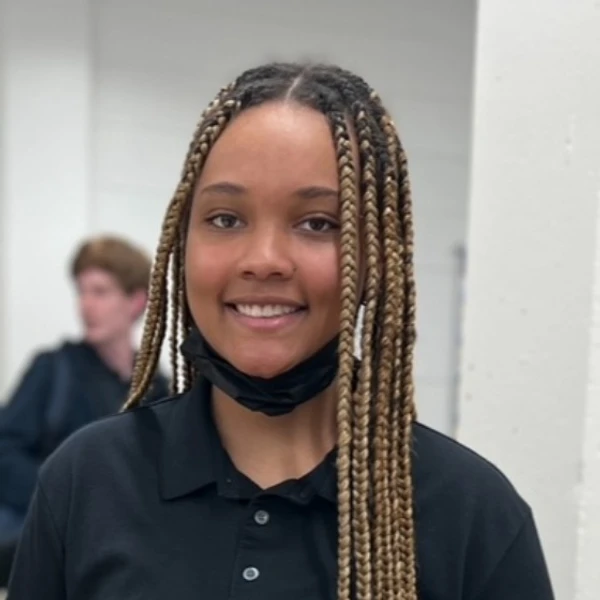
user profile avatar

Lailah Mugambi

1x

Finalist

1x

Winner

Bio

My name is Lailah Makena Mugambi, I was brought up by my mother, who was a single mother at the time, in Nairobi, Kenya. When I decided I wanted to pursue a career in engineering, my mother, knowing that the best place for me to be was the United States, we relocated at the beginning of my high school education. She had lupus, and as I was going through my high school education, I was at the same time taking care of her as her health was deteriorating at the time. I managed to get a 4.3 GPA when I finished my high school education. Seeing my mother fight lupus and still have the time and energy to make sure she was there for me, and support me towards my goals was inspiring, to say the least. She taught me strength and perseverance, and I'm forever grateful for that. When my mother passed in 2024, I was more determined than ever to have my eyes on the prize and go for my dream job, which is marine engineering.

Education

Georgia State University

Bachelor's degree program
2025 - 2029
  • Majors:
    • Mechanical Engineering

Midtown High School

High School
2021 - 2024

Miscellaneous

  • Desired degree level:

    Master's degree program

  • Graduate schools of interest:

  • Transfer schools of interest:

  • Majors of interest:

    • Mechatronics, Robotics, and Automation Engineering
    • Marine Sciences
    • Environmental/Natural Resources Management and Policy
  • Not planning to go to medical school
  • Career

    • Dream career field:

      Mechanical or Industrial Engineering

    • Dream career goals:

      Marine Enginnering

      Sports

      Swimming

      Varsity
      2013 – 20229 years

      Public services

      • Volunteering

        Watoto Coding — Volunteer/Teacher
        2022 – Present
      Post Malone Fan No-Essay Scholarship
      Miley Cyrus Fan No-Essay Scholarship
      Hearts on Sleeves, Minds in College Scholarship
      My name is Lailah Makena Mugambi, I was brought up by my mother, who was a single mother at the time, in Nairobi, Kenya. When I decided I wanted to pursue a career in engineering, my mother, knowing that the best place for me to be was the United States, we relocated at the beginning of my high school education. She had lupus, and as I was going through my high school education, I was at the same time taking care of her as her health was deteriorating at the time. I managed to get a 4.3 GPA when I finished my high school education. Seeing my mother fight lupus and still have the time and energy to make sure she was there for me, and support me towards my goals was inspiring, to say the least. When I graduated in May, my mother moved back to Kenya, and in August she got hospitalized. There is a particular type of silence that you will always encounter in a hospital room. The room will never be completely silent, with the breathing machine going off and the heart monitor beeping. However, the type of silence I am talking about was filled with the noise of outside judgment. As an only child with no father around, the responsibility of ensuring that the law and morals surrounding the life of my mother fell on my shoulders. It was a responsibility I never asked for, but one I willingly took on for the sole reason of having a singular love for the woman who raised me. My struggle with using my voice was not with the medical staff. It was with my family. As my mother continued to fight for her life after suffering a string of heart attacks, my family was a choir of condemnation. Some wanted to take her home, and their reasons were based on denial and a fundamental misunderstanding of her condition that I had been monitoring throughout my high school years. They said that all of her issues could be solved at home. I felt small, as if the child my family still viewed me as was more important than the adult advocate my mother needed. It was difficult for me to be vocal because, every time I was, I was met with "You’re too young to understand." But I knew that if I didn't speak up, no one else would. So, I had to find a voice that was firm, clinical, and unyielding. I spent hours talking to doctors, listening to the mechanics of my mother’s diagnoses, and understanding the reality of her condition. This was my armor. When family members tried to convince me to ignore medical advice, I used my voice to merely state facts, to educate, rather than to argue or debate. But I also learned that communication is not just talking; it’s being brave enough to set a boundary when everyone else is trying to cross it. The ultimate test of my voice was when her health declined beyond the point of recovery. The heart attacks had taken too much. The doctors were looking at me, and the family was looking at me. The hardest thing I have ever done was signing the DNR. It felt as though I was breaking my voice under the weight of the world. However, at this point, I understood that using your voice does not always require you to be loud or right. Sometimes, the loudest use of your voice is a whisper, and this whisper should be a celebration of the truth, no matter how hard the truth may be. By pulling the plug, I was not giving up. I was using my voice to give my mother the peace she deserved, the peace she’d been praying for for four years, and the peace she’d been denied for so long. This experience fundamentally changed my view of what it means to be confident. I used to believe that confidence was about never being afraid. Now, I know that it is about being afraid and doing what is right in spite of that fear. I learned that my voice is my most powerful tool, and in the future, I hope to use my voice to advocate for those who are unable to advocate for themselves. Whether in a medical, professional, or personal context, I hope to be the voice that remains steady in spite of raging emotions. I hope to be the voice that cuts through the noise of popular opinion and finds what is right and just. Having been in that hospital room, I know now that I possess a voice that can weather any storm, and I plan to use that voice to make a difference in honor of my mother.
      Irving S. Berman Scholarship
      My name is Lailah Makena Mugambi, I was brought up by my mother, who was a single mother at the time, in Nairobi, Kenya. She had lupus, and as I was going through my high school education, I was at the same time taking care of her as her health was deteriorating at the time. I managed to get a 4.3 GPA when I finished my high school education. Seeing my mother fight lupus and still have the time and energy to make sure she was there for me, and support me towards my goals was inspiring, to say the least. She taught me strength and perseverance, and I'm forever grateful for that. When my mother passed in 2024, I was more determined than ever to have my eyes on the prize and go for my dream job, which is marine engineering. I am currently pursuing a degree in marine sciences and mechanical engineering with the goal of working in marine engineering as I want to contribute to helping our dying reefs. My passion for coral reef restoration comes from my curiosity about biological adaptation under conditions of extreme environmental stress. Working with a university, I see the reef as a living masterpiece of natural engineering, a complex work of art that is under relentless thermal assault. This perspective has changed my approach to art. I am no longer satisfied with the observation stage, where we record the loss of marine biodiversity. I am now in an action phase, where we see the reef as a dynamic system requiring a rethought foundation. We are no longer restoring what we have lost; we are trying to make a biological system to withstand the 1 to 2 degree celcius temperature increases that cause modern mass bleaching events. I have quickly come to realize that the solution is not in the quick fixes that we often think of, but in looking at the heart of the system itself. This means that we are not just taking that simple step of outplanting the coral pieces, but we are looking at the environment as a whole, taking into account the safe spaces that are chemically and thermally conducive to long-term survival. We are ensuring that the current systems stay alive long enough to become a nursery for future generations, as we attempt this stress-hardening of the structures in order for them to survive the warming of the ocean itself. I have no interest in being a band-aid on a sinking ship, but rather in redesigning the ship itself so that it can float. By combining data analysis with the hands-on nature of marine science and biology, I think we can create restoration models that are technologically advanced and in perfect harmony with the world around us. We are at a critical time in the history of our oceans—a big problem with a ticking clock and no easy answer. My inquisitive nature makes me ask "what if" about all the latest technology, and my imagination enables me to dream of a world in which human ingenuity becomes the catalyst for change in the environment. I hope that my legacy will be one in which my problem-solving skills are used for the preservation of the world's most vital structures, rather than for the efficiency of industry, ensuring that these underwater spaces continue to flourish as an example of how, through creative science, we can once again achieve balance in the world.
      Emerging Leaders in STEM Scholarship
      My name is Lailah Makena Mugambi, I was brought up by a single mother at the time, in Nairobi, Kenya. When I decided I wanted to pursue a career in engineering, my mother, knowing that the best place for me to be was the United States, we relocated at the beginning of my high school education. Seeing my mother fight lupus and still have the time and energy to make sure she was there for me, and support me towards my goals was inspiring, to say the least. She taught me strength and perseverance, and I'm forever grateful for that. When my mother passed in 2024, I was more determined than ever to have my eyes on the prize and go for my dream job, which is marine engineering. I am currently pursuing a degree in marine sciences and mechanical engineering with the goal of working in marine engineering as I want to contribute to helping our dying reefs. My passion for coral reef restoration comes from my curiosity about biological adaptation under conditions of extreme environmental stress. Working with a university, I see the reef as a living masterpiece of natural engineering, a complex work of art that is under relentless thermal assault. This perspective has changed my approach to art. I am no longer satisfied with the observation stage, where we record the loss of marine biodiversity. I am now in an action phase, where we see the reef as a dynamic system requiring a rethought foundation. We are no longer restoring what we have lost; we are trying to make a biological system to withstand the 1 to 2 degree celcius temperature increases that cause modern mass bleaching events. I have quickly come to realize that the solution is not in the quick fixes that we often think of, but in looking at the heart of the system itself. This means that we are not just taking that simple step of outplanting the coral pieces, but we are looking at the environment as a whole, taking into account the safe spaces that are chemically and thermally conducive to long-term survival. We are ensuring that the current systems stay alive long enough to become a nursery for future generations, as we attempt this stress-hardening of the structures in order for them to survive the warming of the ocean itself. I have no interest in being a band-aid on a sinking ship, but rather in redesigning the ship itself so that it can float. By combining data analysis with the hands-on nature of marine science and biology, I think we can create restoration models that are technologically advanced and in perfect harmony with the world around us. We are at a critical time in the history of our oceans—a big problem with a ticking clock and no easy answer. My inquisitive nature makes me ask "what if" about all the latest technology, and my imagination enables me to dream of a world in which human ingenuity becomes the catalyst for change in the environment. I hope that my legacy will be one in which my problem-solving skills are used for the preservation of the world's most vital structures, rather than for the efficiency of industry, ensuring that these underwater spaces continue to flourish as an example of how, through creative science, we can once again achieve balance in the world.
      Stephan L. Daniels Lift As We Climb Scholarship
      My name is Lailah Makena Mugambi, I was brought up by a single mother in Nairobi, Kenya. When I decided I wanted to pursue a career in engineering, my mother, knowing that the best place for me to be was the United States, relocated us at the beginning of my high school education. Seeing my mother fight lupus and still have the time and energy to make sure she was there for me, and support me towards my goals was inspiring, to say the least. She taught me strength and perseverance, and I'm forever grateful for that. When my mother passed in 2024, I was more determined than ever to have my eyes on the prize and go for my dream job, which is marine engineering. I am currently pursuing a degree in marine sciences and mechanical engineering with the goal of working in marine engineering as I want to contribute to helping our dying reefs. My passion for coral reef restoration comes from my curiosity about biological adaptation under conditions of extreme environmental stress. Working with a university, I see the reef as a living masterpiece of natural engineering, a complex work of art that is under relentless thermal assault. This perspective has changed my approach to art. I am no longer satisfied with the observation stage, where we record the loss of marine biodiversity. I am now in an action phase, where we see the reef as a dynamic system requiring a rethought foundation. We are no longer restoring what we have lost; we are trying to make a biological system to withstand the 1 to 2 degree celcius temperature increases that cause modern mass bleaching events. I have quickly come to realize that the solution is not in the quick fixes that we often think of, but in looking at the heart of the system itself. This means that we are not just taking that simple step of outplanting the coral pieces, but we are looking at the environment as a whole, taking into account the safe spaces that are chemically and thermally conducive to long-term survival. We are ensuring that the current systems stay alive long enough to become a nursery for future generations, as we attempt this stress-hardening of the structures in order for them to survive the warming of the ocean itself. I have no interest in being a band-aid on a sinking ship, but rather in redesigning the ship itself so that it can float. By combining data analysis with the hands-on nature of marine science and biology, I think we can create restoration models that are technologically advanced and in perfect harmony with the world around us. We are at a critical time in the history of our oceans—a big problem with a ticking clock and no easy answer. My inquisitive nature makes me ask "what if" about all the latest technology, and my imagination enables me to dream of a world in which human ingenuity becomes the catalyst for change in the environment. I hope that my legacy will be one in which my problem-solving skills are used for the preservation of the world's most vital structures, rather than for the efficiency of industry, ensuring that these underwater spaces continue to flourish as an example of how, through creative science, we can once again achieve balance in the world.
      Eric W. Larson Memorial STEM Scholarship
      My name is Lailah Makena Mugambi, I was brought up by my mother, who was a single mother at the time, in Nairobi, Kenya. When I decided I wanted to pursue a career in engineering, my mother, knowing that the best place for me to be was the United States, we relocated at the beginning of my high school education. She had lupus, and as I was going through my high school education, I was at the same time taking care of her as her health was deteriorating at the time. I managed to get a 4.3 GPA when I finished my high school education. Seeing my mother fight lupus and still have the time and energy to make sure she was there for me, and support me towards my goals was inspiring, to say the least. She taught me strength and perseverance, and I'm forever grateful for that. When my mother passed in 2024, I was more determined than ever to have my eyes on the prize and go for my dream job, which is marine engineering. During the period that my mother was sick, there was a significant amount of bills that had accumulated, and as my mother is from Kenya, she lost her job and was using her savings to pay her bills, which included her rent and her medication. However, as my mother went to the hospital, her money was entirely used to pay her hospital bills. My mother was in the hospital for 4 months, and her hospital bills were significant. Therefore, the money that I inherited was entirely used to pay her hospital bills. I put my life on hold after her passing, and i had to think about the path that i wanted to take, but one thing i knew for sure is that i was going to go to college, but i had to think about how i was going to sustain myself financially while i was there, as well as how i was going to get my degree. Since it is just me and her, i have been in a position where i have been forced to fend for myself. I currently have two jobs, one where i teach children how to swim, as well as one where i teach children engineering using legos. I have also been attending Georgia State University for the last one year. I am currently pursuing a degree in marine sciences as I want to contribute to helping our dying reefs. My passion for coral reef restoration comes from my curiosity about biological adaptation under conditions of extreme environmental stress. Working with a university, I see the reef as a living masterpiece of natural engineering, a complex work of art that is under relentless thermal assault. This perspective has changed my approach to art. I am no longer satisfied with the observation stage, where we record the loss of marine biodiversity. I am now in an action phase, where we see the reef as a dynamic system requiring a rethought foundation. We are no longer restoring what we have lost; we are trying to make a biological system to withstand the 1 to 2 degree celcius temperature increases that cause modern mass bleaching events. I have quickly come to realize that the solution is not in the quick fixes that we often think of, but in looking at the heart of the system itself. This means that we are not just taking that simple step of outplanting the coral pieces, but we are looking at the environment as a whole, taking into account the safe spaces that are chemically and thermally conducive to long-term survival. We are ensuring that the current systems stay alive long enough to become a nursery for future generations, as we attempt this stress-hardening of the structures in order for them to survive the warming of the ocean itself. I have no interest in being a band-aid on a sinking ship, but rather in redesigning the ship itself so that it can float. By combining data analysis with the hands-on nature of marine science and biology, I think we can create restoration models that are technologically advanced and in perfect harmony with the world around us. We are at a critical time in the history of our oceans—a big problem with a ticking clock and no easy answer. My inquisitive nature makes me ask "what if" about all the latest technology, and my imagination enables me to dream of a world in which human ingenuity becomes the catalyst for change in the environment. I hope that my legacy will be one in which my problem-solving skills are used for the preservation of the world's most vital structures, rather than for the efficiency of industry, ensuring that these underwater spaces continue to flourish as an example of how, through creative science, we can once again achieve balance in the world.
      Michele L. Durant Scholarship
      My name is Lailah Makena Mugambi, I was brought up by my mother, who was a single mother at the time, in Nairobi, Kenya. When I decided I wanted to pursue a career in engineering, my mother, knowing that the best place for me to be was the United States, we relocated at the beginning of my high school education. She had lupus, and as I was going through my high school education, I was at the same time taking care of her as her health was deteriorating at the time. I managed to get a 4.3 GPA when I finished my high school education. Seeing my mother fight lupus and still have the time and energy to make sure she was there for me, and support me towards my goals was inspiring, to say the least. She taught me strength and perseverance, and I'm forever grateful for that. When my mother passed in 2024, I was more determined than ever to have my eyes on the prize and go for my dream job, which is marine engineering. I am currently pursuing a degree in marine sciences as I want to contribute to helping our dying reefs. My passion for coral reef restoration comes from my curiosity about biological adaptation under conditions of extreme environmental stress. Working with a university, I see the reef as a living masterpiece of natural engineering, a complex work of art that is under relentless thermal assault. This perspective has changed my approach to art. I am no longer satisfied with the observation stage, where we record the loss of marine biodiversity. I am now in an action phase, where we see the reef as a dynamic system requiring a rethought foundation. We are no longer restoring what we have lost; we are trying to make a biological system to withstand the 1 to 2 degree celcius temperature increases that cause modern mass bleaching events. I have quickly come to realize that the solution is not in the quick fixes that we often think of, but in looking at the heart of the system itself. This means that we are not just taking that simple step of outplanting the coral pieces, but we are looking at the environment as a whole, taking into account the safe spaces that are chemically and thermally conducive to long-term survival. We are ensuring that the current systems stay alive long enough to become a nursery for future generations, as we attempt this stress-hardening of the structures in order for them to survive the warming of the ocean itself. I have no interest in being a band-aid on a sinking ship, but rather in redesigning the ship itself so that it can float. By combining data analysis with the hands-on nature of marine science and biology, I think we can create restoration models that are technologically advanced and in perfect harmony with the world around us. We are at a critical time in the history of our oceans—a big problem with a ticking clock and no easy answer. My inquisitive nature makes me ask "what if" about all the latest technology, and my imagination enables me to dream of a world in which human ingenuity becomes the catalyst for change in the environment. I hope that my legacy will be one in which my problem-solving skills are used for the preservation of the world's most vital structures, rather than for the efficiency of industry, ensuring that these underwater spaces continue to flourish as an example of how, through creative science, we can once again achieve balance in the world.
      Anderson Engineering Scholarship
      Winner
      My name is Lailah Makena Mugambi, I was brought up by my mother, who was a single mother at the time, in Nairobi, Kenya. When I decided I wanted to pursue a career in engineering, my mother, knowing that the best place for me to be was the United States, we relocated at the beginning of my high school education. I am currently pursuing a degree in marine sciences with the goal of working in marine engineering as I want to contribute to helping our dying reefs. My passion for coral reef restoration comes from my curiosity about biological adaptation under conditions of extreme environmental stress. Working with a university, I see the reef as a living masterpiece of natural engineering, a complex work of art that is under relentless thermal assault. This perspective has changed my approach to art. I am no longer satisfied with the observation stage, where we record the loss of marine biodiversity. I am now in an action phase, where we see the reef as a dynamic system requiring a rethought foundation. We are no longer restoring what we have lost; we are trying to make a biological system to withstand the 1 to 2 degree celcius temperature increases that cause modern mass bleaching events. I have quickly come to realize that the solution is not in the quick fixes that we often think of, but in looking at the heart of the system itself. This means that we are not just taking that simple step of outplanting the coral pieces, but we are looking at the environment as a whole, taking into account the safe spaces that are chemically and thermally conducive to long-term survival. We are ensuring that the current systems stay alive long enough to become a nursery for future generations, as we attempt this stress-hardening of the structures in order for them to survive the warming of the ocean itself. I have no interest in being a band-aid on a sinking ship, but rather in redesigning the ship itself so that it can float. By combining data analysis with the hands-on nature of marine science and biology, I think we can create restoration models that are technologically advanced and in perfect harmony with the world around us. We are at a critical time in the history of our oceans—a big problem with a ticking clock and no easy answer. My inquisitive nature makes me ask "what if" about all the latest technology, and my imagination enables me to dream of a world in which human ingenuity becomes the catalyst for change in the environment. I hope that my legacy will be one in which my problem-solving skills are used for the preservation of the world's most vital structures, rather than for the efficiency of industry, ensuring that these underwater spaces continue to flourish as an example of how, through creative science, we can once again achieve balance in the world.
      Harry B. Anderson Scholarship
      My name is Lailah Makena Mugambi, I was brought up by my mother, who was a single mother at the time, in Nairobi, Kenya. When I decided I wanted to pursue a career in engineering, my mother, knowing that the best place for me to be was the United States, we relocated at the beginning of my high school education. She had lupus, and as I was going through my high school education, I was at the same time taking care of her as her health was deteriorating at the time. I managed to get a 4.3 GPA when I finished my high school education. Seeing my mother fight lupus and still have the time and energy to make sure she was there for me, and support me towards my goals was inspiring, to say the least. She taught me strength and perseverance, and I'm forever grateful for that. When my mother passed in 2024, I was more determined than ever to have my eyes on the prize and go for my dream job, which is marine engineering. I am currently pursuing a degree in marine sciences as I want to contribute to helping our dying reefs. My passion for coral reef restoration comes from my curiosity about biological adaptation under conditions of extreme environmental stress. Working with a university, I see the reef as a living masterpiece of natural engineering, a complex work of art that is under relentless thermal assault. This perspective has changed my approach to art. I am no longer satisfied with the observation stage, where we record the loss of marine biodiversity. I am now in an action phase, where we see the reef as a dynamic system requiring a rethought foundation. We are no longer restoring what we have lost; we are trying to make a biological system to withstand the 1 to 2 degree celcius temperature increases that cause modern mass bleaching events. I have quickly come to realize that the solution is not in the quick fixes that we often think of, but in looking at the heart of the system itself. This means that we are not just taking that simple step of outplanting the coral pieces, but we are looking at the environment as a whole, taking into account the safe spaces that are chemically and thermally conducive to long-term survival. We are ensuring that the current systems stay alive long enough to become a nursery for future generations, as we attempt this stress-hardening of the structures in order for them to survive the warming of the ocean itself. I have no interest in being a band-aid on a sinking ship, but rather in redesigning the ship itself so that it can float. By combining data analysis with the hands-on nature of marine science and biology, I think we can create restoration models that are technologically advanced and in perfect harmony with the world around us. We are at a critical time in the history of our oceans—a big problem with a ticking clock and no easy answer. My inquisitive nature makes me ask "what if" about all the latest technology, and my imagination enables me to dream of a world in which human ingenuity becomes the catalyst for change in the environment. I hope that my legacy will be one in which my problem-solving skills are used for the preservation of the world's most vital structures, rather than for the efficiency of industry, ensuring that these underwater spaces continue to flourish as an example of how, through creative science, we can once again achieve balance in the world.
      Byte into STEM Scholarship
      My name is Lailah Makena Mugambi, I was brought up by my mother, who was a single mother at the time, in Nairobi, Kenya. When I decided I wanted to pursue a career in engineering, my mother, knowing that the best place for me to be was the United States, we relocated at the beginning of my high school education. She had lupus, and as I was going through my high school education, I was at the same time taking care of her as her health was deteriorating at the time. I managed to get a 4.3 GPA when I finished my high school education. Seeing my mother fight lupus and still have the time and energy to make sure she was there for me, and support me towards my goals was inspiring, to say the least. She taught me strength and perseverance, and I'm forever grateful for that. When my mother passed in 2024, I was more determined than ever to have my eyes on the prize and go for my dream job, which is marine engineering. I am currently pursuing a degree in marine sciences as I want to contribute to helping our dying reefs. My passion for coral reef restoration comes from my curiosity about biological adaptation under conditions of extreme environmental stress. Working with a university, I see the reef as a living masterpiece of natural engineering, a complex work of art that is under relentless thermal assault. This perspective has changed my approach to art. I am no longer satisfied with the observation stage, where we record the loss of marine biodiversity. I am now in an action phase, where we see the reef as a dynamic system requiring a rethought foundation. We are no longer restoring what we have lost; we are trying to make a biological system to withstand the 1 to 2 degree celcius temperature increases that cause modern mass bleaching events. I have quickly come to realize that the solution is not in the quick fixes that we often think of, but in looking at the heart of the system itself. This means that we are not just taking that simple step of outplanting the coral pieces, but we are looking at the environment as a whole, taking into account the safe spaces that are chemically and thermally conducive to long-term survival. We are ensuring that the current systems stay alive long enough to become a nursery for future generations, as we attempt this stress-hardening of the structures in order for them to survive the warming of the ocean itself. I have no interest in being a band-aid on a sinking ship, but rather in redesigning the ship itself so that it can float. By combining data analysis with the hands-on nature of marine science and biology, I think we can create restoration models that are technologically advanced and in perfect harmony with the world around us. We are at a critical time in the history of our oceans—a big problem with a ticking clock and no easy answer. My inquisitive nature makes me ask "what if" about all the latest technology, and my imagination enables me to dream of a world in which human ingenuity becomes the catalyst for change in the environment. I hope that my legacy will be one in which my problem-solving skills are used for the preservation of the world's most vital structures, rather than for the efficiency of industry, ensuring that these underwater spaces continue to flourish as an example of how, through creative science, we can once again achieve balance in the world.
      Tinkerer’s Path Scholarship
      My passion for coral reef restoration comes from my curiosity about biological adaptation under conditions of extreme environmental stress. Working with a university, I see the reef as a living masterpiece of natural engineering, a complex work of art that is under relentless thermal assault. This perspective has changed my approach to art. I am no longer satisfied with the observation stage, where we record the loss of marine biodiversity. I am now in an action phase, where we see the reef as a dynamic system requiring a rethought foundation. We are no longer restoring what we have lost; we are trying to make a biological system to withstand the 1 to 2 degree celcius temperature increases that cause modern mass bleaching events. This project has been a vessel for my problem-solving philosophy, as I have quickly come to realize that the solution is not in the quick fixes that we often think of, but in taking that deep dive into the very heart of the system itself. In our restoration efforts, this means that we are not just taking that simple step of outplanting the coral pieces, but we are looking at the entire environment as a whole, taking into account the safe spaces that are chemically and thermally conducive to long-term survival. We are ensuring that the current systems stay alive long enough to become a nursery for future generations, as we attempt this stress-hardening of the structures in order for them to survive the warming of the ocean itself. This type of systemic thinking is exactly what fuels my aspiration for global change. I have no interest in being a band-aid on a sinking ship, but rather in redesigning the ship itself so that it can float. By combining data analysis with the hands-on nature of marine science and biology, I think we can create restoration models that are technologically advanced and in perfect harmony with the world around us. We are at a critical time in the history of our oceans—a big problem with a ticking clock and no easy answer. My inquisitive nature makes me ask "what if" about all the latest technology, and my imagination enables me to dream of a world in which human ingenuity becomes the catalyst for change in the environment. I hope that my legacy will be one in which my problem-solving skills are used for the preservation of the world's most vital structures, rather than for the efficiency of industry, ensuring that these underwater spaces continue to flourish as an example of how, through creative science, we can once again achieve balance in the world.