user profile avatar

Kyndal Benn

1x

Finalist

Bio

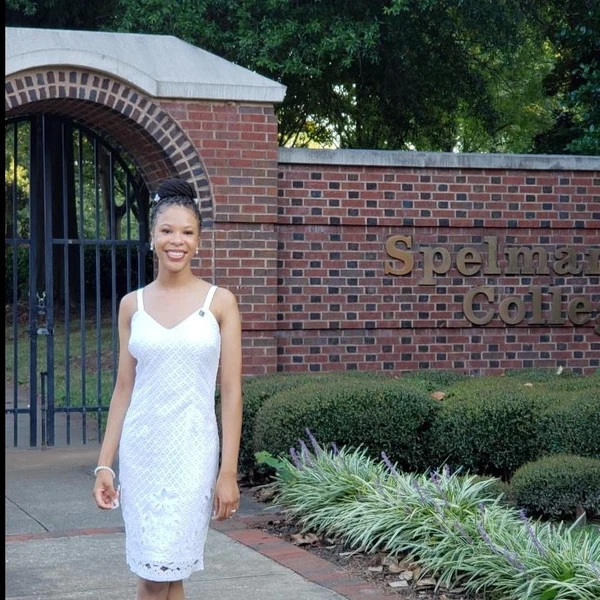
My name is Kyndal Benn, and I am a Spelman College graduate. I received my Bachelor of Arts degree in Political Science, minoring in Spanish.

Education

Wayne State University

Doctoral degree program (PhD, MD, JD, etc.)
2026 - 2026
  • Majors:
    • Law

Spelman College

Bachelor's degree program
2020 - 2024
  • Majors:
    • Political Science and Government
  • Minors:
    • Second Language Learning

Miscellaneous

  • Desired degree level:

    Doctoral degree program (PhD, MD, JD, etc.)

  • Graduate schools of interest:

  • Transfer schools of interest:

  • Majors of interest:

  • Not planning to go to medical school
  • Career

    • Dream career field:

      Law Practice

    • Dream career goals:

      Judge

    • Legal Administrative Support

      State Farm Automobile Insurance Company
      2025 – Present1 year
    • Litigation Assistant

      Witherite Law Group, PLLC
      2024 – 20251 year
    • Legal Fellow

      Lawrence & Bundy LLC
      2024 – 20251 year
    • Legal Intern

      Cofman Townsley Attorneys at Law
      2023 – 2023
    • Front counter team member

      Chick Fil A
      2019 – 20201 year

    Sports

    Cheerleading

    Varsity
    2016 – 20204 years

    Research

    • Political Science and Government

      University of California San Diego - S.T.A.R.S. — Research Fellow
      2022 – 2022

    Arts

    • Hillgrove High School

      Theatre
      Fantastic Mr.Fox
      2016 – 2018

    Public services

    • Volunteering

      Pledger of Hope — Community Volunteer
      2021 – Present
    • Volunteering

      SPELReads — Tutor Volunteer
      2021 – 2024
    • Public Service (Politics)

      Aretta Baldon Campaign — Community Outreach Volunteer
      2021 – 2021

    Future Interests

    Advocacy

    Politics

    Volunteering

    Philanthropy

    Entrepreneurship

    Michael Rudometkin Memorial Scholarship
    My decision to pursue law came not with a textbook, but with a realization: the legal system has the power to alter the course of a life in ways that are both profound and permanent. Growing up, I witnessed this reality with my younger brother, whose experiences exposed me to the challenges that disproportionately affect young Black men. In those moments, the law was a determining force, shaping opportunities, consequences, and futures in real time. I began to understand that justice, specifically in the United States, is not experienced equally and that over-incarceration is simply not a legal issue, but a deeply human one. My demonstrated interest in free expression is rooted in both my academic work and my broader commitment to critical discussion surrounding equality and justice. During my undergraduate studies at Spelman College, I explored questions surrounding civil rights, access, and the role of open dialogue in social progress. During my summer research program, UCSD S.T.A.R.S., I used my knowledge to explore the question: "Is integration a requirement of justice?” Through this work, I examined competing perspectives on equality, segregation, and social cohesion, drawing from legal scholarship, historical movements, and philosophical arguments regarding justice and liberty. Researching this topic reinforced the importance of free expression in our democratic society. Meaningful conversations about race, inequality, and justice require the ability to question established systems, challenge exclusive viewpoints, and engage with ideas that are controversial and uncomfortable. My project required me to analyze opposing viewpoints fairly, including those that criticized integration as a pathway towards justice. The experience strengthened my belief that intellectual freedom and open discourse are essential for societal growth and legal progress. Beyond academics, I have consistently valued environments where individuals can freely express themselves and engage in thoughtful disagreements. I have attended rallies and protests and have had the opportunity to teach members of my communities about different social justice issues, emphasizing that each individual's voice matters. I have also volunteered in my communities by teaching children about the importance of education (expanding their vocabulary and literacy in the Atlanta Public School District) and providing food, clothes, and hygiene necessities to those in need. As someone pursuing a legal career, I recognize that the law is deeply connected with the protection of speech, advocacy, and the exchange of ideas. Free expression allows marginalized voices to be heard, enables advocacy for social change, and creates space for productive debate on complex societal issues. As I continue my legal education, I hope to contribute to spaces that encourage rigorous discussion, protect diverse perspectives, and uphold the freedom to challenge ideas openly and thoughtfully.
    Jeffrey J. Douglas First Amendment Scholarship
    My decision to pursue law came not with a textbook, but with a realization: the legal system has the power to alter the course of a life in ways that are both profound and permanent. Growing up, I witnessed this reality with my younger brother, whose experiences exposed me to the challenges that disproportionately affect young Black men. In those moments, the law was a determining force, shaping opportunities, consequences, and futures in real time. I began to understand that justice, specifically in the United States, is not experienced equally and that over-incarceration is simply not a legal issue, but a deeply human one. My demonstrated interest in free expression is rooted in both my academic work and my broader commitment to critical discussion surrounding equality and justice. During my undergraduate studies at Spelman College, I explored questions surrounding civil rights, access, and the role of open dialogue in social progress. During my summer research program, UCSD S.T.A.R.S., I used my knowledge to explore the question: "Is integration a requirement of justice?” Through this work, I examined competing perspectives on equality, segregation, and social cohesion, drawing from legal scholarship, historical movements, and philosophical arguments regarding justice and liberty. Researching this topic reinforced the importance of free expression in our democratic society. Meaningful conversations about race, inequality, and justice require the ability to question established systems, challenge exclusive viewpoints, and engage with ideas that are controversial and uncomfortable. My project required me to analyze opposing viewpoints fairly, including those that criticized integration as a pathway towards justice. The experience strengthened my belief that intellectual freedom and open discourse are essential for societal growth and legal progress. Beyond academics, I have consistently valued environments where individuals can freely express themselves and engage in thoughtful disagreements. I have attended rallies and protests and have had the opportunity to teach members of my communities about different social justice issues, emphasizing that each individual's voice matters. I have also volunteered in my communities by teaching children about the importance of education (expanding their vocabulary and literacy in the Atlanta Public School District) and providing food, clothes, and hygiene necessities to those in need. As someone pursuing a legal career, I recognize that the law is deeply connected with the protection of speech, advocacy, and the exchange of ideas. Free expression allows marginalized voices to be heard, enables advocacy for social change, and creates space for productive debate on complex societal issues. As I continue my legal education, I hope to contribute to spaces that encourage rigorous discussion, protect diverse perspectives, and uphold the freedom to challenge ideas openly and thoughtfully.