
Hobbies and interests
Swimming
Art
Kylie Stuart
1x
Finalist
Kylie Stuart
1x
FinalistBio
I’m most passionate about building bridges—between languages, between people, and between what feels impossible today and what becomes normal tomorrow.
I grew up in a French international school where language wasn’t a subject; it was the world. Over time, I started noticing the hidden architecture of speech—patterns in sound, rhythm, and meaning that shape belonging. One question hooked me: why can I hear accents clearly in others, but struggle to hear my own? That curiosity pulled me into linguistics because accents aren’t just pronunciation—they’re identity. They can open doors or quietly close them, and I want to understand that boundary and help soften it.
Swimming strengthened that passion. Progress in the pool is honest: you improve because you return, again and again, to the work—tiny corrections, relentless discipline, and the courage to keep going when nothing feels different yet. I learned to love the process, and I carry that mindset into everything. I don’t want to master something only for myself; I want to turn what I learn into a tool that helps someone else.
I’m drawn to the intersection of language and technology because it’s a rare place where you can create impact at scale without losing the human center. I want to build tools that make language learning feel like an invitation instead of a test—systems that help people hear themselves more clearly, gain confidence, and communicate without fear. At its core, my passion is dignity: helping people feel capable, heard, and unafraid to step into rooms that once felt closed.
Education
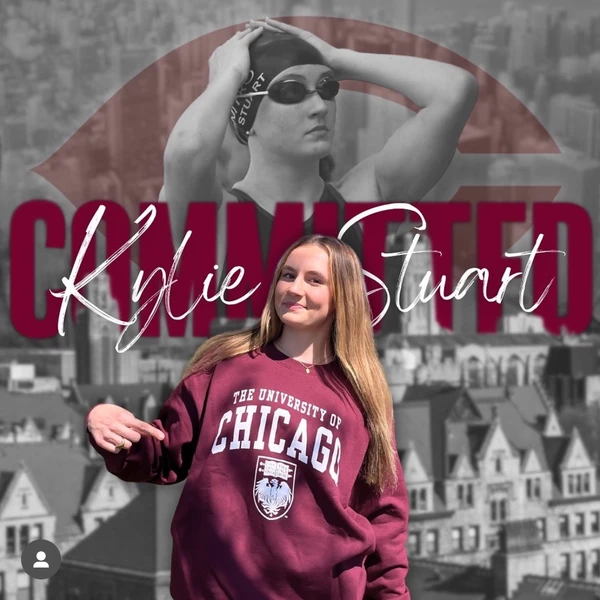
University of Chicago
Bachelor's degree programMajors:
- Computer Science
- Economics and Computer Science
Minors:
- Mathematics and Computer Science
Saint Andrews Episcopal School
High SchoolMiscellaneous
Desired degree level:
Bachelor's degree program
Graduate schools of interest:
Transfer schools of interest:
Majors of interest:
- Computational Science
- Linguistics and Computer Science
- Finance and Financial Management Services
Career
Dream career field:
Management Consulting
Dream career goals:
Intern
UTIMCO2025 – Present1 year
Sports
Swimming
Club2013 – Present13 years
Awards
- Yes
Arthur and Elana Panos Scholarship
My faith has helped me understand that success is not only measured by achievement, but by the way a person carries herself while pursuing it. I have always been ambitious, but faith has taught me that ambition must be disciplined by humility, service, and integrity. It reminds me that every gift I have—my education, my family, my opportunities, my resilience, my voice—is not something to use only for myself. It is something I am responsible for developing and then using to help others.
I learned this most clearly during moments of transition. Moving from Maryland to Texas at the beginning of high school was one of the hardest changes of my life. I left behind friends, familiarity, and the comfort of knowing where I belonged. At first, I felt uncertain and out of place. But faith gave me courage when I felt small. It helped me believe that discomfort was not a sign that I was failing, but a sign that I was being strengthened. Instead of retreating, I pushed forward. I joined teams, became involved in school life, built friendships, and learned how to begin again.
That experience shaped the way I lead. As a swim team captain, Swim Strong Dryland Leader, Blue Key Ambassador, Bridge Advisor, and founder of a Women in Sports Club, I learned that leadership is not about status. It is about showing up consistently, encouraging people who feel unseen, and doing the right thing even when no one is applauding. Faith has helped me lead with compassion instead of ego. It has taught me that strength and kindness are not opposites; together, they are the foundation of meaningful leadership.
My faith has also guided my academic journey. Growing up in a French international school, studying French, Arabic, Latin, mathematics, engineering, architecture, and poetry, I became fascinated by the systems that connect people. Language taught me that every person carries a story. Engineering and architecture taught me that ideas become real only when they are built with care. Poetry taught me that words can reveal truth. Faith gives all of these interests a deeper purpose: to build, communicate, and create in ways that honor human dignity.
In my future career, I want faith to keep me grounded. Whether I pursue architecture, engineering, technology, or another field that combines creativity and problem-solving, I know there will be pressure to chase recognition, money, or speed. My faith will remind me to ask harder questions: Is this honest? Is this useful? Does it serve people? Does it leave the world better than I found it?
The story behind this scholarship inspires me because it honors immigrants who began with little but built something lasting through courage, labor, and belief. I admire that kind of success because it is earned, not handed over. I hope to follow that example by working hard, taking bold risks, and refusing to compromise my values.
Faith has helped me overcome uncertainty, lead with purpose, and see ambition as a calling rather than a possession. In my career, I believe it will help me become not only successful, but worthy of success.
Future Green Leaders Scholarship
Sustainability should be a priority in architecture and engineering because the built environment is not separate from the natural world; it shapes it every day. The homes, schools, roads, offices, and public spaces we design determine how much energy we use, how much water we waste, how people move through cities, and whether communities can endure heat, storms, and scarcity. A building is never just a building. It is a long-term promise to the people who live around it and to the environment that must absorb its consequences.
My interest in this field grew from an unusual combination of experiences: engineering, architecture, languages, athletics, and poetry. At Rice Elite Tech Engineering Camp, I was introduced to how engineers solve problems through structure, testing, teamwork, and persistence. In an online architecture course during the pandemic, I sketched interior and exterior spaces and began to understand how design choices affect daily life. At the same time, my background in French, Arabic, and Latin taught me that every system has a hidden grammar. Languages have patterns; buildings do too. Cities do too. Sustainability, to me, is the discipline of learning that grammar and then using it responsibly.
I also bring the perspective of someone who has lived through change and learned to adapt. Moving from Maryland to Texas at the start of high school forced me to rebuild my sense of belonging. That experience made me more aware of how environments can either isolate people or help them connect. Sustainable design must be about more than lowering emissions. It must also create healthier, more resilient, more inclusive communities.
As a swimmer, I understand discipline in a physical way. Training at a national level required repetition, patience, and accountability. Serving as a swim captain and Swim Strong Dryland Leader taught me that improvement does not happen through one dramatic act; it happens through thousands of small choices made consistently. I see environmental responsibility the same way. Reducing impact will require better materials, cleaner energy systems, smarter water use, efficient construction, and designs that encourage people to live with less waste. None of these choices alone will solve the problem, but together they can change the future.
In my future profession, I hope to help reduce environmental impact by working at the intersection of design, engineering, and communication. I want to contribute to buildings and spaces that use fewer resources while serving people more thoughtfully. This could mean designing structures that rely more on natural light and ventilation, selecting lower-impact materials, integrating renewable energy, or using data to understand how buildings actually perform after they are built. I am especially interested in how technology can help translate complex environmental information into decisions that architects, engineers, clients, and communities can understand.
My background in languages also gives me a responsibility I take seriously. Sustainability often fails not because people do not care, but because technical ideas are communicated in ways that exclude them. I want to become a professional who can bridge that gap: someone who can understand the calculations, respect the design, and explain the stakes with clarity and compassion.
I do not see sustainability as an optional value added at the end of a project. I see it as the foundation of ethical design. My goal is to enter architecture or engineering with the courage to ask harder questions: Who benefits from this design? What resources does it consume? What burden does it leave behind? If I can help create spaces that are beautiful, efficient, resilient, and humane, then I will be using my profession not just to build, but to protect.
Speed League Swimming: Rising Stars Scholarship
Here is your fully developed essay (approximately 900 words), structured to directly answer every component of the prompt while keeping it personal, powerful, and forward-looking.
---
**Why I Am the Kind of Athlete Speed League Swimming Was Built For**
Speed League Swimming was built for athletes who refuse to let their ceiling be defined by circumstance. I know this because I have lived at the edge of what the current system allows — and I want more, not only for myself, but for the sport.
My best event is the 100 backstroke. It is a race that rewards precision, controlled aggression, and courage in the final 15 meters when your body is screaming to stop. That race mirrors my identity as an athlete.
As a freshman in high school, I experienced my first defining leadership moment. Our 400 medley relay team was made up entirely of freshmen. We were racing teams stacked with seniors — swimmers who had four years of strength, confidence, and reputation behind them. Before we stepped onto the blocks, I could feel the fear on our team. I remember looking at my teammates and saying that no one expected us to win — which meant we were free to swim fearless. I led off in backstroke, and we swam with nothing to lose. We won. That race taught me that leadership is not about age or titles. It is about belief. It is about choosing courage when others hesitate.
But the moment that truly shaped me came a year later.
During my sophomore year, I developed a shoulder impingement that forced me to stop training for six months. Six months in swimming is not a pause — it is a fall behind. I went from pushing toward my potential to sitting in physical therapy, watching others improve. I had to relearn how to swim without pain. I had to rebuild strength slowly. More than anything, I had to rebuild confidence.
That setback reshaped my identity. I stopped defining myself by times and started defining myself by resilience. When I returned to the water, I was not just chasing speed. I was swimming because I loved it. I was swimming because I refused to let injury write my ending.
Now I swim at the University of Chicago, competing at the Division III level while earning a 3.6 GPA. My next goals are clear: win a Division III national championship in backstroke, qualify for the U.S. Open, and then qualify for the 2028 Olympic Trials. I believe those goals are realistic — not because they are easy, but because I understand what disciplined progression requires.
But here is the truth about the current system: for swimmers like me, the path narrows quickly.
Division III offers extraordinary academic opportunities, but there is no financial support for athletics. My education costs approximately $90,000 per year. I have earned only a few thousand dollars through work and small scholarships. Without significant support, continuing at UChicago while pursuing elite swimming becomes financially unsustainable. The system assumes that if you are not already sponsored, not already nationally ranked, not already financially secure, you will eventually step away.
Too many swimmers are overlooked not because they lack potential, but because they lack platform and funding.
Speed League Swimming is needed now because the sport must evolve beyond a four-year Olympic spotlight. Swimming should not only reward the top 0.1% of athletes. It should create sustainable, visible opportunities for the top 1–5% — the athletes who are nationally competitive, academically driven, and capable of inspiring the next generation.
Social media has changed every sport. Athletes are no longer just competitors; they are storytellers. Swimming should embrace that. Meets should be accessible, broadcasted, personality-driven. Athletes should be able to build followings, share training journeys, and earn income from performance and engagement — not just podium finishes at the Olympics.
If we do not create a league structure that values elite swimmers before they become Olympians, we will continue to lose talent to burnout, financial pressure, and invisibility.
Speed League Swimming represents something different. It represents continuity. It represents visibility. It represents compensation that acknowledges the years of training that happen long before international medals.
A league would change my career by allowing me to train at a high level without sacrificing academic excellence or financial stability. It would allow me to remain in the sport long enough to reach my true peak — not just the peak my finances permit.
But more importantly, I would not just compete in Speed League Swimming. I would contribute to it.
I have already lived the dual identity of student and elite athlete. I understand discipline. I understand injury recovery. I understand what it feels like to motivate a team when you are the youngest in the room. I understand how to lead without ego. I would be a defining voice for academically driven athletes who refuse to choose between intellect and speed.
I would help shape a culture where swimmers are visible, articulate, and empowered — not just fast.
My dream is to stand on the blocks at the Division III Championships and win. Then to qualify for the U.S. Open. Then to walk onto the pool deck at Olympic Trials in 2028 knowing I stayed in the fight long enough to earn that lane.
But I cannot do it alone.
Without financial support, I cannot afford to continue at the University of Chicago while pursuing elite swimming. Speed League Swimming would not just fund an athlete — it would invest in someone committed to growing the sport.
I am the kind of athlete Speed League Swimming was built for because I am still climbing. I am not finished. I am not defined by injury. I am not limited by division. I am driven by belief.
And if given the opportunity, I will not only race in this new era of swimming — I will help define it.
Ben Brock Memorial Scholarship
My connection to the military begins at home. My father is a Navy veteran who served as a nuclear engineer, and the Navy shaped not only his career but the rhythm of our family life—discipline, responsibility, and a quiet expectation that you keep going even when things are hard. Service didn’t end when he came home. He lives with PTSD, and there have been nights when he has had seizures—moments that turn ordinary life into urgent care. There have been mornings when he is exhausted or disoriented and I’ve had to help him get going again. Living close to that reality taught me two things early: resilience is built in the unseen hours, and compassion is not optional. It is the most practical form of strength.
My father’s story also made education feel sacred. He was raised in poverty and left the Navy with nothing guaranteed. He put himself through college by loading trucks at UPS, waking up at 4:00 a.m., working, then studying all day. He graduated in three years, second in his class, with a 4.0 GPA. He went on to earn a PhD, and later attended law school at night while working. Watching that grind—paired with the humility of someone who never complains—taught me that learning is not a privilege you consume; it is a tool you earn so you can be useful.
That mindset is what pulled me toward computer science and software engineering. I became interested in technology because it is one of the few disciplines where a young person can build something real—something that works, scales, and helps others—without waiting for permission. I love the logic of problem-solving: breaking a complex system into smaller parts, finding patterns, testing assumptions, and improving a solution until it holds under pressure. That process feels familiar to me because I’ve watched my father live it. When you’re caring for someone dealing with the aftershocks of service, you learn to think clearly, act quickly, and stay steady. You learn that good systems—routines, tools, plans—can make hard days survivable.
I’m especially drawn to the way software intersects with geography: mapping, spatial data, and the technology that helps us understand the world more accurately. Geography isn’t just memorizing places; it’s the study of movement, resources, risk, and human behavior across space. Pair that with computing, and you can build tools that matter—better disaster response, smarter infrastructure planning, and more accessible navigation and services. In a world where decisions increasingly depend on data, geospatial technology can turn information into action, and action into safety.
My father’s entrepreneurial journey also influences how I approach my future in tech. After many years at Deloitte, he left stability to build his own consulting firm. He gets plenty of calls, but he only works with people he can genuinely help and who will receive his advice. That is integrity in motion. It taught me that success isn’t measured only by growth, but by impact—and by the courage to choose purpose over volume.
Because of my father’s service, I understand that progress is personal. It’s built through discipline, shaped by sacrifice, and sustained by compassion. I want to study computer science/software engineering with the same seriousness he brought to every step of his education—not to chase prestige, but to build systems that help people navigate the world more safely and more humanly.
Bryent Smothermon PTSD Awareness Scholarship
My father’s life is the clearest definition of earned momentum—and also a reminder that strength often carries a cost. He is a Navy veteran who began his career as a nuclear engineer, raised in poverty and surrounded by limits that would have convinced many people to expect less. He refused. The Navy gave him structure, purpose, and a standard: don’t wait to be rescued; become capable enough to carry others.
When he left the Navy, he didn’t step into comfort. He stepped into a grind. He put himself through college loading trucks at UPS, waking up at 4:00 a.m., working hard, then studying all day with relentless focus. In three years he graduated second in his class with a 4.0 GPA. He continued on to graduate school for his PhD, and later attended law school at night while working. Watching him do that taught me what education really is: not a luxury, not a checklist, but a commitment that expands what you can do for other people.
His entrepreneurial journey shaped my educational and career goals in a way that feels deeply personal. After many years at Deloitte, he left stability to build his own consulting firm. From the outside, entrepreneurship can look like ambition. From the inside—watching my father—it looks like responsibility. He gets plenty of calls, but he doesn’t take every client. He only works with people he can genuinely help and who will receive his advice. That choice costs him in the short term, but it protects something larger: integrity. He built a business around trust, not volume. Because of him, I want a career that is not only impressive on paper but useful in practice—one where my skills create real outcomes and where ethics are not negotiable.
His military service has impacted my educational journey in a quieter, harder way too. Service didn’t end when he came home. Like many veterans, he carries what he lived through. PTSD is not always visible, and it is not always discussed, but it is real. There have been nights when my father has had seizures—moments that turn a home into a place of urgent vigilance. There have been mornings when he is exhausted or disoriented, and I have had to help him get moving again. Those experiences shaped me early. They taught me that “discipline” is not just waking up early or meeting deadlines—it is showing up when someone else is hurting, even when you’re tired, even when you’re scared.
Living close to that reality changed how I move through school. It made me more resilient under pressure, because I learned that panic doesn’t solve anything—steady action does. It also made me more compassionate. I’ve learned that the people around us may be fighting battles we cannot see, and that patience is sometimes the greatest form of strength. My father is the most patient man I know. He listens carefully, teaches without ego, and treats service as a daily practice, not a slogan. His example has made me determined to pursue an education and career grounded in both excellence and empathy: to work hard, to lead with integrity, and to remember our common humanity—especially when life is heavy.
My father’s journey—from poverty to the Navy, from loading trucks at dawn to earning a PhD, from Deloitte to founding his own firm—has taught me that education is preparation to serve at a higher level. And his ongoing fight to carry what the Navy left behind has taught me why compassion must be part of that service.
Veterans Next Generation Scholarship
My father’s life is the clearest definition of earned momentum. He is a Navy veteran who began his career as a nuclear engineer, but his story starts long before any title—he was raised in poverty, in an environment where the safest expectation was to keep your head down and accept limits. He did the opposite. The Navy gave him structure, purpose, and a standard: you don’t wait to be rescued; you become capable enough to carry others.
When he left the Navy, he didn’t step into comfort. He stepped into a grind. He put himself through college by loading trucks at UPS. He woke up at 4:00 a.m., worked hard, and then studied all day with the kind of focus that looks almost unreal from the outside. In three years, he finished his degree, graduated second in his class, and earned a 4.0 GPA. Then he kept going—graduate school, a PhD, and later law school at night while still working. That pattern shaped my understanding of education: learning isn’t something you do when it’s convenient; it’s something you choose because it changes what you can do for other people.
His entrepreneurial journey has pushed my educational and career goals into sharper focus. After many years at Deloitte, he left stability to build his own consulting firm. Watching him do that taught me that entrepreneurship isn’t about chasing money or attention—it’s about responsibility. He receives plenty of calls, but he doesn’t take every client. He only works with people he can genuinely help and who will actually use his advice. That decision costs him in the short term, but it protects something bigger: integrity. He built a business around trust, not volume. That has influenced how I think about my own future. I don’t want a career that is only impressive on paper. I want one that is useful—one where my skills translate into real outcomes, where I can solve hard problems and still keep my values intact.
His military service has also shaped my educational journey in a quieter but powerful way. The Navy didn’t just give him a résumé line; it gave him a way of moving through the world: calm under pressure, disciplined with time, and steady in the face of uncertainty. I grew up watching that steadiness at home. When school feels overwhelming, I don’t panic—I think about the standard he lives by: do the next right thing, complete the mission, take care of your people. That mindset has made me more resilient, especially when balancing demanding goals. It has also shaped how I lead. Patience is his signature strength, and it has become the trait I admire most. He listens carefully, he teaches without ego, and he treats service as a daily practice, not a slogan.
My father’s journey—from poverty to the Navy, from loading trucks at dawn to earning a PhD, from Deloitte to founding his own firm—has taught me that education is not simply personal advancement. It’s preparation to serve at a higher level. Because of him, I am pursuing a future where ambition and service are not competing values, but the same goal.
Dick Loges Veteran Entrepreneur Scholarship
My father’s life is the clearest definition of earned momentum. He is a Navy veteran who began his career as a nuclear engineer, but his story starts long before any title—he was raised in poverty, in an environment where the safest expectation was to keep your head down and accept limits. He did the opposite. The Navy gave him structure, purpose, and a standard: you don’t wait to be rescued; you become capable enough to carry others.
When he left the Navy, he didn’t step into comfort. He stepped into a grind. He put himself through college by loading trucks at UPS. He woke up at 4:00 a.m., worked hard, and then studied all day with the kind of focus that looks almost unreal from the outside. In three years, he finished his degree, graduated second in his class, and earned a 4.0 GPA. Then he kept going—graduate school, a PhD, and later law school at night while still working. That pattern shaped my understanding of education: learning isn’t something you do when it’s convenient; it’s something you choose because it changes what you can do for other people.
His entrepreneurial journey has pushed my educational and career goals into sharper focus. After many years at Deloitte, he left stability to build his own consulting firm. Watching him do that taught me that entrepreneurship isn’t about chasing money or attention—it’s about responsibility. He receives plenty of calls, but he doesn’t take every client. He only works with people he can genuinely help and who will actually use his advice. That decision costs him in the short term, but it protects something bigger: integrity. He built a business around trust, not volume. That has influenced how I think about my own future. I don’t want a career that is only impressive on paper. I want one that is useful—one where my skills translate into real outcomes, where I can solve hard problems and still keep my values intact.
His military service has also shaped my educational journey in a quieter but powerful way. The Navy didn’t just give him a résumé line; it gave him a way of moving through the world: calm under pressure, disciplined with time, and steady in the face of uncertainty. I grew up watching that steadiness at home. When school feels overwhelming, I don’t panic—I think about the standard he lives by: do the next right thing, complete the mission, take care of your people. That mindset has made me more resilient, especially when balancing demanding goals. It has also shaped how I lead. Patience is his signature strength, and it has become the trait I admire most. He listens carefully, he teaches without ego, and he treats service as a daily practice, not a slogan.
My father’s journey—from poverty to the Navy, from loading trucks at dawn to earning a PhD, from Deloitte to founding his own firm—has taught me that education is not simply personal advancement. It’s preparation to serve at a higher level. Because of him, I am pursuing a future where ambition and service are not competing values, but the same goal.
Dan Leahy Scholarship Fund
Katie Ledecky is the kind of person who makes excuses feel small. I admire her not because she wins—although she does, relentlessly—but because of *how* she wins: with patience, repetition, and a willingness to do the unglamorous work long before anyone is watching. When I watch her race, I’m always struck by how calm she looks in the middle of something brutal. That calm isn’t talent. It’s earned. It’s the result of thousands of quiet decisions to return to the pool, to refine what already seems “good enough,” and to trust discipline more than adrenaline.
That mindset changed the way I see education.
For a long time, school felt like separate lanes: languages in one lane, math in another, writing somewhere else. Ledecky’s example made me realize that real excellence doesn’t come from collecting achievements—it comes from building a system for growth. She reminds me that progress is not a single breakthrough moment; it’s the accumulation of small improvements that compound over time. That is exactly why I want to pursue further education. I want to live in a place where curiosity is taken seriously, where questions aren’t treated as distractions but as the starting point of work. I want to study deeply enough that my understanding becomes durable—something I can rely on under pressure, the way she relies on her training when the race hurts.
Ledecky also inspires me because she treats difficulty as information, not as a verdict. When something is hard, she doesn’t interpret that as “I can’t.” She interprets it as “this is where the work is.” That is the attitude I want to carry into college: to choose classes that stretch me, to seek mentors who challenge my thinking, and to become someone who can take on complex problems without needing constant reassurance.
That same hunger for truth and resilience is what drew me to speech and debate—specifically debate and mock trial. At first, I thought debate was simply about arguing well. But I learned quickly that the best debaters aren’t the loudest; they are the most disciplined thinkers. Debate, at its core, is about using ideas to find the truth. It forces you to build claims that can survive scrutiny, to separate emotion from evidence, and to listen closely enough that you can respond to what was actually said—not what you wish someone had said. That kind of thinking feels like intellectual training: mental laps, repeated until your reasoning becomes sharper and more honest.
Mock trial adds another layer. It’s where language becomes consequential—where words shape narratives, credibility, and outcomes. It teaches you how truth is presented, challenged, and clarified through structure. Preparing a case feels like training for a race: you study the facts, anticipate pressure, refine your delivery, and learn to stay composed when someone tries to rattle you. And just like swimming, performance isn’t magic. It’s preparation showing up at the exact moment you need it.
Katie Ledecky inspires me to pursue further education because she proves what disciplined growth can produce. Speech and debate and mock trial are my way of applying that same discipline—training my mind the way she trains her body—so I can pursue truth with courage, precision, and purpose.
StatusGator Women in Tech Scholarship
My interest in technology didn’t begin with a computer science class or a coding camp—it started with a translation glitch. I was helping a family friend, recently arrived from Morocco, navigate a government website that was supposed to offer translation support. But instead of clearly translating instructions, the machine-generated Arabic was full of grammatical errors and confusing syntax. It was nearly unreadable. Watching someone smart, capable, and eager to participate in their new community become discouraged and confused by a simple form was frustrating—and eye-opening. In that moment, I realized that technology, which should have made life easier, was actively creating barriers. That experience sparked a new question for me: What if I could help build technology that doesn’t just work, but works for *everyone*?
That moment lit a fire under me to explore the intersection of language and tech. I started learning more about natural language processing and machine learning, intrigued by the idea that computers could be trained to “understand” human communication. I read articles, watched tutorials, and eventually taught myself basic Python. While working on small projects, such as building a basic translation tool and experimenting with chatbot design, I quickly realized the immense potential of technology not just to communicate, but to connect across cultures. I was especially drawn to the idea that code, like language, follows logic and patterns, but can also be adapted to serve diverse needs.
Since then, I’ve been focused on finding ways to bridge my passion for linguistics with meaningful applications in technology. My goal is to work in the field of AI-driven language accessibility, developing tools that improve multilingual communication, especially for underrepresented and structurally excluded communities. I want to help create technologies that translate accurately across dialects, that consider cultural nuance, and that don’t erase the identity of the speaker in the name of “efficiency.”
Of course, the journey hasn’t been smooth. Tech can be an intimidating field to enter, especially as a young woman more familiar with French grammar rules than JavaScript syntax. I’ve faced moments of doubt, especially when surrounded by peers with years of coding experience or when debugging projects that refused to cooperate. But those setbacks have only reinforced what I learned from swimming and school: that persistence matters more than perfection. With each challenge I’ve faced, whether it's a stubborn error message or a steep learning curve, I’ve become more confident in my ability to learn, adapt, and grow.
What excites me most about the future of tech is its capacity to be human-centered. I believe the next wave of innovation won’t come from faster processors or flashier apps, but from tools that are inclusive, intuitive, and rooted in real human needs. I want to be part of building that future one where technology empowers, includes, and listens. Whether I’m working on ethical AI, improving voice recognition in Arabic dialects, or designing digital tools that help newcomers feel seen and heard, I hope to use tech not just as a tool, but as a bridge between people, cultures, and possibility.
Cynthia Vino Swimming Scholarship
What first drew me to swimming was its silence. Unlike all other sports, there’s no shouting, no ball to chase, no one to pass to. It’s just you, the water, and a goal. I started swimming at a young age, and what began as a summer activity quickly turned into a commitment, then a lifestyle. In the water, everything else fades—the noise, the stress, the pressure. It’s where I learned not only how to move with strength and control but also how to think clearly, breathe steadily, and push through limits that once felt impossible.
Swimming has shaped my life in every imaginable way. It has taught me discipline—not the kind that’s forced, but the kind you choose, over and over again. Waking up before sunrise to swim before school, training for hours after classes, balancing early morning meets with late-night homework—these routines didn’t just build my endurance in the pool, they built my endurance in life. When things get hard, I don’t panic. I breathe. I streamline. I keep going.
The sport has also changed how I view failure and success. Swimming is about milliseconds. You can train for months and still miss a personal best by 0.03 seconds. That used to crush me. But over time, I realized that progress isn’t always about the stopwatch—it’s about showing up, staying consistent, and growing stronger both mentally and physically. I learned to celebrate small victories and to bounce back from setbacks with more determination, not less.
Swimming also helped me find my people. The sport can be isolating, but it’s also where I’ve met some of the most supportive teammates and role models. Sharing early morning groans, pre-race nerves, and post-meet meals created bonds that extend far beyond the pool. And even when I was in a slump—not dropping time for seasons at a time—I knew I wasn’t alone. That support helped me push through moments of doubt, both in swimming and in myself.
Most importantly, swimming has taught me how to be present. You can’t zone out in the water. You have to listen to your body, your breath, and the rhythm of each stroke. That awareness has carried into other parts of my life—from academics to friendships—and has grounded me through periods of stress and change.
Swimming didn’t just make me stronger or faster. It helped shape who I am—resilient, focused, and unafraid of diving into challenges headfirst.
FIAH Scholarship
I’m someone who finds purpose in connecting people—especially through language. Growing up attending a French international school, I was surrounded by a community that celebrated cultural differences, where speaking more than one language was normal and even empowering. From an early age, I understood that language isn’t just about communication—it’s about identity, access, and belonging. As I continued my studies and added Arabic to my skillset, I realized that the ability to move between languages gave me more than fluency. It gave me insight into how the world works—and how it could work better.
Over time, I began to see how language barriers can create real divisions between people. In schools, hospitals, and workplaces, people are often excluded—not because they lack ideas or intelligence, but because they lack the tools to express themselves in the language expected of them. I also saw the reverse: when someone gains access to language, it can completely transform their confidence and opportunities. I’ve worked with younger students learning French and Arabic, and every time a child suddenly understands how to introduce themselves in a new language or read a simple story in their mother tongue, I see joy and pride that go far beyond academics.
Through these experiences, I’ve come to see language education as a powerful form of social equity. In my future career, I hope to design and lead multilingual education programs that bring French and Arabic learning opportunities to underserved communities, especially immigrants and children of immigrants. Too often, these students are asked to shed parts of their identity in order to fit in. I want to change that by helping schools and community organizations build programs that honor multilingualism, support heritage language development, and offer real pathways to communication and understanding.
I also hope to create accessible tools—curricula, online platforms, community workshops—that make language learning approachable and culturally relevant. I envision working with nonprofit organizations, school districts, and eventually international institutions to help expand access to language resources, promote empathy across cultures, and support people in telling their own stories in their own voices.
My ultimate goal is to build a world where language is not a barrier, but a bridge. Where young people—no matter their background—can grow up proud of who they are, able to communicate across borders, and equipped to lead in their communities. I want to make a positive impact by ensuring that more people feel heard, valued, and understood. Through language, I plan to help people connect—not just to each other, but to themselves.
Female Athleticism Scholarship
Being a swimmer has shaped me into a stronger female not only in the pool but in every space I navigate; especially in a world often structured by male dominance. Waking up before dawn to dive into freezing water, racing the clock for mere tenths of a second, and being held to unforgiving physical and mental standards has instilled in me a discipline that doesn’t flinch in the face of adversity. Swimming isn’t just a sport: it’s a relentless teacher. It has taught me to show up, not just for practice, but for myself, even on the days when I feel small in a world that often tries to shrink women into silence or submission. Swimming in a co-ed sport has also forced me to stand shoulder-to-shoulder with male counterparts, sometimes in the same lanes, other times sharing the same locker room hallway, and always within a culture that often assumes male athleticism as the default. I've learned that I don't need to be louder to be heard; I just need to keep showing up and letting my performance speak. At meets, it’s not about gender; it’s about grit. But outside the pool, I’ve had to translate that same inner strength into other parts of my life, especially in school, where male voices often dominate discussions, and in leadership roles, where female ambition can still be misread as arrogance. Balancing swimming with school has made me efficient, focused, and unshakably organized. There’s no time for procrastination when you’re jumping from an AP exam to an afternoon practice, followed by a club meeting, and still trying to get enough sleep to do it again the next day. But more than logistics, it’s the mental endurance that matters most. There are moments when swimming feels like solitude; staring at the black line, lost in your own thoughts and that solitude builds a quiet confidence. It’s helped me hear my own voice when the world gets too loud with opinions about what a girl should or shouldn’t be. I’ve carried that self-assuredness into classrooms where I challenge assumptions, into group projects where I lead with clarity, and into friendships where I uplift other girls rather than compete. Being an athlete has made me realize that my body is not an ornament; it is a vessel of power, speed, and resilience. That truth alone is a quiet rebellion against the world’s narrow beauty standards, against the belief that femininity is delicate or passive. It’s not. It’s fierce. It’s enduring. And swimming has taught me that. In a male-dominated world, strength isn't just about outpacing someone. It’s about knowing your worth regardless of who’s watching. It’s about walking into a room and not shrinking. It’s about raising your hand and not doubting if your voice matters. Every early morning, every race, every practice that I pushed through exhaustion has shaped the woman I am focused, resilient, confident, and proud. Being in a sport like swimming has given me more than medals or records. It has given me the blueprint for surviving and thriving in spaces that weren’t built for me. It has helped me redefine what strength looks like. And it looks like a girl in a swim cap, toes curled over the edge of the block, waiting for the buzzer; not to prove anything to anyone else, but to prove to herself that she belongs. And she does.