Hobbies and interests
Golf
Basketball
Soccer
Bible Study
Community Service And Volunteering
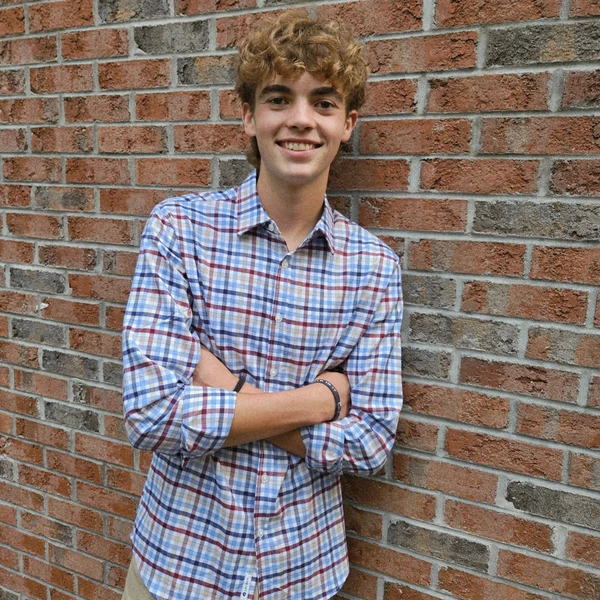
Kyler Barnett
1x
FinalistKyler Barnett
1x
FinalistBio
I am interested in a career where I am able to connect on a personal level with people of all backgrounds, care for their physical needs, and help support them as they go through challenging times. I experienced this myself as I lived through personal medical challenges, and I wish to give the same care to others. Pursuing a career in Diagnostic Medical Sonography will allow me to do this, while still being able to have life balance and be able to continue my church and community volunteer activities, athletic participation, and spend time with friends and family.
Education
University Lake School
High SchoolMiscellaneous
Desired degree level:
Bachelor's degree program
Majors of interest:
- Allied Health Diagnostic, Intervention, and Treatment Professions
Career
Dream career field:
Diagnostic medical sonography
Dream career goals:
Youth Sports Development Supervisor
YMCA2024 – Present2 years
Sports
Soccer
Varsity2022 – Present4 years
Golf
Varsity2022 – Present4 years
Awards
- Broadlands Junior Golf Tournament 1st place
- WI Junior PGA participant
Basketball
Varsity2022 – Present4 years
Awards
- Varsity MVP, Men's Basketball All-Conference Honorable Mention
Arts
Big Idea Art Show IX
Sculpture2024 – 2024
Public services
Volunteering
Riverglen Christian Church — Middle School Youth ministry leader2025 – PresentVolunteering
University Lake School — Referee, line judge, youth sports tournament volunteer2022 – PresentVolunteering
Lake Country Caring — Student volunteer/sorter2023 – 2024
Future Interests
Volunteering
Entrepreneurship
MastoKids.org Educational Scholarship
I was playing low-intensity basketball in my driveway as I always did, pretending I was Giannis Antetokounmpo on the Milwaukee Bucks dribbling through five defenders and dunking on a six-foot hoop. My mom was watching me play, when she received a call. A few days prior, we saw a doctor because I felt extremely fatigued and weak. I was always flushed and was having weird allergic reactions. I wore a heart monitor for a week. The doctor frantically called asking what I was doing because my heart was beating at 220 beats per minute.
I had a follow-up visit that included hours of tests. After the tests, I found out that I had postural orthostatic tachycardia syndrome (POTS) and mast cell activation syndrome (MCAS). The doctors said my nervous system has trouble managing my heart rate and blood flow when upright and my immune system was triggering reactions to ordinary things like exercise. Sports could be dangerous for me, especially if I play for too long.
After my diagnosis, I felt restricted by my own body. I had to push myself harder than the other kids just to play for two-minute spurts. My parents were scared because after each game, they knew that they would watch me come home and sit at the bottom of the stairs, struggling to climb a single one.
But I never stopped wanting to play basketball. Thankfully, I had the Milwaukee Bucks to watch and motivate me. Astonishingly, they won the NBA Championship in 2021. Basketball was the only thing on my mind, and I wanted to go out and play with my friends and recreate all of my favorite plays. But I also knew there would be physical consequences.
During 8th grade, I could barely get through practice. I tried harder than I probably should have, and I continued working every practice. Eventually, I was able to play for four-minute stretches, and by the final game, I played almost the whole thing. This was the greatest accomplishment of my life and I was proud because I pushed through my body’s restrictions. The next day, I woke up extremely fatigued with a migraine. I understood that there is a cost to play, but it was worth it.
Thankfully, I had 3 excellent doctors who were treating my conditions and continually trying new medications and treatments. My symptoms improved very slowly over 5 years. It took IV infusions, injections, numerous daily medications, and learning to moderate my diet and activity.
Now, as a senior in high school, I play the entirety of varsity soccer and basketball games, and all my parents say is “I didn’t think you’d ever be able to do this.” I am most proud of myself for battling POTS and MCAS because it shocks everyone when I tell them about my condition after they have watched me play a full game. My journey with POTS and MCAS took so much hard work and discipline, and I am extremely happy that I didn’t let it keep athletics out of my life. It shaped my future goals and has taught me the power of strength and determination more than anything else.
Watching Giannis and the Bucks showed me how to be driven despite physical and mental roadblocks in life. POTS and MCAS kept me down more days than I can count, but without it, I wouldn’t understand overcoming challenges. POTS and MCAS are the reason I have struggled, but it’s also what pushed me so that my friends and family get to watch me play my heart out.
Gabriel Martin Memorial Annual Scholarship
I was playing low-intensity basketball in my driveway as I always did, pretending I was Giannis Antetokounmpo on the Milwaukee Bucks dribbling through five defenders and dunking on a six-foot hoop. My mom was watching me play, when she received a call. A few days prior, we saw a doctor because I felt extremely fatigued and weak. I wore a heart monitor for a week. The doctor frantically called asking what I was doing because my heart was beating at 220 beats per minute.
I had a follow-up visit that included hours of tests. After the tests, I found out that I had postural orthostatic tachycardia syndrome, or POTS. The doctors said my nervous system has trouble managing my heart rate and blood flow when upright. Sports could be dangerous for me, especially if I play for too long.
After my diagnosis, I felt restricted by my own body. I had to push myself harder than the other kids just to play for two-minute spurts. My parents were scared because after each game, they knew that they would watch me come home and sit at the bottom of the stairs, struggling to climb a single one.
But I never stopped wanting to play basketball. Thankfully, I had the Milwaukee Bucks to watch and motivate me. Astonishingly, they won the NBA Championship in 2021. Basketball was the only thing on my mind, and I wanted to go out and play with my friends and recreate all of my favorite plays. But I also knew there would be physical consequences.
During 8th grade, I could barely get through practice. I tried harder than I probably should have, and I continued working every practice. Eventually, I was able to play for four-minute stretches, and by the final game, I played almost the whole thing. This was the greatest accomplishment of my life and I was proud because I pushed through my body’s restrictions. The next day, I woke up extremely fatigued with a migraine. I understood that there is a cost to play, but it was worth it.
Now, as a senior in high school, I play the entirety of varsity soccer and basketball games and routinely walk 18 holes of golf, and all my parents say is “I didn’t think you’d ever be able to do this.” I am most proud of myself for battling POTS because it shocks everyone when I tell them about my condition after they have watched me play a full game.
My journey with POTS took so much hard work and discipline, and I am extremely happy that I didn’t let it keep athletics out of my life. It shaped my future goals and has taught me the power of strength and determination more than anything else. I plan to pursue a career in Diagnostic Medical Sonography. I wish to pursue a career where I am able to connect on a personal level with people of all backgrounds, care for their physical needs, and help support them as they go through challenging times. I experienced this myself as I lived through personal medical challenges, and I wish to give the same care to others.
Watching Giannis and the Bucks showed me how to be driven despite physical and mental roadblocks in life. POTS kept me down more days than I can count, but without it, I wouldn’t understand overcoming challenges. POTS is the reason I have struggled, but it’s also what pushed me so that my friends and family get to watch me play my heart out.
David Foster Memorial Scholarship
An influential person in my life is my high school math teacher, Mr. Bronner. I first met him the day before the beginning of my freshman year during an all-school gathering. All the teachers were told to introduce themselves, and out of them all, he was the most memorable one because he introduced himself as “Uncle Mark.” Obviously, I wanted to get to know this “Uncle Mark” guy a little bit more, and in talking, I learned that he taught four different math classes and hosted a Bible study club once a week. Unfortunately, he didn’t teach the math class I was taking that year, but I was thrilled to begin attending Bible study.
Over the course of the past 4 years, I grew quite close to Mr. Bronner. He is a teacher who is outgoing, has a goofy sense of humor, and genuinely cares about his students. He makes an effort to get to know his students on a personal level and consistently shows empathy and compassion. I’ve struggled with complex medical issues most of my life and he is one of the few adults who asked me sincere questions and worked to understand the challenges I’ve experienced. Besides my parents, Mr. Bronner is my greatest encourager and lets me know how proud he is when I do well on a test or play a great sports game.
I see now, this is all a reflection of him living out his faith in small, kind, and loving ways. My understanding of faith prior to this, was just the act of attending church on a Sunday. I learned faith in action is more important than faith just in words. Whether Mr. Bronner was handing out snacks to students, making bad “dad” jokes and puns, or cheering us on from the sidelines, he was doing it because he cares and this is a way he shows his faith to others. This inspired me to attend Bible study club weekly, grow in my own faith, and volunteer as a middle school youth ministry leader at my church. I love being able to mentor younger students in the same way Mr. Bronner exemplified for me.
Mr. Bronner taught me geometry and statistics, but more importantly, he taught me what living with genuine faith really means and looks like. Because of him, I saw that the Christian culture as a whole could do better at loving others, showing grace and kindness, being bold in faith, and I personally could do a lot better at living out the things I believed. As a teacher many students look up to, Mr. Bronner constantly shows that he is unafraid to share his beliefs and has a great influence on all those around him. I have a better understanding of how to also be a positive influence on others and have grown into this as a senior who holds leadership roles at school, on my sports teams, and in the Bible study club.
Frederick J. Salone Memorial Basketball Scholarship
I was playing low-intensity basketball in my driveway as I always did, pretending I was Giannis Antetokounmpo on the Milwaukee Bucks dribbling through five defenders and dunking on a six-foot hoop. My mom was watching me play, when she received a call. A few days prior, we saw a doctor because I felt extremely fatigued and weak. I wore a heart monitor for a week. The doctor frantically called asking what I was doing because my heart was beating at 220 beats per minute.
I had a follow-up visit that included hours of tests. After the tests, I found out that I had postural orthostatic tachycardia syndrome, or POTS. The doctors said my nervous system has trouble managing my heart rate and blood flow when upright. Sports could be dangerous for me, especially if I play for too long.
After my diagnosis, I felt restricted by my own body. I had to push myself harder than the other kids just to play for two-minute spurts. My parents were scared because after each game, they knew that they would watch me come home and sit at the bottom of the stairs, struggling to climb a single one.
But I never stopped wanting to play basketball. Thankfully, I had the Milwaukee Bucks to watch and motivate me. Astonishingly, they won the NBA Championship in 2021. Basketball was the only thing on my mind, and I wanted to go out and play with my friends and recreate all of my favorite plays. But I also knew there would be physical consequences.
During 8th grade, I could barely get through practice. I tried harder than I probably should have, and I continued working every practice. Eventually, I was able to play for four-minute stretches, and by the final game, I played almost the whole thing. This was the greatest accomplishment of my life and I was proud because I pushed through my body’s restrictions. The next day, I woke up extremely fatigued with a migraine. I understood that there is a cost to play, but it was worth it.
Now, as a senior in high school, I play the entirety of varsity soccer and basketball games and routinely walk 18 holes of golf, and all my parents say is “I didn’t think you’d ever be able to do this.” I am most proud of myself for battling POTS because it shocks everyone when I tell them about my condition after they have watched me play a full game. My journey with POTS took so much hard work and discipline, and I am extremely happy that I didn’t let it keep athletics out of my life. It shaped my future goals and has taught me the power of strength and determination more than anything else.
Watching Giannis and the Bucks showed me how to be driven despite physical and mental roadblocks in life. POTS kept me down more days than I can count, but without it, I wouldn’t understand overcoming challenges. POTS is the reason I have struggled, but it’s also what pushed me so that my friends and family get to watch me play my heart out.
Tom LoCasale Developing Character Through Golf Scholarship
Growing up, I always connected the game of golf with my dad. He is a talented golfer who shared his love of golf by taking me golfing from a young age and watching tournaments with me. I started taking golf lessons casually in 2nd grade and started playing competitively in 8th grade. My dad always told me the most important rule of golf is honesty. He modeled this for me by teaching me the rules, penalties, and importance of accurately counting my score. He called his own penalties and taught me that having a good round is not necessarily based on the ending score but how you conduct yourself during the round.
My junior year golf season was full of ups and downs, and I was the two seed for each tournament. Some of them, I shot scores that deserved that role, while others I significantly scored worse than my playing partners. Heading into our regional golf tournament, I was playing well and feeling confident in my swing, but that tournament, a switch flipped the wrong way, and I couldn’t seem to find any rhythm on the course. I was struggling to find fairways, hit greens, stay out of trouble on many holes, and control my mentality. Our team needed to place in the top four out of sixteen schools to keep our season alive, and I, as the two seed, was going to be the reason it ended. I started to think that I needed to secretly shave strokes to lower my score, but I remembered the honesty and integrity that my dad had taught me all the way back when I was just getting started with golf. Although keeping my honest score could’ve been the reason our season was over, I was glad I didn’t cheat myself and everyone else participating in the tournament. My honesty was extremely worth it, as fortunately, my teammates played better than expected and were able to bring us inside the top four and send us to sectionals.
Integrity is the defining principle of golf. Golf relies on self responsibility, honesty, and the ethical obligation to report penalties and accurately count scores even when no one is watching. Maintaining this level of moral conviction shows respect for the game and your fellow players. Bobby Jones, one of the world’s greatest golfers of all time famously said, “When you cheat in golf, the only person you’re cheating is yourself.” Golf is a sport that involves a lot of ups and downs, some within your control and many not. It’s easy to be tempted to take a short cut or think one stroke won’t matter. Maintaining a good attitude, keeping emotions in check even when frustrated, showing good sportsmanship, and above everything else playing every round with integrity are the most important values my dad modeled. I am the most proud of my accomplishments in golf when I know they are hard fought and honestly won.
Jules Ehlers-Danlos Syndrome Resilience Scholarship
I was playing low-intensity basketball in my driveway as I always did, pretending I was Giannis Antetokounmpo on the Milwaukee Bucks dribbling through five defenders and dunking on a six-foot hoop. My mom was watching me play, when she received a call. A few days prior, we saw a doctor because I felt extremely fatigued and weak. I wore a heart monitor for a week. The doctor frantically called asking what I was doing because my heart was beating at 220 beats per minute.
I had a follow-up visit that included hours of tests. After the tests, I found out that I had postural orthostatic tachycardia syndrome, or POTS. The doctors said my nervous system has trouble managing my heart rate and blood flow when upright. Sports could be dangerous for me, especially if I play for too long.
After my diagnosis, I felt restricted by my own body. I had to push myself harder than the other kids just to play for two-minute spurts. My parents were scared because after each game, they knew that they would watch me come home and sit at the bottom of the stairs, struggling to climb a single one.
But I never stopped wanting to play basketball. Thankfully, I had the Milwaukee Bucks to watch and motivate me. Astonishingly, they won the NBA Championship in 2021. Basketball was the only thing on my mind, and I wanted to go out and play with my friends and recreate all of my favorite plays. But I also knew there would be physical consequences.
During 8th grade, I could barely get through practice. I tried harder than I probably should have, and I continued working every practice. Eventually, I was able to play for four-minute stretches, and by the final game, I played almost the whole thing. This was the greatest accomplishment of my life and I was proud because I pushed through my body’s restrictions. The next day, I woke up extremely fatigued with a migraine. I understood that there is a cost to play, but it was worth it.
Now, as a senior in high school, I play the entirety of varsity soccer and basketball games, and all my parents say is “I didn’t think you’d ever be able to do this.” I am most proud of myself for battling POTS because it shocks everyone when I tell them about my condition after they have watched me play a full game.
My journey with POTS took so much hard work and discipline, and I am extremely happy that I didn’t let it keep athletics out of my life. It shaped my future goals and has taught me the power of strength and determination more than anything else. I plan to pursue a career in healthcare and aim to show the same care to others that I have received. Receiving this scholarship would help offset the financial challenges that are always present when living with a chronic illness.
Watching Giannis and the Bucks showed me how to be driven despite physical and mental roadblocks in life. POTS kept me down more days than I can count, but without it, I wouldn’t understand overcoming challenges. POTS is the reason I have struggled, but it’s also what pushed me so that my friends and family get to watch me play my heart out.