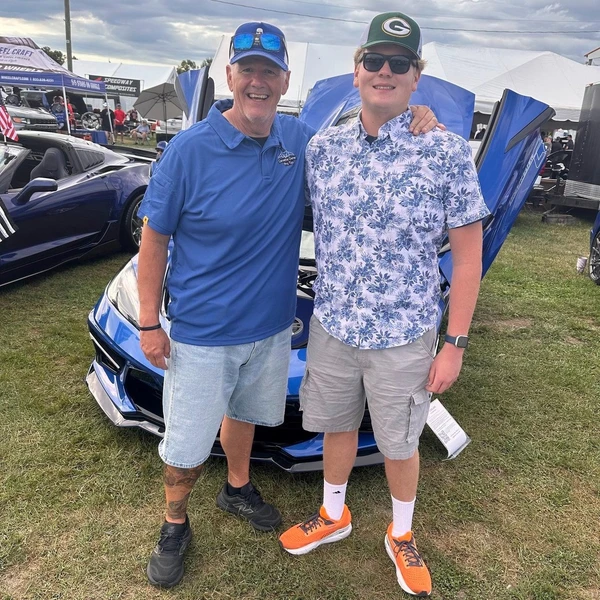
I am a Corvette enthusiast from King George, VA. I want to become an automotive engineer for Corvette once I graduate from Kettering University with a degree in Mechanical Engineering.
Education
King George High
High School
2022 – 2026
Miscellaneous
Desired degree level:
Master's degree program
Majors of interest:
Mechanical Engineering
Medical school interest:
No
Career
Miscellaneous
Dream career field:
Automotive
Dream career goals:
Engineer for Corvette
Has nursing license:
No
Mark Caldwell Memorial STEM/STEAM Scholarship
1250. The 2026 Corvette ZR1X produces 1250 hp. This is hard to imagine since it seems just a few years ago, 400 horsepower was fast for a sports car. The engineering of cars is becoming more advanced each year. Cars prove year after year that they are at the forefront of human innovation.
Cars’ performance continually improves despite their technology seeming to push the limits of engineering. Each year, I look forward to attending my favorite car show, Corvettes at Carlisle, with my dad and experiencing firsthand the Corvette’s innovations. It is hard to imagine how the engineers will be able to develop a more advanced car, but somehow they do year after year. My interest in performance cars has inspired me to pursue a mechanical engineering degree from Kettering University. One day, I will be a Corvette automotive engineer showcasing the latest technology advancements at Carlisle.
Cars have always been significant in my family. One year ago, my dad fulfilled a childhood dream and bought his first Corvette, a 2019 Grand Sport. My mother still owns and drives her first car, a 1997 Mustang GT. Before those, my grandfather owned a 1973 Stingray and a 1993 Corvette.
My passion for cars originated from working on cars with my dad. Performing routine maintenance and replacing clutches, suspensions, and exhaust systems spurred my interest in cars while bringing me closer to my father. We enjoy attending local car meets, and I am searching for a C4 Corvette project car that we can work on before I leave for college in the fall.
I always knew Corvettes were special among all other cars. A Chevrolet can outperform multi-million dollar Koenigseggs and Bugattis. Some people refer to Corvettes as a “fake supercar” or a “poor man’s Ferrari,” but I know the Corvette is in a class of its own! The introduction of the mid-engine C8 is attracting younger Corvette owners. Parking lots become impromptu car shows with owners parking their Corvettes far away from the entrance. Corvettes are much more than a car; they are a community of like minded car-enthusiasts. You can spot a Corvette owner’s tall white socks, crispy white New Balances, jorts, and their Corvette hat from a mile away.
Many challenges exist in the automotive industry that inhibit performance-oriented cars. Restrictive EPA regulations and state laws dramatically decrease the power output. While EPA restrictions are being reduced for manufacturers under the current administration, tighter regulations will likely be implemented by future administrations.
I hope to develop engines that meet EPA restrictions, are legal in all 50 states, and still offer high performance at an affordable price, making high-performance cars accessible to the average consumer. I want to bring back the naturally aspirated big block engines of the '60s and '70s American Muscle and deliver modern performance numbers. I also want to design systems that make cars easy to service, whether this is for the consumer to work on their car or to reduce maintenance costs at the dealership.
The future of the automotive industry is uncertain. Mandates for fully electric vehicle production have been rolled back, and companies have scaled back EV production significantly. It is an exciting time to enter the automotive industry, combining the best of electric motors and gasoline-powered engines to break current performance barriers. My studies at Kettering University are the first steps on my journey to become a Corvette engineer designing the next generation Corvette using an internal combustion engine to surpass 1250 hp.
Scott A. Ross Memorial Automotive Scholarship
1250. The 2026 Corvette ZR1X produces 1250 hp. This is hard to imagine since it seems just a few years ago, 400 horsepower was fast for a sports car. The engineering of cars is becoming more advanced each year. Cars prove year after year that they are at the forefront of human innovation.
Cars’ performance continually improves despite their technology seeming to push the limits of engineering. Each year, I look forward to attending my favorite car show, Corvettes at Carlisle, with my dad and experiencing firsthand the Corvette’s innovations. It is hard to imagine how the engineers will be able to develop a more advanced car, but somehow they do year after year. My interest in performance cars has inspired me to pursue a mechanical engineering degree from Kettering University. One day, I will be a Corvette automotive engineer showcasing the latest technology advancements at Carlisle.
Cars have always been significant in my family. One year ago, my dad fulfilled a childhood dream and bought his first Corvette, a 2019 Grand Sport. My mother still owns and drives her first car, a 1997 Mustang GT. Before those, my grandfather owned a 1973 Stingray and a 1993 Corvette.
My passion for cars originated from working on cars with my dad. Performing routine maintenance and replacing clutches, suspensions, and exhaust systems spurred my interest in cars while bringing me closer to my father. We enjoy attending local car meets, and I am searching for a C4 Corvette project car that we can work on before I leave for college in the fall.
I always knew Corvettes were special among all other cars. A Chevrolet can outperform multi-million dollar Koenigseggs and Bugattis. Some people refer to Corvettes as a “fake supercar” or a “poor man’s Ferrari,” but I know the Corvette is in a class of its own! The introduction of the mid-engine C8 is attracting younger Corvette owners. Parking lots become impromptu car shows with owners parking their Corvettes far away from the entrance. Corvettes are much more than a car; they are a community of like-minded car enthusiasts. You can spot a Corvette owner’s tall white socks, crispy white New Balances, jorts, and their Corvette hat from a mile away.
Many challenges exist in the automotive industry that inhibit performance-oriented cars. Restrictive EPA regulations and state laws dramatically decrease the power output. While EPA restrictions are being reduced for manufacturers under the current administration, tighter regulations will likely be implemented by future administrations.
I hope to develop engines that meet EPA restrictions, are legal in all 50 states, and still offer high performance at an affordable price, making high-performance cars accessible to the average consumer. I want to bring back the naturally aspirated big block engines of the '60s and '70s American Muscle and deliver modern performance numbers. I also want to design systems that make cars easy to service, whether this is for the consumer to work on their car or to reduce maintenance costs at the dealership.
The future of the automotive industry is uncertain. Mandates for fully electric vehicle production have been rolled back, and companies have scaled back EV production significantly. It is an exciting time to enter the automotive industry, combining the best of electric motors and gasoline-powered engines to break current performance barriers. My studies at Kettering University are the first steps on my journey to become a Corvette engineer designing the next generation Corvette using an internal combustion engine to surpass 1250 hp.
Anthony McPherson Memorial Automotive Scholarship
1250. The 2026 Corvette ZR1X produces 1250 hp. This is hard to imagine since it seems just a few years ago, 400 horsepower was fast for a sports car. The engineering of cars is becoming more advanced each year. Cars prove year after year that they are at the forefront of human innovation.
Cars’ performance continually improves despite their technology seeming to push the limits of engineering. Each year, I look forward to attending my favorite car show, Corvettes at Carlisle, with my dad and experiencing firsthand the Corvette’s innovations. It is hard to imagine how the engineers will be able to develop a more advanced car, but somehow they do year after year. My interest in performance cars has inspired me to pursue a mechanical engineering degree from Kettering University. One day, I will be a Corvette automotive engineer showcasing the latest technology advancements at Carlisle.
Cars have always been significant in my family. One year ago, my dad fulfilled a childhood dream and bought his first Corvette, a 2019 Grand Sport. My mother still owns and drives her first car, a 1997 Mustang GT. Before those, my grandfather owned a 1973 Stingray and a 1993 Corvette.
My passion for cars originated from working on cars with my dad. Performing routine maintenance and replacing clutches, suspensions, and exhaust systems spurred my interest in cars while bringing me closer to my father. We enjoy attending local car meets, and I am searching for a C4 Corvette project car that we can work on before I leave for college in the fall.
I always knew Corvettes were special among all other cars. A Chevrolet can outperform multi-million dollar Koenigseggs and Bugattis. Some people refer to Corvettes as a “fake supercar” or a “poor man’s Ferrari,” but I know the Corvette is in a class of its own! The introduction of the mid-engine C8 is attracting younger Corvette owners. Parking lots become impromptu car shows with owners parking their Corvettes far away from the entrance. Corvettes are much more than a car; they are a community of like minded car-enthusiasts. You can spot a Corvette owner’s tall white socks, crispy white New Balances, jorts, and their Corvette hat from a mile away.
Many challenges exist in the automotive industry that inhibit performance-oriented cars. Restrictive EPA regulations and state laws dramatically decrease the power output. While EPA restrictions are being reduced for manufacturers under the current administration, tighter regulations will likely be implemented by future administrations.
I hope to develop engines that meet EPA restrictions, are legal in all 50 states, and still offer high performance at an affordable price, making high-performance cars accessible to the average consumer. I want to bring back the naturally aspirated big block engines of the '60s and '70s American Muscle and deliver modern performance numbers. I also want to design systems that make cars easy to service, whether this is for the consumer to work on their car or to reduce maintenance costs at the dealership.
The future of the automotive industry is uncertain. Mandates for fully electric vehicle production have been rolled back, and companies have scaled back EV production significantly. It is an exciting time to enter the automotive industry, combining the best of electric motors and gasoline-powered engines to break current performance barriers. My studies at Kettering University are the first steps on my journey to become a Corvette engineer designing the next generation Corvette using an internal combustion engine to surpass 1250 hp.
Hank Anderson Memorial Scholarship
1250. The 2026 Corvette ZR1X produces 1250 hp. This is hard to imagine since it seems just a few years ago, 400 horsepower was fast for a sports car. The engineering of cars is becoming more advanced each year. Cars prove year after year that they are at the forefront of human innovation.
Cars’ performance continually improves despite their technology seeming to push the limits of engineering. Each year, I look forward to attending my favorite car show, Corvettes at Carlisle, with my dad and experiencing firsthand the Corvette’s innovations. It is hard to imagine how the engineers will be able to develop a more advanced car, but somehow they do year after year. My interest in performance cars has inspired me to pursue a mechanical engineering degree from Kettering University. One day, I will be a Corvette automotive engineer showcasing the latest technology advancements at Carlisle.
Cars have always been significant in my family. One year ago, my dad fulfilled a childhood dream and bought his first Corvette, a 2019 Grand Sport. My mother still owns and drives her first car, a 1997 Mustang GT. Before those, my grandfather owned a 1973 Stingray and a 1993 Corvette.
My passion for cars originated from working on cars with my dad. Performing routine maintenance and replacing clutches, suspensions, and exhaust systems spurred my interest in cars while bringing me closer to my father. We enjoy attending local car meets, and I am searching for a C4 Corvette project car that we can work on before I leave for college in the fall.
I always knew Corvettes were special among all other cars. A Chevrolet can outperform multi-million dollar Koenigseggs and Bugattis. Some people refer to Corvettes as a “fake supercar” or a “poor man’s Ferrari,” but I know the Corvette is in a class of its own! The introduction of the mid-engine C8 is attracting younger Corvette owners. Parking lots become impromptu car shows with owners parking their Corvettes far away from the entrance. Corvettes are much more than a car; they are a community of like-minded car enthusiasts. You can spot a Corvette owner’s tall white socks, crispy white New Balances, jorts, and their Corvette hat from a mile away.
Many challenges exist in the automotive industry that inhibit performance-oriented cars. Restrictive EPA regulations and state laws dramatically decrease the power output. While EPA restrictions are being reduced for manufacturers under the current administration, tighter regulations will likely be implemented by future administrations.
I hope to develop engines that meet EPA restrictions, are legal in all 50 states, and still offer high performance at an affordable price, making high-performance cars accessible to the average consumer. I want to bring back the naturally aspirated big block engines of the '60s and '70s American Muscle and deliver modern performance numbers. I also want to design systems that make cars easy to service, whether this is for the consumer to work on their car or to reduce maintenance costs at the dealership.
The future of the automotive industry is uncertain. Mandates for fully electric vehicle production have been rolled back, and companies have scaled back EV production significantly. It is an exciting time to enter the automotive industry, combining the best of electric motors and gasoline-powered engines to break current performance barriers. My studies at Kettering University are the first steps on my journey to become a Corvette engineer designing the next generation Corvette using an internal combustion engine to surpass 1250 hp.
Marvin Bozarth Memorial Scholarship
1250. The 2026 Corvette ZR1X produces 1250 hp. This is hard to imagine since it seems just a few years ago, 400 horsepower was fast for a sports car. The engineering of cars is becoming more advanced each year. Cars prove year after year that they are at the forefront of human innovation.
Cars’ performance continually improves despite their technology seeming to push the limits of engineering. Each year, I look forward to attending my favorite car show, Corvettes at Carlisle, with my dad and experiencing firsthand the Corvette’s innovations. It is hard to imagine how the engineers will be able to develop a more advanced car, but somehow they do year after year. My interest in performance cars has inspired me to pursue a mechanical engineering degree from Kettering University. One day, I will be a Corvette automotive engineer showcasing the latest technology advancements at Carlisle.
Cars have always been significant in my family. One year ago, my dad fulfilled a childhood dream and bought his first Corvette, a 2019 Grand Sport. My mother still owns and drives her first car, a 1997 Mustang GT. Before those, my grandfather owned a 1973 Stingray and a 1993 Corvette.
My passion for cars originated from working on cars with my dad. Performing routine maintenance and replacing clutches, suspensions, and exhaust systems spurred my interest in cars while bringing me closer to my father. We enjoy attending local car meets, and I am searching for a C4 Corvette project car that we can work on before I leave for college in the fall.
I always knew Corvettes were special among all other cars. A Chevrolet can outperform multi-million dollar Koenigseggs and Bugattis. Some people refer to Corvettes as a “fake supercar” or a “poor man’s Ferrari,” but I know the Corvette is in a class of its own! The introduction of the mid-engine C8 is attracting younger Corvette owners. Parking lots become impromptu car shows with owners parking their Corvettes far away from the entrance. Corvettes are much more than a car; they are a community of like minded car-enthusiasts. You can spot a Corvette owner’s tall white socks, crispy white New Balances, jorts, and their Corvette hat from a mile away.
Many challenges exist in the automotive industry that inhibit performance-oriented cars. Restrictive EPA regulations and state laws dramatically decrease the power output. While EPA restrictions are being reduced for manufacturers under the current administration, tighter regulations will likely be implemented by future administrations.
I hope to develop engines that meet EPA restrictions, are legal in all 50 states, and still offer high performance at an affordable price, making high-performance cars accessible to the average consumer. I want to bring back the naturally aspirated big block engines of the '60s and '70s American Muscle and deliver modern performance numbers. I also want to design systems that make cars easy to service, whether this is for the consumer to work on their car or to reduce maintenance costs at the dealership.
The future of the automotive industry is uncertain. Mandates for fully electric vehicle production have been rolled back, and companies have scaled back EV production significantly. It is an exciting time to enter the automotive industry, combining the best of electric motors and gasoline-powered engines to break current performance barriers. My studies at Kettering University are the first steps on my journey to become a Corvette engineer designing the next generation Corvette using an internal combustion engine to surpass 1250 hp.
Rob Novak Memorial Automotive Technology Scholarship
Cars’ performance continually improves despite their technology seeming to push the limits of engineering. Each year, I look forward to attending my favorite car show, Corvettes at Carlisle, with my dad and experiencing firsthand the Corvette’s innovations. It is hard to imagine how the engineers will be able to develop a more advanced car, but somehow they do year after year. My interest in performance cars has inspired me to pursue a mechanical engineering degree from Kettering University. One day, I will be a Corvette automotive engineer showcasing the latest technology advancements at Carlisle.
My passion for cars originated from working on cars with my dad. Performing routine maintenance and replacing clutches, suspensions, and exhaust systems spurred my interest in cars while bringing me closer to my father. We enjoy attending local car meets, and I am searching for a C4 Corvette project car that we can work on before I leave for college in the fall.
Many challenges exist in the automotive industry that inhibit performance-oriented cars. Restrictive EPA regulations and state laws dramatically decrease the power output. While EPA restrictions are being reduced for manufacturers under the current administration, tighter regulations will likely be implemented by future administrations.
I hope to develop engines that meet EPA restrictions, are legal in all 50 states, and still offer high performance at an affordable price, making high-performance cars accessible to the average consumer. I want to bring back the naturally aspirated big block engines of the '60s and '70s American Muscle and deliver modern performance numbers. I also want to design systems that make cars easy to service, whether this is for the consumer to work on their car or to reduce maintenance costs at the dealership.
The future of the automotive industry is uncertain. Mandates for fully electric vehicle production have been rolled back, and companies have scaled back EV production significantly. It is an exciting time to enter the automotive industry, combining the best of electric motors and gasoline-powered engines to break current performance barriers. My studies at Kettering University are the first steps on my journey to become a Corvette engineer designing the next generation Corvette using an internal combustion engine to surpass 1250 hp.
Chip Miller Memorial Scholarship
Winner
1250. The 2026 Corvette ZR1X produces 1250 hp. This is hard to imagine since it seems just a few years ago, 400 horsepower was fast for a sports car. The engineering of cars is becoming more advanced each year. Cars prove year after year that they are at the forefront of human innovation.
Cars’ performance continually improves despite their technology seeming to push the limits of engineering. Each year, I look forward to attending my favorite car show, Corvettes at Carlisle, with my dad and experiencing firsthand the Corvette’s innovations. It is hard to imagine how the engineers will be able to develop a more advanced car, but somehow they do year after year. My interest in performance cars has inspired me to pursue a mechanical engineering degree from Kettering University. One day, I will be a Corvette automotive engineer showcasing the latest technology advancements at Carlisle.
Cars have always been significant in my family. One year ago, my dad fulfilled a childhood dream and bought his first Corvette, a 2019 Grand Sport. My mother still owns and drives her first car, a 1997 Mustang GT. Before those, my grandfather owned a 1973 Stingray and a 1993 Corvette.
My passion for cars originated from working on cars with my dad. Performing routine maintenance and replacing clutches, suspensions, and exhaust systems spurred my interest in cars while bringing me closer to my father. We enjoy attending local car meets, and I am searching for a C4 Corvette project car that we can work on before I leave for college in the fall.
I always knew Corvettes were special among all other cars. A Chevrolet can outperform multi-million dollar Koenigseggs and Bugattis. Some people refer to Corvettes as a “fake supercar” or a “poor man’s Ferrari,” but I know the Corvette is in a class of its own! The introduction of the mid-engine C8 is attracting younger Corvette owners. Parking lots become impromptu car shows with owners parking their Corvettes far away from the entrance. Corvettes are much more than a car; they are a community of like minded car-enthusiasts. You can spot a Corvette owner’s tall white socks, crispy white New Balances, jorts, and their Corvette hat from a mile away.
Many challenges exist in the automotive industry that inhibit performance-oriented cars. Restrictive EPA regulations and state laws dramatically decrease the power output. While EPA restrictions are being reduced for manufacturers under the current administration, tighter regulations will likely be implemented by future administrations.
I hope to develop engines that meet EPA restrictions, are legal in all 50 states, and still offer high performance at an affordable price, making high-performance cars accessible to the average consumer. I want to bring back the naturally aspirated big block engines of the '60s and '70s American Muscle and deliver modern performance numbers. I also want to design systems that make cars easy to service, whether this is for the consumer to work on their car or to reduce maintenance costs at the dealership.
The future of the automotive industry is uncertain. Mandates for fully electric vehicle production have been rolled back, and companies have scaled back EV production significantly. It is an exciting time to enter the automotive industry, combining the best of electric motors and gasoline-powered engines to break current performance barriers. My studies at Kettering University are the first steps on my journey to become a Corvette engineer designing the next generation Corvette using an internal combustion engine to surpass 1250 hp.