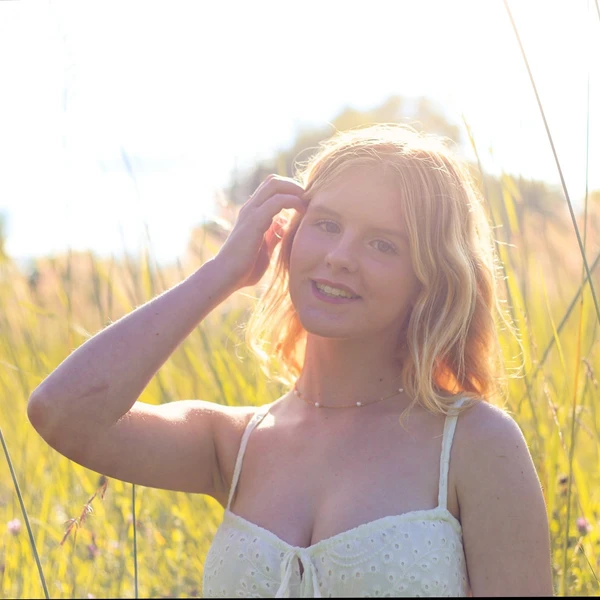
Joliet, IL
Age
17
Gender
Female
Ethnicity
Caucasian
Religion
Christian
Church
Lutheran
Hobbies and interests
Writing
Poetry
Acting And Theater
Volleyball
American Sign Language (ASL)
Bible Study
Clinical Psychology
Criminal Justice
Karaoke
Spending Time With Friends and Family
Animals
Advocacy And Activism
Music
Reading
Romance
Adult Fiction
Fantasy
Humor
Mystery
Horror
I read books multiple times per month
US CITIZENSHIP
US Citizen
LOW INCOME STUDENT
No
FIRST GENERATION STUDENT
No
Kyah Homerding
1x
Finalist
Kyah Homerding
1x
FinalistBio
I’m a passionate poet, dedicated volleyball player, and empathetic individual who thrives on helping others and making meaningful connections. I believe in the power of understanding different perspectives and am deeply interested in human behavior, especially in the context of crime. I’m hardworking and a perfectionist when it comes to organizing and completing tasks. I value family, strive for success, and want to build a future filled with happiness and little regret. While sometimes I do fear growing older, I’m excited to embrace all that college offers and work toward my goals, all while staying true to my values. I also LOVE The Weeknd and just went to his stadium tour in May.
Education
Minooka Community High School
High SchoolGPA:
4
Miscellaneous
Desired degree level:
Master's degree program
Majors of interest:
- Social Work
- Criminal Justice and Corrections, General
Career
Dream career field:
Mental Health Care
Dream career goals:
To become a Social Worker in the Prison System
Crew Member
Dunkin Donuts2025 – Present1 yearGate Attendant
Chicagoland Pool Management2025 – 2025Actress
Haunted House2023 – 20252 years
Sports
Volleyball
Club2022 – 20253 years
Awards
- 1st place
- 3rd place
Softball
Club2013 – 20174 years
Awards
- 3rd Place
- 2nd Place
- Finalist
- MVP
- Medals
Arts
MTM and Kidz Kabaret
ActingAlice in Wonderland, Annie Play Will Do, Frozen Jr., Willy Wonka, Annie, Seussical Jr., Moana, Aladdin, Puffs, If the Shoe Fits2017 – 2024
Public services
Volunteering
Wags 2 Whiskers — Clean the dog kennels2026 – PresentVolunteering
Northern Illinois Food Bank — Packed boxes2022 – PresentVolunteering
National Honors Society — Member2024 – PresentVolunteering
Feed My Starving Children — Packing food2021 – Present
Future Interests
Advocacy
Volunteering
Entrepreneurship
Matthew E. Minor Memorial Scholarship
If I had to describe myself honestly, I would say that I am someone who pays attention. This statement is ironic because I am actually diagnosed with ADHD, but when it comes to people, I notice things others might normally miss. What I mean by that is I can sense who feels out of place, who is being left out, and who might need support even if they do not ask for it. I care deeply about people and their stories, which is part of why I want to go into social work, specifically within the prison system. I believe people are more than their worst decisions, and I am interested in the work that happens after harm—rehabilitation and growth. I also write poetry, which has always been a way for me to process emotions and experiences that are difficult to say out loud.
I am very involved in my school and community, mostly in ways that allow me to connect with others. Through National Honor Society, I have volunteered at a local Swaddling Clothes organization, where I helped sort and organize donated clothing for families in need. I have also helped pack food at a local food bank, which showed me that the volunteer work often considered “boring” is sometimes the most meaningful. At my school, I volunteered at our annual wheelchair basketball game, helping support an event centered around accessibility.
Some of my favorite volunteering experiences are the ones that involve direct interaction. I volunteered at bingo nights through my park district, calling numbers, handing out prizes, and talking with participants. It may seem small, but creating a space where people felt welcomed and laughed mattered to me. I love kids a lot, even though I am honestly terrified of the idea of giving birth to some of my own one day. Still, working with children and youth has always felt natural to me, especially when it comes to making sure they feel safe and accepted.
I am also involved in SADD (Students Against Destructive Decisions) at my school, where we focus on substance abuse, mental health, and bullying prevention. We hang awareness flyers and present to junior high students about these topics. This work is personal for me. I have been bullied for different reasons throughout my life, especially for having two moms. Having two moms has led to judgment and teasing since I was very young, and those experiences shaped how I treat others. I try to be accepting, I speak up when I see someone being rude, and I make an effort to include people who are being left out. I am very much a “see something, say something” person.
Keeping youth safe also extends to online spaces. I am intentional about my digital presence and keep my social media as positive as possible. I do not use Snapchat, and I have not been on TikTok since the summer because I feel those platforms often promote negativity and comparison. I believe safety online starts with the choices we make and the behavior we model.
As I prepare for higher education, financial need is an important factor. I plan on attending college out of state, which comes with higher costs, but I believe it is worth it to experience new places and perspectives. Financial assistance would help make that opportunity possible and allow me to continue growing, learning, and staying involved in the kind of community-centered work that matters to me.
Majestic Bison for Wellness Scholarship
The sterile white walls of the mental health facility where I spent part of my teenage years, held lessons I never expected to learn—lessons that would ultimately shape my future. My primary focus then was simply to get through each day: attending counseling sessions, developing coping mechanisms, and searching for any way forward. In retrospect, that was my first encounter with genuine guidance during my struggles. The staff did not merely fire out instructions; they listened attentively, demonstrated understanding, and helped me see a path ahead. Given my strength and skill for language, I began to consider how I might use my communication skills to assist others the same way others had helped me.
Initially, I was drawn to forensic psychology, influenced by a fascination with criminal behavior and the complexities of the human mind. Yet, as I learned more, I realized my interests were not satisfied by study alone. Instead, I desired to engage directly with individuals, particularly those within the criminal justice system. Social work within correctional institutions presents a combination of my interests: I can remain connected to the world of criminal behavior while contributing to meaningful, face-to-face intervention.
My experiences within the mental health system also reshaped my outlook on empathy and judgment. I have become more open-minded and patient, recognizing that one cannot discern another’s struggles by appearance alone. I now strongly believe that everyone, including those who have made mistakes, deserves access to help and understanding. In my prospective career, I aim to view and treat incarcerated individuals as people first, rather than solely by the label of “criminal.” I hope to cultivate an environment in which inmates feel acknowledged and understood, as I am convinced that authentic change originates from that type of foundation.
Currently, I serve as vice president of Students Against Destructive Decisions (SADD) at my school, an organization devoted to promoting better decision-making among youth. Our initiatives include raising awareness about substance abuse, mental health, and the significant consequences of seemingly minor choices. Through fundraisers, events, and open discussions, I have learned that conversation is the catalyst for societal change and that even smallest actions can shift attitudes.
The social issue I am most compelled to address is the stigma facing incarcerated individuals. Many inmates have untreated mental health issues, disabilities, or unresolved trauma, factors that often contribute to their circumstances. With appropriate support, these individuals can overcome past challenges and pursue improved futures. I am also committed to advocating for those wrongfully convicted and highlighting systemic injustices. My aspiration is to make the public aware of inmates’ capacity for growth and change, thereby encouraging society to look beyond their worst mistakes.
I am aware that this career path will be challenging. Nevertheless, I understand its significance, based on my own experience of needing someone to believe in me during difficult times. I am determined to be that supportive person for others—the individual who listens without judgment and reassures them that, regardless of past actions, their story is still unfolding.
Kalia D. Davis Memorial Scholarship
I’ve always been the kind of person who ends up carrying a lot—school, sports, volunteering, work, and sometimes even the emotions of the people around me. Not because it’s easy, but because it feels like the right thing to do. Whether it’s staying up late to finish an assignment, pushing through at volleyball practice even when I’m exhausted, or being there for someone when they need support—I try to give my full effort. It matters to me.
Reading about Kalia’s life really stuck with me. She sounds like someone who cared deeply, worked hard, and made space for others even with everything on her plate. That kind of energy is something I hope to carry in my own life too.
Right now, I’m getting ready to graduate and planning to study social work. My dream is to work in the prison system—to support people who are incarcerated and help them find access to therapy, education, and re-entry programs. My parents are quick to judge people with criminal records. I grew up hearing that people like that “got what they deserved.” But I never felt that way. I’ve always believed that people are more than the worst thing they’ve done. That belief is what pushes me to do this kind of work—because I want to be someone who sees the full story, not just the mistakes.
I’ve kept my GPA around a 4.0 while staying involved in a busy schedule. I took psychology last year and I’m taking a true crime class now—both of which opened my eyes to how trauma and environment play a role in how people behave. Outside of class, I’ve been volleyball player, which taught me discipline, teamwork and how to keep going even when I'm exhausted. I’ve also always tried to give back in ways that matter, such as volunteering at Feed My Starving Children, helping at the food bank, and working at a wheelchair basketball game at my school to raise money for athletes with disabilities. These experiences reminded me how important community is, and how everyone deserves support.
None of it has been easy to balance, and sometimes I do feel overwhelmed trying to juggle everything. But I care deeply about what I’m doing and where I’m going. That’s why this scholarship would make such a big difference. It would take some of the weight off financially, so I could focus more on learning and getting experience in the field I care about without constantly stressing about money.
More than just money, though, this scholarship feels like a chance to be connected to someone who lived the way I want to live. Kalia’s story is inspiring—and I want to carry forward that same kind of light in my own way. I want to help people feel seen. I want to serve with honesty and care. I want to live a life that’s full—not just of hard work, but of meaning.
If I can keep showing up for people the way she did, I’ll know I’m doing something right.
Dr. Tien Vo Federal Agents To-Be and Public Service Scholarship
I’ve always believed that people are more than the worst thing they’ve ever done. That belief didn’t come from my environment—it came from resisting it. I grew up in a home where mistakes were rarely forgiven and second chances weren’t easily offered, especially when it came to people in the prison system. My parents are the kind of people who don’t look past a criminal record. But for me, that mindset always felt too rigid, too final. I couldn’t stop thinking about what might happen if someone—anyone—chose to believe people could still change.
That’s what pushed me to want to become a social worker in the prison system. I want to be the person who meets people where they are—not where society left them. I want to help incarcerated individuals gain access to therapy, education, and re-entry support. I want to show up for them in the moments where it feels like no one else will. Not to excuse their actions, but to help them understand why they made the choices they did, and how they can move forward differently. Everyone deserves the chance to try again.
Academically, I’ve already started preparing for this path. Last year, I took a psychology class that deepened my interest in human behavior—what drives people, how trauma plays a role, and how healing can begin. This year, I’m taking a true crime course, which is helping me understand the justice system more clearly, along with the many factors that shape criminal cases. These classes have only solidified what I already felt: that I want to work in this space, and that I have the compassion and drive it takes to make a difference.
This scholarship would mean the world to me. I’ve had to think practically about how I’m going to afford college, and even small financial support like this would ease a huge burden. It would allow me to put more focus into my classes, hands-on experiences, and any internships or volunteer work that could prepare me for my future. More than that, it would be a reminder that people believe in the work I want to do—even if not everyone in my own life understands it yet.
I know that entering public service, especially in this field, won’t be easy. I’m not naive about how heavy the work can be. But I also know I can handle it. I’ve learned how to hold space for pain without turning away from it. I’ve learned how to lead with empathy, even when it’s uncomfortable. And I’ve learned that real change doesn’t always look like a big victory—it often looks like sitting with someone in their lowest moment and reminding them they’re still human.
This isn’t just a career goal for me—it’s personal. And this scholarship would bring me one step closer to becoming the kind of social worker I needed to see growing up. Someone who listens, someone who believes in second chances, and someone who shows up.
David Foster Memorial Scholarship
"A teacher affects eternity; he can never tell where his influence stops." Henry Adams, a 19th-century historian, was incredibly insightful when he said this. Before Mrs. Bell, school for me felt like a static-filled radio, buzzing with drama and pain and lacking a clear direction. I'll never forget the first moments in her ASL class when she first signed "hello". Mrs. Bell wasn't just another teacher; she was a mirror. She was just li - a passionate, often over-enthusiastic soul bubbling beneath a quiet exterior. In a world filled with so much noise that my whispers were often ignored, Mrs. Bell heard me.
Mrs. Bell ran her classroom like a stage. She presented information to us in a theatrical way that caught my attention right away. Mrs. Bell could turn the most difficult ASL grammar into a playful show. She'd tell hilarious stories about her experiences, signing them with artistic flair that I would laugh until my sides hurt. I remember one lesson where she shared a story about her shyness in high school, and how discovering ASL helped her find her confidence. It was a real moment for me to see someone who was so confident and joyful admit to once feeling like me. This was incredibly empowering. I looked forward to her class every day. It was one moment in the day when I felt joy. Mrs. Bell understood that sometimes, the most profound word doesn't have to be spoken to be heard. She encouraged me to embrace a quieter side of myself and showed me that there is huge power in thoughtful observation and expressive movement. She nurtured us all that year, so that we were safe to take risks, make mistakes, and honestly connect.
Mrs. Bell's impact stretched far beyond the signs we learned. I developed a deep appreciation for different forms of expression and understanding. She taught me that being "seen" isn't about being the loudest voice in the room. My voice has value and power. Since her class, I still sign, but I miss her. Because of her, I decided to join Connections Crew. As a member, I advised and mentored incoming freshmen several times a year, where I tried to pass on lessons Mrs. Bell taught us so their time in high school wouldn't be so "noisy".
Mrs. Bell didn't just teach me a language; she taught me to find my voice, even when it wasn't spoken, and for that, I am eternally grateful.
Harriett Russell Carr Memorial Scholarship
In my everyday life, I aim to embody a spirit of excellence through a combination of dedication, discipline, and the focus of continuous improvement. Excellence is not just about achieving success in one area, but about consistently applying effort across all aspects of my life. Whether it’s in my academics, sports, or personal development, I hold myself to high standards. In the classroom, I make it a priority to give my best effort, not just to achieve good grades but also to genuinely learn and understand the material. I am constantly pushing myself to grow by seeking extra help when needed and by working to master concepts that challenge me. This dedication is evident in my commitment to managing my time effectively by using planners and apps that help keep me on top of my work. I use an app called Forest, that sets timers while I study, and during that time, it plants a tree. If I exit the app and try becoming off-task, the tree will die. This helps motivate me to keep studying. I understand that excellence requires hard work and persistence, and I approach every task with the same level of determination.
In sports, particularly volleyball, I carry this same mindset. Playing at the club level requires a strong sense of discipline, teamwork, and resilience. I set personal goals to improve my skills, work on weaknesses, and support my teammates in achieving success. Whether during practice or in games, I put my full effort into making sure we work as a team and strive for our collective goals. I take pride in my role as a dedicated athlete, as this allows me to push myself to be better while encouraging others to do the same.
Beyond personal excellence, I am committed to giving back to my community, as I believe it is essential to make a positive impact on those around me. I actively participate in community service through the National Honor Society (NHS) program, where I contribute to various volunteer activities. These experiences range from helping organize wheelchair basketball through my high school, and advertisting for a local food bank. These opportunities have helped me grow so much as a person, and I'm continuing to grow each day. I am passionate about using my skills, time, and energy to help others, and I understand that small acts of kindness and service can have a big impact.
I also try to give back in my everyday life, whether by assisting a friend in need or supporting my family in any way I can. I believe that giving back isn’t just about volunteering for large causes, but also about consistently offering help, showing empathy, and being present for the people around you. I always aim to be someone others can count on, whether it's lending a hand with schoolwork or listening when someone needs to talk.
Through both my dedication to excellence and my consistent community involvement, I believe I am not only improving myself but also contributing to the betterment of those around me. I aim to leave a lasting impact by serving others, creating meaningful connections, and striving to be the best version of myself every day.