Hobbies and interests
Crocheting
Writing
Reading
American Sign Language (ASL)
Community Service And Volunteering
Education
True Crime
Reading
Christian Fiction
Christianity
Historical
Novels
Mystery
Fantasy
I read books multiple times per week
Krystal Baker
1x
Finalist1x
WinnerKrystal Baker
1x
Finalist1x
WinnerBio
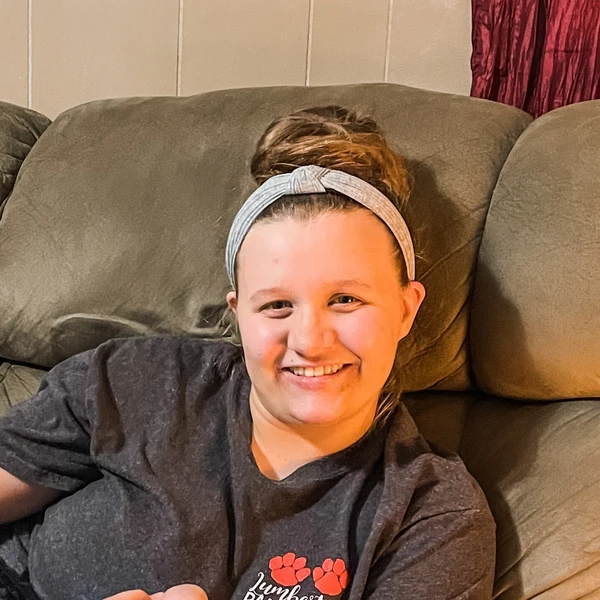
My name is Krystal Baker, and I am seventeen years old. I went into foster care at age nine in 2017, and I was adopted in 2019 by my forever family. I have high-functioning autism, and it's been a challenge, but I am blessed nonetheless. I started community college during my junior year of high school. In 2026, I will graduate from high school and college with my associate's degree. I love science and history, and my passion is elementary education.
Education
Pearl River Community College
Associate's degree programMajors:
- Education, General
GPA:
4
Lumberton High School
High SchoolGPA:
3.9
Miscellaneous
Desired degree level:
Bachelor's degree program
Graduate schools of interest:
Transfer schools of interest:
Majors of interest:
- Education, General
Test scores:
29
ACT
Career
Dream career field:
Education
Dream career goals:
Kindergarten Teacher
Public services
Volunteering
Sunny Hill Pentecostal Church — Sunday School classroom assistant2024 – Present
Future Interests
Volunteering
Christian Fitness Association General Scholarship
Albert Einstein is commonly attributed with saying, “Everyone is a genius. But if you judge a fish by its ability to climb a tree, it will live its life believing it’s stupid.” It is quite ridiculous to judge a fish by its ability to climb a tree, an ability that was not in its DNA. In this same way, it’s also absurd to judge a child’s academic performance without learning more about their home life.
It’s been proven that children who are exposed to trauma have altered brain development, especially in areas related to attention, memory, and emotional regulation. A child’s reading, writing, and test performance can also be significantly affected.
You might be wondering how I could possibly know anything about this. Well, I was once a fish expected to climb a tree while barely surviving in polluted waters.
As a child, I suffered from abuse and neglect at the hands of those who were supposed to protect and love me the most. When I entered school, I was not on the same playing field as my peers, due to what they now call a lack of exposure. No one knew the life I was living, and they labeled me as a slow learner, to the point where they put me in special education relatively quickly. Thankfully, though, my story doesn’t end there.
It all changed when my little brother and I were taken into custody by the state and put with a foster family. I believe this action changed my life exponentially for the better. To this day, I am still incredibly close with my first foster family. They gave me the lifeline I desperately needed.
At age nine, after being placed in foster care, a psychiatrist diagnosed me with autism and ADHD. Because of this, I was able to receive the tools I needed to thrive. Within mere months, I was excelling in school, no longer considered a special education student.
About 9 months later, we went to another foster family, and they eventually adopted us. My grades were so high that the school immediately tested and enrolled me in the gifted program. Even in middle and high school, I consistently made the honor roll and was known in my grade as “the smart girl.”
While a freshman, I became active in my school’s Beta Club, volunteering frequently and traveling to the state convention each year. By the time I entered my senior year, I’d earned three state-level awards and one national-level award, and I was recognized as my club’s National Beta Club Member of the Year twice.
In my junior year of high school, I was accepted into the Middle College program offered by the local community college. This meant I would be simultaneously enrolled full-time at the college and at my high school. When I graduate, I will receive both my high school diploma and my associate’s degree at the same time. I was the only person in my high school to apply for and be accepted into Middle College.
None of this is to say that my life has been simple since I was adopted. I’ve dealt with setbacks, tragedies, and painful events. Several times after my adoption, my birth father has shown up at my home, refusing to accept that I no longer wanted him in my life (not to mention the court system terminated his rights). During my junior year, he showed up at my school, stating he wanted to buy me a class ring and that he needed to see me. Thankfully, he was escorted off the property by the school officer once they checked his ID and saw that he was listed as a ‘no contact’ person on my profile.
I had not been at the school when this happened, and I heard about it afterward when my mother called to let me know. When I found out he was forced to leave merely moments before I had arrived, I nearly had a panic attack, though it was not the first I’d had because of him. After this final occurrence, my family had grounds for a restraining order, and the court granted it that summer.
Although dealing with my birth father’s frequent appearances had become stressful, I refused to let my grades suffer. I’m no longer a victim—through Christ, I have become the victor!
I tell you all of this to show you that when a child is dismissed as simply being “slow” and told that they’ll never climb the tree, they will start to believe that message and look at the unclimbed ‘tree’ as failure. On the other hand, if they are moved to waters where they are allowed to thrive, they can swim to depths we can’t even imagine. I’ve made the declaration: I won’t stop swimming!
Dr. G. Yvette Pegues Disability Scholarship
In typical cases, people on the spectrum are diagnosed between ages 2 and 5. However, it was not until I was nine years old that I was diagnosed. I showed the early signs of being autistic, such as not speaking for at least the first three years of my life, and when I did start talking, I answered ‘no’ to every question asked, had poor eye contact, and exhibited repetitive behaviors. However, I was in an environment where these signals were not deemed significant by those closest to me.
As a child between the ages of 5 and 9, I struggled to focus on my schoolwork and to control my quirks, which were later recognized as “stemming”. The school labelled me as a slow learner, to the extent that they put me in special education relatively quickly.
When I was nine years old, my little brother and I were taken into custody by the state and put with a foster family. A psychiatrist diagnosed me with autism and ADHD. Because of this diagnosis, I was able to receive the tools I needed to thrive. Within mere months, I was excelling in school and no longer considered a special education student. After being placed with my eventual adoptive family, my new school tested me and immediately put me in the gifted program.
This is not to say that I don’t struggle. People have been put off by my special interests and the unique ways I stem, even to the point of bullying. I don’t do well in social situations, and I have suffered panic attacks due to loud, consistent sounds. I struggle to understand social situations, and friendships have ended due to others not understanding my way of perceiving the world.
Thanks to those who care, I’m able to recognize social cues more clearly and respect boundaries. I have found companions who are willing to help me despite all of my oddities. Teachers have offered accommodations that allow me to excel in my studies, and my mom helps me better manage my perceptions. Most of all, I have allowed myself to reflect on my own actions, and this has given me the chance to improve myself. I hope that, as I get older, I can continue to learn more about myself and others so that I can become the best version of me possible.
When I become a teacher in a few years, I hope to help students who have struggled as I have. I’m planning to earn a special education certification after I graduate from university, so I can assist those with special needs who may come into my classroom. I aspire to be as helpful for my future students as my teachers have been for me during my school years.
Kerry Kennedy Life Is Good Scholarship
I have been blessed to have had several incredible teachers in my life. However, I
understand that some children have not had great experiences with all of their teachers.
Also, some students, of all ages, do not have a safe learning environment. I want to pursue teaching because I believe I can provide that to children who need it, and I hope to become someone who can inspire them to be all that they can be.
In addition, I have been inspired by my teachers so much. They have shown me what it means to be a good person, as well as a good teacher. They’ve shown that it’s not enough to teach. Providing compassion, grace, and an empathetic ear is also necessary. I want to teach those lessons to others, especially impressionable young children who need a good role model.
Teachers are responsible for creating an atmosphere that enables their students to
thrive. I’ve seen this firsthand while assisting in classrooms as part of my high school Teacher Academy class. The best teachers I’ve worked under did everything to ensure their students grasped their lessons and flourished under their tutelage.
In my junior year of high school, I was accepted into the Middle College program
offered by my local community college. This has allowed me to be enrolled in both high
school and college so that I will graduate with my high school diploma and my associate’s degree in May. It will afford me the opportunity to enter university with only two years left, enabling me to begin my teaching career early.
To maintain a 4.0 GPA in both high school and college, I have dedicated many hours
to studying and staying on top of my schoolwork. Because of this, I have sacrificed many opportunities to spend time with my family and friends. Thankfully, everyone in my life has been very understanding and supportive of my endeavors, especially those at my church and school.
In conclusion, I am eager to become a teacher because I believe passionate
teachers are always needed. I want to be a positive role model for young kids, encouraging them to excel and believe in themselves. When I think about teaching, I feel so deeply about it and know that it is my life’s purpose. I’ve already sacrificed so much for my future students, and I would do it a hundred times over. No matter what, I want to be a person who goes above and beyond for my students, even before I’m officially in the classroom as their teacher.
Gabriel Martin Memorial Annual Scholarship
When I was around ten years old, I was diagnosed with a plethora of various stomach issues: gastroesophageal reflux disease, irritable bowel syndrome, and gastroparesis. Simply put, my stomach sometimes “glitches” and doesn’t digest food properly, which can culminate in regurgitation or loose bowel movements. Because of this, I’m on two different medications, one of which basically keeps my stomach working. I will most likely be on it for the rest of my life. Additionally, on my specialized learning plan, there’s a note allowing me to make extra restroom visits if needed.
Every few months after my diagnosis, my mother and I would drive two hours to Jackson, Mississippi, so I could see a gastrointestinal specialist, though I’d miss a day of school because of this. About four years ago, I was given a new specialist who suggested trying to phase out one of my medications and replace it with a different prescription. Unfortunately, this plan failed within a day or two, as I began vomiting everything I ate and drank. When we attempted to get back on my usual medicine, I was still unable to eat anything, so I was put on a two-week-long liquid diet. This initially reset my digestive system, allowing me to eat again with medication without any further problems.
Shortly after I began high school, a new specialist came to my local clinic, making it so my mother and I wouldn’t have to make the two-hour drive to Jackson. He had no desire to change my medications unless necessary. Instead, he’s focused on tracking my progress, always noting whether I’ve had recent flare-ups and what might have caused them. Thankfully, now that my stomach issues have subsided significantly, we’ve been able to reduce our visits to every six months instead of every three. However, taking medication is still the only way my stomach will function as it should.
Despite my health challenges over the years, I have maintained a 4.0 GPA at both my high school and the local community college where I’m dually enrolled. In my sophomore and junior years, I completed the Teacher Prep course at my school district’s career and technical center. I believe this has exceptionally prepared me for the elementary teaching career I’m currently pursuing. Once I graduate from high school and community college this May, I plan to transfer to a local university to complete my bachelor’s degree. Then I hope to come back to my old elementary school and teach kindergarten.
Harvest Scholarship for Women Dreamers
One of my earliest memories is sitting at the desktop computer that my foster parents owned, happily clacking away at the keyboard, constructing the musings of my mind into elaborate stories and essays. Once, I wrote a story that was suspiciously close to a cartoon that I had enjoyed watching with my foster sister. On another occasion, after my third-grade teacher mentioned that her young son liked manatees, I did some research and wrote an entire essay about them, simply for the pure enjoyment of writing.
This hobby of mine carried over when my soon-to-be adoptive parents took in my brother and me. I typed long essays on topics ranging from reindeer to King Tutankhamun, along with rambling narratives tucked into the pages of worn notebooks. From the ages of nine to twelve, I would take pen and paper to church and spend my time during the sermon scrawling down random tales. At one point, I even attempted to create a neighborhood newspaper, although it quickly fell flat.
Granted, when I was young, my stories were not very good, but that never stopped me from writing. I loved taking the fantasies from my head and putting them down on paper to read later. Sometimes, while I was in the midst of working on a narrative, I would get so excited about a new plotline that I would stop the current project and start writing something new. To this day, I still have multiple unfinished stories on my computer from my younger years. I wrote about everything from an 1800s midwife fiction piece to modern sports literature. It has also helped that my mother, an editor and publisher, has always encouraged my endeavors, no matter how far-fetched they seemed.
In college, I plan to continue writing, though hopefully not just as a hobby. My greatest dream is to become a published author and write biblical fiction novels, expanding on the fascinating stories and characters we find in Scripture. I am currently working on a manuscript based on the period of the Maccabean Revolt, and I expect to complete my first draft by spring.
What began as a simple childhood pastime of scattered, unfinished ideas has grown into a true calling that intertwines creativity and faith. Each piece I write—whether finished or unfinished—has brought me closer to discovering my voice and my passion. Through writing, I have learned not only to create stories but also to explore the more profound truths woven throughout Scripture. As I continue my education in college, I look forward to using my writing to shed light on the richness of biblical history and help others see God’s hand woven into every story.
Eden Alaine Memorial Scholarship
When I was a freshman in high school, my maternal grandmother was diagnosed with metastatic melanoma. The doctors might have been able to do something if they had caught it in time. However, due to my Grammy’s life-threatening asthma, she was homebound. Visiting her doctors in the past had actually put her in the ICU and intubated her on more than one occasion because of the scents she would encounter there. As a result, she never mentioned any symptoms since, in her mind, going to see a doctor was out of the question.
She started having severe bone pain in late winter, to the point it was too difficult for her even to stand up without screaming, so we were able to get her to see a doctor. After several visits and no relief from the pain, she was finally admitted to the hospital, where they discovered the cancer. Unfortunately, it had already spread throughout her body and into her bones. After a week in the hospital, she was accepted into the best hospice facility in the city. She died a week later, on a Sunday, her two children by her side.
My Grammy’s death hit me hard because I was extremely close to her. I’d spend every other weekend with her, and we bonded over our love of cooking shows and coloring books. She loved me like her own from the moment my mom and dad, her daughter and son-in-law, started fostering my little brother and me. Her favorite thing to say to me was “I love you to Jesus and back.” And she showed it.
Whenever I hit an important milestone in my life, I think about how proud my Grammy would be of me. The day I took my senior portraits, my mom and I sat in her car afterwards. She looked at me with tears in her eyes and said, “I was just about to get my phone out to text these photos to Grammy. And then I remembered —I can’t.” We sat in silence for a while, thinking about how Grammy always gushed over photos of me and my brother, even when I thought that I looked like a gremlin. The day I received my acceptance letter from William Carey University, all I wanted to do was pick up the phone to call Grammy.
The most challenging part of losing her is when I achieve something important in life and then realize she wasn’t around to share it with me. Ironically, that’s also what motivates me to keep going. In everything I do—from my college studies to my writing endeavors—I always stop and think about how I want my Grammy to be proud. And I know she is.
In life, Grammy was my biggest cheerleader. She believed in me no matter what I aspired to do. Once, she even told me that I could be president one day. It makes me smile every time I think about that. She gave me the courage to face my fears and press on when it was hard. The love she gave me healed parts of a hurting little girl, and now I can move forward into adulthood better because of her.
Brooks Martin Memorial Scholarship
When I was a freshman in high school, my maternal grandmother was diagnosed with metastatic melanoma. The doctors might have been able to do something if they had caught it in time. However, due to my Grammy’s life-threatening asthma, she was homebound. Visiting her doctors in the past had actually put her in the ICU and intubated her on more than one occasion because of the scents she would encounter there. As a result, she never mentioned any symptoms since, in her mind, going to see a doctor was out of the question.
She started having severe bone pain in late winter, to the point it was too difficult for her even to stand up without screaming, so we were able to get her to see a doctor. After several visits and no relief from the pain, she was finally admitted to the hospital, where they discovered the cancer. Unfortunately, it had already spread throughout her body and into her bones. After a week in the hospital, she was accepted into the best hospice facility in the city. She died a week later, on a Sunday, her two children by her side.
My Grammy’s death hit me hard because I was extremely close to her. I’d spend every other weekend with her, and we bonded over our love of cooking shows and coloring books. She loved me like her own from the moment my mom and dad, her daughter and son-in-law, started fostering my little brother and me. Her favorite thing to say to me was “I love you to Jesus and back.” And she showed it.
Whenever I hit an important milestone in my life, I think about how proud my Grammy would be of me. The day I took my senior portraits, my mom and I sat in her car afterwards. She looked at me with tears in her eyes and said, “I was just about to get my phone out to text these photos to Grammy. And then I remembered —I can’t.” We sat in silence for a while, thinking about how Grammy always gushed over photos of me and my brother, even when I thought that I looked like a gremlin. The day I received my acceptance letter from William Carey University, all I wanted to do was pick up the phone to call Grammy.
The most challenging part of losing her is when I achieve something important in life and then realize she wasn’t around to share it with me. Ironically, that’s also what motivates me to keep going. In everything I do—from my college studies to my writing endeavors—I always stop and think about how I want my Grammy to be proud. And I know she is.
In life, Grammy was my biggest cheerleader. She believed in me no matter what I aspired to do. Once, she even told me that I could be president one day. It makes me smile every time I think about that. She gave me the courage to face my fears and press on when it was hard. The love she gave me healed parts of a hurting little girl, and now I can move forward into adulthood better because of her.
Ryan Stripling “Words Create Worlds” Scholarship for Young Writers
One of my earliest memories is sitting at the desktop computer that my foster parents owned, happily clacking away at the keyboard, constructing the musings of my mind into elaborate stories and essays. Once, I wrote a story that was suspiciously close to a cartoon that I had enjoyed watching with my foster sister. On another occasion, after my third-grade teacher mentioned that her young son liked manatees, I did some research and wrote an entire essay about them for no other reason than the pure enjoyment of writing.
This hobby of mine carried over when my soon-to-be adoptive parents took in my brother and me. I typed long essays on topics ranging from reindeer to King Tutankhamun, along with rambling narratives tucked into the pages of worn notebooks. From the ages of nine to twelve, I would take pen and paper to church and spend my time during the sermon scrawling down random tales. At one point, I even attempted to create a neighborhood newspaper, although it quickly fell flat.
Granted, when I was young, my stories were not very good, but that never stopped me from writing. I loved taking the fantasies from my head and putting them down on paper to read later. Sometimes, while I was in the midst of working on a narrative, I would get so excited about a new plotline that I would stop the current project and start writing something new. To this day, I still have multiple unfinished stories on my laptop from my younger years. I wrote about everything from a 1800s midwife fiction piece to modern sports literature. It has also helped that my mother, an editor and publisher, has always encouraged my endeavors, no matter how far-fetched they seemed.
In college, I plan to continue writing, though hopefully not just as a hobby. One day, I hope to become a published author and write biblical fiction novels, expanding on the fascinating stories and characters we see in scripture. Currently, I am working on a manuscript based on the period of the Maccabean Revolt, and I expect to complete my first draft by spring.
What began as a simple childhood pastime of scattered, unfinished ideas has grown into a true calling that intertwines creativity and faith. Each piece I write—whether finished or unfinished—has brought me closer to discovering my voice and my passion. Through writing, I have learned not only to create stories but also to explore the more profound truths woven throughout scripture. As I continue my education in college, I look forward to using my writing to shed light on the richness of biblical history and help others see God’s hand woven into every story.
Sparkle and Succeed Scholarship
In typical cases, people are diagnosed with ADHD between ages six and twelve. I was nine years old when I was diagnosed. I showed the early signs of having ADHD, such as poor academic performance, having difficulty focusing, and fidgeting excessively. However, I was more on the side of being attention-deficit rather than hyperactive, so it went unnoticed by those closest to me.
As a child between the ages of five and nine, I struggled with focusing on my schoolwork and sitting still while in the classroom. The school labelled me as a slow learner, to the extent that they put me in special education relatively quickly.
When I was nine years old, my little brother and I were taken into custody by the state and put with a foster family. A psychiatrist diagnosed me with ADHD, as well as high-functioning autism. Because of this diagnosis, I was able to receive the tools I needed to thrive. Within mere months, I was excelling in school and no longer considered a special education student. After being placed with my eventual adoptive family, my new school immediately put me in the gifted education program.
This is not to say that I don’t struggle. People around me have been put off by my fidgeting and constant distractedness. I often do not do well in social situations, due to my difficulties with inattention and impulsive nature. I’ve also struggled with consistent forgetfulness, much to the consternation of those closest to me. My time management has improved since I was a child, though I still grapple with being better every day. I have my days where I am more likely to get distracted, as well as days where I feel more hyper.
Thanks to the help of those who care, I am better able to focus and stay on task while at home and school. I have found companions who are willing to help me despite all of my quirks. Teachers have offered accommodations that allow me to excel in my studies, and my mom helps me to better manage my impulsive actions. Most of all, I have allowed myself to reflect on my own actions, and this has given me the chance to improve myself. I hope that, as I get older, I can continue to progress in learning about myself and others so that I can become the best version of myself possible.
Laurette Scholarship
In typical cases, people on the spectrum are diagnosed between ages 2 and 5. However, it was not until I was nine years old that I was diagnosed. I showed the early signs of being autistic, such as not speaking for at least the first three years of my life, and when I did start talking, I answered ‘no’ to every question asked, and exhibited repetitive behaviors. However, I was in an environment where these signals were not observed to be significant by those closest to me.
As a child between the ages of 5 and 9, I struggled with focusing on my schoolwork and controlling my quirks that were later defined as “stemming”. The school labelled me as a slow learner, to the extent that they put me in special education relatively quickly.
When I was nine years old, my little brother and I were taken into custody by the state and put with a foster family. A psychiatrist diagnosed me with autism and ADHD. Because of this diagnosis, I was able to receive the tools I needed to thrive. Within mere months, I was excelling in school and no longer considered a special education student. After being placed with my eventual adoptive family, my new school immediately put me in the gifted program.
This is not to say that I don’t struggle. People have been put off by my special interests and the unique ways I stem, even to the point of bullying. I don’t do well in social situations, and I have suffered panic attacks due to loud, consistent sounds. I struggle to understand social situations, and friendships have ended due to others not understanding my way of perceiving the world.
Thanks to the help of those who care, I’m able to recognize social cues better and respect boundaries. I have found companions who are willing to help me despite all of my oddities. Teachers have offered accommodations that allow me to excel in my studies, and my mom helps me manage my perceptions better. Most of all, I have allowed myself to reflect on my own actions, and this has given me the chance to improve myself. I hope that, as I get older, I can continue to progress in learning about myself and others so that I can become the best version of myself possible.
Sloane Stephens Doc & Glo Scholarship
Albert Einstein is commonly attributed with saying, “Everyone is a genius. But if you judge a fish by its ability to climb a tree, it will live its life believing it’s stupid.” It is quite ridiculous to judge a fish by its ability to climb a tree, an ability that was not in its DNA. In this same way, it’s also absurd to judge a child’s academic performance without learning more about their home life.
It’s been proven that children who are exposed to trauma have altered brain development, especially in areas related to attention, memory, and emotional regulation. A child’s reading, writing, and test performance can also be significantly affected.
You might be wondering how I could possibly know anything about this. Well, I was once a fish expected to climb a tree while barely surviving in polluted waters.
As a child, I suffered from abuse and neglect at the hands of those who were supposed to protect and love me the most. When I entered school, I was not on the same playing field as my peers, due to what they now call a lack of exposure. No one knew the life I was living, and they labeled me as a slow learner, to the point where they put me in special education relatively quickly. Thankfully, though, my story doesn’t stop here.
It all changed when my little brother and I were taken into custody by the state and put with a foster family. I believe this action changed my life exponentially for the better. To this day, I am still incredibly close with my first foster family. They gave me the lifeline I desperately needed.
At age nine, after being placed in foster care, a psychiatrist diagnosed me with autism and ADHD. Because of this, I was able to receive the tools I needed to thrive. Within mere months, I was excelling in school, no longer considered a special education student.
After about 9 months, we went to another foster family, and they eventually adopted us. My grades were so high that the school immediately tested and enrolled me in the gifted program. Even throughout middle school and high school, I consistently made the honor roll and was known in my grade as “the smart girl”.
In my junior year of high school, I was accepted into the Middle College program offered by the local community college. This meant I would be enrolled as a full-time college student and in high school simultaneously. When I graduate, I will receive both my high school diploma and my associate’s degree at the same time. I was the only person in my high school to apply for and be accepted into Middle College.
Not to say that my life has been simple since I was adopted. I’ve dealt with setbacks, tragedies, and painful events. Earlier this year, my family had to get a restraining order against my birth father, a man who refuses to leave us alone. Although dealing with his frequent appearances had become stressful, I wouldn’t let my grades suffer. I’m no longer a victim—through Christ, I have become the victor!
I tell you all of this to show you that when a child is dismissed as simply being “slow” and told that they’ll never climb the tree, they will start to believe that message and look at the unclimbed ‘tree’ as failure. On the other hand, if they are moved to waters where they are allowed to thrive, they can swim to depths we can’t even imagine. I’ve made the declaration: I won’t stop swimming!
Reimagining Education Scholarship
If I had the opportunity to make a class mandatory for K-12 students, I would choose Basic Nutrition and Cooking Skills. People of all ages seem to lack a proper grasp of nutrition, a fundamental knowledge everyone needs. Additionally, this course can be tailored to suit various age groups, such as teaching kindergarteners the value of hydration and balanced snacks, as well as helping high schoolers develop budget-friendly meal plans. Every child should have the opportunity to be taught these essential life lessons and utilize them from a young age.
In grades K-2, students would learn how to identify different foods, such as fruits and vegetables, grains, proteins, and where food is grown. Hands-on activities could include food group sorting games and storybooks about farming and food adventures. As they grow older, into grades 3-5, they would learn about nutrients, allergies, food safety, and how to read food labels. Not only would this teach them about maintaining a balanced diet, but it would also allow them to understand how different foods affect the body.
As they move into middle school, students in grades 6-8 would be taught about cooking safety, such as knives and cross-contamination, the impact of food on a person’s mood and energy, and meal balance and portion control. To test their knowledge, they would be given budget challenges for a healthy meal, as well as testing their skills in a kitchen boot camp. These experiences would help lay a strong foundation for what they’d be taught in high school.
Finally, all high school students would learn how to plan meals for different lifestyles, such as college, shift work, and parenting. In addition, they’d be taught how to make informed decisions with limited time and money, as well as nutrition for mental and physical health. To provide hands-on experience, they’d design a weekly menu for a family with a small budget and study nutrient deficiency cases in order to recommend dietary changes. As a final project, they’d calculate and compare unit prices and nutritional values while grocery shopping, incorporating important math lessons.
In conclusion, I would make Basic Nutrition and Cooking Skills mandatory for all students, from kindergarten to twelfth grade. Instead of waiting to learn about proper nutrition once a problem in the body or mind arises, this could become a preventative measure. It would enable students to make informed decisions about food choices and help them become self-sufficient when necessary.
Marie Humphries Memorial Scholarship
I am interested in pursuing a career in education because it is needed in our society. I have been blessed to have several incredible teachers in school. However, I understand that many students don't have that. Some students, of all ages, don't have a safe learning environment. I want to pursue teaching because I believe that I can provide that to children who need it.
In addition, I have been inspired so much by my teachers. They have shown me what it means to be a good person, as well as a good teacher. They've shown that it's not enough to teach. Providing compassion, grace, and an empathetic ear is also necessary. I want to teach those lessons to others, especially young children who are still impressionable and need a good role model.
When I think about what I want to do, I feel my heart being pulled towards teaching. I fervently believe that the Lord created me to teach children and has given me the opportunities to do so. Teaching is an honorable profession, and it will always be needed. It is not so simple to say that I want to do it; I need to do it.
A teacher can make a deep impression on a young person, inspiring and motivating them. A good teacher can encourage them to go after their dreams, whatever they may be. On the other hand, a poor teacher might lead them to believe they will never succeed due to their environment or background. When you're a teacher, it's so crucial that you're passionate about what you do.
There will always be some who are tempted to do just enough to get by. However, teachers are responsible for creating an atmosphere that enables their students to thrive. I've seen this first-hand when I've assisted in classrooms as part of my high school Teacher Academy class. The best teachers I worked under did everything to ensure their students grasped their lessons and flourished under their tutelage.
In conclusion, I am pursuing a career in education because it is desperately needed. I want to be a positive role model to young kids, encouraging them to excel and believe in themselves. When I think about teaching, it's something that I feel so deeply about and that I need to do. In a world where some teachers are doing the bare minimum, I want to be one who goes above and beyond for my students.
Fred Rabasca Memorial Scholarship
WinnerI am pursuing a career in education because it is needed in our society. I have been blessed to have several incredible teachers in school. However, I understand that many students don't have that. Some students, of all ages, don't have a safe learning environment. I want to pursue teaching because I believe that I can provide that to children who need it.
In addition, I have been inspired so much by my teachers. They have shown me what it means to be a good person, as well as a good teacher. They've shown that it's not enough to teach. Providing compassion, grace, and an empathetic ear is also necessary. I want to teach those lessons to others, especially young children who are still impressionable and need a good role model.
When I think about what I want to do, I feel my heart being pulled towards teaching. I fervently believe that the Lord created me to teach children and has given me the opportunities to do so. Teaching is an honorable profession, and it will always be needed. It is not so simple to say that I want to do it; I need to do it.
A teacher can make a deep impression on young people, inspiring and motivating them. A good teacher can encourage them to go after their dreams, whatever they may be. On the other hand, a poor teacher might lead them to believe they will never succeed due to their environment or background. When you're a teacher, it's so crucial that you're passionate about what you do.
There will always be some who are tempted to do just enough to get by. However, teachers are responsible for creating an atmosphere that enables their students to thrive. I've seen this first-hand when I've assisted in classrooms as part of my high school Teacher Academy class. The best teachers I worked under did everything to ensure their students grasped their lessons and flourished under their tutelage.
In conclusion, I am pursuing a career in education because it is desperately needed. I want to be a positive role model to young kids, encouraging them to excel and believe in themselves. When I think about teaching, it's something that I feel so deeply about and that I need to do. In a world where some teachers are doing the bare minimum, I want to be one who goes above and beyond for my students.
David Foster Memorial Scholarship
It’s always been challenging to deal with my social anxiety and high-functioning autism. Not every teacher could go out of their way to accommodate me. It hurt sometimes, but I understood. It’s not easy when there are at least a dozen other students to deal with.
At least, that was until Mrs. Temples became my teacher. She didn’t understand my quirks and triggers when she first met me. However, she went out of her way to attend my 504 annual meeting with the principal and my mom. Right away, she went to work making sure her teaching style and instruction aligned with it. For example, I’ve had childhood trauma that’s made it challenging to work with male classmates. Mrs. Temples was always careful to pair me with females, as well as being careful not to bring attention to it. I appreciated that about her. She never made it obvious to my classmates when helping me; she did it inconspicuously, and I felt nothing but genuine love from her.
In eighth grade, my class dealt with a lockdown drill that was presented as being real. Because of this, I had a severe panic attack, causing me to be escorted out of the room. My classmates couldn’t understand the trauma that triggered my reaction. I never blamed them; it’s not easy to explain the reason behind attacks such as mine.
When Mrs. Temples was told of it, she didn’t try to figure out the reason behind my reaction. Instead, she went out of her way to tell me privately when there would be lockdown drills. Typically, teachers were not allowed to do this, but she knew that I could not mentally deal with the surprise again. This helped me immensely, and I couldn’t be more grateful for her kindness.
As an English teacher, Mrs. Temples made sure everyone understood the concepts she presented, and at the same time, she helped me understand what it meant to be a great teacher. It’s not good enough to ensure that your students are taught well, but it’s also essential that they feel safe in your classroom and that you offer compassion and understanding. Mrs. Temples did this consistently, not only for me, but for everyone.
Mrs. Temples built authentic connections with all her students, whether they were from her drama club or her Honors English class. She went out of her way to make it a point to know what was happening in their life. Even though I’m not her student anymore, I still stop by her classroom to talk with her. Not every teacher takes the time to get to know their students, but she did and was someone easy to talk to.
During my sophomore year, my high school experienced two heartbreaking tragedies. In that time, Mrs. Temples made sure to help us through our grief while maintaining appropriate boundaries. She always made students feel loved and seen, yet never uncomfortable.
In conclusion, Mrs. Temples has made a deep impression on me both personally and in my career aspirations. She showed me that it’s possible to help a struggling student without attempting to “figure them out.” She knew when it was time to show a student tough love and when it was time to give them grace and a compassionate ear. In the two years she taught me, she showed me what it means to be a good person and an excellent teacher.