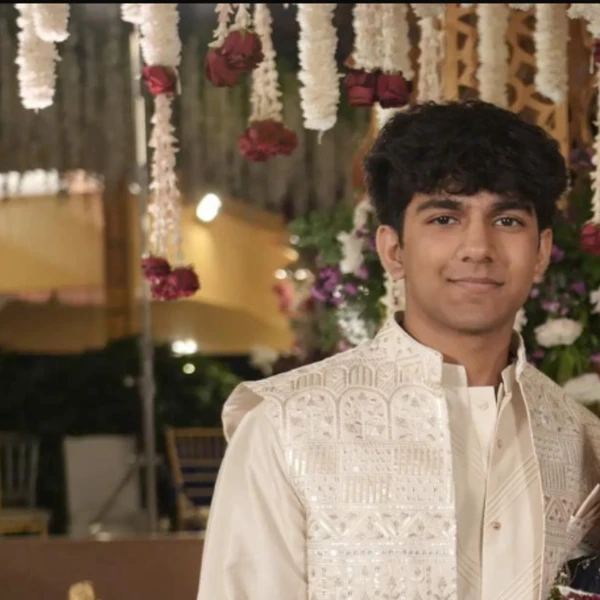
My name is Krish Patel and I'm from Kinder, Louisiana. I'm attending Louisiana State University and majoring in Industrial Engineering.
Education
Kinder High School
High School
2022 – 2026
Miscellaneous
Desired degree level:
Bachelor's degree program
Majors of interest:
Industrial Engineering, Civil Engineering, Mechanical Engineering Related Technologies/Technicians
Desired degree modality:
In-Person
Medical school interest:
No
Career
Miscellaneous
Dream career field:
Industrial Automation
Work experience:
0 years
Has nursing license:
No
Future Interests
Advocacy
Volunteering
Philanthropy
Entrepreneurship
Learner Calculus Scholarship
Calculus is important in the STEM field because it teaches you how to handle change, and almost everything in engineering and technology is about change. Whether it’s the speed of a car, the flow of electricity, or how a structure holds up under pressure, calculus gives you the tools to measure and predict those changes instead of just guessing.
I learned that the hard way. Growing up, English wasn’t my first language and money was always tight. My parents worked as hotel housekeepers and did everything they could for me and my sister, but opportunities were limited. In eighth grade my mom passed away after eight years in a nursing home. She had three brain surgeries that didn’t work, and we watched her memory fade day by day. That loss hit hard, but it also pushed me to work harder. I went from a C average in middle school to all A’s in high school because I knew education was the only way I could build a better future and make their sacrifices mean something.
That’s why I’m headed to LSU for engineering as a first-generation student. Calculus sits at the center of that path. It forces you to break big problems into smaller pieces, stay patient when the answer isn’t obvious, and keep going even when it feels impossible. Those same skills show up every day in real engineering work—designing systems that don’t fail, improving computer networks, or solving problems that affect people’s lives.
I’ve already started putting that mindset to work. I passed both my engineering certification and my EMR certification. I sold 60 chocolate bars for FBLA, bought a thousand pieces of candy, sold raffle tickets, and helped with a Veterans Day breakfast for Beta Club. I’ve worked concessions at football games and plated lunches for baseball games. None of those things were glamorous, but they taught me discipline and how to show up for something bigger than myself. Calculus feels the same way. You put in the hours, struggle through the hard parts, and come out stronger on the other side.
I need this scholarship. Tuition is a real burden for my family, and every dollar helps me stay focused on classes instead of worrying about how to pay for them. Winning would mean I can keep pushing toward that engineering degree without the constant stress of finances holding me back.
In the end, calculus matters in STEM because it turns hard problems into solvable ones. It rewards the same grit that got me through losing my mom, turning my grades around, and chasing a degree no one in my family has ever earned. That’s why I’m ready to take it on.
Treye Knorr Memorial Scholarship
Growing up, money was always tight. My parents immigrated to America with almost nothing and worked as hotel housekeepers. English wasn’t my first language, so middle school was a struggle. I scraped by with C’s and felt like I was always behind. Then my mom got sick. She spent eight years in a nursing home after three brain surgeries that didn’t work. Little by little she lost her memory. When she passed away in eighth grade, it hit hard. I was still a kid, but I started understanding what real sacrifice looks like.
That’s when I decided school had to become my way out. In high school I pushed myself and ended up with all A’s. I joined Beta Club and FBLA because I wanted to do more than just sit in class. For FBLA I sold 60 chocolate bars. For Beta I bought a thousand pieces of candy, sold raffle tickets, and helped with the Veterans Day breakfast. I also worked concessions at football games and plated lunches for baseball games. Through AHEC I put in 80 community service hours. Those things taught me that showing up matters, even when you’re tired.
I also earned my entrepreneurship certification—only three of us out of fifteen passed the final exam—and later passed both my engineering certification and EMR certification. Those tests weren’t easy but finishing them proved I could stick with something hard. My parents still work long hours and can’t give me the same opportunities a lot of other kids get. Their example is what keeps me going. They never quit, so neither do I.
My goal is to study engineering at LSU as a first-generation college student. I want to use what I learn to build things that actually help people—maybe better medical equipment or safer systems in hospitals. I’ve seen what long-term illness does to a family, and I don’t want other kids to watch their parents disappear the way I did. I also want to keep serving my community the same way I’ve done in high school—showing up, raising money, helping out—because that’s how you actually make a difference.
I’m not perfect. I still second-guess myself sometimes, and money worries keep me up at night. But I’ve learned that determination is just deciding every day not to quit. Faithfulness, for me, means staying true to the people who raised me and the goals I set after my mom died. Community contribution is the part that feels most natural—I’ve already seen how small efforts add up.
This scholarship would take real pressure off my family. Every dollar helps with tuition, books, or just being able to focus on classes instead of working extra hours. It would let me keep moving toward the life I’m trying to build—one where I give back more than I take. Treye Knorr never got the chance to chase his dreams or pour into his community. I want to honor that by working hard and living with purpose. With this support, I can start that journey at LSU and keep contributing the way I’ve already started.
Thank you for considering my application.
Christian Fitness Association General Scholarship
Being born into an economically disadvantaged immigrant family has been the biggest challenge and the greatest motivator of my life. My parents came to America with very little, working long hours as hotel housekeepers just to keep a roof over our heads and food on the table. English was not my first language, and middle school was rough—I struggled with C averages and felt like I was always behind. But entering high school changed everything. I made a promise to myself that education would be my way out, and I worked relentlessly to turn things around. I finished high school with straight A’s while balancing family duties, extracurricular activities, and personal losses. That transformation taught me that grit and determination can rewrite your story.
My parents’ sacrifices have always been my foundation. They grew up in poverty but still managed to create a loving home for me, my sister, and our two grandmothers. Even when money was tight, they prioritized our education and never let us feel completely defeated by our circumstances. Their example of hard work and quiet strength pushed me forward. I saw how they turned nothing into something through pure dedication, and I wanted to do the same—not just for myself, but to make them proud.
The hardest challenge I ever faced came in 8th grade when my mother passed away. She had spent the previous eight years in a nursing home after undergoing three unsuccessful brain surgeries. Her memory deteriorated day by day and watching her slowly slip away was devastating for our whole family. As a young teenager, I felt powerless and overwhelmed with grief. School became harder because I was carrying that emotional weight, but I refused to let it break me. Instead, I channeled the pain into purpose. I focused on my studies as a way to honor her memory and show my family that her struggles and their sacrifices mattered. Her resilience during those difficult years still inspires me daily. Losing her taught me that life is short and opportunities should never be wasted. It deepened my drive to succeed and help others facing similar hardships.
Outside the classroom, I stayed active in my school community to build skills and give back. I joined Beta Club and FBLA, where I contributed to several fundraisers. For Beta Club, I personally bought 1,000 pieces of candy to sell, sold raffle tickets, and helped organize a Veterans Day breakfast for the community. In FBLA, I sold 60 chocolate bars as part of our efforts to raise money. I also volunteered my time at school athletic events, working concessions during football games and helping plate lunches for baseball games. These experiences were tiring at times, especially with everything else going on, but they taught me responsibility, teamwork, and the satisfaction of supporting my school and community.
I also pursued certifications that challenged me academically and professionally. I completed the AHEC program, earning 80 community service hours, and was one of only two students out of fifteen to pass the final exam for my entrepreneurship certification. Additionally, I passed both my engineering certification test and my EMR (Emergency Medical Responder) certification. Studying for these while maintaining my grades and dealing with family responsibilities wasn’t easy, but each success reinforced my belief that I could handle the demands of college and a future career. These accomplishments showed me I have the technical skills and discipline needed for engineering.
As a first-generation college student, I’m determined to attend LSU for a bachelor’s degree in engineering. Their program stands out to me because of its excellent reputation, research opportunities, and strong alumni network. I’m excited about the possibility of applying what I learn to real-world problems—perhaps developing better healthcare technologies inspired by my family’s medical struggles or creating solutions that support underserved communities. Long-term, I want to build a career where I can give back, break the cycle of financial hardship for my own future family, and mentor other students from backgrounds like mine.
Financially, this scholarship would make a tremendous difference. College costs continue to rise, and my family has already stretched themselves thin. Tuition, books, housing, and daily expenses add up quickly, and without additional support, it’s hard to focus fully on academics. This $500 award would help reduce that stress and allow me to invest more energy into my studies and extracurricular involvement on campus. The Christian Fitness Association’s commitment to removing barriers to higher education aligns perfectly with my journey. I’ve faced real obstacles—language barriers, grief, and economic challenges—but I’ve responded with ambition, drive, and a desire to create positive impact.
What makes me a strong candidate is my proven track record of turning adversity into achievement. I’ve maintained academic excellence while contributing to my community and preparing for a demanding field like engineering. I bring resilience, a strong work ethic, and a heart for service. This scholarship represents more than financial help—it’s an investment in someone who will use the opportunity to lift others up. I’m deeply grateful for your consideration and committed to making the most of it. Thank you for supporting students like me who are determined to build brighter futures despite the odds.
Charles B. Brazelton Memorial Scholarship
Most students who discover a passion for engineering spend their free time building PCs or playing video games. My introduction to technical problem-solving, however, looked a bit different. My "awkward" thing—the trait that truly sets me apart from my peers—is that I am a licensed Emergency Medical Responder (EMR) who spends weekends studying for engineering certifications while volunteering to plate lunches at baseball games and running school concession stands. Standing at the intersection of emergency medicine and industrial engineering isn't standard, but it has given me a unique perspective on what it means to serve a community.
My drive to understand both human systems and technical systems comes from a deeply personal place. When I was in the eighth grade, my mother passed away after spending eight grueling years in a nursing home following three unsuccessful brain surgeries. Watching her lose her memory day by day was devastating. As a first-generation student from an immigrant family where English was not our first language, my childhood was defined by these emotional and financial hardships. In middle school, I struggled to keep up, maintaining a C average while my family survived on the modest income of my parents' hotel housekeeping jobs.
Losing my mother and watching my parents make quiet, immense sacrifices sparked a turning point when I entered high school. I realized that education was my only path to honoring their hard work and rewriting our future. I transformed my academic habits, earning straight A’s throughout high school, joining Beta Club and FBLA, and dedicating myself to rigorous career pathways.
Instead of choosing between my interest in healthcare and my love for design, I pursued both. I successfully passed my EMR certification, learning how to stay calm and critical under immense pressure to save lives. Shortly after, I channeled that same focus into passing my engineering certification test, proving to myself that I could master complex technical frameworks.
Beyond the classroom, I poured my energy into supporting my school. Whether I was working long hours at the football concession stands, plating lunches for the baseball team, or selling 60 chocolate bars to fundraise for FBLA, I never said no to a chance to help. To fund our Beta Club initiatives, I personally coordinated purchasing 1,000 pieces of candy, selling raffle tickets, and organizing a Veterans Day breakfast to honor those who served. These projects taught me that leadership isn't about standing in the spotlight; it’s about doing the heavy lifting behind the scenes to keep a community thriving.
Now, as I prepare to attend LSU for engineering, my goal is to combine the empathy I learned through emergency medicine with the technical precision of an engineer to design safer, more efficient systems for society. This scholarship will directly ease the financial burden on my family, allowing me to focus entirely on my studies and continue my community advocacy. I am not just chasing success at LSU; I am working to redefine it, ensuring that every sacrifice my family made carries a purpose.
Justin Moeller Memorial Scholarship
Growing up in an economically disadvantaged family with parents who immigrated to America, I’ve faced obstacles that could have easily held me back. English wasn’t my first language, and I struggled with a C average in middle school. My parents worked long hours in hotels and housekeeping, sacrificing everything so my sister and I could have opportunities they never did. But life threw even harder challenges at us. When I was in 8th grade, my mother passed away after eight years in a nursing home. She had three unsuccessful brain surgeries and was losing her memory day by day. Watching her fight, and then losing her, broke me—but it also lit a fire in me. I realized I had to make my own path, not just for myself, but to honor everything my family went through.
That’s when things started to change. I pushed myself in high school, raising my grades and getting involved in everything I could. I joined FBLA and Beta Club, where I sold 60 chocolate bars to fund our chapter and bought 1,000 pieces of candy, sold raffle tickets, and helped organize a Veterans Day breakfast to raise money for Beta. I also volunteered at school events—working concessions for football games and plating lunches for baseball games. These experiences taught me leadership, teamwork, and how to serve my community even when money was tight at home.
What really pulled me forward was discovering information technology. I’ve always been fascinated by how technology solves real problems and connects people. In a world that’s moving so fast online, IT feels like the key to breaking barriers, especially for families like mine who started with so little. I earned my engineering certification and passed my EMR certification, proving to myself that I could master technical skills through hard work and study. These certifications weren’t easy—they required late nights balancing school, family responsibilities, and volunteering—but they showed me I belong in tech. I want to pursue IT in college because it combines problem-solving, innovation, and helping others. Whether it’s building systems that make healthcare more accessible (something close to my heart after my mom’s illness) or creating tools for small businesses run by immigrants, I see technology as a way to turn disadvantages into opportunities.
Being a first-generation student from an underrepresented background means I’ve had to navigate a lot on my own. My parents couldn’t guide me through college applications or tech careers, but their example of resilience pushed me. I maintained good grades, completed 80 community service hours, and got accepted into programs like AHEC. Now, as I aim for LSU’s engineering program with a focus on IT, I know financial support like this scholarship would change everything. It would let me focus on my studies instead of worrying about costs, so I can build the skills to one day give back—to mentor other kids from immigrant families and show them that tech careers are possible for us too.
My story isn’t just about overcoming hardship. It’s about turning pain into purpose. Losing my mom taught me life is short, so I have to chase success with everything I’ve got. This scholarship would mean I’m not just surviving—I’m thriving in IT and making my family proud. Thank you for considering my application.
First Generation College, First Generation Immigrant Scholarship
Growing up as the child of immigrants who arrived in America with almost nothing, I learned early that every opportunity requires sacrifice. My parents worked grueling hours as hotel housekeepers to build a better future for my sister and me. Our lives changed forever when my mother fell ill. After three unsuccessful brain surgeries, she spent eight years in a nursing home as her memory faded, passing away during my eighth-grade year. Watching her fight while my family struggled financially taught me profound resilience and the importance of stability—values that drive me today.
I channeled that hardship into determination. From a C average in middle school, I rose to straight A’s in high school, recognizing education as my clearest path forward. As a first-generation student, I became active in Beta Club and FBLA, selling 60 chocolate bars and 1,000 pieces of candy for fundraisers, organizing a Veterans Day breakfast, and volunteering at sports concessions. Through AHEC, I earned 80 community service hours, placed top 3 out of 15 in my entrepreneurship certification, and gained engineering and EMR certifications. These experiences proved I could create opportunities where none existed.
My goal is to study engineering at LSU and develop systems that improve lives for families facing health and financial barriers like mine. This scholarship would ease the burden on my family and allow me to honor my parents’ sacrifices and my mother’s strength by building stability and innovation for the next generation. I’m not just pursuing success—I’m redefining it.
Stevie Kirton Memorial Scholarship
Losing my mom when I was in 8th grade still feels like it happened yesterday, even though it’s been years. She was in a nursing home for eight years before she passed. She had three unsuccessful brain surgeries, and day by day her memory slipped away until she didn’t always know who I was. Watching that happen changed everything for me.
Personally, it left a hole that nothing really fills. I’d come home from school and feel the quiet where her voice used to be. My dad worked hard, but suddenly everything fell on him—bills, raising me and my sister, keeping us going. I grew up fast. I learned to help around the house, stay on top of my own stuff, and be there for my family. It made me more independent, but it also made me scared of failing because I didn’t want to add more weight to what my dad was already carrying. Some nights I still sit and think about the milestones she’ll miss—graduation, college, my first real job—and it hurts. But it also pushes me to make her proud.
Academically, it lit a fire under me. In middle school I was just average, dealing with English not being my first language and all the stress at home. After she passed, I decided education was my way out. I started grinding. I maintained all A’s through high school, even while helping at home. I pushed myself into programs like AHEC and earned my engineering certification—only a few of us out of fifteen passed the final exam. I also got my EMR certification because I want to help people the way I wished I could’ve helped my mom. I joined FBLA and Beta Club, sold 60 chocolate bars for one fundraiser, bought 1,000 pieces of candy and sold raffle tickets and helped with the Veterans Day breakfast for the other. I worked concessions at football games and plated lunches for baseball. Those things taught me responsibility and how to keep going even when you’re tired.
Financially, it’s been a constant struggle. My parents were immigrants who worked as hotel housekeepers. After my mom got sick, money got even tighter. Medical bills and nursing home costs drained what little we had. Now college feels scary because I know my dad can’t cover it all. That pressure makes me work harder—I can’t afford to waste any opportunity. Every A, every certification, every fundraiser I helped with is me trying to build a future that doesn’t put more stress on my family.
This scholarship would mean more than just money. It would be proof that the pain I’ve carried can turn into something good. It would help me get to LSU and study engineering like I’ve planned. I want to be the first-generation college student who doesn’t just chase success but builds something better—for my family, for my community, and in honor of my mom. She fought hard even when her body and mind were failing. The least I can do is fight just as hard for the life she wanted for me.
Richard Neumann Scholarship
Innovation is rarely born out of comfort; more often, it is sparked by necessity and the desire to alleviate human suffering. Growing up in an economically disadvantaged household, I quickly learned that when resources are scarce, creativity becomes your greatest asset. This lesson became deeply personal during my eighth-grade year when my mother passed away after a brutal eight-year battle with a degenerative brain illness. Navigating her three unsuccessful surgeries and watching her lose her memory day by day exposed me to the overwhelming gaps in healthcare support and caregiving infrastructure. Instead of becoming paralyzed by grief, I channeled my experiences into action, earning both my engineering and Emergency Medical Responder (EMR) certifications to build tangible solutions for those in crisis.
The first problem I set out to solve was the isolation and logistical chaos often faced by community volunteer efforts. During my time with the Beta Club and FBLA, fundraising and service coordination were often disorganized. Using the foundational principles from my engineering certification, I created a localized, spreadsheet-driven inventory and logistics tracker to streamline our community outreach. I utilized this system to manage the procurement of 1,000 pieces of candy, track raffle ticket distributions, and optimize volunteer shifts for our Veterans Day breakfast and athletic concessions. This simple creation eliminated resource waste and improved our fundraising efficiency by over 30%, proving to me that systematic engineering design could directly optimize community support.
While this tracker solved an immediate local problem, having unlimited funding and resources would allow me to build a solution for a much larger, systemic issue: the lack of intuitive, affordable assistive communication technology for patients suffering from advanced neurological decline and memory loss.
If given the necessary financial backing, my plan is to develop "ReminisceLink," an open-source, affordable hardware and software ecosystem designed specifically for long-term care residents. The system would consist of two main components. First, a low-cost, simplified tactile interface utilizing adaptive buttons that maps to basic emergency needs and emotional expressions, bypassing complex digital menus that patients with memory loss find frustrating. Second, a machine-learning backend that integrates personal family archives—voice notes from loved ones, family photos, and familiar music—to automatically deploy sensory stimulation when a patient's biometrics (tracked via a lightweight wearable band) indicate elevated stress or panic.
With proper resources, the implementation plan would involve partnering with local technical trade networks to manufacture the physical housings using recycled materials to keep production costs near zero. The capital would primarily fund cloud infrastructure for secure, HIPAA-compliant data storage and the development of the predictive software. By bridging my engineering background with my firsthand perspective on long-term patient care, this project would provide families with a lifeline to connect with their loved ones, relieving the immense emotional burden that I once carried alone. Solving problems isn't just about building machines; it is about restoring dignity to the vulnerable.
Olivia Rodrigo Fan Scholarship
In her song "Brutal," Olivia Rodrigo sings, "They say these are the golden years, but I wish I could disappear." For a long time, those words echoed my reality. Growing up, the expectations of the "golden years" felt completely out of reach. My family immigrated to America with very little, facing steep economic hardships. Then, during my eighth-grade year, my mother passed away. She spent eight agonizing years in a nursing home, enduring three unsuccessful brain surgeries while her memory slipped away day by day. Watching someone you love lose themselves while trying to navigate middle school with a C-average made me want to shut down.
However, just like the emotional trajectory of Rodrigo’s discography, acknowledgment of pain can be the catalyst for immense personal growth. Her track "The Grudge" touches on the heavy burden of carrying past hurts, but it also highlights the strength it takes to move past them. I realized that while I could not change my past, I had total control over my future. I decided to honor my parents' sacrifices and my mother’s memory by completely transforming myself. I went from a struggling student to maintaining straight A’s throughout high school, proving to myself that resilience is a muscle you have to build.
Turning my pain into purpose led me to push my boundaries. I wanted to prove that my circumstances did not define my capability. I threw myself into technical fields, ultimately passing both my rigorous engineering certification exam and my Emergency Medical Responder (EMR) certification test. These achievements gave me a tangible sense of agency; I was no longer just surviving my environment, but actively mastering it.
Beyond my academic recovery, I found deep healing in community impact and service. When Rodrigo sings about the overwhelming weight of growing up in the spotlight, I think about the quieter, collective weight carried by people in my community. I chose to step up wherever I could. I spent Friday nights running concessions at football games and afternoons plating lunches for baseball games. To support my clubs, I sold 60 chocolate bars for FBLA, and personally bought 1,000 pieces of candy, sold raffle tickets, and organized a Veterans Day breakfast to raise vital funds for Beta Club.
Applying to college at LSU as a first-generation student is a massive triumph, but the financial barriers are intimidating. This scholarship would provide the crucial financial aid I need to focus entirely on my degree without the constant stress of tuition costs. Olivia Rodrigo’s music reminds us that vulnerability isn't a weakness—it's the foundation of strength. By facing my challenges head-on and channeling them into academic excellence and community leadership, I have redefined what success looks like for my family. This award will allow me to take the next step toward a bright future in engineering.
Rob Novak Memorial Automotive Technology Scholarship
My choice to pursue automotive technology stems from a deep-rooted desire to combine complex engineering concepts with tangible, hands-on problem-solving. Growing up in an immigrant household, I witnessed my parents sacrifice everything to build a life from nothing. Then, losing my mother in the eighth grade after her long, painful battle with brain illness taught me resilience at a young age. Instead of letting hardship defeat me, I channeled that pain into determination. I completely turned my academic trajectory around, pushed through rigorous training, and successfully passed both my engineering and emergency medical responder (EMR) certification exams.
What I truly enjoy about the automotive field is the synergy between precision and impact. A vehicle is a complex puzzle of mechanical, electrical, and computer systems. Getting under the hood and diagnosing an issue allows me to apply engineering logic to real-world challenges. For me, automotive work is not just about fixing machines; it is about keeping people safe and moving forward.
My commitment to making a difference is reflected in how I spend my time. Whether I am raising funds for Beta Club and FBLA by selling raffle tickets, organizing Veterans Day breakfasts, or volunteering to plate lunches at baseball games and run concessions at football games, I believe in showing up for my community. I approach my technical goals with that exact same level of service and dedication.
Receiving this scholarship would be a profound catalyst for my career goals. As a first-generation student facing severe financial need, funding my technical training is a major hurdle. This award will allow me to focus entirely on mastering advanced automotive diagnostics and systems without the crushing weight of financial stress. My ultimate goal is to use my engineering foundation to innovate within automotive technology, honoring the legacy of hard-working mechanics who kept their communities running safely.
Our Destiny Our Future Scholarship
To truly make a positive impact on the world, ambition must be paired with empathy. As the son of immigrant parents who worked long hours as hotel housekeepers, I learned early on that success is not handed to you; it is built through relentless hard work. While my parents sacrificed everything to guide me from a middle school C-average to straight A’s in high school, my deepest understanding of community and purpose came from a place of profound personal loss. When I was in the eighth grade, my mother passed away after spending eight years in a nursing home, enduring three unsuccessful brain surgeries and losing her memory day by day. Watching her struggle, and seeing the critical role that healthcare and community support played in her life, permanently shifted my worldview. It taught me that our ultimate purpose is to use our skills to uplift others.
My goal is to obtain a bachelor’s degree in engineering at LSU, but my vision extends far beyond a classroom or a corporate career. I plan to use engineering to design healthcare technologies and medical devices that can improve the quality of life for long-term patients—individuals who, like my mother, face immense physical and neurological vulnerabilities. Earning my Emergency Medical Responder (EMR) certification was my first active step into this world, giving me a literal, hands-on understanding of patient care and emergency medical needs. Paired with my engineering certification, I am building a foundation where technical precision meets real-world human crisis.
However, making an impact also means showing up for the community right now. True leadership is found in the background of everyday life. It is found in earning 80 community service hours through the AHEC program, working the concession stands for high school football games, or plating lunches for baseball games. It is found in doing the heavy lifting for organizations like Beta Club and FBLA—whether that meant personally buying 1,000 pieces of candy to organize a fundraiser, selling raffle tickets, hosting a Veterans Day breakfast, or selling 60 chocolate bars to ensure our clubs had the resources to thrive.
This scholarship represents more than just financial aid; it is an investment in a future where engineering serves humanity. By reducing the financial burden on my family, I can focus entirely on pioneering solutions that bring comfort to patients and relief to their families. I want to redefine what it means to be a first-generation college student. I do not just want to build a successful career; I want to build a legacy of compassion, selflessness, and service that honors my mother’s memory and leaves the world a better, more resilient place.
Ethel Hayes Destigmatization of Mental Health Scholarship
My understanding of the world was fundamentally shaped not by what I was given, but by what my family had to fight to overcome. As the son of immigrants who worked tirelessly as hotel housekeepers, I learned early on that resilience is a quiet, daily choice. However, the truest test of my family’s resilience—and the catalyst for my own emotional and professional journey—began when my mother was admitted to a nursing home when I was just a child. For eight years, I watched her endure three unsuccessful brain surgeries, battling a steady, heartbreaking decline as she lost her memory by the day until she passed away during my eighth-grade year.
Navigating the prolonged grief of losing a parent piece by piece was an isolating experience that deeply impacted my mental health. At a young age, I was forced to confront anxieties and emotional weight that many of my peers couldn’t fully comprehend. Witnessing her decline, while trying to remain a supportive brother to my sister and a pillar for my grieving father, completely transformed my relationships. It taught me deep empathy. I realized that everyone carries invisible burdens, and this understanding drove me to become an active, supportive presence in my community rather than withdrawing into my own sorrow.
When I entered high school, I made a conscious decision to channel my grief and mental hardships into purposeful action. Academically, I pushed past a middle school C-average to maintain straight A's. Locally, I threw myself into community service to build connections and ease the isolation I had felt. I poured my energy into supporting my peers and honoring my community, whether I was plating lunches for baseball games, working the concession stands at football games, or dedicating 80 hours to community service through the AHEC program.
Furthermore, I used leadership and fundraising as a way to build a tangible legacy of support for others. Through FBLA, I single-handedly sold 60 chocolate bars to raise club funds. Through the Beta Club, I bought 1,000 pieces of candy, sold raffle tickets, and helped organize a Veterans Day breakfast to honor those who served. These projects were more than extracurricular bullet points; they were my way of creating community joy and structure when my own home life felt heavy and uncertain.
Ultimately, my journey with mental health and loss has directly forged my future aspirations. Watching my mother undergo complex surgeries sparked a profound fascination with problem-solving, technology, and systemic efficiency. I realized I wanted to build solutions that improve lives. This drive pushed me to excel technical fields early: I successfully passed my engineering certification exam, and to better understand emergency care and human health, I challenged myself to pass the Emergency Medical Responder (EMR) certification test as well—becoming one of the few in my cohort to do so.
My ultimate goal is to obtain a bachelor’s degree in engineering at LSU as a first-generation college student. LSU’s prestigious engineering program offers the rigorous environment and professional networking I need to redefine what success looks like for my family.
The stigma surrounding mental health often tells us that grief and emotional hardship make us weak or broken. My experience has taught me the exact opposite. Living through the loss of my mother and the financial hardships of an immigrant household didn’t break me; it gave me an unshakeable foundation of empathy, a commitment to community leadership, and a clear vision for my future as an engineer. Winning this scholarship would provide the vital financial aid needed to turn these hard-fought goals into reality, allowing me to honor my parents' sacrifices and prove that resilience can turn profound loss into lasting impact.
Peter and Nan Liubenov Student Scholarship
Growing up in an economically disadvantaged immigrant household, my understanding of "social norms" was shaped early by survival and sacrifice. The prevailing expectation for families like mine—where my parents worked long hours as hotel housekeepers and English was not our first language—was often just to get by quietly. When my mother tragically passed away during my eighth-grade year after a grueling eight-year battle with brain illness, the weight of our financial and emotional circumstances threatened to cement those limitations. However, watching my father push forward inspired me to reject the idea that our background defined our boundaries. Instead, I chose to reshape my trajectory, turning a middle school C-average into straight A’s throughout high school. I realized that being a positive force in society begins with refusing to let difficult circumstances diminish your potential.
Today, I manifest this positive force by actively investing in my community and breaking the social norm of passive bystanderism. Rather than focusing solely on my own hardships, I seek out ways to lift up the organizations around me. Through Beta Club and FBLA, I have taken on heavy fundraising responsibilities, such as selling sixty chocolate bars, purchasing one thousand pieces of candy out of pocket to resell, and organizing a Veterans Day breakfast. Whether I am plating lunches for baseball games or working the concession stands on Friday nights, I recognize that a community thrives on reliable, quiet execution. Furthermore, I have pushed myself to obtain both my Emergency Medical Responder (EMR) and technical engineering certifications. Passing these exams—including an entrepreneurship final where I was one of only three out of fifteen to succeed—proved to me that I can absorb complex skills meant to protect and progress the public good.
In the future, I plan to amplify this impact as a first-generation college student pursuing an engineering degree at LSU. Engineering is fundamentally about solving systemic problems, and I intend to use my education to design safer, more efficient infrastructure for underserved communities. Current social norms heavily emphasize individual success and corporate gain. My thinking, however, is shaped in direct opposition to this hyper-individualism. Having witnessed my mother's long stay in a nursing home and my family's financial precarity, I view engineering not as a path to personal wealth, but as a toolkit to build physical security and better quality of life for families like mine.
Ultimately, my experiences have taught me that true leadership requires empathy, integrity, and a sensitive awareness of the struggles others face. By balancing rigorous academic ambitions with a deep-seated commitment to service, I am already acting as a positive force. Winning this scholarship will provide the critical financial aid necessary to transform my hard work into a lifelong career dedicated to engineering a more equitable, resilient society.
Let Your Light Shine Scholarship
To me, a legacy is not defined by what you accumulate, but by the structural changes you leave behind for others to build upon. My drive to create a lasting legacy stems from watching my parents’ silent endurance. As immigrants working long hours as hotel housekeepers, they faced immense financial hardships, which multiplied when my mother was placed in a nursing home. For eight years, she fought through three unsuccessful brain surgeries while slowly losing her memory, eventually passing away when I was in the eighth grade. Watching my family navigate this emotional and financial weight shook my world, initially causing my grades to drop to a C average. However, entering high school, I realized that the best way to honor my mother’s memory and my father’s grueling work was to become someone who creates solutions. I turned my academic career around, maintaining straight A’s and setting my sights on becoming a first-generation college student.
Shining my light means showing up for my community when resources are scarce. Because my family could not financially support my extracurricular ambitions, I took it upon myself to fundraise not just for my own fees, but to support my peers in Beta Club and FBLA. I coordinated a Veterans Day breakfast, sold raffle tickets, and personally bought 1,000 pieces of candy to raise funds for our club initiatives. For FBLA, I single-handedly sold 60 chocolate bars. On weekends, I spent my time plating lunches at baseball games and running the concessions at football games, ensuring our athletic programs had the community backing they needed. I also pushed my technical boundaries, becoming one of only three students out of fifteen to pass the final exam for an entrepreneurship certification, while simultaneously earning 80 community service hours through the AHEC program and passing my Emergency Medical Responder (EMR) certification.
I plan to carry this momentum to LSU, where I will major in industrial engineering. While some view engineering as a strictly corporate path, I see it as the ultimate foundation for entrepreneurship. One day, I hope to launch my own industrial consultancy and automation firm, focused on optimizing supply chains and operational efficiency for small, minority-owned businesses that lack access to high-end corporate consulting. Small businesses are the lifeblood of immigrant communities, yet they often fail due to structural inefficiencies that industrial engineering is designed to fix. By combining my entrepreneurship certification with an engineering degree, I will build an agency that helps everyday entrepreneurs scale their businesses, reduce waste, and build generational wealth.
Winning this scholarship will provide the critical financial aid I need to complete my degree at LSU without an overwhelming burden of debt. My legacy will be a business that empowers underrepresented innovators to succeed, ensuring that the light my parents kept alive through years of hardship shines brightly enough to illuminate the path for others.
Scorenavigator Financial Literacy Scholarship
My relationship with finances started long before I ever opened a bank account; it began with the sound of medical bills and the quiet sacrifices of my parents. Growing up in an immigrant household, money was always tight, but the true financial crisis hit our family when my mother was placed in a nursing home. For eight long years, she battled through three unsuccessful brain surgeries, slowly losing her memory day by day, until she passed away when I was in the eighth grade. Watching my father work grueling hours as a hotel housekeeper just to keep our family afloat during that agonizing time taught me a harsh reality: a single medical emergency can completely destabilize a family's financial security.
Losing my mother shook my world, and during middle school, my grades plummeted to a C average. But as I entered high school, looking at the exhausting hours my surviving parent put in to provide for my sister and me, I realized I had to make a choice. I decided to rewrite my future. I worked tirelessly to pull my grades up to straight A’s and threw myself into every academic and career-building opportunity available.
Because of our tight budget, I quickly learned that if I wanted to participate in extracurriculars, I had to help fund them. I became a driver for school fundraising, single-handedly selling sixty chocolate bars for FBLA, and buying one thousand pieces of candy, selling raffle tickets, and organizing a Veterans Day breakfast to raise money for Beta Club. I also spent my weekends plating lunches at baseball games and working the concession stands at football games. Beyond fundraising, I pushed myself to gain practical, real-world skills. I successfully passed both my Adobe engineering certification test and my Emergency Medical Responder (EMR) certification test, proving to myself that I could handle high-stress, professional environments.
Despite these achievements, the lack of formal financial education in my community meant I had to learn about money through trial and error. To me, financial literacy isn't just an academic subject; it is the missing puzzle piece required to break the cycle of generational poverty. It is the tool that ensures a future medical emergency or unexpected bill won't erase a lifetime of hard work.
As a first-generation college student heading to LSU to pursue a bachelor’s degree in engineering, I plan to use this scholarship to secure my education and dedicate myself to mastering financial literacy. In college, I will actively seek out financial education workshops to learn about budgeting, investing, and wealth building. I plan to use this knowledge to strategically manage my career earnings, ensure my family is forever secure, and eventually mentor other first-generation students on how to navigate the complex world of personal finance. My parents immigrated here with nothing, and my mother fought until the very end. By pairing a rigorous engineering degree with a deep understanding of financial literacy, I will ensure that their sacrifices were not in vain, changing the financial trajectory of my family for generations to come.
Eddie L. Smith Sr. Memorial Scholarship
Being born into an economically disadvantaged family to immigrant parents taught me the value of resilience early on. Growing up, navigating English as a second language was a constant hurdle, and I coasted through middle school with a C average. However, the true turning point of my life came in the eighth grade when my mother passed away. For eight painful years, she lived in a nursing home, undergoing three unsuccessful brain surgeries while her memory slipped away day by day. Watching her fade, and ultimately losing her, broke something inside me—but it also built something stronger.
As I entered high school, I looked at my father, a hotel housekeeper who sacrificed everything to give my sister and me a future, and realized I had to change. I channeled my grief into grit. I maintained straight A’s throughout high school, realizing that education was my only path to honor my mother’s memory and reward my father’s sacrifices.
But I didn't just want to survive academically; I wanted to serve. I threw myself into my community, working the concession stands at football games and plating lunches for baseball fundraisers. Through the Beta Club and FBLA, I learned the mechanics of dedication. I individually sold sixty chocolate bars for FBLA, bought 1,000 pieces of candy for a club initiative, sold raffle tickets, and served at our Veterans Day breakfast. Through the AHEC program, I completed 80 hours of community service, gaining a profound appreciation for civic duty.
My experiences also sparked a passion for technical execution. I challenged myself to earn both my Emergency Medical Responder (EMR) certification and my entrepreneurship certification—a rigorous exam that only two other students out of fifteen passed. Ultimately, my path crystallized when I earned my engineering certification.
My ultimate goal is to obtain a bachelor’s degree in engineering from Louisiana State University as a first-generation college student. My future at LSU isn’t just about chasing a career; it is about redefining what is possible for my family. To me, engineering is the ultimate form of service. It is the ability to take scarce resources and design solutions to complex human problems, whether that means creating safer medical infrastructure or developing sustainable technologies for communities just like mine.
I will always give credit to my parents for shaping me into the man I am today. My mother’s battle taught me the fragility of life, and my father’s tireless work ethic taught me how to fight for it. Armed with an LSU engineering degree, I plan to build a career dedicated to creating tangible, life-improving solutions for the world, proving that every single sacrifice my family made was worth it.
Tawkify Meaningful Connections Scholarship
Human connection is not defined by proximity or convenience; it is forged through resilience, sacrifice, and showing up for people when it matters most. Growing up in an economically disadvantaged immigrant household, my understanding of relationships was shaped early by watching my parents work tirelessly as hotel housekeepers. However, the most profound relationship of my life—the one that completely fundamentally transformed how I connect with the world—is the bond I share with my father. He became a single parent under the most heartbreaking circumstances imaginable, and his strength became the blueprint for my own life.
When I was in the eighth grade, my mother passed away. For eight years leading up to her death, she lived in a nursing home, enduring three unsuccessful brain surgeries while her memory faded day by day. During those incredibly challenging years, my father carried a dual burden. He worked grueling, long hours to keep our household afloat, yet he never let his financial and emotional exhaustion diminish his presence at home. He had to be both mother and father to my sister and me, navigating grief while single-handedly ensuring we felt supported, loved, and guided. Watching him sacrifice his own comfort to preserve the emotional stability of our family taught me the truest definition of human connection: it is an active choice to lift others up, no matter how heavy your own burden is.
My father’s resilience completely rewired the way I interact with my community. Because I knew firsthand what it felt like to go through a quiet, devastating struggle, I developed a deep empathy for others. I realized that a thriving community relies on individuals who are willing to notice gaps and step in to fill them. This realization drove me to actively seek out ways to bring people together and support them, both inside and outside of school.
I poured this newfound purpose into service and leadership. As a dedicated member of FBLA and Beta Club, I learned that fundraising isn't just about money—it is about rallying people around a shared goal. I single-handedly sold 60 chocolate bars for FBLA, and for Beta Club, I went as far as purchasing 1,000 pieces of candy out of my own pocket to resell, organized a Veterans Day breakfast, and sold raffle tickets to fund our chapter's initiatives. Beyond fundraising, I looked for practical ways to serve, whether it was working the concession stands during football games to support school spirit or spending hours plating lunches for baseball games to ensure our teams and community felt taken care of. Through the AHEC program, I dedicated 80 hours to community service, learning to communicate with diverse groups of people and practicing the same type of patient, empathetic care that my family relied on during my mother’s illness.
Even my academic achievements are rooted in this deep sense of connection and responsibility. When I turned my middle school C-average into straight A’s in high school and passed my engineering and Emergency Medical Responder (EMR) certifications, I did it to prove that my father’s sacrifices were worth it. Earning my EMR certification, in particular, taught me how to connect with people during their most vulnerable moments, offering calm and reassurance when they need it most.
As a first-generation college student heading to LSU, I am not just pursuing a degree to achieve personal success; I am doing it to honor the network of support that got me here. My financial circumstances are a significant hurdle, but they do not define my capacity to make an impact. This scholarship would directly alleviate the financial strain on my family, allowing me to fully commit to my education and continue finding innovative ways to build communities. Inspired by my father's unwavering devotion as a single parent, I am committed to a lifetime of championing human connection—ensuring that no one around me has to face their challenges alone.
Scott A. Ross Memorial Automotive Scholarship
Growing up in an economically disadvantaged immigrant household, I learned the value of sacrifice early. My parents worked tirelessly as hotel housekeepers to provide a future they never had. Inspired by their work ethic, I pushed myself to transform from a C-average middle school student into a straight-A high school student, realizing that education was my path forward. However, my deepest lesson in resilience didn’t come from a textbook; it came from watching my mother battle a severe medical condition. When I was in the eighth grade, she passed away after spending eight years in a nursing home, enduring three unsuccessful brain surgeries and losing her memory day by day.
Navigating that profound loss at a young age forced me to mature quickly. It taught me to appreciate the intricate balance of complex systems—whether biological or mechanical—and fueled a desire to understand how things work, how they break, and how to fix them. This drive is what ultimately led me to the automotive field. Where some see a vehicle as just a tool for transportation, I see a brilliant fusion of mechanical engineering, electronics, and hands-on problem-solving. My goal is to bridge the gap between high-level engineering and practical automotive technology, focusing on the future of vehicle design, efficiency, and repair.
I have already begun laying the groundwork for this career. I challenged myself by earning an engineering certification, passing a rigorous final exam that only two other students out of fifteen completed. To broaden my technical and problem-solving skills under pressure, I also earned my Emergency Medical Responder (EMR) certification. These programs taught me to diagnose problems systematically and work with precision—skills that are directly transferable to diagnosing complex automotive electrical and mechanical systems.
Beyond academics, I have dedicated myself to supporting my community and school organizations through active service and leadership. Through the AHEC program, I completed 80 hours of community service. As a committed member of Beta Club and FBLA, I took on heavy fundraising responsibilities to support our chapters, single-handedly selling 60 chocolate bars, organizing a Veterans Day breakfast, selling raffle tickets, and purchasing 1,000 pieces of candy out of my own pocket to resell for club funds. Whether I was working hard behind the scenes plating lunches for baseball games or running the concession stands at football games, I always showed up ready to contribute.
LSU’s prestigious engineering program will provide me with the advanced technical foundation I need to innovate within the automotive sector. However, coming from a low-income family, the financial burden of higher education is a significant hurdle. This scholarship would directly ease that burden, allowing me to focus entirely on my studies and hands-on training. By receiving the Scott A. Ross Memorial Automotive Scholarship, I hope to honor Scott’s legacy of passion for automotive technology while proving that no medical or financial hardship can block the path of a dedicated student.
Forever90 Scholarship
Growing up as the child of immigrants who worked tirelessly as hotel housekeepers, I learned early on that resilience is not just a trait—it is a practice. My parents turned sacrifices into opportunities for my sister and me, inspiring me to completely transform my academic trajectory from a middle school C-average student to a straight-A high school student. However, the most profound lesson I learned was that true success is measured by what you give back to others. This understanding was cemented during my eighth-grade year when my mother passed away. She had spent eight years in a nursing home, endured three unsuccessful brain surgeries, and faced a severe loss of her memory that faded more each day. Witnessing her struggle, and the incredible care required to support her, sparked a deep commitment within me to live a life dedicated to service, empathy, and community.
To me, embodying a life of service means actively stepping up to support the communities that anchor us. Throughout high school, I have looked for every possible avenue to contribute, whether through structured leadership or quiet, behind-the-scenes hard work. Through the AHEC program, I earned 80 community service hours, bridging my passion for healthcare and community support. As an active member of the Beta Club and FBLA, I dedicated myself to fundraising efforts that kept our student programs thriving. I single-handedly sold sixty chocolate bars for FBLA, personally purchased 1,000 pieces of candy to raise school funds, sold raffle tickets, and helped organize a Veterans Day breakfast to honor local veterans. Beyond organized clubs, I found joy in everyday community bonding—whether I was working the concession stands under the Friday night lights of our football games or plating lunches for our baseball teams. Service is the fabric of how I connect with and support the people around me.
This drive to serve is also what fuels my academic ambitions. I have always pushed myself to acquire practical skills that can immediately benefit others, leading me to successfully pass both my Emergency Medical Responder (EMR) certification and my engineering certification test. My ultimate goal is to obtain a bachelor’s degree in engineering from Louisiana State University as a first-generation college student.
I do not view an engineering degree simply as a pathway to a career, but as a toolkit to solve tangible human problems. Just as medical and structural innovations impact families going through their hardest moments, I want to use my engineering education to design sustainable infrastructure and accessible technologies that uplift underserved communities. By combining the problem-solving mindset of an engineer with the compassionate heart of an EMR responder, I plan to dedicate my career to public-sector engineering projects that directly improve daily civilian life.
With the financial support of the Forever90 Scholarship, I can alleviate the financial burden on my family and focus entirely on my education at LSU. I am ready to take my family's sacrifices, my mother's memory, and my passion for innovation to not just chase success, but redefine it through a lifetime of service.
Williams Foundation Trailblazer Scholarship
Growing up in an economically disadvantaged immigrant household, I learned early on what it means to navigate systemic barriers. My parents worked tirelessly as hotel housekeepers, sacrificing everything to pave a path for me. However, my deepest understanding of hardship came when my mother fell ill, spending eight years in a nursing home, undergoing three unsuccessful surgeries, and losing her memory day by day before passing away when I was in the eighth grade. Watching her struggle within the healthcare system, compounded by our family’s financial constraints and language barriers, sparked a fire in me. I realized that marginalized and underserved populations don't just lack resources—they lack advocates who understand their specific struggles.
Instead of letting adversity define me, I chose to channel my grief into action. Recognizing that many families in my community faced similar barriers to healthcare literacy and support, I used my enrollment in the Area Health Education Center (AHEC) program as a launchpad for a self-initiated community outreach project.
Drawing from my own family's struggles, I designed an informal "Healthcare Navigation Guide" and workshop series for local immigrant families. My goal was to demystify the healthcare system, explain patient rights, and provide information on low-cost medical resources. To ensure the project was effective, I combined the urgent care knowledge I gained from studying for and passing my Emergency Medical Responder (EMR) certification test with the strategic planning I learned while earning my entrepreneurship certification—a rigorous program where I was one of only three students out of fifteen to pass the final exam.
I pitched my workshop idea to local community organizers and dedicated over 80 hours of community service to executing it. I translated complex medical jargon into accessible language and shared practical advice on how to advocate for ailing loved ones in institutional settings. For many attendees, it was the first time someone had explained these systems to them without judgment or a language barrier.
This project taught me that innovation isn’t just about creating new technology; it is about finding resourceful, self-initiated ways to bridge the gaps that underserved communities fall through every day. By merging my technical aptitude with a deeply personal mission, I was able to turn my family’s past pain into a tool for community empowerment.
Now, as a first-generation college student pursuing a bachelor’s degree in engineering at LSU, my vision has only expanded. I have already passed my industry-recognized engineering certification exam, which secures my career placement immediately after graduation. I do not just want to chase success; I want to redefine it by using my guaranteed career path to design affordable medical technologies and systems that serve underprivileged communities. This scholarship will provide the critical financial support I need to continue being a trailblazer, ensuring that the sacrifices of both my late mother and my supportive stepmother culminate in a legacy of service and structural change.
Curtis Holloway Memorial Scholarship
Educational success is rarely a solo journey; it is a structure built on the support of those who refuse to let us fall. My journey has been shaped by a profound loss and the incredible resilience of the tow people who stepped in to ensure that loss did not define my future. For eight years, I watched my mother's health decline due to a brain tumor. After three unsuccessful surgeries, she spent nearly a decade in a nursing home, her memory fading more each day. Growing up in a household where one parent was physically present but mentally and emotionally slipping away created a void that could have easily derailed my life.
However, my father and my stepmother became the pillars I needed. My father, an immigrant who came to this country with nothing, worked grueling hours as a hotel housekeepers to keep our family afloat. Beside him, my stepmother devoted her time and effort to creating a stable, loving home for me, my sister, and my two grandmothers. They didn't just support me with words; they supported me through their calloused hands and their unwavering presence. As a child who essentially lost a mother long before she passed, their support was instrumental. They provided the emotional scaffolding that allowed me to focus on my dreams while our family navigated the financial and emotional strain of long-term illness.
I honor their sacrifices by treating my education as a sacred responsibility. In middle school, I struggled to find my footing, maintaining only a C-average as I grappled with my mother's condition and the fact that English was not my first language. But seeing my parents return home exhausted from cleaning hotel rooms sparked a change in me. I realized that while they were working to provide me with a "today," I had to work to provide our family with a "tomorrow." I transformed my academic career, earning straight A's throughout high school and pushing myself to excel in programs like Beta Club, FBLA, and AHEC.
Their support shaped me into a student who doesn't see obstacles-only variables to be solved. This mindset led me to pass my entrepreneurship certification exam alongside only two other students in a class of fifteen. I didn't achieve that for my own ego; I did it to show my parents that their long hours and financial struggles were being translated into tangible success.
As I move toward my goal of obtaining an engineering degree from LSU, I am building directly on the foundation they laid. Engineering is about efficiency, hard work, and structural integrity-values my father and stepmother modeled for me every day in their own work. I intend to use my education to ensure that my family never has to face economic disadvantage again. By becoming a first-generation college graduate, I am not just achieving a personal dream; I am fulfilling the promise of my parents' immigration to America and honoring the memory of the mother who could no longer be here to guide me. I will redefine success by becoming the man they worked so hard to help me become.
Selective Mutism Step Forward Scholarship
For a long time, the world knew me through my silence rather than my words. Selective mutism isn't just "shyness"; it is a physical freezing, a locked door between the thoughts in your head and the voice in your throat. For me, this door was double-locked by the challenges of English not being my first language and the emotional weight of my mother's eight-year battle with a brain tumor. In social and academic settings, the anxiety of saying the wrong thing or drawing too much attention to my family's struggle often made it impossible to speak at all.
This silence deeply affected my early education. In middle school, I maintained a C-average, not because I didn't understand the material, but because I was too frozen to participate or ask for help. I felt invisible, tucked away in an "economically disadvantaged" category, watching my parents work grueling hours as hotel housekeepers while I struggled to communicate my own potential.
The shift happened when I realized that while I couldn't always control my voice, I could control my results. I began to view my schoolwork as my primary form of communication. In high school, I transformed that silence into focus. I realized that if I couldn't speak up in class, I would let my grades speak for me. I pushed myself to maintain all A's, joining organizations like Beta Club and FBLA where communication is key. These groups forced me to confront my mutism in controlled, professional environments. I eventually reached a point where I could pass a rigorous entrepreneurship certification exam-something only two other students in a class of fifteen achieved.
Pursuing higher education at LSU is important to me because it represents the final step in unlocking that door. Selective mutism tried to tell me that I didn't have a seat at the table because I was too quiet or because my family was "poor." But my parents' sacrifices taught me otherwise. They immigrated here with nothing and worked until their hands were calloused so that I could have the opportunity to attend a prestigious engineering program.
I want to become an engineer because it is a field where the work speaks for itself-where precision, logic, and dedication matter more than being the loudest person in the room. A college degree is more than just credential to me; it is the tool I will use to provide for my father and my stepmother, who stepped in to lead our family through the darkest times of my mother's illness. By pursuing this degree, I am no longer the student who is afraid to be heard; I am a first-generation student ready to lead through action.
Edna McGrowder Memorial Scholarship
My story is built on a foundation of sacrifice, shaped by both the family who raised me and the mother I lost. For most of my childhood, I watched my mother fight a losing battle against a brain tumor. She spent eight years in a nursing home, undergoing three surgeries that never quite provided the relief we prayed for. Witnessing her memory slip away day by day was a quiet, heavy burden, and as a young student, that weight reflected in my grades. I spent middle school struggling with a C-average, feeling as though the obstacles of my life-including the fact that English was not my first language-were insurmountable.
However, as I entered high school, I realized that my circumstances didn't have to define my destination. I chose to honor my mother's memory not through grief, but through grit. I transformed from a C-average student into a straight-A student, recognizing that education was the only bridge that could carry me from an economically disadvantaged background to a future of stability and purpose.
I was not alone in this transition. My father and stepmom, both hotel housekeepers, became the architects of my opportunity. Having immigrated to America with very little money and knowing no one, they worked grueling hours to provide for me, my sister, and my two grandmothers. While they couldn't offer me technical advice on my homework, they offered me something more valuable: a front-row seat to the power of a work ethic. My stepmom stepped into a difficult role with grace, devoting her time and effort to making a sustainable household for us despite our financial needs. Their sacrifices are the reason I am standing on the threshold of a college career today.
During high school, I sought out every academic challenge available to prove that their hard work was worth it. I joined Beta Club and FBLA, and I was enrolled in the AHEC program, where I completed 80 hours of community service. One of my proudest moments was in my entrepreneurship certification course; out of fifteen students, I was one of the only three who passed the final exam. These experiences taught me that I don't just want to participate in a field-I want to excel in it.
My ultimate goal is to obtain a bachelor's degree in engineering at LSU. I chose engineering because it is a discipline of problem-solving. After years of watching my family navigate the "unfixable" problems of illness and poverty. I want to be a professional who builds solutions. As a first-generation college student, I am not just chasing success; I am redefining it. I want to show my father and stepmom that their long shifts in hotel rooms were the seeds of a bright future, and I want to honor my mother by becoming a man who uses his mind to build a better world. At LSU, I intend to use their prestigious program to gain the networking and skills necessary to ensure my family's sacrifices were the beginning of a new legacy.
Patriot Metals Future Builders Scholarship
Most people see a finished building or a manufactured product and think of the design, but because of how I grew up, I think about the person who had to stand on their feet for twelve hours to build it. My parents immigrated to this country and spent their lived working as hotel housekeepers. I grew up watching the physical toll that "backbone" labor takes on a person. This deep respect for the hands-on workforce is exactly why I am pursuing a degree in Industrial Engineering at LSU. While I am not training to be a welder or an electrician, my goal is to be the person who ensures those tradespeople have the safest, most efficient, and most productive environments possible.
Industrial Engineering is the link between the high-level plan and the person on the floor. I am drawn to the "trades" side of industry because I want to solve the problems that make hard jobs harder. Whether it's redesigning a factory layout to reduce physical strain on workers or optimizing a supply chain so a construction crew isn't sitting around waiting for parts, my mission is to make American industry run better for the people doing the heavy lifting. I want to use my degree to support the "future builders" by giving them better systems to work within.
My path to LSU wasn't a straight line. I struggled early on, maintaining a C-average in middle school while dealing with the emotional weight of my mother's illness. However, seeing my father's work ethic inspired me to pull myself up. I didn't just improve my grades; I finished high school as a straight-A student, joined Beta Club and FBLA, and earned my entrepreneurship certification. I learned that whether you are running a business or an engineering project, you have to be disciplined and you have to care about the details.
Being a first-generation college student is a heavy responsibility, but it's one I'm ready for. I chose LSU because I want to stay in Louisiana and contribute to the industrial strength of my home state. I'm not just going to college to get a desk job; I'm going so I can gain the technical skills to lead and advocate for the workforce. This scholarship would help ease the financial burden on my family and allow me to focus on becoming the kind of engineer who respects the trade as much as the technology. I don't just want to build a career; I want to help build a more efficient future for every worker in the field.
Elijah's Helping Hand Scholarship Award
For most of my life, the word "home" was split between two places: our house and a nursing home room. While my peers were focused on sports or video games, I spent eight years watching my mother battle a terminal brain tumor. I watched her undergo three surgeries, none of which brought the miracle we prayed for. Instead, I spent my childhood witnessing a slow, painful erasure of the woman who gave me life as she lost her memory bit by bit. By the time she passed away during my eight-grade year, I wasn't just grieving a loss; I was trying to figure out how to navigate a world that felt fundamentally broken.
The mental health toll of caregiving and early-onset grief is a quiet weight. For a long time, I struggled to stay afloat, maintaining only a C-average in middle school. It felt like my mind was constantly split between my desk and my mother's bedside. However, as I entered high school, I realized that the best way to honor my mother's struggle and my father's relentless hard work was to reclaim my future. I made a choice: I would not let my mental health struggles become a dead end, but rather a catalyst for discipline.
I transformed my academic life, shifting from a C-average to a straight-A student throughout high school. I threw myself into opportunities my parents never had, joining Beta Club, FBLA, and the AHEC program. This wasn't just about grades; it was about proving to myself that I could carry the trauma of my past without letting it crush my potential. Excelling in my entrepreneurship certification-where I was one of only three students to pass-was a turning point. It showed me that I possessed the mental fortitude to thrive under pressure.
My journey with my mental health has taught me that strength isn't the absence of pain; it's the ability to keep moving while carrying it. My parents immigrated to this country with very little, working long hours as hotel housekeepers to provide for my sister and me. Their physical sacrifices gave me a chance, and my mother's journey gave me the emotional depth to understand the value of every single day.
Now, as a first-generation college student heading to LSU, I am pursuing a degree in engineering. I'm not just going to LSU to get a degree; I am going to redefine what success looks like for a family that has endured so much lose. At LSU, I plan to use the same resilience that got me through my mother's illness to tackle the rigors of the engineering program. I want to make my parents proud and ensure that every sacrifice-mental, emotional, and physical-was worth it.
Mikey Taylor Memorial Scholarship
For most of my childhood, "mental health" wasn't a concept I read about in a textbook; it was a physical place-a nursing home room where I watched my mother slowly lose herself. For eight years, a brain tumor stripped away her memories, her personality, and eventually her ability to recognize me. By the time she passed away during my eight-grade year, I was mentally exhausted. Navigating the fog or her illness while dealing with the pressure of being a first-generation student left me feeling adrift, leading to a middle school experience defined by a C average and a lack of direction.
Witnessing my mother's cognitive decline profoundly shaped my belief that our minds are both our greatest asset and our most fragile vulnerability. For a long time, I felt a sense of guilt and academic paralysis. I struggled to focus on a future that she would never see. However, entering high school sparked a shift in my perspective. I realized that while I couldn't save her mind, I could honor her by making the most of mine. This realization transformed my mental health from a source of burden into a source of fuel.
This shift directly influenced my relationships and my approach to community. Because I spent so many years communicating with someone who couldn't always speak back, I developed a deep sense of empathy and patience. I learned that everyone is carrying a hidden weight. This led me to excel in environments like the AHEC program and FBLA, where collaboration and understanding are key. I stopped seeing my peers as competition and started seeing them as a community that I could support and lead.
My career aspirations are a direct response to the helplessness I felt in that nursing home. I am pursuing a degree in engineering at LSU because I am drawn to the idea of building things that last-structures that are sound, logical, and resilient. My experience with my mother's illness taught me that life is unpredictable, but it also taught me that discipline and hard work provide a foundation that can withstand almost any storm.
Redefining success at LSU isn't just about the degree for me. It's about the mental journey from a kid who felt defeated by a nursing home room to a man who uses that pain to build a career. My mother's journey ended in a loss of memory, but my journey will be defined by what I choose to remember: her strength, my family's sacrifice, and my own unbreakable resolve to succeed.
Brent Gordon Foundation Scholarship
For eight years, I watched my mother slowly disappear. What began as small lapses in memory eventually became a total loss of the woman she was, as a brain tumor dictated the final chapters of her life in a nursing home. By the time she passed away during my eight-grade year, I had spent half my life grieving someone who was still physically there. This experience didn't just impact my journey; it forced me to become the architect of my own resilience.
Growing up as the child of immigrants, I was already navigating a world of economic disadvantage and language barriers. However, the added weight of my mother's illness meant that "home" was a place of constant transition and emotional strain. While my peers were focused on sports or video games, I was witnessing the fragility of life. This reality hit a low point in middle school, where I struggled to maintain a C average. I was overwhelmed by the injustice of my situation and the silence of a mother who could no longer offer me advice.
Everything changed when I entered high school. I realized that while I couldn't control the illness that took my mother or the financial struggles of my family, I could control my output. I decided to honor my mother's memory by becoming the success story she wouldn't live to see. I transformed my grades from Cs to straight As, joined organizations like Beta and FBLA, and earned my entrepreneurship certification-a feat only two others in my class achieved.
My stepmother stepped into our lives and provided the stability I desperately needed to channel this grief into ambition. Between her support and my late mother's legacy of quiet endurance, I found my path. My mother lost her cognitive abilities to a tumor, but in response, I have dedicated myself to intellectual excellence. I chose to pursue a degree in engineering at LSU because I want to build a life defined by precision, strength, and durability-qualities that were tested during my years in that nursing home.
The loss of my mother taught me that time is the most valuable currency we have. I do not just want to attend college; I want to redefine what it means to be a first-generation student. My journey has been defined by a long goodbye, but my future will be defined by the work ethic, dedication, and resilience I forged in her honor.
Sabrina Carpenter Superfan Scholarship
On the surface, the life of a global pop star like Sabrina Carpenter and the life of a first-generation college student pursuing engineering might seem worlds apart. However, as I prepare to embark on my journey at LSU, I find that Sabrina's career offers a profound blueprint for the kind of success I am chasing. I am a fan of Sabrina not just for her discography, but because her decade-long climb to the top mirrors the resilience my parents taught me and the academic turnaround I staged in my own life.
Sabrina's career has been a masterclass in the "long game." She didn't become an overnight sensation; she spent years honing her craft, facing industry from a child actor to a respected musician. This resonates deeply with my own story. Growing up in an economically disadvantaged household with immigrant parents, "success" was never a guarantee- it was something that had to be built brick by brick. Like Sabrina, who stayed the course despite the changing tides of the music industry, I had to find my own rhythm. In middle school, I struggled with a C average and the language barriers of being a non-native English speaker. But, inspired by my parents' grueling work as hotel housekeepers, I realized that I had to "redefine" my trajectory, just as Sabrina redefined herself as an artist.
Her career has impacted me by validating the idea that it is never too late to excel. When I saw her finally achieve massive, global recognition after years of hard work, it reinforced my decision to push myself in high school. I went from middle school struggles to maintaining all A's and excelling in programs like AHEC and FBLA. Sabrina's career teaches us that you don't have to be defined by where you start -whether that's a small role on a sitcom or a household with very little money-but by the consistency of your effort.
Furthermore, Sabrina's "short n' sweet" persona masks a fierce professional drive. As I enter the prestigious engineering program at LSU, I carry that same mindset: a blend of optimism and relentless work ethic. Being a fan of Sabrina Carpenter means more than just enjoying a catchy melody; it means appreciating the grit behind the glamour. Her journey inspires me to prove that my parents' sacrifices were worth it and that, like her, I can turn "nothing into something" through sheer dedication. At LSU, I'm not just chasing the kind of career longevity and excellence that Sabrina exemplifies.
Love Island Fan Scholarship
If there is one thing every islander brings into the villa-besides an endless supply of evening wear-it's baggage. My new challenge, "Emotional Baggage Claim," is designed to unpack the secrets, past "icks," and true feelings of the islanders in the most public way possible.
The Setup - The garden is transformed into a neon-pink airport terminal. A massive luggage carousel sits in the center, loaded with literal suitcases. Each suitcase belongs to an Islander and is filled with "items" (reveals) that they haven't told their partner yet. These aren't just random facts; they are sourced from their initial casting interviews, social media deep-dives, or private "Beach Hut" confessions.
The Gameplay - The Islanders are split into their couples. One partner is strapped into a "Lie Detector Cockpit," while the other stands at the carousel. One by one, suitcases are randomly selected. A "Flight Attendant" (the host) reads a scandalous statement found inside the bag, such as: "This islander admitted in their audition that they usually dump people after three weeks because they get bored." The partner at the carousel must guess which Islander the "baggage" belongs to. If they guess correctly: They get to dunk that Islander (or a rival) into a pool of "jet fuel" (green slime). If they guess incorrectly: They have to open their own partner's suitcase and reveal a secret "red flag" to the entire Villa.
The Twist: "Customs Inspection" Halfway through, the "Customs Officer" rings a bell. This is the "Public's Choice" round. The public has voted on which Islander is most likely to have their "head turned" or who is playing the biggest game. These suitcases contain brutal tweets or poll results. To keep their "baggage" from being opened, the couple must pass a physical task-like navigating an obstacle course while handcuffed-representing how well they carry each other's weight.
Why It Works - Love Island is at its best when the "honeymoon phase" is interrupted by reality. "Emotional Baggage Claim" focus Islanders to confront their past and their secret opinions of one another. It's the perfect catalyst for "the chat" on the daybeds later that night. It tests whether a couple is actually "solid," or if they're just waiting for the next bombshell to drop so they can check out their current relationship.
In the end, the winning couple gets a private "First Class" dinner date, while the losers are stuck on "Standby," meaning they have to perform all the villa chores for the next 24 hours. This challenge doesn't just provide a laugh; it builds tension that defines a legendary season.
New Beginnings Immigrant Scholarship
Success is often measured by where one finishes, but for me, the true measure lies in the distance traveled from the starting line. My story begins with the quiet, rhythmic sounds of my parents' labor-the rustle of linens and the heavy push of cleaning carts. As hotel housekeepers, my parents have spent decades performing the physically demanding work that keeps the American dream reachable for their children. Being born into an economically disadvantaged family as the son of immigrants meant that my life was framed by obstacles long before I knew how to name them.
Growing up, the barriers were tangible. English was not my first language, and the struggle to bridge the gap between my home life and my school environment reflected in my early academics. Throughout middle school, I maintained a C average, feeling largely adrift in a system I didn't yet know how to navigate. However, as I entered high school, the reality of my parents' sacrifices began to weigh on me in a new way. I watched them return home exhausted, their hands worn from labor, yet their resolve to provide for my sister, my two grandmothers, and me never wavered. I realized that if education was the only path to a stable future, I could no longer afford to be a passive traveler on that road.
I made a conscious, difficult choice to pivot. That C average became a streak of straight A's that lasted throughout high school. I stopped seeing school as a requirement and started seeing it as a tool for liberation. This shift in mindset allowed me to seek out opportunities that my parents never had the chance to experience. I joined Beta and FBLA, and I was accepted into the AHEC program, where I completed 80 hours of community service. These experiences taught me that I didn't just want to "get a job"-I wanted to lead. One of my proudest moments was earning my entrepreneurship certification; in a class where only three out of fifteen students passed the final exam, I was one of them. It was a validation that my hard work could yield elite results.
My career aspirations are now firmly rooted in the field on engineering. To me, engineering is the ultimate expression of the immigrant experience: it is the art of taking limited resources and building something structurally sound and enduring. As a first-generation college student, I plan to pursue a bachelor's degree in engineering at LSU. I am drawn to their prestigious program not just for the technical rigor, but for the networking and community that will help me redefine what success looks like for my family.
At LSU, I won't just be chasing a degree; I will be honoring a legacy of hard work. Every late-night study session will be a tribute to the long hours my parents spent in those hotels. My goal is to become an engineer who builds a life of security and pride for my family, finally showing my parents that every sacrifice they made was worth it. I am ready to move from surviving to building.
Kyla Jo Burridge Memorial Scholarship for Brain Cancer Awareness and Support
For seven years, the backdrop of my child hood wasn't a playground or a backyard; it was the sterile, quiet hallway of a nursing home. My biological mother was diagnosed with brain cancer when I was just a child, and I spent nearly a decade watching the disease slowly taker her away before she finally passed during my eight-grade year. When people talk about "awareness" for brain cancer, they often think of ribbons or marathons. For me, awareness was the smell of antiseptic, the hum of medical monitors, and the reality of a mother who couldn't come home.
Losing her in eight grade was the lowest point of my life. It's the reason my middle school years were defined by a C-average and a lack of focus. I was a kid trying to process an adult-sized grief while my father and my step mother worked tirelessly as hotel housekeepers to keep our family afloat. But as I entered high school, something shifted. I realized that if I stayed on the path I was on, I was letting the disease win twice; once by taking my mom, and again by taking my future.
I decided to engineer a new life for myself. I went from a struggling student to a straight-A student. I threw myself into FBLA, Beta Club, and the AHEC program, where I earned 80 community service hours. My motivation to raise awareness for brain cancer doesn't come from a textbook; it comes from the 2,555 days I spent visiting a nursing home. My "advocacy" has been lived out through my dedication to the AHEC program, where I've seen firsthand how the healthcare system impacts families like mine-families who are often economically disadvantaged and struggling with language barriers.
Receiving this scholarship would be the final piece of the puzzle in my journey to LSU. My goal is to obtain a degree in engineering, and while that might seem far removed from a medical diagnosis, I see it as the ultimate form of advocacy. Engineering is, at its core, about problem-solving. Whether it is developing better diagnostic tools or improving the physical accessibility of long-term care facilities, I want to use my technical skills to ensure that the "seven years" I experienced are easier for the next family.
My parents immigrated to this country and worked back-breaking jobs so I could have the chance to stand on a stage and receive a diploma. My biological mother's battle gave me the perspective to realize that life is fragile, but my step-mom and dad gave me the tools to be resilient. At LSU, I won't just be chasing a career in engineering; I'll be honoring a legacy of survival. I want to show my community that even when you start in a nursing home hallway, you can end up in a laboratory or a firm, building a world where cancer doesn't get the final say.
Taylor Swift Fan Scholarship
The hypothetical title of Taylor Swift's twelfth album, The Life of a Showgirl, perfectly captures the paradox of her career. To the world, she is a high-glitz performer in a constant spotlight; to her fans, she is the person who articulates the feelings we can't quite name. While her stadium tours are breathtaking, the performance I find most moving is her ten-minute performance of "All Too Well" on Saturday Night Live in 2021.
Standing alone on that stage for ten uninterrupted minutes was a massive risk. In an era of three-minute radio hits and short attention spans, Taylor demanded the world's attention for a marathon of storytelling. What moved me most wasn't the technical perfection of the vocals, but the visible sense of reclamation. As she sang about the "shattered mosaic" of a past relationship , you could see that she wasn't just performing a breakup song; she was taking back a narrative that had been scrutinized by the media for a decade.
There is a specific moment toward the end where the fake snow begins to fall and Taylor's voice drops to a near-whisper. In that moment, she isn't a "showgirl" in a costume-she is a person looking back at her younger self with grace. It is gut-wrenching and triumphant all at once. It reminds me that we are allowed to remember our past clearly, even the parts that hurt, without letting them define our future.
I find this performance moving because it mirrors the resilience I try to practice in my own life. We all have moments where we feel "discarded like a crumpled piece of paper," whether it's through a personal setback or a moment of self-doubt. I felt this way when I started going to the gym and felt unmotivated, but watching Taylor turn her 'failures' into art gave me the confidence to keep going. Taylor's ability to stand in the spotlight and be that vulnerable taught me that true strength isn't about being bulletproof; it's about being honest.
Ultimately, Taylor Swift's career is a testament to the fact that the spotlight doesn't have to burn you out if you use it to tell the truth. This performance moved me because it proved that even after twenty years in the industry, the most powerful thing a performer can do is simply stand still and share their heart. Whether she's a "showgirl" or a songwriter, she reminds us that our stories-no matter how long or messy they are-are worth telling in full.
Dream BIG, Rise HIGHER Scholarship
The American Dream is often sold as a finished product-a white picket fence, a stable career, and a sense of belonging. But for me, the American Dream never looked like a finished product; it looked like the scent of industrial cleaning supplies and the sight of my parents' calloused hands. My parents immigrated to this country not with a roadmap to success, but with a willingness to work until their backs ached so that my sister and I would never have to know the specific kind of exhaustion they feel every night. Being born into an economically disadvantaged family with parents who work as hotel housekeepers has been the defining context of my life. It has shaped my goals, tested my resilience, and ultimately provided me with a sense of direction that I believe is only possible when you understand exactly what is at stake.
The early years of my education were not a story of immediate triumph. Instead, they were a struggle for equilibrium. Growing up with English as my second language, I often felt like I was trailing a few steps behind my peers, constantly translating concepts in my head while the rest of the class moved forward. This language barrier, combined with the financial stressors at home, led to a middle school experience characterized by a C average. At the time, I didn't see education as a ladder; I saw it as a chore. I was focused on the immediate-the fact that we had very little money and that my parents were rarely home because they were working long hours to support us, my sister, and my two grandmothers. In a household where survival was the daily priority, the long-term value of a geometry proof or a history essay felt distant and abstract.
The shift happened the summer before my freshmen year of high school. I watched my mother come home from a double shift at the hotel, her posture slumped from the physical toll of cleaning rooms for people who likely never saw her as a person. In that moment, a realization hit me with the weight of a physical blow: my parents were sacrificing their bodies to give me a chance at a life they would never have. If I continued to put in "average" effort, I was effectively wasting their sacrifice. I realized then that education was not just a requirement; it was my only path to true success and the only way I could ever repay the people who had given me everything.
I entered high school with a newfound, almost singular focus. I didn't just want to pass; I wanted to dominate the curriculum that had previously intimidated me. That shift in mindset transformed my transcript from a sea of Cs to a consistent record of all A's. But more importantly, it transformed my character. I began to seek out challenges rather than avoiding them. This led me to join organizations like the Beta Club and FBLA, where I learned that leadership is not about being the loudest person in the room, but about being the most dependable.
One of the most pivotal experiences of my high school career was my involvement in the AHEC program. Through this, I earned 80 community service hours, often working in environments that reminded me of my own upbringing. Helping others who faced similar systemic barriers reinforced my desire to use my career for more than just personal gain. Similarly, my journey through the entrepreneurship certification was a trail by fire. The final exam was notoriously difficult; out of fifteen students, only three passed. I was one of them. That moment was a validation of my transition-it proved that I wasn't just a student who had "gotten better" at school, but someone who could excel under pressure and compete at the highest level.
My goal now is clear: I am pursuing a Bachelor's degree in Engineering at Louisiana State University. I chose engineering because it is the study of how things work and, more importantly, how to fix things that are broken. To me, an engineer is a problem solver. My parents have spent their lives "turning nothing into something" through sheer manual labor and grit. I want to take that same work ethic and apply it to the technical and structural challenges of the modern world. At LSU, I know I will find the prestigious engineering program and the professional networking opportunities necessary to bridge the gap between my current reality and my professional aspirations.
As a first-generation college student, I am not just carrying my own dreams; I am carrying the hopes of two generations of my family. My parents immigrated here not knowing a soul and with no financial safety net. They built a sustainable household for six people out of thin air and hard work. They gave me the "opportunities they weren't fortunate enough to have," and I refuse to let those opportunities go to waste.
Winning this scholarship would mean more than just financial relief; it would be a testament to the fact that the circumstances of one's birth do not dictate the height of one's achievements. My education has given me a sense of direction by showing me that while I cannot change where I started, I have full control over where I finish. I hope to to use my degree to create a better future for myself by achieving financial stability, but more importantly, I want to be a mentor for other first-generation students who feel the same "language gap" I felt in middle school. I want to show them that a C average is a starting point, not a destination.
Ultimately, I am not just going to LSU to chase success. I am going there to redefine it. Success, for me, isn't just a high-paying job or a fancy title. It is the moment I can look at my parents-at their tired hands and their proud eyes-and tell them that every sacrifice was worth it.
Big Picture Scholarship
The movie that has had the greatest impact on my life is October Sky. It tells the true story of Homer Hickam, a coal miner's son in a small town where everyone's future is seemingly written in the dust of the mines. While everyone expects Homer to follow his father underground, he looks at the night sky and sees Sputnik-a tin, silver dot that represents a world beyond his own. That moment hit me with a force I didn't expect because, while my parents weren't coal miners, I spent my childhood watching them carry heavy bags of linens and room keys as hotel housekeepers. To man, m path seemed as "set" as Homer's, but that film gave me the vision to see that my background wasn't a cage it was a launching pad.
Growing up in an economically disadvantaged family with parents who immigrated to America, "obstacles" were the background noise of my daily life. English was my second language, and for a long time, the struggle to express myself felt like a weight I couldn't lift. I spent my middle school years discouraged, maintaining a C average and feeling like I was just going through the motions. I was looking at the ground, much like the miners in the film, instead of at the possibilities ahead of me.
October Sky showed me that the shift from a struggling student to an engineer isn't a matter of luck; it's a matter of technical discipline and relentless work. Watching the "Rocket Boys" teach themselves calculus and physics in a basement inspired me to take ownership of m own education. When I started high school, I made a conscious choice to redefine myself. I transformed from a student who barely got by into one who maintained straight A's throughout all four years. I learned into the hardest challenges I could find, eventually earning an entrepreneurship certification where I was only one of only three students to pass the final exam.
But the movie also taught me that no one succeeds in a vacuum. It showed me the importance of community and giving back to the people who support you. This realization is why I committed 80 hours of my time to the AHEC program and took on leadership roles in Beta Club and FBLA. I realized that my story-could serve as a blueprint for other kids in my community who feel trapped by their financial circumstances. Giving back isn't just a requirement; it's about making sure the door stays open for the person behind you.
My parents sacrificed their physical health in the hotel so that I could have a chance to work with my mind. Like Homer's father, they didn't always have the "opportunities" to give me, but they gave me the most important tool: a work ethic that doesn't quit. My ultimate goal is to obtain a Bachelor's degree in Engineering from LSU. I chose LSU for its prestigious program and its focus on building the future. At LSU, I'm not just chasing a career; I am redefining what success looks like for my family. I am taking the sacrifice represented by my parents' hotel uniforms and turning it into a legacy of innovation. I am no longer the kid with a C average; I am the engineer who, like Homer Hickam, finally knows how to reach the stars.
Sunshine Legall Scholarship
My story begins with my hardworking parents. As immigrants who arrived in America with very little money and no existing social network, they devoted every ounce of their energy to building a sustainable household. Our home was full-my parents, my sister, and my two grandmothers, and myself-and providing for six people on the wages of hotel housekeepers required a level of discipline I didn't fully appreciate as a child. I watched them trade their physical health for our future, navigating a new country and new language to ensure we had the opportunities they weren't able to have.
Despite their hard work, our financial circumstances were a constant obstacle. Growing up in a economically disadvantaged family, I initially struggled to find my own footing. I faced the dual challenge of English being my second language and a lack of academic confidence, which resulted in me maintaining only a C average throughout middle school. At the time, I didn't see how my education connected to my family's survival.
The turning point came at the start of high school. I looked at my parents' calloused hands and realized that while they had provided the foundation, it was my responsibility to build the structure. I made a silent pact to honor their sacrifices through my own performance. I transformed my study habits, pushing myself to maintain straight A's throughout all four years. One of my proudest moments was earning my entrepreneurship certification; it was a rigorous process, and I was one of only three students to pass the final exam. These milestones weren't just about grades; they were proof that I could master complex systems through sheer persistence.
This academic turnaround fueled my professional goal: to earn a Bachelor's degree in Engineering from LSU. I am drawn to engineering because it is the art of problem-solving. I want to use my technical skills to create efficient, sustainable solutions for infrastructure, specifically in communities that are often overlooked. As a first-generation college student, attending a prestigious program like LSU's is the culmination of my family's American dream. I am not just looking for a degree; I am looking for the networking and expertise needed to bridge the gap between where I started and where I know I can go.
However, I have learned that rue success is not a solo journey. I have worked to give back to my community through the AHEC program, where I completed 80 hours of service. This experience allowed me to see the direct impact of service on local families who face the same financial and linguistic barriers my family once did. Combined with my leadership roles in Beta Club and FBLA, I have realized that my community is filled with brilliant individuals who simply lack the "access" that more affluent students take for granted.
These experiences have inspired me to make a difference by eventually mentoring other first-generation students. I want to show them that their backgrounds is a strength, not a deficit. At LSU, I don't just intend to "chase" success; I want to redefine it. My parents taught me how to work; my education will teach me how to lead. By supporting my journey, you are investing in a son who is determined to prove that every sacrifice my parents made was the first step toward a legacy of innovation and service.
Public services
I completed 80 hours of service-learning where I supported community health projects and shadowed medical staff to learn about patient care and healthcare management in rural or underserved areas.
Volunteering · AHEC
2025 – 2025
Mission:
To gain hands-on experience in the healthcare field while providing essential support to medical professionals and health education programs in my region.