user profile avatar

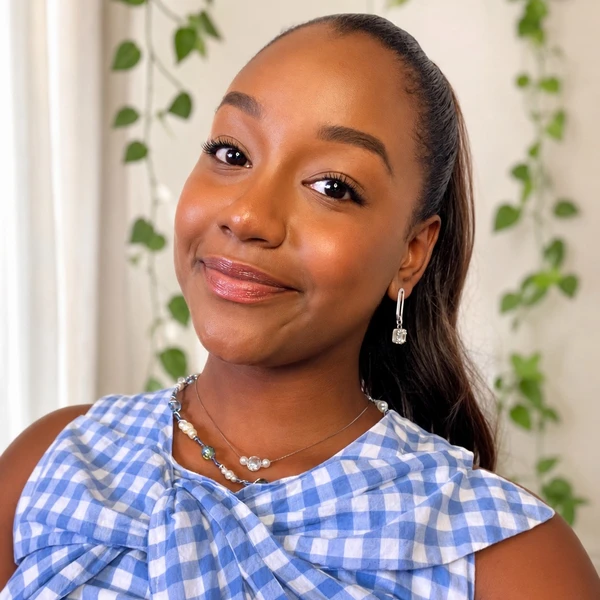
Krisann Bedassie

1x

Finalist

General information

Hobbies & Interests

  • Choir
  • Cosmetology
  • Ethnic Studies
  • Foreign Languages
  • Jewelry Making
  • International Relations
  • Girl Scouts
  • Government
  • Graphic Design
  • Human Rights
  • Makeup and Beauty
  • Politics and Political Science
  • Model UN
  • Social Justice
  • Poetry
  • Speech and Debate

Reading

  • Adventure
  • Art
  • Chick Lit
  • Classics
  • Contemporary
  • Drama
  • Education
  • Cultural
  • Family
  • Historical
  • Humanities
  • Humor
  • Juvenile
  • Law
  • How-To
  • Leadership
  • Magical Realism
  • Literature
  • Politics
  • Philosophy
  • Psychology
  • Mystery
  • Novels
  • Science Fiction
  • Social Science
  • Young Adult

I read books multiple times a week.

Bio

I am Krisann Bedassie, an 18-year-old Form 6 student at St. Joseph’s Convent, San Fernando, Trinidad and Tobago, passionate about leadership, service, and global affairs. Raised by my hardworking single mother, I learned the value of perseverance, humility, faith, and making every opportunity count. I serve as a Form 6 prefect, Student Council trustee, peer mediator, and mentor. Since 2024, I have been a Trinidad and Tobago UNESCO SDG Schools Ambassador, founding a 30-member UNESCO club and leading initiatives focused on education, health, climate action, and water access. I was also selected as one of 50 participants in Cohort 3 of the Women Parliamentarians of Trinidad and Tobago YES! Leadership Programme, exploring AI, digital surveillance, and responsible innovation. I was the first student from Trinidad and Tobago selected for Yale Young Global Scholars, where I studied politics, law, and economics alongside students from around the world. I have also researched meritocracy and student mental health, participated in Stanford’s Code in Place, and developed an examination resource website for seven schools. As an award-winning spoken-word artist, I have placed first in over 20 competitions, using my voice to explore justice, equity, and human rights. I aspire to become a diplomat, UN ambassador, or political adviser. Through education, I hope to turn opportunity into service and create opportunities for others.

Education

Other Schools

High School

2020 – 2027

GPA4.0 GPA

Miscellaneous

Desired degree level:
Master's degree program
Majors of interest:
Political Science and Government, Philosophy, Sociology
Desired degree modality:
In-Person
Medical school interest:
No
English as first language:
Yes
Homeschooled:
No

Career

  • Digital Marketing and Business Assistant: I run the social media page.

    Marketing and Advertising · Style et Saveur

    Jan 2020 – Present

Miscellaneous

Dream career field:
International Affairs, Political Organization, Law Practice, Government Administration, Government Relations
Work experience:
0 years
Has nursing license:
No
Leadership experience:
Yes

Future Interests

  • Advocacy
  • Politics
  • Volunteering
  • Philanthropy
Lotus Scholarship
Some people learn perseverance from mountains. I learned it from buckets. When the water stops running in our home, I collect what I can: buckets, bottles, barrels, anything that can hold enough for my family to bathe, clean, cook, and drink. I used to think this was simply something I had to do. Eventually, I realised it was teaching me how to live with scarcity without becoming defined by it. I was raised by a single mother who built a life for us through her own work. Money has often had to stretch further than it should, and I have learned that opportunity can be just as scarce as water. But scarcity taught me not to waste either. I learned to turn what I have into what I need. I turned our water struggles into an ocean-based innovation that placed second in a regional Caribbean competition. I turned questions about academic competition into research on meritocracy and student wellbeing. I turned my voice into advocacy through UNESCO, student government, spoken word, and youth leadership. I am still filling buckets. Only now am I filling them with knowledge, experience, and opportunities that I hope to carry back to other young people. I want to study politics, sociology, law, and global affairs, then use that education to expand access to opportunities for communities like mine. My circumstances taught me that a person does not need abundance to create something meaningful. Sometimes, you simply learn to carry what you have carefully enough to make it reach someone else.
Maggie's Way- International Woman’s Scholarship
There is a particular kind of courage required to leave an island. Perhaps that is why I think of Moana when I think about Maggie Kwiecien. Not because I am leaving home because I dislike it, but because there comes a moment when the horizon stops looking like an ending and starts looking like an invitation. I come from Trinidad and Tobago, a small Caribbean nation where the sea is never very far away. Yet growing up here has taught me that distance is not measured only in miles. Sometimes it is measured in opportunity. I have learned to travel farther than my circumstances suggest I should. I have grown up in a single-parent household with limited financial resources. I have managed household responsibilities, including collecting and storing water when our supply disappears. I have commuted long distances to school while pursuing opportunities that often required me to look beyond my island. I learned early that if I wanted to find certain rooms, I might have to travel to them. Maggie did exactly that. She left Poland for the United States alone in 2015, without the comfort of an established support system, and built a life through determination, intellectual curiosity, and courage. I cannot claim to know what it felt like to make that journey. But I recognize something in it. The willingness to begin again. I know what it means to be the first. I was the first student from Trinidad and Tobago to attend Yale Young Global Scholars, where I studied Politics, Law, and Economics alongside students from around the world. I became the youngest participant selected as Prime Minister in the Women Parliamentarians of Trinidad and Tobago YES! Leadership Programme. I founded a UNESCO SDG club, researched meritocracy and student wellbeing, competed in spoken word, learned to code, and kept saying yes to opportunities that required me to imagine myself somewhere I had never been before. None of this has felt like becoming extraordinary. It has felt like refusing to let geography become destiny. That is perhaps where I see myself most clearly in Maggie. She was not only brave enough to cross borders; she was intellectually restless. She wanted to become an expert in whatever she set her mind to. I understand that hunger. I have never been satisfied with simply knowing *what* happens. I want to know why. Why do some students thrive while others are left behind? Why does achievement sometimes come at the expense of wellbeing? Why do laws protect some communities more effectively than others? My curiosity has become a compass. And now, I am preparing to cross another ocean. Studying in the United States would be a significant financial challenge for my family. It would also mean entering another unfamiliar environment, far from the people and places that made me who I am. But I do not see unfamiliarity as evidence that I do not belong. I see it as evidence that I am growing. I will carry Trinidad with me: its contradictions, its warmth, its smallness, its enormous imagination. I will carry my mother's sacrifices, the water I learned to conserve, the classrooms that taught me to compete, and the communities that taught me to serve. Maggie crossed an ocean and built a life on the other side. I am standing at my own shoreline now. I do not know exactly how far I will go. But I have never believed that the horizon was the edge of the world. It is only the place where I have not arrived yet.
Kalia D. Davis Memorial Scholarship
There is a strange thing about being eighteen: everyone keeps asking what you want to become, while you are still learning how to become yourself. For a long time, I thought my answer had to be everything. The scholar. The leader. The poet. The daughter. The advocate. The girl who never wastes an opportunity because she knows what it means not to have many. I have spent my secondary school years reaching for every door I could find, not because I believe achievement makes me more worthy, but because I have always believed that the life I was born into should not be the life that limits me. I am an eighteen-year-old student at St. Joseph’s Convent San Fernando in Trinidad and Tobago, a first-generation college student from a single-parent household. My mother has taught me that ambition is not always loud. Sometimes it looks like getting up and working when nobody is watching. Sometimes it looks like making something out of almost nothing. I have tried to carry that lesson everywhere. I serve as a UNESCO SDG Ambassador and founded a 30-member school club focused on service, climate, wellness, and the Sustainable Development Goals. I have served as a Form 6 prefect and Student Council trustee, mentored younger students, represented young women through the Women Parliamentarians of Trinidad and Tobago, and researched how achievement-driven environments affect students’ wellbeing. I have also stood behind a microphone and spoken about justice, equity, and human rights, winning more than twenty spoken-word competitions. But beneath the certificates and titles is something much simpler. I care about people. I have learned that excellence means very little if it becomes a ladder you climb alone. That is why Kalia’s story stays with me. Her life was not defined only by achievement. She was an athlete, student, worker, leader, daughter, friend. She encouraged people. She laughed. She loved sunsets and dancing with her niece. Her legacy reminds me that a life is not measured only by how high we rise, but by what remains warmer because we were here. That is the kind of excellence I want. Not perfection. Presence. Not a collection of accomplishments, but a collection of people who can say, “She helped me believe I could.” I sometimes think of ambition as water. It can carry a person across an ocean, but if you try to hold all of it in your hands, eventually your fingers cannot contain it. I have spent years learning how to pursue everything without allowing achievement to become the reason I measure my worth. The scholarship would help me pursue higher education in the United States, something that feels both extraordinarily close and impossibly far from where I stand. As a student from a low-income, single-parent household, the cost of tuition, housing, food, health insurance, travel, and everyday living is not an abstract number. It is the difference between a dream I can reach and one I can only watch from shore. But financial support would give me more than a degree. It would give me room to grow into the person I am trying to become. I want to study politics, law, sociology, and global affairs, eventually working in international policy and public service. I want to use my education to challenge inequity, expand opportunity, and make institutions more responsive to the young people they serve. The hunger to be everything once exhausted me. Now, I want to become something more meaningful: someone whose life makes it easier for someone else to believe that theirs can be extraordinary too. That, to me, is legacy.
Hines Scholarship
There is a particular kind of hunger that does not live in the stomach. It lives somewhere behind the ribs, where ambition begins to resemble longing. It is the hunger to become: to cross the distance between what you inherited and what you imagine, and refuse to mistake your circumstances for your boundaries. I know that hunger. I am a first-generation college student from Trinidad and Tobago, raised in a single-parent household where money has often been something to stretch rather than spend. My mother built a life for us through hard work, faith, and sacrifice. She could not hand me a map to the future I wanted. Instead, she taught me to draw one. For years, I believed in meritocracy almost instinctively. Work hard. Learn everything you can. Earn your place. Knock loudly enough, and eventually someone will open the door. That belief carried me far. I pursued research, leadership, technology, service, and opportunities beyond my country. I became a UNESCO SDG Ambassador, founded a 30-member club, served as a student leader, studied Politics, Law, and Economics through Yale Young Global Scholars, and became the first student from Trinidad and Tobago to participate. But the more I achieved, the more complicated my relationship with achievement became. I researched meritocracy because I wanted to understand what happens when society tells young people that success is earned entirely through effort. I discovered that achievement can be liberating, but it can also become a measurement by which we judge our worth. I recognised myself in that tension. I have sometimes felt the need to become everything at once: the scholar, leader, advocate, writer, future diplomat, and daughter who makes sacrifice worthwhile. I began to wonder whether I was pursuing these identities because they were mine, or because I feared that being only one thing would not be enough. That is the hunger to be everything: the fear that one life, one achievement, one version of yourself might not be sufficient. College means more to me than getting a degree. It means learning to distinguish ambition from performance. I want to study politics, law, sociology, and global affairs because I want to understand who gets opportunity and who is forced to fight for it. I want to become a political adviser or ambassador and work on policies that shape lives too often reduced to statistics. But I do not want education merely to help me escape poverty. I want it to help me understand poverty well enough to challenge it. The American Dream fascinates me because it promises that where you begin does not have to determine where you end. As an international student pursuing an American education, I am drawn to that promise, but I know dreams are not equally accessible when the price of admission differs for everyone. I want to mentor students who are the first in their families to imagine possibilities beyond what they have known. I want to expand access to scholarships, technology, educational resources, and leadership opportunities. I want my success to become infrastructure for someone else's beginning. My mother taught me to work for a better life. Meritocracy taught me to question who gets to define “better.” And my hunger to become everything has taught me something more important: I do not need to become everything. I need to become useful. College is where I hope to turn ambition into impact, opportunity into responsibility, and one young woman's pursuit of something better into a door left open for those coming behind her.
Barbara Cain Literary Scholarship
I have never believed books are meant to be escaped into. I read to be disturbed. To have some quiet certainty inside me pulled apart and rearranged. The books that stay with me do not simply tell me what to think. They make me interrogate the machinery beneath my own thinking: why I want what I want, what I am willing to sacrifice for it, and whether the person I become in pursuit of it is someone I still recognise. The Water Dancer taught me that freedom is not only about escaping what confines you. It is about remembering what was almost taken from you. Ta-Nehesi Coates' novel moves through memory, enslavement, loss, and liberation, but what stayed with me was its treatment of memory as survival. The past can wound us, but forgetting it can wound us differently. I began to understand that freedom without remembrance can become another kind of captivity. That realisation deepened my interest in sociology and politics. I want to understand the systems that determine whose stories are remembered, whose suffering becomes policy, and whose humanity is made invisible. Love’s Labour’s Lost taught me something less comfortable: ambition can be both noble and dangerous. Shakespeare surrounds his characters with intellect, language, and the desire to become more than they currently are. Yet beneath the comedy lies a question I have found myself asking: when are we pursuing something because we love it, and when are we performing our worth? That question became personal. I have spent years in competitive academic environments where achievement can become a currency. Grades become rankings; rankings become identities; identities become cages. My research into meritocracy and student wellbeing grew from watching how easily the pursuit of excellence can become the pursuit of validation. I learned that wanting something badly is not enough. I must also ask why I want it. Am I running toward something, or merely running away from being ordinary? Winners by Danielle Steel taught me that failure does not always mean you have reached the end of your story. Sometimes a setback is simply the dark soil in which a comeback is taking root. That lesson matters to me because I have learned that ambition is not a straight road. It is a coastline. It recedes. It breaks. It forces you to find another way forward. Together, these books have changed what I believe education is for. I once thought education was primarily a key: something that could unlock doors beyond the financial circumstances I inherited. I still believe that. But books have taught me that a key is useless if you do not know which doors are worth opening. I want to study politics, law, sociology, and global affairs because I am interested in those doors: who built them, who has the keys, who is kept outside, and what happens when people begin demanding that the architecture change. The Water Dancer taught me to remember. Love’s Labour’s Lost taught me to question. Winners taught me to continue. Together, they taught me that courage is not always loud. Sometimes it is the quiet decision to care enough to keep going. Perhaps that is what I love most about books. They do not simply give us lives to read. They give us mirrors. Sometimes we look into them and find ourselves. Sometimes we find the person we are afraid of becoming. And sometimes, if we are lucky, we find the person we are still brave enough to become.
RonranGlee Literary Scholarship
The Scythe and the Student "Let fame, that all hunt after in their lives, Live registered upon our brazen tombs, And then grace us in the disgrace of death, When, spite of cormorant devouring time, Th’ endeavor of this present breath may buy That honor which shall bate his scythe’s keen edge And make us heirs of all eternity." In this passage from Love’s Labour’s Lost, Shakespeare transforms the pursuit of fame into a negotiation with mortality. The speaker imagines achievement as a kind of bargain: if we spend our brief “present breath” pursuing honour, perhaps what we accomplish will survive the body that accomplished it. Yet beneath this celebration of ambition lies something more unsettling. The passage asks not simply whether we can become great, but why we are so desperate to be remembered. Shakespeare makes fame both a monument and a mirror: what we build to outlive ourselves may reveal how afraid we are of being ordinary, forgotten, or consumed by time. I recognise that hunger. I have grown up believing deeply in the power of achievement. Education, to me, has never been merely about grades. It has represented possibility. I come from a single-parent household with limited financial resources, and I have watched my mother build a life through work, sacrifice, faith, and persistence. I learned early that circumstances can be inherited, but they do not necessarily have to become destinies. So I began to climb. Each achievement became another rung: leadership positions, research, competitions, service, technology, opportunities beyond Trinidad and Tobago. I became a UNESCO SDG Ambassador. I founded a 30-member club. I researched meritocracy and its effects on student success and wellbeing. I attended Yale Young Global Scholars, studying Politics, Law, and Economics. I entered spaces where I had once wondered whether someone from my small corner of the Caribbean could belong. I believed, and still believe, that education can change the architecture of a life. But Shakespeare makes me suspicious of the ladder. His speaker does not merely say that people seek fame. He says that they “hunt” after it. The word is almost predatory. Fame becomes something elusive that we chase through the forest of our lives, always moving farther ahead. And the object of the hunt is strange: not happiness, not wisdom, not even goodness, but remembrance. Why? Because time is coming. Shakespeare gives time a body: a “cormorant,” a creature associated with insatiable appetite, devouring everything in its path. Then he gives it a weapon: the scythe. Human beings may spend decades constructing identities, institutions, reputations, and accomplishments, only for time to arrive like a blade through a field, levelling everything that once stood upright. Against that blade, the speaker offers achievement. A “brazen tomb.” I find that image almost unbearably beautiful. A tomb is where a life ends. Bronze suggests permanence. Together, they create a paradox: we build monuments to ourselves precisely because we know we will die. Fame is therefore not the opposite of mortality. It is born from our awareness of it. And I wonder if modern achievement has become our own kind of brazen tomb. Today, we catalogue ourselves. Our résumés become monuments. Our transcripts become inscriptions. Awards become little plaques against the wall of time. We collect titles, rankings, acceptances, publications, followers, distinctions. We learn to turn our lives into evidence. Evidence that we mattered. Evidence that we were exceptional. Evidence that the world should remember our names. I have studied meritocracy partly because I wanted to understand this phenomenon. We are taught that effort produces reward, that talent rises, that the hardest worker eventually reaches the highest place. There is something beautiful in that belief. For a student from a financially constrained family, it can feel like a door left unlocked. But meritocracy has a shadow. When achievement becomes our primary measure of worth, ambition stops being a vehicle and becomes a mirror. We no longer ask, “What am I learning?” We ask, “How am I performing?” We no longer ask, “What can I contribute?” We ask, “How does this compare to everyone else?” The student becomes a statistic. The person becomes a résumé. And the pursuit of “something better” can quietly become a fear of being anything less than extraordinary. This is where Shakespeare’s final image unsettles me most. He does not say that achievement will defeat death. He says it will “bate” the scythe’s “keen edge.” The blade remains. Time remains. Death remains. At best, achievement dulls the cut. Perhaps that is the most honest definition of legacy. It does not make us immortal. It makes our brief existence consequential. That distinction has changed the way I understand my own ambition. I still want the education I have dreamed about. I still want to study politics, law, sociology, and global affairs. I still want to work in international affairs and eventually become a political adviser or ambassador. I still want to reach places that once seemed impossibly distant. But I am beginning to understand that the point cannot be to build the tallest monument. It has to be to build something that remains useful after I have left it. My research should not simply become another line on a résumé. It should help schools understand how achievement affects students. My leadership should not simply produce titles. It should make younger students more confident entering rooms I once entered uncertainly. My education should not simply become my escape from financial hardship. It should become an instrument with which I can return to the communities that shaped me. Perhaps this is the difference between ambition and legacy. Ambition asks, “How far can I go?” Legacy asks, “Who can go farther because I went?” The first is about elevation. The second is about expansion. And Shakespeare’s passage has made me realise that perhaps we misunderstand eternity. Maybe becoming an “heir of all eternity” does not mean having your name survive forever in bronze. Names eventually fade. Statues crack. Plaques gather dust. Even the most celebrated lives become paragraphs in books that someone may someday stop reading. But a life can continue differently. In a student who discovers she is capable because someone believed in her first. In a policy that makes opportunity less dependent on circumstance. In a community that gains a resource it did not have before. In a question planted so deeply in another person that they spend their own life pursuing its answer. That kind of legacy does not require immortality. It requires only that something living be left behind. And perhaps that is what Shakespeare understood about the “present breath.” The breath is brief. That is precisely why what we do with it matters. I used to think education was my way of outrunning the circumstances I was born into. Now I think of it differently. Education is the breath I have been given. What I do with it is the inscription. And if time must eventually come with its scythe, I hope it finds something worth cutting down.
Sloane Stephens Doc & Glo Scholarship
I have spent much of my life learning how to carry things. Water, when the taps run dry. Responsibilities, when my family needs me. Questions, when the answers around me feel insufficient. And, perhaps most importantly, hope. Hope is a strange thing to carry. It is weightless, but sometimes it is the heaviest thing you own. My mother carried it for me before I knew its name. She raised me in a single parent household with limited resources, yet somehow made my world feel larger than our circumstances. She taught me that hardship could explain where I began without deciding where I would end. Because of her, I learned to look beyond what was immediately possible. That instinct has shaped the impact I want to make. I do not want my education to become a ladder that I climb and leave behind. I want it to become a bridge. A bridge between talented students and opportunities they do not know exist. Between young people and the institutions that make decisions about their futures. Between communities that are too often asked to endure problems and the people with the power to change them. I have already begun building pieces of it. As a Trinidad and Tobago UNESCO SDG Ambassador, I founded a 30-member UNESCO club focused on education, wellness, climate action, and service. As a prefect and Student Council Trustee, I mentored approximately 30 younger students and helped develop future student leaders. Through the Women Parliamentarians of Trinidad and Tobago YES! Leadership Programme, I entered conversations about AI, digital surveillance, data exploitation, and responsible innovation. Through spoken word, I have competed and advocated around justice, equity, and human rights. But perhaps my most important work began with a question. Why does achievement not always produce wellbeing? For my research on meritocracy, I examined how achievement-focused environments affect student success and mental health. I discovered that opportunity is not distributed as evenly as ambition is. There are brilliant young people everywhere. What differs is who has access to the bridge. That is the future I want to change. I intend to study politics, law, sociology, and global affairs in the United States and eventually work in international affairs as a political adviser or ambassador. I want to understand the structures that produce inequality well enough to help redesign them. I want to advocate for young people whose circumstances are treated as predictions instead of problems that can be changed. And I want to give back personally, too. I want to mentor students applying internationally, especially those who have never seen someone like themselves do it before. I want to connect young people with scholarships, leadership programmes, technology, and educational resources. I want to create pathways that remain open after I have crossed them. Because I know what it feels like to stand at the edge of possibility. I know what it is like to wonder whether the other side is meant for someone else. And I know what it means when someone reaches back and says, *come with me.* My mother did that for me. So will I. I do not want to be remembered simply for how far I went. I want to be remembered for how many people found a way forward because I had gone first.
Michael Rudometkin Memorial Scholarship
How do you know if you are selfless? I have never known how to answer that question comfortably. Selflessness seems strange when you begin measuring it. How many people have you helped? How many hours have you volunteered? How many lives have you changed? At what number does a person become “selfless”? I do not keep a tally. I think that is partly because I have always believed there is something uncomfortable about turning kindness into a scorecard. The moment I begin counting every good thing I have done, I wonder whether I am helping someone or simply collecting evidence that I am a good person. Psychologically, I think selflessness is less about the absence of self-interest and more about learning to make room for another person's needs. It is noticing that someone is struggling and deciding that their struggle matters to you, even when nobody is watching. That is the kind of person I try to be. At school, I have served as a prefect, Student Council Trustee, peer mediator, and mentor. I have mentored approximately 30 students, including younger students who later became prefect trainees. Sometimes that meant helping someone understand a responsibility. Sometimes it meant listening when a student was overwhelmed. Sometimes it meant speaking up when something within our school community needed to change. None of those moments felt extraordinary while they were happening. That is the point. My community service has taken many forms. As Vice-President of my school's Rotary Interact Club, I helped organize 10 hampers for a battered women's shelter and led a $1,000 polio eradication fundraiser. Through my UNESCO SDG Club, which I founded with 30 members, I helped organize service initiatives and encouraged students to see global problems as local responsibilities. I have also mentored younger students academically, with three of five students I tutored earning Honor Roll recognition. I have learned that helping someone does not always mean solving their problem. Sometimes it means making the problem feel less lonely. My spoken-word work has taught me the same lesson differently. I perform about justice, equity, and rights, and I once mentored a younger girl who later became a finalist herself. I remember being more excited about her success than my own. Watching someone find confidence in a voice they once doubted reminded me why I share mine. I think perseverance is part of selflessness too. It is easy to care when caring is convenient. It is harder to continue when the work is repetitive, when recognition disappears, or when the problem is larger than anything one person can fix. I continue because I have come to believe that impact is rarely one dramatic act. More often, it is a collection of small decisions to care again. I do not know whether I am selfless. I am not sure anyone can objectively know. I only know that when I see someone struggling, I want to help. When I have something useful to give, I want to share it. When I have a voice, I want to use it for someone who may not have one. Maybe that is enough. I am not trying to become the person with the longest list of service hours or the most impressive record of altruism. I am simply trying to be a good person. And perhaps the most selfless thing I can do is stop asking whether that makes me selfless at all.
The Concrete Rose Scholarship Foundation
Some flowers are planted in perfect soil. Others learn to grow through concrete. I think of my mother when I think of that second kind. She raised me in a single-parent household, building a life for us through self-employment in cosmetology while teaching me lessons that no classroom could. She taught me hard work without recognition, humility without weakness, and faith without certainty. We have never had abundant resources, but I was never allowed to believe that limited circumstances meant limited possibilities. That belief became the foundation of my education. I grew up in Trinidad and Tobago, where many students understandably pursue universities locally. I began wondering what existed beyond the boundaries of what was familiar. I wanted to study politics, law, sociology, and global affairs because I became fascinated by a question that felt both academic and deeply personal: why do some people receive opportunities that others must fight to find? My interest in this question led me to research meritocracy and its effects on student success and mental wellbeing. It led me to Yale Young Global Scholars, where I studied Politics, Law, and Economics and became the first student from Trinidad and Tobago to participate. It led me to student government, where I became a prefect and Student Council Trustee, and to the Women Parliamentarians of Trinidad and Tobago YES! Leadership Programme, where I was selected as the youngest participant and later chosen to serve as Prime Minister in our parliamentary simulation. It also led me to service. I founded a 30-member UNESCO SDG club, served as a Trinidad and Tobago SDG Ambassador, participated in UN CSW68, mentored younger students, and used spoken word to advocate for justice, equity, and rights. Each experience has strengthened my belief that education should not simply help us change our own circumstances. It should equip us to change the circumstances that limit others. That is why this scholarship matters to me. Applying to universities in the United States is an enormous financial undertaking for my family. My mother and I have limited resources, and the cost extends far beyond tuition. Housing, meals, transportation, books, health insurance, and other necessities create barriers that we cannot independently absorb. Receiving this scholarship would help transform higher education from an aspiration into something more attainable. I want to study in the United States and eventually work in international affairs as a political adviser or ambassador. I want to understand how laws, institutions, and policies can create more equitable societies, particularly for young people and women whose voices are often overlooked. But I do not want my education to become a ladder that I climb alone. I want to reach back. I want to mentor young women who cannot yet see themselves in rooms where decisions are made. I want to expand access to educational opportunities, scholarships, leadership programmes, and information that can change a student's trajectory. I want to use my voice in spaces where women from communities like mine are still underrepresented. A rose does not stop being remarkable because it grew through concrete. Perhaps the concrete is part of the story. It teaches the flower how fiercely it wants the sunlight. My circumstances have never been the absence of possibility. They have been the soil from which I learned to grow.
Matthew E. Minor Memorial Scholarship
There is a particular silence in a competitive school. It is the silence after results are posted. Everyone looks. Everyone calculates. Who came first? Who fell? Who received the award? Who scored higher? At my school, academic excellence is celebrated, but sometimes comparison becomes cruelty. I have seen students teased for lower grades, accomplishments diminished because someone else achieved more, and friendships strained by rankings. What begins in a classroom can follow a student onto Instagram, WhatsApp, or a group chat, where a screenshot, comment, or joke can become a permanent reminder of embarrassment. I know this environment because I have lived in it. It taught me that bullying is not always loud. Sometimes it sounds like a joke. Sometimes it looks like competition. Sometimes it is the quiet belief that another person's success makes you less successful. That realization has shaped my community involvement. As a prefect, peer mediator, student leader, and mentor to younger students, I have tried to create spaces where students feel supported rather than judged. I have helped address student concerns, mentored younger students, and worked to make leadership more accessible to those who may not always feel confident speaking. My concern for young people's wellbeing also became academic. I researched meritocracy and mental health for my CAPE Sociology research, examining how achievement-centered environments can affect students. I learned that ambition can motivate us, but when young people begin to believe their worth depends on performance, ambition can become anxiety. That is why keeping children safe, both in person and online, begins with changing what we teach them about their worth. I encourage young people to recognize bullying, speak to trusted adults, preserve evidence of serious cyberbullying, protect their personal information, and use reporting and blocking tools rather than retaliating. Through my UNESCO youth work and student leadership, I also promote digital responsibility, empathy, and informed online behavior. Most importantly, I want young people to know that asking for help is not weakness. My community has taught me that safety is not simply the absence of harm. It is knowing that someone will notice when you are hurting. Financially, higher education in the United States is a significant challenge for my family. I come from a low-income, single-parent household. My mother is self-employed in cosmetology, and our income is limited. I live with my mother and relatives in a shared household where expenses are divided. I have no personal savings or assets to contribute toward university, and we cannot independently cover the full cost of tuition, housing, meals, transportation, books, and health insurance. For me, financial aid is therefore not an advantage. It is the difference between imagining an American education and being able to pursue one. Still, I continue to reach beyond what seems possible. I have learned that young people do not need less ambition. They need environments where ambition does not require sacrificing their wellbeing. I want to help build those environments. Because a student should be able to lose a race without believing she has lost her worth. She should be able to succeed without becoming someone else's target. And she should never have to face cruelty alone, whether it happens in a hallway or behind a screen.
Pierson Family Scholarship for U.S. Studies
I have always been fascinated by the word *possible*. Perhaps because, growing up in Trinidad and Tobago, I learned early that the life you imagine for yourself can feel very far from the life you are expected to live. My family taught me to work for what I want. My mother taught me that hard work is not glamorous, but it is powerful. I carried that belief into school, where I became fascinated by meritocracy: the idea that effort and ability should determine how far we go. For my CAPE Sociology research, I studied achievement and its relationship with students’ mental health. The more I learned, the more complicated my belief became. I still believe deeply in hard work, but I began to understand that talent is everywhere while opportunity is not. That realization did not make me less ambitious. It made my ambition larger. I wanted to understand the systems that decide who gets opportunities, who gets overlooked, and what happens when a young person refuses to let circumstance define her ceiling. That curiosity led me toward sociology, politics, law, and global affairs, and eventually to Yale Young Global Scholars, where I studied politics, law, and economics. I became the first student from Trinidad and Tobago to participate in the programme. For me, being first was never about standing alone. It was about discovering that a door could exist even when nobody around me had walked through it before. That has been one of my greatest challenges: learning to pursue possibilities that were unfamiliar in my community. Most students around me understandably pursue universities at home. I began imagining myself studying in the United States, in classrooms where I could examine the questions that keep me awake: Why are some societies more equitable than others? How does law create change? How can young people influence the systems that govern their lives? One person made that possibility feel less like a fantasy. Chelsea-Marie, a former student, was accepted to George Washington University. Watching her leave for an American university changed something in me. She had stepped beyond the path most students around us followed and proved that a Trinidadian student could belong in those spaces too. Sometimes inspiration is not someone telling you that you can dream. Sometimes it is seeing someone who came from somewhere familiar do it first. I want to do the same for someone else. I hope to pursue higher education in the United States because I want an education that does not stop at understanding inequality, but teaches me how to challenge it. After graduation, I hope to work in international affairs, eventually serving as a political adviser or ambassador, using law, policy, and diplomacy to advocate for communities whose voices are too easily dismissed. I do not believe that I am entitled to every opportunity simply because I work hard. I believe something more demanding: that if opportunity is unevenly distributed, we should work to redistribute it. I want to become the kind of person who walks through the door, then turns around and holds it open.
Fans of Olandria Carthen Black Women Excellence Scholarship
There is a strange intimacy in carrying water. You learn its weight before you learn what it means to live without it. In my community, the tap does not always keep its promises. Some days, water comes. Other days, it does not. So I have learned to listen for it, to store it when it arrives, to carry it when it does not. I have spent hours collecting and storing water from a community tank, watching something as ordinary as water become something that must be planned for. And I keep thinking about how easily we call certain things necessities when they are guaranteed to us. Water. Education. Opportunity. Olandria Carthen’s story reminds me why those last two matter so deeply. As a first generation college graduate and Tuskegee University alumna, she turned education into a pathway not only for herself, but for the Black women she now encourages. I want to build that same kind of pathway, beginning with a problem I have literally carried in my own hands. If I could build a company to improve life for today’s youth, I would build one around water insecurity. I imagine affordable smart water management systems for families and communities where water access is unreliable. Sensors could monitor storage levels, detect leaks, track consumption, and send alerts when supplies are running low. Community data, collected responsibly, could also help identify patterns in shortages and guide better distribution. But I would not begin in a boardroom. I would begin at home. I would speak with families, students, schools, engineers, and community organizations. I would build a low cost prototype, test it with households, listen to what does not work, rebuild it, and test it again. Partnerships with schools, businesses, nonprofits, and government agencies could help subsidize systems for low income families and bring them into more communities. Because a solution is not really a solution if the people who need it most cannot afford it. I think about the hours spent carrying water. An hour solving a problem that should not exist is an hour taken from something else. An hour of studying. An hour of creating. An hour of being young. That is what I would ultimately build: not simply a smarter way to store water, but more time. More time for a student to finish her homework. More time to discover her talent. More time to apply for the scholarship that could change her life. Education gave Olandria a path forward. I want to help make sure circumstances do not close that path for someone else. I have carried the problem. Now I want to build the solution.
Krisann Bedassie Student Profile | Bold.org