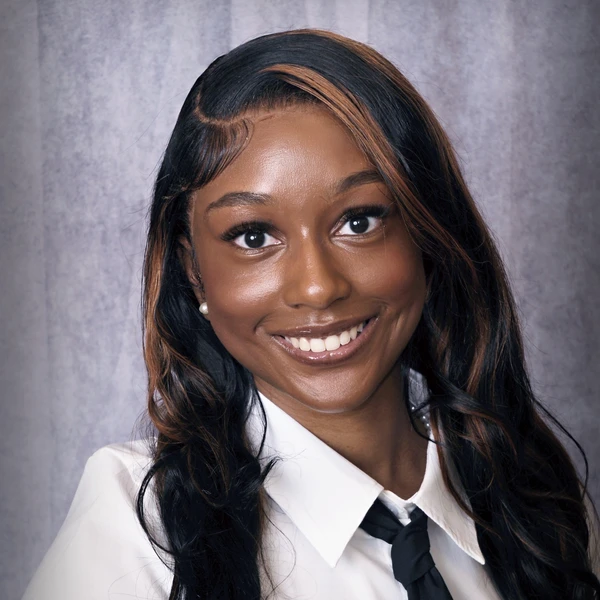
user profile avatar

Kiyah Thomas

1x

Finalist

Bio

I am a 17-year-old senior at the Academy of Health Sciences in Prince George’s County, where I am enrolled in the Early College High School program. In May 2026, I will graduate with both my high school diploma and an Associate’s Degree in Health Science. With a 4.5 GPA and a strong interest in math and science, I am passionate about pursuing a career in the medical field, with a particular focus on pediatrics. My passion for healthcare stems from personal experience, as I have a sibling with disabilities who has inspired me to help others and make a difference in the lives of children and families. Outside of academics, I am a certified lifeguard and enjoy swimming, listening to music, attending concerts, and spending time with family and friends.

Education

Academy Of Health Sciences At Pgcc

High School
2022 - 2026

Miscellaneous

  • Desired degree level:

    Bachelor's degree program

  • Majors of interest:

    • Health Professions and Related Clinical Sciences, Other
  • Planning to go to medical school
  • Career

    • Dream career field:

      Medicine

    • Dream career goals:

    • I have personal, lived-experience as a sibling of a severely disabled brother. I work with his home health care providers regularly to learn more about caring for children with special healthcare needs.

      2022 – Present4 years

    Public services

    • Volunteering

      Maryland Department of Parks and Recs — I assisted the evnt plans with various operation tasks such as helping with registration and making sure participants had sufficient supplies
      2024 – 2025
    Abigail O. Adewunmi Memorial Scholarship
    A problem I strive to solve is improving equity for cancer outcomes in Black people. The racial and gender disparities within healthcare are a concern I am deeply passionate about. Experiencing several losses from cancer throughout my life made this issue personal, allowing me to see first hand how socioeconomic status directly affects health through quality of healthcare, health behaviors, and environmental factors. The loss that impacted me the most was my grandmother’s. My grandmother and I shared a great relationship, and she played a pivotal role in instilling the values I have that guide my life today. Growing up, I watched her constantly work to care for everyone around her while putting her health on the back burner. When she was diagnosed with colorectal cancer, it had already advanced to other parts of her body. Going to the hospital every day after school, walking around seeing black women who shared a similar story with my grandmother, truly touched me. These experiences inspired me to study the relationship between medicine, gender, and race. The first step I plan to take to address this is contributing to initiatives that educate Black people and participate in research opportunities to understand the intricacies of cancer and African American health. At University of Maryland, I will major in biology which will enrich my critical thinking and communication skills essential for research and problem-solving. Beyond academics, I plan to be involved in volunteer activities where I can spread awareness and engage with the local community. I envision myself being an active member of student organizations that are committed to promoting Black women’s health and supporting students devoted to this cause. Being part of these organizations, I can share my personal experiences with students and professors, build connections, and cultivate solutions that combat health disparities affecting Black women. My background in community service has prepared me to approach this work with empathy and responsibility. Through my involvement in community awareness events and volunteer initiatives, I have supported families affected by illness and gained a deeper understanding of the importance of advocacy. Serving as Social Media Manager for the Black Student Union also allowed me to help create spaces centered on representation and unity. These experiences reinforced my belief that service includes both direct action and building environments where people feel seen and supported. Additionally, earning my lifeguard and CPR certification reflects my dedication to being prepared to protect others in critical moments. These roles require attentiveness, calm decision-making, and accountability which are qualities that are essential in both community service and healthcare. Attending college would provide a solid foundation for addressing the complex and systemic inequalities prevalent in the health field. I hope to help create a world where wealth, race, or gender does not sway health outcomes. This problem cannot be solved overnight; however, with collaboration and compassion, I believe we can make advancements in health quality for everyone.
    Evangelist Nellie Delores Blount Boyce Scholarship
    I am a 17-year-old senior at the Academy of Health Sciences in Prince George’s County, where I am enrolled in the Early College High School program. In May 2026, I will graduate with both my high school diploma and an Associate’s Degree in Health Science. With a 4.5 GPA and a strong interest in math and science, I am passionate about pursuing a career in the medical field, with a particular focus on pediatrics. To know my story and my journey is to understand the persistence, determination and resilience it took for me to get to this point. My passion for healthcare stems from personal experience, as I have a sibling with disabilities who has inspired me to help others and make a difference in the lives of children and families. My brother was born severely premature at just 23 weeks, tiny enough to fit in the palm of an adult hand. He survived, but with lasting consequences: severe lung disease, cerebral palsy, deafness, cortical vision impairment, and a need for a feeding tube. I was four years old when he was born. I didn’t fully understand the severity of his complications, but I knew life was different, forever. As I progressed throughout my childhood, my family’s life revolved around attending to my brother’s health. From being suddenly awakened at 2 a.m. on a weekday for emergency hospital visits, learning how to use medical equipment, and going to weekly therapy sessions after school, I realized from a young age my life at home was much different from my friends. Early on, I had to develop patience and maturity. I have spent countless days at Children’s National Hospital in Washington, D.C. This includes several holidays and birthdays as well. I remember doing my math homework on the hospital floor in the emergency room in first grade. I still have the gray clipboard my dad bought for me to do my homework at his physical therapy sessions every Tuesday and Thursday in third grade after school. During hospital stays, I was a young, curious girl who was heavily involved. Every time I saw a doctor pull out a cord or a monitor, I would always ask, “What’s that?” or “Why are you doing that?” I found the medical field fascinating, and throughout my years, I’ve acquired a great deal of knowledge. These lived experiences sparked my interest in the medical field and a desire to help people with complex medical needs in underserved communities. Throughout all of this, my education remained a priority for me. I’ve learned to adapt and persevere through hardships to accomplish my goals. These years have shaped my work ethic, ability to handle stressful situations, and my compassion for others. If nothing else, my brother has taught me to embrace the little things in life. My brother has shaped my perspective on the world. I recognize the importance of accessibility, inclusion, and the little things that most people overlook. My brother has taught me more than any school teacher or textbook ever could. He has shaped my values and inspired my future career. The role of being his “helper” was never a burden to me; it’s one I have come to embrace and continue to cherish.
    Hester Richardson Powell Memorial Service Scholarship
    I am a 17-year-old senior at the Academy of Health Sciences in Prince George’s County, where I am enrolled in the Early College High School program. In May 2026, I will graduate with both my high school diploma and an Associate’s Degree in Health Science. With a 4.5 GPA and a strong interest in math and science, I am passionate about pursuing a career in the medical field, with a particular focus on pediatrics. To know my story and my journey is to understand the persistence, determination and resilience it took for me to get to this point. My passion for healthcare stems from personal experience, as I have a sibling with disabilities who has inspired me to help others and make a difference in the lives of children and families. My brother was born severely premature at just 23 weeks, tiny enough to fit in the palm of an adult hand. He survived, but with lasting consequences: severe lung disease, cerebral palsy, deafness, cortical vision impairment, and a need for a feeding tube. I was four years old when he was born. I didn’t fully understand the severity of his complications, but I knew life was different, forever. As I progressed throughout my childhood, my family’s life revolved around attending to my brother’s health. From being suddenly awakened at 2 a.m. on a weekday for emergency hospital visits, learning how to use medical equipment, and going to weekly therapy sessions after school, I realized from a young age my life at home was much different from my friends. Early on, I had to develop patience and maturity. I have spent countless days at Children’s National Hospital in Washington, D.C. This includes several holidays and birthdays as well. I remember doing my math homework on the hospital floor in the emergency room in first grade. I still have the gray clipboard my dad bought for me to do my homework at his physical therapy sessions every Tuesday and Thursday in third grade after school. During hospital stays, I was a young, curious girl who was heavily involved. Every time I saw a doctor pull out a cord or a monitor, I would always ask, “What’s that?” or “Why are you doing that?” I found the medical field fascinating, and throughout my years, I’ve acquired a great deal of knowledge. These lived experiences sparked my interest in the medical field and a desire to help people with complex medical needs in underserved communities. Throughout all of this, my education remained a priority for me. I’ve learned to adapt and persevere through hardships to accomplish my goals. These years have shaped my work ethic, ability to handle stressful situations, and my compassion for others.
    Overcoming Adversity - Jack Terry Memorial Scholarship
    Jack Terry's story resonates with me because I too have experienced a very difficult and life changing situation as a young child. Additionally, as a result of my lived-experience, I plan to pursue a career in the medical field as well. My little brother was born at just 23 weeks, tiny enough to fit in the palm of an adult's hand. He survived but with lasting consequences: severe lung disease, cerebral palsy, deafness, cortical vision impairment, and a need for a feeding tube. I was four years old when he was born. I didn’t fully understand the severity of his complications, but I knew life was different forever. As I progressed throughout my childhood, my family’s life revolved around attending to my brother’s health. From being suddenly awakened at 2 am on a weekday for emergency hospital visits, learning how to use medical equipment, and going to weekly therapy sessions after school, I realized from a young age my life at home was much different from my friends. Early on, I had to develop patience and maturity. I have spent countless days at Children’s National Hospital in Washington, D.C. This includes several holidays and birthdays as well. I remember doing my math homework on the hospital floor of the emergency room in first grade. I still have the gray clipboard my dad bought for me to do my homework at his physical therapy sessions every Tuesday and Thursday in third grade after school. I can recall more times than I’m proud of when I wished to have a “normal” life, a “normal” family. I felt isolated at times because I couldn’t relate to my friends and their sibling stories. I didn’t have the annoying little brother who got on my nerves every chance he got. Instead, I had a little brother who gets awkward stares every time we go out in public. It took me a while to accept my family’s differences. Despite all the surgeries and procedures my brother has endured, despite not being able to talk or walk, my brother is undoubtedly the happiest person I know. I have learned through him that different doesn’t mean wrong. He is my symbol of strength. During hospital stays, I was a young, curious girl who was heavily involved. Every time I saw a doctor pull out a cord or a monitor, I would always ask, “What’s that?” or “Why are you doing that?” I found the medical field fascinating, and throughout my years, I’ve acquired a great deal of knowledge. These lived experiences sparked my interest in the medical field and a desire to help people with complex medical needs in underserved communities. Throughout all of this, my education remained a priority for me. I’ve learned to adapt and persevere through hardships to accomplish my goals. These years have shaped my work ethic, ability to handle stressful situations, and my compassion for others. If nothing else, my brother has taught me to embrace the little things in life. My brother has shaped my perspective on the world. I recognize the importance of accessibility, inclusion, and the little things that most people overlook. I plan to dedicate my life and work to advocating for the needs of those who are often overlooked in our society. My brother has taught me more than any school teacher or textbook ever could. He has shaped my values and inspired my future career. The role of being his “helper” was never a burden to me; it’s one I have come to embrace and continue to cherish!
    Valerie Rabb Academic Scholarship
    One evening, as I was giving my brother his daily medicine through his g-tube, a lightbulb turned on in my head. My dream job changed frequently as a kid, from a teacher to a police officer to a YouTuber, and none of these dreams stuck. But at that moment with my brother, I realized the one role I could never get tired of was being his “helper.” That’s where my passion had always been. My brother was born severely premature at just 23 weeks, tiny enough to fit in the palm of an adult hand. He survived, but with lasting consequences: severe lung disease, cerebral palsy, deafness, cortical vision impairment, and a need for a feeding tube. I was four years old when he was born. I didn’t fully understand the severity of his complications, but I knew life was different, forever. As I progressed throughout my childhood, my family’s life revolved around attending to my brother’s health. From being suddenly awakened at 2 a.m. on a weekday for emergency hospital visits, learning how to use medical equipment, and going to weekly therapy sessions after school, I realized from a young age my life at home was much different from my friends. Early on, I had to develop patience and maturity. I have spent countless days at Children’s National Hospital in Washington, D.C. This includes several holidays and birthdays as well. I remember doing my math homework on the hospital floor in the emergency room in first grade. I still have the gray clipboard my dad bought for me to do my homework at his physical therapy sessions every Tuesday and Thursday in third grade after school. I can recall more times than I’m proud of when I wished to have a “normal” life, a “normal” family. I felt isolated at times because I couldn’t relate to my friends and their sibling stories. I didn’t have the annoying little brother who got on my nerves every chance he got. Instead, I had a little brother who received awkward stares every time we went out in public because of his bulky wheelchair and the circular device taped to the right side of his head: a cochlear implant. It took me a while to accept my family’s differences. Despite all the surgeries and procedures my brother has endured, despite not being able to walk, talk, or eat by mouth, my brother is undoubtedly the happiest person I know. I have learned through him that different doesn’t mean wrong. As a result of my extensive experience, I find the medical field fascinating, and throughout my years, I’ve acquired a great deal of knowledge. These lived experiences sparked my interest in the medical field and a desire to help people with complex medical needs in underserved communities. Throughout all of this, my education remained a priority for me. I’ve learned to adapt and persevere through hardships to accomplish my goals. These years have shaped my work ethic, ability to handle stressful situations, and my compassion for others. If nothing else, my brother has taught me to embrace the little things in life. My brother has shaped my perspective on the world. I recognize the importance of accessibility, inclusion, and the little things that most people overlook. My brother has taught me more than any school teacher or textbook ever could. He has shaped my values and inspired my future career. The role of being his “helper” was never a burden to me; it’s one I have come to embrace and continue to cherish.
    Chris Ford Scholarship
    One evening, as I was giving my brother his daily medicine through his g-tube, a lightbulb turned on in my head. My dream job changed frequently as a kid, from a teacher to a police officer to a YouTuber, and none of these dreams stuck. But at that moment with my brother, I realized the one role I could never get tired of was being his “helper.” That’s where my passion had always been. My brother was born severely premature at just 23 weeks, tiny enough to fit in the palm of an adult hand. He survived, but with lasting consequences: severe lung disease, cerebral palsy, deafness, cortical vision impairment, and a need for a feeding tube. I was four years old when he was born. I didn’t fully understand the severity of his complications, but I knew life was different, forever. As I progressed throughout my childhood, my family’s life revolved around attending to my brother’s health. From being suddenly awakened at 2 a.m. on a weekday for emergency hospital visits, learning how to use medical equipment, and going to weekly therapy sessions after school, I realized from a young age my life at home was much different from my friends. Early on, I had to develop patience and maturity. I have spent countless days at Children’s National Hospital in Washington, D.C. This includes several holidays and birthdays as well. I remember doing my math homework on the hospital floor in the emergency room in first grade. I still have the gray clipboard my dad bought for me to do my homework at his physical therapy sessions every Tuesday and Thursday in third grade after school. I can recall more times than I’m proud of when I wished to have a “normal” life, a “normal” family. I felt isolated at times because I couldn’t relate to my friends and their sibling stories. I didn’t have the annoying little brother who got on my nerves every chance he got. Instead, I had a little brother who received awkward stares every time we went out in public because of his bulky wheelchair and the circular device taped to the right side of his head: a cochlear implant. It took me a while to accept my family’s differences. Despite all the surgeries and procedures my brother has endured, despite not being able to walk, talk, or eat by mouth, my brother is undoubtedly the happiest person I know. I have learned through him that different doesn’t mean wrong. He is my symbol of strength. During hospital stays, I was a young, curious girl who was heavily involved. Every time I saw a doctor pull out a cord or a monitor, I would always ask, “What’s that?” or “Why are you doing that?” I found the medical field fascinating, and throughout my years, I’ve acquired a great deal of knowledge. These lived experiences sparked my interest in the medical field and a desire to help people with complex medical needs in underserved communities. Throughout all of this, my education remained a priority for me. I’ve learned to adapt and persevere through hardships to accomplish my goals. These years have shaped my work ethic, ability to handle stressful situations, and my compassion for others. If nothing else, my brother has taught me to embrace the little things in life. My brother has shaped my perspective on the world. I recognize the importance of accessibility, inclusion, and the little things that most people overlook. I plan to dedicate my life and work to advocating for the needs of children like my brother!