user profile avatar

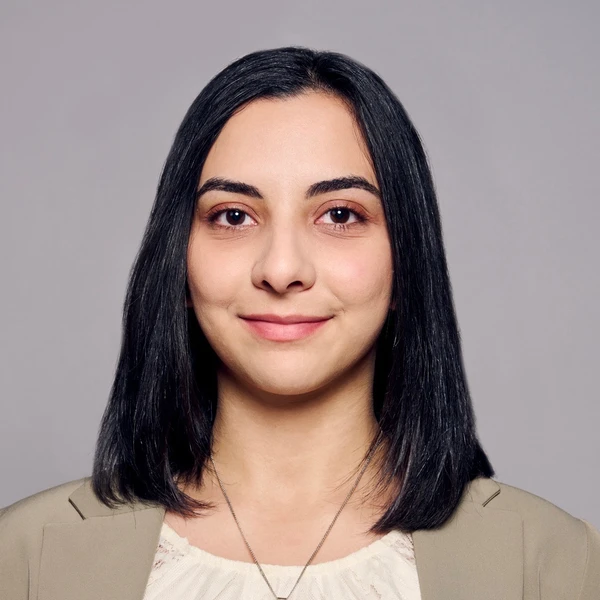
Kimia Dasteh Goli

3x

Nominee

1x

Finalist

1x

Winner

Bio

Hello, my name is Kimia! I am an incoming medical student who is passionate about stroke education, outreach, and prevention. What originally sparked my interest in the field was losing my grandparents to stroke and seeing its impact on both the patient’s and the caregiver’s quality of life. In college, I studied Neuroscience with an Engaged Humanities Initiative project on the experience of health and illness. Since then, I have been volunteering with and leading a non-profit organization focused on stroke education and prevention in the United States. By educating a community of stroke survivors and caregivers, we hope to empower individuals to take ownership of their own health and make educated decisions to mitigate current and/or prevent future strokes. In my role, I serve close to 85 young stroke survivors (under the age of 60) across 23 states, with the goal of helping them reintegrate back into the society after their diagnosis. As a future physician, I want to continue working with this community and take a health humanities approach that is research-informed and patient-centered, especially in the field of neurological and chronic disorders. Outside of health advocacy and community service, I am also passionate about biomedical research. I was trained as a structural biologist and currently work on designing a novel HIV-1 vaccine! In my free time, I enjoy writing poetry and photography. In a personal project I call “Poetography,” I combine my interests to tell a story. I hope to publish my work one day. Thank you for reading!

Education

Pennsylvania State University-College of Medicine

Doctoral degree program (PhD, MD, JD, etc.)
2026 - 2026
  • Majors:
    • Medicine

University of Illinois at Chicago

Bachelor's degree program
2018 - 2021
  • Majors:
    • Neurobiology and Neurosciences

Miscellaneous

  • Desired degree level:

    Doctoral degree program (PhD, MD, JD, etc.)

  • Graduate schools of interest:

  • Transfer schools of interest:

  • Majors of interest:

  • Planning to go to medical school
  • Career

    • Dream career field:

      Medicine

    • Dream career goals:

      Educator

    • Post-baccalaureate Research Fellow (IRTA)

      National Institute of Allergy and Infectious Diseases
      2022 – 20231 year
    • Research Assistant

      The Wistar Institute
      2024 – Present2 years
    • Research Technician

      Children's Hospital of Philadelphia
      2023 – 20241 year

    Sports

    Swimming

    Club
    2015 – 20194 years

    Awards

    • No

    Research

    • Biological and Biomedical Sciences, Other

      Wistar Institute — Research Assistant
      2024 – Present

    Arts

    • Self

      Photography
      2018 – Present

    Public services

    • Volunteering

      Circle of Rights — Director of Stroke Leadership Council
      2022 – Present

    Future Interests

    Advocacy

    Politics

    Volunteering

    Philanthropy

    New Beginnings Immigrant Scholarship
    Winner
    As my eyes grew heavy and my head began to float, I rested my forehead against the table, gripping its legs for balance. Minutes later, I woke up on the floor with my sister hovering over me, splashing cold water on my face, fear etched into her expression. That moment marked the beginning of countless neurology appointments and my first experience navigating the U.S. healthcare system as a recent immigrant. At sixteen, newly arrived in the United States while my parents remained abroad, I often longed for them during those visits. Instead, I found reassurance in my neurologist, Dr. Laura. Sensing my anxiety in the waiting room, she gently asked why I was there by myself and whether I had eaten that day. After listening carefully to my history, she explained that a prior concussion was causing episodes of syncope and migraines. We reviewed a treatment plan together, and she encouraged me to keep a symptom diary, research my condition, and return with questions. What stayed with me was not just her clinical expertise, but her recognition of me as a whole person, young, frightened, and navigating an unfamiliar system. Through trust and compassion, Dr. Laura empowered me to take ownership of my health, and in doing so, planted the first seed for my future in medicine. Motivated by that experience, I began volunteering with my local fire department as a junior brigade member and later trained as an EMT. I wanted to understand what it meant to show up for people in moments of vulnerability. One EMS call remains vivid. We responded to an elderly man, Ian, whose cancer had relapsed after chemotherapy. He was curled on the couch in pain, refusing to move. As my team prepared the stretcher, I asked him about the television show playing, "NCIS", and watched his expression soften as he eagerly recounted the plot. While he talked, we gently transferred him, and during transport I monitored his vitals while the paramedic managed his pain. When we reached the emergency department and transferred his care, Ian smiled and told me “you better watch the show.” Moments later, as physicians rushed behind the curtain to stabilize him, I stood outside feeling helpless. That feeling, wanting to do more, clarified my desire to become a physician who can accompany patients through their most uncertain moments. In college, I majored in neuroscience to better understand the biological foundations of illness, while continuing to seek the human stories behind disease. Through the Engaged Humanities Initiative, I explored how culture, language, and storytelling shape health experiences, particularly for marginalized communities. Interviewing patients and physicians and studying social determinants of health helped me contextualize my own immigrant experience within broader systems of inequity. I led health literacy initiatives and community outreach programs aimed at reducing barriers to care. After college, I extended this work by leading a stroke nonprofit organization, where I created a virtual community for stroke survivors and caregivers nationwide. Each week, I facilitate conversations with physicians, therapists, and community leaders about recovery, prevention, and emerging therapies. Watching survivors gain confidence to ask informed questions continually reminds me of Dr. Laura’s encouragement years ago, to be curious, engaged, and empowered in one’s own care. My immigrant journey has taught me resilience, adaptability, and the importance of compassionate guidance within unfamiliar systems. These experiences have shaped my aspiration to become a physician who listens deeply, validates lived experiences, and integrates personalized care. Just as I was once supported during my most vulnerable moments, I hope to be a steady presence for patients navigating illness, uncertainty, and transition.