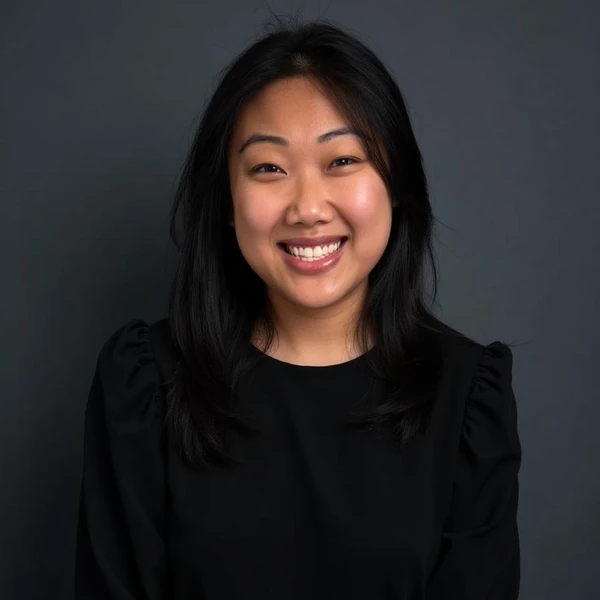
1. Tell us about yourself.
My name is Kimberly Yee, and I’m a mother, nurse, mental health advocate, and proud first-generation Chinese American. I’m currently pursuing my Doctor of Nursing Practice (DNP) at Duke University to become a Psychiatric-Mental Health Nurse Practitioner (PMHNP). My life has been shaped by resilience, by falling down, getting back up, and carving a path forward even when the odds felt stacked against me.
I care deeply about making mental health care accessible, culturally competent, and rooted in compassion. Having personally survived trauma, depression, and a suicide attempt, I know how isolating and misunderstood emotional suffering can be. It’s why I show up every day with a mission to be the kind of provider I once needed; someone who listens, advocates, and never gives up on people.
I am also a mother of two and a volunteer in both my local PTA and animal shelter. My identity is multifaceted, but everything I do is grounded in service and community. I’ve learned that healing happens in connection, and I hope to use my education, voice, and lived experience to help others find that connection too.
2. What’s a real-world issue you feel deeply connected to, and why?
The issue I feel most connected to is the unmet mental health needs within marginalized communities, particularly among BIPOC and immigrant populations. As a first-generation Chinese American, I grew up in a household where mental health was never discussed. Emotional struggles were often minimized, and therapy was seen as something “other people” did.
As I grew older, and especially after surviving sexual assault and depression, I realized just how much stigma and silence were costing us. Mental health is a universal human experience, yet many communities of color still lack access to culturally responsive care. Language barriers, mistrust of the system, and lack of representation only widen these gaps.
This issue matters to me because I’ve lived it. I know what it’s like to feel invisible, to suffer in silence, and to not know where to turn. But I also know the power of healing when care is trauma-informed, affirming, and accessible. That’s what I want to bring into the world.
3. If you had the power to make change in that area, what would you do?
If I had the power, I would reimagine mental health care as community-rooted, culturally affirming, and proactive, not just reactive. I would build mental health programs within schools, community centers, and faith-based organizations in underserved neighborhoods. These programs would be led by diverse clinicians who reflect the communities they serve and would integrate talk therapy, mindfulness, nutrition, and social support.
I would also advocate for policy changes that expand access to mental health care, especially for immigrants, refugees, and the uninsured. That includes increasing federal funding for safety-net clinics, loan forgiveness programs for psychiatric providers, and mental health training for primary care teams.
Finally, I would normalize mental health conversations through storytelling. I believe in the power of sharing lived experiences to reduce stigma. If we create more spaces where people can say “me too,” we can build a world where no one suffers in silence.
4. How did you choose your area of study, and what do you hope to do with it?
My journey into psychiatric nursing was born out of personal healing. After surviving trauma and struggling with untreated mental health challenges, I returned to school through a local community college. I originally chose nursing for its stability and purpose, but once I began working in the cardiovascular ICU, I couldn’t ignore how often patients' emotional needs went unmet.
During COVID-19, families were kept out of hospitals, and patients died alone. I saw profound grief and fear, and I felt helpless without the tools to address it. That’s when I knew I needed to pursue psychiatric nursing. I wanted to be someone who could hold space for others in their darkest moments.
I’m now at Duke University, pursuing a DNP to become a PMHNP. My goal is to work in community mental health, serve underserved populations, and eventually teach at the college level. I want to change lives through care, and help train the next generation of nurses to lead with both knowledge and heart.
5. What’s one goal you’ve set for yourself in the next 5 years—and how do you plan to get there?
Within the next five years, I plan to open a culturally inclusive outpatient mental health clinic that offers both traditional psychiatric services and integrative care; including mindfulness, peer support, and trauma-informed yoga. I envision it as a safe space for individuals who don’t see themselves in mainstream mental health care.
To achieve this, I’m focused on building clinical experience during my DNP program, particularly in underserved settings. I’m also connecting with mentors in both psychiatry and health policy to understand the business and legislative sides of health care.
In the meantime, I’ll continue volunteering, learning from diverse populations, and seeking out continuing education in areas like nutritional psychiatry and somatic therapies. I want my practice to be evidence-based and deeply human.
6. How has education helped you better understand yourself and your purpose?
Education gave me a second chance, and then it gave me purpose. Returning to community college as a single mom was humbling, but it reminded me of what I was capable of. It also introduced me to professors who believed in me before I believed in myself.
As I moved through my nursing degrees, I began to see how my past, once something I wanted to forget, could be transformed into something meaningful. I wasn’t just learning clinical skills; I was learning how to channel empathy, advocacy, and lived experience into real-world impact.
At Duke, I’ve grown intellectually and emotionally. I’ve realized that my purpose is not just to provide care, but to challenge the systems that prevent people from accessing it. Education has helped me reclaim my story, and now I use it to help others reclaim theirs.
7. How has your identity as a woman influenced the way you move through the world?
Being a woman, especially a woman of color, has shaped how I advocate, how I lead, and how I care.
As a nurse, I’ve had to fight to be heard in rooms where decisions were made without understanding the full context of patients’ lives. As a student and mother, I’ve balanced late-night studying with early morning lunches and bedtime stories. And as a trauma survivor, I’ve had to navigate systems that weren’t designed to protect women like me.
But being a woman has also taught me the power of persistence and community. It’s taught me how to lift others up, how to listen deeply, and how to lead with compassion. I am proud to be part of a generation of women who are changing health care from the inside out.
8. What does leadership mean to you—and how have you embodied it?
To me, leadership means showing up with integrity, even when no one’s watching. It means creating space for others, especially those whose voices are often left out.
I’ve embodied leadership by mentoring nursing students, organizing mental health awareness events, and volunteering with the PTA at my children’s school. I’ve also advocated for patient-centered care in clinical settings and spoken openly about my own mental health journey to reduce stigma.
Leadership isn’t about titles, it’s about how you treat people, how you respond in crisis, and how you uplift your community. I strive to lead through service and example.
9. Describe a time you had to be resourceful or resilient. What did you learn from it?
After my sexual assault, I dropped out of college and spent years feeling broken. Becoming a single mother forced me to be resilient in ways I never imagined. I returned to school through community college, often studying while rocking a baby to sleep. I worked part-time, applied for every scholarship I could find, and leaned on public resources like WIC and childcare subsidies to make ends meet.
What I learned is that resilience isn’t about always being strong, it’s about continuing, even when it’s hard. It’s about asking for help, accepting imperfection, and believing that your future can look different from your past.
10. If awarded this scholarship, how would it help you pursue your dreams?
This scholarship would be life-changing. It would allow me to continue my doctoral education at Duke without the fear of having to pause due to financial uncertainty, especially given the current political climate and growing concerns about the future of student loan programs.
Beyond financial support, this scholarship would affirm that my journey matters, that survivors, mothers, first-generation students, and community college graduates belong in spaces like this. With this support, I could focus on clinical excellence, continue serving my community, and lay the groundwork for the inclusive mental health clinic I plan to open.