
Hobbies and interests
Advocacy And Activism
Artificial Intelligence
Biomedical Sciences
Reading
Classics
I read books multiple times per week
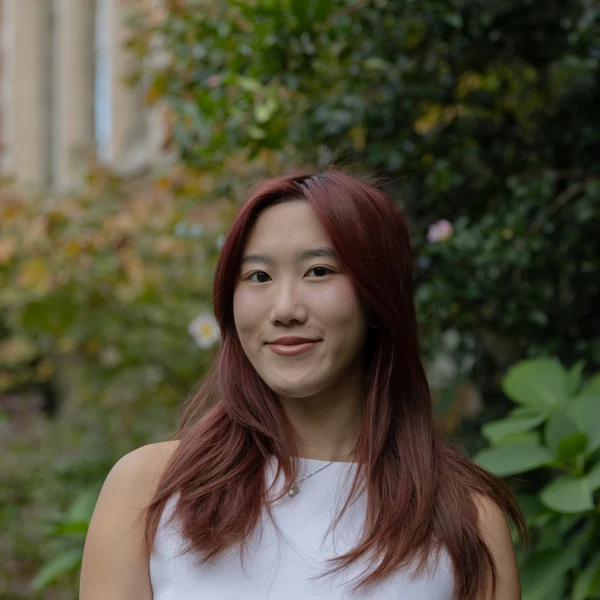
Kiera Nguyen
1x
Finalist
Kiera Nguyen
1x
FinalistBio
My name is Kiera Nguyen and I’m a Public Health–Global Health student at the University of Washington with a strong interest in healthcare strategy, operations, and social impact consulting. I’m passionate about applying data-driven solutions to improve access, equity, and efficiency in healthcare systems. I’m always looking to connect with others working at the intersection of public health and business innovation.
Education
Columbia University in the City of New York
Master's degree programMajors:
- Business Administration, Management and Operations
Columbia University in the City of New York
Master's degree programMajors:
- Business/Managerial Economics
University of Washington-Seattle Campus
Bachelor's degree programMajors:
- Public Health
Minors:
- Business/Managerial Economics
Miscellaneous
Desired degree level:
Doctoral degree program (PhD, MD, JD, etc.)
Graduate schools of interest:
- Columbia University in the City of New York
Transfer schools of interest:
Majors of interest:
Career
Dream career field:
- Management Consulting
Dream career goals:
Strategy and Ops
Program Management Intern
Sono Bello2025 – Present1 year
Sports
Water Polo
Varsity2018 – 20224 years
Awards
- top defender
Swimming
Junior Varsity2022 – 20264 years
Research
Audiovisual Communications Technologies/Technicians
Applied Hearing Sciences — Lab Manager2023 – Present
Arts
University High School
Ceramics2018 – 2022
Public services
Volunteering
UW Food Pantry — Volunteer2022 – 2024
Tawkify Meaningful Connections Scholarship
The most meaningful relationship in my life was built largely through silence.
My grandfather helped raise me while my mother worked tirelessly as a single parent. He was a veteran of the South Vietnamese military who survived seven years in a reeducation camp before rebuilding his life in the United States. By the time I was old enough to understand pieces of his story, I had already grown up in the quiet strength that defined him.
He was not outwardly expressive. Love, in our household, was rarely verbal. It was early morning rides to school. It was cut fruit waiting on the kitchen table. It was fixing broken things without being asked. It was sitting beside me while I did homework, even if we were not speaking.
Growing up bilingual, I slowly lost fluency in Vietnamese as English became dominant in school. For years, I did not realize what that meant for our relationship. There were questions I could not fully ask and stories he could not fully explain. As I matured, I made a conscious effort to relearn Vietnamese so I could reconnect with him more deeply. Rebuilding that bridge taught me that connection requires intention. It is not passive. It must be nurtured.
Living under one roof with my grandparents and my aunt, who lives with schizophrenia, also taught me that relationships are layered with responsibility. My grandfather was not only a caregiver to me, but also to my aunt. Watching him balance patience, protection, and quiet sacrifice shaped how I define strength. It showed me that relationships are sustained not just by emotion, but by consistency.
When my grandmother passed and my grandfather became more isolated, I saw how fragile connection can be if not actively maintained. During my senior year, while studying out of state, I flew home twice as our family navigated loss. In those moments, I understood that presence matters more than convenience. Showing up physically, emotionally, and logistically became my way of honoring the people who raised me.
That relationship has deeply influenced how I build connections today.
In my academic and professional life, I prioritize intentionality. In research settings, I do not see participants as data points. I see individuals trusting us with their experiences. In leadership roles, I check in on teammates beyond deliverables. I am attentive to unspoken cues because I grew up learning to read silence.
My grandfather’s reserved nature taught me that not everyone expresses struggle openly. As a result, I approach relationships with patience and empathy. I ask thoughtful questions. I listen carefully. I understand that trust builds gradually, through small consistent actions rather than grand gestures.
In a world increasingly driven by speed and efficiency, my relationship with him reminds me that meaningful connection requires slowing down. It requires being present even when conversations are imperfect or language is limited.
His life was shaped by war, displacement, and rebuilding. Mine has been shaped by education and opportunity made possible through his sacrifice. The way I build relationships now reflects that inheritance. I value loyalty, responsibility, and intentional care. I understand that strong relationships are not transactional. They are sustained through quiet commitment.
The most meaningful relationship in my life did not revolve around constant conversation. It revolved around showing up.
Because of him, I build connections with depth rather than surface. I lead with empathy rather than assumption. And I understand that human connection, at its core, is less about words and more about presence.
Eden Alaine Memorial Scholarship
Grief, for me, came in waves during my senior year of college.
Within a short period of time, I lost both of my grandparents, the two people who helped raise me while my mother worked tirelessly as a single parent. They were not just relatives. They were my foundation. They were the ones who packed my lunches, helped with homework, and shaped the values that carried me into adulthood.
My grandfather had served in the South Vietnamese military during the Vietnam War. After the war, he was imprisoned for seven years in a reeducation camp before eventually rebuilding his life in the United States. He carried the weight of that history quietly. Strength, to him, meant endurance. Even as he aged, he remained the protector of our household, caring not only for me but also for my aunt who lives with schizophrenia and requires ongoing support.
When my grandmother passed, the loss was devastating. I was studying out of state at the time, and I flew home immediately. I flew back again when my grandfather passed shortly after. Traveling between school and home felt surreal. I would sit in lectures discussing long-term goals while knowing that my family’s immediate world had shifted permanently.
As the oldest English-speaking grandchild, I took on much of the responsibility for funeral arrangements, paperwork, and communication. Navigating logistics for an immigrant family during a time of grief was emotionally exhausting. Translating legal documents while trying to process my own loss forced me to compartmentalize in ways I had never experienced before. I had to be composed for everyone else while quietly breaking inside.
The hardest part was watching my grandfather, after my grandmother’s passing, become more isolated. He had survived war, imprisonment, displacement, and decades of rebuilding. Now he was left alone, still caring for my aunt while carrying his own unspoken trauma. Losing him soon after felt like losing the final pillar of my childhood.
There were moments that semester when I questioned how I would keep going academically. Grief does not pause deadlines. Assignments still needed to be submitted. Exams still occurred. I learned to function through tears, to write papers after phone calls about arrangements, and to show up even when my heart felt heavy.
But through that pain, I also discovered resilience I did not know I had. My grandparents sacrificed everything to build stability for our family. My grandfather endured imprisonment and started over in a new country. My grandmother worked quietly and endlessly to hold our family together. Continuing my education became not just a personal goal, but a way to honor them.
Their loss reshaped my understanding of responsibility and perseverance. It taught me that strength is not the absence of grief, but the decision to move forward while carrying it. It deepened my empathy for others navigating invisible battles and reinforced my commitment to build a future that reflects the sacrifices they made.
Even in their absence, they continue to guide me. Every milestone I reach is tied to the foundation they built. My perseverance is rooted in their resilience.
Learner Calculus Scholarship
When I first took calculus, I struggled.
I was comfortable with structured math, where problems followed clear steps and answers felt predictable. Calculus felt abstract. Limits, derivatives, and integrals seemed disconnected from reality. I remember wondering how something so theoretical could possibly matter outside a classroom.
But over time, calculus stopped feeling abstract and started feeling powerful.
In public health, where I study and conduct research, numbers are never just numbers. Infection rates, hospitalization curves, and risk projections are built on mathematical models that rely on calculus. Differential equations help estimate how quickly a disease spreads. Integrals help calculate total exposure over time. Derivatives measure how rapidly a situation is changing. Behind every graph that forecasts a peak or decline is a calculus based framework.
What changed my perspective was realizing that those curves represent people.
When we model disease transmission, we are not just manipulating variables. We are predicting how quickly families may lose loved ones, how hospitals may become overwhelmed, and how communities may need resources. Calculus allows us to measure change precisely, but public health reminds us why that precision matters.
Struggling through calculus forced me to slow down and truly understand relationships between variables. It trained me to think in terms of systems rather than isolated numbers. That mindset mirrors how public health operates. Health outcomes are not random. They change based on access to care, environmental exposures, policy decisions, and socioeconomic conditions. Calculus provides the language to describe those dynamic interactions.
Through research in applied hearing science, I have worked with data that measures accessibility and communication outcomes. When analyzing trends, I began to appreciate how rates of change and cumulative effects influence real lives. A small improvement in access, when accumulated across thousands of individuals, becomes meaningful. An overlooked inefficiency, when compounded over time, becomes harmful. Calculus helps quantify those patterns.
At the same time, public health has taught me that numbers alone are not enough. Data may reveal trends, but understanding context requires empathy. A rising curve on a graph represents stress on families. A percentage point increase in risk reflects someone’s lived experience. Calculus strengthens the analytical foundation of STEM, but the human element gives that analysis purpose.
Personally, struggling in calculus taught me resilience. I had to ask questions, revisit concepts, and accept that understanding would not come instantly. That process mirrors how complex public health challenges are addressed. Solutions require iteration, refinement, and persistence.
STEM careers continue to expand because society depends on individuals who can analyze and respond to change. Calculus is essential because it equips us to measure that change accurately. In fields like public health, engineering, and data science, the ability to model dynamic systems is what transforms observation into action.
I no longer see calculus as an isolated math requirement. I see it as the foundation that allows me to interpret data responsibly. It teaches precision, but it also reinforces accountability. Numbers tell the story quantitatively, but the people behind those numbers remind us why that story matters.
In STEM, calculus is important not just because it is difficult, but because it allows us to understand change in a way that can protect, improve, and save lives.
Bryent Smothermon PTSD Awareness Scholarship
Some of my earliest memories of my grandfather are not of what he said, but of what he did not say.
He served in the South Vietnamese military during the Vietnam War. After the war ended, he was imprisoned for seven years in a reeducation camp before eventually reuniting with my grandmother in the United States. By the time I was born, the war was history in textbooks, but for him it was still present in his body.
Because my mother was a single parent, my grandparents raised me. We all lived under the same roof, including my aunt who struggles with schizophrenia and requires constant care. My grandfather carried the weight of all of us. He was disciplined and protective, but there were moments when his eyes looked far away. Loud noises made him tense. Some nights he could not sleep. He rarely spoke about the years he lost. Silence became his language of survival.
As a child, I did not understand PTSD. I only understood that my grandfather loved fiercely but guarded himself emotionally. I also grew up between languages. Vietnamese was spoken at home, but as I entered school and became immersed in English, I slowly lost fluency. I did not realize what that meant until I was older and wanted to ask him about his past, his pain, his strength. There were stories I could not fully access because I did not yet have the words.
That loss hurt in ways I did not expect. Language is connection. As my Vietnamese weakened, so did my ability to reach him. In recent years, I have made a deliberate effort to relearn and strengthen my Vietnamese. I practice with him, ask questions, and listen more carefully. Rebuilding that bridge has become one of the most meaningful acts of my life.
This year, my grandmother passed away. Her death has been devastating for our family and especially for my grandfather. After surviving war, imprisonment, displacement, and decades of rebuilding, he now faces grief late in life. Watching him mourn while still caring for my aunt and holding our family together has shown me both the depth of his resilience and the quiet toll trauma takes over time.
Through him, I have learned that PTSD is not always loud. Sometimes it is silent endurance. But silence can isolate veterans from the support they deserve. In many immigrant communities, mental health is minimized and strength is equated with suppression.
My education in public health has deepened my understanding of how trauma affects not just individuals, but families across generations. Growing up in a household shaped by war taught me empathy and patience. It taught me that behavior often reflects unseen history.
I hope to use my experience to advocate for culturally competent mental health care for veterans, particularly immigrant veterans whose trauma is compounded by language barriers and displacement. I want to help normalize seeking support rather than suffering quietly.
My grandfather survived seven years of imprisonment and rebuilt his life in a foreign country. His sacrifice created my opportunity. Honoring him means ensuring that veterans like him do not have to carry invisible wounds alone.
Through his silence, I learned compassion. Through rebuilding our language, I learned connection. Through his endurance, I learned responsibility. And through his story, I found the courage to speak openly about trauma so others do not have to.
Christian Fitness Association General Scholarship
The first time I fully understood the weight of higher education costs, I was not sitting in a lecture hall. I was reviewing my tuition statement, calculating what financial aid covered and what remained my responsibility. Seeing the remaining balance forced me to think differently about my education. It was no longer simply a degree I was pursuing. It was a long term investment that required strategic planning, discipline, and resilience.
I am currently pursuing a degree in Public Health and preparing to continue into a Master of Science in Business Analytics. My academic path has been intentional from the beginning. I chose public health because I wanted to understand how structural systems influence human outcomes, particularly in communities that face barriers to care. I chose business analytics because I want the quantitative tools to redesign those systems at scale. Together, these disciplines allow me to move beyond identifying disparities and toward building measurable, data driven solutions.
Throughout my undergraduate career, I have actively sought opportunities to apply what I learn. As a Research Manager in the Applied Hearing Science Lab, I have coordinated participant recruitment, scheduled and supported audiometric testing sessions, and contributed to projects focused on accessibility technologies such as smartphone based captioning tools. This role demanded more than technical understanding. It required organizational precision, communication across stakeholders, and the ability to manage timelines while maintaining research integrity.
My work culminated in presenting our findings at a university research symposium. Standing beside my poster and explaining our methodology, results, and broader implications to faculty and peers was a defining academic milestone. Preparing for the symposium required me to synthesize complex data into clear narratives, anticipate questions, and defend our research approach. It was the moment I transitioned from consuming knowledge to contributing to it. Presenting at the symposium strengthened my confidence as a researcher and affirmed that I belong in rigorous academic spaces.
Beyond research, I have balanced internships and leadership responsibilities that required initiative and accountability. In operational and project based roles, I have supported data tracking initiatives, analyzed performance metrics, and contributed to workflow improvement strategies. These experiences sharpened my ability to connect analytics with real world impact. I do not approach opportunities passively. I seek out environments where I can learn, lead, and improve systems.
My drive is deeply rooted in my upbringing as a Vietnamese American student raised in a family that emphasized sacrifice and opportunity. Growing up bilingual, I often translated documents and navigated institutional systems for my family. I saw firsthand how access to information can determine access to resources. Those early experiences instilled both urgency and responsibility in how I approach education. I understand that my academic progress represents more than personal advancement. It represents the expansion of possibility for my family and community.
Financially, the journey has required careful planning. Tuition, housing, textbooks, and technology fees accumulate quickly, and while financial aid has provided support, it does not eliminate the long term financial burden. Preparing for graduate study in business analytics means committing to an even greater investment. I am mindful of the consequences of excessive student debt and actively seek scholarships as a way to reduce long term strain. Financial stability directly influences academic focus. When financial uncertainty is reduced, cognitive energy can be directed toward innovation, research, and leadership rather than constant calculation.
This scholarship would meaningfully ease that pressure as I transition into graduate education. Reduced financial strain would allow me to devote more time to research initiatives, professional development, and mentoring other students pursuing STEM and analytics fields. It would also enable me to take on opportunities that prioritize long term impact rather than short term financial necessity.
Looking forward, my goal is to build data driven systems that improve healthcare delivery and operational efficiency. I want to design analytics frameworks that optimize resource allocation, reduce supply waste, and improve accessibility in healthcare institutions. Inefficient systems translate into tangible consequences such as delayed treatment, unnecessary costs, and widened disparities. By integrating predictive modeling and performance analytics into decision making processes, I aim to help organizations operate more effectively and equitably.
Impact, to me, also includes representation and mentorship. As someone who navigated higher education without a clear blueprint, I understand how intimidating academic and professional spaces can feel. I intend to mentor bilingual and first generation students entering technical fields, demonstrating that leadership in research and analytics is attainable.
A scholarship is not simply financial assistance. It is recognition of demonstrated commitment and future potential. Through rigorous coursework, research leadership, symposium presentation, internships, and sustained ambition, I have built a strong academic foundation. With support, I will continue expanding that foundation into measurable impact for my community.
College costs continue to rise, but so does my determination. My ambition is clear, my drive is proven, and my commitment to using education as a tool for structural improvement is unwavering. With this scholarship, I will continue transforming opportunity into action and knowledge into lasting change.
Julie Holloway Bryant Memorial Scholarship
The first time I translated medical paperwork for my family, I was still a child.
Vietnamese is my first language. English came later, through classrooms, textbooks, and quiet determination. At home, Vietnamese carried emotion, respect, and cultural nuance. At school, English carried grades, opportunity, and mobility. Learning to navigate both worlds shaped not only how I communicate, but how I understand systems, responsibility, and community.
Growing up bilingual meant stepping into the role of translator early. I interpreted parent teacher conferences, insurance documents, and healthcare forms that felt overwhelming even to adults. At times, it was intimidating to explain complex English terminology in Vietnamese while knowing that decisions about finances or medical care depended on my accuracy. That responsibility matured me quickly. It also exposed me to how language barriers can create unequal access to critical services.
Being bilingual has its challenges. There is the subtle pressure of acting as a cultural bridge, the fear of mistranslating something important, and the internal balancing of two identities. In academic spaces, I worked hard to refine my English writing and public speaking so that my ideas would be taken seriously. At home, I maintained Vietnamese to preserve connection with my family and heritage. Moving between languages often meant moving between expectations.
Yet the benefits of bilingualism have far outweighed the challenges.
Speaking Vietnamese and English allows me to see how language shapes thought. Vietnamese emphasizes relational hierarchy and respect in ways that English does not. English offers precision in academic and technical discourse. Together, they allow me to communicate with depth and adaptability. Bilingualism strengthened my cognitive flexibility and sharpened my listening skills. More importantly, it gave me empathy for individuals navigating systems in a language that is not their own.
This perspective directly influenced my decision to study Public Health. I became interested in how structural barriers, including language access, affect healthcare outcomes. I saw how families hesitate to seek care when translation is unavailable or when medical terminology feels inaccessible. Through research in applied hearing science, I have worked on technology that improves accessibility, reinforcing my belief that innovation must account for linguistic and cultural diversity.
Post graduation, I will pursue a Master of Science in Business Analytics to build data driven systems that improve healthcare delivery and accessibility. I want to design tools that integrate multilingual support into digital health platforms and ensure that language access is treated as a core operational priority rather than an afterthought.
As a Vietnamese American woman, my bilingual identity is not separate from my professional ambition. It is the foundation of it. The experience of translating for my family showed me how fragile access can be when language becomes a barrier. It also showed me how powerful communication can be when it bridges gaps.
Being bilingual is more than speaking two languages. It is holding two perspectives at once. It is navigating complexity with nuance. It is understanding that equity begins with understanding.
That is the perspective I carry into my education and the future I am determined to build.
Bulkthreads.com's "Let's Aim Higher" Scholarship
I want to build systems that outlast me.
Not just companies, not just projects, but systems that make access to opportunity more efficient, equitable, and sustainable. Through my education in Public Health and my upcoming Master of Science in Business Analytics, I am intentionally building the skills to redesign how healthcare and resource allocation function at scale.
I have always been drawn to inefficiencies. In healthcare settings, I saw how fragmented supply chains, outdated processes, and poor data integration create unnecessary costs and barriers to care. Communities suffer when systems are disorganized. Patients wait longer. Resources are wasted. Preventable conditions escalate. I realized that behind many social problems are structural design flaws.
What I want to build is a data driven infrastructure that helps healthcare organizations operate smarter. I envision developing analytics platforms that integrate operational performance, resource utilization, and patient outcomes into one decision making framework. Instead of reacting to shortages, leaders could forecast them. Instead of overproducing supplies that expire unused, systems could optimize inventory based on predictive modeling. Instead of allocating funding blindly, administrators could identify where intervention would generate the greatest measurable impact.
Building this future requires more than ambition. It requires technical expertise, strategic thinking, and financial literacy. Higher education is the foundation that allows me to move from identifying problems to designing scalable solutions. My training in public health helps me understand the human consequences of systemic failure. My graduate training in business analytics equips me with the quantitative tools to correct those failures.
This vision extends beyond my own career. As a Vietnamese American student, I am aware of how access to information and opportunity can transform a family’s trajectory. By building ventures and systems that operate efficiently and responsibly, I hope to create employment opportunities, mentor other students of color entering STEM and business, and contribute to a culture that values long term impact over short term gain.
To me, building my future means combining ownership with responsibility. It means creating ventures that are financially sustainable and socially meaningful. It means designing systems that reduce waste, expand access, and strengthen communities rather than extracting from them.
Education is not simply a credential. It is infrastructure for what I will build next. With the right foundation, I intend to construct systems that make opportunity less accidental and more accessible.
That is the future I am working to build.
Learner Mental Health Empowerment for Health Students Scholarship
During college, I learned that achievement and anxiety can coexist.
From the outside, my academic path looked strong. I balanced research leadership, internships, and competitive graduate school applications. But internally, I often carried pressure that felt constant and unrelenting. The expectation to excel academically, represent my family well, and secure a successful future sometimes translated into chronic stress that I normalized as “just being driven.”
Mental health became important to me when I realized that productivity without well-being is unsustainable. There were semesters when I measured my worth entirely through grades, internships, and external validation. When outcomes did not align with my expectations, I internalized it deeply. I learned that resilience is not the absence of struggle. It is recognizing when you need support and allowing yourself to receive it.
As a Vietnamese American student, conversations about mental health were not always common in my upbringing. Academic success was prioritized, while emotional strain was often minimized. This cultural dynamic made it harder to articulate when I felt overwhelmed. Over time, I realized that silence perpetuates stigma. If high achieving students do not talk about mental health, it reinforces the misconception that success and struggle cannot coexist.
I began advocating for mental health in small but intentional ways. Within my research team and student organizations, I prioritize transparency around workload and boundaries. When leading projects, I emphasize realistic timelines and encourage teammates to communicate if they feel overloaded. I check in with peers not only about deliverables, but about how they are actually doing.
I also advocate by modeling balance. I speak openly with friends about therapy, stress management, and burnout. When classmates express self doubt or imposter syndrome, I share my own experiences rather than presenting a curated version of success. Normalizing these conversations reduces isolation. It reminds people that high performance environments do not require emotional suppression.
In academic spaces that reward constant productivity, I believe advocacy also means redefining what strength looks like. Strength is not working through exhaustion without pause. Strength is seeking support early. Strength is setting boundaries. Strength is understanding that long term impact requires mental sustainability.
Mental health is important to me as a student because it directly shapes academic performance, relationships, and overall well-being. It influences how we process failure, navigate uncertainty, and pursue ambition. Without mental health, achievement becomes fragile.
As I continue into graduate study, I plan to advocate by fostering collaborative environments that prioritize both excellence and well-being. Whether leading research, managing teams, or building future ventures, I want to contribute to cultures where mental health is acknowledged rather than hidden.
Open dialogue changes narratives. When students feel safe discussing mental health, they are more likely to seek help, support one another, and reach their full potential. I am committed to being part of that cultural shift, not only through words, but through daily action and leadership.
Breeze Sports Scholarship
Sports have always represented more than competition to me. They are systems of performance, resilience, teamwork, and data driven improvement. Behind every athlete on the field is a network of analysts, trainers, healthcare professionals, and strategists working to optimize performance and protect long term wellbeing. It is that intersection of health, data, and performance that inspires me to pursue a career in the sports industry.
As a Public Health student preparing to pursue a Master of Science in Business Analytics at Columbia University, I am drawn to the structural side of sports. I am fascinated by how data can shape training protocols, injury prevention strategies, and long term athlete sustainability. While many focus on highlight reels and final scores, I am motivated by the systems that keep athletes healthy and performing at their peak.
Through my research experience in applied hearing science, I have worked on projects that integrate technology into healthcare delivery. This experience showed me how wearable devices, predictive modeling, and real time data can improve outcomes and personalize care. In sports, similar tools can be used to track workload, detect injury risk, optimize recovery, and extend athletes’ careers. I am particularly interested in how advanced analytics can prevent overtraining and reduce chronic injury, protecting athletes not just for a season, but for their lifetime.
Public health also shaped how I think about sports equity. Access to elite training, injury rehabilitation, and performance analytics is often limited to well funded programs. I hope to work on systems that democratize performance insights, making evidence based training and injury prevention more accessible across collegiate and professional levels. Sports should not only reward talent, but also protect the long term health of those who compete.
In the future, I see myself working in sports analytics or performance operations, building decision dashboards that integrate biomechanical data, recovery metrics, and workload analytics into strategic coaching decisions. I want to contribute to organizations that treat athlete health as a long term investment rather than a short term resource. By combining my training in public health and business analytics, I aim to bridge performance optimization with responsible athlete management.
What inspires me most about pursuing a career in sports is the opportunity to contribute to something larger than individual achievement. Sports unite communities, inspire young athletes, and shape cultural narratives. By working behind the scenes to protect athlete health and enhance performance through data driven systems, I hope to leave a legacy not defined by a scoreboard, but by sustainable impact.
The future of sports lies not only in stronger athletes, but in smarter systems. I am committed to helping build them.
Future Green Leaders Scholarship
As a Public Health student preparing to pursue a Master of Science in Business Analytics at Columbia University, I believe sustainability must become a measurable standard of business performance rather than a marketing slogan. In today’s economy, organizations track revenue, margins, and growth with precision. Environmental impact should be held to the same analytical standard.
My understanding of sustainability began in public health. Through coursework and research, I studied how air pollution increases respiratory disease, how climate related instability worsens health inequities, and how environmental degradation disproportionately harms vulnerable communities. Sustainability is not abstract to me. It manifests in asthma rates, hospital admissions, cognitive outcomes, and long term population health trends. If we fail to protect environmental systems, we undermine the very foundation of public health.
Through my research in applied hearing science, I witnessed how technological innovation can expand access while reducing resource consumption. Smartphone based captioning and remote accessibility tools reduced the need for transportation, paper documentation, and physical infrastructure while improving communication for older adults. This experience shifted how I see sustainability. It is not solely about restriction or sacrifice. When systems are designed intelligently, efficiency, equity, and environmental responsibility can reinforce one another.
Businesses hold extraordinary power over environmental outcomes. They shape global supply chains, energy consumption patterns, material extraction, manufacturing processes, and waste production. When business leaders are trained to optimize only for short term financial returns, environmental costs are externalized and ignored. However, when leaders are equipped with analytical tools that integrate carbon impact, resource efficiency, and lifecycle costs into financial models, sustainability becomes strategic rather than symbolic.
This is where my future path in business analytics becomes critical. At Columbia University, I intend to deepen my expertise in predictive modeling, data architecture, and optimization frameworks so that I can embed environmental accountability into decision making systems. I envision building executive dashboards that track carbon emissions alongside operating margins. I want to apply demand forecasting to reduce medical supply overproduction, optimize procurement networks to cut transportation emissions, and implement energy usage modeling within healthcare facilities to improve efficiency.
Beyond operational improvements, I hope to influence how sustainability is valued in corporate strategy. Too often, environmental initiatives are treated as public relations efforts rather than structural commitments. Through rigorous modeling and long term cost analysis, I aim to demonstrate that sustainable systems are not only ethically responsible but financially resilient. Reducing waste lowers costs. Energy efficiency improves margins. Smarter logistics decrease emissions and strengthen supply reliability.
Sustainability should be a priority in business because businesses determine how resources are allocated, consumed, and replenished at scale. Individual action matters, but systemic change requires institutional leadership. As a future MSBA graduate from Columbia University, I am committed to ensuring that environmental impact is quantified, monitored, and optimized with the same rigor as revenue growth.
The future demands leaders who can translate environmental responsibility into measurable, actionable strategy. I intend to be one of them.
Women in STEM Scholarship
I chose to pursue STEM because I am drawn to understanding how systems work and how they can be improved to serve people more effectively. Growing up, I was fascinated by logic and problem solving, especially in physics and data driven thinking. What began as curiosity about how things function evolved into a commitment to applying scientific reasoning to real world challenges.
As a Public Health student with a background in research and applied analytics, I have seen firsthand how STEM disciplines shape outcomes that directly affect human lives. In the Applied Hearing Science Lab at the University of Washington, I work on research that examines how technology, including smartphone captioning and hearing devices, can improve accessibility for older adults. This experience has shown me that STEM is not abstract. It is deeply human. Behind every dataset is a person whose quality of life can be improved through thoughtful innovation.
As a woman in STEM, I am aware that representation still lags in many technical fields. In research meetings and technical discussions, I have often been one of the few women at the table. Rather than discouraging me, this reality has strengthened my resolve. I want to contribute not only as a scientist and analyst, but also as someone who expands what leadership in STEM looks like. Visibility matters. When young women see others confidently navigating research, data, and technology spaces, it reshapes what they believe is possible for themselves.
My long term goal is to work at the intersection of analytics, healthcare innovation, and strategic decision making. I want to design systems that leverage data to reduce inefficiencies in healthcare delivery and improve equitable access to care. Whether through predictive modeling, technology integration, or operational redesign, I hope to use STEM not only to solve technical problems but to address structural gaps that disproportionately affect underserved communities.
Ambition, to me, means refusing to limit my trajectory based on historical norms. Drive means continuing to pursue technical mastery even when spaces are competitive or male dominated. Impact means ensuring that my work translates into measurable improvements in people’s lives.
The STEM industry needs diverse perspectives to continue advancing responsibly and creatively. As a woman pursuing STEM, I am committed to being part of that advancement. I aim to build, analyze, and innovate in ways that make systems more equitable, efficient, and human centered. This scholarship would not only support my education financially but also affirm the importance of women contributing boldly to the future of STEM.