
San Antonio, TX
Age
20
Gender
Gender Variant/Non-conforming
Ethnicity
Hispanic/Latino
Religion
Agnostic
Hobbies and interests
Anatomy
Animals
Astrology
Concerts
Cosmetology
Baking
Fashion
Movies And Film
Roller Skating
Drag Racing
Music
Makeup and Beauty
Ceramics And Pottery
Coffee
Witchcraft
Camping
Comics
Reading
Gothic
Young Adult
Spirituality
Historical
Adult Fiction
Health
Horror
Music
Self-Help
I read books multiple times per month
US CITIZENSHIP
US Citizen
FIRST GENERATION STUDENT
Yes
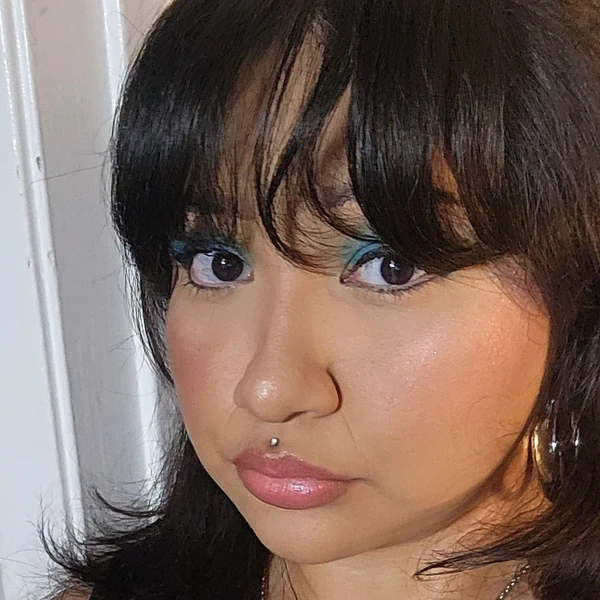
Kiera Garduño
1x
Finalist1x
Winner
Kiera Garduño
1x
Finalist1x
WinnerBio
Undergrad student pursuing my mortuary science degree!
I grew up as a first generation Mexican American with a single parent in a multi-generational household. I have always been passionate about personal growth and academics. I cope with mental illness which has made me be intentional and graceful with myself and the world around me.
Education
San Antonio College
Associate's degree programMajors:
- Health Professions and Related Clinical Sciences, Other
Cypress Falls High School
High SchoolMiscellaneous
Desired degree level:
Trade School
Graduate schools of interest:
Transfer schools of interest:
Majors of interest:
- Funeral Service and Mortuary Science
Career
Dream career field:
Funeral Director
Dream career goals:
Barista
7 Brew2024 – 20251 year
Future Interests
Advocacy
Politics
Volunteering
Philanthropy
Goths Belong in STEM Scholarship
WinnerIn every STEM class I’ve taken, I’ve been the only one who looked like I didn’t belong there. Not because I couldn’t keep up, but because in environments like anatomy and chemistry, I was bold enough to be authentic and devote myself to something seemingly out of the bounds of what it means to be alternative. While others may have seen contrast in my Gothic lifestyle and even social rebellion, I felt alignment and freedom. My alternative identity did not pull me away from science. It led me toward my calling.
I have been part of the alternative umbrella since I was eleven, after being introduced to shows like Daria and bands like Paramore by my older cousins. By fifteen, I had become a baby bat. What began as a curiosity about sound and style, like listening to The Cure and embracing my love for dark romantic aesthetic, became something deeper. Goth subculture does not romanticize death; it refuses to look away from it. It creates space to acknowledge mortality with honesty and reflection. That perspective shaped my worldview and ultimately guided me toward a career in mortuary science.
Before turning twenty, I have lived through more than I ever expected to at such a young age. I didn't grow up in the healthiest family environment. In a toxic multigenerational immigrant household, financial stability, encouragement, and emotional safety were often absent. During that time, the goth community became the first place I felt unconditional acceptance. It offered belonging when I needed it most and taught me that difference isn't something to minimize, but something to hold with pride. That lesson strengthened me academically as well; when I walked into rigorous STEM classrooms, I was no longer afraid of standing alone.
When I was seventeen, I lost a friend suddenly. Her death shook me deeply. I attended her service, carrying grief I did not yet know how to process. What I encountered changed me. Her service was beautiful, peaceful, and dignified. She was dressed in her own alternative style, reflecting exactly who she was: confident, expressive, unapologetically herself. Seeing her presented that way brought me comfort. In death, she was honored as the person she truly was. She would be remembered exactly as she had lived.
That moment solidified my calling. I realized how powerful death care can be when it's done with compassion and attention to identity. Mortuary science is grounded in biology, chemistry, restorative art, and technical precision. It requires knowledge of anatomy, preservation methods, sanitation protocols, and meticulous care. In my STEM courses, I found comfort in that structure, the certainty that process matters, and that detail protects dignity. But beyond the science, funeral service is stewardship. It's about safeguarding a person’s story during one of the most vulnerable moments a family will ever face.
As a nonbinary Mexican American, I understand how meaningful it is to be seen fully. Cultural background, gender expression, and personal style should not disappear at death. I want families to feel reassured knowing their loved one is presented authentically and respectfully. Representation and cultural awareness matter profoundly in this field, and I intend to embody both.
Becoming a funeral director is not simply a career goal; it's a commitment formed from grief, resilience, and reverence. I am pursuing mortuary science not in spite of my alternative identity, but because it has given me the courage to confront mortality with honesty and compassion. I will carry my friend’s memory with me into every preparation room and service I help create, ensuring that each life I honor is treated with dignity, precision, and authenticity.