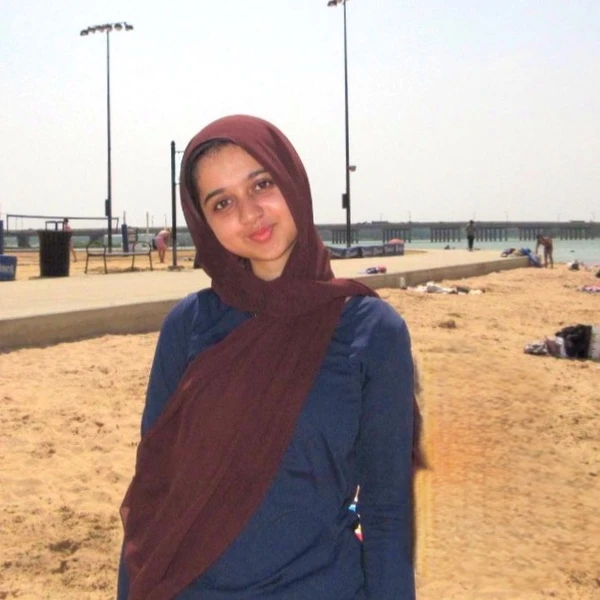
As a high school senior at Plano Senior High School, my journey has been shaped by resilience, passion, and the desire to make an impact in a world that often feels out of reach. I attend a competitive high school, where I’ve embraced rigorous AP courses like Computer Science, Calculus, and Physics—not just as academic challenges but as stepping stones toward a future I once thought was impossible. The odds were stacked against me: I am the only girl on an all-boys robotics team, and in a world that often dismisses women in STEM, I’ve had to fight for my place.
Yet, every challenge has only fueled my ambition. I led my team to win the **Rookie All-Star Award** at the FRC World Championships, a victory that wasn’t just about the trophy—it was about proving to myself and others that determination and innovation can break through any barrier. But beyond the competition, I wanted to make a difference. I founded **FTC++**, a platform designed to simplify programming and CAD concepts for robotics teams. With over 3,000 monthly users worldwide, it has become a vital resource for students who might otherwise struggle with these complex topics. Helping others navigate challenges that once felt impossible for me is a source of deep fulfillment.
However, it’s not just the mechanics of robotics or programming that drive me; it’s the power of STEM to change lives. That’s why I’ve dedicated myself to teaching free robotics camps for refugees and students of color—marginalized groups that rarely see themselves in these spaces. The moment I see a child’s face light up when they successfully code their first robot, I know that my work is much bigger than me. It’s about creating access, breaking down barriers, and empowering others to see what’s possible, no matter their background.
If I could start my own charity, it would focus on bridging the technology gap for underrepresented communities. My mission would be to provide free STEM education, particularly in robotics and data science, to children and young adults from disadvantaged backgrounds. The goal would be to create pathways for those who might not otherwise have access to resources or mentorship. Volunteers would assist in teaching coding, robotics, and data analysis, while also helping students develop problem-solving skills and foster a sense of empowerment. The charity would not only offer education but mentorship and internship opportunities, helping these students transition into the workforce or higher education. I want to ensure that these young minds, despite their circumstances, know they have the potential to change the world.
When I pursue my degree in data science, my goal is clear: to leverage technology, particularly artificial intelligence, to tackle systemic issues and make a meaningful, lasting impact. I envision a future where I use data science to create AI solutions that improve healthcare outcomes, reduce environmental harm, and create smarter, more equitable educational systems. As a data scientist, I will not just analyze numbers—I will use those numbers to change lives, build more inclusive systems, and help create a world where opportunity is accessible to everyone.