To understand the true weight of dementia, one must look far beyond clinical definitions and view it through the daily, lived reality of the home. In my family, the impact of cognitive decline is not an abstract concept discussed in biology lectures or cited in public health textbooks; it is a constant, evolving challenge that defines our household. My grandmother lives with dementia, and watching her condition progress from mild forgetfulness to a state that grows visibly more challenging day by day has been a heartbreaking journey. At the same time, my mother is navigating the early stages of perimenopause, experiencing severe brain fog, exhaustion, and daily memory slips of her own due to wild hormonal fluctuations. Living in a home where two generations of women I love are struggling with cognitive stability simultaneously has fundamentally reshaped my worldview, my personal resilience, and my professional vision as an aspiring scholar in science, technology, engineering, and mathematics (STEM).
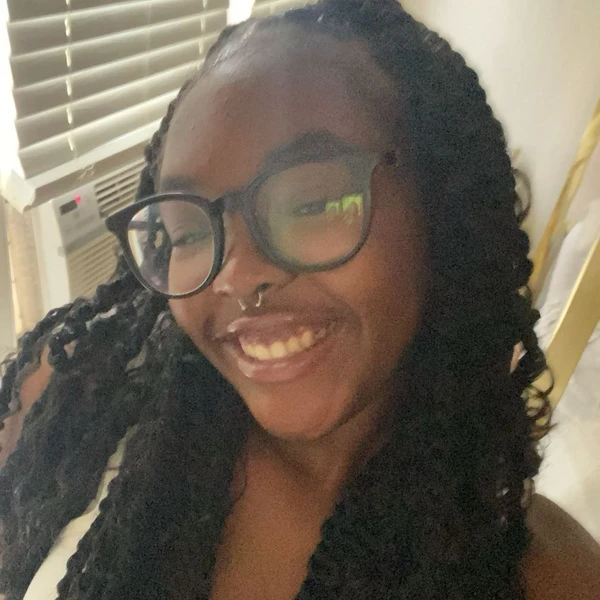
Growing up as a Black, LGBTQIA+ young woman in a low-income household, I observed early on how health outcomes are dictated by systemic neglect, zip codes, and resource scarcity. Where others saw isolated misfortunes, my innate curiosity saw structural patterns waiting to be understood and dismantled. I learned early that while survival in a marginalized environment requires resilience, creating lasting change demands deliberate, scientific, and calculated action. My name is Khai, and as a first-generation scholar, my lived experiences have fueled a singular, unwavering mission: to enter the fields of public health, biology, and epidemiology so I can dismantle the barriers that keep vulnerable communities suffering in silence.
Watching my grandmother’s cognitive abilities decline has taught me that dementia does not simply affect an isolated individual; it transforms the entire social and economic fabric of a family. Tasks that were once automatic, like managing medications, preparing meals, or recalling daily schedules, now require intense patience, rigid routine, and constant supervision. Yet, the emotional weight of this reality is heavily compounded by watching my mother shoulder the overwhelming burden of caregiving while managing her own physical and cognitive fatigue. Perimenopausal brain fog is a genuine, frequently dismissed medical issue. Seeing my mother fight through her own memory lapses while attempting to manage her mother’s advancing illness revealed how deeply interconnected women's health issues are across different life stages.
In low-income communities, specialized memory care facilities and professional home health aides are often financially out of reach. As a result, the burden of care almost always falls on family members who are already balancing tight budgets, hourly jobs, and limited resources. Watching my mother navigate this dual strain showed me firsthand how easily informal caregivers burn out when navigating complex health shifts without adequate institutional support. This situation proved to me that dementia is not merely a neurological disorder occurring under a microscope; it is a structural public health crisis that exposes deep disparities in our healthcare infrastructure.
Through this personal journey, I have learned that caregiving and scientific inquiry both require a profound level of empathy, patience, and adaptability. Alzheimer’s and dementia-related illnesses teach us that human value is not tied to productivity, sharp memory, or constant independence. Even as my grandmother’s recollection of details fades, her need for emotional connection, comfort, and human dignity remains fully intact. I have learned to meet both my grandmother and my mother exactly where they are each day, offering active support rather than frustration. This daily exercise in compassion has grounded my perspective as an aspiring epidemiologist. It has taught me that hard clinical data must always be paired with ethnographic empathy, honoring the lived human realities behind every medical statistic.
Driven by an unending curiosity about how diseases manifest and how human environments shape immunity and aging, I am pursuing an education focused on Biology, Public Health, and Medical Anthropology. I refuse to view science as an isolated academic exercise reserved for high towers. Science is the most powerful tool available to decode the world and protect vulnerable populations. My ultimate goal is to become an epidemiologist specializing in infectious disease control and chronic disease prevention, while grounding my research in the human, social context that traditional clinical data far too easily ignores. I want to move beyond merely tracking numbers on a spreadsheet; I want to understand the human "why" behind the data, ensuring that public health interventions are informed by the real-world conditions of the people they are meant to serve.
Empowering myself with knowledge means bridging classroom theory with real-world, practical execution. To tackle the complexities of disease transmission and institutional health, classroom learning alone is insufficient. That is why I am actively preparing to complete Sterile Processing Department (SPD) training alongside my degree coursework. Entering the sterile processing field allows me to step directly into a hospital environment where disease prevention occurs in real time through precise decontamination protocols. By studying surgical instrumentation, the chemistry of medical disinfectants, and hospital biosafety mechanics, I am building a concrete, hands-on understanding of pathogen containment, bio-burden, and environmental sanitation. By combining rigorous epidemiological research, frontline infection control expertise, and deep cultural empathy, I am preparing myself to contribute grounded, meaningful leadership to the STEM field.
My ambition extends beyond the laboratory and hospital walls into the heart of community advocacy. Understanding that public health is deeply intertwined with basic survival needs, I balance my academic pursuits with volunteering at a local food distribution center to directly combat food insecurity. Food insecurity, chronic stress, and health neglect create severe long-term impacts on physical and cognitive health. Science loses its transformative power when it ignores these ground-level truths. My mission is to ensure that scientific advancement directly serves marginalized communities who are far too often left invisible in medical research.
This scholarship represents a crucial catalyst for my future and my dream of joining a vibrant community of empowered women in STEM. As a first-generation student fully responsible for funding my own education, I constantly balance rigorous science coursework with employment commitments, practical training, and community service. Managing rising college costs alongside my academic and technical preparation creates a heavy financial weight that threatens to disrupt my educational trajectory. Navigating higher education without a generational financial safety net requires immense focus and discipline, but financial strain should never stand as a barrier to scientific innovation.
Receiving this scholarship would provide vital, direct financial relief. It would allow me to shift my primary focus away from daily economic survival and concentrate my energy entirely on mastering my scientific studies, completing my professional SPD certifications, and expanding my grassroots public health work. This funding is far more than financial aid; it is a direct investment in a future epidemiologist who understands health disparities from the ground up, possesses the practical skills to combat disease, and holds an unyielding determination to protect community health.
Ultimately, living through the realities of my grandmother's dementia and my mother's perimenopausal struggles has given me a refined sense of purpose. It has taught me that true health equity means ensuring that no family has to face devastating health transitions alone or in silence. It has reinforced my commitment to building a career where I can actively dismantle systemic barriers surrounding chronic illness, cognitive decline, and women's health. Knowledge empowers us to look at complex problems not with fear, but with curiosity and a drive to find solutions. With the support of this scholarship, I will continue building the academic, practical, and human-centered foundation necessary to lead in the STEM field, ensuring that aging with dignity is a guaranteed right, and that no community is ever left behind, silenced, or forgotten in the data.