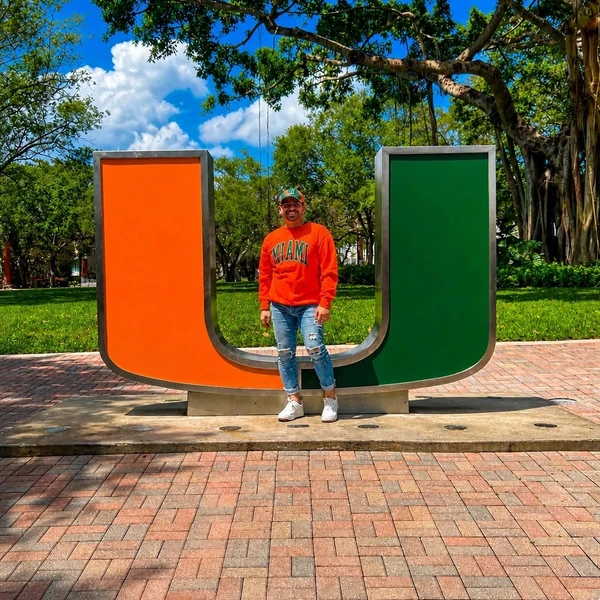
Kevin Perez
1x
Finalist
Kevin Perez
1x
FinalistBio
I am the first person in my family to complete a college degree, and continuing my education is something I take great pride in. Pursuing this next step represents not only a personal achievement, but also an opportunity to create a better future for myself and inspire others around me. I would be incredibly grateful for the opportunity to receive this scholarship and continue working toward my academic and professional goals.
Education
University of Miami
Doctoral degree program (PhD, MD, JD, etc.)Majors:
- Education, General
University of Central Florida
Master's degree programMajors:
- Hospitality Administration/Management
Rollins College
Bachelor's degree programMajors:
- Communication, Journalism, and Related Programs, Other
Miscellaneous
Desired degree level:
Doctoral degree program (PhD, MD, JD, etc.)
Graduate schools of interest:
Transfer schools of interest:
Majors of interest:
Career
Dream career field:
Education
Dream career goals:
Lotus Scholarship
Coming from a single-parent household has shaped my character, work ethic, and determination in profound ways. It taught me early on the importance of responsibility, resilience, and perseverance. I learned that success is not always about having ideal circumstances, but about making the most of what you have and continuing to move forward even when things are difficult.
Growing up, I witnessed firsthand the strength and sacrifice it takes to support a family as a single parent. That experience motivated me to take education seriously and to create opportunities for myself that could lead to a different future. There were moments when balancing academic responsibilities, personal challenges, and long-term goals felt overwhelming, especially without the same level of financial or academic guidance that others may have had. However, those challenges pushed me to become resourceful, disciplined, and self-motivated.
One of the most important lessons I have learned is how to persevere through uncertainty. I had to learn how to seek out resources, ask questions, and advocate for myself in educational spaces that were not always familiar. Instead of seeing obstacles as setbacks, I began to see them as opportunities to grow and prove to myself that I was capable of succeeding.
These experiences have also shaped my passion for education and my desire to make a positive impact in my community and beyond. I understand what it feels like to navigate systems without clear guidance, and I want to be someone who helps others feel supported, encouraged, and empowered throughout their educational journey. I am especially passionate about serving students who come from similar backgrounds—single-parent or low-income households—because I know how impactful it is to have someone believe in you when circumstances feel limiting.
Edwards Scholarship
I am a first-generation college student who has built my educational journey through persistence, adaptability, and determination. Growing up without a family roadmap for higher education meant that much of my path required self-teaching, research, and learning how to navigate unfamiliar systems on my own. From applying to college to understanding financial aid and pursuing advanced academic opportunities, I often had to figure things out step by step while balancing responsibilities and uncertainty.
One of the biggest obstacles I have faced has been self-doubt—questioning whether I belonged in academic spaces where I did not always see people with similar backgrounds to my own. There were moments when the process felt overwhelming, especially when trying to balance academic goals with personal responsibilities and long-term planning for my future. However, those challenges also became the foundation of my resilience. Each obstacle taught me how to advocate for myself, ask questions, seek resources, and keep moving forward even when the path was not clear.
What helped me overcome these challenges were the educators, mentors, and leaders who saw my potential before I fully saw it in myself. Their encouragement showed me that success is not only about where you start, but about the support you receive and the determination you carry forward. These experiences shaped my passion for education and my desire to become an educator myself.
I am currently pursuing studies in education with a focus on special education because I believe every student deserves access to learning environments where they feel seen, valued, and capable. My goal is to create inclusive classrooms where students of all abilities are supported academically, emotionally, and socially. I want to help students build confidence, independence, and a strong sense of identity.
Studying in the United States provides me with the opportunity to gain knowledge, training, and diverse perspectives that will prepare me to make a meaningful impact in education. I plan to use my education to advocate for students with special needs and those from underrepresented or first-generation backgrounds. I want to contribute to educational spaces that prioritize equity, inclusion, and individualized support.
My long-term goal is to become an educator who not only teaches academic skills but also helps students believe in their own potential. I want to create a classroom environment where students feel safe to take risks, make mistakes, and grow. I also hope to serve as a role model for students who may feel uncertain about their future, showing them that their background does not define their success.
Ultimately, I want my work to create a ripple effect—impacting not only individual students, but also families and communities. If I can help even one student feel capable, confident, and proud of who they are, then I know I am contributing to something much bigger than myself.
American Bolivian Collective in Memory of Janett Adams Scholarship
I am not a direct descendant of someone from Bolivia; however, I have great respect for Bolivian culture and the broader Latino/a community, and I recognize how cultural identity shapes a student’s educational experience, sense of belonging, and opportunities for success. While my own background is that of a first-generation college student, my journey has helped me understand the importance of identity, representation, and cultural awareness in education.
Even though I do not personally identify as Bolivian, I value learning about the diverse backgrounds of students and communities I may serve. I understand that students from Bolivia and other Latin American countries often carry strong cultural values such as family unity, resilience, respect for education, and a deep sense of responsibility. At the same time, many may also face challenges such as language barriers, transitions into new educational systems, or limited access to resources and representation in academic spaces.
These realities shape how I view my role as a future educator, especially in special education. I believe it is essential to recognize the whole child—not just their academic needs, but also their cultural identity, lived experiences, and family background. Every student brings something valuable into the classroom, and those differences should be acknowledged and celebrated rather than overlooked.
My understanding of identity has been shaped by my own experiences navigating education as a first-generation student. I know what it feels like to enter spaces where you may not immediately see yourself represented or where systems and expectations are unfamiliar. That experience taught me how important it is for educators to create environments where students feel safe, welcomed, and understood from the moment they enter the classroom.
This perspective directly influences my approach to teaching and my future work in special education. I am committed to using culturally responsive teaching practices that honor students’ backgrounds and integrate their experiences into learning. I want students to see themselves reflected in what they are learning and to feel that their culture is a source of strength, not something that separates them from success.
In my classroom, I plan to build strong relationships with students and families, recognizing that education does not happen in isolation. I want to understand each student’s story, including their cultural traditions, home language, family structure, and values, so I can better support their growth. I also believe family engagement is essential, especially in communities where families may feel disconnected from educational systems due to language or cultural differences.
Whether working with students from Bolivia, other Latin American countries, or diverse backgrounds from around the world, my goal is to ensure that every student feels a strong sense of belonging. I want to create a classroom where identity is not something students feel they need to hide or change, but something they are encouraged to embrace and take pride in.
My commitment to equity and inclusion also extends beyond the classroom. I hope to be an advocate for students with disabilities and for culturally diverse learners by promoting practices that ensure fairness, access, and opportunity. I believe that when educators take time to understand their students’ cultural identities, they are better able to meet academic and emotional needs in meaningful ways.
Although I am not personally connected to Bolivian heritage, I carry a deep respect for all cultures and a strong commitment to learning from the communities I serve. My goal is to be an educator who not only teaches academic skills but also uplifts students’ identities, strengthens their confidence, and helps them see their cultural background as an important part of who they are and what they can achieve.
Special Needs Advocacy Inc. Kathleen Lehman Memorial Scholarship
My name is someone who believes deeply in the power of education to transform lives. As a first-generation college student, my journey has been shaped by perseverance, resilience, and the guidance of educators who believed in me even when I doubted myself. Navigating higher education without a family roadmap taught me how important support systems are, and it also showed me how impactful a caring educator can be in a student’s life.
These experiences are what led me to pursue a career in special education. I want to dedicate my career to serving students with special needs because I believe every child deserves to feel seen, valued, and capable of success. Too often, students with disabilities are defined by what they struggle with instead of what they are capable of achieving. I want to help shift that narrative.
In my future career, I plan to make a positive social impact by creating inclusive, supportive, and empowering classroom environments where all students can thrive. My goal is to meet students where they are academically, socially, and emotionally, and provide individualized instruction that builds both skills and confidence. I want to celebrate progress in all forms, whether that means academic growth, improved communication, increased independence, or greater self-advocacy.
Beyond academics, I hope to focus on helping students develop a strong sense of identity and self-worth. Many students with special needs face challenges that can affect their confidence, and I want to be an educator who helps them recognize that their differences are not limitations, but part of what makes them unique and valuable. I want my classroom to be a place where students feel safe to try, make mistakes, grow, and discover their strengths.
I also plan to make an impact by building strong relationships with families and caregivers. I understand that education is most effective when it is a partnership, and I want to ensure that families feel supported, informed, and included in their child’s learning journey. By working collaboratively, we can create consistent support systems that extend beyond the classroom.
In addition, I hope to advocate for equity and accessibility in education. Students with disabilities deserve access to high-quality instruction, resources, and opportunities that allow them to reach their full potential. I want to contribute to a school culture where inclusion is not just a practice, but a priority.
My long-term goal is to be an educator who not only teaches academic skills but also helps students believe in themselves. I want to be the kind of teacher who students remember not just for what was taught, but for how they were made to feel—respected, understood, and capable.
Ultimately, my mission is to help students with special needs build confidence, independence, and hope for their future. If I can help even one student recognize their potential and believe in their abilities, then I will consider my work a meaningful success.
RonranGlee Special Needs Teacher Literary Scholarship
My passion for the special education profession comes from my belief that every child deserves the opportunity to be seen, heard, understood, and valued. Special education is not only about supporting students academically; it is about helping students discover their strengths, develop confidence, and understand that their differences do not lessen their value. I believe every student has unique abilities and gifts, and it is the role of an educator to help students recognize those gifts within themselves.
Professor Harold Bloom’s statement, “the purpose of teaching is to bring the student to his or her sense of his or her own presence,” deeply resonates with me because it reflects what I believe education should accomplish. To me, a “sense of their own presence” means helping students understand who they are and recognize that they matter. It means helping them realize that their voices deserve to be heard, their ideas have value, and their existence creates an impact.
For students with special needs, this journey can be especially meaningful. Many students spend years being identified by diagnoses, accommodations, or limitations rather than by their talents, creativity, determination, and individuality. Sometimes the world focuses so heavily on what students struggle with that it forgets to celebrate what they can do. I believe special education teachers have the responsibility to shift that perspective.
My mission is to help students move from asking, “What is wrong with me?” to believing, “There is something powerful within me.”
This mission is deeply personal to me because my own educational journey required perseverance and self-belief. As a first-generation student pursuing higher education, I often entered spaces without a roadmap. I experienced uncertainty, self-doubt, and moments where I questioned if I belonged. There were times when I felt behind because I was learning systems and expectations on my own.
What changed my journey were the educators and mentors who chose encouragement over judgment. They helped me recognize strengths I could not yet see in myself. Their belief became part of the reason I continued moving forward. Those experiences inspired me because I realized how powerful one supportive person can be.
Although my experiences are different from those of students receiving special education services, they helped me develop empathy and understand the importance of representation, patience, and individualized support.
As a future special education teacher, my classroom mission would center on three goals: helping students build confidence, develop independence, and discover identity.
First, I want students to build confidence through meaningful success. Success should not be measured only by grades or standardized expectations. For one student, success may mean reading independently for the first time. For another, it could mean communicating a need, participating in class, making a friend, or believing in themselves enough to try again after failure.
Second, I want to help students develop independence and self-advocacy. Many students with disabilities spend years relying on others to speak for them. I want to help them find their own voices and understand that they can advocate for their needs, goals, and dreams.
Third, I want students to discover their identities beyond labels. A student is never simply a diagnosis. They are artists, future leaders, creators, problem-solvers, dreamers, athletes, musicians, and individuals with unlimited potential.
Helping students experience their own presence means creating a classroom where they feel emotionally safe. It means celebrating effort, encouraging questions, allowing mistakes, and reminding students that progress does not have to look the same for everyone.
I also believe family partnerships are essential in special education. Families know their children in ways educators cannot immediately understand. By working together, schools and families can create stronger support systems and ensure students receive encouragement in every environment.
As I continue my education and pursue advanced studies, I hope to contribute not only inside classrooms but also through advocacy and leadership. I want to improve educational experiences, strengthen support systems, and help create environments where students with disabilities receive opportunities that recognize both their needs and their strengths.
My long-term goal is to become an educator who changes the way students view themselves. I want students to leave my classroom understanding that they are capable, important, and deserving of every opportunity.
If a student leaves my classroom believing, “I belong here,” then I will know I have accomplished my mission.
Sandy Jenkins Excellence in Early Childhood Education Scholarship
My passion for early childhood education comes from the belief that the earliest years of a child’s life are some of the most important in shaping who they become. During these years, children are not only learning letters, numbers, and basic skills; they are developing confidence, emotional awareness, communication skills, and their understanding of the world around them. These first experiences with learning often influence how children view education for the rest of their lives, which is why I believe early childhood educators hold an incredibly meaningful role.
As a first-generation student, education changed the direction of my own life. I understand what it feels like to navigate unfamiliar spaces, search for guidance, and work toward goals without always having a clear roadmap. Because of my experiences, I have developed a deep appreciation for educators who create safe spaces, offer encouragement, and help students believe in their potential. Their impact on my life inspired me to pursue a path where I can create that same impact for others.
I am especially passionate about early childhood education because children at this stage are naturally curious, imaginative, and eager to learn. They see possibilities everywhere and approach the world with excitement. I want to help preserve that sense of wonder while creating an environment where children feel valued, respected, and supported. I believe learning should be engaging, meaningful, and centered around helping children develop confidence in themselves.
My passion also comes from understanding that early education reaches beyond academics. Early childhood educators help children learn how to communicate, solve problems, regulate emotions, build friendships, and develop independence. The lessons taught during these years often become the foundation children carry with them into elementary school, higher education, and adulthood.
I believe every child deserves an educator who sees their potential, regardless of their background, family circumstances, or learning style. I hope to become the type of educator who recognizes each child’s strengths and creates opportunities for them to grow. I want children to walk into my classroom feeling safe, included, and excited to learn. I want them to know their ideas matter and that they are capable of achieving great things.
My experiences have also taught me the importance of representation and advocacy in education. Not every student enters the classroom with the same opportunities or support systems. Some children may face challenges that are invisible to others. I want to be an educator who not only teaches but also advocates, encourages, and helps create opportunities for every learner.
As I continue my educational journey and pursue advanced studies, my goal extends beyond the classroom. I hope to contribute to improving educational systems, strengthening early learning programs, and supporting policies that increase access and equity for young learners. I want to help build environments where all children have the resources and support they need to succeed from the very beginning.
I am passionate about early childhood education because I believe the smallest moments can have the greatest impact. A teacher helping a child learn their first letter, celebrating a small achievement, encouraging them after a mistake, or simply making them feel seen can create memories that last a lifetime. Those moments may seem small, but they can shape confidence, motivation, and a child’s belief in themselves.
For me, early childhood education is more than a career choice. It is an opportunity to influence the beginning of a child’s story. It is the chance to help build strong foundations, inspire curiosity, and encourage children to dream without limits.
Dr. Connie M. Reece Future Teacher Scholarship
My inspiration to become a teacher comes from my own educational journey and the people who believed in me along the way. As the first person in my family to pursue higher education, I often found myself navigating unfamiliar spaces without a roadmap. There were many moments when I felt uncertain, overwhelmed, or questioned whether I truly belonged. The teachers, mentors, and leaders who encouraged me during those moments made a lasting impact on my life.
What inspired me most was not only what they taught in a classroom, but how they made students feel seen, supported, and capable of achieving more than they believed possible. They showed me that education is not simply about academics; it is about empowerment, confidence, and opening doors that students may not even realize exist.
My experiences shaped my desire to become an educator because I understand what it feels like to be the student searching for guidance. I know what it means to ask questions others may already know the answers to, to navigate higher education as a first-generation student, and to work through challenges while still pursuing bigger goals. Those experiences gave me resilience, but they also gave me purpose.
I want to become the type of educator who creates an environment where students feel encouraged to grow, take risks, and believe in themselves. I hope to use my experiences to show students that their background does not define their future and that obstacles do not determine their potential.
As I continue my educational journey and pursue advanced studies, my goal is to lead with empathy, understanding, and service. I want students to know they are capable, even when they doubt themselves. I want to help create opportunities, mentor future leaders, and advocate for students who may feel overlooked or uncertain about their path.
My journey has taught me that representation and support matter. Sometimes all it takes is one teacher who believes in a student to change the direction of their life. I hope to be that teacher for someone else.
Education changed the trajectory of my life, and becoming an educator is my opportunity to help create that same impact for others. Through my experiences, I hope to inspire students not only to succeed academically, but to believe that they belong in every room, every opportunity, and every dream they choose to pursue.
In addition to teaching academic content, I want to help students develop confidence, leadership skills, and a sense of purpose. I want to create spaces where students feel safe asking questions, making mistakes, and discovering their strengths. Many students walk into classrooms carrying invisible challenges, and I want to be an educator who recognizes those struggles while still encouraging them to reach their full potential.
My long-term goal is not only to educate but to lead and create meaningful change within education. By pursuing advanced studies, I hope to contribute to programs, policies, and initiatives that improve student support systems and increase opportunities for those who come from underrepresented or first-generation backgrounds.
Being first-generation has shown me that success is not always about having the perfect path; sometimes it is about continuing forward despite uncertainty. I want my students to see someone who understands perseverance because I have lived it myself. I want them to know that their dreams are valid, their voices matter, and their circumstances do not limit what they can achieve.
Teaching, to me, is more than a profession. It is an opportunity to give back, inspire change, and become the person I once needed during my own journey. If I can help even one student believe in themselves the way others believed in me, then I will know I have made a difference.
My hope is that years from now, one of my students will look back and remember not only what they learned in my classroom, but how they felt in it—supported, valued, and inspired to pursue a future they once thought was out of reach