Hobbies and interests
Key Club
Comedy
Culinary Arts
Driving
Spanish
Accounting
Animals
Business And Entrepreneurship
Reading
Biography
Cookbooks
Food and Drink
Literary Fiction
I read books multiple times per month
Kennedie Jamison
1x
Finalist1x
Winner
Kennedie Jamison
1x
Finalist1x
WinnerBio
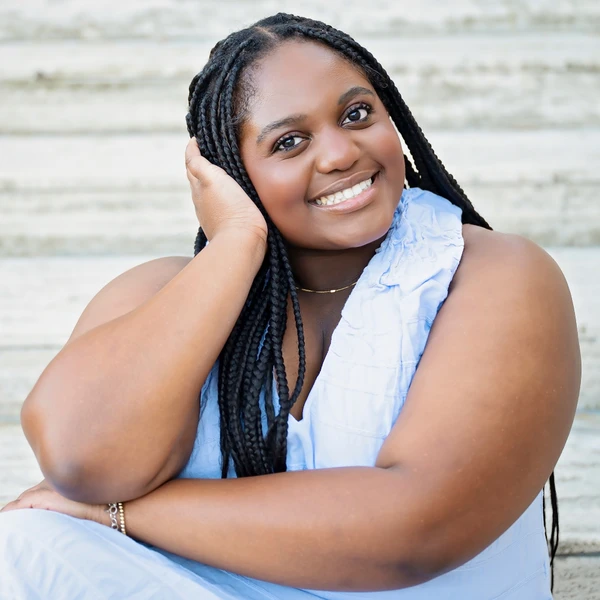
My name is Kennedie, and I am a proud graduate of the Class of 2026. Throughout high school, I have been committed to academic excellence, leadership, and community service. I graduated with Honors, received the Principal’s Award, earned a Certificate of Completion in Honors Spanish, and completed dual credit coursework to further challenge myself academically and prepare for college.
I have held several leadership roles, including serving as Vice President of the National Honor Society and President of SHIFT, a club dedicated to empowering young women. I have also been actively involved in Key Club, Student Council, the mentoring program, Spanish Club, and Junior World Affairs Council, where I developed leadership skills, cultural awareness, and a passion for serving others.
One of my proudest accomplishments was winning a school lunch recipe contest. My award-winning recipe was featured on school menus throughout Arlington ISD, and I was honored to be featured on local news and in a published article recognizing this achievement.
This fall, I plan to pursue a degree in Accounting and work toward becoming a Certified Public Accountant (CPA). My long-term goal is to become a Chief Financial Officer (CFO), where I can use my leadership, analytical skills, and passion for business to make a meaningful impact. I am excited to continue growing academically and professionally while giving back to my community.
Education
James Martin High School
High SchoolMiscellaneous
Desired degree level:
Bachelor's degree program
Majors of interest:
- Accounting and Related Services
- Clinical, Counseling and Applied Psychology
- Psychology, General
- Research and Experimental Psychology
Career
Dream career field:
- Accounting
Dream career goals:
Account/CFO
Cashier/Cook
Wetzel Pretzel2024 – Present2 years
Public services
Volunteering
Key club — Volunteer2022 – 2026
Ray Aplin Memorial Scholarship
Living with epilepsy has taught me that success is not measured by how few obstacles a person faces, but by how they respond when those obstacles threaten to derail their goals. While many students worry about exams, assignments, and extracurricular activities, I have also had to consider an unpredictable challenge that can interrupt my life without warning. A single seizure can leave me physically exhausted, mentally drained, and struggling to regain my footing academically. Yet despite these setbacks, I have remained committed to my education because I refuse to let epilepsy define my future.
I have chosen to pursue a degree in accounting because I enjoy solving complex problems, working with numbers, and helping others achieve financial stability. My long-term goal is to become both a Certified Public Accountant and a financial advisor. I want to use my education to guide individuals and families toward financial security by helping them make informed decisions and plan for their futures. For me, earning a college degree is more than an academic achievement it is the foundation for building a meaningful career and creating opportunities to positively impact the lives of others.
Epilepsy has shaped my educational journey in ways that are both visible and invisible. While some days are completely normal, a severe seizure can leave me unable to attend class, complete assignments on schedule, or focus the way I normally would. Recovering is not simply a matter of resting for a few hours; it can take time for my mind and body to return to normal. Those moments have been frustrating because they temporarily interrupt the progress I work so hard to make. However, I have learned that setbacks do not erase determination. After every obstacle, I return to my studies, communicate with my teachers, and put in the extra effort necessary to catch up. Rather than allowing epilepsy to become an excuse, I have used it as motivation to become more resilient, disciplined, and adaptable.
To me, independence means having the ability to pursue my dreams despite the challenges I face. It means building a life where I can support myself financially, make my own decisions, and contribute meaningfully to my community without allowing my disability to limit my ambitions. My education is the key to achieving that independence. The knowledge and professional skills I gain in college will allow me to establish a stable career while proving to myself that epilepsy does not determine my capabilities or my potential.
Although epilepsy has introduced uncertainty into my life, it has also strengthened qualities that I believe will serve me well throughout college and my career. It has taught me perseverance when circumstances are beyond my control, humility when I need to ask for help, and gratitude for every opportunity to continue moving forward. I know there may be future challenges, but I also know that I have already overcome many of them. My journey has shown me that resilience is not about avoiding setbacks—it is about rising after each one with greater determination than before. With an education, I will not simply build a career; I will build a life defined by perseverance, purpose, and independence.
Charlene K. Howard Chogo Scholarship
Women’s empowerment begins with creating spaces where young women feel that they belong. Throughout high school, I have worked to foster an environment where girls feel supported, heard, and encouraged to become confident in who they are. The most meaningful way I have done this has been through The Shift, a student organization founded by my AVID teacher after she noticed that many girls struggled with loneliness and social isolation following the COVID-19 pandemic. She saw students eating lunch alone, withdrawing from friendships, and finding it difficult to reconnect after months of isolation. Rather than allowing that trend to continue, she created The Shift, a welcoming community open to girls of every background, culture, and ethnicity, united by the common goal of empowering one another through the everyday challenges of being a young woman.
As I became more involved, I eventually had the privilege of serving as president of The Shift. In that role, I wanted to ensure that the club was seen as more than a place only for girls who felt lonely. I believed every young woman could benefit from having a supportive community, regardless of her personality or social circle. I worked alongside our leadership team to make meetings more engaging and inclusive by planning activities, encouraging open discussions, and creating an atmosphere that welcomed both new and returning members. By helping shift the club’s image from a place associated with loneliness to one centered on friendship, leadership, and personal growth, we reached more students who may never have considered joining otherwise.
Through The Shift, I learned that empowerment is often found in the smallest moments. Sometimes it meant inviting someone to sit with us at lunch. Other times it meant listening without judgment, celebrating another student’s accomplishments, or encouraging someone to share her thoughts for the first time. I watched girls who once sat quietly begin participating in conversations, forming meaningful friendships, and growing more comfortable expressing themselves. Witnessing those transformations reinforced my belief that confidence flourishes when people know they are accepted. I realized that true leadership is not about being the center of attention, it is about creating opportunities for others to feel seen and valued.
The lessons I learned through The Shift have shaped the kind of leader I strive to be. They have taught me that empowering women is not limited to large speeches or public recognition; it is built through consistency, compassion, and intentional acts of inclusion. As I continue my education and pursue a career in accounting and financial advising, I hope to mentor other young women and encourage them to pursue ambitious goals with confidence. Whether that means helping a future colleague find her voice, mentoring students interested in business, or simply creating spaces where others feel they belong, I want to continue the work that began with The Shift. I have learned that when women uplift one another, confidence becomes contagious, communities become stronger, and every young woman has the opportunity to recognize her own potential.
Sweet Dreams Scholarship
Everywhere I go, I notice the same scene. Families sit together at restaurants, yet everyone is looking down at a screen. Friends gather, but conversations are interrupted by notifications. Even in school hallways, students often walk with their eyes fixed on their phones instead of the people around them. While technology has connected us to the world, I believe it has quietly disconnected us from one another.
Gen Z is the most digitally connected generation in history, yet many of us report feeling lonelier than ever. High screen time has become so normalized that we rarely question how much of our lives it consumes. We scroll endlessly through carefully curated snapshots of other people’s lives, often comparing ourselves to unrealistic standards while missing opportunities to build genuine relationships. The issue is not technology itself—technology has incredible benefits—but rather our growing dependence on it as a substitute for meaningful human interaction.
This is a problem that many people simply walk past because it is invisible. Unlike broken roads or abandoned buildings, loneliness cannot be seen. A student may have thousands of followers online but still feel isolated. Someone can spend hours texting without having a single face-to-face conversation all day. These quiet struggles often go unnoticed because everyone else is doing the same thing.
If I had the resources, I would create community spaces and programs designed to encourage authentic social connection. I envision weekly events where phones are set aside in exchange for conversation, board games, community service projects, outdoor activities, or collaborative workshops. Schools could host “unplugged” social hours that help students build friendships without the pressure of social media. Local businesses and organizations could partner to create welcoming spaces where young people feel comfortable gathering, talking, and forming lasting relationships.
I also believe education is an important part of the solution. We teach students how to use technology, but we rarely teach them how to use it responsibly. Workshops on healthy screen habits, digital wellness, and the importance of face-to-face communication could help young people recognize when technology is enhancing their lives instead of controlling them.
As someone who belongs to Gen Z, I understand the appeal of social media and smartphones. They help us learn, communicate, and stay informed. However, I also believe some of our happiest moments happen when we put our phones away and become fully present with the people around us. A meaningful conversation, a shared laugh, or simply feeling heard can have a greater impact than hours spent scrolling through a screen.
The strongest communities are built not through Wi-Fi signals, but through human connection. If we invest in creating more opportunities for people to gather, listen, and genuinely know one another, we can address one of the most overlooked challenges facing my generation. Sometimes, the greatest way to connect with the world is to first reconnect with the people sitting right beside us.
Clark Emerging Leaders Scholarship
WinnerOne of the biggest adversities I’ve faced in my life has been learning how to define myself in a world that constantly tried to define me first. Growing up in a low‑income, culturally diverse environment, I often felt like I was living between identities rather than fully belonging to any of them. I moved between communities naturally speaking Spanish with friends, attending Vietnamese Catholic events, visiting the Nigerian market with my grandmother, and growing up with pieces of Japanese culture from my mother. I absorbed everything around me, but I struggled to understand where *I* fit.
The hardest part of this journey was learning how to see myself within my own race. As an African American student, I often felt like an outsider in spaces where I was supposed to belong. Whether I was the only Black student at church camp or the only non‑Hispanic student in my AP Spanish Literature class, I felt like I was always “almost” part of a community, but never fully inside it. I even questioned whether I belonged at an HBCU because I didn’t feel “Black enough.” That feeling of not fitting anywhere not culturally, not socially, not academically became one of the biggest challenges I had to overcome.
I overcame it by learning to embrace the complexity of who I am. Instead of seeing my blended identity as a weakness, I began to see it as a strength. I realized that I didn’t need to fit into one box when I was clearly meant to build my own. I learned to take pride in the fact that I could move between cultures, understand different perspectives, and connect with people from all backgrounds. That realization taught me resilience, self‑acceptance, and the importance of creating spaces where others feel seen.
This is exactly why I want to attend an HBCU. For the first time, I want to be in an environment where my identity isn’t questioned or compared but celebrated. HBCUs are built on community, culture, and empowerment—values that align with the person I am becoming. I want to learn in a space where Black excellence is the norm, not the exception, and where I can grow academically while also strengthening my cultural confidence. An HBCU will give me the foundation, mentorship, and representation I’ve been searching for.
Attending an HBCU will help me succeed by giving me the support system I never had, the cultural grounding I’ve longed for, and the academic preparation I need to pursue a career in business and accounting. It will allow me to step into my future with confidence, purpose, and a stronger sense of who I am.
The adversity I faced taught me that identity is not something you find it’s something you build. And at an HBCU, I know I will continue building mine with pride.
Marcia Bick Scholarship
Students from disadvantaged backgrounds deserve opportunities like scholarships and grants because potential is not determined by income, family circumstances, or access to resources. Many of us grow up with dreams just as big as anyone else’s, but with far fewer tools to reach them. What we lack in financial stability, we make up for in resilience, determination, and the ability to work twice as hard for the same opportunities. When a student rises above hardship, it isn’t by accident, it’s because they refuse to let their circumstances define their future.
Coming from a low‑income family, I learned early what it means to go without. My parents worked hard, but financial stability was never guaranteed. College was always talked about as something important, but no one in my family had the knowledge or experience to guide me through the process. I didn’t grow up with tutors, test prep, or people who could explain FAFSA, scholarships, or even the basics of choosing a major. I had to teach myself everything from understanding financial aid forms to figuring out what credits, deadlines, and requirements even meant. What many students learn from parents or counselors, I learned through trial, error, and persistence.
There were moments when the lack of resources felt overwhelming. I often felt behind compared to students who had college‑educated parents or access to academic support. But instead of letting that discourage me, it pushed me to work harder. I sought out mentors, asked questions even when I felt embarrassed, and spent hours researching what I needed to know. Every step I took was one I carved out for myself, and that journey taught me independence, grit, and the importance of advocating for my own future.
These experiences are exactly why I believe students like me deserve opportunities. When you grow up without financial security or guidance, success is not handed, you build it from the ground up. Scholarships don’t just provide money; they provide access, stability, and the chance to focus on education instead of survival. They allow students with potential to finally breathe, to grow, and to pursue their goals without being held back by circumstances they cannot control.
Support through this grant would make a meaningful difference in my life. It would ease the financial pressure that comes with being a first‑generation, low‑income student and allow me to focus on my academic goals instead of constantly worrying about how to afford them. I want to earn my degree not only for myself, but to break generational barriers and show others in my community that success is possible, even when the odds are stacked against you.
I am committed to working hard, pushing through challenges, and creating a future that reflects the effort I’ve put in. With support from this scholarship, I can continue moving forward and turn the dreams I’ve fought for into reality.
Andrea N. Santore Scholarship
For most of my life, I struggled to understand who I truly was. I grew up surrounded by many cultures, traditions, and identities, and for a long time, I felt like I didn’t fully belong to any of them. I moved between communities naturally speaking Spanish with friends, attending Vietnamese Catholic events, visiting the Nigerian market with my grandmother, and growing up with pieces of Japanese culture from my mother. I absorbed everything around me, but I often wondered what that made *me*. I didn’t have one clear identity, one label, or one box to fit into. For years, I saw that as a weakness.
But as I’ve grown, I’ve realized that this “in‑between” identity is actually my greatest strength. I am a blend of cultures, perspectives, and experiences. I understand what it feels like to be the only Black student in a room, the only non‑Hispanic in an AP Spanish class, or the person who doesn’t quite fit the expectations of any one group. Instead of letting that make me feel small, I’ve learned to let it make me powerful. My identity allows me to connect with people from all backgrounds, to empathize deeply, and to see the world through more than one lens.
This is exactly why I want to pursue a degree in business and accounting. I want to enter the professional world not just as another employee, but as someone who brings representation, cultural awareness, and a voice for people who often feel unseen. Diversity in the workplace isn’t just a goal for me, it’s a responsibility. I want to help create environments where people don’t feel pressured to shrink themselves to fit in but are encouraged to bring their full identities to the table. I want to be part of the generation that changes what leadership looks like.
Education is the tool that will allow me to do that. To me, education is more than learning facts or earning a degree,it is the transportation of ideas. It takes everything I’ve lived, everything I’ve questioned, and everything I hope to change, and gives me the knowledge and structure to turn it into action. With a business degree, I can help shape workplaces that value inclusion, cultural understanding, and authenticity. I can help build teams where diversity isn’t just welcomed but celebrated.
This scholarship would help me continue that journey. As a first‑generation student, financial barriers can feel overwhelming, but support like this gives me the chance to focus on my goals instead of my obstacles. It would allow me to keep pushing forward, to keep learning, and to keep building the legacy I want to leave behind a legacy of hope, representation, and inspiration for anyone who has ever felt like they didn’t fit into just one box.
Kristinspiration Scholarship
For most of my life, I struggled to understand who I truly was. Whenever I was asked to describe myself, I reached for words like unique, creative, resilient, or opinionated. But none of those words ever felt big enough to hold everything I am. Over time, I realized that not having a single, neat identity *is* my identity. I was never meant to fit into one category or aesthetic. I was meant to be a leadersomeone who carries many influences, many cultures, and many stories at once. That is the person I am today, and the person I hope to inspire others to become.
Growing up in a suburban Texas city surrounded by a wide range of cultures, I absorbed pieces of each one. I studied Spanish for years and spoke it outside the classroom, shaping my connection to the Hispanic community. I attended Vietnamese Catholic events with friends. Every Saturday morning, I visited the Nigerian market with my grandmother. My mother was born in Japan on an army base and brought pieces of that culture into our home. I grew up moving between these worlds naturally, picking up traditions, languages, and habits as if they were all part of me. Cultural blending wasn’t something I tried to do, it was simply how I lived.
But the hardest part of this journey was learning how to see myself within my own race. As an African American student, I often felt like an outsider in spaces where I was supposed to belong. Whether I was the only Black student at church camp or the only non‑Hispanic student in my AP Spanish Literature class, I felt like I was always “almost” part of a community, but never fully inside it. I even struggled to imagine myself at an HBCU because I didn’t feel “Black enough.” For a long time, this made me feel disconnected from myself.
But as I’ve grown, I’ve learned to turn that insecurity into strength. I’ve realized that my identity isn’t lacking’s layered. I don’t have to fit into one box when I was clearly meant to build my own. I want my story to be a reminder to others who feel “in between” that they are whole, even when the world tries to make them choose one version of themselves. I want to leave a legacy of proof that you can be many things at once and still be enough.
Education is important to me because it gives me the language, tools, and confidence to turn my experiences into something meaningful. Learning transports ideas—it allows me to take everything I’ve lived, everything I’ve questioned, and everything I’ve become, and use it to create change. I want to study business and accounting so I can lead with empathy, cultural awareness, and purpose.
This scholarship would help me continue that journey. It would ease the financial pressure that comes with being a first‑generation student and allow me to focus on becoming the kind of leader who inspires others to embrace their own identities. With this support, I can keep building the legacy I hope to leave behind one rooted in courage, diversity, and the belief that who you are is always enough.
Bright Lights Scholarship
I am most interested in studying accounting and business because I know these fields will give me the strongest foundation for both my academic success and my future career. For as long as I can remember, I’ve been drawn to the structure, strategy, and problem‑solving that shape the economic world. Pursuing accounting feels like the first real step toward the future I’ve imagined for myself—one where I understand how businesses operate, make decisions, and grow. It has been a long‑lasting goal of mine to be involved in the future of the economic world, and studying accounting is the first step toward achieving that dream.
I’m especially interested in the consumer-packaged goods (CPG) industry because it centers around products people use every single day. Items like food, beverages, and household essentials may seem simple, but behind them is an entire system of planning, production, marketing, and consumer insight. I find it exciting to think about working in an industry that has such a direct impact on people’s daily lives. The products are familiar and relatable, yet the strategy behind them is complex and constantly evolving.
Another reason the CPG industry appeals to me is its fast pace. Companies must pay close attention to consumer trends, preferences, and behaviors, and they have to adapt quickly to stay competitive. I’m drawn to the idea of being part of that process—analyzing what people want, understanding why they want it, and helping businesses respond in ways that make sense. It’s a field where creativity meets data, and where decisions can shape how millions of people interact with everyday products.
This scholarship would make a meaningful difference in my journey toward these goals. As a first‑generation student, I am navigating college decisions, financial responsibilities, and academic expectations largely on my own. While I am determined to succeed, the financial side of pursuing higher education can be overwhelming. Receiving this scholarship would ease that pressure and allow me to focus more on my studies, internships, and career development rather than worrying about how to afford each step.
More importantly, this scholarship would give me the confidence to keep pushing toward the future I want. It would show me that people believe in my potential and in the goals I’m working toward. With this support, I can continue building the foundation I need to enter the business world, contribute to the CPG industry, and create a successful future for myself and my family.
Bick First Generation Scholarship
Being a first‑generation student means carrying dreams that started long before me. My parents didn’t have the chance to go to college, so I grew up watching them work hard, sacrifice, and push through challenges without the opportunities I now have. To me, being first‑gen isn’t just about being the first to attend college, it is about breaking a cycle, opening a door that’s been closed for generations, and proving to myself and my family that our story can look different.
The biggest challenges I’ve faced haven’t just been academic; they’ve been emotional and financial. There were many moments where I felt like I was figuring everything out alone, like college applications, financial aid, scholarships, deadlines, and expectations that no one in my family had ever navigated. It’s overwhelming to feel like you’re supposed to know everything when you’re the first one doing it. But instead of letting that discourage me, it pushed me to become more independent, resourceful, and determined. I learned to ask questions, seek help, and advocate for myself, even when it felt uncomfortable.
There were also times when balancing school, responsibilities at home, and my own goals felt impossible. But each challenge taught me something: how to stay focused, how to keep going even when I’m tired, and how to believe in a future I can’t fully see yet. I’ve learned that being first‑gen means being resilient, even when the path is unclear.
My dreams are bigger than just earning a degree. I want to build a life where I can support my family, create stability, and use my education to make a real impact. I’m driven by the idea that my success isn’t just mine, but it belongs to the people who raised me, supported me, and believed in me even when they didn’t always understand the process. I want to show my younger siblings and cousins that college is possible, that they don’t have to limit themselves, and that someone in our family did it first so they don’t have to feel alone doing it next.
This scholarship would bring me closer to those goals by easing the financial pressure that comes with being a first‑generation student. It would allow me to focus more on my education and less on the stress of how to afford it. It would give me the chance to continue my journey with confidence, knowing that people believe in my potential and the future I’m working toward.
Being first‑gen means carrying both the weight and the hope of my family’s dreams. It means choosing growth over fear, opportunity over doubt, and determination over uncertainty. And with support like this scholarship, I can keep moving forward and become the first, but definitely not the last in my family to graduate.