Hobbies and interests
Painting and Studio Art
Art
Coffee
Girl Scouts
Marine Biology
National Honor Society (NHS)
Photography and Photo Editing
Self Care
Music
Tennis
YouTube
Tattooing
True Crime
Weightlifting
Food And Eating
Movies And Film
Astronomy
Animals
Chess
Reading
Drama
Mystery
Romance
Thriller
I read books daily
Kennadi Cook
1x
Finalist
Kennadi Cook
1x
FinalistBio
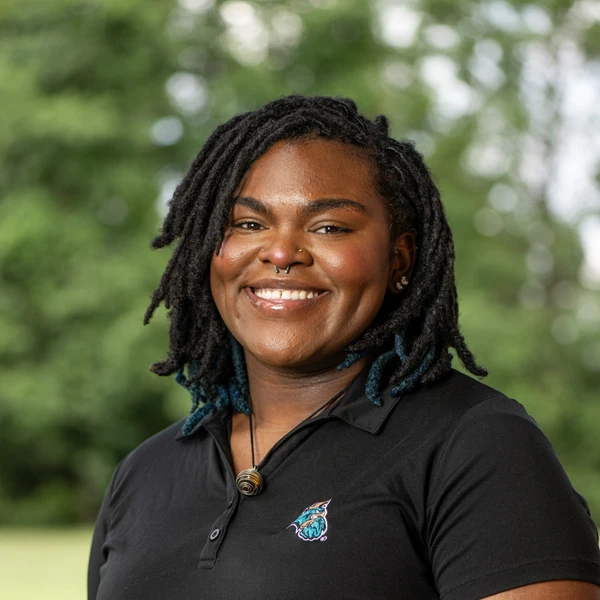
Kennadi Cook is an emerging marine scientist and graduate student in Coastal Marine and Wetland Studies at Coastal Carolina University. Her academic work focuses on understanding the resilience of coastal ecosystems through biogeochemical research, intending to improve how scientists and communities respond to environmental change. Growing up with a strong appreciation for the ocean, Kennadi developed a passion for protecting marine environments and advancing sustainable solutions for vulnerable coastal habitats. She is committed to using science, research, and collaboration to support the conservation of marine ecosystems and ensure the long-term health of coastal communities. Through her graduate studies and future career, Kennadi hopes to contribute meaningful research that informs policy, strengthens ecosystem resilience, and protects the ocean for generations to come.
Education
Coastal Carolina University
Master's degree programMajors:
- Marine Sciences
Coastal Carolina University
Bachelor's degree programMajors:
- Marine Sciences
Bullis School
High SchoolMiscellaneous
Desired degree level:
Doctoral degree program (PhD, MD, JD, etc.)
Graduate schools of interest:
Transfer schools of interest:
Majors of interest:
- Marine Sciences
Career
Dream career field:
Research
Dream career goals:
Kennadi's long-term goal is to earn a Ph.D. in marine science and become a researcher dedicated to understanding how climate change is transforming marine ecosystems. I am particularly interested in studying how ocean acidification, nutrient pollution, and coral bleaching affect coral reefs, marine plankton, and the biological pump which are all systems that play a critical role in regulating the health of our planet. Through my research, I hope to contribute knowledge that helps develop sustainable solutions to protects ocean ecosystems and the communities that rely on them.
Campus Tour Guide
Coastal Carolina University2024 – 20251 yearShift Lead
Insomnia Cookies2024 – Present2 yearsResilience Scholar
South Carolina Sea Grant Consortium2025 – 2025
Sports
Weightlifting
2025 – Present1 year
Golf
Junior Varsity2017 – 20214 years
Tennis
Club2010 – 202111 years
Research
Marine Sciences
Coastal Carolina University — Writer2025 – 2025Marine Sciences
South Carolina Sea Grant Consortium — Resilience Scholar2025 – 2025
Public services
Volunteering
Coastal Carolina University — Volunteer2024 – 2024
Future Interests
Volunteering
Minority Women in STEM
Pursuing a career in STEM as a Black woman has shaped not only my academic journey but also my sense of purpose. As a marine science student at a predominantly white institution, I have often found myself in spaces where very few people look like me. In lecture halls, research labs, and fieldwork settings, I am frequently one of the only Black women present. While this reality can sometimes feel isolating, it has also strengthened my determination to succeed and contribute meaningfully to a field where diverse voices and perspectives are deeply needed.
Marine science is already a specialized discipline, and the lack of representation within it can make the path feel even more challenging for minority women. There have been moments when I questioned whether I truly belonged in spaces where I was underrepresented. However, those moments ultimately became a source of motivation. Instead of discouraging me, they reinforced my commitment to continue pursuing my goals and to help create a future in which women who look like me are more visible in scientific research and environmental leadership.
One of the most defining challenges of my academic journey occurred during my senior year. While completing my final coursework and research responsibilities, I worked three different jobs to support myself while remaining a full-time student. My days often began early with classes, followed by my shifts working on campus for certain days. In between responsibilities, I frequently spent time assisting in the laboratory to support research projects and gain hands-on experience in marine science. Many evenings ended with another shift at work, where I was not finished until 1:00 am. Despite the exhaustion that came with balancing these responsibilities, I remained committed to my education. This experience pushed me to develop resilience, discipline, and perseverance.
Walking across the graduation stage as a Black woman earning a degree in marine science from a predominantly white institution was one of the proudest moments of my life. Being named to the Dean's List while navigating those challenges affirmed that my dedication and hard work had paid off. More importantly, it reinforced my belief that perseverance can open doors not only for myself but also for those who may follow similar paths.
Looking ahead, I plan to pursue a P.h.D. in marine science and build a career as a researcher focused on understanding how climate change affects marine ecosystems. I am particularly interested in studying the impacts of ocean acidification, nutrient pollution, and coral bleaching on coral reef systems, as well as the role of marine plankton in the biological pump. The ocean plays a critical role in regulating the health of our planet, yet many of its ecosystems are increasingly threatened. I hope to contribute research that advances scientific understanding and informs solutions that help protect these fragile environments.
Equally important to me is the opportunity to uplift other underrepresented women in STEM. Because I rarely saw women who looked like me in this field, I want to become the kind of scientist that younger students can look up to. Whether through mentorship, outreach, or representation in research spaces, I hope to encourage young women, especially those from minority backgrounds, to pursue their careers in science without hesitation. I want them to know that their voices, ideas, and perspectives belong in STEM.
My journey has taught me that representation, perseverance, and opportunity matter. By continuing my education and contributing to marine science research, I hope to not only advance scientific knowledge but also to help ensure that the next generation of women in STEM sees a field where they are empowered to succeed.