user profile avatar

Keneryn Rodriguez

1x

Finalist

1x

Winner

Bio

Leadership & Service       •     President, Kitty Hawk Honor Society – Led the honor society by organizing activities and supporting academic excellence.       •     Project Officer, AFJROTC – Coordinated projects that enhanced the unit’s operations and community presence.       •     Classroom Leader (2 years) – Independently managed classroom instruction and peer mentoring.       •     Commander, Drill Team – Trained and led the drill team in preparation for competitions and showcases.       •     Community Service Leader – Organized and participated in service events, including Alzheimer’s Walk, veteran support initiatives, and community cleanups.       •     Fundraising Leadership – Spearheaded fundraising efforts, including raising over $30,000 to send AFJROTC to nationals and conducting multiple back-to-back unit fundraisers.       •     Summer Leadership Camp (2x attendee) – Strengthened leadership, teamwork, and resilience skills.       •     Law Enforcement Explorer Program (1 year) – Gained hands-on experience in law enforcement procedures and community engagement.       •     Youth Virginia State Police Academy Graduate – Completed training in law enforcement leadership and public service. Total Volunteer Hours: ~207

Education

Virginia Commonwealth University

Bachelor's degree program
2026 - 2030
  • Majors:
    • Registered Nursing, Nursing Administration, Nursing Research and Clinical Nursing
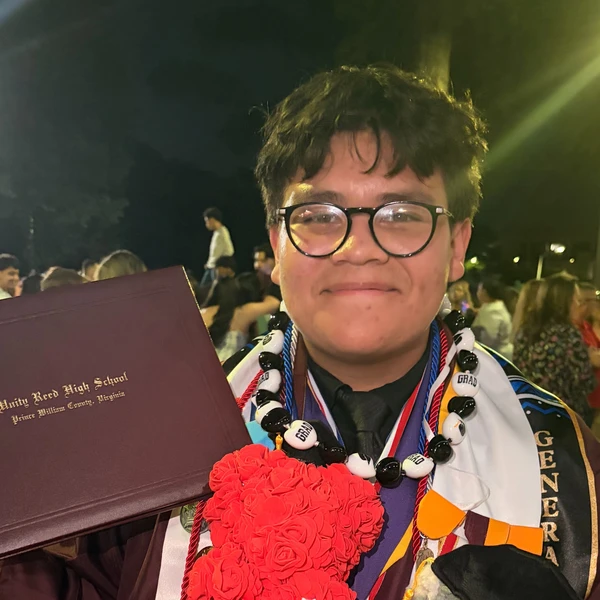
Unity Reed High School

High School
2022 - 2026

Miscellaneous

  • Desired degree level:

    Bachelor's degree program

  • Graduate schools of interest:

  • Transfer schools of interest:

  • Majors of interest:

    • Registered Nursing, Nursing Administration, Nursing Research and Clinical Nursing
  • Not planning to go to medical school
  • Career

    • Dream career field:

      Hospital & Health Care

    • Dream career goals:

    • Cashier/Buyer

      Kid To Kid
      2025 – Present1 year

    Sports

    Skateboarding

    Club
    2026 – Present6 months

    Research

    • Behavioral Sciences

      Independent — Head Researcher
      2023 – 2026

    Arts

    • School

      Photography
      2025 – Present

    Public services

    • Volunteering

      URHS JROTC — Head leader
      2022 – Present

    Future Interests

    Volunteering

    Dashanna K. McNeil Memorial Scholarship
    I did not choose nursing because I wanted a stable career or because I liked science, although both are true. I chose nursing because I have seen firsthand what it means when someone shows compassion during the worst moment of a person’s life. Hospitals have been part of my life for as long as I can remember. My mother survived a brain aneurysm and later underwent open heart surgery, leaving her disabled. Over the years, I spent countless hours in hospitals and waiting rooms, watching healthcare workers care for her. Those experiences showed me both the fear families carry and the incredible impact a nurse can have. One nurse in particular changed my life. After my mother suffered a seizure following her open heart surgery, she was placed in the ICU. She was confused, frightened, and struggling to understand what was happening around her. I was only seventeen and terrified of leaving her alone. I remember feeling helpless, like there was nothing I could do to make things better. Then a nurse walked into the room and changed everything. She spoke to my mother with patience and kindness, calming her fear and confusion. She treated her with dignity when she was at her most vulnerable. She also noticed me. She asked if I had eaten, checked on how I was doing, and advocated for me to stay overnight with my mother. That simple act of compassion meant more than she will ever know. That night taught me what nursing truly is. Nursing is not just about medications, procedures, or charting. It is about advocacy, compassion, and human connection. It is about helping people feel safe when everything around them feels uncertain. That nurse did not just care for my mother’s physical needs; she cared for both of us as human beings. That experience inspired my future. After high school, I plan to attend Virginia Commonwealth University to earn my Bachelor of Science in Nursing and join Army ROTC. My goal is to serve as a military nurse before becoming an emergency room nurse and eventually a Nurse Practitioner. I am especially drawn to emergency nursing because I work well under pressure and want to serve patients during some of the most critical moments of their lives. As someone who is bilingual in Spanish and English, I also hope to advocate for patients and families facing language barriers in healthcare. I know how overwhelming medical settings can feel, especially when communication is limited. I want to help bridge that gap so patients feel understood, respected, and less alone. My goal in nursing goes beyond treating illness. I want to be a source of comfort, trust, and strength for people when they need it most. The nurse who cared for my mother showed me the kind of impact one person can make. I want to carry that same compassion into every patient interaction and dedicate my life to serving others through nursing.
    RonranGlee Literary Scholarship
    “Be like the rocky promontory against which the restless surf continually breaks; but it stands firm and tames the fury of the water around it.” Marcus Aurelius uses the image of a rocky promontory resisting relentless waves to argue that true strength is not found in avoiding hardship, but in developing an inner stability that hardship cannot destroy. The deeper meaning of this passage is that adversity is inevitable, but suffering becomes transformative when a person refuses to let external chaos determine their character. Rather than promising a life free from pain, Marcus Aurelius presents resilience as a deliberate discipline: the ability to remain grounded, purposeful, and morally steady while life crashes against you. The most important word in this passage is not “rocky” or even “surf,” but “stands.” Marcus does not describe the rock as fighting the ocean or defeating it. The promontory does not stop the waves from coming. Instead, it remains unmoved. This distinction reveals a central Stoic principle we do not control external events, but we control our response to them. The ocean represents everything beyond human control loss, suffering, uncertainty, injustice, and fear. The rock symbolizes the disciplined mind that refuses to surrender its values to circumstance. This image challenges a common misunderstanding of strength. Many people associate strength with aggression, dominance, or the power to overpower obstacles. Marcus Aurelius suggests something more difficult and profound. Strength is endurance. It is composure. It is the refusal to allow pain to corrupt one’s judgment or character. The rock does not become the storm. It remains itself. The phrase “tames the fury of the water” deepens this idea. The rock does not merely survive the waves; its presence changes them. The water loses its violence upon impact. This suggests that resilience is not purely defensive. Inner discipline can actively transform chaos. When a person develops emotional steadiness, external turmoil loses some of its power to disturb them. The storm may remain violent, but its ability to control the individual weakens. There is also an important paradox in Marcus Aurelius’s imagery. Water appears powerful because it is forceful and constant, yet it is ultimately the rock that endures. This reversal challenges how humans often perceive power. Loudness, force, and intensity may appear dominant in the moment, but endurance outlasts aggression. The passage implies that permanence belongs not to what strikes hardest, but to what remains rooted. On a deeper philosophical level, the passage reflects Stoicism’s belief that virtue is the only true good. External circumstances wealth, status, health, even suffering are temporary and unstable. A person who builds identity around these external things becomes vulnerable to collapse when they are lost. Marcus Aurelius instead calls for an identity rooted in virtue: wisdom, courage, discipline, and justice. A person anchored in these qualities cannot be easily shaken because their foundation does not depend on changing circumstances. What makes this passage especially powerful is its rejection of passive optimism. Marcus Aurelius does not say the waves will stop. He does not promise easier conditions or future comfort. His philosophy demands something harder: strength without guarantees. This realism gives the passage enduring relevance. Human life has always involved uncertainty, grief, and hardship. The lesson is not to wait for calm waters before becoming strong. It is to become strong amid the storm. Ultimately, Marcus Aurelius argues that resilience is not the absence of struggle but the mastery of self within struggle. The rocky promontory symbolizes the highest form of human strength: unwavering character in the face of relentless adversity. The passage reminds us that while we cannot control the storms of life, we can decide whether we will be swept away by them or remain standing.
    Bright Lights Scholarship
    College was not something that ever felt for sure in my household. For many people, college is discussed as the natural next step after high school. In my home, it felt more like a distant dream, something I wanted deeply but was never sure I would be able to afford. I am a first generation college student from a low income household, and financial hardship shaped much of my life. My mother became disabled after surviving a brain aneurysm and undergoing open heart surgey. My father has struggled with alcoholism, and my uncle moved in with us after surviving an attack that left him with brain damage. Growing up in an environment where survival often came before long term planning taught me responsibility at an early age. I learned how to balance school, work, caregiving, and leadership while carrying challenges that many people my age have never had to face. Despite those obstacles, I refused to let my circumstances define my future. Over the last four years, I pushed myself academically and personally. I maintained a strong GPA while taking rigorous coursework, including IB classes and dual enrollment coursework. I worked part time to save for college because I knew I could not rely on my family's financial support. At the same time, I dedicated myself to service and leadership through AFJROTC, where I got to the position of Corps Commander, leading 112 cadets. In that role, I helped organize community service projects, led fundraising efforts that raised over $30,000 to send our unit to nationals, and contributed more than 207 volunteer hours to causes including Alzheimer’s awareness, veteran support, and community cleanups. After high school, I plan to attend Virginia Commonwealth University to study nursing and join Army ROTC. My goal is to serve as a military nurse before becoming an emergency room nurse and eventually a Nurse Practitioner. I want to care for people during the most vulnerable moments of their lives, especially those from underserved communities who often struggle to access quality healthcare. As someone who is bilingual in Spanish and English, I also hope to advocate for patients and families facing language barriers in medical settings, ensuring they feel heard, understood, and respected. This scholarship would help remove one of the biggest barriers standing between me and that future and that wpould be financial burden. The cost of college is more than tuition alone it includes books, supplies, transportation, housing, and countless other expenses that add up quickly. Receiving this scholarship would lessen that burden and allow me to focus more fully on my education, leadership development, and future service. More than financial support, this scholarship would represent an investment in someone determined to create lasting impact. I am not pursuing college only for myself. I am pursuing it to change the trajectory of my family’s future and to become the kind of nurse and leader who makes a difference in the lives of others. College will open doors for me, but through service, compassion, and leadership, I intend to open doors for others as well.
    Julie Holloway Bryant Memorial Scholarship
    Before I ever thought about becoming a nurse, I was already standing in hospitals doing something most kids my age never had to do. I was translating. Spanish was my first language. It was the language of my home, my family, my earliest memories. English came later, learned out of necessity, pieced together through school. And for a long time, living between two languages felt less like a gift and more like a weight. Because when you are the one in your family who speaks English, you become responsible for things no child should have to carry alone. I remember standing beside my mother at the doctor's appointments, listening to medical terms I barely understood myself, and trying to translate them into Spanish. I did not always know the right words. But I showed up every time because she needed me to. Those moments taught me something I could not have learned anywhere else. When someone cannot understand what is being said about their own body, their own health, their own life, they lose something important. I never wanted my mother to feel lost in those rooms. So I became her voice. Navigating two languages while also navigating a learning disability, a low income household, and an unstable home life meant I was always working twice as hard just to keep up. Being bilingual in those circumstances was not always a badge of pride. Sometimes it was just exhausting. After high school, I plan to attend Virginia Commonwealth University to study Nursing, join Army ROTC, and serve as a military nurse before building my career as an emergency room nurse. In the ER, language barriers can be the difference between a patient feeling heard and a patient feeling invisible. I know what it feels like to be in a hospital room and not fully understand what is happening. I never want a Spanish speaking patient or family member to feel that way when I am their nurse. I want to be the person who bridges that gap, who looks them in the eye, speaks their language, and makes them feel safe. Being bilingual is not just a skill I have. It is a part of my story. It shaped my empathy, my resilience, and my understanding of what it truly means to show up for someone. Every word I translated for my mother in those hospital rooms was practice for the nurse I am becoming. I was always meant to be in that space. Now I am ready to walk in on the other side.
    Scorenavigator Financial Literacy Scholarship
    I learned about money the hard way. Not from a class, not from a book, but from living in a household where there was never quite enough of it, and every dollar had a decision attached to it. Growing up in a low-income home with a disabled mother, a father battling alcoholism, and an uncle with brain damage living with us, financial stress was not something I heard about. It was something I felt every single day. I watched my family make impossible choices. Do we pay this bill or that one? Do we buy groceries or save what little we have for something we might need later? Those are not questions children should have to think about. But I thought about them. Because when you grow up in that environment, you cannot help it. Nobody sat me down and taught me about credit scores, interest rates, or how debt works. That education did not exist in my home, not because my family did not care, but because term financial planning feels like a luxury you cannot afford to think about. So I started figuring it out myself. I got a part time job in high school, not for spending money, but to help save for college because I knew no one else could save it for me. I learned quickly that earning money and keeping money are two very different skills. I had to make hard choices about what to spend, what to save, and what to say no to, even when saying no was painful. I watched people around me fall into traps, such as payday loans, credit card debt, and borrowing money with no real plan to pay it back. I did not want that to be me. Being a first generation college student means I am walking into a financial world that my family could not fully prepare me for. There is no roadmap in my house for student loans, budgeting on a college income, or building credit the right way. I am going to have to learn it, and I am going to have to learn it fast. But that is exactly what drives me. I do not just want to survive financially. I want to build something real. I want to be the first person in my family to have actual finacal stabillity to understand how money works and use that knowledge to create a better life not for meself but for my mother and my family too. Every hard choice I watched my family make every bill that caused stress every moment we went without something we needed those memories are not wounds I carry. They are lessons I am going to use. I plan to study personal finace seriously during my time at Virginia Commonwealth University alongside my Nursing degree. I want to understand budgeting, credit and long term financal planning so that I can make smart decision from very start of my adult life. And one day when I am stable and strong. I want to be the person in my community who helps others learn what nobody taught me growing up.
    Philippe Forton Scholarship
    Hospitals have been a part of my life for as long as I can remember. I know what the waiting rooms smell like. I know the sound of monitors beeping down a hallway. I know what it feels like to sit in a chair outside a room and not know what is happening to the person you love most inside of it. My mother has faced some of the hardest medical battles I have ever seen. A brain aneurysm. Open heart surgery. A once strong body, slowly becoming something she had to fight to keep up with every single day. I watched her go through things no person has to go through. And I watched how the people around her treated her during those moments. Most people were kind. But there was one nurse who was different. I do not remember her name. But I remember everything else about her. She walked into my mother's room, where we were in the ICU, and she looked at her chart and then talked to her and was making jokes, and then she asked about me and how I am doing, and asked if she could bring me something to eat because I was there for so long. And then she asked my mom if she needed anything as well. My mother at the time was sun downing because she had a seizure after the open heart surgery. So the nurse made sure she was taking her time to talk to her so she could calm down. At the time of this event, I was 17 and in the ICU. Anyone under 17 could not stay overnight, even if they were over 18 still could stay the whole night, but they had to leave around 12. I remember the nurse that shift talked to her charge nurse, and she let me hide in my mom's room and let me stay the night with her. That moment changed me, and I thanked her so much. I was already carrying a lot at home. My father's struggle with alcoholism, my uncle moving in after surviving a brain injury, the weight of a low-income household, and a learning disability I was always fighting against. I was angry at a lot of things. But watching that nurse with my mother, I felt something shift inside me. I did not just want to survive my circumstances. I wanted to become someone who could do for others what that nurse did for my mom and me. That is why I want to be an emergency room nurse. Not because it is a stable career. Not because I am good under pressure, though I am. But because I have seen firsthand what it means to a scared and hurting person when someone treats them like they matter feel it too. I have felt the weight of being overlooked, and I have watched my mother feel it too. I never want a patient in my care to feel that way. Compassion, as the prince said, is an action word with no boundaries. That nurse did not have to let me stay there. She chose to let me. And that choice meant everything to my mother and to me.
    Chris Jones Innovator Award
    Over my four years of high school, I have contributed over 207 volunteer hours to my community through events that ranged from veteran support initiatives and community cleanups to Alzheimer's awareness walks. Every single event I showed up to, I gave my all because I believe that if you are going to show up for your community, you should actually show up. One of the moments that stands out most to me was the Alzheimer's Walk in 2023. My friend Yessica and I were collecting donations for Alzheimer's research alongside our AFJROTC unit. All cadets were expected to leave at 4:00 PM, but Yessica and I looked at each other and decided we were not ready to go. We stayed until 7:30 PM, nearly four hours longer than anyone asked us to, continuing to collect donations and helping clean up the event. I also took on leadership roles in community service through AFJROTC. As Corps Commander, I organized service events that supported veterans, raised awareness for important causes, and brought our unit together around the idea that serving others is one of the most powerful things you can do with your time. I also helped lead fundraising efforts that raised over thirty thousand dollars to send my unit to nationals, which showed me that when a community comes together with a shared goal, there is nothing they cannot accomplish. Looking ahead, I plan to drive change in a much bigger way through my career in nursing and my service in Army ROTC at Virginia Commonwealth University. I have seen first hand what it feels like to be in a hospital as a family member watching someone you love struggle through a broken and overwhelming system. My mom became disabled after a brain aneurysm and open heart surgery, and my uncle moved in with us after surviving an attack that left him with brain damage. Those experiences sitting in waiting rooms, watching nurses and doctors make split second decisons that changed everything, shaped my deep desire to be on the other side of that equation one day. As a future nurse and eventually a Nurse Practitioner, I want to advocate for patients the same way I have always advocated for the people in my community. I want to work in understand communites where quality healthcare is not always easy to acress and I want to use my background to do so.
    Gregory Flowers Memorial Scholarship
    The personal achievement I am most proud of is becoming the Corps Commander of my AFJROTC program. Out of everything I have done in my four years of high school, this moment stands above the rest because of how far I had to come to get there and how much it has changed the way I see myself. When I first joined AFJROTC in my freshman year, I was not someone who walked in with confidence. I transferred to a new school because I felt invisible and like I did not belong anywhere. I had a learning disability, and I was dealing with serious challenges at home, and I was honestly just hoping to find somewhere I fit in. I had no idea that AFJROTC would not only give me a community but would eventually put me in charge of one. Over 4 years, I worked my way up through the program, taking on roles like project Officers, Drill Team Commander and classroom leader. Each role taught me something new about leadership, responsibility, and what it means to truly show up for the people counting on you. But nothing compared to the moment I became corps commander and took on the responsibility of leading 112 cadets. In that role I was able to put ideas into action that I had been thinking about for years. I led my unit through community service events, helped organize fundraisers that raised over thirty thousand dollars to send my team to nationals and made it my personal mission to make every signle cadets feel like they were valued and seen. Our motto in AFJROTC is "One team, one fight" and I lived by that every single day as commander. This achievement impacted my life in ways I still feel to this day. It proved to me that my learning disability, my home life and my cirumstances were not going to be the things that defined me. I used to worry that I was not smart enough or strong enough to lead anything. Becoming Corps Commander shut that voice down. It showed me that I am capable of doing hard things that people trust me and that I have something real to offer the world. It also deepened my passion for service and for lifting other up. Watching my cadets grow, seeing younger students find their confidnce the same way I found mine, reminded me everyday why community matters. Gregory Flowers dedicated over twenty years of his life to mentoring young people because he understood that one person believing in you can change everthing. AFJROTC gave me that and becoming Corps Commander gave me the platform to pass it on. As I heard to Virginia Commonwealth University to study Nursing and join Amry ROTC, I carry everthing this achievement taught me. I know how to lead with compassion. I know how to push through when things are hard. And I know that the best thing I can do with everything I have been given is turn around and give it to someone else.
    Josh Barkley Memorial Scholarship
    Winner
    Having a learning disability was something I did not fully understand for a long time. I knew I had an IEP, but for a while, I did not really know what that meant or how to use it to actually help myself. Nobody sat me down and explained how to advocate for my own needs or how to speak up when something was not working for me. I had to figure that out on my own, and honestly, that journey taught me more about myself. Growing up, I was already carrying a lot. My mom suffered a brain aneurysm and later had open heart surgery, leaving her disabled. My dad struggled with alcoholism, and my uncle moved in with us after surviving an attack that left him with brain damage. On top of all that, I was dealing with my own learning challenges while trying to keep my grades up, work part-time, and save for college. There were so many moments where I felt like the odds were completely stacked against me. I remember sitting in classes feeling frustrated because I could not process information the same way as the other kids in the class. I felt like a burden asking for help. The moment things started to shift for me was when I joined AFJROTC and later the IB program. These two programs pushed me in ways I never expected. I remember being terrified to sign up for IB classes because I thought my learning disability meant I was not smart enough for that level of work. But I did it anyway, and I proved myself wrong. Taking five IB classes, two dual enrollment courses with universities like UPenn and Vanderbilt, and maintaining a 3.2 GPA while managing everything going on at home showed me that my learning disability does not define me. Learning to advocate for myself did not happen overnight. It was a slow process of realizing that speaking up for my needs was not a weakness. I started using my IEP more intentionally, communicating with my teachers and being honest about what I needed to succeed. Going forward, I want to carry that same self advocacy into my career in nursing. Having lived through the experience of feeling unheard and unsupported, I understand deeply how important every person's voice is and how it matters. My learning disability gave me empathy that I could never have learned from a class. It shaped my passion for nursing, a field where advocating for patients who cannot always speak for themselves.