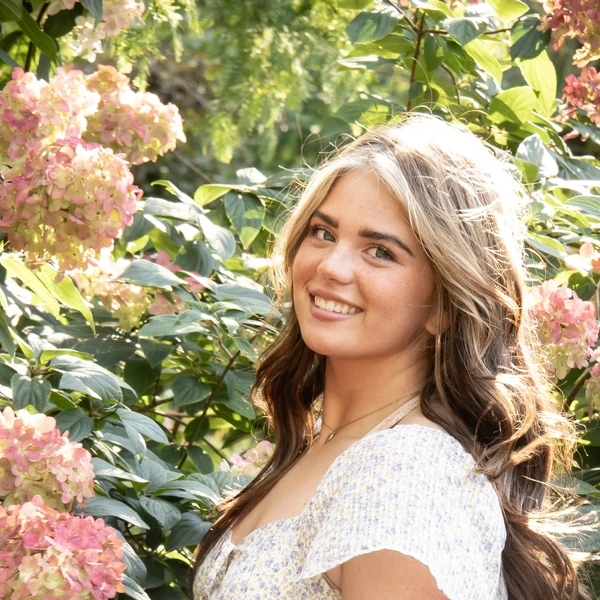
Hobbies and interests
Volleyball
National Honor Society (NHS)
Church
Babysitting And Childcare
Bible Study
Biomedical Sciences
Reading
Horror
Health
I read books daily
Kelsey von Daggenhausen
1x
Finalist
Kelsey von Daggenhausen
1x
FinalistBio
I’m an aspiring physician committed to building a more inclusive healthcare system for children with developmental and neurological differences. My goal is to become a developmental behavioral pediatrician or pediatric neurologist and advocate for patients who are often overlooked in traditional medical spaces.
Leadership and service have shaped my path. As president of my school’s Unified Club, I worked to promote inclusion for students with special needs and helped organize initiatives that brought our school community together. Coaching volleyball and volunteering with Special Olympics have further strengthened my passion for supporting young people and helping them build confidence and independence.
I will attend the University of Michigan, where I plan to double major in Biology, Health, and Society and Biopsychology, Cognition, and Neuroscience as I prepare for medical school. No matter where my career takes me, I plan to stay deeply connected to my community through coaching, advocacy, and mentorship. My goal is to combine medicine, leadership, and service to create spaces where every child feels supported, capable, and included.
Education
Lake Fenton High School
High SchoolMiscellaneous
Desired degree level:
Doctoral degree program (PhD, MD, JD, etc.)
Majors of interest:
- Neurobiology and Neurosciences
- Biological and Biomedical Sciences, Other
- Human Biology
- Cognitive Science
Career
Dream career field:
- Hospital & Health Care
Dream career goals:
Neurologist
Intern
Henry Ford Health2023 – 20252 yearsSales Lead/Part-Time Manager
Famous Footwear2025 – Present1 year
Sports
Volleyball
Varsity2021 – 20232 years
Public services
Volunteering
Special Olympics — Head Coach2018 – PresentVolunteering
Adopt-A-Pet — Volunteer2019 – Present
Future Interests
Advocacy
Volunteering
Learner Mental Health Empowerment for Health Students Scholarship
Mental health is important to me as a student because I know what it feels like to struggle silently while still being expected to show up every day as if everything is fine. My most vivid memory is my suicide attempt at just fourteen. I remember standing in my brightly yellow painted bathroom, a handful of pills in my hand, overwhelmed by grief, my parents’ divorce, and relentless bullying at school. After swallowing them, I stood in front of the mirror for what felt like forever. Something shifted in those moments. I forced myself to undo what I had done, and the next morning, I woke up and continued on as if nothing had happened. No one knew, but everything had changed.
That experience shaped how I understand mental health. It showed me how invisible struggles can be and how easily someone can be overlooked. As a student, I realized that mental health directly impacts everything—focus, relationships, confidence, and the ability to feel like you belong. In the years that followed, I continued to face challenges with anxiety and obsessive-compulsive disorder. Even then, I never returned to that same place, but I did learn how difficult it can be to navigate something others cannot see.
Because of this, I advocate for mental health in my community by focusing on awareness, inclusion, and creating spaces where people feel supported. As a Special Olympics volleyball coach and president of my school’s Unified Club, I have worked closely with individuals who are often misunderstood or judged. Through Inclusion Week, I helped create opportunities for students to connect, breaking down barriers between general education and special education students. While this work focuses on inclusion, it also directly supports mental health by helping students feel seen, valued, and accepted.
On a more personal level, I advocate by being intentional in how I treat others. I listen without judgment, I pay attention to when someone seems off, and I try to create an environment where people feel comfortable opening up. I have learned that advocacy is not always about big actions—it is often about the small, consistent ways you show up for people.
My experiences have also shaped my future goals. I plan to study Biopsychology, Cognition, and Neuroscience at the University of Michigan and pursue a career in healthcare, where I can support individuals navigating both neurological and mental health challenges. I want to be someone who not only understands the science, but who truly listens and creates a space where patients feel safe and understood.
Mental health matters to me because I have lived it. I know how heavy it can feel, but I also know how powerful support can be. That is why I am committed to continuing to advocate, speak openly, and help create a community where no one feels like they have to struggle alone.
Women in Healthcare Scholarship
I chose to pursue a degree in healthcare because I have seen how much it matters to feel understood, especially in moments when you are vulnerable. For me, this is not just an interest in science or medicine, but a commitment shaped by my experiences and the people in my life.
Growing up with an older brother who has autism and an uncle with Down syndrome, I was exposed early to the reality that not everyone receives the same level of understanding or support. I saw how easily differences could be misunderstood and how often individuals were overlooked because others did not take the time to truly listen. Those moments stayed with me. They made me curious about the brain, behavior, and development, but more importantly, they made me want to be someone who bridges that gap in understanding.
At the same time, my own experiences with mental health deepened that perspective. After facing bullying and struggling with anxiety and obsessive-compulsive disorder, I came to understand how invisible challenges can be. I learned that someone can appear completely fine on the outside while quietly fighting a battle internally. Those experiences gave me a stronger sense of empathy and a desire to support others in a way that goes beyond surface-level care. They showed me that healthcare is not just about treating conditions, but about understanding the full experience of the person in front of you.
These experiences have led me to pursue a degree in Biopsychology, Cognition, and Neuroscience at the University of Michigan, with the goal of becoming a pediatric neurologist. I am passionate about working with children because they are often the most vulnerable, yet the most resilient. I want to be someone who not only understands the science behind neurological and developmental conditions, but also creates an environment where children and their families feel safe, supported, and heard.
Through my work as a Special Olympics volleyball coach and my leadership in promoting inclusion at my school, I have already seen the impact that patience, encouragement, and understanding can have on someone’s confidence and growth. These experiences have reinforced that my role in healthcare will not just be to diagnose or treat, but to advocate.
As a woman in healthcare, I hope to make a positive impact by leading with both knowledge and compassion. Women have historically had to work harder to be seen and heard in STEM fields, and I want to be part of a generation that changes that narrative. I hope to serve as both a provider and a role model, showing young girls that they belong in science and that their voices matter.
Ultimately, I want to create a space where patients feel seen, understood, and valued, especially those who are often overlooked. My goal is not only to improve health outcomes, but to change the way care is experienced.
Ethel Hayes Destigmatization of Mental Health Scholarship
My most vivid memory is my suicide attempt at just age fourteen I remember standing in my brightly yellow painted bathroom, hand full of pills, deep in a depressive episode. At the time, I was grieving the loss of my grandfather, my parents were going through a divorce and I was being ruthlessly bullied at school everyday. For about a year I contemplated ending my life, and on a random November night I decided to take the leap and do it. After swallowing the pills I stood there staring at myself for about 5 minutes in the mirror, thinking about my family, my dog crying outside the door, and something changed in me. I don't know why or how, but all I recall in the five minutes following is forcing myself to puke everything I had swallowed up. Through the sobs, I proceeded back to my bed where I lay and hoped that what I wished for for so long would not come true. Unbeknownst to myself, I woke up the next morning, went downstairs and ate breakfast with my mom. I never told anyone what happened late that November night, but I did ask my parents to get me involved in therapy. Over time, I got better, I started feeling more like myself, I spoke with staff at my school about the bullying and threats I was getting, and I found a new supportive group of friends.
Although to this day nobody knows that night ever occurred, it still remains one of the most formative moments of my life. It changed the way I see everything—myself, other people, and the world around me. What I didn’t realize at the time is that surviving that moment did not mean everything would suddenly be easy. In the years that followed, I began to struggle with severe anxiety and obsessive-compulsive disorder, where my thoughts were overwhelming and nearly impossible to control. But even in the midst of those struggles, I never again felt the desire to end my life. That night shifted something in me. It made me realize that even when everything feels unbearable, there is still a part of me that wants to keep going. It showed me how invisible mental health struggles can be, and how someone can be smiling, laughing, and functioning, while quietly fighting a battle no one else can see.
That understanding has completely shaped how I approach others. I no longer take people at face value. I understand how much someone might be holding in, and how powerful it can be to feel seen, even in small ways. This perspective became even more meaningful through my work with individuals with developmental disabilities. As a Special Olympics volleyball coach and leader in inclusion efforts at my school, I have spent years working with individuals who are often misunderstood, like I was. I began to see strong parallels between mental health struggles and developmental differences—both are often judged without being understood.
Working with these athletes gave me a sense of purpose during a time when I was still learning how to manage my own mental health. Being someone they could trust, encourage, and rely on helped me step outside of my own thoughts and focus on creating a positive environment for others. I saw how confidence could grow when someone felt supported, and how much of a difference patience and understanding could make. In many ways, they helped me heal just as much as I was helping them.
My experiences with mental health ultimately shaped the path I want to pursue. I plan to study Biopsychology, Cognition, and Neuroscience at the University of Michigan, with the goal of becoming a neurologist. I want to better understand the brain, not only from a scientific perspective, but from a human one—understanding how mental health, behavior, and neurological differences all intersect. I want to be someone who not only treats conditions, but truly listens, advocates, and creates a space where patients feel safe and understood.
Looking back, that night at fourteen no longer defines me by fear or pain, but by what came after. It showed me how fragile life can feel, but also how much strength exists within a single moment of choice. It gave me a perspective that I carry with me every day—the understanding that you never truly know what someone is going through, and that even the smallest act of support can change everything. That is the kind of impact I want to have, and the reason I am committed to using my experiences, my education, and my voice to help bring light to something that so often remains in the dark.
Sarah Eber Child Life Scholarship
There was a point in my life when I started to feel invisible. In high school, while pushing myself through an early middle college program and taking on full college coursework, I was also facing years of intense bullying and struggling to find where I belonged. What should have been one of the most exciting and defining opportunities of my life became something isolating. I remember sitting in classrooms feeling completely out of place, questioning not only my environment, but myself. I had worked so hard to get there, yet I felt like I was slowly losing my sense of confidence and belonging.
At first, I viewed this adversity as something that was happening to me. I questioned whether I had made the wrong decision, whether I was strong enough to handle the pressure, and whether I truly belonged in the path I had chosen. Balancing the demands of college-level coursework with the emotional weight of feeling excluded made everything feel heavier. There were nights where I felt overwhelmed, exhausted, and unsure how much more I could take.
But over time, something in me shifted. I realized that while I could not control how others treated me, I could control what I did with those experiences. I made the decision to stop letting those moments define my worth and instead use them to shape who I wanted to become. I turned toward the spaces where I felt purpose. Coaching Special Olympics and leading inclusion efforts through my school’s Unified Club became more than activities. They became places where I could breathe, where I could be myself, and where I could make sure others never felt the way I had.
Through those experiences, I began to understand the power of showing up for others. I saw how much it mattered to be patient, to listen, and to create spaces where people feel safe and valued. The more I poured into others, the more I found pieces of myself again. What once felt like something that was breaking me slowly became something that was building me.
This adversity changed the way I see the world. It made me more aware of the quiet struggles people carry and how easily someone can feel overlooked. It also gave me a deeper sense of purpose. I no longer just want to succeed for myself. I want to be someone who makes others feel seen, especially in moments when they feel the most alone. That is what has driven my passion for pursuing a career in pediatric healthcare. I want to work with children who may be facing their own challenges and be someone who understands not just their condition, but their experience.
Looking back, that time in my life still hurts, but it also means something more now. It taught me resilience, but more importantly, it taught me empathy. It showed me that even when you feel invisible, you still have the ability to make others feel seen. And to me, that is the kind of impact that matters most.
Julie Adams Memorial Scholarship – Women in STEM
I didn’t develop a passion for STEM in a classroom. I developed it by learning how to understand the people I love. Growing up with an older brother who has autism and an uncle with Down syndrome, I saw early on that the world does not always take the time to understand differences. I watched moments where they were underestimated or misunderstood, and I began to realize how much of that came from a lack of understanding of the brain and behavior. That realization stayed with me and eventually grew into a passion for studying Biopsychology, Cognition, and Neuroscience.
From a young age, I saw how easily differences could be misinterpreted. I watched people assume that my brother wasn’t trying hard enough in school, when in reality, he just needed information explained in a way that worked for him. I saw my uncle’s accomplishments overlooked because they didn’t fit traditional expectations. These experiences shaped how I see the world. They taught me that intelligence, ability, and success do not look the same for everyone, and that too often, people are judged before they are understood. I began to realize that many of these misunderstandings stem from a lack of knowledge about how the brain works and how it influences behavior.
That realization is what led me to pursue a degree in Biopsychology, Cognition, and Neuroscience. I am fascinated by the complexity of the brain and the way it shapes how we interact with the world. More importantly, I am driven by the opportunity to use that knowledge to better understand people who are often overlooked and to advocate for more compassionate, individualized care.
As I have grown, this passion has extended beyond curiosity into action. Through my involvement in Special Olympics, where I have served as a Head Volleyball Coach for six years, I have had the opportunity to work closely with individuals with developmental disabilities. Coaching has taught me that progress is not always measured in wins. Some of my most proud moments are the games my team lost. They remained positive and kept their heads held high. I have seen athletes accomplish things they once believed were impossible simply because someone believed in them. Those moments reinforced my belief that understanding and encouragement can change someone’s life.
In addition to coaching, I have taken on leadership roles focused on promoting inclusion in my school community. As president of my school’s Unified Club, I led Inclusion Week, an initiative designed to break down barriers between general education and special education students. What began as a week of awareness led to lasting change, and now through my efforts on the State Superintendent Advisory Team, special education students are fully integrated into general classrooms at my school. This experience showed me that change is possible when people are willing to challenge existing systems and advocate for others.
My passion for STEM is also shaped by my own experiences with adversity. After facing years of bullying, I came to understand what it feels like to be judged and excluded. Those experiences gave me a deeper sense of empathy and a stronger desire to support others who may feel unheard. Instead of letting those experiences define me, I chose to use them as motivation to create change.
This fall, I will attend the University of Michigan-Ann Arbor to study Biopsychology, Cognition, and Neuroscience, with the goal of becoming a pediatric neurologist. I want to combine scientific understanding with compassion, ensuring that children and their families feel heard, supported, and valued. Julie Adams’ dedication to her students and her passion for supporting young women in STEM reflects the kind of impact I hope to have, not just in my career, but in the lives of others.
Ultimately, I am passionate about my degree because it gives me the chance to be for others what my brother and uncle have needed; someone who truly sees them, understands them, and refuses to overlook them. I have seen how much it matters when even one person takes the time to care, and how deeply it hurts when no one does. Those moments have stayed with me, and they are the reason I cannot imagine doing anything else. Through my education, I want to turn that understanding into action, creating a future where children like my brother are not misunderstood, but supported and believed in. This path is not just a career for me, it is something I carry with me every day and something I am determined to use to make a lasting difference.
Kelly Mays Legacy Scholarship
I learned what it means to advocate for someone before I ever had the words to describe it. As a child, I often found myself sitting beside my older brother, helping him sound out words or learn to count to 10. He has autism, and even at a young age, I could see how easily he was misunderstood, sometimes even by our own parents. To others, it looked like he wasn’t trying. To me, it was clear he just needed someone to meet him where he was.
That realization stayed with me. Growing up alongside my brother and my uncle, who has Down syndrome, I witnessed how often individuals are overlooked or underestimated—not because they lack ability, but because others fail to understand them. I began to recognize how powerful it is when someone takes the time to listen and to truly see the person in front of them. Those moments shaped my perspective and sparked my interest in psychology as a way to better understand behavior, development, and the human experience.
That understanding deepened through my own experiences with bullying. There were times when I felt invisible and unheard, and I began to understand how isolating that can be. Instead of allowing those experiences to define me, they pushed me to become more aware of others who may be struggling in silence. I realized that even small acts of support can have a lasting impact.
This led me to take action in my community. As president of my school’s Unified Club, I led Inclusion Week to break down barriers between general education and special education students. What began as a week of events led to lasting change, and special education students are now fully integrated into classrooms at my school. I have also served as a Special Olympics volleyball coach for 6 years, where I have learned how to build trust, foster confidence, and create a sense of belonging.
This fall, I will be attending the University of Michigan-Ann Arbor, where I plan to study Biopsychology, Cognition, and Neuroscience. I hope to use this education as a foundation for a career in pediatric neurology, where I can support children and families navigating developmental and neurological challenges. My goal is not only to understand the science behind behavior, but to advocate for more compassionate, individualized care within the healthcare system.
Kelly Mays’ legacy of ensuring individuals feel seen, heard, and supported reflects the values that have shaped my journey. I am committed to carrying that mission forward by using my education, experiences, and voice to advocate for those who need it most and to create a world where no one feels invisible.
Valerie Rabb Academic Scholarship
Education has shaped not only my goals, but also who I am and how I see my future. When I decided to leave my traditional high school during my sophomore year to attend an early middle college program, I stepped into something completely unfamiliar. I didn’t fully understand how difficult it would be, but I knew I wanted to challenge myself and create a better future. Being fully enrolled in college courses while still in high school forced me to take responsibility for my success in ways I never had before. It pushed me to grow academically, but more importantly, it helped me discover a sense of purpose.
I initially entered the program through the exercise science pathway with the intention of becoming a physical therapist. At the time, I was certain that was the career I wanted. However, after shadowing professionals, I realized it was not the right fit. Instead of discouraging me, teachers and counselors helped turn that realization into growth. It pushed me to reflect on what truly interested me and where I could make the greatest impact. Through both my coursework and personal experiences, I was guided toward becoming a developmental-behavioral pediatrician.
Throughout this journey, I faced significant adversity that shaped both my goals and my sense of purpose. While adjusting to college-level coursework, I also experienced extreme bullying. There were many moments when I felt isolated, questioning whether I truly belonged. However, those experiences gave me a new perspective. I began to see parallels between my own struggles and the challenges faced by my brother, who has autism, and my uncle, who has Down syndrome. Watching them navigate a world that often misunderstands them helped me realize that adversity can either break you or strengthen your empathy. Instead of letting those experiences define me, I used them to grow stronger and advocate for myself.
That perspective fueled my passion for service and advocacy. As a Special Olympics volleyball coach and president of my school’s Unified Club, I built meaningful connections with athletes and students with special needs. These roles were opportunities to create a sense of belonging. This passion led me to organize Inclusion Week, focused on breaking down barriers between general and special education students. What started as an effort to increase awareness led to real change. Because of this initiative, special education students at my school are now fully integrated into general classrooms, creating a more inclusive environment. Seeing that impact showed me how powerful advocacy can be.
These experiences have shaped my future. I plan to continue working with the Special Olympics community and advocating for individuals with developmental differences. They influenced my values and guided my career path. I aspire to become a developmental-behavioral pediatrician, combining my passion for science with my commitment to helping others. I want to support children and families who may feel unheard and create environments where they feel valued.
Education has given me the tools, but my experiences have given me purpose. The adversity I faced taught me resilience and empathy, and my work in Special Olympics showed me how to turn those qualities into meaningful change. I am committed to using my education to advocate, support, and create inclusive spaces for those who need it most.
Dream BIG, Rise HIGHER Scholarship
Education has been the foundation that shaped both my goals and my sense of direction. When I made the decision to leave my traditional high school during my sophomore year to attend an early middle college program, I was stepping into something completely unfamiliar. I didn’t fully understand how much that decision would challenge me, but I knew I wanted to push myself toward a better future. That experience changed the way I viewed education. It stopped being just about grades or meeting expectations and became a tool for understanding people, growth, and purpose. Being completely enrolled in college courses while still in high school forced me to take responsibility and direction for my success in ways I never had before.
I initially entered the program through the exercise science pathway with the intention of becoming a physical therapist. At the time, I was dead set on this. However, after shadowing professionals and gaining real-world exposure, I realized that it was not going to be the right fit for me. Instead of discouraging me, teachers and counselors worked with me and helped turn that realization into growth. It pushed me to reflect more deeply on what truly interested me and where I could make the greatest impact. Through both my coursework and my personal experiences, I became increasingly drawn to the connection between biology, psychology, and behavior. I found myself wanting to understand not just how the body works, but how people think, develop, and experience the world differently. That shift in perspective helped guide me toward my goal of becoming a developmental-behavioral pediatrician or pediatric neurologist.
My educational journey was not without its challenges. While I was adjusting to a more demanding academic environment, I was also dealing with difficult social experiences. I struggled with friendships and faced extreme bullying, which made an already intense program feel isolating at times. There were nights when I felt completely overwhelmed, balancing rigorous coursework with the emotional weight of feeling out of place. I questioned whether I had made the right decision to enter college so soon and whether I truly belonged in that environment. However, those moments forced me to grow in ways I never expected. I learned how to advocate for myself, how to stay focused on my goals even when my environment felt discouraging, and how to keep moving forward despite doubt.
At the same time, I found strength and purpose through my involvement in my community. My experiences with Special Olympics and my efforts to create Inclusion Week at my school had a profound impact on me. I saw firsthand how often individuals with special needs are overlooked or separated from their peers and I was able to relate with them. Watching students become more aware, more accepting, and more inclusive showed me the power of small actions to create meaningful change. It also reinforced my desire to pursue a career that allows me to support individuals who may not always have a voice in traditional systems. These experiences connected directly to what I was learning academically, showing me that education is not just about personal success, but about how you use that knowledge to uplift others.
As I continued through the program, I began to see how all of these experiences were shaping me into a more independent, resilient, and compassionate person. Earning my associate degree while still in high school was an accomplishment I am incredibly proud of, but more importantly, it represents the perseverance it took to get there. I entered the program unsure of myself and terrified of failure, but I am leaving it with a clear sense of purpose and confidence in my ability to overcome challenges. Getting accepted into my dream school, the University of Michigan-Ann Arbor, is another milestone that reflects not just academic achievement, but personal growth.
Looking ahead, I plan to use my education to create a better future not only for myself but for others as well. My goal is to work in the medical field with children who have developmental or neurological differences, helping them and their families feel seen, understood, and supported. I want to be part of an important system that values inclusion and recognizes that every individual learns and grows in their own way. Education has given me the knowledge to pursue this path, but it has also given me the empathy and perspective needed to make a meaningful impact. My journey has taught me that challenges do not define you, but how you respond to them does. I plan to carry that mindset with me as I continue my education and work toward building a future where everyone has the opportunity to succeed.
Our Destiny Our Future Scholarship
From a young age, I have believed that creating positive change begins with empathy and action. My experiences as a volunteer and student leader have shown me that even small efforts can ripple outward to inspire community growth. One of the most formative experiences for me was serving as a head coach for Special Olympics. Working with athletes of all abilities, I learned the importance of patience, adaptability, and encouragement. I remember one athlete struggling during volleyball practice; instead of focusing on his mistakes, I broke skills into smaller steps and paired him with a supportive teammate. Witnessing his confidence grow was a powerful reminder that support, understanding, and opportunity can transform lives.
In school, I extended this philosophy through leadership roles. As president of the Unified Club and a member of both the Principal and Superintendent Advisory Teams, I observed firsthand how students with special needs were often isolated from their peers. Recognizing this gap, I advocated for Inclusion Week, creating school-wide events to raise awareness and foster connections between all students. These experiences reinforced my belief that community impact is rooted in listening, identifying needs, and developing creative solutions that bring people together.
Looking ahead, I plan to leverage my STEM education to make an even broader positive impact. I am particularly passionate about using science and technology to solve real-world problems that affect underrepresented and underserved communities. By developing accessible technological tools, promoting STEM education for young students, and engaging in research that addresses societal challenges, I hope to create solutions that improve lives while inspiring others to participate in meaningful innovation.
Equally important to me is mentorship and advocacy. Just as I benefited from supportive teachers, coaches, and peers, I want to guide others who may face barriers in education or social inclusion. Whether through tutoring, STEM outreach programs, or community service initiatives, I aim to create environments where individuals feel empowered to pursue their passions and reach their potential. I believe that true progress is not just measured by personal success, but by the ability to lift others along the way.
Ultimately, making a positive impact on the world requires both compassion and action. My commitment to service, leadership, and STEM-driven solutions reflects my desire to build inclusive, supportive, and innovative communities. I hope to continue creating spaces where people of all abilities and backgrounds can thrive, fostering connections that extend beyond individual achievements. By combining empathy with initiative and knowledge, I am dedicated to contributing to a world that values understanding, opportunity, and the power of collective growth.
Hodge Legacy Community Service Scholarship
Community service has shaped who I am because it allows me to turn my values into action. I have always believed that leadership is not just about personal success, but about using your time and abilities to improve the lives of others. Many of my service experiences have been inspired by my family and the lessons I have learned growing up alongside people who are often overlooked.
My brother has autism and my uncle has Down syndrome, and growing up with them gave me a perspective that many people do not experience. I saw how easily individuals with disabilities could be misunderstood or excluded, even within places that were meant to be supportive. At the same time, I saw how powerful patience could be in helping someone thrive. Those experiences taught me empathy and inspired me to focus much of my community service on promoting inclusion.
One of the most meaningful ways I have given back to my community has been through my involvement with Special Olympics. As a coach, I work with athletes with intellectual and developmental disabilities to help them build skills, confidence, and teamwork. Coaching has shown me that success is not always defined by winning a game. Sometimes success is an athlete serving the ball over the net for the first time or stepping onto the court without fear. Watching those moments unfold reminds me that encouragement and belief can change the way someone sees themselves.
Along with coaching, I serve as the president of my school’s Unified Club. Through this role, I work to create stronger connections between students with and without disabilities. During my sophomore year, I noticed that many special education students were often separated from the rest of the student body, and many students did not even realize they shared the same school. I brought these concerns to school leadership and helped organize an initiative called Inclusion Week.
Inclusion Week was designed to create opportunities for students to interact, learn from each other, and build genuine friendships. We organized activities and events that encouraged collaboration and conversations about respect, acceptance, and understanding. Rather than simply talking about inclusion, we wanted students to experience it firsthand. One of the most meaningful outcomes was seeing special education students become more integrated into classrooms and everyday school life.
These experiences have taught me that community service is not just about volunteering hours; it is about creating lasting change. When people come together with the goal of supporting one another, even small efforts can have a meaningful impact. Service reminds us that we all have the ability to make our communities stronger by choosing empathy and action.
I also believe that giving back is a way of paying forward the support we receive in our own lives. Throughout my education, teachers, coaches, and mentors have invested their time and energy in helping me succeed. Volunteering allows me to honor that support by helping others feel encouraged and valued in the same way.
Looking toward the future, I plan to continue serving my community through both volunteer work and my career. My goal is to pursue a career in medicine, particularly working with children who have developmental and neurological differences. Many families navigating these challenges feel overwhelmed or unsupported, and I want to be someone who provides not only medical care, but also compassion and understanding.
Community service has shown me that real leadership is rooted in service. By giving back and paying things forward, we create communities where everyone has the opportunity to feel valued, supported, and capable of reaching their full potential.
STLF Memorial Pay It Forward Scholarship
One of the most meaningful service initiatives I helped organize was Inclusion Week at my high school. As president of our Unified Club, I noticed that many students with special education needs were often separated from the rest of the student body. Even though they attended the same school, many general education students did not know them, interact with them, or even realize they were part of our community. I believed our school could do better at creating an environment where every student felt included and valued.
To address this, I worked with school administrators, teachers, and fellow students to organize Inclusion Week. The goal was to create opportunities for students with and without disabilities to interact, learn from one another, and build genuine friendships. Throughout the week, we held events and activities that encouraged collaboration and awareness. We organized inclusive games, classroom discussions about disabilities and respect, fundraising for our local Special Olympics Area, and activities that brought students together in shared spaces. Rather than simply talking about inclusion, we wanted students to experience it.
One of the most important outcomes of Inclusion Week was the way it helped integrate special education students more fully into the everyday life of the school. Teachers began inviting special education students to participate more frequently in general classroom activities, and many students who had never interacted before began forming friendships. All special education students were also put into elective classes such as art, gym, and music. What started as a single week of programming helped spark ongoing conversations about inclusion and how our school could continue improving opportunities for all students to learn together.
In addition to organizing Inclusion Week, I have volunteered as a coach with Special Olympics, where I work with athletes with disabilities to help them build skills and confidence through sports. Coaching has shown me how powerful encouragement and support can be in helping someone reach goals they once thought were impossible. These experiences have strengthened my commitment to creating spaces where everyone feels they belong.
Through organizing Inclusion Week and volunteering with Special Olympics, I have learned that leadership is not just about holding a title—it is about serving others and using your position to create meaningful change. Leadership through service means listening to the needs of your community and taking action to address them. It requires empathy, initiative, and the willingness to advocate for people who may not always have a voice.
These experiences have shown me that even small efforts can have a lasting impact when they bring people together. Inclusion Week started as an idea to raise awareness, but it grew into a movement within my school to better integrate and support all students. That experience reinforced my belief that leadership should always be rooted in service, compassion, and the desire to lift others up.
Janice Louise Olach Scholarship
One of the most significant hardships I have faced in my life has been growing up without the support of my father after my parents divorced when I was eleven years old. The separation itself was difficult, but what made it more challenging was the absence that followed. My father was largely uninvolved in my life afterward and did not provide financial or emotional support. As a child, it was confusing and painful to process why someone who was supposed to be a constant presence simply wasn’t there. Over time, that absence forced me to grow up quickly and learn how to navigate challenges with resilience.
My mother became the sole provider for our family. She is a teacher at a diverse, low-income school, and while she has always worked tirelessly to support us, finances were often tight. Watching her juggle long hours, debt, and the responsibility of raising our family alone gave me a deep respect for her perseverance. It also motivated me to take responsibility for my own future. During my senior year of high school, I worked a full-time job while continuing my education. Balancing work, school, and my other commitments was not easy, but it taught me discipline, time management, and the value of persistence.
Despite the challenges at home, I refused to let my circumstances limit my goals. I enrolled in an Early Middle College program that allowed me to pursue college-level coursework and earn my associate’s degree while still in high school. Taking on that workload required sacrifice and determination, but it was a step toward building a better future for myself and my family. Education became my way of creating opportunities that might not have otherwise been available.
Through these experiences, I also became more aware of the struggles other people face. My younger brother has autism and my uncle has Down syndrome, and growing up alongside them gave me an even stronger sense of empathy and responsibility to help others. Rather than allowing hardship to make me bitter, I chose to turn it into motivation. I became involved in activities that focused on inclusion and service, including volunteering as a Special Olympics coach and serving as president of my school’s Unified Club. These roles allowed me to support others while also finding purpose in my own challenges.
This hardship ultimately shaped who I am today. It taught me resilience, independence, and the importance of perseverance even when circumstances are difficult. It also showed me that success is not defined by where you start, but by how you respond to the obstacles in front of you.
As I move forward, I plan to use what I have learned to help others who face their own challenges. My goal is to pursue a career in medicine, specifically working with children who have developmental and neurological differences. Many families navigating these challenges feel overwhelmed or unsupported, and I want to be someone who provides both guidance and compassion.
The struggles I experienced growing up did not stop me from pursuing my goals; instead, they strengthened my determination to succeed. They taught me that resilience, hard work, and empathy can transform hardship into purpose. Those lessons will continue to guide me as I work toward making a meaningful difference in the lives of others.
Maxwell Tuan Nguyen Memorial Scholarship
My decision to pursue a career in the medical field has been shaped by both my family experiences and my passion for helping others. Growing up, I saw firsthand how developmental and neurological differences can affect not only an individual, but also their entire family. My younger brother has autism and my uncle has Down syndrome, and watching them navigate school, healthcare, and everyday life gave me a deeper understanding of the challenges many families face. At the same time, I also witnessed how the right support, patience, and medical guidance could make an incredible difference in their confidence and quality of life. Those experiences inspired me to pursue medicine so I can help create that same kind of impact for other families.
From a young age, I became curious about how the brain works and why people learn and develop in different ways. That curiosity grew as I got older and eventually led me to explore healthcare more seriously. Through my participation in an early college program and a technical career center focused on health sciences, I had the opportunity to study medical topics and begin preparing for a future in healthcare while still in high school. These experiences helped confirm that medicine was the path I wanted to pursue because it combines science, problem solving, and compassion in a way that directly improves people’s lives.
My goal is to become either a developmental-behavioral pediatrician or a pediatric neurologist. I want to work with children who have developmental or neurological differences and support them during some of the most important stages of their lives. Many children with disabilities are often misunderstood or overlooked, and families can struggle to find the resources and support they need. As a physician, I hope to help bridge that gap by providing both medical care and guidance that empowers families to better understand and advocate for their children.
Beyond clinical care, I want my career to focus on creating more inclusive and supportive environments for individuals with disabilities. Throughout high school, I have worked to promote inclusion in my community as president of my school’s Unified Club and as a volunteer coach with Special Olympics. These experiences have shown me the importance of building spaces where people feel valued and supported. I plan to continue that work throughout my medical career by advocating for accessible resources, promoting awareness, and supporting programs that help individuals with developmental differences reach their full potential.
Ultimately, what inspires me most about medicine is the opportunity to combine science with service. Being a doctor means more than diagnosing illnesses or prescribing treatments; it means listening to patients, understanding their experiences, and helping them navigate challenges with compassion. My personal experiences have given me a strong sense of empathy and a desire to make sure that every patient feels seen, heard, and respected.
Through my career in medicine, I hope to make a difference by improving the lives of children and families who often feel overlooked. By combining my passion for science with my commitment to service, I want to help create a healthcare system where every child, regardless of their abilities, has the support and opportunities they need to thrive.
God Hearted Girls Scholarship
My relationship with Jesus has shaped the way I see both my purpose and the way I treat others. Faith has taught me that serving people, showing compassion, and standing up for those who are often overlooked are not just good qualities, but responsibilities. Through my faith, I have learned the importance of humility, patience, and loving others without judgment. These values guide many of the decisions I make and influence the way I approach my goals.
One of the ways my faith has most deeply influenced me is through my family. Growing up with a younger brother with autism and an uncle with Down syndrome has helped me better understand what it means to live out the teachings of Jesus. Christ consistently showed compassion toward those who were marginalized or misunderstood, and that example has shaped how I see the people around me. Watching my brother and uncle navigate a world that sometimes underestimates them has taught me to value every person’s dignity and potential. Their perseverance and joy in small victories remind me that everyone deserves patience, support, and the opportunity to grow.
These experiences have strengthened both my faith and my sense of purpose. They have inspired me to pursue a career in medicine, particularly in fields that focus on developmental and neurological differences. I hope to become a developmental-behavioral pediatrician or pediatric neurologist so I can work with children who often feel overlooked or misunderstood. My faith encourages me to see medicine not only as a profession, but also as a calling to serve others with compassion and integrity.
I have also tried to live out my faith through service and leadership in my community. As president of my school’s Unified Club, I work to promote inclusion and build connections between students with and without disabilities. I also volunteer as a coach with Special Olympics, where I help athletes build confidence and develop their skills. Coaching has been one of the most meaningful ways I have practiced my faith because it allows me to support others, celebrate their progress, and create an environment where everyone feels valued.
As I continue my education, I plan to implement my faith by approaching both my studies and my relationships with a spirit of service. Faith reminds me that success is not just about personal achievement, but about how we use our talents to help others. Whether I am studying, volunteering, or eventually caring for patients, I want my actions to reflect the compassion, patience, and humility that Jesus modeled.
Throughout my educational journey, my relationship with Jesus will continue to guide me. It encourages me to stay grounded, work diligently, and remain focused on serving others. I hope to carry these values into my future career, using my education and abilities to make a meaningful difference in the lives of children and families who need support the most.
Aserina Hill Memorial Scholarship
Throughout my life, I have been driven by a desire to lead, serve, and create more inclusive spaces for others. I am currently a high school student who will be attending the University of Michigan in the fall, where I plan to double major in Biology, Health, and Society and Biopsychology, Cognition, and Neuroscience on a pre-med track. My long-term goal is to become a developmental-behavioral pediatrician or pediatric neurologist so I can work with children who have developmental and neurological differences.
Much of what motivates me comes from my experiences growing up with family members with disabilities. My younger brother has autism and my uncle has Down syndrome. Watching the challenges they sometimes face, as well as the joy they find in their accomplishments, has shaped the way I see the world. These experiences taught me patience, empathy, and the importance of creating environments where people of all abilities feel valued and supported.
Outside the classroom, I have tried to turn those values into action. I serve as the president of my school’s Unified Club, where I work to promote inclusion and build connections between students with and without disabilities. Through this role, I helped organize Inclusion Week at my school to raise awareness and create opportunities for students to interact and support one another. I am also a volunteer coach with Special Olympics, where I work with athletes who compete not just for medals, but for the joy of the game and the sense of belonging that comes with being part of a team. Coaching has been one of the most rewarding parts of my life because I get to watch athletes grow in confidence, push past fears, and celebrate accomplishments that once felt impossible.
In addition to volunteering, I have also worked a full-time job during my senior year while completing my coursework and earning my associate’s degree through an early college program. Balancing school, work, and service has taught me time management, responsibility, and perseverance. These experiences have strengthened my commitment to pursuing a career in healthcare and serving communities that often lack adequate support.
If I could start my own charity, its mission would be to promote inclusion and provide resources for children with developmental and neurological differences. The organization would focus on supporting both children and their families by creating spaces where they feel understood, empowered, and connected to their communities. Many families struggle to find accessible programs, mentorship opportunities, or guidance when navigating healthcare and education systems. My charity would work to bridge those gaps.
The organization would serve children with disabilities as well as their families, particularly in communities where resources are limited. Volunteers could help by coaching adaptive sports teams, tutoring students who need extra academic support, organizing inclusive community events, and mentoring younger children with disabilities. The goal would be to create a supportive network where children are encouraged to grow, build confidence, and feel like they belong.
Ultimately, my goal is to combine my passion for service with my future career in medicine. Whether through coaching, volunteering, or healthcare, I want to continue advocating for individuals who are often overlooked and help build a world where everyone has the opportunity to succeed.
Dynamic Edge Women in STEM Scholarship
Since I first started school, I was always the line leader and the “good kid” teachers relied on to keep order. As I got older, that role only expanded. I was the overachiever who would get paired with loud or struggling students in hopes my focus would rub off on them. I wore that identity like a badge of honor. I was the “responsible one,” the “smart one,” the kid who followed every rule and chased every A. For years, I let that version of myself define who I was.
The people who most unexpectedly influenced my decision to pursue a technical field weren’t scientists or doctors. They were my younger brother, who has autism, and my uncle, who has Down syndrome.
Growing up with them gave me a perspective that many people don’t experience. I watched how often the world misunderstood them or underestimated what they were capable of. At the same time, I saw how the right support could completely change their confidence. Patience simply made a huge difference in how comfortable and successful they felt.
One moment that always stands out to me happened when I was still in elementary school and helping my brother practice his spelling words. He would get frustrated and say he just “wasn’t good at learning.” At first, I didn’t understand why it seemed so much harder for him. Instead of repeating the words the way I learned them, I started breaking them down differently—sounding them out together, writing them in colors, and turning them into small games. Slowly, he began getting them right, and I could see his confidence grow. The words themselves hadn’t changed, but the way we approached them had. Seeing that shift made me realize how powerful it can be to understand how someone’s brain works and adapt the way we teach and support them.
Over time, experiences like that made me curious about how people learn and why different minds work in different ways. What started as helping my brother with school grew into a deeper interest in development and behavior. When I had the opportunity to enroll in an Early Middle College program,I decided to pursue that curiosity further by studying health and medical sciences while earning my associate’s degree during high school. Through those programs, I was able to explore medicine more directly and observe healthcare environments. Science stopped feeling like memorizing facts and instead became a tool for understanding people and finding ways to better support them.
My brother and my uncle have also taught me that success does not always look the way people expect it to. They celebrate achievements that others might overlook, and the joy they feel in those moments is something I carry with me. They have shown me that progress can take many forms and that every person deserves support in reaching their own version of success.
Because of them, I feel drawn to pursue a career in medicine, particularly in fields that focus on developmental and neurological differences. I want to work with children and families who may feel unheard or misunderstood and help create environments where they can thrive rather than simply fit in.
As I continue my education, my goal is to combine scientific knowledge with the empathy I developed from my family experiences. My brother and my uncle were not traditional mentors in STEM, but they were the ones who showed me why understanding the brain, behavior, and human development truly matters. They are the reason I want to use science not just to study people, but to support them.