
Hobbies and interests
Dance
Kelsey Muckle
1x
Finalist
Kelsey Muckle
1x
FinalistBio
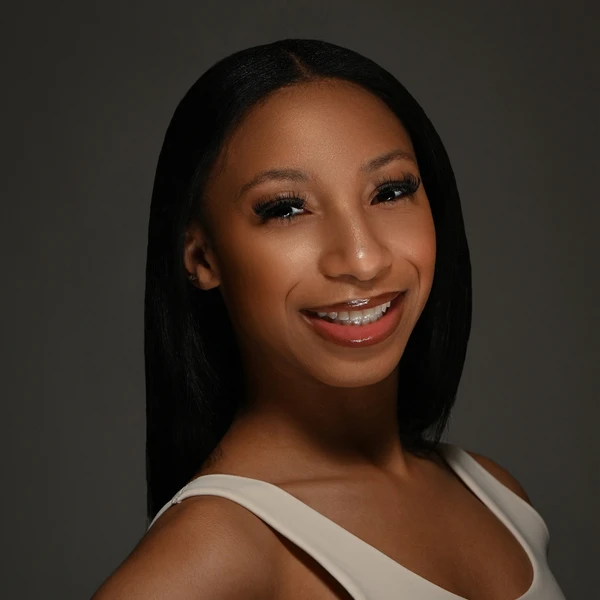
Kelsey Muckle, a Georgia native, has committed 15 years to dance thus far. She reigns supreme on stage by enticing the audience with her mesmerizing moves. Since the age of three, Kelsey has been training in Jazz, Ballet, Pointe, Modern, Contemporary, Hiphop, and Tap under prominent instructors at Visions Dance Academy and currently at Dancemakers of Atlanta. Presently, a first-year Health Science major student at Spelman College, Kelsey will be following her dream as a physical therapist and a dancer. Kelsey strives to give preventative care to dancers and fill the void of proper recovery therapy for injured dancers.
Education
Spelman College
Bachelor's degree programMajors:
- Health Professions and Related Clinical Sciences, Other
Miscellaneous
Desired degree level:
Bachelor's degree program
Graduate schools of interest:
Transfer schools of interest:
Majors of interest:
- Sports, Kinesiology, and Physical Education/Fitness
Career
Dream career field:
- Hospital & Health Care
Dream career goals:
Sports
Dancing
Varsity2011 – Present15 years
Awards
- National High School Dance Scholars Honors Award
- Elite Dancer
Arts
Dancemakers of Atlanta
Dance2011 – Present
Public services
Volunteering
Dancemakers of Atlanta — Instructor and Assistant2022 – Present
Ethel Hayes Destigmatization of Mental Health Scholarship
My experience with mental health has changed the way I understand myself, the people around me, and what I want my future to look like. I have learned that mental health is not always visible. Someone can attend class, laugh with friends, answer messages, and still be carrying something they have not figured out how to explain. That realization has made me more compassionate, but it has also made me more intentional about the kind of person I want to become.
There have been moments when I have felt emotionally overwhelmed, drained, or unsure of how to handle everything happening around me. Balancing school, responsibilities, relationships, and the expectations I place on myself has sometimes felt heavier than I wanted anyone to know. I used to believe that being strong meant pushing through everything without admitting that I was struggling. Over time, I learned that strength can look completely different. Sometimes strength means acknowledging that I am not okay, taking a step back, asking for support, or giving myself permission to rest.
My experience has also changed my relationships. I used to think caring about someone meant always having the right thing to say or trying to solve their problems. Now I understand that sometimes people do not need a solution immediately. They need someone who will listen without judging them. I have become more intentional about checking on people, noticing changes in their behavior, and creating space for honest conversations. I have learned that asking someone, “Are you really okay?” can mean more than simply asking how their day was.
At the same time, mental health has taught me that caring for other people does not mean abandoning myself. I have learned the importance of boundaries, communication, and recognizing when a relationship is affecting my peace. I want the people in my life to know that I care about them, but I also understand that healthy relationships require mutual effort. I cannot be everything for everyone, and I do not have to feel guilty for protecting my own well-being.
My experiences have influenced my educational and career goals as well. As a Health Science student preparing for a future in healthcare, I want to become a professional who recognizes the person behind the symptoms. Physical health and mental health are not separate parts of someone's life. Pain, stress, fear, financial pressure, and emotional exhaustion can affect how people recover and how they interact with healthcare providers. I want my future patients to feel that they are being treated as people rather than problems to be solved.
This perspective is especially important to me because healthcare can sometimes become focused on numbers, diagnoses, and procedures. Those things matter, but they do not tell a patient's entire story. A patient may be struggling to follow a treatment plan because they are overwhelmed, scared, exhausted, or unable to afford what they need. A provider who takes time to listen can discover barriers that might otherwise be missed. I want to be that kind of provider: knowledgeable and professional, but also approachable and compassionate.
My experience has made me interested in improving how people talk about mental health. I want to help create environments where asking for help does not feel embarrassing or like an admission of failure. I believe access matters, but so does the way support is offered. A resource cannot truly help someone if they are afraid of being judged for using it. I want to contribute to a culture where mental health conversations are normal, especially among young people who may feel pressure to appear like they have everything under control.
The way I see the world has changed because I no longer assume I know what someone is experiencing based on what I see. A quiet person may be overwhelmed. A confident person may be struggling. Someone who seems distant may simply be trying to make it through the day. I have learned to leave room for stories I do not know. That lesson has made me slower to judge and quicker to listen.
Mental health has also changed how I define success. I used to think success was mainly about accomplishing goals, earning good grades, and reaching the next milestone. Those things are still important to me, but I now understand that success also includes being healthy enough to enjoy what I work so hard to achieve. I do not want to build a successful future while ignoring the person living inside it. My goals now include protecting my peace, building healthy relationships, and becoming someone who can support others without losing myself.
Most importantly, my experience has taught me that growth is not always dramatic. Sometimes growth is setting a boundary, asking for help, getting out of bed on a difficult morning, having an honest conversation, or choosing to try again after feeling discouraged. Those small decisions have shaped my resilience. They remind me that progress does not have to be perfect to be real.
I cannot say that my experiences with mental health have made life easier. They have, however, made me more aware, compassionate, and purposeful. They have shaped the relationships I build, the healthcare professional I hope to become, and the impact I want to make in my community. I want to use what I have learned to make people feel less alone and more comfortable seeking support when they need it.
My understanding of mental health has ultimately taught me to look beyond appearances. It has shown me that everyone deserves patience because everyone is fighting battles that may not be visible. It has made me more willing to listen, more careful with my words, and more determined to treat people with dignity. Those values will shape not only the healthcare professional I become, but also the person I choose to be every day throughout my life.
Joe Gilroy "Plan Your Work, Work Your Plan" Scholarship
My main goal is to graduate from Spelman College with a Health Science degree, continue into a Doctor of Physical Therapy program, and become a physical therapist who helps people regain movement, independence, and confidence. I do not want my career to only be about having a title. I want to build a life where my education gives me the ability to make healthcare more accessible and where the people I serve feel respected and understood.
My first priority is completing my undergraduate education successfully. During the next two years, I plan to maintain or improve my academic performance by using Spelman’s academic resources, meeting with professors during office hours, forming study groups, and seeking tutoring when I need it instead of waiting until I am struggling. I will also continue looking for scholarships and grants to reduce the amount I need to borrow. My target is to secure at least $10,000 annually in outside scholarships and financial support.
Financial planning is an important part of my goal. My estimated yearly educational and living expenses can reach approximately $50,000. I plan to cover these costs through a combination of institutional financial aid, FAFSA-based assistance, scholarships, summer employment, savings, and family support when available. I will budget approximately $2,000 each year for books, course materials, transportation, professional clothing, and unexpected academic expenses. I will also maintain a separate emergency savings goal of at least $1,000 so one unexpected expense does not immediately interfere with school.
My second goal is gaining meaningful healthcare experience before applying to physical therapy programs. Beginning now, I plan to pursue volunteer opportunities, clinical exposure, observation hours, and internships that allow me to understand different areas of patient care. I want to complete experiences in settings such as outpatient clinics, rehabilitation centers, hospitals, and community health programs. These experiences will help me determine which patient populations I want to serve while strengthening my future applications.
By my junior and senior years, I plan to research Doctor of Physical Therapy programs, compare tuition and prerequisite requirements, build relationships with mentors, and prepare for applications. I will prioritize programs based on accreditation, clinical opportunities, graduation outcomes, location, and total cost rather than choosing a school based only on reputation. I will apply to several programs so that my future does not depend on one acceptance decision.
I also understand that plans can change. If I cannot immediately enter a DPT program, I will use that time intentionally by working in a healthcare setting, completing any missing prerequisites, strengthening my application, and saving money. If finances become my biggest obstacle, I will pursue graduate scholarships, assistantships, employer tuition benefits, and federal financial aid before considering private loans.
My long-term goal is to become a licensed physical therapist and eventually contribute to a practice or community program that provides affordable rehabilitation services. I want to serve patients who may delay care because of cost, transportation, or limited access. Reaching that goal will require discipline, financial planning, mentorship, experience, and flexibility.
I know there is no perfect path to success. My plan is to keep moving forward, evaluate what is working, adjust when necessary, and use every resource available to me. I am investing in my education because I believe becoming a healthcare professional is not simply my career goal; it is how I plan to create opportunities for myself while giving meaningful care to others.
Sherman S. Howard Legacy Foundation Scholarship
My involvement in my local church has taught me that service is not always about doing something big enough for people to notice. Sometimes, it is showing up, listening, giving your time, or helping someone carry a burden they were never meant to carry alone. Because of my church, I have learned to look at service as a responsibility rather than something I do only when it is convenient.
Being involved in church has placed me around people from different generations and backgrounds. I have seen how easily someone can become overlooked when they are struggling financially, emotionally, or simply trying to get through a difficult season. Those experiences have made me more aware of the needs around me. Instead of asking, “What can I get from this experience?” I have learned to ask, “What can I do with what I have?”
That mindset has followed me outside of church. I try to serve my community by giving my time, helping others when I can, and being intentional about making people feel seen. Whether I am volunteering, assisting someone who needs support, or encouraging someone who is having a difficult day, I understand that small acts can have a lasting effect. My church taught me that you do not have to have a lot of money, influence, or resources to make a difference. You can start with your time, your kindness, and your willingness to care.
One of the biggest lessons I have taken from church is that service should not be performed for recognition. It should come from genuinely caring about people. That lesson has changed how I approach community involvement. I do not want to volunteer simply to add another activity to my résumé. I want the people I serve to actually feel the impact of my presence.
My church has also challenged me to become more compassionate. It has reminded me that everyone is carrying something I may know nothing about. Because of that, I try to be slower to judge and quicker to help. I have learned that sometimes the most meaningful form of service is simply being patient with someone, listening to them, or reminding them that they are not alone.
I also carry that lesson into how I treat people. Service can happen in moments: checking on a friend, encouraging a student, sharing information that is helpful, or offering help without waiting to be asked. My church helped me realize that community becomes stronger when people stop thinking about themselves. Perspective continues to shape who I am and the impact I hope to leave behind.
As I continue my education and prepare for a career in healthcare, I know this foundation will remain important. Healthcare is about more than treating a condition; it is about caring for a person. My church has helped me understand the importance of serving people with dignity, patience, and compassion. Those values are ones I want to carry into every community I become part of.
Ultimately, my church has shown me that service is a way of living. It has taught me to notice needs, respond with compassion, and use what I have to help someone else. I may not be able to solve every problem in my community, but I can choose to be someone who contributes to the solution. That is the kind of service I want to continue practicing, not because I expect recognition, but because I believe everyone deserves to feel supported, valued, and cared for.
Healing Self and Community Scholarship
Mental health care should not feel like a luxury that people have to earn. If I could make one unique contribution to the world, I would create a community-based mental health system that meets people where they are financially, emotionally, and physically.
I want to help build affordable mental health centers in communities where people often struggle silently because therapy is too expensive, transportation is difficult, or they simply do not know where to begin. These centers would offer low-cost counseling, support groups, wellness workshops, and connections to other resources. I would also advocate for virtual appointments and flexible hours so that getting help does not require someone to choose between their mental health and their job, education, or family responsibilities.
What would make my contribution different is the emphasis on feeling understood, not just treated. I want mental health care to reflect the cultures, experiences, and everyday realities of the people receiving it. No one should feel judged for needing help or embarrassed because they cannot afford it.
As someone pursuing a career in healthcare, I want to carry this belief with me beyond a classroom or hospital. I want to be the person who notices when someone is struggling and helps them find a door that is actually open.
My goal is not simply to make mental health care cheaper. It is to make support feel reachable, normal, and human. I want someone to hear “you need help” and know that help is genuinely available to them.
RonranGlee Literary Scholarship
Marcus Aurelius' statement, “You have power over your mind—not outside events. Realize this, and you will find strength,” presents one of the central ideas of Stoic philosophy. Although the sentence is brief, it contains a profound lesson about human nature and personal responsibility. My thesis is that Marcus Aurelius argues that genuine strength comes from mastering one's thoughts and reactions rather than attempting to control circumstances that lie beyond one's influence. Through this idea, he encourages readers to redefine strength as self-discipline, emotional resilience, and wisdom instead of power over other people or external situations.
The first part of the passage establishes a clear distinction between what belongs to an individual and what does not. According to Aurelius, the human mind is the only domain over which a person has complete authority. Thoughts, attitudes, judgments, and responses are personal choices, while the actions of others, unexpected hardships, and the natural course of life remain outside anyone's control. This distinction challenges the common belief that happiness depends primarily on favorable circumstances. Instead, Aurelius argues that peace begins with recognizing the limits of human control. His words suggest that many people create unnecessary suffering by investing emotional energy in events they can neither prevent nor change.
The passage also implies that freedom is not determined by external conditions but by the ability to govern one's own mind. Many individuals assume they would experience happiness if they possessed greater wealth, higher status, or more predictable circumstances. Aurelius rejects this assumption by emphasizing that external conditions are unstable and temporary. Wealth can disappear, relationships can change, and success can fade unexpectedly. If happiness depends entirely upon these uncertain factors, then emotional stability becomes impossible. By directing attention inward instead of outward, Aurelius proposes a more dependable foundation for personal well-being. A disciplined mind remains steady because it is not constantly dependent upon circumstances that cannot be guaranteed.
Another important aspect of the passage is its redefinition of strength. In many societies, strength is associated with physical power, authority, or the ability to influence others. Aurelius presents a completely different understanding. He suggests that the strongest person is not the one who dominates external situations but the one who remains composed despite them. Maintaining patience during hardship, responding thoughtfully instead of emotionally, and refusing to allow anger or fear to dictate behavior all require significant inner discipline. This concept transforms strength from something visible to something deeply internal. It becomes an achievement of character rather than a display of power.
Furthermore, the passage emphasizes personal responsibility. Aurelius does not encourage readers to blame circumstances for their emotional suffering. Instead, he argues that while external events may create challenges, individuals remain responsible for interpreting and responding to those events. This perspective does not deny the existence of pain or injustice. Rather, it recognizes that people cannot always choose what happens to them, but they can choose how they will respond. By accepting responsibility for one's reactions, an individual becomes less dependent on the unpredictable actions of others and more capable of maintaining inner stability.
The phrase, “Realize this, and you will find strength,” highlights that wisdom begins with understanding rather than force. Aurelius suggests that strength is discovered through a change in perspective. Once a person recognizes that controlling every external event is impossible, frustration begins to lose its power. Instead of exhausting themselves by attempting to change uncontrollable situations, individuals can devote their energy toward improving their own character, decisions, and habits. This realization produces resilience because it shifts attention away from anxiety and toward purposeful action.
The underlying meaning of the passage extends beyond ancient philosophy and remains relevant in modern life. People today frequently experience stress caused by circumstances beyond their control, including financial uncertainty, academic pressure, social expectations, family conflicts, and unexpected setbacks. Aurelius' advice encourages individuals to separate what they can influence from what they cannot. Rather than becoming overwhelmed by uncertainty, they can focus on making thoughtful decisions, maintaining integrity, and preserving emotional balance. His philosophy does not promise an easier life but offers a healthier way of confronting life's inevitable difficulties.
Ultimately, Marcus Aurelius teaches that lasting strength originates within the individual rather than in external success or favorable circumstances. His statement reminds readers that while the world remains unpredictable, the human mind possesses the capacity for reason, discipline, and resilience. By mastering one's thoughts instead of attempting to master every situation, individuals gain a form of strength that cannot easily be taken away. Through this lesson, Aurelius demonstrates that true freedom is not achieved by controlling the world but by developing the wisdom and self-control necessary to face whatever the world presents with courage and composure.
Sloane Stephens Doc & Glo Scholarship
Growing up, I learned that the greatest impact a person can make is not measured by awards or recognition, but by the lives they touch. Every experience I have had has strengthened my desire to become someone who helps others regain hope during difficult moments. My education is not simply a pathway to a career. It is the foundation that will allow me to serve my community, advocate for people who often feel overlooked, and create opportunities for healthier and happier lives.
As a Health Science major on the path to becoming a physical therapist, I have chosen a profession centered on healing, patience, and encouragement. Physical therapy is about much more than helping someone walk again after an injury. It is about restoring confidence, independence, and dignity. I want every patient who walks through my door to feel seen, respected, and supported regardless of their age, income, or background.
The people who inspire me most are those who continue showing up for others even when life is difficult. I have watched family members make sacrifices without expecting anything in return, reminding me that compassion is often found in the smallest acts of kindness. I have also been inspired by healthcare professionals who treated patients with genuine care instead of rushing them through appointments. Their kindness showed me that healing begins with listening. Those experiences shaped the type of healthcare professional I hope to become.
My vision extends beyond working in a clinic. I want to bring healthcare education into communities where access to resources is limited. Too many families are unaware of injury prevention techniques, rehabilitation services, or exercises that could improve their quality of life. I hope to organize community wellness workshops, provide free mobility screenings, and partner with local schools, churches, and community centers to educate people about maintaining healthy lifestyles. Knowledge should never be a privilege available only to those who can afford it.
I am especially passionate about encouraging young people to believe that careers in healthcare are possible for them. Representation matters. When students see someone who shares their background succeeding, they begin to imagine themselves doing the same. I want to mentor students, volunteer with youth organizations, and speak at schools about the importance of education, perseverance, and service. Sometimes all it takes is one person believing in you to change the direction of your life.
Creating meaningful change also means addressing barriers that prevent people from receiving quality healthcare. I hope to advocate for greater accessibility, affordable rehabilitation services, and culturally compassionate care. Every individual deserves to feel valued when seeking medical treatment. By combining professional knowledge with empathy, I believe healthcare providers can improve both physical recovery and emotional well-being.
The impact I want to make will not happen overnight. It will be built through every patient I encourage, every student I mentor, every family I educate, and every opportunity I create for someone else to succeed. My education will give me the skills to heal, but my purpose will always be to serve. I want my legacy to be one of compassion, leadership, and hope. If I can help even one person believe in a brighter future because someone believed in them first, then I will know I have used my education exactly as it was meant to be used.
Rosa A. Wilson Scholarship
As a Health Science major at Spelman College on the pre-physical therapy track, I have learned that healing extends far beyond treating an injury. True healing means recognizing the barriers that prevent people from living healthy, fulfilling lives and working to remove those barriers. As a future physical therapist, I want to use my degree to empower BIPOC women by ensuring they receive compassionate, culturally competent care while also advocating for changes that make quality healthcare more accessible. My goal is not only to help women recover physically but also to restore confidence, independence, and hope.
Growing up, I witnessed how many Black women carried the weight of caring for everyone else while often neglecting their own health. Whether because of financial limitations, lack of insurance, transportation issues, or past negative experiences with healthcare providers, many delayed seeking treatment until their conditions became severe. These experiences showed me that health disparities are not simply personal choices; they are the result of systemic inequities that continue to affect underserved communities. They also inspired me to become someone who listens, educates, and advocates without judgment.
As a physical therapist, I want every patient to feel seen and respected. I plan to create an environment where BIPOC women feel comfortable asking questions, expressing concerns, and participating in decisions about their care. Representation matters, and I hope that seeing a healthcare professional who understands their experiences will help build trust that has too often been broken. I also want to educate patients about injury prevention, chronic pain management, mobility, and long-term wellness so they can confidently take charge of their health beyond the clinic.
Community engagement will always be central to my career. I hope to partner with schools, churches, community centers, and local organizations to provide free wellness workshops, injury screenings, and educational programs. By bringing healthcare directly into neighborhoods, I can help reach women who may not otherwise have access to these resources. I also want to mentor young girls interested in healthcare careers, encouraging them to believe that they belong in spaces where important decisions are made. Investing in future generations is one of the most meaningful ways to create lasting change.
Advocacy is another responsibility I take seriously. I plan to support policies that improve access to affordable rehabilitation services, expand healthcare coverage, and address disparities affecting marginalized communities. I also want to work alongside organizations dedicated to health equity, using both my professional knowledge and personal experiences to amplify the voices of women whose concerns are often overlooked. Change happens when healthcare professionals speak up not only inside examination rooms but also in board meetings, community forums, and legislative discussions.
Spelman College has strengthened my commitment to service and social justice. It has challenged me to think critically about the intersection of race, gender, and health while encouraging me to use my education to uplift others. Those lessons have shaped the kind of healthcare professional I hope to become: one who leads with empathy, serves with humility, and advocates with courage.
My degree will be more than a professional credential. It will be a tool to challenge inequities, empower BIPOC women, and create healthier communities where every woman has the opportunity to thrive. I believe meaningful change begins with compassion, grows through service, and continues when we choose to stand beside those whose voices deserve to be heard every single day.
Rebecca Lynn Seto Memorial Scholarship
When I think about working with a child like Rebecca, I think about seeing the child before the disability. Every child deserves to be known for their personality, strengths, interests, and dreams rather than the challenges they face. My first priority would be building trust because meaningful learning cannot happen unless a child feels safe, respected, and understood. I would take the time to learn how Rebecca communicates, what motivates her, what causes frustration, and what strategies help her succeed. Every child learns differently, and I believe it is my responsibility as an educator to adapt my teaching instead of expecting the child to adapt to me.
To reach and teach Rebecca, I would use patience, consistency, and individualized instruction. I would incorporate hands-on learning, visual supports, positive reinforcement, and technology when appropriate. I would celebrate small victories because progress is not always measured by large milestones. Sometimes success is a child asking for help independently, completing a task with confidence, or simply believing in themselves. I also believe in maintaining high expectations while providing the support necessary for students to meet those expectations. Children often rise to the level of belief that others have in them, and I want every student to know I believe they are capable of growth.
Family plays an irreplaceable role in the education of a child with disabilities. Parents and caregivers know their children in ways that no teacher ever could. They understand their routines, fears, communication styles, and the strategies that work best at home. I believe education is strongest when teachers and families work as partners instead of separately. Open communication, mutual respect, and shared goals create consistency between home and school, giving children the stability they need to thrive. Families should feel heard, valued, and included in every important decision regarding their child's education.
I confirm my sincere intent to work in special education for students from pre-kindergarten through twelfth grade. My long-term goal is to dedicate my career to helping children with diverse learning needs discover their potential while creating classrooms where every student feels accepted and empowered. I understand that special education requires compassion, flexibility, lifelong learning, and unwavering advocacy, and I am committed to developing those qualities throughout my career.
Although I have not yet held a formal position working exclusively with children with special needs, I have gained valuable experience through volunteering, mentoring, and interacting with children who learn differently in educational and community settings. Those experiences have taught me the importance of patience, active listening, and meeting children where they are instead of where we expect them to be. They also reinforced my desire to pursue a career dedicated to supporting students with disabilities.
Paying for college has been one of the greatest challenges I have faced. I currently attend Spelman College, and while I receive financial aid, scholarships remain essential to helping me continue my education. My family and I work hard to cover educational expenses, but tuition, books, housing, transportation, and other costs continue to create financial strain. I am committed to earning my degree while minimizing student loan debt because I want to begin my career focused on serving students rather than worrying about overwhelming financial obligations. Receiving this scholarship would ease that burden and allow me to devote more time to my education, professional development, and preparing to become the compassionate, dedicated special education teacher I aspire to be.
Hines Scholarship
For me, going to college means much more than earning a degree, it represents opportunity, growth, and the ability to create a better future for myself and my community. As a first step toward achieving my dreams, college has challenged me to think critically, discover my purpose, and develop the skills needed to make a meaningful impact on the lives of others.
Attending Spelman College has made this journey especially meaningful. Spelman is more than an institution; it is a community that empowers Black women to lead with confidence, excellence, and compassion. Being surrounded by ambitious, talented, and inspiring women has encouraged me to push beyond my limits and embrace my potential. Every class, conversation, and experience at Spelman has reinforced the importance of using my education to serve others and create positive change.
I chose to pursue a degree in Health Science on a pre-physical therapy track because I am passionate about helping people improve their quality of life. I have always been interested in the connection between health, movement, and overall well-being, and I know that physical therapy will allow me to combine my love for science with my desire to care for others. My goal is to become a physical therapist who helps individuals regain their independence, restore their confidence, and overcome physical challenges.
Beyond my personal aspirations, I am committed to addressing healthcare disparities that affect underserved communities, particularly Black communities. Access to quality healthcare and rehabilitation services is not always equitable, and I want to help bridge those gaps by providing compassionate, culturally responsive care. Through my education, I hope to become an advocate for health equity and a source of support for individuals who may not otherwise have access to the care they need.
While I am dedicated to achieving these goals, the financial burden of higher education can be overwhelming. As a student at Spelman College, where the cost of attendance exceeds $50,000 per year, I understand the sacrifices that come with pursuing a quality education. Receiving this scholarship would ease the financial stress associated with tuition, textbooks, and educational expenses, allowing me to focus more fully on my studies, clinical experiences, and community involvement.
Ultimately, what I am trying to accomplish extends far beyond earning a degree. I am working toward a future where I can use my education to empower others, improve health outcomes, and inspire the next generation of students to pursue careers in healthcare. Going to college means investing in my purpose, and with the support of this scholarship, I will be one step closer to turning that purpose into a lifelong commitment to service and leadership.
Kayla Nicole Monk Memorial Scholarship
Growing up, I have always been fascinated by the connection between science and the human body. As I learned more about healthcare and witnessed the impact that quality medical care can have on individuals and families, I discovered my passion for physical therapy. This passion inspired me to pursue a degree in Health Science on a pre-physical therapy track, furthering my education in the STEAM field.
I chose STEAM because it combines critical thinking, innovation, and compassion to solve real-world problems. Science and technology continue to transform healthcare, creating new opportunities to improve patient outcomes and increase access to care. Through my education, I am gaining the knowledge and skills necessary to become a physical therapist who can help individuals recover from injuries, regain independence, and improve their quality of life.
As a Black woman pursuing a career in healthcare, I am especially motivated to address disparities that affect underserved communities. Many Black communities face barriers to accessing quality healthcare services, including physical therapy. These barriers often contribute to poorer health outcomes and reduced opportunities for preventative care and rehabilitation. I want to be part of the solution by providing culturally responsive care, advocating for health equity, and serving communities that have historically been overlooked.
Currently, I attend Spelman College, where I am working toward my degree while maintaining my commitment to academic excellence and community service. Although I am dedicated to achieving my goals, the financial burden of higher education presents significant challenges. The cost of tuition, textbooks, laboratory fees, and other educational expenses can create obstacles that make it difficult to focus solely on my studies.
Receiving this scholarship would provide me with the financial support needed to continue my educational journey with less financial stress. It would allow me to dedicate more time to academic opportunities, hands-on experiences, and community engagement activities that will prepare me for a successful career in physical therapy. This support would also help reduce my reliance on loans, enabling me to invest more fully in my future and graduate school education.
Ultimately, this scholarship is more than financial assistance, it is an investment in my ability to make a meaningful difference in the lives of others. By supporting my education in STEAM, this scholarship will help me move one step closer to becoming a physical therapist who empowers individuals to regain mobility, restore confidence, and live healthier lives. I am committed to using my education to create positive change and inspire future generations to pursue careers in healthcare and STEM fields.
Ethel Hayes Destigmatization of Mental Health Scholarship
Mental health is a topic that, for much of my life, hovered quietly in the background, present but rarely spoken about openly. My personal journey with mental health has been one of learning, growth, and self-discovery. It has shaped not only my goals and relationships, but also my broader understanding of the world and the people in it. Through struggle and healing, I have come to believe that mental health is as vital as physical health, and that empathy, vulnerability, and support are essential to building a kinder, more resilient society.
My first real encounter with mental health challenges came during my sophomore year of high school. Up until that point, I had always been a high-achieving student, meticulous about my grades and extracurriculars, and eager to meet others’ expectations. I took pride in being dependable and strong, but beneath the surface, I was dealing with mounting anxiety and self-doubt. The pressure to excel became overwhelming, and I began to experience panic attacks. Simple tasks felt insurmountable, and I struggled to sleep, focus, or find joy in activities that once brought me happiness.
At first, I was ashamed to admit I was struggling. I worried that acknowledging my anxiety would make me appear weak, or that people wouldn’t understand. For months, I kept my feelings bottled up, putting on a brave face while my inner world grew darker and more chaotic. Eventually, my parents noticed the changes in my behavior and encouraged me to talk to a counselor. Taking that first step was terrifying, but it was also a turning point. Through therapy, I learned to name my feelings, recognize triggers, and develop coping strategies that helped me regain control. I also realized that I was not alone in my struggles; so many people face similar challenges, even if they don’t speak about them.
This experience transformed my understanding of myself and others. I became more compassionate, not only toward myself, but toward friends, classmates, and even strangers. I learned that everyone carries invisible burdens and that kindness and patience can make a world of difference. My relationships grew stronger as I began to open up to trusted friends and family about my mental health journey. Instead of hiding my struggles, I found strength in vulnerability. My honesty invited others to share their own experiences, and together we built deeper, more supportive connections.
My journey with mental health has also reshaped my goals, both personal and professional. I realized that success is not defined solely by external achievements or accolades, but by balance, authenticity, and well-being. I became passionate about advocating for mental health awareness in my school and community. I joined the mental health club, helped organize awareness campaigns, and spoke at school assemblies about the importance of seeking help and supporting one another. It was empowering to use my voice to challenge stigma and encourage open conversations. I found purpose in helping others feel less alone, and these experiences inspired me to pursue a career in healthcare, specifically physical therapy, where I can contribute to holistic healing.
Understanding the connection between mental and physical health has become central to my philosophy. My own recovery taught me how deeply our minds and bodies are intertwined. During a particularly challenging period, I suffered a hip injury that took me out of dance for over a year. The physical pain was difficult, but the emotional toll was even greater. I felt isolated and frustrated, grieving the loss of something I loved. It was through physical therapy that I regained not just strength in my body, but hope and confidence. My physical therapist recognized the emotional aspects of my recovery, supporting me with patience and encouragement. That holistic approach inspired me to want to offer the same to others. I am determined to become a physical therapist who sees the whole person, not just the injury, and who advocates for mental health as an essential part of healing.
My experience with mental health has also made me more attuned to the systemic barriers many face when seeking help, whether due to stigma, lack of access, or cultural misconceptions. I have become passionate about equity in healthcare, particularly for underserved communities where mental health resources are often scarce. I hope to use my education and voice to advocate for better access to care, to educate others, and to help break down the walls of silence and shame that still surround mental health.
Perhaps most importantly, my journey has taught me the value of self-compassion. There are still days when anxiety and self-doubt creep in, but I have learned to treat myself with the same kindness I offer others. I have learned that healing is not linear, that setbacks do not erase progress, and that asking for help is a sign of strength, not weakness.
In summary, my experience with mental health has been both a challenge and a gift. It has shaped my goals by inspiring me to pursue a career centered on holistic care and advocacy. It has deepened my relationships by teaching me the power of vulnerability and empathy. And it has broadened my understanding of the world, reminding me that everyone is fighting battles we may never see. I am committed to using my experiences to promote understanding, break stigma, and help build a world where mental health is valued, supported, and celebrated as an essential part of our shared humanity.
Our Destiny Our Future Scholarship
My plan to make a positive impact on the world is rooted in my commitment to service, empathy, and the belief that small acts of kindness can create far-reaching ripples of change. I have always been inspired by the idea that we each have a unique role to play in making the world a better place for those around us. For me, this means dedicating my life and work to helping others, especially those who are often overlooked or underserved.
My primary avenue for making a difference is through my chosen career as a physical therapist. I have witnessed firsthand how physical therapy can transform lives, not just by healing injuries, but by restoring hope, independence, and self-confidence. During my own recovery from a hip injury, my physical therapist became more than a healthcare provider; she was a mentor, a motivator, and a source of unwavering support. That experience inspired me to pursue physical therapy, so that I can be that source of encouragement and healing for someone else.
My vision is to provide compassionate, personalized care to every patient I work with. I want to help people regain their strength and mobility, but also to see their recovery as an opportunity for growth and renewed confidence. I believe in a holistic approach to healing, one that addresses not only the body, but also the mind and spirit. By fostering strong relationships with my patients, listening to their stories, and advocating for their needs, I hope to empower them to take charge of their own health and well-being.
Beyond individual patient care, I am passionate about addressing healthcare disparities in underserved communities. I plan to volunteer my time and skills in areas where access to quality rehabilitation and healthcare services is limited. Too often, barriers such as cost, distance, or lack of awareness prevent people from receiving the care they need. By working in community clinics, leading health education workshops, and advocating for greater accessibility, I hope to bridge these gaps and ensure that everyone has the opportunity to heal and thrive.
I also recognize the importance of inspiring and uplifting others, especially young women and minorities who may not see themselves represented in healthcare professions. I plan to mentor students, share my story, and encourage others to pursue their dreams, no matter the obstacles they face. Representation matters, and I want to show that with determination, empathy, and hard work, anyone can make a difference.
In summary, my plan to make a positive impact on the world centers on service, compassion, and advocacy. Whether it is in a clinic, a classroom, or a community center, I am determined to use my skills and my voice to uplift others and promote healing in every sense of the word. I believe that by helping even one person regain hope and confidence, I contribute to a larger cycle of kindness and progress that can change the world for the better.
Women in Healthcare Scholarship
My decision to pursue a degree in healthcare stems from a deep-rooted desire to help people reclaim their health, independence, and confidence. Growing up, I witnessed firsthand the transformative power of compassionate care, both through my own experiences as a patient and as a volunteer in rehabilitation centers. These experiences not only inspired me to seek a career in healthcare, but specifically ignited my passion for physical therapy, where science and human connection come together to restore hope and movement.
My journey toward this field began with a personal challenge: a hip injury that sidelined me from dance for over a year. Physical therapy became my lifeline, not only restoring my body, but also my spirit. It was during those long months of rehabilitation that I saw the profound impact a skilled and empathetic healthcare professional can have. My physical therapist not only guided me through exercises, but listened to my fears, encouraged me on hard days, and celebrated every small victory. That experience inspired me to want to provide the same level of personalized care and support to others facing injuries or setbacks.
Healthcare, to me, is more than just treating symptoms; it is about understanding each patient’s story, advocating for their needs, and empowering them to take charge of their recovery. That is the heart of physical therapy, and it is why I am so drawn to this profession. I want to help people regain strength and mobility, but also to help them rediscover their confidence and joy in everyday life. I believe that healing is holistic, and physical therapists play a crucial role in addressing both the physical and emotional aspects of recovery.
As a woman entering the healthcare field, I am mindful of the unique perspectives and strengths women bring to this profession. Women often serve as advocates, nurturers, and leaders in their communities, and I hope to embody those roles as a physical therapist. Representation matters, especially in healthcare, where patients seek providers who understand and respect their diverse backgrounds and experiences. I am passionate about promoting inclusivity and equity in patient care, and I hope to inspire other young women, especially those from underrepresented backgrounds, to pursue careers in healthcare as well.
My goal is to make a positive impact not only by providing excellent clinical care, but also by serving as an advocate for my patients and my community. I want to work in underserved areas, where access to quality rehabilitation services is limited, and where my skills and empathy can make a real difference. Whether it is helping an athlete return to the field, an elderly person regain independence, or a child recover from injury, I want every patient I work with to feel seen, heard, and supported.
In summary, I have chosen healthcare, and physical therapy in particular, because I believe in the power of healing through connection, knowledge, and compassion. As a woman in this field, I am committed to making a meaningful difference, supporting my patients’ journeys, and helping to build a more inclusive and caring healthcare system for all.
Second Chance Youth Scholarship
To me, a second chance means more than just starting over, it means being trusted with the opportunity to become who you were always capable of being. It is the space to grow past your mistakes without being permanently defined by them. My experience in the juvenile justice system challenged me in ways I never expected, but it also forced me to confront myself honestly. What once felt like the lowest point in my life became the moment that pushed me to change my direction and take control of my future.
During that time, I had to sit with my choices and truly understand their impact. I realized how quickly one decision could shift the course of my life and limit opportunities I hadn’t even reached yet. It was difficult to face, especially knowing that my actions affected not just me, but my family and the people who believed in me. But in that discomfort, I found clarity. I learned accountability, not just saying “I’m sorry,” but actually changing my behavior. I learned discipline, patience, and the importance of thinking beyond the moment. Most importantly, I realized that I still had control over what my story would become.
Since then, I have been intentional about rebuilding myself. Choosing to attend Spelman College as a Health Science major on the pre-physical therapy track reflects that commitment. I am no longer moving without direction, I am working toward a purpose. Physical therapy stands out to me because it represents restoration, healing, and giving people their strength back, both physically and mentally. In many ways, that mirrors my own journey. I understand what it feels like to be at a low point, and I want to be part of helping others recover, rebuild, and move forward in their lives.
I have taken clear steps toward positive change by prioritizing my education, improving my mindset, and surrounding myself with people who challenge me to do better. I’ve learned how to manage my emotions and handle difficult situations with more maturity instead of reacting impulsively. I hold myself accountable now in a way I didn’t before. Growth for me has been about consistency, showing up every day with better decisions, even when it’s hard.
Receiving this opportunity would allow me to continue on this path without the weight of financial stress holding me back. I would use the award funds to support my education, including tuition, textbooks, and other academic expenses required for my Health Science program. As a pre-physical therapy student, I also anticipate costs related to gaining clinical experience, observation hours, and preparing for graduate school. This support would allow me to stay focused on my long-term goals and fully invest in becoming the best version of myself academically and professionally.
My future goal is to become a licensed physical therapist and work in communities that often lack access to quality healthcare and rehabilitation services. I want to help people regain not just movement, but confidence and independence. Beyond my career, I am committed to paying it forward. I want to mentor young people who have faced challenges similar to mine, especially those who feel like their past has already decided their future.
I understand how easy it is to feel labeled or limited after being involved in the juvenile justice system. I want to be someone who challenges that narrative. Whether through mentorship programs, community outreach, or simply sharing my story, I hope to show others that a setback does not have to be permanent. I want to create a space where young people feel seen, supported, and encouraged to choose growth over repetition of mistakes.
A second chance is not something I take lightly. It is something I am actively working to earn every day through my actions, my discipline, and my commitment to my future. My past experiences shaped me, but they do not define me, they prepared me. I am determined to continue building a life rooted in purpose, resilience, and service, and to use every opportunity I receive to uplift not only myself, but others who are still finding their way.
Dick Loges Veteran Entrepreneur Scholarship
My father’s journey as both a Navy veteran and an entrepreneur has been a guiding force in my life, shaping not only my values but also my educational and career aspirations. Watching him build a barbershop business after his military service has given me firsthand insight into resilience, hard work, and the importance of serving others, qualities that have inspired my desire to attend Spelman College and pursue a career as a physical therapist.
Growing up, I saw the discipline and dedication my father brought home from the Navy. He often spoke about the importance of teamwork, adaptability, and integrity, principles that guided him on ships at sea and later in his own business. When he transitioned from military life to becoming a barber and eventually a barbershop owner, I watched him navigate challenges with determination and a positive attitude. The barbershop quickly became more than just a place for haircuts; it grew into a community hub where people came not only for grooming but for camaraderie, advice, and encouragement. My dad treated every customer with respect and genuine care, creating an environment where everyone felt valued.
This sense of service and commitment to community deeply influenced my own goals. I realized that I wanted a career where I could make a tangible difference in people’s lives, helping them regain confidence and independence. Physical therapy appeals to me because, much like my dad’s role as a barber, it blends technical skill with empathy and personal connection. I want to help others recover and thrive, just as my father helps his clients look and feel their best.
My educational journey has also been shaped by the lessons I learned from my father’s military service. His stories of overcoming obstacles, working with diverse groups of people, and never giving up have been a source of motivation when I’ve faced my own setbacks. For example, when I suffered a hip injury that kept me from dancing for over a year, my dad’s encouragement and example helped me stay focused on my recovery and my studies. He reminded me that resilience is built through adversity, and that hard work and perseverance can turn challenges into opportunities for growth.
Attending Spelman College feels like a natural extension of these values. Spelman’s commitment to academic excellence, leadership, and service to underserved communities aligns with the legacy my father has modeled. I am eager to learn, grow, and give back, carrying forward the lessons of discipline, service, and compassion that my father’s military and entrepreneurial journey has instilled in me. Through my education and future career as a physical therapist, I hope to honor his example by making a meaningful impact in the world.
Hearts on Sleeves, Minds in College Scholarship
One moment that profoundly shaped my understanding of communication and confidence happened during my sophomore year of high school. It was a moment when I struggled to use my voice, but ultimately found the courage to speak up, forever changing how I view advocacy and leadership.
I had always been a diligent student, content to let my work speak for itself. Participating in class discussions or voicing controversial opinions did not come naturally to me; I was more comfortable listening rather than leading. That changed during a meeting of the school’s Environmental Club, of which I was a member. Our club’s mission was to promote sustainability within the school and the local community. That year, we decided to launch a campaign to reduce single-use plastics in the school cafeteria. We spent weeks researching alternatives, surveying students, and preparing a presentation for the school administration.
On the day of our presentation, our club president fell ill unexpectedly. As the vice president, I was next in line to deliver our research and recommendations. When the faculty advisor informed me that I would need to take the lead, my heart dropped. Public speaking had always intimidated me, and the thought of addressing the entire administrative board was overwhelming. I considered asking someone else to step in or suggesting that we postpone, but I knew how important this campaign was to the club and to me personally. The school’s reliance on single-use plastics was not just an environmental issue, it was an opportunity for positive change and student agency.
When I finally stood before the administration, my hands were shaking and my voice quivered. I stumbled through my introduction and lost my place in the notes a few times. But as I spoke about the environmental impact of plastic waste and the enthusiasm students had for change, I began to notice a shift in the room. Some administrators nodded in agreement, others took notes. Their engagement gave me a surge of confidence, and I found myself speaking more clearly and passionately. I responded to questions, addressed concerns about costs and logistics, and offered examples of other schools that had successfully implemented similar programs.
By the end of the meeting, I felt an immense sense of relief, but also pride. The administration agreed to pilot a plastic reduction initiative, starting with eliminating plastic straws and introducing reusable utensils. The club celebrated, but what stuck with me most was how close I had come to letting fear silence me. If I had not found the courage to use my voice, the campaign might have stalled, and our hard work could have amounted to nothing.
This experience taught me several valuable lessons. First, I learned that confidence is not a prerequisite for action; it is often a result of action. Waiting to feel completely comfortable before speaking up might mean waiting forever. Sometimes, the act of stepping forward is what builds the confidence we need. I also discovered that communication is as much about authenticity and conviction as it is about polish. My delivery was far from perfect, but my sincerity and commitment resonated more than flawless eloquence ever could.
Moreover, I realized the power of using my voice not just for myself, but for a cause and a community I cared about. Being the spokesperson for our club was daunting, but it also meant I was representing the hopes and ideas of many students. I saw firsthand how one voice, even a nervous, uncertain one, can be the catalyst for meaningful change when it is rooted in purpose.
Since that moment, I have embraced opportunities to speak up and lead, even when it feels uncomfortable. I volunteered to facilitate club meetings, led classroom presentations, and participated in local climate marches. I also made a point to encourage quieter members of the club to share their ideas, knowing how intimidating it can be to step into the spotlight for the first time. Through these experiences, I have become a more confident communicator and a more empathetic leader.
Looking to the future, I hope to use my voice to advocate for sustainability, equity, and positive change on a larger scale. Whether it is through engaging in campus organizations, writing articles, or participating in public forums, I want to amplify issues that matter and help empower others to do the same. I believe that real progress happens when diverse voices are heard and valued, and I am committed to fostering environments where everyone has the confidence and support to speak up.
In conclusion, the moment I struggled to use my voice, and ultimately did, was transformative. It taught me that courage is not the absence of fear, but the willingness to act in spite of it. It showed me that communication is about connecting with others over shared values and goals. Most importantly, it inspired me to use my voice to create impact and to help others find theirs, wherever life may take me.
Wieland Nurse Appreciation Scholarship
I've decided to pursue a career in health sciences because I sustained a hip injury during one of the most important dance seasons for me. I tore my labral in two places. I was out the majority of the season. It was physically and mentally challenging for me. I went to dance classes and rehearsals every week. It was hard to see my fellow dancers participate in class and rehearsals without me. I journaled a lot yo help me stay focused on my revovery and to stay positive mentally. The process was long and I had to have lots of patience.
Luckily, I had an orthopedic doctor who was a former dancer. She fully understood where and the pain was and why the pain was so severe. She also referred me to a hip specialist, he gave me an MRI and was able to be more detailed in my recovery. My physical therapist was very knowledgeable of dancers and their movements so she could give me the appropriate therapy regimen. All of them were very good with me and my healing process. I worked very hard in physical therapy to come back to my passion in dance. I would do my physical therapy excercises during dance classes abd at dance competitions. I put in the extra work because I was determined to dance again! With hard work and consistency, I was able to participate in the last showcase. I won Title Dancer for that competition abd had a fantastic moment. From that day of my injury I became very interested in how the body works and heals itself. I also vowed that I would make sure I provide preventive care for other young up and coming dancers. I want them to remain healthy and injury free. I also, would like to help them mentally by giving them advice as much as I can that will help them throughout their dance careers. Dancers are athletes as well and it is imperative that we eat right, treat our bodies right, and stay strong mentally, physically, and emotionally. Health Sciences will definitely help me to accomplish all of those goals and make the dance world a better place!
I discovered this scholarship through Bold off of my mother's Facebook page. I don't have an account myself, but we were looking at some of the other parents' post of their daughters' prom pictures. They all were quite stunning!