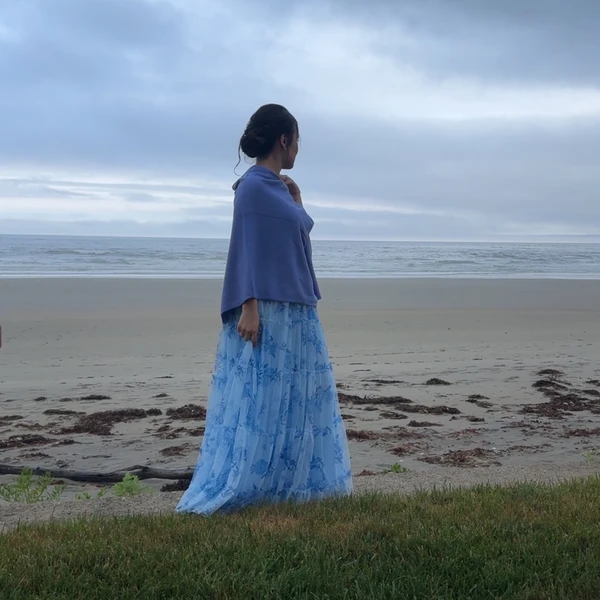
From a very young age, life demanded a resilience from me that most children are never asked to summon. My childhood was marked by hospital stays, ICU visits, and holidays celebrated alone under fluorescent lights rather than with family. While other children unwrapped gifts by a tree, I was unwrapping IV lines and test results, learning how to find hope in the most sterile of places. Outside the hospital walls, home was no refuge. Growing up in a broken family, I had no choice but to become independent at 15. I woke up each morning and carried myself to school, not because anyone reminded me, but because I refused to let my circumstances define my future. That independence came at a cost loneliness, exhaustion, and the constant pressure to survive but it also became the foundation of my strength. At 19, I found myself in a relationship that nearly cost me my life. The abuse I endured was more than physical; it sought to silence my spirit, to convince me that I was powerless. But I chose to fight. I chose to break free. I chose survival. That decision to value my life and my children’s futures ignited a determination in me that has never dimmed. Every hardship I faced could have been the end of my story. Instead, each one became a turning point. The hospitals taught me how to find joy even in dark places. My broken family taught me how to stand on my own. The abusive relationship taught me the power of reclaiming my voice. Today, I carry those lessons into my role as a full-time student, mother, and provider. I am not just surviving anymore I am thriving, with a 3.9 GPA, membership in Phi Theta Kappa Honor Society, and a vision of using my nursing degree to heal others with both skill and compassion.
To me, empathy is more than simply understanding another person’s feelings it is the act of stepping into their shoes, even when their path looks very different from my own. Empathy is listening not just with your ears, but with your heart. It is choosing compassion over judgment, connection over distance, and humanity over indifference. My understanding of empathy was not learned in a classroom, but through life itself. Growing up, I spent much of my childhood in and out of hospitals. I know what it feels like to be isolated, scared, and longing for someone to notice the pain behind the brave smile. Later, as a teenager navigating independence far too early, I learned the silent struggles of carrying burdens that felt heavier than my age should have allowed. And as a young woman who survived an abusive relationship, I discovered firsthand how desperately people need not just help, but to feel seen, believed, and valued.
Those experiences shaped how I show up for others today. As a mother, empathy means recognizing that each of my children experiences the world in their own way. It means pausing to listen when my son struggles with schoolwork, or when my daughter’s tears don’t match the smallness of the problem. Their emotions are real, and empathy allows me to guide them with patience and love. As a student, empathy means supporting classmates who are balancing just as much as I am work, family, and education while still daring to dream big. It’s understanding that success is not measured only by grades, but by how we encourage one another along the way. As a future nurse, empathy is the foundation of the care I want to provide. Patients do not come with just symptoms; they come with stories, fears, and hopes. A nurse who treats only the illness but ignores the person has not truly cared for them. My goal is to be the kind of nurse who offers not just medicine, but comfort; not just instructions, but understanding. Empathy, to me, is the bridge that connects people through shared humanity. It transforms pain into purpose, strangers into allies, and challenges into opportunities for kindness. It is not weakness it is strength. Empathy has carried me through my darkest times, and it is the gift I am committed to carrying forward to others.