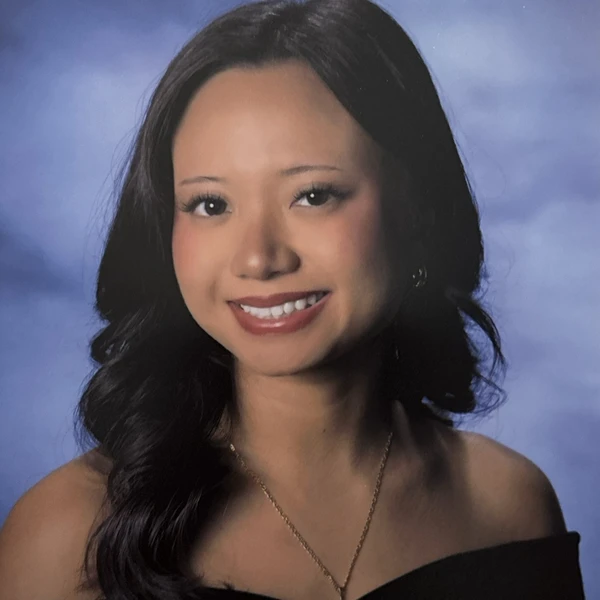
user profile avatar

Keira Ann Bernabe

1x

Finalist

1x

Winner

Bio

I am a high senior passionate about healthcare and human development. I’m going into university as a Biology major. Through my jobs as a Kumon tutor and activity assistant at a rehabilitation center, I’ve developed a commitment to providing compassionate and empathetic patient-centered care. I hope to create supportive spaces where individuals feel seen and valued.

Education

Mills High

High School
2023 - 2026

Miscellaneous

  • Desired degree level:

    Bachelor's degree program

  • Majors of interest:

    • Biological and Biomedical Sciences, Other
    • Public Health
    • Biological and Physical Sciences
    • Biopsychology
  • Planning to go to medical school
  • Career

    • Dream career field:

      Hospital & Health Care

    • Dream career goals:

      Pediatrician

    • Tutor

      Kumon
      2022 – Present4 years
    • Activity Assistant

      Central Gardens Post Acute
      2024 – 20251 year

    Sports

    Badminton

    Varsity
    2022 – 20231 year

    Tennis

    Varsity
    2022 – Present4 years

    Arts

    • School Orchestra

      Music
      2019 – 2023

    Public services

    • Volunteering

      Hospital — Service Line Chair in Comfort and Conversation department
      2025 – Present
    Valerie Rabb Academic Scholarship
    It was my first time visiting the Philippines. The rain poured down as we returned from a stroll in Baguio City’s local park, and despite his struggling joints, Lolo Bernie held my hands, “Dapat palaging mainit yung mga kamay mo.” Your hands should always stay warm. I looked at the sincerity in his gentle eyes and smiled, “Opo,” not realizing that his small gesture would stick with me even after my trip. Despite the years of distance and the language barrier, I felt connected to my roots. Growing up in America sometimes made me feel alienated from my culture, but Lolo Bernie helped me embody a Filipino’s attentive care. Hospitality and acts of service have become my natural instinct. When Lolo noticed my cold hands, he didn’t just give me warmth; he showed me that caring for others meant paying attention to the smallest details. I aspire to be a pediatrician because children are full of wonder and should be nurtured. My academic goal is to attend medical school so I can provide care to diverse communities. I hope to create exam rooms that feel like safe spaces. Growing up experiencing two cultures has taught me how healthcare can be a scary space for people who face language barriers. I hope to create environments where families feel cared for and understood. The warmth my Lolo offered me that rainy day shaped my understanding of love and responsibility. I carry this devotion in all of my high school jobs. As a Kumon tutor, I ensure my students feel supported and make the classroom a fun experience. During my time as an activity assistant at a rehabilitation center, I spent every Saturday caring for elderly residents. I observed their needs and offered companionship through small acts such as making them coffee or braiding their hair. I’ve spent over 220 hours engaging with patients and observing how they respond to their conditions based on their physical and cognitive stages of life. I noticed that while most patients were engaged during a group coloring activity, older patients struggled. To support them, I gave a demonstration by coloring my own page so they could mirror my actions. I allowed the patients to express themselves freely, even if their rose was blue. By modifying a task to fit their strengths, I was able to transform their ability to participate. Beyond group support, my role expanded to one-on-one activities where attentive care and respect mattered most. I’ve sat beside patients and listened to their stories, helped feed nearly 200 residents, and stayed with patients during medical emergencies. Nurses thanked me for helping them complete tasks and I found joy in making patients smile. Even small tasks felt meaningful because I made people feel seen. Seeing patients struggle with challenges they could no longer overcome taught me the importance of empathy. I am driven to advocate for more inclusive approaches in healthcare, where women can play a key role in reimagining patient care. To build on my experiences, I took a college social psychology class. Psychology has helped me relate academic concepts to real human experiences I see daily. Additionally, I am enrolled in a medical terminology course to learn more about the human body. I am now able to break down complex terms, which helps me translate their meanings. These courses allow me to have a stronger foundation in science. I would like to apply my knowledge from both my hands-on experience and my college courses to bridge gaps in healthcare by combining empathy with science.
    Electric Cycle Studio Student Athlete Scholarship
    I convinced myself that asking for help meant I wasn’t good enough. From elementary school to middle school, my fixed mindset held me back from taking advantage of the opportunities given to me due to my fear of failure and shame. My teachers taught me that a good student always gets high grades and never fails, and my parents would reaffirm that; however, upon entering high school, I found peers who supported me when I felt vulnerable and teachers who encouraged me to seek help, allowing me to embrace my challenges and turn them into opportunities for growth that empowered me to be resilient. In high school, I shifted from allowing my insecurities to consume my reality to seeking interventions that helped me be more in control of my “perfectionist” anxiety because of who I surrounded myself with. I have made a lot of mistakes in tennis, such as missing shots, short serves, and hitting balls out. However, recovering from losses took more than simply showing up to practice. I used to view my two-hour practices as my only way of getting better, but my friend suggested I take time on my own to watch lessons online. My phone became a pocket resource for practicing at home, not only as a form of entertainment. In sports and at school, I found friends who would work hard alongside me, encouraging me to reach out for help. My studious friends were different from those who tried to compete with me because they valued effort and collaboration. With their help, I learned to discipline myself to avoid comparing myself to others and focus on approaching challenges at my own comfort level. I didn’t have to face my setbacks alone, as I had people who were striving for improvement as well. I was once a passive vessel, trying to be someone I was not; I wanted to be more like my peers, but eventually, I grew from my own strengths. I have come to realize that progress is not made overnight; it is rarely linear. My struggles are signs that I am trying, and I realize that accepting my mistakes is a strength because I acknowledge what I need to improve on. My growth mindset allows me to think more positively about how I can develop as a person. I embrace new ideas, and when I face changes that I find difficult, I tell myself that I will adjust and move past them. I am more confident in my abilities as a student, athlete, and person, knowing that the more effort I put in, the more fruitful my life is.
    Women in Healthcare Scholarship
    Interning in a rehabilitation center for the elderly has deepened my interest in biology and human development. As an activity assistant, I’ve spent over 220 hours engaging with patients and observing how they respond to their conditions based on their physical and cognitive stages of life. As a young woman pursuing a path in STEM, I am inspired to contribute to a field where I notice women are still underrepresented. I want to bring both compassion and diverse perspectives to patient care. I noticed that most patients were actively engaged during a group coloring activity, while older patients struggled with participation. To support them, I gave a demonstration by coloring my own page so they could mirror my actions. I allowed the patients to express themselves freely, even if their rose was blue and the owl was purple. By modifying a task to fit their strengths, I was able to transform their ability to participate. Beyond group support, my role expanded to one-on-one activities where attentive care and respect mattered most. I’ve sat beside patients and listened to stories they told about their childhood, helped feed nearly 200 residents, braided hair to provide emotional therapy, and stayed with patients during medical emergencies. Through my experiences, I learned that people are the way they are not only because of genetics, but also because of environmental factors. Seeing patients struggle with challenges they could no longer overcome taught me the importance of empathy in their care. It made me realize that aging isn’t a predictable process and needs compassion at every stage. I am driven to advocate for more inclusive approaches in healthcare, where women can play a key role in reimagining how patient care is delivered. My internship gave me a higher sense of purpose. Nurses thanked me for helping them complete tasks and I found joy in making patients smile after seeing them sad or in pain. Even completing small tasks felt meaningful because I made people feel seen. To build on my experiences, I took a college social psychology class that introduced me to mental processes. Psychology has helped me relate academic concepts to real human experiences I see daily. I began to understand concepts such as cognition and social interactions that I observed patients doing at the rehabilitation center. Additionally, I am enrolled in a medical terminology course to learn more about the human body. I learned more than what I expected. I am now able to break down complex terms into prefixes, roots, and suffixes, which helps me translate their meanings. These courses allow me to have a stronger foundation in science. I hope to continue exploring the development of life through biology. I would like to apply my knowledge from both my hands-on experience at my internship and my college courses to bridge gaps in healthcare by combining empathy with science.
    Women in STEM Scholarship
    Interning in a rehabilitation center for the elderly has deepened my interest in biology and human development. As an activity assistant, I’ve spent over 220 hours engaging with patients and observing how they respond to their conditions based on their physical and cognitive stages of life. As a young woman pursuing a path in STEM, I am inspired to contribute to a field where I notice women are still underrepresented. I want to bring both compassion and diverse perspectives to patient care. I noticed that most patients were actively engaged during a group coloring activity, while older patients struggled with participation. To support them, I gave a demonstration by coloring my own page so they could mirror my actions. I allowed the patients to express themselves freely, even if their rose was blue and the owl was purple. By modifying a task to fit their strengths, I was able to transform their ability to participate. Beyond group support, my role expanded to one-on-one activities where attentive care and respect mattered most. I’ve sat beside patients and listened to stories they told about their childhood, helped feed nearly 200 residents, braided hair to provide emotional therapy, and stayed with patients during medical emergencies. Through my experiences, I learned that people are the way they are not only because of genetics, but also because of environmental factors. Seeing patients struggle with challenges they could no longer overcome taught me the importance of empathy in their care. It made me realize that aging isn’t a predictable process and needs compassion at every stage. I am driven to advocate for more inclusive approaches in healthcare, where women can play a key role in reimagining how patient care is delivered. My internship gave me a higher sense of purpose. Nurses thanked me for helping them complete tasks and I found joy in making patients smile after seeing them sad or in pain. Even completing small tasks felt meaningful because I made people feel seen. To build on my experiences, I took a college social psychology class that introduced me to mental processes. Psychology has helped me relate academic concepts to real human experiences I see daily. I began to understand concepts such as cognition and social interactions that I observed patients doing at the rehabilitation center. Additionally, I am enrolled in a medical terminology course to learn more about the human body. I learned more than what I expected. I am now able to break down complex terms into prefixes, roots, and suffixes, which helps me translate their meanings. These courses allow me to have a stronger foundation in science. I hope to continue exploring the development of life through biology. I would like to apply my knowledge from both my hands-on experience at my internship and my college courses to bridge gaps in healthcare by combining empathy with science.
    De Los Santos Family Scholarship
    Winner
    1. After over 2000 hours as a Kumon tutor, I learned to find another approach when one fails. Every obstacle became a chance to improve my teaching. Out of the twenty students I tutor weekly, four-year-old JJ challenged me the most because my teaching approach wasn't effective. He often cried for his mom and refused to touch his work. I observed how my coworkers adjusted their tone and teaching approaches for each student, and I even enrolled in a child development class to understand how children think and learn at different stages of life. I revised my strategy so I would be prepared for JJ to come in next class. In the following week, I drew a ladybug next to JJ’s papers. Knowing he liked bugs, I used his interest to distract him from crying with excitement. I promised to draw new insects for each worksheet he finished, and he eagerly completed every page while I drew beetles. I saw how supporting JJ required me to be flexible. Helping JJ succeed showed me how patience and flexibility can make a difference, as failure pushed me to find a new way forward. Learning to empathize with children allowed me to support them. 2. To love as a Filipino is to love with actions. It was my first time visiting the Philippines. The rain poured down as we returned from a stroll in Baguio City’s local park, and despite his struggling joints, Lolo Bernie held my hands, “Dapat palaging mainit yung mga kamay mo.” Your hands should always stay warm. I looked at the sincerity in his gentle eyes and smiled, “Opo,” not realizing that his small gesture would stick with me even after my trip. Despite the years of distance and the language barrier, I felt so connected to my roots. Growing up in America sometimes made me feel alienated from my culture, but Lolo Bernie helped me embody a Filipino’s attentive care. Hospitality and acts of service have become my natural instinct. When Lolo noticed my cold hands, he didn’t just give me warmth; he showed me that caring for others meant paying attention to the smallest details. Filipino culture is not expressed through grand gestures, but with small acts of hospitality and service. I strive to be the kind of person who advocates for others. I aspire to be a pediatrician because children, like I was that day, depend on caring adults to support them. My academic goal is to attend medical school so I can provide care to diverse communities, hoping to create exam rooms that feel less intimidating and more like safe spaces. Growing up experiencing two cultures has taught me how healthcare can be a scary space for people who face language barriers. I hope to create safe spaces where families will feel cared for and understood. The warmth my Lolo offered me that rainy day shaped my understanding of love and responsibility. My Filipino heritage shaped my dream of caring for others with the same quiet devotion he showed me. I carry this devotion with me in all of my high school jobs. As a Kumon tutor, I ensure my students feel supported and make the classroom a fun experience that encourages learning. During my time as an activity assistant at a rehabilitation center, I spent every Saturday caring for elderly residents. I observed their needs and offered companionship through small acts such as making them coffee or braiding their hair. I took leadership in clubs like community service, UNICEF, and Clothes for Kids, where I fostered my passion for working and advocating for children.