Hobbies and interests
African American Studies
Agriculture
Aviation
Gardening
Photography and Photo Editing
Travel And Tourism
Horseback Riding
Horticulture
Farming
Cooking
Reading
Adult Fiction
Academic
Architecture
Biography
Cultural
Food and Drink
Gardening
I read books multiple times per week
Keena Moffett
1x
FinalistKeena Moffett
1x
FinalistBio
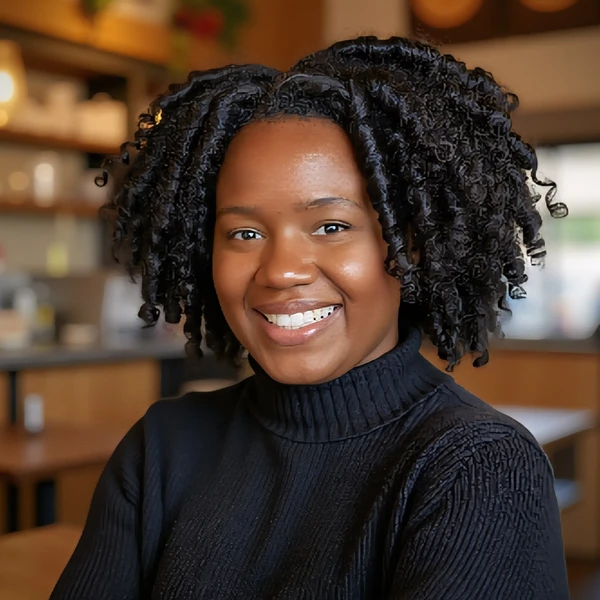
I’m a graduate student pursuing a Master of Public Health and rebuilding a dream I put on pause years ago. After becoming a mother at seventeen and navigating periods of homelessness as a teenager, I built a career in finance and operations to support my family. Now, with my two children grown, I’ve returned to school to pursue the work I’m truly passionate about: women’s health, chronic disease, and the systemic inequities that affect Black women.
My long-term goal is to enter the medical and research side of women’s health, focusing on metabolic and endocrine disorders, inflammation, and conditions like endometriosis that are often misunderstood or overlooked. I’m passionate about improving diagnosis, research funding, and treatment pathways for conditions that disproportionately affect women, especially women of color.
Everything I’ve experienced, from overcoming early adversity to managing my own complex health journey, has strengthened my commitment to serve others, study disease more deeply, and help build a more equitable healthcare system. I’m a dedicated student, a lifelong learner, and someone who believes deeply in reclaiming the goals we had to set aside. Returning to school at forty is not a setback for me; it’s a victory, and the beginning of the work I was always meant to do.
Education
Georgia State University
Master's degree programMajors:
- Public Health
American Intercontinental University
Bachelor's degree programMajors:
- Accounting and Computer Science
Miscellaneous
Desired degree level:
Doctoral degree program (PhD, MD, JD, etc.)
Graduate schools of interest:
Transfer schools of interest:
Majors of interest:
- Biological and Biomedical Sciences, Other
Career
Dream career field:
Medicine
Dream career goals:
Translational Biomedical Science
Senior Financial Analyst
Mille Lacs Corporate Ventures2022 – 20242 yearsFinancial Analyst
AGG2025 – Present1 year
Sports
Track & Field
Junior Varsity1999 – 20023 years
Arts
YouTube
VideographyYes2018 – 2022
Public services
Volunteering
North Point Church — Counselor2012 – 2016
Future Interests
Advocacy
Volunteering
Philanthropy
Entrepreneurship
Women in Healthcare Scholarship
My interest in healthcare began long before I had the language to articulate it. My mother worked as a medical transcriptionist throughout my childhood, and while her job didn’t place her at patients’ bedsides, it placed her squarely within the world of medicine. I grew up surrounded by the rhythm of clinical language, the stories embedded in medical dictation, and the environment of hospitals where she sometimes brought me along. Those early moments left a deep impression on me. They made healthcare feel familiar, accessible, and purposeful, a place where people’s lives were transformed, not just treated.
By the time I graduated high school, I knew I wanted to become a pediatric oncologist. That aspiration came from a genuine desire to be at the intersection of science, compassion, and advocacy. But life, as it often does, had other plans. I became a mother very young, married early, and had to make decisions centered around stability rather than ambition. The long road of medical training didn’t feel possible then, and I chose a more practical path: earning a degree in business and working my way into finance.
Even so, healthcare never fully left my orbit. While attending college and caring for my newborn son, I became a certified nursing assistant, working in clinical settings that reminded me why I had once dreamed of medicine in the first place. Being a CNA taught me the humanity of healthcare, the patience required, the intimacy of caring for people during their most vulnerable moments, and the importance of a compassionate presence in clinical spaces. It also showed me the systemic challenges that impact both patients and providers, especially those from marginalized communities.
Years later, after building a career in finance, raising two children, and navigating my own complex health journey as a Black woman living with endometriosis and metabolic challenges, I felt myself returning to the field I had set aside. But this time, I returned with clarity: my calling wasn’t simply to work in healthcare, it was to help shape it.
I made the decision to pursue a Master of Public Health with a focus on epidemiology because it bridges everything I care about: data, disease patterns, women’s health, and the inequities that disproportionately impact Black women. My lived experience gives me a firsthand understanding of gaps in research, care, and diagnosis, particularly in conditions like endometriosis, which are chronically misunderstood and underfunded. These personal experiences have become fuel for what I hope will be a long-term career in research.
My ultimate goal is to pursue a PhD in translational biomedical science, with a concentration in endocrinology, women's health, and the biological mechanisms underlying conditions like endometriosis. I want to contribute to research that expands understanding of how endocrine disorders manifest in women of color, how endometriosis behaves more like a metastatic disease than a benign one, and why these disparities persist. I hope to be part of the scientific community shaping new diagnostic criteria, treatment pathways, and classification debates, including whether endometriosis should be considered a form of cancer based on its behavior.
As a woman in healthcare, my impact will come from bringing an intersection of perspectives: scientific, analytical, personal, and culturally informed. I want to ensure that women, especially Black women, are not dismissed, misdiagnosed, or overlooked in the very systems meant to care for them.
I chose healthcare because it has always been the place where my curiosity, compassion, and purpose intersect. I returned to healthcare because I realized that the field needs voices like mine.
Ella's Gift
My experiences with mental health and substance abuse are woven into the fabric of my earliest memories. I did not grow up struggling with substance use personally, but I grew up in a home shaped by it. Both of my parents battled addiction during my childhood, my mother with cocaine and alcohol, and my father with a brief period of cocaine use before entering long-term sobriety. Their struggles created an environment marked by instability, neglect, and frequent crises, and the emotional weight of that environment shaped my mental health for decades afterward.
Poverty, food insecurity, and periods of homelessness were not abstract concepts for me, they were daily realities. I learned very young how to parent myself, how to navigate chaos, and how to survive in circumstances that felt too heavy for a child to carry. Living in that environment, I internalized lessons about fear, hypervigilance, and self-sacrifice, but I also developed a unique emotional resilience. I did not use drugs or alcohol as I grew older, not out of judgment, but because I had seen firsthand the impact addiction could have on a family. It was a survival decision, a commitment to myself that the cycle would stop with me.
The long-term effects of that upbringing showed up later in my mental health. As an adult, I was diagnosed with PTSD related to childhood trauma, chemical depression, and anxiety. These weren’t sudden developments; they were the natural echoes of years spent in unpredictable and unsafe conditions. For a long time, I moved through life simply trying to function, working full time, raising my children, maintaining a household, without ever having the chance to acknowledge what I had survived.
My healing truly began when I allowed myself to stop minimizing my own story. Therapy became an anchor, giving me the tools to understand the patterns that shaped me and to gradually rebuild my sense of safety. I learned that recovery, even when it is from trauma rather than substance use, is not a straight line. It requires intentional choices every day: choosing rest when I am overwhelmed, choosing community when isolation feels easier, and choosing routines that support my mental well-being. For me, recovery looks like a combination of therapy, mindfulness practices, movement, structured routines, and eliminating things, whether substances or environments, that trigger emotional instability. It is a lifelong practice of knowing myself and caring for myself in ways I never learned growing up.
My experiences have also shaped me as a mother. I raised two children with a deep awareness of mental health, knowing how it feels to grow up without that understanding. When one of my children struggled in school due to an undiagnosed attention-related disability, I became their advocate, pushing for proper evaluation and a 504 plan so they wouldn’t fall through the cracks. When my other child faced more complex mental health challenges, I learned how to support them through crisis, uncertainty, and fear without shame or silence. Their journeys, and my own, have shown me that mental health challenges are not character flaws but medical realities requiring compassion and resources.
These personal experiences are the foundation of my educational goals today. I returned to graduate school in my forties to study public health, with a long-term goal of contributing to medical research involving women’s health, chronic illness, and health inequities, especially those affecting Black women. My history gives me a unique lens into the ways trauma, environment, and physical health intersect. I understand what it means to fall through systemic gaps, and I want to help ensure fewer people do.
Continuing to manage my recovery is central to this journey. Graduate school is demanding, but prioritizing mental health is what allows me to thrive. I maintain a structured wellness plan that includes therapy, sleep hygiene, physical activity, and boundaries that protect my emotional stability. I surround myself with people who support my healing and avoid environments that replicate patterns from my past. Recovery is not something I view as a hurdle to completing my education; it is part of the reason I am pursuing this path. It grounds me, guides me, and keeps me connected to the purpose behind my work.
My story is one of intergenerational struggle, but also intergenerational healing. I am breaking cycles my parents never had the chance to break. I am building a future grounded in stability, compassion, and purpose. And I am using everything I have survived, not as a weight holding me back, but as a foundation for the kind of health professional and advocate I intend to become.
Elizabeth Schalk Memorial Scholarship
Mental illness has shaped my life in ways that are both deeply personal and central to the woman I am becoming. I grew up in conditions that no child should have to navigate, including years of homelessness, neglect, and profound instability. Those experiences left a lasting imprint, and as an adult I have been diagnosed with PTSD and chemical depression. For a long time, mental illness felt like something I was simply trying to outrun. Now, I understand it as part of my story, not the definition of it.
My relationship with mental health became even more layered when I began living with chronic illness. I have endometriosis, a condition known for high rates of comorbid depression because of the relentless pain and the way it can make your world feel very small. When you are fighting a body that doesn’t always cooperate, it becomes easy to lose sight of joy, energy, or possibility. I experienced those moments, too. But instead of closing me off from the world, these challenges sparked a lifelong commitment to understanding women’s health, especially the health of Black women, who remain underrepresented and under-researched in medical literature.
Mental illness in my life has not been a single event; it has been a thread running through different seasons. I have had to learn resilience that is not romantic or inspirational, but practical: getting up every day despite emotional heaviness, building routines that support my well-being, asking for help when needed, and allowing myself to imagine a future larger than my past circumstances. That practice, quiet, persistent, often invisible, is what has carried me into graduate school.
Studying public health has given me both language and direction. I understand now how trauma, chronic illness, and health inequities intertwine. I also understand that the experiences I survived give me a unique lens into why research, advocacy, and culturally competent care matter so deeply. My goal is to contribute to medical research focused on metabolic and hormonal disorders in Black women, including conditions like endometriosis that are frequently dismissed or misunderstood. I want to help create the data that saves lives, changes treatment standards, and expands the way we talk about women’s pain.
Mental illness has also shaped the way I show up for my family. As a mother of two adult children, I try to model what it looks like to break cycles, seek support, and continue growing at any age. Returning to school full-time while managing chronic illness and working to improve my mental health has shown them that delays don’t erase dreams. It has shown them that healing is possible, and that purpose can still be built from circumstances that were never in your control.
This scholarship would help me continue my education without sacrificing my stability. The financial pressure of graduate school can intensify mental health symptoms, especially for students like me who do not have a safety net to fall back on. Support like this makes it possible for me to focus on my coursework, my research, and my long-term contribution to the communities I care about.
My experiences with mental illness have shaped me, but they have also equipped me. They have made me empathetic, determined, and committed to a future where no one feels unheard or unseen in their own health journey. That is the future I am working toward, and the future this scholarship would help me reach.