user profile avatar

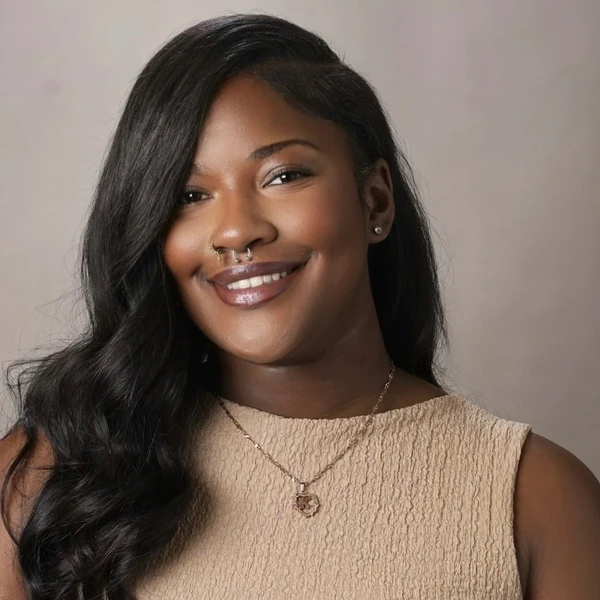
Kayla Woodard

1x

Finalist

Bio

Hi, I'm Kayla Woodard, a first-generation college graduate from Chicago with a passion for storytelling and representation. I earned my B.A. in English with a concentration in Media Cultures from the University of Illinois Urbana-Champaign and will begin the Master of Science in Management program this fall. I'm excited to pursue a career in publishing, where I hope to help bring diverse and meaningful stories to readers.

Education

University of Illinois at Urbana-Champaign

Master's degree program
2026 - 2027
  • Majors:
    • Business, Management, Marketing, and Related Support Services, Other
University of Illinois at Urbana-Champaign

Bachelor's degree program
2022 - 2026
  • Majors:
    • English Language and Literature, General

Miscellaneous

  • Desired degree level:

    Doctoral degree program (PhD, MD, JD, etc.)

  • Graduate schools of interest:

    • University of Illinois at Urbana-Champaign
  • Transfer schools of interest:

  • Majors of interest:

    • Business, Management, Marketing, and Related Support Services, Other
  • Not planning to go to medical school
  • Career

    • Dream career field:

      • Publishing
    • Dream career goals:

    • Crew

      AMC
      2024 – Present2 years

    Sports

    Dancing

    Club
    2022 – 20264 years

    Research

    • African Languages, Literatures, and Linguistics

      Trio McNair Scholars — Undergraduate Researcher
      2023 – 2026

    Arts

    • Creative Writing Club

      Film Criticism
      2024 – 2025
    • HipNotic Dance Team

      Dance
      2022 – 2026

    Public services

    • Volunteering

      Books to Prisoners — Organizing the books by genre to be sorted into their boxes later
      2024 – 2025
    • Volunteering

      Eastern Illinois Food Back — Sorting through donated, canned food to make sure it was safe to consume and within date.
      2025 – 2026

    Future Interests

    Advocacy

    Volunteering

    Philanthropy

    Entrepreneurship

    Ethel Hayes Destigmatization of Mental Health Scholarship
    When I think about my journey with mental health, I don’t think about a diagnosis. I think about silence. My mother struggled with alcoholism and substance abuse for as long as I can remember. Before I was born, she was diagnosed with Multiple Sclerosis, a disease that left her unable to work and forced her to raise seven children on disability benefits. The stress, pain, and frustration of that reality often spilled into our home. Arguments with my stepfather sometimes became physical. Doors slammed, voices were raised, and tension filled the house until it felt suffocating. At times, that anger spilled onto us. What began as yelling could quickly turn into threats, fights, or moments that left emotional wounds long after the bruises faded. As a child, I never knew which version of my mother I would come home to, the loving mother who sacrificed everything for her children or the woman overwhelmed by pain, addiction, and circumstances she could no longer control. I spent years angry at her for that. To be honest, I still am sometimes. But the moment that shaped me most happened when I was eleven years old. One day, my mother attempted suicide in front of me and my three younger siblings. What I remember most isn’t the panic. It is the silence. The silence when I watched her raise a knife to her throat. The silence afterward when she came home with four stitches beneath her chin. The silence in the years that followed. Nobody talked about it. No explanation. No discussion. Like so many difficult things in my childhood, it was simply brushed aside. For years, I couldn't understand why. Now, I think part of the reason was that talking about it would have made it real. Silence allowed everyone to keep moving forward, even if none of us were truly healing. In this, I learned that silence does not make pain disappear. It only gives it a place to hide. I would love to say my mother's story has a perfect ending. It does not. She still struggles with substance abuse, alcoholism, and still refuses to talk about much of what happened. But my siblings and I do. Through those conversations, I have found understanding, healing, and even forgiveness. Forgiveness for my young self who felt powerless and that they should’ve done more to help. Those conversations also led my siblings and me to pursue family therapy, whether my mother choose to participate or not. For a long time, I thought healing meant finally finding the right words to make my mother understand what growing up felt like for us. But as I got older and those conversations finally started happening, I noticed something that unsettled me. Whenever I brought up things that hurt me growing up, the conversation never stayed on my experience for long. This is what I jokingly call the oppression Olympics. My mother grew up in the 1980s with a mother addicted to crack. She experienced things no child should have to. I understand that now. But understanding that has never made it easier to understand why my own pain couldn’t exist beside hers. I remember telling her about my childhood, about things I still struggle to make sense of, and she told me, “If you want to talk about it so much, you should go to therapy.” Later, when I tried again to talk about what it meant for a child to witness moments no child should ever be present for, she didn’t meet me there. Instead, she disregarded what I was saying and redirected the conversation back to herself, telling me I should consider what she had been going through instead. It was a refusal, yes, but over time, I made a heartbreaking realization. Our experiences could never exist in the same emotional space for her. There was no room where both truths could be held at once. I started to internalize that. I stopped expecting understanding from anyone who hadn’t been there, and even from her, I learned to expect deflection instead of understanding. That made it harder to speak at all, because if the person closest to the story couldn’t understand, how could anyone else? So I wrote. Writing became another part of that healing process. I wrote a short story called Like Butter that explored many of these experiences and emotions. Putting those memories onto paper allowed me to process years and years of grief, anger, and confusion. For the first time, I felt like I was doing something with my pain instead of simply carrying it. That experience eventually inspired me to co-found WeXpress at the University of Illinois, an organization dedicated to promoting mental health awareness through creative expression. We host open mic nights, facilitate small-group conversations, and maintain a peer support line available nearly 24/7 because mental health struggles do not operate on a schedule. Sometimes the hardest moments happen at three o'clock in the morning when the rest of the world feels asleep. Through WeXpress, we work to make sure that students have a space where they feel heard, supported, and connected. As a child I could not help my mother. But as an adult, I can help create the spaces that I wish had existed for me. Spaces where people can tell their stories, express difficult emotions, and realize they are not alone. My journey with mental health has taught me that healing begins with honesty. It taught me the importance of empathy and open communication. Most importantly, it taught me that cycles can be broken. Maybe I cannot break every cycle for my mother, no matter how much I wish I could. But I can help break them for myself, for my siblings, for my future family, and for the communities I am a part of. That is the future I hope to build, one where difficult conversations are not avoided, where creativity becomes a tool for healing, and where silence no longer has the final word.
    Bulkthreads.com's "Let's Aim Higher" Scholarship
    If I could build one thing, it would be a community where people feel safe enough to be honest. For most of my life, I carried things alone. Growing up in a household fueled by alcoholism, substance abuse, and financial hardship, I learned early on how to keep difficult emotions to myself. It wasn't until college, when I began writing about my experiences, that I realized how healing it could be to put those feelings into words. More importantly, I learned that when you allow yourself to be vulnerable, it often gives others permission to do the same. That realization eventually led me to co-found WeXpress, a mental health advocacy organization centered on creative expression. Through open mic nights, discussion groups, peer support, and community events, we created a space where students could share poems, stories, songs, artwork, or simply their thoughts. The organization started small. I mean during our first semester, only a handful of students regularly attended meetings. But in many ways, that became our greatest strength. The smaller environment allowed people to build trust and share parts of themselves they might not have felt comfortable expressing elsewhere. What I want to build in the future is bigger than a single student organization. I want to continue expanding the idea behind WeXpress which is that creativity and community can be powerful tools for connection and healing. Now that I have graduated, I have been thinking carefully about how this work can continue beyond a university campus. For now, I plan to start small. One of my first goals is creating an online community through a Discord server where people can continue the kinds of conversations and creative sharing that made WeXpress meaningful. I have also been discussing the possibility of partnering with my father's nonprofit youth organization, which provides sports and after-school programming for children. Together, we have talked about piloting a small creative expression program that meets once every other week. Looking back, I wish I had access to a space like that when I was younger. Starting with one group and a handful of participants may seem small, but WeXpress started the same way. I have learned that meaningful communities are rarely built all at once. Pursuing a Master of Science in Management is an important part of that goal. While passion helped start WeXpress, sustaining and growing an organization requires leadership, strategic planning, and knowledge on how a business should operate. Through my graduate education, I hope to develop the skills necessary to build something that can continue serving people long after I am no longer directly involved. The impact I hope to make is simple. I want fewer people to feel alone. I want people carrying grief, anxiety, uncertainty, or pain to know there is a place where they can be heard without judgment. If I can help build communities that make even a small number of people feel seen, supported, and connected, then I will have built something that matters.
    Joe Gilroy "Plan Your Work, Work Your Plan" Scholarship
    Joe Gilroy's motto, "Plan Your Work, Work Your Plan," resonates with me because every major goal I have achieved has required careful planning, flexibility, and persistence. Right now, my goal is completing my Master of Science in Management degree to position me for a career in publishing. Like many first-generation and low-income students, finances are my biggest obstacle. My original plan was to attend the program in person. However, after much consideration, I realized the cost would be impossible to manage. The in-person program is approximately $57,000. Because of this, I have begun exploring transferring into the online version of the program. I recently contacted the university to determine whether this is an option and am currently awaiting a response. If approved, the cost would decrease to approximately $15,648. It would make graduate school far more attainable. Even with the lower tuition cost, paying for graduate school will require a multi-layered financial plan. I have already inquired about whether any portion of the scholarship package I originally received can be transferred to the online program. At the same time, I am actively applying for scholarships through platforms such as Bold.org, Fastweb, and Scholarship Owl. During the summer, my goal is to apply for 2-3 scholarships every other day and once classes begin, I plan to scale that goal to 2-3 scholarships per week. Because scholarship funding is never guaranteed, I am also prepared to use federal student loans if necessary. I currently work at AMC, earning $15.55 per hour. During the summer, I typically work between 17-25 hours per week and between 10-15 during the school year. Knowing this income alone will not cover my expenses, I have applied for additional positions at Nothing Bundt Cakes, Texas Roadhouse, and Cunningham Children's Home. If hired at Cunningham Children's Home, which pays $22 per hour, it would significantly strengthen my ability to support myself. My goal is to reserve Sunday through Tuesday for coursework, while working Wednesday through Saturday. Having a structured schedule is makes sure neither my academics nor my finances fall behind. I am budgeting roughly $900 per month for housing and utilities. While I do not own a car and occasionally rely on the bus or Uber, avoiding car payments, insurance, and maintenance helps keep my expenses lower. I also plan to continue donating plasma twice per week, generating $500 per month. Half of that income will go toward immediate expenses such as groceries and rent, while the other half will be used to begin paying down the student loans I accumulated during undergrad. I also believe in preparing for multiple futures at once. Before deciding to pursue the MSM, I applied to six PhD programs during my senior year. Although I was not admitted, the experience helped me see where I could be a stronger candidate. During the MSM year, I plan to prepare for another application cycle. Between August and November, I will revise my personal statements, strengthen my research materials, and continue meeting every other week with my mentor, Dr. Brittney Miles, who has been helping me refine my strategy and prepare stronger applications. If I am admitted to a PhD program, I will continue my academic journey. If not, I will still have completed the MSM and be positioned for a career in publishing. Either outcome moves me forward, which is why I am investing in both paths rather than relying on a single opportunity. Growing up in a low-income household taught me that opportunities rarely arrive on their own. They require preparation, persistence, and a plan. Completing my master's degree will be no different.
    Christian Fitness Association General Scholarship
    The challenge I faced during school was learning that independence is not always a strength. Growing up, I learned very quickly that if something needed to get done, I would have to figure it out myself. My mother struggled with alcoholism and substance abuse for much of my childhood, and my father was largely absent. As one of seven children growing up in a low-income household, there was rarely anyone available to walk me through problems or show me the next step. If we didn't have food, we got up early on Saturday mornings and stood in line at the food pantry. If I needed something for school, I learned how to find a way. Over time, resourcefulness became second nature. For years, that mindset served me well. It made me resilient, determined, and adaptable. By the time I graduated high school, I viewed independence as one of my greatest strengths. I was proud of the fact that I could handle things on my own. Then I arrived at the University of Illinois. During my first semester, I quickly realized I was completely out of my depth. As a first-generation college student, I felt like everyone else had been given a handbook that I somehow missed. Students talked casually about office hours, internships, research opportunities, and networking that I barely understood. Every day felt like I was trying to learn a new language. For the first time in my life, I wasn't excelling academically. I had always been a strong student. If I didn't understand something, I worked harder. College didn't work that way. Professors expected students to seek help when they needed it. Opportunities often went to the students who knew where to look and who to ask. I remember getting my first C and feeling absolutely crushed. Looking back now, it sounds silly, but at the time I genuinely thought my life was over. I had worked so hard to get to college that struggling there felt like proof that I didn't belong. Every setback felt like confirmation that everyone else was smarter, more prepared, and somehow knew something I didn't. My instinct was to do what I had always done, figure it out myself. So I struggled quietly. I convinced myself that asking for help would somehow expose me as an imposter. The reality was that I wasn't struggling because I lacked drive. I was struggling because I was trying to navigate an entirely new environment without the guidance and support that many of my peers already knew how to access. Eventually, I had to admit that I needed help. That realization changed everything. Once I started asking questions, I discovered that there were people who genuinely wanted to see me succeed. Professors held office hours because they wanted students to learn. Advisors could connect me with opportunities I did not know existed. Mentors could offer guidance that would have taken years to learn on my own. The more willing I became to seek support, the more doors began to open. One of those doors was the TRIO McNair Scholars Program. Through McNair, I conducted independent research examining race, representation, and Black horror media. What began as curiosity eventually led to presentations at academic conferences and opportunities to share my work with scholars and students from across the country. As someone who entered college not even knowing undergraduate research was an option, presenting my own research felt surreal. McNair strengthened my research and writing skills and gave me the confidence to pursue opportunities I once believed were beyond my reach. Another door led me across the world. During college, I studied abroad. Each experience challenged me to step outside of my comfort zone and engage with perspectives different from my own. I learned about the legacy of apartheid in South Africa, sustainability initiatives in Panama, food rhetoric in France, and history in Czech Republic. These experiences broadened my understanding of the world and reinforced my belief that education extends far beyond the classroom. As I grew, I became committed to creating those same opportunities for others. As a McNair Ambassador, I help connect underrepresented students with research opportunities that once felt inaccessible to me. As a Shelley Ambassador and mentor, I help students navigate campus, connect with resources, and find there sense of belonging. I also co-founded WeXpress, a mental health advocacy organization that creates spaces for students to connect through creative expression. In addition, I served as captain of my collegiate dance team and met some of my bestest friends. Looking back, the greatest challenge I faced was letting go of the belief that I had to do everything alone. The very skill that helped me survive growing up, hyper-independence, became the thing holding me back. Today, I am preparing to begin graduate school. While I am proud of my accomplishments, I am even prouder of the lesson behind them. Success is about knowing when to seek help, learning from those around you, and using what you've gained to help someone else. Despite everything I have accomplished, my greatest achievement is not a conference presentation or a study abroad program. It is the fact that my younger siblings can now look at my journey and see a path that once felt impossible. None of my four older siblings attended college, and for a long time, higher education felt like unfamiliar territory for my family. By earning my degree and continuing on to graduate school, I hope I have shown my younger siblings that these opportunities belong to them too. Every opportunity I have received has changed the trajectory of my life. My goal is to continue creating opportunities for others through my career and also ensuring that the trend starts moving in a different direction within my own family. If my journey has taught me anything, it is that one person's success can become someone else's blueprint. I hope to be that blueprint for my siblings and the students who come after me.
    Charles B. Brazelton Memorial Scholarship
    My awkward thing is that I do not like being touched. Unnecessarily, at least. The small things that seem to come naturally to everyone else like patting someone's shoulder while laughing, poking their arm to get their attention, standing close enough that your shoulders brush together. I would subtly move my body mere inches away to get in the clear without offending anyone. Most people never noticed. I first realized it in high school. The lightest brush of someone's hand and I would recoil internally and die a little inside. Outwardly, I smiled and carried on with the conversation. But inside, every alarm was going off. It eventually got so bad that I couldn't enjoy hugs unless I knew they were coming. Then, over time, I decided those were unnecessary too. The strange part was that this mostly applied to my family. It wasn't until then that I realized how strange that actually was. I hugged my friends all the time. After dance performances, birthdays, breakups, physical affection came naturally. I never thought twice about it. But when it came to my family, I would stiffen immediately. I would endure the hug rather than return it. Sometimes I would find a reason to leave the room before it happened at all. I'm still surprised it took me years to notice. One day it finally hit me that I was more comfortable being vulnerable with people I had known for a few years than with people I had known my entire life. At first, I felt guilty about that realization. Family is supposed to be the place where affection comes easiest. But the more I thought about my childhood, the more sense it made. My mother was raising seven children while living with Multiple Sclerosis, alcoholism, and substance abuse. Home could change quickly. One moment everything was fine and the next there was yelling, slamming doors, arguments, and physical fights. Whether that anger landed on us or not, you learned to listen for footsteps. You learned how to tell what kind of day it was going to be before anyone said a word. I don't think I realized until much later that I carried that same vigilance into my relationships. Physical affection felt uncomfortable because closeness felt uncomfortable. Not because I didn't want it, but because I never fully trusted it. Love in my household was real, but it was often tangled with chaos, and somewhere along the way I started keeping people at arm's length. The irony is that my adult life has become centered around connection. As a McNair Ambassador, I help students from underrepresented backgrounds find research opportunities that once felt out of reach to me. As a Shelley Ambassador and mentor, I help students navigate campus, connect with resources, and find a sense of belonging. I co-founded WeXpress, a mental health advocacy group, to create spaces where people can share their stories through art. Almost all of the work I care about comes down to the same thing, helping people feel seen, supported, and less alone. Somewhere along the way, I learned that while vulnerability can be uncomfortable, isolation is far worse. I still don't particularly enjoy random shoulder taps. I still move away without thinking sometimes. But I no longer see those things as flaws that need fixing. They are reminders of where I came from and how far I've come. The interesting part isn't that I spent years avoiding closeness. It's that despite all of that, I still chose a life built around connection, community, and showing up for other people.
    Learner Mental Health Empowerment for Health Students Scholarship
    For much of my childhood, mental health was something that existed in silence. When I was eleven years old, my mother attempted suicide in front of me and my younger siblings. She struggled with alcoholism, substance abuse, and the pressures of raising seven children while living with Multiple Sclerosis. What stayed with me most was not the event itself, but what happened afterward. Nothing. There was no family conversation, no acknowledgment of what we had witnessed, and no space to process it. Like many difficult things, it was simply brushed aside and left unspoken. When I came to college, I finally began putting some of those experiences into words. For the first time, I wrote a story inspired by my mother's suicide attempt, titled “Like Butter.” While the characters were fictional, the emotions behind them were entirely my own. I did not expect the experience to be as healing as it was. Writing allowed me to process years of confusion, grief, anger, and guilt that I had never fully confronted. That realization changed the way I think about advocacy. I began to understand that creative expression can be a powerful tool for mental health. Sometimes people are not ready to speak directly about what they are carrying, but they can write it, paint it, perform it, or see themselves reflected in someone else's story. That belief led me to co-found WeXpress at the University of Illinois, an organization dedicated to mental health advocacy through creative expression. Through open mic nights, small-group discussions, creative events, and a peer support line that is available nearly 24 hours a day. Anxiety, depression, loneliness, and grief do not operate on a schedule, and neither should support. I'm won’t lie and pretend that WeXpress is some massive organization reaching hundreds of people every week. When we first started, only a handful of students came to our meetings. Even now, our numbers are modest compared to larger organizations on campus. But honestly, I think that's part of what makes it special. Because we're smaller, people tend to feel more comfortable opening up. The environment feels personal. People share poems, songs, short stories, journal entries, or sometimes nothing at all. Some people come to speak, while others come only to listen. Both are okay. There is never pressure to share more than you're ready to. Our discussion nights work the same way. Participation is always optional. Sometimes people contribute a lot. Sometimes they just sit and listen. Sometimes listening is exactly what someone needs that day. The peer support line follows a similar philosophy. While it is available nearly 24 hours a day, it is completely volunteer-based because we understand that the people providing support are human too. Sometimes you're in a place where you can help someone else carry their burden, and sometimes you're carrying your own. We try to be intentional about respecting both realities. What I love most about WeXpress is the understanding that exists there. People understand what it's like to carry something for so long that it starts eating away at you. For me, finding that kind of community after years of silence has been deeply healing. My hope is that anyone who walks into one of our events, even just once, leaves knowing there are people who genuinely care about how they're doing. My goal is to continue creating spaces where people feel safe enough to share their stories, seek support, and realize they do not have to carry their struggles alone. If my experiences have taught me anything, it is that healing begins when people feel safe enough to speak.
    Future Green Leaders Scholarship
    Before studying abroad in Panama, I thought sustainability was mostly about recycling, conservation, and climate change. While I understood these issues were important, I never really spent that much time considering how sustainability connected to my own career goals. That changed when I participated in a sustainability-focused program that introduced me to the United Nations Sustainable Development Goals (SDG’s) and challenged me to think about sustainability as a long-term commitment to both people and the planet. Through the program, I had conversations with researchers, entrepreneurs, and community leaders. I realized sustainability is an environmental issue, yes, but is also a business and education issue. Before Panama, I thought of sustainability primarily through an environmental lens. However, discussions surrounding the SDG’s showed me that sustainability is about creating systems that can endure over time. Whether the topic was economic development, education, climate action, or community based efforts, each conversation emphasized long-term success requires balancing present needs with future consequences. That perspective fundamentally changed how I think about business and the role it plays in shaping society. The two goals that resonated with me most were Responsible Consumption and Production (SDG 12) and Quality Education (SDG 4). As someone pursuing a career in publishing, I began to see how my future profession intersects with both. Sustainability should be a priority in publishing because books have both a physical and cultural footprint. Every stage of a book's journey, from paper sourcing and printing to packaging and distribution, requires resources. Publishers have a responsibility to reduce waste by using sustainably sourced paper, improving print forecasting to avoid overproduction, expanding print-on-demand options, and creating more efficient distribution systems. However, I do not believe the solution is to eliminate physical books altogether. Due to my bachelors in english, I understand the value of a physical book and the unique experience that comes with holding one in your hands. Books are cultural objects that people collect, annotate, share, and pass down. I believe the future of sustainable publishing lies in finding a unique balance between physical and digital formats. By embracing e-books and digital distribution but also being more intentional about when and how physical books are produced, publishers can reduce waste without sacrificing the art of reading. Publishing also plays an important role in advancing SDG 4 through education, but education does not always come in the form of textbooks or nonfiction. Throughout my studies, I have seen firsthand how stories influence public understanding. Most people will never read an academic journal article on climate science or environmental policy, but they may read a novel that imagines a world affected by resource scarcity, environmental collapse, or the consequences of the lack of action. Fiction has a very unique ability to make abstract problems feel personal. It allows readers to imagine possible futures, empathize with affected communities and people and actually consider and sit with the long-term impact of human choices in ways that statistics alone often cannot. As a future publishing professional, I want to support stories that encourage readers to think critically about the world around them. Whether through climate fiction, speculative fiction, or stories that explore environmental justice, publishing can make these conversations accessible to audiences who might never engage with them otherwise. Panama taught me that sustainability is about protecting resources, but also about how we produce and share knowledge. As I pursue a Master of Science in Management, I hope to contribute to both by advocating for more sustainable publishing practices and supporting stories that help readers imagine a more sustainable future.
    Lotus Scholarship
    Growing up in a low-income, single-parent household taught me early on that opportunities rarely arrive at your doorstep. More importantly, it taught me that no one is coming to save you. My mother raised seven children while living with Multiple Sclerosis and relying on disability benefits. There was no backup plan. If we needed food, we woke up early on Saturday mornings and stood in line at the food pantry. If something broke, we figured out how to make do. I learned that resilience is not waiting for things to get better. It is taking action with whatever resources you have. That mindset followed me into college. As a first-generation student, I quickly realized that opportunities would not simply appear because I deserved them. I sought out mentors, support programs, scholarships, and leadership opportunities. That led me to become a TRIO McNair Scholar, conduct research, present at academic conferences, and study abroad multiple times, experiences I once believed were out of reach for someone like me. Today, I use those experiences to help others do the same. As a McNair Ambassador, I help connect underrepresented students with research opportunities and resources that can open doors to graduate education and professional careers. As a Shelley Ambassador, I work with the African American Cultural Center to engage Black high school students and help them see themselves on a college campus. I serve as a mentor through 100 Strong and RACS, where I support first-year students as they navigate college life and connect them with the resources they need to succeed. My long-term goal is to work in publishing and continue creating opportunities for others. Growing up, I learned that access is not distributed equally. Because of that, I want to spend my life helping others find doors that they didn’t know exist.
    New Light: Illuminating Your Future Scholarship
    When people ask about my goals for the future, I usually think about the life I am working toward rather than the circumstances I came from. While being raised as one of Jehovah's Witnesses shaped parts of my childhood, I have reached a point where I no longer want that experience to define me. Instead, I want to focus on the future I am building for myself. One of my biggest goals is to build a career in publishing. Growing up on the South Side of Chicago, books introduced me to worlds, ideas, and possibilities far beyond my own experiences. They helped me understand both myself and the people around me. That passion eventually led me to the University of Illinois Urbana-Champaign, where I earned a degree in English and conducted research on race, media, and representation as a TRIO McNair Scholar. This fall, I will continue that journey by pursuing a Master of Science in Management. My long-term goal is to combine my love of storytelling with business and leadership. During my undergraduate education, I became increasingly aware of how many stories are left on the margins. If I wanted to study Black authors, authors of color, or LGBTQ+ writers, I often had to seek out specialized courses. Through my research, I also saw how many creators from underrepresented communities must work harder for visibility and recognition. Those experiences inspired my interest in publishing. I hope to work in an industry where I can help connect readers with meaningful stories while creating more opportunities for voices that are too often overlooked. To achieve that goal, I plan to continue investing in my education and professional development. My graduate degree will provide me with the management, marketing, and leadership skills necessary to navigate the publishing industry and eventually contribute to the decisions that determine which stories reach readers. I also hope to gain experience through internships, mentorship, and professional organizations as I build my career. Some of my goals are smaller, but equally important. As the oldest of seven children, I want to be an example for my younger siblings. I want them to see that opportunities that once seemed impossible, earning a college degree, pursuing graduate school, studying abroad, or building a career you genuinely care about, are well within reach. I also hope to achieve financial stability, have a family, continue traveling, and create a life where I have the freedom to keep learning and growing on my own terms. For a long time, many of the major decisions about my future felt predetermined. Today, one of my greatest goals is simply having the freedom to choose my own path. Choosing college, choosing graduate school, and choosing a career that aligns with my values and what I want to do are decisions I do not take for granted. My future goals are ambitious, but every step I have taken so far has taught me that goals that once feel impossible can become reality through persistence, education, and belief in yourself. That is exactly the future I am working toward.
    Marilynn Walker Memorial Scholarship
    Growing up on the South Side of Chicago, books were one of the first places where I learned that there was a world beyond my own. They introduced me to different perspectives, challenged my assumptions, and helped me imagine possibilities for my future. As a young Black girl, the stories that resonated with me most were often the ones where I could see myself reflected on the page. Those experiences sparked my love of storytelling and eventually led me to pursue a degree in English at the University of Illinois Urbana-Champaign. When I began studying literature and media in college, I expected to spend my time analyzing craft and stories. What I did not expect was to become interested in the systems behind them. In my second year, I started noticing a startling pattern. Many of my core literature courses repeated the same kinds of voices, overwhelmingly white and male. If I wanted to study Black authors, authors of color, or LGBTQ+ writers, I often had to take specialized courses. While I loved those classes, they made me question why some voices were still treated as separate from the broader literary conversation. My research on race, Black media, and representation as a TRIO McNair Scholar pushed me to think even more critically about these questions. Over time, I realized that representation is not only shaped by writers and artists. It is greatly shaped by the business decisions that happen behind the scenes. Decisions about which books are acquired, and how they are marketed, where the resources are invested, and which audiences are prioritized all influence which stories reach readers. And that realization is what inspired me to pursue a career in publishing and ultimately led me toward graduate study in business. This fall, I will begin the Master of Science in Management program at the University of Illinois. Higher education will fuel my future in business by giving me the tools to move from understanding these challenges to actively addressing them. While my undergraduate education taught me how to analyze stories and understand their cultural impact, graduate education will teach me how organizations operate, how strategic decisions are made, how teams are selected, and how businesses eventually connect products with audiences. These skills will allow me to navigate the publishing industry not only as someone who values and cherishes stories personally, but as someone capable of helping shape how those stories are shared with the world. The program will also strengthen my leadership and decision-making abilities. I want to understand how to build effective teams, manage complex projects, develop marketing strategies, and contribute to organizational growth. Those skills are essential because meaningful change, unfortunately, requires more than recognizing a problem, it requires understanding how institutions function and how to influence them from within. My goal is to build a career in publishing where I can help bring meaningful stories to readers while expanding opportunities for voices that have historically been overlooked. I want to be part of the conversations that determine which stories receive visibility, support, and investment. As a first-generation college student, higher education has already transformed my life. This next step will give me the business knowledge, leadership skills, and confidence to transform my passion for storytelling into meaningful impact, helping create a literary environment where more people can see themselves reflected in the stories they read. The same stories that saved my life.