Hobbies and interests
Dance
Writing
Reading
Babysitting And Childcare
Reading
Adult Fiction
Romance
Horror
Mystery
Young Adult
I read books daily
Kayla Wilkin
1x
Finalist
Kayla Wilkin
1x
FinalistBio
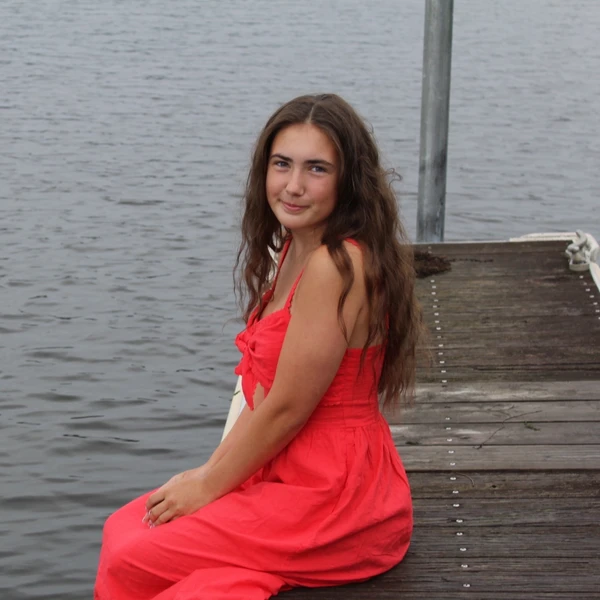
Hello! My name is Kayla Wilkin. I am sixteen years old and will be graduating as a junior this year. I plan to attend college to earn my associate degree in diagnostic medical sonography, with the goal of eventually becoming a pediatric oncology sonographer.
In the meantime, I work part-time at a daycare, where I am gaining valuable experience caring for and supporting children. This role has helped me develop patience, responsibility, and compassion—qualities that will be important in my future career working with young patients and their families.
Outside of work and school, I enjoy reading and am currently writing my own novel, which I hope to create into a series. I also have a Siberian Husky named Milo, and we love going on walks together.
My mother has always been a single parent, and watching her work hard to provide for our family has inspired me to pursue my goals with determination. I am committed to doing everything I can to help contribute to my college education and lessen the financial burden on her.
Thank you very much for considering my application for this scholarship.
Education
Dover Area High School
High SchoolMiscellaneous
Desired degree level:
Associate's degree program
Majors of interest:
- Medicine
Career
Dream career field:
Medicine
Dream career goals:
Pediatric Oncology Sonographer
Director's assistant
Sunshine Family Center - Daycare2024 – Present2 years
Sports
Dancing
Varsity2012 – Present14 years
Arts
Dover Area High School
Acting2023 – 2023
Future Interests
Volunteering
WCEJ Thornton Foundation Low-Income Scholarship
When I was little, wishes were made on dandelions, four-leaf clovers, and single stars in the night sky. I’d stand in my backyard, barefoot, holding a dandelion between my fingertips. I would close my eyes and blow the seeds into the wind—wishing, with everything in me, that I could save someone’s life. At night, I would look up at the sky through my window and do the same thing. Every star became a wish. One for my mom. One for my grandfather. One for a child I had never met, but somehow already had a place inside my heart.
Back then, wishes were all I had. Wishes were the only way a little girl could help the world in the way she’d yearned to. I didn’t know how healing worked or what it really meant to help someone. I only knew that I wanted to. That a part of my heart always belonged to another child.
Even then, it never felt like a choice. It felt as if I were a stamp branded to a slab of wood. As if it were this quiet pull toward something bigger than who I was.
Because of that, there was never much question about what I would do with my life. Choosing to apply to a medical imaging program didn’t feel like a decision so much as a continuation of who I’ve always been. It was never about success or stability—it was about wanting something so fiercely that no other path ever seemed right.
As I grew older, I began searching for something more than just wishes. I wanted a way to understand what was happening inside the people I cared about, to find the source of their pain instead of just wishing it would disappear. For the first time, I saw a path that allowed me to do exactly what I had spent my childhood wishing for: to look beyond the surface, to find what was hidden, and to be part of the process that helps make someone feel whole again.
I used to stand barefoot in my backyard, blowing dandelion seeds into the wind, wishing I could find whatever was hurting someone and make it go away.
Now, I don’t have to wish for that anymore. Through medical imaging, I’ve found a way to see what once felt invisible—and to help in the way I had been reaching for all along.
I still wish on every star, but I wish for something slightly different. I wish that every child I encounter would have the chance to grow up without fear, to feel safe in their own body, and to wish on dandelions and falling stars the same way I once did.
And now, instead of simply wishing, I’m choosing a path that allows me to help make those wishes come true.
Dan Leahy Scholarship Fund
The cracks on my childhood ceiling were imprinted into my mind each night. They were thin lines spreading across the blue plaster like a map I never meant to memorize. And somehow, I did. When the room was quiet, I would lie there and trace them with my eyes, wondering how something so small could slowly split something so solid apart. Water damage from the roof had created a bubble right in the center of my imaginary map, as if it were holding the cracks together. The water bubble was the first thing I'd look at, and then I'd slowly outline the four cracks until they slowly faded back into the ceiling. Some nights, I would run my finger over each crack as if I could personally understand why they were there.
Back then, I didn't realize that my ceiling was the perfect representation of what it had looked like for me.
Growing up, my dad left when I was five, leaving my mom to raise four kids on her own. My mom began to struggle, physically and financially, but she never let us go without. There wasn't a summer that we didn't go to the beach. A birthday without a party. A night without a roof over our head. A meal without food. A Christmas without presents.
Our home was filled with broken picture frames and half-ripped Disney character stickers on our bathtub wall. Dogs that barked at the neighbors and a half-broken basketball hoop in the driveway. Blankets took up much of the couch, and the television was always on. The downstairs had a pool table and a laundry room with lights that always flickered.
No matter the circumstances, our house was always a home.
And it wasn't the Disney stickers or the flickering lights that made it feel that way.
It was always my mom.
She loved so fiercely that, as a child, I never stopped to wonder how hard things must have been for her. I simply believed she felt the same security that I did.
As I've grown older, I've come to realize how wrong I was.
I watched my mom climb out of a dark place and build the life she once dreamed about. I watched her start her dream job and finally find financial stability. I watched her grow stronger, more confident, and happier.
I watched us move homes. I watched her grow older while I grew up.
And somewhere along the way, the Disney stickers disappeared from the bathtub wall.
My mom didn’t just raise four kids. She raised a woman who learned how to walk through fire because she watched her mother do it first. She raised a woman who doesn’t give up when life gets difficult.
Most importantly, she raised a woman who loves deeply and cares fiercely for others.
That is why I want to dedicate my life to helping children with cancer. As a future pediatric oncology sonographer, I hope to care for children during the most frightening moments of their lives, just as my mom cared for us during ours. Giving them the same security she once gave to me.
Now, I lie in a different bed in a different home. One filled with the same kind of love, just the older one.
And look up to a perfectly smooth ceiling. Because now, I don't need the bubble.
Now my crack is fading away, leaving the bubble behind because the strength that once held my world together now lives within me.
Women in STEM Scholarship
When I was little, wishes were made on dandelions, four-leaf clovers, and single stars in the night sky. I’d stand in my backyard, barefoot, holding a dandelion between my fingertips. I would close my eyes and blow the seeds into the wind—wishing, with everything in me, that I could save someone’s life. At night, I would look up at the sky through my window and do the same thing. Every star became a wish. One for my mom. One for my grandfather. One for a child I had never met, but somehow already had a place inside my heart.
Back then, wishes were all I had. Wishes were the only way a little girl could help the world in the way she’d yearned to. I didn’t know how healing worked or what it really meant to help someone. I only knew that I wanted to. That a part of my heart always belonged to another child.
Even then, it never felt like a choice. It felt as if I were a stamp branded to a slab of wood. As if it were this quiet pull toward something bigger than who I was.
Because of that, there was never much question about what I would do with my life. Choosing to apply to a medical imaging program didn’t feel like a decision so much as a continuation of who I’ve always been. It was never about success or stability—it was about wanting something so fiercely that no other path ever seemed right.
As I grew older, I began searching for something more than just wishes. I wanted a way to understand what was happening inside the people I cared about, to find the source of their pain instead of just wishing it would disappear. For the first time, I saw a path that allowed me to do exactly what I had spent my childhood wishing for: to look beyond the surface, to find what was hidden, and to be part of the process that helps make someone feel whole again.
I used to stand barefoot in my backyard, blowing dandelion seeds into the wind, wishing I could find whatever was hurting someone and make it go away.
Now, I don’t have to wish for that anymore. Through medical imaging, I’ve found a way to see what once felt invisible—and to help in the way I had been reaching for all along.
I still wish on every star, but I wish for something slightly different. I wish that every child I encounter would have the chance to grow up without fear, to feel safe in their own body, and to wish on dandelions and falling stars the same way I once did.
And now, instead of simply wishing, I’m choosing a path that allows me to help make those wishes come true.
Arthur and Elana Panos Scholarship
"In the beginning, God created the heavens and the earth." I sit on my bedroom floor, highlighters in hand, and re-read the same verse over and over again. Like, somehow I can change the words on the page. I know I need to change. But knowing and being able to fulfill that are two very different things. "Dear Heavenly Father, I'm sorry." I sit in my bed, lights turned off, hands linked together, and I cry. "This will be the time."
"In the beginning, God created the heavens and the earth." I sit on my bed, cross-legged. My Bible open in front of me. I highlight that sentence like I finally understand what is being said. I know I need to change. I know prayer is supposed to help me do that. "Dear Heavenly Father, I'm so sorry." I sit in my bed, lights turned off, staring at the wall, and cry. "This will be the time, God. I will give my life to you."
"In the beginning, God created the heavens and the earth." I'm crying this time. My blood is boiling, my chest feels tight, and I feel like at any moment I will lose this fight with myself. So I re-read that verse again. "God, I'm tired. I'm tired of losing. This will be the time."
"In the beginning, God created the heavens and the earth." I know this verse. I know Genesis like the back of my hand, except I can't read it. I can't move on. I can't finish it. I look at the words and wish I could understand them the way everyone else does.
My faith feels like a tug-of-war. The devil pulls from one side, while the Lord waits on the other with open arms for me to choose Him.
And I am the rope.
"In the beginning, God created the heavens and the earth."
"God, pull. Please."
But he won't.
Not because he doesn't care for me.
But because our relationship was never about force.
I used to beg God to pull harder than the devil.
But faith was never meant to be a battle of strength.
It was meant to be a choice.
Our relationship was built on the knowledge that love was more than the pull toward evil. Love was more than comfort.
Love was the quiet decision to keep choosing something good, even when it was easier to choose evil.
It took me years to understand that faith is proven in quiet moments. The moments where you choose compassion, patience, and hope, even when the world feels heavy.
That understanding led me to pursue Pediatric Oncology Sonography.
Children facing cancer are living battles they never asked for. Their families sit in waiting rooms, holding their breath for answers. In those moments, medicine is not just about technology or diagnoses.
It is about the people who choose to stand beside them.
As a future Pediatric Oncology Sonographer, I know my role will not always be to fix what is wrong. But I can be the steady presence in the room. I can treat every child with gentleness, patience, and dignity.
Most of all, I can be the one who opens their arms and waits.
My faith has taught me that love does not force healing or erase pain. Instead, it shows up. It stays. It chooses compassion again and again.
And that is the kind of healthcare professional I want to be.
So now, I sit in my bed and open my Bible.
"In the beginning, God created the heavens and the earth."
And I continue to read.
Women in Healthcare Scholarship
When I was little, wishes were made on dandelions, four-leaf clovers, and single stars in the night sky. I’d stand in my backyard, barefoot, holding a dandelion between my fingertips. I would close my eyes and blow the seeds into the wind—wishing, with everything in me, that I could save someone’s life. At night, I would look up at the sky through my window and do the same thing. Every star became a wish. One for my mom. One for my grandfather. One for a child I had never met, but somehow already had a place inside my heart.
Back then, wishes were all I had. Wishes were the only way a little girl could help the world in the way she’d yearned to. I didn’t know how healing worked or what it really meant to help someone. I only knew that I wanted to. That a part of my heart always belonged to another child.
Even then, it never felt like a choice. It felt as if I were a stamp branded to a slab of wood. As if it were this quiet pull toward something bigger than who I was.
Because of that, there was never much question about what I would do with my life. Choosing to apply to a medical imaging program didn’t feel like a decision so much as a continuation of who I’ve always been. It was never about success or stability—it was about wanting something so fiercely that no other path ever seemed right.
As I grew older, I began searching for something more than just wishes. I wanted a way to understand what was happening inside the people I cared about, to find the source of their pain instead of just wishing it would disappear. For the first time, I saw a path that allowed me to do exactly what I had spent my childhood wishing for: to look beyond the surface, to find what was hidden, and to be part of the process that helps make someone feel whole again.
I used to stand barefoot in my backyard, blowing dandelion seeds into the wind, wishing I could find whatever was hurting someone and make it go away.
Now, I don’t have to wish for that anymore. Through medical imaging, I’ve found a way to see what once felt invisible—and to help in the way I had been reaching for all along.
I still wish on every star, but I wish for something slightly different. I wish that every child I encounter would have the chance to grow up without fear, to feel safe in their own body, and to wish on dandelions and falling stars the same way I once did.
And now, instead of simply wishing, I’m choosing a path that allows me to help make those wishes come true.
Patricia Lindsey Jackson Foundation - Eva Mae Jackson Scholarship of Education
"In the beginning, God created the heavens and the earth." I sit on my bedroom floor, highlighters in hand, and re-read the same verse over and over again. Like, somehow I can change the words on the page. I know I need to change. But knowing and being able to fulfill that are two very different things. "Dear Heavenly Father, I'm sorry." I sit in my bed, lights turned off, hands linked together, and I cry. "This will be the time."
"In the beginning, God created the heavens and the earth." I sit on my bed, cross-legged. My Bible open in front of me. I highlight that sentence like I finally understand what is being said. I know I need to change. I know prayer is supposed to help me do that. "Dear Heavenly Father, I'm so sorry." I sit in my bed, lights turned off, staring at the wall, and cry. "This will be the time, God. I will give my life to you."
"In the beginning, God created the heavens and the earth." I'm crying this time. My blood is boiling, my chest feels tight, and I feel like at any moment I will lose this fight with myself. So I re-read that verse again. "God, I'm tired. I'm tired of losing. This will be the time."
"In the beginning, God created the heavens and the earth." I know this verse. I know Genesis like the back of my hand, except I can't read it. I can't move on. I can't finish it. I look at the words and wish I could understand them the way everyone else does.
My faith feels like a tug-of-war. The devil pulls from one side, while the Lord waits on the other with open arms for me to choose Him.
And I am the rope.
"In the beginning, God created the heavens and the earth."
"God, pull. Please."
But he won't.
Not because he doesn't care for me.
But because our relationship was never about force.
I used to beg God to pull harder than the devil.
But faith was never meant to be a battle of strength.
It was meant to be a choice.
Our relationship was built on the knowledge that love was more than the pull toward evil. Love was more than comfort.
Love was the quiet decision to keep choosing something good, even when it was easier to choose evil.
It took me years to understand that faith is proven in quiet moments. The moments where you choose compassion, patience, and hope, even when the world feels heavy.
That understanding led me to pursue Pediatric Oncology Sonography.
Children facing cancer are living battles they never asked for. Their families sit in waiting rooms, holding their breath for answers. In those moments, medicine is not just about technology or diagnoses.
It is about the people who choose to stand beside them.
As a future Pediatric Oncology Sonographer, I know my role will not always be to fix what is wrong. But I can be the steady presence in the room. I can treat every child with gentleness, patience, and dignity.
Most of all, I can be the one who opens their arms and waits.
My faith has taught me that love does not force healing or erase pain. Instead, it shows up. It stays. It chooses compassion again and again.
And that is the kind of healthcare professional I want to be.
So now, I sit in my bed and open my Bible.
"In the beginning, God created the heavens and the earth."
And I continue to read.
Instagram: kayla_wilkin21
Kristinspiration Scholarship
My name is Kayla Wilkin. I am sixteen years old and graduated early through an early admission program in January. This fall, I plan to attend York College of Pennsylvania to pursue Pediatric Oncology Sonography, majoring in Medical Imaging.
My interest in this field comes from both personal and professional experience. At fourteen, I began working part-time at my mother's daycare, where I developed a strong sense of patience, responsibility, and care when working with children. Over the past two years, I have also faced several medical challenges, including chronic low blood pressure, known as Orthostatic Hypotension. Through these experiences, I have gained a unique perspective on healthcare—not only from a clinical standpoint, but from the patient's side as well.
I know what it feels like to be vulnerable in a hospital setting. More importantly, I know how meaningful it is to feel safe, heard, and cared for. That feeling is something I hope to provide to others, especially children facing serious illnesses. My goal is to build a career where I can combine technical skill with compassion, helping patients feel not just treated, but supported.
Growing up, financial stability was not always guaranteed. My family often relied on assistance, like an EBT card. But even small things—like ordering a drink at a restaurant—were considered luxuries. I learned early on what it felt like to give more and be given less.
Those experiences shaped my perspective and taught me the value of resilience, gratitude, and hard work. They also motivated me to pursue a future where I can create stability not only for myself, but for those around me.
This scholarship would play a crucial role in helping me reach my goals. Reducing the financial burden of my education, it would allow me to fully focus on my studies and training in a demanding medical program. It would also bring me one step closer to building a future that is defined not by limitation, but by opportunity.
More than anything, this scholarship would help me turn my experiences into a career where I can make a lasting difference in the lives of others.
Growing up, I learned what it felt like to make do with less and to understand that some things were simply out of reach. I carry that with me as something that drives me to build a future where "enough" is no longer something I have to question. It is also the reason I am determined to build a future where no child has to quietly understand, too early, what it means to go without.
Charles B. Brazelton Memorial Scholarship
Laughter is defined as a vocal expression triggered by humor. For me, it was never that simple.
Growing up, I laughed at everything.
At funerals, I'd stand over the casket and laugh—not because anything was funny, but because I didn't understand what death meant. Watching people cry over someone I didn't know felt unfamiliar, awkward and uncomfortable in a way.
If someone fell down the stairs, I laughed before I helped them up. If someone slipped in the dirt, I was already doubled over, struggling to breathe through it.
Eventually, it stopped being something I did and started being who I was.
People didn't just know me, they also knew my laugh.
Most people would think that was a great thing. But for me, I hated it. Because even through the giggles, it was the thing I was teased for the most.
I was told to be quiet. To be more respectful. That I was inconsiderate, rude—sometimes even cruel. And after a while, I started to wonder if they were right.
Because the one thing that came most naturally to me—
the thing that made me stand out—
was also the very thing that made me feel the most out of place.
When the very thing that made me who I was was stripped away, until it felt like something I had to hide.
So what do you do with that? How do you reshape who you are just to fit inside an invisible box someone else built for you?
Maybe the problem was never me, but the box. Maybe some things aren't meant to be contained at all.
Some say laughter is the best medicine. But why does it feel like the thing that needed curing? Why did mine always feel like something that needed to be fixed? Why did mine feel like the very thing people wanted to take away.
Maybe my laughter was never the problem. Just like Charles being left-handed—similar to me. It was something so small, something so different, but it was never wrong.
That "flaw" was never the issue. It was the way people saw it. The way something unfamiliar was so quickly labeled as incorrect.
But maybe people like us were never meant to be "right."
(No pun intended.)
Maybe we were given these differences for a reason. Maybe they're the things that carry us through when the world feels heavy. When everything else starts to feel like too much.
Because I know, without a doubt, that without my laugh, I wouldn't have made it through the same way.
Or maybe not at all.
But maybe that was the point.
Maybe it was never something to fix. It was always something that kept me going.
For most people, crying is a sign they’re alive.
For me, it was never tears—
Laughter may be defined as a response to humor.
For me, it was never that simple.
It was how I learned that being alive didn't always look the way people expected.
It was how I learned that being alive didn't always look the way people thought was "right".
And yes, pun intended.
Honorable Shawn Long Memorial Scholarship
My name is Kayla Wilkin. I am sixteen years old and graduated early through an early admission program in January. This fall, I plan to attend York College of Pennsylvania to pursue Pediatric Oncology Sonography, majoring in Medical Imaging.
My interest in this field comes from both personal and professional experience. At fourteen, I began working part-time at my mother's daycare, where I developed a strong sense of patience, responsibility, and care when working with children. Over the past two years, I have also faced several medical challenges, including chronic low blood pressure, known as Orthostatic Hypotension. Through these experiences, I have gained a unique perspective on healthcare—not only from a clinical standpoint, but from the patient's side as well.
I know what it feels like to be vulnerable in a hospital setting. More importantly, I know how meaningful it is to feel safe, heard, and cared for. That feeling is something I hope to provide to others, especially children facing serious illnesses. My goal is to build a career where I can combine technical skill with compassion, helping patients feel not just treated, but supported.
Growing up, financial stability was not always guaranteed. My family often relied on assistance, like an EBT card. But even small things—like ordering a drink at a restaurant—were considered luxuries. I learned early on what it felt like to give more and be given less.
Those experiences shaped my perspective and taught me the value of resilience, gratitude, and hard work. They also motivated me to pursue a future where I can create stability not only for myself, but for those around me.
This scholarship would play a crucial role in helping me reach my goals. Reducing the financial burden of my education, it would allow me to fully focus on my studies and training in a demanding medical program. It would also bring me one step closer to building a future that is defined not by limitation, but by opportunity.
More than anything, this scholarship would help me turn my experiences into a career where I can make a lasting difference in the lives of others.
Growing up, I learned what it felt like to make do with less and to understand that some things were simply out of reach. I carry that with me as something that drives me to build a future where "enough" is no longer something I have to question. It is also the reason I am determined to build a future where no child has to quietly understand, too early, what it means to go without.
Mema and Papa Scholarship
I have looked at this prompt over and over for the past month.
The truth is, I have spent my entire life helping people, but it isn't like pieces of a broken vase. No matter how hard you try, you can't take a piece and glue it to who you are.
One time you help someone doesn't define you. The truth is, anyone can help one another. In fact, it's in our human nature to do exactly that.
So I found it strange that I couldn't think of what to write. I give my life to little children every day. My whole future is based on helping kids with cancer detect and measure their tumors.
Helping isn't something I do once; it's something I've built my life around.
And maybe that's what makes this essay difficult. I can't gather every moment of helpfulness and present it to you, because no matter how carefully I try to piece it together, it won't reflect the whole picture. Because no matter how much you glue the vase back together, it'd never give the same value it did. I can't take fragments of moments and glue them into a definition of who someone is.
What I didn’t understand then was that the same thing that made me who I am could also make things harder. The world isn’t built on equal care. Some people give less. Some people take more. And when you’re someone who naturally pours everything you have into others, you feel that difference more than most.
But even then, I never saw my heart as a flaw. Because for me, helping people didn’t take something away—it made me feel complete.
Working at a daycare, it can be very easy to lose yourself in the chaos of children. But for me, the only thing that kept me going was the lives I knew I was changing.
I saw it in the little boy with anger issues—how we would breath in and out, until his hands stopped shaking and he realized he wasn’t something to be feared. I saw it in the toddlers I taught how to dance for the first time, sitting in my lap as I moved their hands to the rhythm and bounced my knees until they laughed. I saw it in the quiet moments too—kneeling beside a child after an accident, reminding them softly, “It’s okay." And I saw it in the loudest ones—the cheers and screams when a child finally learned something new, like the whole world had just opened for them.
That was what kept me there.
Because success, to me, was never about moving up or being recognized. It wasn’t about titles or achievements. The only success I ever felt was in those moments—when I could see, right in front of me, that I had made a difference. That I had helped someone feel safe. That I had, in some small way, made them feel whole.
And the truth is, there were plenty of times I wanted to quit. Days that drained me, moments that made me question if I could keep giving so much of myself.
But I didn’t.
Because all I could think about was that the day I stopped showing up might be the day a child stopped trying. Because even when it’s hard, I would rather care too much than not enough.
Because even if I can’t piece together every moment, I know the whole of who I am is built from them.
Maria's Legacy: Alicia's Scholarship
Growing up, water was the only thing I'd drink at restaurants.
Ice clinking in a plastic cup, I'd watch other kids order sodas without thinking, while I folded my menu closed and said, "I'm dehydrated anyway."
My mom never had to ask twice. She never kept us from ordering the "fancy" drinks; I just grew up knowing that I shouldn't.
You think differently when you grow up watching your mom work three different jobs. You think differently when your whole life is centered around how much money is left on the food card.
Not because she ever failed me, but because she did everything she could—and I was never the daughter to ever ask for more.
She once told me to “learn from her mistakes,” as if the challenges she faced with money were meant to guide me, not define me. But I didn't know how not to let it define who I was. It followed me everywhere. In the way I hesitate before asking for something, in the way I learn to settle before I even try. Because I taught myself that that was always the easier option. Because watching my mom organize money just for a new baby doll seemed unfair.
But my mom never wanted that for me. She wanted me happy, so she'd buy it for me anyway. But I don't think she realized that the only happiness I'd ever wanted to see was her own.
She didn't just show me how hard life could be—she showed me how much more was possible. In the middle of long shifts and late nights, she made it clear in the only way she could:
I was meant to go further.
And somewhere along the way, I started to believe that too.
As I grew older and talked to people who never had a food card, I realized I couldn't imagine a better way to grow up than the way I did. That's when I became grateful for all the lessons hidden in those plastic cups of water. Grateful that I grew up learning value and humility before I ever experienced it myself.
That didn't make anything easier, definitely not when I applied to college. All I could see was a mom who might struggle with my debt because I decided to move forward. It felt like a weight pressing on my heart, as if I was purposely ordering a Coke instead of water. But the only way to make a situation easier was by earning my degree, building my future, and ensuring that my choices lift rather than burden my family.
As a future Pediatric Oncology Sonographer, I will not only help children across the world detect and measure tumors, but I will also create a foundation of stability for my future family, showing them that it is possible to go from nothing to everything—and that sometimes, nothing can be everything too.
My kids will not grow up worrying about food or water, but they will understand that some people do—and that doesn’t make them any less human or any less worthy of respect. My kids will grow up knowing that sometimes...sometimes water isn't just for dehydration.
Sometimes, it's the only thing a kid has.
Going to college and earning my associate’s degree would change my life—but not just my own. Sometimes, I imagine the moment I can pay my mom back for every baby doll she ever bought me.
I don’t just want to go to college for myself; I want to go for every version of her that never thought there was a way out.
Change of Heart Scholarship
There are not many conversations I remember vividly. There are not many conversations I can remember word for word, or explain in full detail what was being said when.
As teenagers, we spend a lot of time worrying about our future. We think a lot about ourselves. Not because we’re selfish, but because the world doesn’t pause for anyone. It keeps moving, whether we notice or not.
Growing up, I was always the type of person to reach out. I was always the type of person to listen when someone needed someone to talk to. But somewhere along the way, when life got busier, I forgot that about myself. I forgot that the person I was could make a difference, just by showing up.
One night, my friends and I were sitting in a car when my friend Will shared something that stopped me in my tracks. He described a moment of quiet loneliness at work. How he had wondered if anyone would even notice if he disappeared. He talked about going home, making dinner, sitting alone, and thinking about how long it would take before anyone realized he was gone. I didn’t know how to respond. I felt helpless, shocked, and suddenly aware of how much of our lives are lived unseen.
How much of my own life was lived unseen.
At first, I tried to shrug it off, but the image stuck with me. Because I had never heard something I related to more.
That same night, I made myself dinner, sat down alone, and caught myself wondering the same thing—if anyone would notice my own disappearance.
It made me realize that even people who seem "fine" can carry burdens that are invisible, and that our assumptions about others can be dangerously wrong.
That night, I started to realize that teenagers can be very similar. We are all rushing to live up to the standard. We are all overwhelmed and lonely and so so lost for people that are already supposed to be found.
My turning point was not a college decision or a plan for the future.
My turning point was learning to slow down.
My turning point was choosing to stay in this moment instead of the next.
As someone pursuing pediatric oncology sonography, I know my role won’t just be about what shows up on a screen. It will be about the child sitting in front of me and the parent beside them. That night taught me that people don’t always say when they’re struggling. Sometimes, they sit with it. So I’ve learned not to rush past those moments.
Because the most important thing I can do—then and now—is slow down long enough to make sure someone knows they’re not invisible.
Sometimes, slowing down is the only way to make sure no one disappears unnoticed.
Because in a world that never stops moving,
I’ve learned that the people who matter most are the ones we choose to slow down for.
“I Matter” Scholarship
The gravel crunched under my tires as I pedaled faster, the wind pushing against my face like it was trying to slow me down. I didn’t stop. I glanced over my shoulder, checking to make sure she was still there. And she was, wobbling slightly, but following me like she always did. I always took the street first. The imaginary one built in our backyard, where the grass became pavement, and our bikes became cars on the freeway. Every time, I would lead, and every time, I would glance back to make sure my sister was right behind me.
“Wait for me!” she’d call, and I’d skid to a stop like I always did, as if we were sitting at a red light.
I learned what it meant to be responsible from the seat of a bike—not in a classroom, but from the feeling of looking over my shoulder and knowing someone was counting on me to lead the way. But being the one in front didn’t end when we got off our bikes.
It looked like holding myself together when my mom and brother were rushed into an ambulance, making sure that wherever I went, my sister was right behind me. It looked like leading her through New York at Christmas, her fingers gripping the back of my jacket so she wouldn’t get lost. It looked like lending her my jacket in elementary school and letting her “borrow” my favorite comb.
We were like fire—sometimes we burned too hot, flaring up at the smallest things, but even then, there was always warmth underneath it all. And every time, whether I realized it or not, I was doing the same thing I did on that bike.
One time, social services came to our house after my brother made a false call. My sister and I were sent upstairs, and she started crying. While my mom was downstairs being interviewed, I held her together. When my mom came up, she asked who wanted to be interviewed first.
My sister didn't say anything. I didn't have to look at her to know why.
So then I said it. "I'll go first."
The same way I'd always answered her before.
But this time, it meant something different. It wasn't about starting a game or turning onto an imaginary street first. It was about stepping into something I wasn't ready for, simply because I knew she wasn't.
My entire life has been about making sure she never has to drive alone—that any pothole she might hit, I’ve already felt first.
And somewhere along the way, I realized that this instinct to lead, to protect, and to look out for someone else didn't end with her. It became a part of who I am. It's what draws me toward a future in healthcare. Where leading doesn't mean being ahead, but making sure no one is ever left behind. And now, life is starting to move faster. The roads are getting longer, the distance between us stretching in ways the backyard never could. There will be moments when I can’t be right beside her, when I won’t be able to reach back and steady her handlebars.
But even then, she’ll never really be on her own. Everything I’ve ever done has been to make sure she knows how to trust that someone is always looking back for her, but also forwards.
And even when I go off to college, I know with certainty that if she ever called out, "Wait for me," she wouldn't have to wonder if I'd stop—
because I always will.
Sola Family Scholarship
When I was little, I used to lie awake at night, staring at the ceiling, convinced our house would burn down while I slept. I imagined the sound of alarms, the heat, the way everything familiar could disappear in minutes. My fear was relentless. I thought about my bed, my room, my stuffed frog, the small pieces of my world I didn’t know how to live without yet. I was terrified of losing everything I once loved.
But even in that fear, there was something I never doubted.
I knew that if there were ever a fire—if the world really did fall apart in the dark—my mother would come for me.
As I’ve grown older, I have come to the knowledge that sleep makes even the strongest people vulnerable. How surrendering to rest means trusting that the world won’t hurt you while your eyes are closed. I believe that deeply, and when I was a child, my trust never came from the world.
It came from her.
I knew that if something went wrong, she would appear in the doorway, pull me into her arms, and make the danger stop. I didn’t understand, then, how heavy that role was.
One night, long after my siblings had gone to bed, we sat on opposite ends of the couch. The house was quiet in that way, it only gets when everyone else is asleep. She tried to hide her tears. She thought I couldn’t see. But I could. So I got up, crossed the room, and wrapped my arms around her. And for the first time, she cried in mine.
That was the night I realized how much she really went through. Behind the smile on her face, she was in a deep hole—one so dark that even someone as strong as my mom couldn’t pull herself out. She had bills, car payments, raising four kids by herself, while working three different jobs. The fear she carried so that we could simply feel safe, and the exhaustion she swallowed so we would never have to taste it.
Now, looking back, I’ve learned that sometimes the fire doesn’t announce itself. Sometimes it burns quietly. What she gave me wasn’t protection from pain. It was the ability to survive it.
The entire time that I had been scared of a fire, I had only ever imagined what it might do to me—how much of my small world it would take. But I never stopped to wonder what it would feel like for her. I didn’t realize that, while I was afraid of losing everything, she was the one standing in it. Now, what scares me most is not the fire itself, but how long she would have to endure it without anyone seeing. Because I never realized she was burning while still protecting me from the heat.
That understanding has shaped who I am. It has made me more aware, more compassionate, more independent, and more determined to be a source of strength for others, the way she was for me. I don’t just want to succeed for myself—I want to create the stability she fought to give me.
Because of her, I understand that strength isn’t the absence of flames, but the choice to keep going through it—even when it would be easier to burn.
I was raised by a woman whose flame kept us warm, even as it flickered under the weight of everything she carried. I hold that fire in my heart now—and next time, I’ll not only shield it from the dark, but use its light to guide me forward.
Finance Your Education No-Essay Scholarship
1000 Bold Points No-Essay Scholarship
Maxwell Tuan Nguyen Memorial Scholarship
When I was little, wishes were made on dandelions, four-leaf clovers, and single stars in the night sky. I’d stand in my backyard, barefoot, holding a dandelion between my fingertips. I would close my eyes and blow the seeds into the wind—wishing, with everything in me, that I could save someone’s life. At night, I would look up at the sky through my window and do the same thing. Every star became a wish. One for my mom. One for my grandfather. One for a child I had never met, but somehow already had a place inside my heart.
Back then, wishes were all I had. Wishes were the only way a little girl could help the world in the way she’d yearned to. I didn’t know how healing worked or what it really meant to help someone. I only knew that I wanted to. That a part of my heart always belonged to another child.
Even then, it never felt like a choice. It felt as if I were a stamp branded to a slab of wood. As if it were this quiet pull toward something bigger than who I was.
Because of that, there was never much question about what I would do with my life. Choosing to apply to a medical imaging program didn’t feel like a decision so much as a continuation of who I’ve always been. It was never about success or stability—it was about wanting something so fiercely that no other path ever seemed right.
As I grew older, I began searching for something more than just wishes. I wanted a way to understand what was happening inside the people I cared about, to find the source of their pain instead of just wishing it would disappear. For the first time, I saw a path that allowed me to do exactly what I had spent my childhood wishing for: to look beyond the surface, to find what was hidden, and to be part of the process that helps make someone feel whole again.
I used to stand barefoot in my backyard, blowing dandelion seeds into the wind, wishing I could find whatever was hurting someone and make it go away.
Now, I don’t have to wish for that anymore. Through medical imaging, I’ve found a way to see what once felt invisible—and to help in the way I had been reaching for all along.
I still wish on every star, but I wish for something slightly different. I wish that every child I encounter would have the chance to grow up without fear, to feel safe in their own body, and to wish on dandelions and falling stars the same way I once did.
And now, instead of simply wishing, I’m choosing a path that allows me to help make those wishes come true.
Sarah Eber Child Life Scholarship
"I can do more."
That was the sentence I repeated to myself growing up. Three simple words that slowly became the way I defined my strength. When I was younger, I thought strength meant doing more—being the person everyone could rely on. The more I took on, the stronger I believed I was.
Looking back now, I see it like weights stacked on my back. At first, the weight was light, but over time it kept coming until my shoulders carried more than I realized.
Still, I kept saying it.
"I can do more."
Working twelve-hour shifts while attending online school wasn't easy. Most days, I woke up exhausted, knowing the day ahead would stretch every ounce of energy I had. But quitting was never an option. My family needed stability, and my mom already carried too much. If she needed something done, I made sure it was finished before she even had to ask. If a friend needed someone to listen, I stayed on the phone until they felt okay again. If a child needed comfort, I held them as if it mattered.
Helping people became my identity. Being dependable became the role I stepped into when I realized no one would do it the same for me. I believed that if I kept giving more of myself, someone would do the same.
So I kept telling myself, "I can do more."
But adversity does not always arrive in one moment. For me, it felt like standing in the ocean during a thunderstorm. At first, the waves brushed against my legs, but eventually they grew stronger. Before I knew it, my legs buckled beneath me, the air in my lungs went thin, and for the first time, I wondered if I had taken on more than I could survive.
But I refused to sink.
Instead, I started swimming.
Swimming meant pushing through exhaustion even when my mind told me to stop. It meant continuing to show up for work and school even on days when I had nothing left. Eventually, when I reached the shore, I stood there, looking back at the storm I had just survived, and I said the same words I had always said.
"I can do more."
For so long, I had worn strength like a mask. I was the person who never complained, the one who always stepped in, the one who made sure everyone else was okay. In many ways, I felt like Ghostface—someone defined entirely by the mask they wore.
People knew the role I played for them, but they never knew the person behind it.
The hardest part of adversity was realizing how much of myself I had given away trying to be everything for everyone else. It felt as if I were a puzzle missing half its pieces, or a block of ice shattered into fragments no one thought to help gather.
That realization taught me something I will carry for the rest of my life. Adversity did not just test my strength; it reshaped my understanding of it.
I learned that strength is not only about how much you can carry, but also that it's okay to set the weights down. Caring deeply for others is beautiful, but it should never come at the cost of losing who you are.
Most importantly, I learned that resilience is not the absence of struggle.
It is the decision to keep moving forward anyway.
So yes, I can do it.
Not because I carry everything alone, but because I learned how to survive the waves that once tried to drown me.
God Hearted Girls Scholarship
"In the beginning, God created the heavens and the earth." I sit on my bedroom floor, highlighters in hand, and re-read the same verse over and over again. Like, somehow I can change the words on the page. I know I need to change. But knowing and being able to fulfill that are two very different things. "Dear Heavenly Father, I'm sorry." I sit in my bed, lights turned off, hands linked together, and I cry. "This will be the time."
"In the beginning, God created the heavens and the earth." I sit on my bed, cross-legged. My Bible open in front of me. I highlight that sentence like I finally understand what is being said. I know I need to change. I know prayer is supposed to help me do that. "Dear Heavenly Father, I'm so sorry." I sit in my bed, lights turned off, staring at the wall, and cry. "This will be the time, God. I will give my life to you."
"In the beginning, God created the heavens and the earth." I'm crying this time. My blood is boiling, my chest feels tight, and I feel like at any moment I will lose this fight with myself. So I re-read that verse again. "God, I'm tired. I'm tired of losing. This will be the time."
"In the beginning, God created the heavens and the earth." I know this verse. I know Genesis like the back of my hand, except I can't read it. I can't move on. I can't finish it. I look at the words and wish I could understand them the way everyone else does.
My faith feels like a tug-of-war. The devil pulls from one side, while the Lord waits on the other with open arms for me to choose Him.
And I am the rope.
"In the beginning, God created the heavens and the earth."
"God, pull. Please."
But he won't.
Not because he doesn't care for me.
But because our relationship was never about force.
I used to beg God to pull harder than the devil.
But faith was never meant to be a battle of strength.
It was meant to be a choice.
Our relationship was built on the knowledge that love was more than the pull toward evil. Love was more than comfort.
Love was the quiet decision to keep choosing something good, even when it was easier to choose evil.
It took me years to understand that faith is proven in quiet moments. The moments where you choose compassion, patience, and hope, even when the world feels heavy.
That understanding led me to pursue Pediatric Oncology Sonography.
Children facing cancer are living battles they never asked for. Their families sit in waiting rooms, holding their breath for answers. In those moments, medicine is not just about technology or diagnoses.
It is about the people who choose to stand beside them.
As a future Pediatric Oncology Sonographer, I know my role will not always be to fix what is wrong. But I can be the steady presence in the room. I can treat every child with gentleness, patience, and dignity.
Most of all, I can be the one who opens their arms and waits.
My faith has taught me that love does not force healing or erase pain. Instead, it shows up. It stays. It chooses compassion again and again.
And that is the kind of healthcare professional I want to be.
So now, I sit in my bed and open my Bible.
"In the beginning, God created the heavens and the earth."
And I continue to read.
Sharen and Mila Kohute Scholarship
The cracks on my childhood ceiling were imprinted into my mind each night. They were thin lines spreading across the blue plaster like a map I never meant to memorize. And somehow, I did. When the room was quiet, I would lie there and trace them with my eyes, wondering how something so small could slowly split something so solid apart. Water damage from the roof had created a bubble right in the center of my imaginary map, as if it were holding the cracks together. The water bubble was the first thing I'd look at, and then I'd slowly outline the four cracks until they slowly faded back into the ceiling. Some nights, I would run my finger over each crack as if I could personally understand why they were there.
Back then, I didn't realize that my ceiling was the perfect representation of what it had looked like for me.
Growing up, my dad left when I was five, leaving my mom to raise four kids on her own. My mom began to struggle, physically and financially, but she never let us go without. There wasn't a summer that we didn't go to the beach. A birthday without a party. A night without a roof over our head. A meal without food. A Christmas without presents.
Our home was filled with broken picture frames and half-ripped Disney character stickers on our bathtub wall. Dogs that barked at the neighbors and a half-broken basketball hoop in the driveway. Blankets took up much of the couch, and the television was always on. The downstairs had a pool table and a laundry room with lights that always flickered.
No matter the circumstances, our house was always a home.
And it wasn't the Disney stickers or the flickering lights that made it feel that way.
It was always my mom.
She loved so fiercely that, as a child, I never stopped to wonder how hard things must have been for her. I simply believed she felt the same security that I did.
As I've grown older, I've come to realize how wrong I was.
I watched my mom climb out of a dark place and build the life she once dreamed about. I watched her start her dream job and finally find financial stability. I watched her grow stronger, more confident, and happier.
I watched us move homes. I watched her grow older while I grew up.
And somewhere along the way, the Disney stickers disappeared from the bathtub wall.
My mom didn’t just raise four kids. She raised a woman who learned how to walk through fire because she watched her mother do it first. She raised a woman who doesn’t give up when life gets difficult.
Most importantly, she raised a woman who loves deeply and cares fiercely for others.
That is why I want to dedicate my life to helping children with cancer. As a future pediatric oncology sonographer, I hope to care for children during the most frightening moments of their lives, just as my mom cared for us during ours. Giving them the same security she once gave to me.
Now, I lie in a different bed in a different home. One filled with the same kind of love, just the older one.
And look up to a perfectly smooth ceiling. Because now, I don't need the bubble.
Now my crack is fading away, leaving the bubble behind because the strength that once held my world together now lives within me.