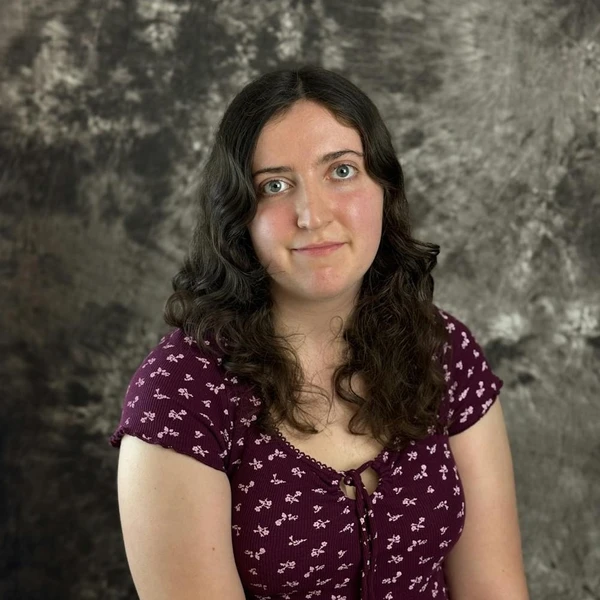
user profile avatar

Kayla chamoy

1x

Finalist

Bio

Secretary of Seawolves Accessibility Network Member of Phi Alpha Delta Law fraternity Member of Delta Alpha Pi Honor Society

Education

Stony Brook University

Bachelor's degree program
2025 - 2029
  • Majors:
    • Philosophy
    • Journalism

Miscellaneous

  • Desired degree level:

    Master's degree program

  • Graduate schools of interest:

  • Transfer schools of interest:

  • Majors of interest:

  • Not planning to go to medical school
  • Career

    • Dream career field:

      Legal Services

    • Dream career goals:

      Sports

      Swimming

      Varsity
      2016 – 20193 years

      Research

      • Communication, Journalism, and Related Programs, Other

        Journalism Department — Investigative Journalist
        2024 – 2025

      Arts

      • High School

        Theatre
        Oklahoma, The Sound of Music
        2015 – 2019

      Future Interests

      Advocacy

      Politics

      Volunteering

      Philanthropy

      Entrepreneurship

      Bold Rewards No-Essay Scholarship
      Ethel Hayes Destigmatization of Mental Health Scholarship
      I fear that my mother will die. As a raging anorexic and alcoholic, I have been told the worst: to prepare myself for her death. If someone told me I was just like her as a child--I would scream at them. Unfortunately, they were right: I am the spitting image of what I fear the most. I have her face, her tendencies to pick at her skin, her "big" emotions--I have it all. If I could, I would scream at the world for making us both suffer with our mental health. But as I have learned from being in college, I am unable to do so. While I cannot change her behavior or actions, I can use my built-up anger from dealing with both of our struggles to bring attention to the limited knowledge of mental illness. I am not planning on become a psychologist; I would do better as a patient. But I can use the bottled-up emotions spanning 19 years to influence change in the mental health and special education community. In fact, I would go further as to advocate for support in making sure that the intersections between these two communities are visible. As a special education student myself from K-12 grade, I was unable to access actual support for my growing emotional instability. I was given accommodations such as extra time on exams and a separate room to take tests in, but I was still suffering. Only this time, it was not visible. My desire to become an advocate stems directly from experience in these communities, from being an "invisible" student myself to seeing a person I care about--my mother--suffer greatly from the perceptions surrounding mental illness, and the ignorance for what it truly is. I hope to use every opportunity I can to become an advocate. I especially want to go to law school where I want to specialize in supporting families who are struggling with the task of getting their children services. I will not allow myself to "give up." I will fight for myself, my mother, and for those who are struggling to get beneficial services. I will use all of my power, my connections, and opportunities to make sure that others do not have to suffer with seeing a loved one falling through the system because they have a mental illness.
      Special Needs Advocacy Inc. Teresa Politano Memorial Scholarship
      As a child, I was diagnosed with a Developmental Disorder in Math and Reading and a processing speed of .5%. I was also given the diagnosis of Attention-Hyperactivity disorder. I felt that this made me unlucky as a child--as I would constantly be told that I would never accomplish anything. These diagnoses were my identity, and I could not see through them. Unbeknownst to me, I was lucky. I had a father who would constantly advocate so I could have the services that I needed to be able to succeed. He believed in me when no one else did. He was the first person who suggested that I could go to university. That was never something I thought about. Through his tiring efforts of advocating for me, I was able to see that I was not what I was diagnosed with, I could create actual change. One of the first lessons my father taught me was to "embrace the difference." I did not know what this meant. Now, looking back, I know exactly what that meant. Sitting in my first university course--Foundations of Journalism at the University at Buffalo, I fell in love with investigative reporting. While my peers worked on Headlines, News, and Science--I focused heavily on what I already knew: the special education community. I wanted to show my previous teachers that I could become more than my diagnoses. I started researching into others who had done the same. But what I found was jarring. Most students with disabilities were unable to gain the services I took for granted. Most of the students were not able to have specialized teachers. I knew that needed to be fixed. So, I focused on what I knew I excelled at--writing--and I worked closely with that Foundations of Journalism professor. He gave me a special opportunity as a second semester freshman--to do an independent study. In this independent study, I was able to focus on the difficulties that students in Western New York faced getting services. I used the research and investigative skills I had learned during the course to uncover the widely under covered issue. I spoke to special education advocates, lawyers, and parents of children with special needs. I turned this into an investigative article, where I was able to use my writing skills and the interviews to create a meaningful piece of journalism. I realized that my disabilities are not "inherently bad" but could be used to bring actual change. I am now at Stony Brook University, where I am majoring in both Journalism and Philosophy. My goal is to continue this advocacy work in the future. I know that with my investigative skills and my writing--I will be able to embrace the difference in the field of journalism. I will continue to create these articles in order to advocate for change in the special education field. I will make sure that the lesson is not "you cannot accomplish anything," instead, I will turn this into encouragement: "You can accomplish academic and career achievements no matter what you are diagnosed with." I will use my "fiery" passion, no matter how cliche it sounds, to advocate for others in the special education system.
      Learner Mental Health Empowerment for Health Students Scholarship
      Since I was seven years old, I have struggled with my own mental health. This struggle has opened my eyes to the underreported issues that young adults face everyday. It does not help that the stigma is so incredibly prevalent that most individuals, like myself, are unable to reach out for help in fear of the public response. Only in university, after almost dropping out due to traumas that led me to be diagnosed with Post-Traumatic Stress Disorder did I reach out for help. This was not a decision I made lightly–it was not out of want, it was out of need. I want to change this. I want to advocate so that others in the same situation reach out for help out of want. I want to ensure that the stigma that prevented me from talking about my struggles is lessened. As an investigative student journalist at Stony Brook University, I have focused on reporting on underreported and systemic issues in special education. I would like to continue this reporting with mental health challenges. I have previously used my writing and communication skills to bring awareness around the disparities in the Western New York Special Education system. Now, I want to focus on the disparities in mental health resources for those who are struggling. I believe that this scholarship will help me achieve my goal of advocacy through schooling. I have joined clubs like Active Minds on campus, which focuses on reducing the stigma around mental health. I have also joined clubs like Seawolves Accessibility Network to lead the organization to make real change regarding how mental health is treated on my campus. The foundational skills I have learned from my previous reporting and writing positions have helped me drive change in my campus community, publishing articles surrounding mental well-being of students. I am hoping to also study abroad in Australia, where I will be able to further my understanding of international mental health education and societies. Lastly, I am hoping that I will be able to reduce suicide rates with my advocacy work as an investigative journalist, bringing light to other's stories. I am focused entirely on advocacy work through prevention materials and education. I would like to learn more about the research methods that can be used to lessen the stigma through my education. I hope that I can use my own experiences to highlight the need for change in the mental health field. I am also hoping that by using my education through Stony Brook University, I can encourage change on a large scale.