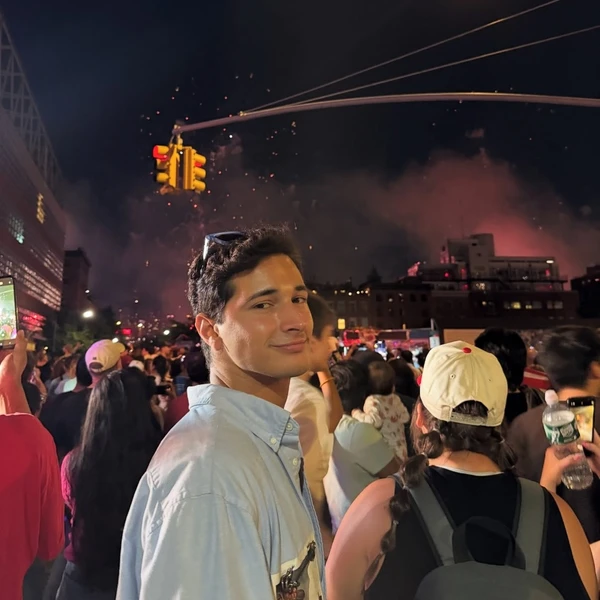
Los Angeles, CA
Hobbies and interests
Stocks And Investing
Volleyball
Philosophy
Reading
Portuguese
Travel And Tourism
Law
Human Rights
Reading
Law
I read books daily
Kayan Abate Braga Costa
1x
Finalist1x
WinnerKayan Abate Braga Costa
1x
Finalist1x
WinnerBio
I am a first-generation college student, child of immigrant parents, and a Political Science major on the pre-law track at Santa Monica College. After being forced to leave the United States as a child due to my parents’ visa complications, I grew up in Brazil navigating cultural displacement, language barriers, and the challenges of discovering my identity in environments where being openly LGBTQ+ felt unsafe.
I returned to California alone and supported myself through full-time work while pursuing my education, often balancing demanding schedules with academic excellence. Despite these challenges, I earned placement on the Dean’s Honor List twice. At SMC, I have immersed myself in political science, philosophy, and economics coursework and participate in the Pre-Law Club, where I explore legal advocacy and public policy.
My goal is to attend law school and become an advocate for immigrants and LGBTQ+ individuals, using education as a tool for justice and systemic change.
Education
Santa Monica College
Associate's degree programMajors:
- Political Science and Government
GPA:
3.8
Miscellaneous
Desired degree level:
Bachelor's degree program
Graduate schools of interest:
Transfer schools of interest:
Majors of interest:
- Political Science and Government
- Law
Career
Dream career field:
Law Practice
Dream career goals:
server
in-n-out2021 – 20221 yearbarista
starbucks2021 – 20232 yearsserver
eataly2024 – Present2 years
Sports
Volleyball
Club2012 – 20208 years
Awards
- yes
Research
Anthropology
Santa Monica College — Student writing the research2024 – 2024Anthropology
Santa Monica College — Student2024 – 2024
Future Interests
Advocacy
Politics
Volunteering
Philanthropy
Entrepreneurship
Mikey Taylor Memorial Scholarship
Mental health has shaped every major belief I hold about myself, others, and the world. Growing up, I learned early that silence could feel safer than honesty. As a child, my family was forced to leave the United States due to visa complications, and overnight, everything familiar disappeared. In Brazil, I struggled with language barriers, cultural isolation, and the constant feeling of not belonging. That displacement planted the first seeds of anxiety and self-doubt, even before I had the words to name them.
As I grew older, my mental health struggles deepened when I began to understand my identity as a gay man in environments where being myself felt dangerous. Bullying, religious shame, and fear taught me how to hide parts of myself in order to survive. I learned to disappear emotionally while appearing functional on the outside. For a long time, I believed that endurance meant silence. That belief nearly cost me my life. During one of my darkest periods, the weight of isolation and internalized fear became unbearable, and I reached a breaking point. Surviving that moment fundamentally changed how I understand strength. I realized that survival was not weakness, it was power.
These experiences reshaped my relationships. For years, I struggled to trust others or allow myself to be vulnerable. Losing friends through forced migration and starting over multiple times made attachment feel risky. Healing required learning how to open up again, to speak honestly about my struggles, and to accept support without shame. Today, I value relationships rooted in empathy and emotional safety. I am intentional about listening deeply, checking in on others, and creating spaces where honesty is allowed. Mental health taught me that connection is not built through perfection, but through shared humanity.
My experiences have also directly shaped my career aspirations. At Santa Monica College, studying political science, philosophy, and economics gave me language for what I lived through. I began to understand that mental health struggles are not just personal failures, they are deeply connected to systems of exclusion, displacement, and inequality. I am a first-generation college student, and navigating higher education while working long hours to support myself has only reinforced my awareness of how mental health and access to resources are intertwined.
I aspire to pursue a career in law, where I can advocate for individuals who, like me, have been pushed to the margins, immigrants, LGBTQ+ individuals, and those navigating trauma without adequate support. My mental health journey taught me that policy, law, and institutions have real emotional consequences on people’s lives. I want to be part of creating systems that protect dignity rather than erode it.
Mental health did not just influence my life, it redirected it. It taught me compassion, resilience, and responsibility. I no longer measure success by how much pain I can endure in silence, but by how honestly I can live and how intentionally I can support others. My journey transformed pain into purpose, and it continues to guide the work I hope to do in the world.
Learner Mental Health Empowerment for Health Students Scholarship
Mental health is important to me as a student because it has never been separate from my education, it has shaped every part of my ability to survive, learn, and grow. For much of my life, mental health was something I carried quietly, believing that strength meant silence. I now understand that real strength comes from naming pain, seeking support, and creating space for others to do the same.
As a child, my family was forced to leave the United States due to visa complications, uprooting my life overnight. In Brazil, I navigated a new language, culture, and identity while growing up in environments where difference often meant danger. As a gay teenager in a country with high rates of violence against LGBTQ+ individuals, fear became constant. I learned to hide parts of myself to stay safe. Over time, that silence turned inward. Anxiety, isolation, and hopelessness became familiar companions, eventually leading to a mental health crisis that nearly cost me my life.
Surviving that moment reshaped how I understand mental health. I realized that suffering in silence is not resilience, it is erosion. Healing required honesty, time, and the courage to speak. It also required understanding that mental health is not a personal failure, but a human responsibility that deserves care, attention, and community support.
When I returned to California alone years later, mental health remained central to my academic journey. Supporting myself through long work hours while attending college meant constantly balancing exhaustion with determination. At Santa Monica College, I learned that showing up mattered, even on days when my mental health made it difficult. Writing essays, participating in discussions, and engaging in political science and philosophy courses became ways of processing what I had lived through. Education did not erase my struggles, but it gave them meaning.
Today, I advocate for mental health by being open when it is safe to do so. I normalize conversations about therapy, emotional exhaustion, and vulnerability among friends and peers, especially within immigrant and LGBTQ+ communities where mental health is often stigmatized or ignored. I listen without judgment, encourage others to seek help, and share my own experiences to remind people they are not alone. Advocacy does not always look like public speeches; sometimes it looks like sitting with someone in their darkest moments and staying.
Mental health advocacy is also central to my future goals. I aspire to pursue law and work in spaces where marginalized individuals are often overlooked or silenced. Understanding mental health has taught me empathy, patience, and the importance of dignity, qualities that will guide my work as an advocate for immigrants and LGBTQ+ individuals navigating systems that can feel overwhelming and dehumanizing.
Mental health is important to me because it saved my life, and now it shapes my purpose. By continuing to speak, listen, and advocate, I hope to help build a culture where survival is not the goal, but well-being is the standard.
Ethel Hayes Destigmatization of Mental Health Scholarship
Mental health has shaped my life long before I had language for it. For many years, it was something I carried quietly, something I learned to endure rather than discuss. Growing up, I learned early that pain could exist without explanation and that survival often meant silence. That silence followed me across borders, identities, and stages of my life, shaping how I understood myself and the world around me.
As a child, my family was forced to leave the United States due to visa complications, and overnight, everything familiar disappeared. In Brazil, I struggled to adapt to a new language, culture, and sense of belonging. I became the outsider, the child who did not quite fit anywhere. At the same time, I was learning to suppress parts of myself to stay safe. Discovering that I was gay in an environment marked by homophobia taught me that visibility could be dangerous. Silence became a coping mechanism. I learned to endure quietly, to minimize myself, and to believe that pain was something to be managed alone.
Over time, that silence took a toll on my mental health. I internalized fear, shame, and isolation, and I began to believe that my struggles were weaknesses rather than responses to trauma. When my identity was exposed at school, the loss of control over my own story intensified everything I had been holding in. The whispers, the stares, and the betrayal pushed me into a darkness I did not yet have the tools to navigate. One night, overwhelmed by years of suppressed pain, I made a decision I did not think I would survive. I did. And surviving changed everything.
Recovery was not immediate or simple. Healing forced me to confront the belief that suffering should be hidden. I began to understand that survival was not weakness, it was power. Slowly, I learned to sit with my pain instead of running from it. That process reshaped how I relate to others. Where I once withdrew, I now try to listen. Where I once hid, I now speak with intention. My experiences taught me empathy that is not theoretical, but lived. I recognize distress in silence. I understand how easily people can fall through the cracks when mental health is ignored or stigmatized.
When I returned to the United States alone years later, mental resilience became essential to survival. Supporting myself through long work hours, financial instability, and academic pressure required more than discipline, it required self-awareness. Santa Monica College became a turning point, not only academically, but emotionally. Education gave me language for what I had lived through. Through political science, philosophy, and economics, I learned that mental health is deeply connected to systems of power, displacement, and inequality. My pain was not isolated; it existed within larger structures that often fail to protect vulnerable people.
These realizations reshaped my aspirations. I want to pursue law because I have lived what it means to exist without protection, emotionally, socially, and legally. I want to advocate for individuals who are marginalized not only by policy, but by silence. Mental health has taught me that survival alone is not enough; people deserve dignity, understanding, and access to support before they reach crisis points.
Today, I approach relationships with honesty and care. I value openness, boundaries, and compassion, for others and for myself. My journey has taught me that talking about mental health does not make pain heavier; it makes it bearable. It allows light in.
My experiences have shaped my belief that resilience is not about pretending everything is fine, but about choosing to stay present and engaged with life despite hardship. I carry my story not as a wound, but as a responsibility, to speak, to listen, and to help create spaces where others do not feel compelled to suffer in silence.
Elijah's Helping Hand Scholarship Award
Mental health and LGBTQIA+ experiences have shaped my life in ways that are inseparable from who I am today. For much of my youth, existing as myself felt unsafe. I learned early that being different made me visible in ways I could not control, and that visibility came with judgment, isolation, and fear. Over time, those pressures did not just affect how others saw me, they affected how I saw myself.
Growing up, I learned to hide. I learned which parts of myself were acceptable and which needed to be buried to survive. That kind of silence does not disappear quietly; it settles into the mind. As I struggled to reconcile my identity with environments shaped by rigid expectations and deep-rooted homophobia, my mental health suffered. I carried shame that was never mine to hold and learned to measure my worth through the approval of others. The weight of pretending became exhausting, and silence slowly turned into loneliness.
When my identity was exposed, I lost control over my own narrative. Whispers, stares, and betrayal followed, and I felt stripped of safety and dignity. My mental health reached a breaking point, and there was a moment when the pain felt unbearable. I survived. That survival reshaped my understanding of strength. I learned that staying alive is not weakness, it is resistance. It is choosing to remain present in a world that has not yet learned how to protect you.
Healing did not come quickly or easily. It required learning how to forgive myself for surviving, how to release the belief that I was a problem to be fixed, and how to rebuild a sense of worth that did not depend on silence. Over time, I began to reclaim my voice. Education became my anchor. Each essay I wrote, each classroom discussion I entered, became an act of defiance, proof that I deserved space, safety, and a future.
As a queer person, my mental health journey is inseparable from my identity. I have learned that systems often fail LGBTQIA+ individuals not because we are fragile, but because we are forced to navigate environments that deny our humanity. This understanding has shaped my purpose. I am committed to advocating for spaces where queer individuals are not merely tolerated, but protected and affirmed, especially in educational and legal systems where policy directly affects lives.
Elijah’s Helping Hand represents more than financial support; it represents recognition. It honors perseverance in a world that often asks marginalized people to endure quietly. My story is one of survival, growth, and refusal to disappear. I carry the responsibility to live fully not only for myself, but for those whose lives were cut short before they could be seen, understood, or protected.
I continue forward with the belief that staying alive, speaking openly, and building a future rooted in justice is itself an act of impact. Through my education and advocacy, I intend to help create a world where mental health is taken seriously, LGBTQIA+ lives are valued, and survival is met with support rather than silence.
JobTest Career Coach Scholarship for Law Students
My desired legal career path is rooted in advocacy for people who are systematically excluded, displaced, or silenced by the very systems meant to protect them. I plan to pursue a career in law focused on immigration and civil rights, with particular attention to the intersections of legal status, economic vulnerability, and LGBTQ+ identity. My goal is not only to practice law, but to use it as a tool to restore dignity, stability, and voice to those navigating injustice without a safety net.
My interest in law did not begin in a classroom; it began with lived experience. As a child, my family was forced to leave the United States due to visa complications, uprooting my life overnight. I learned early how immigration law is not abstract, it determines whether families stay together, whether futures remain intact, and whether people are allowed to belong. Years later, when I returned to the United States alone, I experienced firsthand what it means to rebuild without protection, guidance, or financial security. These experiences shaped my understanding of law as something deeply personal and profoundly consequential.
To prepare for this path, I am majoring in Political Science on a pre-law track and immersing myself in coursework that emphasizes critical analysis, ethical reasoning, and structural inequality. Classes in political theory, philosophy, and economics have given me the language to understand my experiences within broader legal and institutional frameworks. I have learned how power operates, how laws are shaped, and how silence often sustains injustice. Joining the Pre-Law Club further strengthened my commitment, allowing me to engage in legal discussions, explore real case studies, and connect with mentors who affirmed that my background is not a liability in law, it is a strength.
Alongside my academics, I have worked extensive hours to support myself financially, often balancing demanding jobs with full course loads. This experience sharpened my discipline, time management, and resilience, skills essential to the rigor of legal education and practice. More importantly, it reinforced my belief that access to justice should not depend on privilege. Too often, those who need legal advocacy the most are the least equipped to navigate complex systems alone.
My experiences as an immigrant and a gay man have deeply informed my professional aspirations. I know what it means to exist at the margins, to fear being unseen or unheard, and to rely on internal strength when external support is absent. These realities drive my commitment to becoming a lawyer who listens carefully, advocates fiercely, and understands clients not as cases, but as people.
In the legal profession, I hope to make an impact by expanding access to representation, mentoring first-generation and marginalized students interested in law, and contributing to a more humane and inclusive legal system. Law, at its best, is a promise, that rights matter, that voices count, and that dignity is not conditional. I intend to spend my career honoring that promise.
Bright Lights Scholarship
My plans for the future are rooted in one simple goal: to turn survival into advocacy. I intend to pursue a career in law, focusing on immigration and civil rights, so I can protect people who, like me, have lived through displacement, exclusion, and systemic vulnerability. This path is not abstract or aspirational, it is personal. My life has been shaped by forces that law has the power to harm or to heal, and I want to be on the side that restores dignity.
As a child, my family was forced to leave the United States due to visa complications, and overnight I lost my home, stability, and sense of belonging. Years later, when I returned to the U.S. alone, I carried that loss with me. I worked up to eighty hours a week to support myself, navigated housing insecurity, and rebuilt my life without a safety net. As a first-generation college student and an underrepresented minority, I entered higher education without guidance, connections, or financial cushioning, only determination.
Santa Monica College became the place where my future took shape. Through political science, philosophy, and economics, I learned to name what I had lived through. I began to understand how immigration policy, legal exclusion, and unequal access to protection shape real lives. Joining the Pre-Law Club confirmed what I already felt in my body: my experiences were not just personal tragedies, they were legal issues demanding advocacy. I earned placement on the Dean’s Honor List twice while working full-time, proving to myself that I could endure pressure and still excel academically.
My long-term plan is to transfer to a four-year university, attend law school, and become an attorney who works directly with immigrant and LGBTQ+ communities. I want to represent individuals navigating deportation, asylum claims, labor exploitation, and discrimination, people who are often forced to survive in silence because they lack resources or legal knowledge. I know what it means to feel unprotected, and I want to make sure fewer people have to face that fear alone.
This scholarship would be a critical step in making that future possible. Financial barriers remain one of the greatest obstacles in my education. Even now, I balance work and school to stay enrolled, often at the cost of rest and stability. Receiving this scholarship would ease that burden, allowing me to reduce work hours, focus more fully on my coursework, and prepare competitively for transfer and law school. More than that, it would be an affirmation that students like me, first-generation, underrepresented, and resilient, belong in academic and professional spaces.
College has never been guaranteed for me. Every step forward has been earned deliberately. This scholarship would not only help me reach my goals, it would help ensure that the education I am fighting for becomes a tool I can use to protect, advocate for, and uplift others.
Rev. and Mrs. E B Dunbar Scholarship
Achieving higher education has required me to confront obstacles I never expected to face so early in life. My journey has been shaped by displacement, financial insecurity, and the constant challenge of rebuilding after loss, but those obstacles have also clarified my purpose and commitment to giving back.
As a child, my family was forced to leave the United States due to immigration complications. Overnight, everything familiar disappeared. I lost my home, my language, and my sense of belonging. In Brazil, I had to adapt to a new culture while navigating life as a queer, immigrant child in environments where difference often meant danger. Survival required silence, resilience, and emotional endurance. Education became my anchor, the one space where effort still mattered, even when circumstances were out of my control.
Years later, when I returned to California alone, the obstacles did not disappear; they changed form. I arrived with limited financial resources and no safety net. My first home was a small room in Compton, and I worked multiple jobs, sometimes up to eighty hours a week, to support myself while attending Santa Monica College. Long commutes, exhaustion, and financial pressure were constant, but I refused to let them derail my education. I attended class after overnight shifts, completed assignments during work breaks, and pushed forward even when rest felt like a luxury. Despite these challenges, I earned placement on the Dean’s Honor List twice.
These experiences have shaped how I understand education, not just as personal advancement, but as a responsibility. Through my studies in political science, philosophy, and law-focused coursework, I’ve come to understand how systems of power, policy, and law affect communities like mine. I have seen firsthand how easily people are displaced, silenced, or left unprotected.
My goal is to pursue a career in law and use my education to advocate for immigrant and LGBTQ+ communities who face barriers similar to those I’ve endured. I want to help create legal pathways that protect dignity, expand access, and ensure that no one is forced to rebuild their life alone.
The obstacles I’ve faced have not pushed me away from my goals, they’ve pulled me closer to them. With continued education, I plan to give back by transforming lived hardship into legal advocacy and community empowerment. Education gave me direction when everything else was uncertain. Now, I intend to use it to help others find stability, justice, and hope.
Bassed in PLUR Scholarship
The most powerful EDM experience of my life took place far from where I was born, in the middle of a country that once felt both like refuge and exile: Ultra Music Festival in Rio de Janeiro. That night was more than a concert. It was one of the first moments in my life where I felt completely free inside my own body.
At the time, my life was defined by displacement. I had been forced to leave the United States as a child and rebuild myself in Brazil, learning a new language, navigating a new culture, and growing up in environments where being myself often felt unsafe. For years, I learned how to survive quietly. Music became the one place where I did not have to explain myself. EDM, in particular, gave me something I could not find anywhere else: release.
Standing in the crowd at Ultra Rio, surrounded by thousands of people moving to the same rhythm, I felt something shift. The bass wasn’t just sound, it was grounding. Every drop felt like permission to let go of fear I had carried for years. For the first time in a long time, I wasn’t thinking about where I came from, what I had lost, or who I needed to be to stay safe. I was just present. I was alive.
What struck me most wasn’t just the music, but the community. Strangers danced together without judgment. People shared water, smiles, flags, and moments. No one asked who I was supposed to be. Everyone was allowed to exist fully as themselves. That is when PLUR, Peace, Love, Unity, and Respect—stopped being a slogan and became something real to me. Peace meant inner calm after years of chaos. Love meant acceptance without conditions. Unity meant belonging without explanation. Respect meant being seen without being questioned.
EDM culture showed me what community could look like. It taught me that spaces built on shared joy and mutual respect can heal people in ways institutions often fail too. That lesson stayed with me long after the lights shut off.
Today, as a college student balancing work, survival, and education, EDM remains a source of strength. It reminds me that joy is not something you earn after suffering, it is something you are allowed to experience even while healing. The values of PLUR influence how I move through the world. I try to lead with empathy, to create safe spaces for others, and to treat difference not as a threat, but as something to celebrate.
Ultra Rio did not change my life because of who was on stage, it changed my life because of who I was allowed to be in the crowd. That experience shaped my outlook, reminding me that connection can exist even after loss, and that unity is possible across language, identity, and borders. EDM didn’t just give me music, it gave me a vision of belonging, and I carry that vision with me as I continue building my future.
Julie Holloway Bryant Memorial Scholarship
My first language was not English. It was the language of home, family, and belonging, the language I spoke before I ever learned how easily words could become barriers. When I was forced to leave the United States as a child due to my parents’ visa complications, language became the first thing I lost control over. In Brazil, Portuguese surrounded me, and suddenly English, the language that once made me feel secure, marked me as different.
Learning Portuguese was not optional; it was survival. Every mispronounced word was met with laughter. Every pause reminded me that fluency meant safety. I learned quickly, not because it was easy, but because I had to. Over time, Portuguese became more than a skill, it became proof that I could adapt, endure, and rebuild myself from nothing. Yet becoming bilingual also meant living between worlds. In Portuguese, I learned how to disappear. In English, I learned how to remember who I was.
Returning to the United States years later, English no longer flowed naturally. The language that once belonged to me felt rusted, unfamiliar. I struggled to express myself with the same confidence I once had, especially in academic settings where precision mattered. Writing essays, participating in discussions, and advocating for myself required double the effort. I was thinking in one language while speaking in another, constantly translating not just words, but meaning.
Despite these challenges, being bilingual became one of my greatest strengths. Navigating two languages sharpened my ability to listen deeply, read context, and communicate with intention. It taught me that meaning is not only in words, but in tone, silence, and timing. At Santa Monica College, as I pursued political science and pre-law studies, this skill became invaluable. I learned how law, policy, and power depend on language, who is understood, who is excluded, and who is forced to translate themselves to be taken seriously.
Being fluent in Portuguese and English also connects me to communities that are often overlooked. I understand what it means to interpret systems for others, to explain forms, expectations, and rights across cultural and linguistic lines. This lived experience fuels my aspiration to pursue a career in law, where I hope to advocate for immigrants, multilingual individuals, and those navigating legal systems in a second language.
Post-graduation, I plan to continue my education with the goal of attending law school. I want to build a career rooted in advocacy, using my linguistic skills to ensure that language is never a barrier to dignity, justice, or access. Being bilingual has taught me resilience, adaptability, and empathy, skills that extend far beyond communication.
Speaking more than one language has meant carrying more than one identity. It has been challenging, humbling, and at times painful. But it has also shaped my perspective, sharpened my ambition, and strengthened my voice. I do not simply speak two languages, I live between them. And that space has prepared me to build bridges where others see divides.
Bulkthreads.com's "Let's Aim Higher" Scholarship
What I want to build is a life of protection, for myself, and for people who have lived too long without it.
I have spent much of my life navigating systems that were never designed with people like me in mind. As the child of immigrants who was forced to leave the United States and later return alone, I learned early how fragile stability can be. Later, as a gay man growing up in environments where safety was never guaranteed, I learned what it feels like to exist without protection, legal, social, or emotional. Those experiences shaped my understanding of what is missing in the world and clarified what I want to build within it.
Through my education, I want to build a career in law and public service that expands access, dignity, and protection for marginalized communities. I am pursuing political science as a pre-law student because I want to understand how laws are made, how power operates, and how systems can be reshaped to serve people rather than silence them. Education has given me the tools to transform personal struggle into informed action. It has taught me that injustice is not inevitable, it is constructed, and therefore, it can be dismantled.
At Santa Monica College, I began building this future one decision at a time: showing up to class after overnight work shifts, engaging deeply with political theory, and participating in pre-law discussions that challenged me to think critically about justice and responsibility. Each course helped me refine not only my academic skills, but my vision. I am not interested in success that benefits only me. I want to build a career that creates pathways for others, immigrants navigating unfamiliar systems, LGBTQ+ individuals seeking safety, and young people who have been taught to shrink themselves to survive.
Beyond my own career, I hope to build a community rooted in advocacy and mentorship. I want to be someone who demystifies legal systems, who makes knowledge accessible, and who reminds others that their experiences are not weaknesses, but sources of insight and strength. Representation matters, and I want to be visible proof that resilience can turn into leadership.
Building a future takes more than ambition, it takes sustained effort, opportunity, and support. This scholarship would allow me to continue building with intention rather than limitation. What I am building is not just a profession, but a commitment: to use my education to protect, uplift, and create lasting change for those who deserve to feel seen and secure.
RonranGlee Literary Scholarship
Winner“You have power over your mind — not outside events. Realize this, and you will find strength.”
— Marcus Aurelius, Meditations, Book II
In this brief yet profound passage, Marcus Aurelius argues that human freedom does not arise from control over circumstances, but from mastery of perception. The underlying meaning of this statement is not passive acceptance, but a radical redefinition of strength: true power lies in the disciplined governance of one’s inner life when the external world is hostile, unpredictable, or unjust.
At first glance, Aurelius’ claim may appear simple, even comforting. However, a close reading reveals that he is not offering reassurance — he is issuing a demand. The phrase “You have power over your mind” is written as a declaration, not a suggestion. Aurelius does not say we might gain power, or that power will come with time. He asserts that this power already exists. The challenge, therefore, is not acquiring strength, but recognizing and exercising it.
The second half of the sentence — “not outside events” — sharpens the contrast. Aurelius deliberately separates the internal from the external, creating a boundary that many people instinctively resist. Human beings are inclined to believe that happiness, safety, and dignity depend on events beyond their control: political stability, social acceptance, economic security, or the approval of others. Aurelius dismantles this assumption. By denying power over outside events, he is not diminishing human agency; he is redirecting it inward, where it is most effective and least vulnerable.
The word “realize” is crucial. Aurelius does not say believe this truth — belief can be passive. To realize something is to internalize it through reflection and practice. This implies that strength is not emotional numbness or denial of pain, but a conscious mental discipline. Stoic strength does not eliminate suffering; it prevents suffering from ruling the self. In this way, Aurelius reframes adversity as a testing ground rather than an obstacle.
The final phrase — “and you will find strength” — completes the transformation. Strength is presented not as dominance, force, or control over others, but as stability within oneself. This strength is discovered, not granted. It emerges only after the individual accepts the limits of external power and commits to inner responsibility. Aurelius suggests that resilience is not reactive; it is cultivated.
What makes this passage enduring is its ethical demand. Aurelius does not excuse injustice or deny hardship. Instead, he insists that dignity survives even when conditions are cruel. The underlying message is that suffering does not automatically confer meaning — meaning is created through the refusal to surrender one’s inner autonomy. This idea challenges modern assumptions that trauma defines identity. Aurelius argues the opposite: identity is defined by response.
Importantly, this passage is not a rejection of emotion. Stoicism is often misinterpreted as emotional suppression, but Aurelius’ emphasis on the mind refers to judgment, not feeling. Pain may occur, fear may arise, grief may persist — yet the individual still retains the ability to choose how those experiences are interpreted and integrated. The mind, in this sense, becomes a moral space where values are preserved even when circumstances deteriorate.
Aurelius’ position is radical because it places responsibility squarely on the individual without cruelty. He does not promise rescue. He promises agency. The strength he describes is not dramatic or visible; it is quiet, steady, and internal. This aligns with the lived reality of people who endure prolonged instability, displacement, or exclusion. When external safety is absent, internal discipline becomes survival.
Ultimately, the underlying meaning of this passage is that freedom is not granted by the world — it is practiced within the self. Aurelius offers no illusions of control over fate, politics, or fortune. Instead, he offers something more durable: the capacity to remain intact. In a world where circumstances often fail individuals, this philosophy insists that the self does not have to fail with them.
This passage endures because it names a truth that is both sobering and empowering: when everything else is uncertain, the mind remains the last territory of sovereignty. To realize this is not to escape hardship, but to endure it without surrendering one’s humanity.
Nabi Nicole Grant Memorial Scholarship
There were moments in my life when faith was not something I spoke about openly, but something I clung to quietly. When everything familiar was taken from me, faith became the only constant I could carry across borders, languages, and fear.
As a child, my family was forced to leave the United States due to visa complications, uprooting my life overnight. In Brazil, I found myself in a world where I did not speak the language and did not belong. Every attempt to express myself was met with laughter, and I quickly learned that silence was safer than visibility. As I grew older, that silence deepened when I realized I was gay in an environment shaped by strict religious beliefs and widespread homophobia. I prayed not for happiness, but for safety. I prayed to make it through each day without being seen as a threat or a mistake.
My faith was tested most deeply during moments of isolation. When my sense of identity clashed with the expectations around me, I felt abandoned not only by people, but by God. There were nights when I questioned why I had to endure so much loss, fear, and loneliness. But even in doubt, I kept praying. Sometimes those prayers were angry. Sometimes they were desperate. Sometimes they were silent. Still, they were prayers.
One of the defining moments of my life came when I reached a breaking point. After years of carrying pain quietly, I reached a place where I no longer wanted to exist. I survived that moment, and survival changed everything. Waking up the next day, I realized that my life had been spared for a reason. Faith no longer meant asking God to remove my suffering; it meant trusting that my suffering was not meaningless.
Years later, when I returned to the United States alone, faith followed me again. Standing in the airport, saying goodbye to my parents knowing they could not come with me, I prayed for strength I did not yet have. In California, with only nine hundred dollars and no safety net, I worked long hours, walked home afraid at night, and pushed myself through exhaustion. In those moments, faith became discipline. It reminded me to keep going when my body and mind wanted to stop.
Today, my faith is quieter but stronger. It lives in my persistence, my compassion, and my refusal to give up on myself or others. It has taught me that endurance is sacred, that love can exist even in fear, and that survival itself can be an act of faith.
Relying on my faith did not remove my obstacles, but it carried me through them. It taught me that even when life feels uncertain and unjust, purpose can still be found. My journey has shaped my ambition to pursue law and advocacy, so I can stand beside those who feel unprotected and unheard. Faith gave me the courage to survive. Now, it gives me the responsibility to serve.
Dream BIG, Rise HIGHER Scholarship
Education did not enter my life as a simple path toward success. It entered as a lifeline. At moments when everything familiar was stripped away, home, stability, language, belonging, education became the one place where I could still imagine a future for myself. It gave direction to my pain, meaning to my survival, and purpose to the life I was rebuilding piece by piece.
As a child, my family was forced to leave the United States because of my parents’ visa complications. Overnight, I lost more than a home. I lost identity, safety, and the life I had known. In Brazil, I arrived unable to speak Portuguese, suddenly aware of how isolating it feels to be unable to communicate. Every attempt at speaking was met with mockery. I became the outsider, the foreign child who did not belong anywhere. Education was no longer just schoolwork, it was proof that I could still grow, still learn, still become something beyond my circumstances.
As I grew older, my challenges deepened. Discovering my sexuality in a country with deep-rooted homophobia taught me what it meant to survive quietly. Fear shaped my daily decisions. Silence became a form of protection. I learned to endure, to adapt, to rebuild myself in secrecy. Those years reshaped my sense of self, but they also planted something important: resilience. Not the loud kind, but the quiet, steady strength built through years of refusing to disappear.
When I returned to California years later, I returned alone. There is a moment I will never forget, standing in the Rio de Janeiro airport with a one-way ticket, letters, and photographs that felt heavier than my suitcase. My mother held my face and whispered, “I am so proud of you,” her voice trembling with the fear of sending her son to a country she was forbidden to enter. When I landed in California, I cried not from joy, but from the weight of rebuilding a life from nothing.
My first home was a small, deteriorating room in Compton. I had nine hundred dollars and no safety net. I worked multiple jobs, sometimes up to eighty hours a week, commuting long hours, sleeping little, and eating whatever I could afford. Survival became routine. Some nights were defined by fear, walking home alert to every shadow, or standing alone on a freeway when my car broke down, headlights rushing past as I wondered if my life would end anonymous and unfinished. Education, in those moments, was the reason I kept going. It was the promise that my suffering had direction.
At Santa Monica College, education finally began to stabilize my life. I showed up to class after overnight shifts. I completed assignments during breaks at work. I studied through exhaustion because failure was not an option. Slowly, effort began to translate into progress. I earned placement on the Dean’s Honor List twice, not because my life was easy, but because I refused to let hardship define my limits.
More importantly, education gave me language. Through political science, philosophy, and economics, I learned that what I had lived through was not just personal misfortune, it was shaped by systems of power, immigration law, inequality, and exclusion. Pain became something I could analyze, articulate, and challenge. Joining the Pre-Law Club allowed me to explore legal reasoning, participate in discussions, and see my experiences reflected in real-world legal issues. Education transformed my story from something I endured into something I could use.
Today, my goals are clear. I aspire to pursue law so I can advocate for immigrants, LGBTQ+ individuals, and others who are forced to navigate life without protection or stability. I know what it means to build a future without a safety net. I understand how policy and legal systems can determine whether people are protected or abandoned. My education has given me both the tools and the responsibility to work toward change.
The challenges I have overcome, displacement, financial instability, fear, and isolation, did not break me. They shaped my discipline, my empathy, and my determination. Education taught me that resilience is not just survival; it is transformation. It is the decision to turn pain into purpose, instability into ambition, and fear into forward motion.
I hope to use my education not only to secure my own future, but to create pathways for others who feel voiceless or unseen. Whether through legal advocacy, community engagement, or mentorship, I want to be the person I once needed, someone who understands how difficult it is to start with nothing and still believes that a better future is possible.
This scholarship would not simply ease financial strain; it would affirm that perseverance has value. It would allow me to focus more fully on my education without the constant fear of financial collapse. Everything I have achieved has been built through sacrifice, discipline, and belief in who I am becoming. With continued support, I am prepared to carry this work forward—using education as a tool for independence, transformation, and purpose.
Kim Moon Bae Underrepresented Students Scholarship
My identity as a member of an underrepresented minority is inseparable from my life story. It has shaped where I have lived, how I have been treated, and how I have learned to survive and grow within systems that were not designed with people like me in mind.
As the child of immigrant parents, I learned early that belonging can be fragile. When my family was forced to leave the United States because of visa complications, I lost more than a home, I lost stability, language, and a sense of safety. Moving to Brazil meant starting over in a country where I did not fully belong, learning a new language while navigating unfamiliar cultural expectations. I became hyperaware of difference: how you speak, how you look, how much space you are allowed to take. Being visibly “other” taught me that identity is often something the world assigns to you before you are ready to define it yourself.
Living between countries and cultures shaped me into someone constantly translating, not just language, but identity. I learned to code-switch, to adapt, to anticipate how I would be perceived in different spaces. That awareness followed me when I returned to the United States alone years later. I arrived carrying an accent that no longer felt fully American, experiences that didn’t fit neatly into a single narrative, and the quiet understanding that I would have to work harder to be taken seriously.
At Santa Monica College, I saw how race, immigration status, and socioeconomic background intersect in academic spaces. As a low-income, first-generation student of color, I balanced full-time coursework with exhausting work schedules, long commutes, and constant financial pressure. I often sat in classrooms knowing my classmates had support systems I did not, family members who understood college, financial safety nets, or simply the comfort of stability. Yet I refused to disappear. I showed up. I earned my place through discipline, resilience, and relentless effort, eventually being recognized on the Dean’s Honor List.
My identity has not only shaped my challenges; it has shaped my purpose. Studying political science, philosophy, and economics allowed me to see my experiences reflected in broader systems of power, law, and inequality. I learned that the struggles I faced were not personal failures, but structural realities faced by marginalized communities every day. That realization transformed pain into clarity and gave direction to my ambition.
Looking forward, my identity will continue to guide my path. I aspire to pursue a career in law and advocacy, working to protect immigrants, LGBTQ+ individuals, and other marginalized communities who are often silenced or overlooked. I know firsthand what it means to navigate institutions that were not built for you, and I intend to help reshape them.
Being BIPOC is not just something that has affected my journey, it is what gives my journey meaning. It has taught me resilience, empathy, and responsibility. I carry my identity with pride, not despite the obstacles it has brought, but because of the strength it required me to build. And I will continue to use that strength to create space, opportunity, and justice for others walking similar paths.
Arthur and Elana Panos Scholarship
Faith has been one of the few constants in my life during moments when everything else felt uncertain. I was raised in a Christian household, and while my understanding of faith has evolved over time, it has always served as an anchor during loss, displacement, and rebuilding. My faith did not remove hardship from my life, but it gave me the strength to endure it with integrity and hope.
As a child, my family was forced to leave the United States due to immigration complications, uprooting my life overnight. In Brazil, I faced the isolation of a new language, a new culture, and the pain of feeling invisible. During those years, faith became less about answers and more about endurance. I learned to pray not for comfort, but for the ability to survive days that felt overwhelming. Faith taught me patience when circumstances were beyond my control and reminded me that my worth did not disappear when stability did.
Later, as I struggled with identity, fear, and silence, faith became a quiet reassurance rather than a loud declaration. It reminded me that even when I felt unseen, my life still had meaning. When I returned to the United States alone years later, faith helped me take that step without knowing what would come next. Standing in the airport, saying goodbye to my parents with no guarantee of success, faith was the belief that courage itself could be an act of trust.
At Santa Monica College, faith has guided how I carry myself through hardship. Balancing eighty-hour workweeks, financial instability, and academic pressure required more than discipline, it required moral grounding. Faith shaped how I treated others even when exhausted, how I refused to cut corners, and how I held onto integrity in environments that often reward survival over character. Earning placement on the Dean’s Honor List twice was not just an academic achievement, but proof that perseverance rooted in values produces growth.
As I pursue a career in law and public service, my faith will continue to guide me. I believe law should protect dignity, not strip it away. My experiences as an immigrant, a first-generation student, and someone who rebuilt life from nothing have shaped my commitment to justice. Faith reinforces my responsibility to advocate honestly, act ethically, and serve people rather than systems.
I do not see faith as separate from ambition. Instead, it is what keeps ambition grounded. It reminds me that success is not measured only by achievement, but by the integrity with which it is earned. As I move forward in my career, I carry my faith as a compass, guiding my decisions, strengthening my resilience, and reminding me that even the hardest journeys can lead to purpose.
Rainbow Futures Scholarship
For much of my life, being LGBTQ+ meant learning how to survive quietly. Before I ever had the language to name my identity, I learned that being different made me a target. As a child, I was drawn to things others labeled “abnormal.” My favorite color was pink, I admired jewelry and princesses, and I never understood why that invited laughter, slurs, and isolation. Over time, I learned that pretending to be someone else earned me safety, but it also taught me how to disappear.
That silence followed me across borders. When my family was forced to leave the United States because of visa complications, I lost not only my home, but the fragile sense of belonging I had built. In Brazil, I navigated a new language, culture, and identity in a country with deep-rooted homophobia and high rates of violence against LGBTQ+ individuals. Living in a Christian household, I learned to pray not for happiness, but for safety. Fear shaped how I spoke, how I dressed, and how much of myself I allowed the world to see.
When I first fell in love with a boy, I felt light after years of darkness. But that moment of joy was short-lived. When my mother discovered our relationship, her reaction was filled with rejection and shame. Yet in that same moment, my father looked at me and said, “You are my son, I will always love you.” That sentence became a lifeline. Still, when my identity was exposed at school, the whispers and stares stripped me of control over my own story. Nights became battles with my thoughts until one night I decided to end the pain. I survived. And survival changed everything.
When I returned to California years later, I did so alone, carrying trauma, resilience, and a determination to rebuild my life honestly. Supporting myself through long workweeks while attending Santa Monica College, I chose education as an act of defiance. Each essay, each classroom discussion, became proof that my voice mattered. Through courses in political science, philosophy, and economics, I learned that my experiences were not just personal, they were shaped by systems of power, exclusion, and inequality.
My aspiration for higher education is rooted in advocacy. I plan to pursue a career in law so I can fight for immigrants and LGBTQ+ individuals who are still living in fear, silence, and instability. I know what it means to exist without protection, and I refuse to let that reality remain unchanged. My commitment to LGBTQ+ rights is not abstract; it is lived. I advocate by telling my story, by refusing to disappear, and by working toward a future where safety and dignity are not privileges.
Receiving this scholarship would alleviate significant financial strain, allowing me to focus on my education rather than constant survival. More than that, it would affirm that LGBTQ+ students like me, those who have endured rejection, displacement, and silence, belong in academic and professional spaces. With continued support, I will use my education to advocate, protect, and create change for a community that deserves to live openly and without fear.
Robert F. Lawson Fund for Careers that Care
My life has been shaped by instability, displacement, and the constant need to adapt. I did not grow up with the expectation that systems would protect me; instead, I learned early what it means to survive when they fail. These experiences are what drive my commitment to a career dedicated to helping others, particularly through government and law.
As a child, my family was forced to leave the United States due to visa complications, and overnight I lost my home, my stability, and the life I knew. In Brazil, I had to rebuild from nothing, learning a new language, navigating a new culture, and growing up without the protections I once assumed were guaranteed. Being different made survival more difficult. As a gay immigrant youth, fear became a daily reality, and silence often felt like the only way to stay safe. Those years taught me how vulnerable people can become when they are left without legal or institutional support.
When I returned to the United States years later, I came back alone. I supported myself through low-wage service jobs, sometimes working up to eighty hours a week while attending Santa Monica College full-time. I lived with constant financial pressure, knowing that one missed paycheck or unexpected expense could undo everything I had worked to rebuild. Despite this, I remained committed to my education, earning placement on the Dean’s Honor List twice. Education was not just a goal, it was survival, stability, and hope.
What separates my ambition from simple career advancement is purpose. I am pursuing a degree in political science on a pre-law track because I want to work in government and law to protect people who are often overlooked: immigrants, low-income families, and LGBTQ+ individuals navigating systems that were not designed with them in mind. I have lived the consequences of legal exclusion, economic insecurity, and policy decisions that feel abstract to some but are life-altering to others.
At Santa Monica College, courses in political science, philosophy, and economics gave me the language to understand my experiences within larger systems of power and justice. I realized that my story was not just personal, it was systemic. That realization transformed my pain into motivation. I want to be part of the workforce that closes gaps rather than deepens them, and that uses policy, advocacy, and law to create real protection for vulnerable communities.
This scholarship would ease the financial burden that continues to shape every academic decision I make. More importantly, it would allow me to focus my energy on preparing for a career dedicated to service rather than survival. Like Robert F. Lawson, I believe that a life devoted to helping others is a life with purpose. My goal is to use my education to make systems more humane, more accessible, and more just, for those who, like me, know what it means to rebuild without a safety net.
Bick First Generation Scholarship
Being a first-generation student means walking forward without a map. It means stepping into classrooms, offices, and systems that no one in your family has ever navigated, while carrying not only your own dreams, but the weight of everyone who came before you. For me, being first-generation is not just an academic label; it is the story of rebuilding a life after everything familiar was taken away.
As a child, my family was forced to leave the United States due to visa complications. Overnight, I lost my home, my community, and the sense of stability that education once represented. Growing up in Brazil, I learned early that opportunity is fragile. I adapted to a new language, a new culture, and a new reality where survival often came before ambition. Education became my constant, the one thing I believed could not be taken from me.
When I returned to the United States years later, I did so alone. With limited financial resources and no family experience to guide me through college, I learned everything by trial and error. I worked up to eighty hours a week to support myself while attending Santa Monica College full-time. There were nights I studied after overnight shifts, mornings I went to class without sleep, and moments when giving up felt easier than continuing. But I kept going. Despite these challenges, I earned placement on the Dean’s Honor List twice, proving to myself that perseverance and purpose could coexist.
Being first-generation has taught me how to advocate for myself, how to ask questions without fear, and how to persist even when the path feels isolating. At Santa Monica College, I found direction through my studies in political science, philosophy, and economics. I discovered that my experiences were not isolated misfortunes, but reflections of larger systems of power, immigration, and inequality. This realization shaped my dream of pursuing a career in law, where I hope to advocate for immigrants and marginalized communities who, like my family, were forced to navigate complex systems without support.
This scholarship would do more than relieve financial pressure, it would provide stability in a journey defined by uncertainty. It would allow me to dedicate more time to my studies, leadership opportunities, and preparation for transfer, rather than survival alone. More importantly, it would affirm that first-generation students like me belong in academic spaces, not despite our struggles, but because of the resilience they forged.
I am building a future not only for myself, but for my family. This scholarship would help turn that future into reality.
Harry & Mary Sheaffer Scholarship
Empathy, for me, is not an abstract value. It is something I learned through loss, displacement, and learning how to survive in worlds that were not built with me in mind. As a first-generation college student, my greatest talents are resilience and communication, the ability to listen deeply, adapt across cultures, and transform personal hardship into understanding for others. These skills shape how I hope to build a more empathetic and globally aware community.
I learned empathy early, when my family was forced to leave the United States due to visa complications. Overnight, I lost my home, stability, and sense of belonging. In Brazil, I did not speak the language, and every attempt to communicate was met with laughter. I became the outsider, the child who did not belong anywhere. Later, growing up gay in a country with deep-rooted homophobia taught me how dangerous silence can be, but also how powerful understanding is. I learned to observe before speaking, to read people carefully, and to recognize fear and vulnerability even when they are unspoken. Those experiences shaped my ability to connect across difference.
When I returned to California alone years later, empathy became survival. I worked up to eighty hours a week while attending Santa Monica College, often commuting long hours and studying through exhaustion. As a first-generation student with no academic safety net, I had to learn how to advocate for myself, ask questions without shame, and navigate institutions that felt unfamiliar. At SMC, I found language for my experiences through political science, philosophy, and economics. I learned that what I lived through was not just personal, it was shaped by global systems of power, migration, and inequality. That realization changed how I see the world and my place in it.
I plan to use my education and talents to build empathy by amplifying voices that are often ignored. As a future lawyer, I want to work with immigrant and LGBTQ+ communities who experience displacement, fear, and legal invisibility. My ability to speak multiple languages, move between cultures, and communicate lived experiences allows me to bridge gaps between people who might otherwise never understand one another. Empathy begins when stories are heard without judgment, and justice begins when those stories are taken seriously.
Beyond my career, I hope to foster empathy through mentorship and advocacy, helping first-generation students navigate higher education, sharing resources, and reminding others that their backgrounds are strengths, not obstacles. I believe global understanding is built through small, human connections: listening, translating pain into dialogue, and choosing compassion over indifference.
As a first-generation student, I carry not only my own dreams but the hopes of those who never had the chance to pursue higher education. I will use my resilience, voice, and lived experience to help build a world where difference is not feared, but understood, and where empathy becomes the foundation for lasting change.
CF Boleky Scholarship
I have learned, more than once, what it means to lose everything, including the people who make life feel livable.
As a child, I was forced to leave the United States suddenly due to my family’s immigration situation. Overnight, I lost my home, my school, and every friendship I had built. In Brazil, I learned how to start over while grieving people who were still alive but impossibly far away. Years later, when I returned to the United States alone, I lost everything again, this time the friends who had become my family in Brazil. Each move taught me the same painful lesson: friendship is fragile when your life is unstable.
Because of this, trust did not come easily to me. I learned to be independent, guarded, and careful with my heart. Making friends felt risky; losing them felt inevitable. Even now, I struggle to open myself fully to others, always bracing for the moment life might take them away again.
Then, two years ago, I met her.
We met in the United States, strangers at first, but connected almost immediately by the things we did not need to explain. She is Brazilian, like me. She understands displacement, loss, and the quiet exhaustion of rebuilding a life from nothing. With her, I did not have to translate my pain or soften my story. She understood it instinctively. For the first time in my life, friendship felt safe.
There was no single dramatic moment that made her my best friend. It was the accumulation of small ones: late-night conversations where silence was just as comforting as words, moments when she showed up without being asked, times when she held my fears gently instead of trying to fix them. She became the one person I trust completely in this world—the person I call when life feels unbearable, and the one who reminds me who I am when I forget.
What makes her my best friend is not just love, but loyalty. She stayed when others might have drifted away. She chose me consistently, even when my life was complicated, heavy, or uncertain. After a lifetime of goodbyes, she became my proof that some connections are not temporary.
Now, I stand at another crossroads. If I do not receive this scholarship, I will be forced to attend a school far from the one she currently attends, turning the most important friendship in my life into a long-distance one. For many people, distance is an inconvenience. For me, it reopens wounds shaped by separation and loss. I know too well how distance can slowly erode even the strongest bonds.
This friendship is not something I take lightly. It is devotion built from shared survival, sacrifice shaped by circumstance, and loyalty chosen every day. It has carried me through loneliness, fear, and moments where I questioned whether stability was possible for someone like me.
CF Boleky’s legacy honors the power of friendship as a source of strength. My best friend is my anchor in a life marked by displacement. She is my constant in a world that has never been consistent. And loving her, trusting her, and fighting to stay close to her is one of the bravest things I have ever done.