user profile avatar

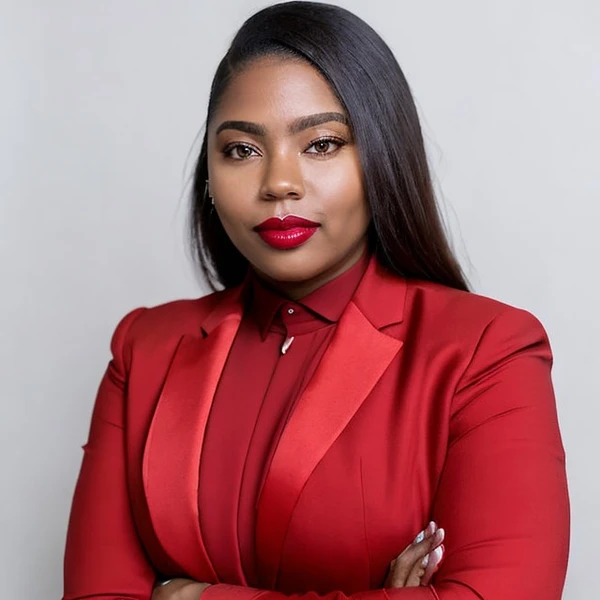
KaTina Hill

2x

Finalist

2x

Winner

Bio

Hi, I’m KaTina Hill; a working mother, student, mentor, and community builder who believes deeply in the power of education, representation, and choosing growth even when the path isn’t easy. I’m currently pursuing a degree in Human Development while working full time in the tech industry within customer success. My journey hasn’t been linear, but it has been intentional. As a Black woman navigating higher education, corporate tech, and leadership spaces, I’ve learned how to advocate for myself, adapt quickly, and keep moving forward even when systems weren’t designed with me in mind. Balancing school, work, and motherhood has taught me discipline, resilience, and how to lead with empathy; for others and for myself. Community is at the heart of everything I do. I’m the founder and administrator of Black Women in Customer Success, a mentorship-focused space created to support, uplift, and connect women of color in tech. What began as a passion project has grown into a community where representation is normalized and success is shared. I know firsthand how powerful it is to see someone who looks like you thriving; and I’m committed to being that example. Pursuing my education is bigger than me. It’s about modeling perseverance and possibility for my children and helping open doors for those coming behind me. I believe education opens doors, but community keeps them open. I’m bold because I choose purpose over fear, impact over limitation, and growth every single time.

Education

Howard University

Bachelor's degree program
2025 - 2027
  • Majors:
    • Human Development, Family Studies, and Related Services
Miscellaneous

  • Desired degree level:

    Bachelor's degree program

  • Graduate schools of interest:

  • Transfer schools of interest:

  • Majors of interest:

  • Not planning to go to medical school
  • Career

    • Dream career field:

      Technology

    • Dream career goals:

    • police radio dispatcher

      city of Memphis
      2017 – 20225 years
    • customer success

      Motorola solutions
      2022 – Present4 years

    Public services

    • Volunteering

      MBIDO — Community Impact Director
      2023 – 2025
    Jerrye Chesnes Memorial Scholarship
    There is no manual for being everything to everyone while quietly trying to become someone for yourself. I am a wife. A mother. A full-time professional. A community builder. And a student, one who made the deliberate, inconvenient, deeply necessary decision to return to school not because the timing was right, but because I finally decided that my goals deserved the same energy I had been pouring into everyone else's lives for years. Choosing to return to school meant choosing myself. And for a mother, that sentence is more complicated than it sounds. When you have children, they become the organizing principle of everything. Your schedule, your budget, your bandwidth, your identity, all of it tilts in their direction, as it should. I did not resent that. But somewhere in the beautiful chaos of raising children and building a home and holding down a career, I noticed that the version of me with goals and ambitions and a degree she had not yet finished had been quietly set aside. Not abandoned. Just waiting. And one day I looked at her and thought; it is time. The challenges of returning were not abstract. They were Tuesday mornings and grocery bills and the alarm going off before anyone else in the house was awake. They were the economy making every dollar stretch in four directions at once, tuition competing with utilities, textbooks competing with school supplies for my kids. They were the mental math that never fully balanced: if I study tonight, what doesn't get done? If I take this class, what do we cut? Every decision to invest in my education came with a real cost somewhere else, and I made it anyway. Again and again. I wear multiple hats not as a metaphor but as a lived reality. There are days I move from a work meeting to a parent-teacher conference to a discussion board post without a single moment in between to breathe. There are evenings when I am helping with homework while mentally outlining an assignment of my own. There are weeks when the economy tightens and something has to give, and I have to decide once more whether to protect this goal or sacrifice it. I have chosen to protect it every time. Because here is what returning to school taught me about myself: I am not just doing this for a degree. I am doing this to show my children what it looks like when a woman refuses to put herself last permanently. I am doing this because I grew up without a blueprint for what choosing yourself looks like, and I want them to have one. I am doing this because every time I submit an assignment after a long day of being everything to everyone, I am proving, to myself, to them, to every version of me that was told this was not possible, that it is. I did not return to school because it was easy. I returned because I finally understood that the most important thing I could model for my children is a mother who did not give up on herself. That lesson is worth every sacrifice it has cost me to get here.
    Charles B. Brazelton Memorial Scholarship
    Let me tell you about my eyebrows. Before thick brows were a beauty standard, before people were filling them in and paying good money to look like they were born with them; I had them. Full, bold, unapologetically present. And instead of being ahead of my time, I was called Helga. As in Helga from Hey Arnold. As in the cartoon character with the unibrow and the chip on her shoulder. Kids are not subtle. But the eyebrows were just the beginning. I was skinny, the kind of skinny that kids noticed and commented on, as if a body is something you owe people an explanation for. And I was growing up in hard circumstances, which meant my clothing options were limited. Not by taste. By survival. There is a particular cruelty in being teased for something you had no control over, for wearing what was available, for looking the way poverty looks when it shows up on a kid who is just trying to make it through the school day. And then there were the events. The games, the performances, the ceremonies, the moments when everyone else's people were in the stands, and mine were not. Not because they weren't invited. Not because I hadn't hoped. But because the adults in my life were fighting battles of their own that left no room for mine. I would scan the bleachers anyway. Every single time. I would tell myself it was fine, that it didn't matter, that I didn't need anyone there. I was lying. It mattered every time. What I didn't know then was that all of it, the eyebrows, the clothes, the empty seats, the names, was building something in me. Not bitterness, though there was some of that too. Something harder to name. A kind of quiet, stubborn refusal to shrink. I had already been through too much to let a nickname be the thing that finished me. The "awkward" thing about me is that I am a collection of things that were never supposed to add up to much. A girl from a hard place, with big eyebrows and limited options and no one in the stands. A girl who was teased for what she looked like and overlooked for what she was going through. By most measurements, I was not supposed to be here, not in college, not building community, not creating opportunities for other young women who grew up seeing the same empty bleachers I did. But here is what I've learned: the awkward things, the hard things, the things people used to make you feel small, they don't disappear. They transform. My eyebrows are now exactly what people want. My story is exactly what someone younger than me needs to hear. And the empty seats at every event I ever attended taught me to show up for others the way no one showed up for me. I am still that girl. I just finally know what she was worth all along.
    RonranGlee Literary Scholarship
    Selected Passage “Men are disturbed not by things, but by the views which they take of them." — Epictetus, The Enchiridion, Chapter 5 The Space Between Event and Identity In addition to being reduced to a motivational phrase regarding positive thinking, Epictetus' statement, “Men are disturbed not by things, but by the views which they take of them," can be interpreted philosophically as well. While Epictetus does acknowledge that there are no easy answers to suffering, injustice, or hardships, his main point is that human freedom is found within the space between an event happening and the individual assigning a particular meaning to that event. In simpler terms, although external events can affect an individual's life, they have no ultimate authority over the development of an individual's identity, character or future. At first view, the quote seems very simplistic. It divides two concepts , "things" and "the views which they take of them." Immediately the reader is drawn to think more about the interpretation of the event as opposed to the occurrence of the event itself. The placement of "views" after "things" suggests that while events may occur outside of an individual's control, the meaning assigned to those events remains within the realm of human agency. The juxtaposition of these concepts illustrates that although circumstances influence people's lives, perception influences how those circumstances are ultimately understood. When examined against the background of Epictetus' own history as a slave, it is clear that he could not possibly be naïve to hardship. His philosophy did not arise out of comfort or privilege. Thus, when interpreting his statement as a whole, it is evident that he is not dismissing hardship but instead rejecting the idea that hardship defines who a person will become. One of the key words in this passage is "views." In today's world, views are often understood simply as opinions; however, Epictetus uses the term in a much broader context. Views encompass judgments, interpretations, beliefs, and assumptions about reality. Regardless of whether the event itself is fixed in some way, the meaning assigned to the event remains malleable. People do not merely exist within their reality, they interpret it. This concept holds incredible relevance even though it originated thousands of years ago. Viktor Frankl, a psychologist who survived the Holocaust and wrote “Man's Search for Meaning”, came to similar conclusions. Frankl argued that the last human freedom is to choose one's attitude in any situation. Separated by approximately two thousand years in time, Frankl and Epictetus are arguing essentially the same thing: although suffering may be inevitable, individuals have the capacity to assign meaning. Both argue against the premise that external events hold absolute authority over the human spirit. This passage provides considerable insight into the process of human development. Since I am currently studying Human Development, I find Epictetus particularly interesting since current developmental theories support and complicate his assertion. Erik Erikson's theory of psychosocial development posits that individuals form their identities as they navigate various stages of life. Individuals do not come into the world with their identity already established; they build their identity as they experience various aspects of life and make decisions in relation to those experiences. From Erikson's perspective, Epictetus is developing an argument concerning identity formation itself. The difficult experiences which comprise a person's life become part of that person's story; however, they do not necessarily write that entire narrative. On the other hand, Bronfenbrenner's ecological systems theory points out that humans do not grow up in isolation. Family systems, community systems, school systems, societal norms, and institutions all contribute to human development. At first glance, Bronfenbrenner's ecological systems theory seems to contradict Epictetus' philosophical position that emphasizes the role of the individual. However, upon further examination, the two perspectives actually illustrate a comprehensive understanding of human growth. Bronfenbrenner demonstrates why environment plays such a crucial role in shaping an individual while Epictetus illustrates why environment does not possess total authority over an individual's identity or potential. This tension between circumstance and agency lies at the heart of the passage. Epictetus is not claiming that everyone begins life with equal opportunities or equal burdens. Such a reading would oversimplify his argument. Rather, he insists that individuals retain a measure of freedom regardless of their circumstances. That freedom is not the power to erase suffering but the power to determine what suffering means. This idea becomes especially important when considering resilience. Consistently, research demonstrates that people experiencing similar hardship exhibit dramatically varied outcomes. For example, some emerge from difficulty feeling powerless while others develop increased feelings of purpose and efficacy. There is no evidence to suggest that these differences were completely due to circumstance alone. Interpretation makes a difference. Meaning makes a difference. The stories individuals formulate about their experiences frequently shape the trajectory of their development. Thus, in addition to focusing on events, Epictetus focuses on identity. In fact, the central inquiry presented by this passage is not "What happened?" but rather, "Because of what happened, who will you become?" This paradigmatic transformation changes the quote from an observation about perception into a philosophy of human freedom. External events may impact an individual's life in a number of ways; however, external events never predetermine where an individual goes in life. Finally, the fundamental implication contained within Epictetus' statement is that human dignity originates in the capacity for creating meaning in spite of adversity. Suffering matters. Loss matters. Injustice matters. However, neither suffering nor loss possesses ultimate authority over defining a person's identity. Through placing greater emphasis on perception relative to circumstance, Epictetus affirms that individuals have agency in constructing their own selves. Over two millennia after its writing, this passage still resonates because it expresses a universal struggle common among humanity. Each person will experience disappointment, hardship, and uncertainty during their lifetime. While suffering may be inherent in each individual's existence, what separates one individual from another is not suffering itself but rather the meaning derived from suffering. Epictetus encourages readers to realize that although we can never fully control what happens to us, we can participate in shaping who we become through the interpretations we choose to adopt. Ultimately, it is in this space between an event occurring and an individual forming an identity that lies the foundation of human freedom.
    Ethel Hayes Destigmatization of Mental Health Scholarship
    My understanding of mental health did not begin in a classroom, therapist's office, or psychology textbook. It began in my childhood. I grew up watching my mother battle what felt like impossible odds. She lived with seven different diagnoses and struggled with substance abuse. As a child, I did not have the words to understand mental illness, addiction, trauma, or emotional regulation. What I understood was unpredictability. I understood walking on eggshells, carrying responsibilities that felt too heavy for a child, and learning to survive in an environment where stability often felt out of reach. The trauma of those experiences followed me into adulthood in ways I did not immediately recognize. For years, I believed I simply had anger issues. I viewed my emotional reactions as personal flaws rather than symptoms of wounds that had never been given space to heal. It wasn't until later in life that I began to understand the truth: much of what I was experiencing stemmed from Post-Traumatic Stress Disorder, unresolved childhood trauma, and Bipolar Disorder. Receiving those diagnoses was both heartbreaking and liberating. For the first time, I could stop asking, "What's wrong with me?" and start asking, "What happened to me?" That shift changed everything. Mental health taught me that healing is not weakness, it is courage. It taught me that survival strategies developed in childhood do not always serve us in adulthood. It taught me that emotions are not enemies to be conquered but messages to be understood. Most importantly, it changed how I show up in my relationships, especially as a mother. Growing up, healthy emotional expression was not something I witnessed consistently. Today, I am intentional about giving my children what I often needed myself. I teach them that sadness is allowed. Anger is allowed. Fear is allowed. Joy is allowed. We talk about emotions openly instead of hiding them. We practice naming our feelings instead of suppressing them. I want my children to know that asking for help is strength, not failure. Breaking generational cycles has become one of the most important goals of my life. My journey with mental health has also shaped my aspirations. As a student studying Human Development, a mentor, and a community leader, I am passionate about helping others understand that they are not defined by their diagnoses, their trauma, or their past mistakes. Through my work supporting women, students, and young people, I strive to create spaces where people feel seen, heard, and valued. I want others to know what I spent years learning myself: healing is possible, even when the road is long. My experiences have fundamentally changed how I view the world. I have learned that many people are carrying invisible battles. The person who appears angry may be hurting. The person who seems distant may be overwhelmed. The person who looks strong may be fighting to stay afloat. Because of this, I try to lead with empathy instead of judgment. Mental health is not something that affects "other people." It affects families, communities, and generations. My mother's struggles impacted my life, and my healing impacts my children's lives. That reality has shown me the power of vulnerability and honest conversation. Today, I am still healing. Some days are easier than others. But I am no longer ashamed of my story. Instead, I see it as proof that pain does not have to be our legacy. We can choose understanding over silence, healing over hiding, and hope over stigma. If sharing my story helps even one person feel less alone, then every step of my journey has had purpose.
    Hearts on Sleeves, Minds in College Scholarship
    There is a quiet kind of irony in my story: the very experiences that taught me how to use my voice are the same ones that made me afraid to speak. For a long time, my voice lived in survival mode, measured, careful, and often silent. Trauma has a way of teaching you when speaking is unsafe, when being seen is dangerous, and when shrinking is the only option. I learned early how to read a room before I ever learned how to command one. I became observant, thoughtful, and deeply aware, an overthinker not by nature alone, but by necessity. Recently, I took a personality assessment and discovered I am an INFP, someone who lives in both deep reflection and quiet conviction. That felt accurate. What the test could not fully capture, however, is that I am also someone constantly negotiating between who I am internally and who I must be externally. Because the truth is, I am both. I am the person who thinks deeply, studies the details, and envisions the bigger picture. But I am also the person learning, in real time, how to stand in rooms that were never designed with me in mind and still choose to speak. One of the clearest moments where this tension revealed itself was during a recent organizational restructuring at work. Anyone who has experienced a reorganization knows the uncertainty it brings, shifting roles, unclear expectations, and teams left trying to find their footing. I could feel it immediately. My team was unsettled, unsure of what came next, and quietly carrying concerns that had not yet been addressed. I could not sit in that silence. So, I did what I have trained myself to do, I listened, I observed, and then I acted. I gathered their concerns, translated them into a clear plan, and presented it to my direct manager. That part felt natural. Advocacy in smaller, safer spaces is something I have grown comfortable with. It is where my voice feels steady, even strong. But then came the moment that tested me. I was asked to present that same plan in front of senior leadership. Suddenly, the room felt different. The stakes felt higher. And I became acutely aware of everything I represented in that space, I was one of four people on my team, and the only woman of color in the room. In that moment, my voice was no longer just my own. It carried visibility, expectation, and the weight of being seen in a way that felt both powerful and deeply vulnerable. And if I am honest, a part of me wanted to shrink. That old, familiar instinct, the one shaped by past experiences, whispered that it would be easier to stay quiet, to avoid the pressure, to not risk being misunderstood or dismissed. Trauma has a way of resurfacing in moments that require courage. It reminds you of every time your voice was ignored, silenced, or questioned. But something in me has been changing. I reminded myself that my presence in that room was not accidental. That my ideas were not only valid, they were necessary. That every time I choose to speak, I am not only advocating for myself but also making space for others who look like me, who think like me, who have been told, directly or indirectly, that their voices are too much or not enough. So I spoke. Not perfectly. Not without nerves. But with intention. And that moment did not just teach me how to use my voice, it showed me what it means to reclaim it. I am still learning. Still unlearning. Still navigating the tension between the part of me that hesitates and the part of me that knows I am called to lead. Finding my voice has not been a single moment of transformation, it has been a continuous process of choosing courage over comfort, again and again. What I have learned is this: confidence is not the absence of fear. It is the decision to speak despite it. And communication, true, impactful communication, is not just about being heard. It is about creating clarity, building trust, and making space for others to feel seen and supported. That is the kind of voice I am committed to developing. As I continue my journey in both higher education and my professional career in technology, I want to use my voice to advocate for equity, representation, and intentional leadership. I want to create environments where women of color do not have to question whether they belong in the room, but instead know they were always meant to be there. Because I understand what it feels like to carry both silence and strength at the same time. I am no longer waiting until I feel completely ready to speak. I am learning to speak anyway. And in doing so, I am not only finding my voice, I am becoming it.
    Nabi Nicole Grant Memorial Scholarship
    At thirty-two years old, I walked into the emergency room vomiting, fainting, and terrified, and walked out days later with a pacemaker and an unshakable faith in God. In 2024, I began experiencing frightening medical episodes. That year I began experiencing frightening medical episodes. Without warning I would start violently vomiting, lose consciousness, and even lose control of my body. The episodes left me weak, confused, and terrified. When it first happened, I went to the emergency room and was treated with fluids and sent home. No one could explain what was happening. When the symptoms returned, even worse than before, I found myself back in the emergency room. I remember feeling exhausted, scared, and desperate for answers. As doctors and nurses began preparing to treat me the same way they had before, it felt like my situation was about to be dismissed again. In that moment I felt completely helpless. Sitting in that hospital room, I quietly prayed. I asked God to please help someone see what was wrong with me and guide the doctors to the answers my body was desperately trying to give. Shortly after that prayer, something happened that I will never forget. My symptoms struck again while I was still in the hospital. I began vomiting and my body started shutting down right in front of the medical team. I remember passing out with the nurse in the room, and waking with all ER Staff. What had been terrifying episodes at home suddenly became the moment that saved my life. Because it happened in the hospital, the doctors could finally see exactly what was happening. A Black physician stepped in and made a statement that brought me both relief and hope. He told me, “You are not leaving here until we figure out what is wrong.” In that moment, as a black woman in a hospital, I felt truly heard for the first time since the symptoms began. In June of 2024, I spent five days in the ICU on complete bed rest while doctors ran tests and monitored my heart. At just 32 years old, I left the hospital with a pacemaker. Doctors discovered that my heart itself was healthy, but my vagus nerve was malfunctioning and causing my body to crash without warning. The pacemaker now helps regulate that nerve and prevents those dangerous episodes. Those five days in the ICU were some of the scariest moments of my life. Lying in a hospital bed, unable to move, forced me to confront how fragile life can be. But it also strengthened my faith in a way nothing else ever had. I truly believe it was God who intervened that day. If my symptoms had not returned while I was in the hospital, doctors might not have discovered the cause. If that doctor had not insisted on finding answers, I may have continued living with a life-threatening condition without knowing it. That experience taught me that faith is not just believing when life is easy. Faith is trusting God when you feel powerless and afraid. In one of the most uncertain moments of my life, prayer gave me strength and hope. Today I live with a pacemaker, but I also live with a renewed sense of gratitude and purpose. My faith carried me through one of the most frightening challenges I have ever faced, and it continues to guide my life. I believe God had the final say in my story that day, and because of that, I move forward with deeper faith and determination to use my life to uplift and help others.
    Harvest Scholarship for Women Dreamers
    My "pie in the sky" is to create spaces to provide the resources for women (and especially women of color) to be believed in before they believe in themselves. I envision developing spaces that bring together education, mentorship, advocacy, and community accountability in order for women to go from surviving to thriving without being forced to do it alone. Creating this dream has the potential to be both inspiring and intimidating, due to the fact that it would require me to be able to find my voice, to lead and to be grounded in my experiences. The idea behind this dream is based upon my own experiences. A large portion of my life was spent trying to navigate through systems that lacked the ability to guide me, to be consistent, or provide me with a safe environment, I realized early on how isolating it can be to bear a heavy burden of responsibility with no support system. I spent many years focusing on survival, raising a family, working a full-time job, and managing unresolved trauma; all the while silently believing that there needed to be more to life than just existing. The spark that ignited this dream for me was seeing firsthand the power of community when women are provided the freedom to dream out-loud and are held accountable with compassion rather than judgment. Throughout my work in mentoring and community leadership, specifically with women of color going through career transition and returning to school; I've witnessed the rapid change in one's life when support meets opportunity. I've seen women develop confidence, negotiate salary increases, return to school and ultimately believe they have a place in rooms they previously feared entering. Those moments reinforced what I've always known; that my purpose is to create and sustain these spaces. Creating this dream is currently unattainable to me because it will require me to develop personally, professionally, and structurally. In order for this to occur, I'll have to invest more in my education, so I can tie my lived experience to formal knowledge and credibility. I'm currently doing this by attending college as an adult learner, while simultaneously working full-time and raising a family. I'll also need to continue developing my leadership skills, growing my network and learning how to expand community-based initiatives while maintaining their core values. A fundamental component to achieving this dream is courage. Courage to be visible, courageous enough to ask for help, courageous enough to occupy space unapologetically. Dreams are big and understanding the vision may not come easily to all people. This means I choose to believe instead of fearing and that I remain committed to consistency versus comfort. Community accountability is what will maintain this dream alive. I believe that growth occurs when women surround themselves with other women who tell them who they are when doubt surfaces. My ultimate "pie in the sky" goal isn't simply to achieve personal success, but to produce impact. I want to create pathways for women who resemble me, who come from similar backgrounds and who only need to hear from another person, "Your dream makes sense." I'd like to be a contributor in helping to create a future for women, where women don't have to reduce their ambitions in order to merely survive. This dream seems to be so big, and it is. However, I've found that the dreams we're most fearful of are typically the dreams we should be pursuing. With education, community, accountability, and courage, I believe this vision can become a reality that will positively affect lives - including my own.
    Brent Gordon Foundation Scholarship
    When people talk about losing a parent, the conversation often centers on death. What is rarely acknowledged is the grief that comes from having a parent who is still alive but chooses not to be present, to not show up, protect, nurture, or love a child in the ways they need. This type of loss is quieter, harder to name, and often carried alone, yet it can be just as life-altering. The loss of a parent through absence rather than death is one of the defining losses of my life. During my youth, I became accustomed to grieving a parent who was physically alive but consistently emotionally unavailable and absent by choice. There is a uniquely painful experience in witnessing a parent deliberately choose emotional distance or indifference. As a result, I realized early on that the support, safety, and guidance I needed would never come from the place it should have. This loss profoundly shaped my childhood and continued to influence my life into adulthood. Growing up with an absent parent caused significant emotional distress and contributed to developmental trauma. I learned to rely on myself at a young age. I learned to function without consistent emotional support, to quietly accept disappointment, and to develop strength as a means of survival rather than choice. Without a supportive or protective model, I did not learn how to establish healthy attachments, advocate for myself, or feel protected things many children take for granted. I also carried unanswered questions and had to learn to accept that closure does not always come. This loss has affected nearly every aspect of my life’s journey. It has shaped how I show up as a mother, with an intentional commitment to presence in ways I did not experience. It motivated me to pursue education later in life while working full time and raising a family, because I understood that stability for myself and my children was something I had to create. I could not wait for it to be given. This experience has also influenced my professional path, guiding me toward advocacy-centered work where ensuring others feel seen, supported, and valued is central. Grieving a living parent is complex and often unrecognized. While society validates grief following the death of a parent, it rarely acknowledges the grief that comes with abandonment or emotional absence. There are no sympathy cards, no public rituals, and no space to openly mourn. Instead, individuals are often expected to be grateful, forgive quickly, or minimize their experience. Yet unresolved grief does not disappear it transforms. For me, it transformed into motivation, persistence, and a commitment to disrupt cycles of loss. Despite this loss, I continue to move forward. I returned to school as an adult learner with a vision rooted in stability, purpose, and generational healing. I mentor others particularly women of color who are navigating their own experiences of loss, trauma, and rebuilding. I believe resilience is not about ignoring pain; it is about acknowledging it and continuing forward anyway. The loss of a parent, whether through death or absence, reshapes a life. It can strip away security and guidance, but it can also forge strength, empathy, and determination. My journey has not been defined by what was missing, but by what I chose to build in its place: presence, advocacy, and opportunity. I carry my loss with me not as a limitation, but as a reminder of how far I have come and why I refuse to stop moving forward.
    Kim Moon Bae Underrepresented Students Scholarship
    Winner
    As a Black woman, a mother, and a community leader in the field of technology, my underrepresented minority status has impacted my life, my core values, and my direction for the future. I find myself in environments that were not designed by people who look like me; higher education, corporate technology, and leadership, and every one of those environments reinforces that representation, access, and advocacy are not luxuries; they are necessities. I have had a non-linear and challenging academic path. The demands of balancing a full-time job, being a mom, and taking classes require discipline, resilience, and unyielding commitment to my vision for the future. As a woman of color, I have often found that systems move slowly, are unclear about processes, or fail to take into consideration the complexities of the lives and responsibilities of students such as myself. Those experiences could have derailed me from achieving my goals. However, instead, they have only further solidified my resolve to continue advocating for myself, asking tough questions, and continuing forward through difficult times. The experiences of adversity and inequality did not deter me from leading; rather, they allowed me to develop greater leadership qualities and increased my purpose. Working in the tech industry (specifically, in customer success) has shown me firsthand how underrepresentation affects both employees and customers alike. Working in this environment as a Black woman has empowered me to lead with empathy, clarity, and accountability. I have experienced firsthand what it is like to feel overlooked or unheard. Therefore, I lead with a human-centered focus so that inclusion is intentional and not just performative. In addition to my professional role, I have dedicated myself to building communities and mentoring women of color. Building Black Women in Customer Success was not only a way to help women of color gain access to resources, encouragement, and guidance in an industry where they are underrepresented, but also a way for me to make a difference in a very personal way. I know first-hand how powerful it can be to see someone who looks like you succeeding and having a network of support that acknowledges your experiences and encourages you to reach new heights. My identity as a mother has influenced my pursuit of education. Not only is pursuing education a way for me to invest in my own future, but it is also a way to declare to my children that no matter the barriers that may stand in our way, determination, growth, and possibility exists. I want them to see that the obstacles we encounter will not define us, determination and purpose will. Ultimately, I plan to continue using my voice, education, and experiences to open doors and provide pathways for others. Being an underrepresented minority has never limited me; it has provided me the foundation of my leadership, advocacy, and influence. My journey proves that representation does matter and when we have access, support, and opportunities to grow and thrive, we don't just succeed; we open doors that previously existed only as walls.
    Lotus Scholarship
    Inherently due to my lack of parents and moving between homes of various relatives I had to develop persistence at a very young age. The uncertainty that was always present was something I could never give into. I developed a way to rapidly adjust to new environments and focus on making the best decisions possible in environments where there were many negative influences; such as drug and gang involvement. Because I didn't have a consistent source of direction and support from my parents, I became my own motivator and held myself accountable. I made sure to keep myself connected to my education, community, and personal growth as ways to anchor myself in times of uncertainty. For me, persistence means finding long-term solutions instead of taking short-term escapes and having the resilience to continue to move forward when it feels like stability is unattainable. My experiences have allowed me to navigate adversity with both clarity and determination, regardless of how unstable things may seem. Today, these same experiences guide me as I go about the world as a student, professional, and community leader. I am deeply invested in helping to pour some of the knowledge I've gained back into my community, by serving as a role model of what can be accomplished when one chooses to leave the cycle of instability and survival behind. I am currently working to achieve my goals through my academic pursuits, professional development, and through my involvement in my community. I also mentor, lead, and create space that encourages individuals to grow, be accountable, and find hope. Through sharing my story and consistently showing up for others I want to assist in breaking the cycles of poverty and limited opportunity and inspire other individuals to pursue their own paths of perseverance and purpose as I have.
    Erin Lanae's HBCU Excellence Scholarship
    Attending Howard University was both purposeful and very personal. To me, Howard is much more than just a university, it’s a legacy, a responsibility, and a commitment I made to myself and to my family. As a non-traditional student attempting to balance being a single mother, having a full time job, and community leadership, I required a university that did not simply accept greatness but expected it; while respecting the life experiences that each student brings to the table. Howard represents a place that honors the fact that who I am as a Black woman is not something that I will need to diminish or explain but instead, it is honored, challenged, and empowered. The academic environment at Howard University has taught me to be a critical thinker, to be bold in my leadership, and to connect the theories we learn in the classroom to real-world impact, especially through my studies in Human Development. Each class, discussion, and assignment has reinforced how important representation in education is and how powerful access to knowledge can be. It is even more special that my children are able to witness this experience unfold. I would like my children to see the value of perseverance, the importance of curiosity in learning, and my faith in myself when faced with adversity. I want them to know that there are many different roads to success and that it is never too late to reinvest in their education or write a new chapter in their lives.