Hobbies and interests
Reading
Writing
Exploring Nature And Being Outside
Hiking And Backpacking
Walking
Running
Baking
Clarinet
Shopping And Thrifting
Theater
Reading
Young Adult
Fantasy
Science Fiction
Historical
I read books daily
Katie Flaherty
1x
FinalistKatie Flaherty
1x
FinalistBio
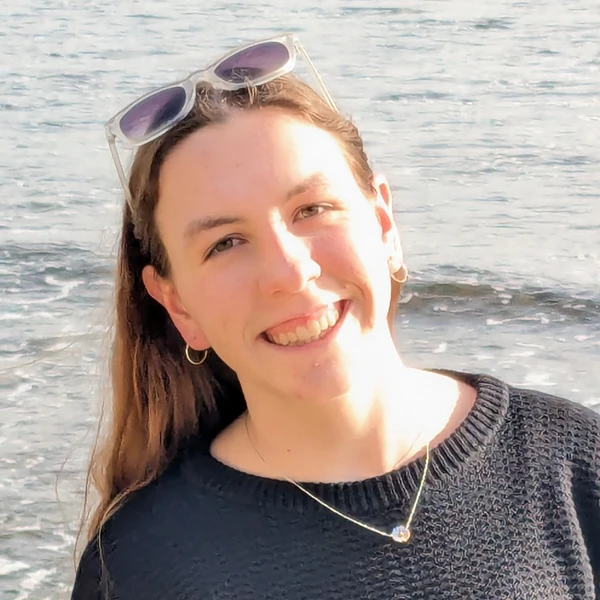
My name is Katie, and I am a freshman at Bradley University. Driven by a commitment to understanding how nutrition can influence long-term health outcomes, I am double majoring in Nutrition/Dietetics and Public Health Education. I intend to graduate with my Bachelor of Science in 2029, after which I plan to earn my Master's degree and pursue a career in nutrition and community wellness.
Outside of my studies, I enjoy reading, writing, staying active, and spending time outdoors—activities that reinforce my belief in a balanced and healthy lifestyle.
Thank you for your time and considering my application!
Education
Bradley University
Bachelor's degree programMajors:
- Public Health
- Dietetics and Clinical Nutrition Services
Miscellaneous
Desired degree level:
Master's degree program
Graduate schools of interest:
Transfer schools of interest:
Majors of interest:
- Dietetics and Clinical Nutrition Services
- Public Health
Career
Dream career field:
Health, Wellness, and Fitness
Dream career goals:
Seasonal Employee
Edwards Apple Orchard2024 – 2024
Sports
Soccer
Junior Varsity2021 – 20254 years
Awards
- Captain
- Most Positive
Cross-Country Running
Junior Varsity2022 – 20253 years
Awards
- Co-Captain
- Most Determined
Basketball
Junior Varsity2021 – 20243 years
Awards
- N/A
Public services
Volunteering
Grace United Methodist Church — Youth2021 – 2025
Future Interests
Advocacy
Volunteering
Tammurra Hamilton Legacy Scholarship
One of my favorite musicals is Dear Evan Hansen. The plot follows a socially anxious high school senior, Evan Hansen, who gets trapped in a lie after a troubled classmate, Connor Murphy, commits suicide. The Murphy family mistakenly believe Evan’s therapy letter, found in Connor’s pocket, ties the two together as good friends. Evan then fabricates a secret friendship to comfort them, while initiating a movement to advocate for mental health. While Evan eventually owns up to his errors, the Connor Project, dedicated to advocating for mental health, evolves into something bigger.
The lyrics deeply resonate with me. Words such as “No one deserves to disappear” and today will be a good day because “you’re you” spoke to me. Sometimes it can be difficult to climb out of the pit of self-deprecating despair that I find myself sinking into. Sometimes, the emotions can seem overwhelming or unrelenting, and the “what-ifs” pound in my head until my chest feels tight. It can be difficult to imagine, in the vast world, that I hold significance. It can be difficult to remind myself that I am enough, exactly who I am.
And yet, Evan Hansen is right. “[I am] not alone.” Unfortunately, rarely anyone is unaffected by mental health these days. Over one in five U.S. adults, and roughly one in seven youth live with a mental illness. People either know someone with a mental illness, or have one themselves. These aren’t just statistics to me—they’re a reality. I have had multiple friends share their own stories of mental health and thoughts of self-harm. It breaks my heart to hear them describe the pain they have had to endure and the hopelessness they felt.
When I read the story of Tammurra Hamilton, it broke my heart, too. She was only a year older than me, a college sophomore so full of life and aspirations. Like Tammurra, I value making others feel not only heard, but listened to.
While many view mental health through the lens of dire circumstances, I have also learned it lives in our daily habits and self-perception. It lives in the way we gaze in the mirror, praying for a different body. We are in a world where bodies can easily be manipulated through AI, anyone can offer dietary fads, and conflicting messages run rampant on the internet. People constantly compare their lows to influencers’ highlights. All of this can negatively affect one’s mental health, including mine. I have, and continue to, struggle with comparison and food morality—feelings of guilt and shame due to labeling food as “good” and “bad.” Because I know firsthand the pressure society can put on people’s weight and diet, I do not want anyone to feel unworthy in their own body. I am pursuing a degree in dietetics to dismantle these harmful narratives. I want to help others find peace with their bodies before they reach that point of self-deprecation and insecurity.
In my experience, one of the easiest ways to improve mental health is to heal our relationships with our bodies. I intend to promote mental wellness by promoting a healthy relationship with food. Not only will I raise awareness of mental health through the field of dietetics, I will support my community by listening to individuals as they share their personal struggles. In the words of Evan Hansen, it’s important to advocate for mental health because no one should have “any doubt that it matters that they are here.” No one should have any doubt that it matters—despite their inadequacies, insecurities, and appearances—that they are here. We matter.
Kerry Kennedy Life Is Good Scholarship
America is in a food paradox. We are simultaneously overfed and undernourished. We are told to cook meals at home, but fast food restaurants line the streets. We are advised to consume whole fruits and vegetables, but they are not always readily available. Bodies can easily be manipulated through AI, anyone can offer dietary fads, and conflicting messages run rampant on the internet. How can we stop the contradictions, and find the truth?
That’s where I come in. It wasn’t until I joined my high school’s cross country team that I really started paying attention to the role my food choices had on my performance. My coach explained basic nutrition, and I couldn’t help but be drawn to this field. However, the more I started watching what I ate, the more my relationship with food became a struggle. I have, and continue to, wrestle with food morality—the idea of labeling food as “good” or “bad.” Food morality associates feelings—for me, often guilt and shame—to eating, and it can make it hard to fully enjoy a meal. Because I know firsthand the pressure society can put on people’s weight and diet, I do not want anyone to feel unworthy in their own body. I’m passionate about dietetics because I want to help individuals with their nutrition before they reach that point of self-deprecation and insecurity that I experienced.
To help heal my relationship with food, I turned to science. I discovered nutritional epidemiology—the study of how specific foods impact certain diseases and disorders. Nutrition has the power to prevent, slow, and sometimes even reverse many disorders that afflict many American families. I find it interesting how the foods a person eats may have direct correlations to the diseases they acquire. In fact, I’m double-majoring in nutrition and public health education in order to potentially go on to study nutritional epidemiology. It’s important to me to find solutions to common diseases through nutritional choices, and share that knowledge with others so they can improve their own ailments.
Unfortunately, a large problem with healthy nutrition is availability. I’m committed to public service, because it frustrates me that Americans are advised to eat a variety of foods, but it’s not always feasible for low income households. One of my good friends has shared personal anecdotes about how, coming from a below-poverty household, she was often unable to pay for the “healthier” foods or purchase the variety that the Dietary Guidelines recommends. Hearing her stories solidified my resolve to work in public service; I don't just want to tell people what to eat—I want to help change the systemic systems that prevent them from eating well. When a low-income area has limited access to affordable, nutritious food, it is called an urban food desert. These cities rely more on convenience than nutrition. Through general public education and awareness, I hope to help bridge the divide between urban food deserts and preventative healthcare.
Being a student with a double major takes a lot of commitment and rigor, but I’m confident it will be rewarding in the end. While I’m still exploring different options for my future, my ultimate goal is to help as many people as I can. This summer, I plan to shadow nutritionists in a variety of environments in order to add a sense of direction. If awarded the Kerry Kennedy Life Is Good Scholarship, it would greatly ease the financial burden, and I’d be one step closer to educating people about how their diet plays a large role in their overall health. I’d be one step closer to resolving the American food paradox.
Amber D. Hudson Memorial Scholarship
We are in a world where bodies can easily be manipulated through AI, anyone can offer dietary fads, and conflicting messages run rampant on the internet. This can negatively affect ones’ confidence, myself included. I have, and continue to, struggle with food morality—the idea of labeling food as “good” or “bad.” Food morality associates feelings—for me, often guilt and shame—to eating, and it can make it hard to fully enjoy a meal. Because I know firsthand the pressure society can put on people’s weight and diet, I do not want anyone to feel unworthy in their own body. I am majoring in dietetics because I want to help individuals with their nutrition before they get to that point of self-deprecation and insecurity.
Nutritional epidemiology is the study of how specific foods impact certain diseases and disorders. For example, it was found that consuming trans-fats are directly related to an increased risk for many cardiovascular diseases. Nutritional epidemiologists have also found a strong link between high consumption of red or processed meat and an increased risk of colon cancer. As explained in the scholarship description, nutrition can influence the prevention, progression, and regression of many disorders that afflict millions of American families. Since reading about what nutritional epidemiology is, I have been interested in this field of study. I find it intriguing how the foods that a person eats can have direct correlations to the diseases they may acquire. In fact, I am double majoring in nutrition and public health education in order to potentially go on to study nutritional epidemiology. It is important to me to find solutions to common diseases through nutritional choices, and to share that knowledge with others so they can improve their own ailments.
Having begun my dietetics journey, I am still fascinated in the field of nutrition. I love learning about how nutrients work together to help or hinder the overall health of the body. Currently, I am exploring different options for a future occupation. Ultimately, my end goal is to help as many people as I can. As a Registered Dietitian, I will meet patients face-to-face, assess their diet, and offer tips for a healthier lifestyle. Personally, I find it hard to navigate through the overwhelming nutritional information. I would like to help educate patients and their families who may be uncertain about the impact food has on their health. If I go down the path of nutritional epidemiology, it will be part of my responsibility to research foods and their respective health issues. Many Americans are plagued with a disorder where their nutrition may be the best prescription available. Although unsure about the specifics of my future, I am confident it involves assisting patients and their families on ways to improve their quantity and quality of life.
If awarded the Amber D. Hudson scholarship, it would ease the financial burden and I would be one step closer to educating people about how their diet plays a large role in their overall health. Regardless of where I end up, I am convinced that, through my work, I will be helping people just like Amber Hudson—whose life was cut too short—learn about how food choices could potentially affect the prevention, progression, and regression of certain diseases. Raising awareness about nutrition is one of my top priorities. It is important to me that everybody has the chance to live a long, healthy life.