Hobbies and interests
3D Modeling
Advocacy And Activism
Mental Health
Coding And Computer Science
Community Service And Volunteering
Communications
Government
Writing
Volunteering
Human Rights
Public Health
Public Speaking
Public Policy
Reading
Academic
Adult Fiction
Classics
Women's Fiction
Young Adult
Travel
Thriller
Tragedy
True Story
Suspense
Spirituality
Social Science
Social Issues
Adventure
Literary Fiction
Fantasy
Plays
Psychology
Horror
I read books daily
Katherine Haley
2x
Finalist2x
WinnerKatherine Haley
2x
Finalist2x
WinnerBio
Katherine “Katie” Haley is a Master of Social Work candidate at the University of Connecticut with a certificate in Human Rights. As a case manager at UConn’s Center for Students with Disabilities and a research assistant within the school of social work and with the Department of Mental Health and Addiction Services, she bridges academic and applied work in disability advocacy, mental health activism, and public policy. A first-generation college student and valedictorian of Bristol Community College, Katie transferred to Brown University, where she served as the Recovery and Substance-Free Program Director, graduation speaker and co-founded the Non-Traditionally Aged Student Union. Her professional and academic goals center on advancing global health-based substance use policy, incarceration reform, and equitable access to education for marginalized communities.
Education
University of Connecticut
Master's degree programMajors:
- Clinical, Counseling and Applied Psychology
- Public Administration and Social Service Professions, Other
- Public Policy Analysis
- Law
- Social Work
Brown University
Bachelor's degree programMajors:
- Psychology, General
Bristol Community College
Associate's degree programMajors:
- Psychology, General
Miscellaneous
Desired degree level:
Doctoral degree program (PhD, MD, JD, etc.)
Graduate schools of interest:
Transfer schools of interest:
Majors of interest:
Career
Dream career field:
International Affairs
Dream career goals:
Recovery and Substance-Free Program Coordinator
Brown University2021 – 20243 years
Research
Social Work
University of Connecticut — Research Assistant2025 – Present
Arts
PrintzbyKatie
Graphic Art3D models and prints2024 – Present
Public services
Advocacy
SAFE Project — Student Voice Liason2023 – 2024
Future Interests
Advocacy
Politics
Volunteering
Philanthropy
Entrepreneurship
Strong Leaders of Tomorrow Scholarship
Leadership, to me, is not about authority or titles. It is about noticing who is being left out, understanding why, and taking responsibility for changing that reality. What makes me a leader is my ability to turn lived experience, including disability, into sustained advocacy, systems-level thinking, and tangible support for others navigating higher education and public institutions.
I am a graduate student with ADHD and dysgraphia, disabilities that shape how I learn, communicate, and process information. For much of my academic life, these conditions were framed as deficits. Dysgraphia made traditional writing-intensive coursework slow and exhausting, even when my conceptual understanding was strong. ADHD meant constantly managing attention, time, and sensory overload in environments that rarely accommodate neurodivergence. Rather than disqualifying me from leadership, these experiences sharpened it. They taught me how institutional design can either empower or exclude, and they gave me an acute awareness of the invisible barriers many students face.
My leadership is grounded in problem-solving and access-building. At the University of Connecticut, I work at the Center for Students with Disabilities, where I support students with a wide range of cognitive, physical, and psychological disabilities. In this role, I do not simply help individuals navigate accommodations. I translate complex systems, advocate with faculty, and design strategies that allow students to participate fully without being reduced to a diagnosis. Because I know firsthand what it feels like to be misunderstood or underestimated, I lead with clarity, patience, and respect. I listen closely, identify structural barriers, and work collaboratively to remove them.
Beyond direct support, I lead through systems change. As a research assistant on multiple social work and public health projects, I contribute to survey design, evaluation frameworks, and policy-relevant research focused on marginalized populations. My ADHD has made me especially strong at seeing patterns across complex information, while dysgraphia has pushed me to communicate ideas clearly and intentionally. I have learned to lead teams by organizing processes, anticipating breakdowns, and ensuring that accessibility is embedded from the start rather than treated as an afterthought.
Leadership also means modeling what persistence looks like when the path is not straightforward. I am a first-generation, non-traditional student who transferred institutions, balanced work with full-time study, and pursued graduate education while managing disability. I lead by example, showing other students with special needs that academic excellence and leadership are not reserved for those who fit a narrow mold. My record reflects this commitment, maintaining a strong GPA while engaging deeply in service, research, and advocacy.
What makes me a leader is not that I have overcome disability, but that I lead because of it. My ADHD and dysgraphia have shaped a leadership style rooted in equity, adaptability, and accountability. I do not seek to succeed alone. I seek to build systems where more people can succeed with dignity. That is the kind of leadership our educational institutions, and our future, need.
Enders Scholarship
If no one in my generation of my family dies from addiction, we will be the first as far back as our family keeps records. Addiction has shaped my lineage like a shadow written into our DNA. My mother died from an overdose. My grandfather died of cirrhosis. My great-grandmother slipped on the ice walking home from the liquor store and never woke up. Loss in my family has never been abstract. It has been the permanent kind, the kind that takes people you love and leaves a hole that never feels big enough to hold the grief of their absence.
That grief reshaped me. I had to navigate anger at the unfairness of addiction, guilt for surviving, grief that came in waves instead of stages, and fear that I might become another name in our family history. At times, it shattered my confidence and sense of direction. But as I moved through trauma, I learned something life-changing about myself: I am not defined by what I come from. I am defined by how I respond to it.
Meditation and journaling have been essential parts of that healing. Journaling gave me back my voice when grief tried to take it. It allowed me to make sense of experiences that once felt too big to hold. Meditation helped me build a quieter, steadier internal world when everything felt like chaos. It taught me to notice what I am feeling without letting it drown me. These practices are not abstract for me. They are daily survival tools that have grounded me, softened me, and helped me choose compassion over fear and desperation.
These experiences also guide my academic and professional life. I am pursuing my education not only to build stability for myself, but to fight for a world where fewer families carry generational grief like mine. As a research assistant on a Socially Engaged Mindfulness-Based Intervention at my university, I study how mindfulness can deepen compassion, emotional regulation, and community connection. This work is deeply personal to me. I do not just research healing; I live it, and I want to help create accessible healing practices for others impacted by addiction, trauma, and marginalization. I also work for the state analyzing community programs for people with substance use disorder. I often suggest mindful practices of journaling, yoga, and meditation become essential parts of those programs, or for mindfulness scales to be a part of our data collection.
My main influences are the people who have proven resilience is something I can build over time. My father died sober, and I take pride in this growth and passion for knowledge. While she lost her battle with addiction, I will never forget the wonderful years that my mother had in recovery, and the way she strived to be a good mother to my young sister. Women in recovery who rebuilt their lives from less than nothing are my pillars today. Other community advocates who refuse to look away from suffering are my heroes. I aspire to be like the scholars and practitioners I've met who treat healing not as an individual task, but a community responsibility. Everyone from these mentors to Thich Nhat Hanh show me the traits I strive to embody every day.
Losing my family changed me, but so has surviving. I carry grief, but I also carry passion. Continuing my education allows me to honor my family through my own transformation. I want to be the generation that breaks the pattern. I want the next chapter in my family’s history to be about healing, stability, and hope.
Ethan To Scholarship
For much of my life, my mind has felt like both a gift and an obstacle. Living with ADHD, depression, and anxiety has meant constantly balancing potential with pressure, creativity with chaos. When I was younger, I didn’t have the tools or the support to manage those challenges. My grades slipped, my self-worth plummeted, and I ultimately dropped out of high school. At the time, it felt like proof that I wasn’t capable. In reality, it was a sign that I needed understanding, structure, and care, though they wouldn't come for many years.
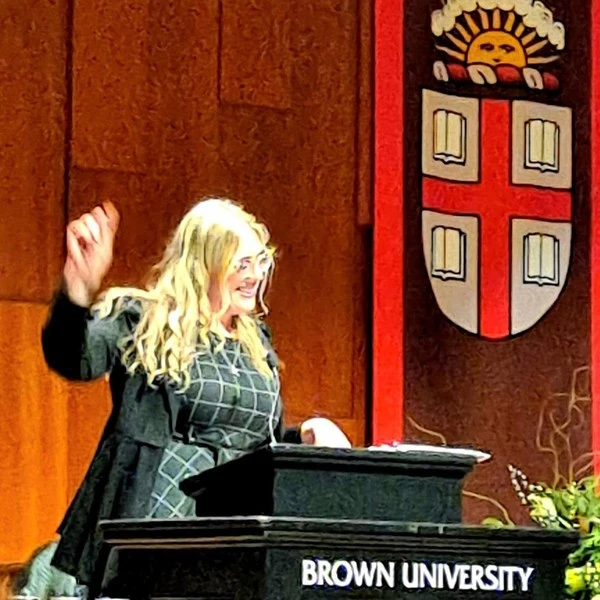
In my early twenties, I lost both of my parents within a year. Grief magnified my existing struggles: the disorganization of ADHD became paralysis, and the anxiety that once motivated me turned into fear. For a long time, I was just trying to survive. But survival eventually became purpose. As I learned to prioritize my mental hygiene through therapy, mindfulness, and community support, I began rebuilding from the ground up. With the encouragement of people who believed in me when I didn’t, I enrolled in community college. I discovered that with structure, compassion, and the right strategies, I could thrive. I graduated from Bristol Community College as valedictorian, transferred to Brown University, and became the graduation speaker of my class. That journey from high school dropout to Ivy League graduate wasn’t about “fixing” my mental health. It was about learning to live in partnership with it.
Now, as a master’s student in social work at the University of Connecticut, I’m continuing that work on a broader scale. I’m also earning a graduate certificate in Human Rights, because I believe that mental health is inseparable from justice, equity, and access. My goal is to become a therapist in a low income area similar to the one I came from, and also work as a policy analyst focused on reforming systems that criminalize or neglect people with mental health and substance use challenges. I want to create policies that replace stigma with understanding while treating the very people I hope to impact with those broader systemic policies.
Professionally, I’ve dedicated myself to bridging the gap between personal experience and systemic change. I work at the Center for Students with Disabilities at UConn, helping students navigate academic and emotional barriers similar to those I once faced. As a research assistant on a Socially Engaged Mindfulness-Based Intervention project, I study how mindfulness can reduce stress and strengthen resilience among social work students. Through my field placement with the Connecticut Department of Mental Health and Addiction Services, I contribute to research that evaluates supportive housing programs for people with opioid use disorder. Each of these roles has deepened my understanding that mental health advocacy must happen both one person at a time and at the policy level.
My mental health journey has taught me to see strength in vulnerability and possibility in persistence. I still have ADHD, depression, and anxiety, but they no longer control my life. They make me more empathetic, more adaptable, and more committed to building systems that recognize that people’s worth is not defined by their productivity or perfection. I didn’t choose this career despite my mental health struggles. I chose it because of them. Every step I’ve taken - from dropping out of high school to standing at the podium at Brown, and now pursuing my master’s - has reinforced my belief that healing and achievement are not opposites. They’re partners in growth, recovery, and life.
ADHDAdvisor Scholarship for Health Students
Throughout my academic and professional journey, I have dedicated myself to supporting others who face mental health challenges. My lived experience has given me a detailed understanding of how isolation, stigma, and systemic barriers can impact emotional well-being. As I pursue my Master's degree in Social work, I continue to deepen that knowledge. That awareness shapes the empathy and care I bring to my work every day. As a case manager at the University of Connecticut’s Center for Students with Disabilities, I support students who are managing ADHD, anxiety, depression, trauma, and other conditions that affect learning and daily life. I help them build personalized strategies for success, develop self-advocacy skills, and connect with campus and community resources. Every interaction is guided by compassion and the belief that mental health is an essential part of a person’s ability to thrive.
Beyond my professional role, I work to create inclusive spaces that promote understanding and healing. I have helped organize workshops, conferences, and advocacy events centered on disability rights, mental health awareness, and community care. These efforts bring people together to share experiences, reduce stigma, and build supportive networks. I also engage in peer support, offering a listening ear and encouragement to friends, classmates, and colleagues who are struggling.
My studies in social work and human rights have strengthened my ability to view mental health through multiple lenses: psychological, social, and structural. I have learned how policies, community resources, and cultural narratives all shape individual well-being. In the future, I plan to use this knowledge to pursue a career in research and policy development focused on improving access to compassionate, evidence-based care. My goal is to help create systems that prioritize prevention, inclusion, and dignity for all people. Ultimately, my commitment to supporting others’ mental health is rooted in the belief that everyone deserves to be seen, heard, and valued. Whether through one-on-one guidance, program design, or advocacy at a broader level, I hope to continue creating environments where people can feel safe, understood, and capable of growth.