Hobbies and interests
Running
Volunteering
Reading
Animals
Church
Reading
Classics
Literary Fiction
Suspense
Women's Fiction
I read books daily
Katherine Arne
1x
FinalistKatherine Arne
1x
FinalistBio
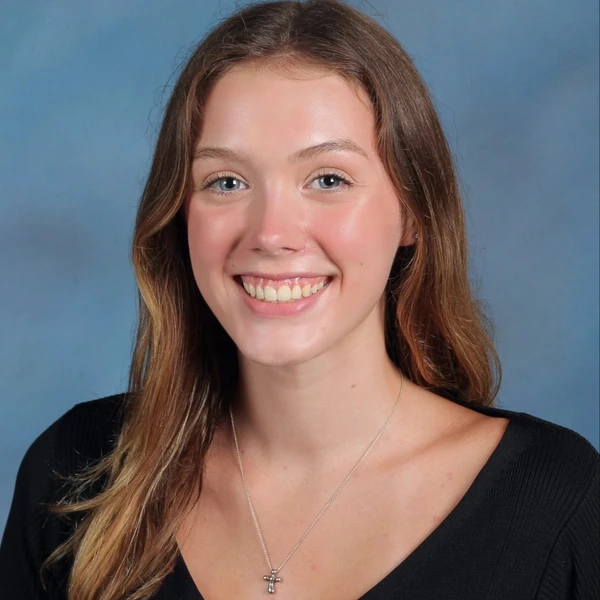
I am a third-year undergraduate at Emory University, pursuing my B.S. in Neuroscience and Behavioral Biology and Sociology double major. I am actively involved in a research lab, and hold executive board positions for my university's chapter of Best Buddies, Global Brigades, Fellowship of Christian Athletes, and Brain Exercise Initiative.
I am passionate about science and education, but also service, and connecting with individuals from all walks of life.
I am committed to developing a well-rounded foundation in the sciences while gaining hands-on experience in the classroom, research settings, as well as volunteering, which I will be able to accomplish with the help of scholarships.
Education
Emory University
Bachelor's degree programMajors:
- Sociology
- Neurobiology and Neurosciences
Adlai E Stevenson High School
High SchoolMiscellaneous
Desired degree level:
Doctoral degree program (PhD, MD, JD, etc.)
Graduate schools of interest:
Transfer schools of interest:
Majors of interest:
- Neurobiology and Neurosciences
- Sociology and Anthropology
Career
Dream career field:
Hospital & Health Care
Dream career goals:
Biomedical technology expansion for underserved communities
Summer camp coach
Adlai E. Stevenson High School2021 – Present5 yearsReceptionist
Center for Innovative Dentistry2018 – Present8 years
Sports
Basketball
Varsity2019 – 20234 years
Awards
- Captain
- IHSA State Champions 2022
Research
Neurobiology and Neurosciences
ExPHR lab — research assistant2025 – Present
Public services
Volunteering
Brain Exercise Initiative — Volunteer Coordinator2024 – PresentVolunteering
Global Brigades — Medical interpreter and medical assistant2024 – Present
Future Interests
Advocacy
Volunteering
Philanthropy
Entrepreneurship
College Connect Resilience Award
Resilience is the art of persistence without bitterness. I learned this at age nine, when I was diagnosed with Juvenile Idiopathic Arthritis. Well, I thought I learned that. Then came my Diabetes Insipidus diagnosis five years later, at age fourteen.
Now, living with two chronic illnesses, I have needed to learn and relearn advocacy, bravery, vulnerability, and resilience. I began juggling medications with dangerous side effects, dealt with 100 nights in the hospital, missed classes, sports practices, field trips, and birthday parties. I had to weigh the benefits of a drug against what it might damage in the rest of my body—a calculation no child should have to make. But I would not trade those years.
My condition didn’t dim that ambition; my illness sharpened it. When doctors said, “There are no other options,” I asked, “Why?” That question became a lifelong commitment to push for better answers, not just for myself, but for others in the rare disease community.
As a neuroscience and sociology double major at Emory University, I’ve learned how systemic inequities compound the medical challenges faced by marginalized groups, including those with rare diseases. Funding, specialists, and awareness are all limited. Many rare diseases, including my own, require frequent blood testing, yet there are few at-home options beyond a glucose monitor. This gap has inspired my career goal: to develop portable, affordable blood-testing devices small enough to fit in a backpack, yet powerful enough to give patients more control over their health. I want to positively impact individuals’ quality of life, no matter their financial or geographical situation.
Resilience, for me, isn’t just about surviving; it’s about innovating. Every late-night research session, every challenging lab experiment, and every all-nighter in the library is rooted in the same determination that nine-year-old me had in a hospital bed: to make healthcare more humane, holistic, and accessible. I want to create tools that honor patients not just as cases to be managed, but as people with birthdays to celebrate, games to play, and dreams to chase.
Being a college student with a chronic illness means living in constant negotiation with my own body, learning to perfect the balance of coursework, social life, extracurricular responsibilities, lab work, and exercise while simultaneously navigating fatigue, pain, and appointments. It means relying on scholarships so I can devote my limited energy to academics and research, not additional jobs during the semester. But it also means carrying a perspective that few of my peers have: I know how fragile, precious, and stubbornly beautiful life is when you fight to claim it.
Resilience is not the absence of struggle; it is the refusal to let struggle define your limits. My illness has shaped my vision, my discipline, and my empathy. It has made me a better scientist, a more determined advocate, and a more compassionate human being. And it will continue to guide me as I work to ensure that no one, regardless of condition or circumstance, feels left behind.
Women in STEM Scholarship
Choosing STEM was never met with self-doubt for me. My decision to pursue research was deeply personal, sparked by too many “no's” from a doctor. I always wondered, why are we just going to accept my treatment plan? Are you sure there are no other options? That constant questioning didn’t feel rebellious; it felt necessary to optimize my quality of life.
Growing up with a chronic illness, I learned the importance of advocacy before most of my peers even knew what that word meant. I saw how decisions in science and medicine impact real lives, and how a lack of innovation can keep people from living to their fullest potential. I missed hundreds of days of school, field trips, and birthday parties, which, to a nine-year-old, felt detrimental. My curiosity about my treatment plan soon grew into a determination to be part of the change.
As a woman now pursuing a Bachelor of Science in a STEM field, I see how often we as women hold back in the lab, office hours, and in group projects, afraid of coming off as pushy. Me? That is precisely why I speak up. I want to push the boundaries of science. I do not fear becoming too ambitious, because innovation is not created through comfort.
My earliest research experiences at Emory confirmed that this was where I belonged. Whether I was troubleshooting an experiment or reading late into the night about emerging biotechnology tools, I felt the same drive I had as a child asking “why” in every doctor’s office. STEM gave me a place where that persistence was a strength, not an annoyance.
Through every all-nighter in the library stacks and every mind-stretching group discussion, I carry my nine-year-old self in the back of my mind. She wanted a doctor who saw her for more than just her illness, approaching her treatment holistically. A team that considered her sports, her plans with friends, her birthday parties, not just the needles in her arms. She wanted to feel seen, to be more than a statistic or a dot on a graph.
That is the kind of scientist I aim to become: one who develops tools that don’t just treat conditions, but honor the lives of the people behind them. I envision leading a biotechnology lab that designs portable, affordable blood-testing devices small enough to fit in a backpack, yet powerful enough to allow people from all walks of life to focus less on their illness and more on living unapologetically. My goal is to put these tools in the hands of patients worldwide, from rural towns to city centers, so no one’s health depends on proximity to a clinic. Alongside this work, I hope to mentor young women so they can lead, innovate, and prove that “no” is never the final answer.
Johnna's Legacy Memorial Scholarship
It is strange to put my chronic illness struggles down on paper, because it is not an instinctual reaction for me to complain. I am grateful for my chronic illness and all the pain, both mental and physical, that it has caused me. Starting at the age of 9, I had to learn to weigh the benefits of a drug against the horrific side effects that wrecked other systems of my body while treating another. 100 nights in the hospital later, missed birthday parties and school field trips, I would not trade any bit of it.
As a neuroscience and sociology double major at Emory University, I’ve learned how deeply systemic inequities affect healthcare outcomes—especially for those in marginalized communities. The rare disease community is no exception. Our community is often disproportionately impacted by a lack of funding, limited research, few specialists, minimal advocacy, and public awareness. These challenges are not only medical but also deeply social. I believe that with a mix of my struggles with my illness and my STEM and social science education, I can take a holistic approach to creating positive change for my community.
An overlooked challenge in the rare disease community I am personally affected by is the inaccessibility of routine monitoring tools. Many rare diseases, including my own, require frequent blood testing—yet few tools exist for at-home use beyond a glucose monitor. This has ignited my passion to pursue a career in biotechnology, specifically in improving the accessibility and affordability of diagnostic tools. My struggles growing up in chronic pain shaped this vision and introduced me to a new field I want to dedicate my life to expanding. I want to help develop user-friendly, affordable blood testing services that empower patients to take control of their health from home. Increasing accessibility and education opportunities for these users will allow for more autonomy in chronically ill individuals. So much money, time, thought, and worry go into illness monitorization for rare disease individuals every day. I hope to help others regain their autonomy and independence through my research.
Through education, awareness, and innovation, we can bridge the gap between patients and care—ensuring that no one with a rare disease feels left behind. My journey has taught me that while illness can limit the body, it can also expand the mind, and I intend to use that perspective to help others reclaim their independence and thrive. Rare diseases take so much away from an individual's quality of life. I strive to take even the smallest step towards allowing a chronically ill individual to allow themselves, even for just 10 minutes each day, to forget about their illness through compassionate care and biotechnology expansion.
Women in STEM and Community Service Scholarship
While many teenagers dream of getting a new car or going on a shopping spree for their birthdays, I asked for a service trip. For the past two birthdays, I’ve spent a week high in the mountains of rural Panama providing medical assistance to underserved indigenous communities. Leaving behind air conditioning, cell service, and showers, I paid little mind to the bugs in my sleeping bag, focusing instead on the people I was there to serve.
Giving the community access to not only prescription drugs but also acetaminophen and anti-parasite medications was eye-opening. Some individuals rely solely on quarterly volunteer trips like ours, hoping the insulin we provide will last until the next medical brigade. I spoke with schoolchildren who woke up before the sun rose to reach the clinic before the line stretched down the street. Mothers carrying their infants on their backs walked as far as four miles each way to access our clinic (our clinic being a closed elementary school). Waiting without air conditioning for as long as six hours in the sweltering heat, it is nearly impossible not to have a shift in perspective once returning to the States.
Despite my embarrassment of grammatical errors in Spanish and limited knowledge in comparison to the seasoned medical professionals, I worked primarily chairside with the American dentist on staff as a medical interpreter. Whether it was offering words of encouragement, a silly selfie to make a child laugh, or allowing a nervous patient to squeeze my hand, I saw the power of human connection, transcending background, language, or culture. I was able to shadow dentists, pharmacists, and physicians, and work in triage to organize patients by medical needs and bring them to the respective office.
Like many students, I’ve felt the immense pressure to have my future “all figured out.” For a long time, I was riddled with self-doubt, convincing myself that I was falling behind or making a mistake by not following the pre-med track. But these trips changed everything. Immersed in the work, I discovered that my passion lies in making medical care accessible, both locally and globally.
Now, I am determined to build a career at the intersection of my medical education and my commitment to service. I hope to continue creating change by using my STEM background not only to treat patients, but also to advocate for healthcare systems that serve all communities with compassion and equity. Nobody deserves to be denied basic human rights, and access to healthcare is no exception. Individuals around the world, whether in developing countries or locally in the United States, deserve accessible and affordable options to optimize their quality of life.