Hobbies and interests
Research
Anthropology
Art History
Artificial Intelligence
Golf
Alpine Skiing
Swimming
Baking
Cooking
Hiking And Backpacking
Travel And Tourism
Food And Eating
Katelyn Kang
1x
Finalist
Katelyn Kang
1x
FinalistBio
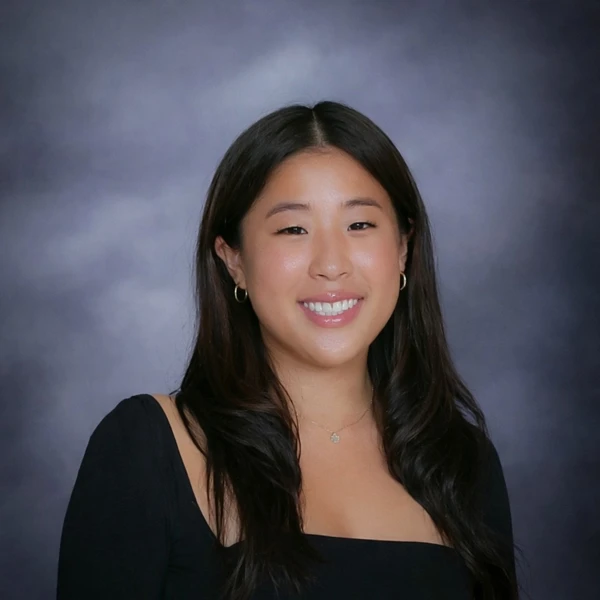
Hi! I'm Katelyn. I’m interested in gerontology and how people age across both biology and everyday life. That curiosity ties into how environment, culture, and habits shape long-term well-being. I grew up by the coast and like being outdoors, especially hiking and spending time near the ocean. I also love food, whether that’s cooking or trying new places, and I’m inspired by Anthony Bourdain’s curiosity and the way he used food to understand people and culture.
Education
Redondo Union High
High SchoolMiscellaneous
Desired degree level:
Bachelor's degree program
Majors of interest:
- Biotechnology
Career
Dream career field:
Biotechnology
Dream career goals:
Sports
Golf
Varsity2021 – Present5 years
Awards
- MVP
Research
Biotechnology
COSMOS — Student-researcher2025 – 2025
Public services
Volunteering
Redondo Beach Public Library — Teen Volunteer2022 – Present
Mark L. Williams Scholarship
One of the most impactful teachers I have had was my AP European History teacher. At first, he honestly intimidated me. He had a habit of pushing every answer further than I expected, constantly asking why, why, why until I felt like I was running out of things to say. There were moments when I doubted myself, thinking that if he kept pressing, I must be wrong. Over time, I realized that was not what he was doing. He was not trying to prove me wrong. He was trying to make me trust my own thinking and push it further.
His class was less about memorizing facts and more about learning how to think. He challenged us to move past patterns and easy labels and instead focus on context and contradictions. That shift changed how I approached school. I stopped looking for the fastest way to the right answer and started paying attention to how I got there.
One moment that stayed with me happened during a class debate about Britain’s rule over India. I argued that Britain’s economic policies in India were more reflective of mercantilism, even though Britain practiced liberal capitalism at home. Most of the class leaned toward calling it capitalism, based on what we had learned about Britain more broadly. It would have been easy to second guess myself and go along with that.
Instead, I stuck with my reasoning. When a classmate argued that Britain’s policies reflected progressive liberal capitalism, pointing to reforms and infrastructure, I did not dismiss her. I asked her to explain her logic. As we went back and forth, I explained how Britain’s actions in India focused on extracting resources and maintaining a favorable balance of trade, often at the expense of local workers. What started as a disagreement turned into a real discussion.
Eventually, we realized we were both partly right. Britain’s system was not consistent. It looked different at home than it did abroad. That moment changed how I understood history. It showed me that complex issues do not fit into simple categories, and that disagreement is not about winning. It is about getting closer to the truth.
Looking back, I see that my teacher was doing this all along. His constant questioning forced me to explain my thinking, defend it, and refine it. I stopped relying on what I thought he wanted to hear and started trusting my own ideas, as long as I could support them.
He also changed how I saw education. Before his class, I treated school as something to get through efficiently. Learn the material, get the grade, move on. His class made me slow down and actually engage. I started to care about understanding ideas, not just recognizing them.
He motivated me through challenge, not comfort. By refusing to accept surface level answers, he showed me that I was capable of more than I thought. That has stayed with me beyond his classroom. It shapes how I approach discussions, how I handle uncertainty, and how I think about learning.
Because of him, I no longer see education as just a requirement. I see it as a way to build confidence in my own thinking and to better understand the complexity of the world around me.