Gender
Female
Ethnicity
Hispanic/Latino
Hobbies and interests
Writing
Baking
Church
Human Rights
Law
Reading
Volunteering
Advocacy And Activism
Chess
Ethics
Poetry
Reading
Academic
Biography
Horror
Law
I read books daily
US CITIZENSHIP
US Citizen
FIRST GENERATION STUDENT
Yes
Kate Padilla Raya
1,045
Bold Points1x
Finalist1x
Winner
Kate Padilla Raya
1,045
Bold Points1x
Finalist1x
WinnerBio
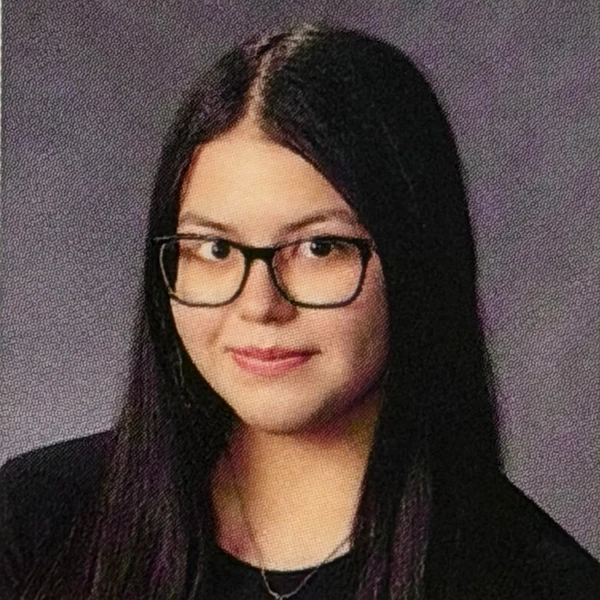
Hello everyone, my name is Kate Padilla Raya. I am a sophomore at Elmhurst University. I am studying Criminal Justice and Theology. I hope to practice law one day with a focus on disability rights. Since elementary school, I’ve had the opportunity to work with children with disabilities, which has shaped the way I see the world and inspired my commitment to inclusion.
In high school, I joined Best Buddies and became even more aware of the daily barriers that people with disabilities face. These barriers go beyond physical spaces and show up in education, employment, and access to justice. That is why I want to pursue a career in ADA law. I believe everyone deserves to be treated with dignity and have the chance to succeed.
Outside of school, I enjoy baking, working with animals, and creative writing. Each of these gives me a different way to express myself. One of my proudest moments was having a poem published because it reminded me that my voice matters. I am also a regular blood donor, as I possess the universal blood type. I consider it an honor to be able to help people who need it most.
A random goal of mine is to give a TED talk one day; that is when I'll know I made it. I am a first-generation student who has dreams bigger than life's barriers. I want to secure my future, love what I do, and most importantly, make my immigrant parents proud.
Education
Elmhurst University
Bachelor's degree programMajors:
- Criminal Justice and Corrections, General
Miscellaneous
Desired degree level:
Doctoral degree program (PhD, MD, JD, etc.)
Graduate schools of interest:
Transfer schools of interest:
Majors of interest:
Career
Dream career field:
Law Practice
Dream career goals:
Intern
Addison Police Department2025 – 2025Concierge
The Clarendale Of Addison ( Senior Living Facility)2025 – Present12 monthsCashier, Coffee Bar attendant, Online Order Specialist
Angelo Caputos Fresh Market2021 – 20254 years
Sports
Soccer
Junior Varsity2020 – 2020
Public services
Volunteering
St. Phillip the Apostle Catholic Church — Catechist Assistant2025 – PresentVolunteering
Addison Trail High School Library — Volunteer2022 – 2023Volunteering
Best Buddies Illinois — Best Buddies Historian2019 – 2022Volunteering
Chicago Public Library ( West Belmont Branch), White Oak Library ( Romeoville) — Summer Reading Program Assistant2016 – 2019
Future Interests
Advocacy
Volunteering
Philanthropy
Patrick Roberts Scholarship for Aspiring Criminal Justice Professionals
One of the greatest challenges within the criminal justice system today is the lack of understanding surrounding disabilities, both visible and invisible. Too often, people with disabilities are left to navigate systems that were not built with them in mind. I’ve come to believe that awareness within the justice system is a kind of mercy that can change outcomes and even save lives.
In my Policing and Society class, I chose to focus my semester-long research paper on how police interact with people with disabilities, especially those on the autism spectrum. I wanted to understand what was happening to such an underrepresented group, and why so many encounters ended in tragedy. Autism can sometimes be misread as defiance. Overstimulation or confusion can appear as an unwillingness to follow orders. A lack of understanding in those moments can quickly escalate a situation that needed patience instead of force. My research showed how sensitivity and awareness could make all the difference. It taught me that compassion, when practiced intentionally, is a form of protection.
Later, during my internship with my town’s police department, I was able to see those lessons come to life. The officers I worked with had training designed to help them evaluate their use of force and assess whether outside factors (like mental health or disability) might be influencing a person’s behavior. I went on several ride-alongs, and what stayed with me most was how carefully they approached each person. When they interacted with individuals with disabilities, their tone softened. Their movements slowed. They treated each situation as a human moment, not a problem to control. Watching that kind of patience and restraint taught me that awareness can be learned, and when it is, it can make communities safer for everyone.
My interest in ADA law grew from moments like these. I want to take that same sense of awareness and expand it into every area of society. In workplaces, schools, and public spaces, people with disabilities deserve to be understood, not just accommodated. Accessibility should be part of how we think, not an afterthought.
Since I was young, I have worked with children with disabilities, which shaped how I see the world. In high school, I joined Best Buddies, and those friendships deepened my sense of purpose. These are people with full, beautiful lives. They have their own hopes, humor, and ways of seeing the world. Most of them don’t need someone to speak for them; they just need to be understood. That kind of grace does not cost much to give, but it changes everything when it’s offered. Studying both Criminal Justice and Theology has helped me see how dignity and fairness intertwine. My faith teaches me that every person carries worth, and my studies show me how systems can either honor or deny that worth. The combination drives me to pursue a future in ADA law, where I can advocate for accessibility, awareness, and fairness across the justice system.
The opportunities I’ve had so far: my classes, my research, my internship, and my volunteer work, have all led me here. They’ve shown me that justice begins with how we see one another. I want to help build a system where understanding is second nature, where people with disabilities are treated not as exceptions but as equals.