Hobbies and interests
Photography and Photo Editing
Katalyna Searcy
2x
Finalist
Katalyna Searcy
2x
FinalistBio
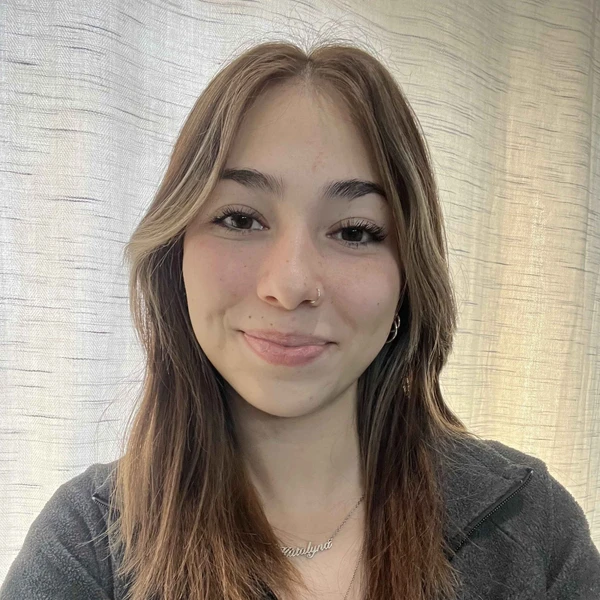
I'm Katalyna, an incoming civil engineering student at Texas Tech University, and I've been a builder for as long as I can remember. In high school I designed and produced my entire yearbook by myself, and it sold out before the year ended. I also run a small freelance photography and design business. I'm drawn to engineering because it lets me build something even bigger: the roads, water systems, and structures that an entire community depends on.
I'm a first-generation college student from Odessa, Texas, raised mostly by my father in a household of seven. No one in my family had done this before me, so I learned early to work for what I want. While taking a full load of dual-credit classes, I worked a nearly full-time job and still earned 72 college credit hours and a 3.7 GPA before finishing high school, so I could start college ahead and spend less on my degree. That effort recently landed me an internship at a civil engineering firm in my hometown, which confirmed this is exactly the work I'm meant to do.
I also believe in showing up for my community. I volunteered hundreds of hours on a campaign to modernize the schools in my district, and watching that effort turn into real buildings is what made me want to be the engineer who designs and builds them.
My goal is to become a licensed structural engineer and bring that skill home to the Permian Basin that raised me. I want to spend my career creating things that outlast me, and any support along the way helps me put my energy into the work instead of the cost of getting there.
Education
Texas Tech University
Bachelor's degree programMajors:
- Civil Engineering
Odessa College
Associate's degree programMajors:
- Liberal Arts and Sciences, General Studies and Humanities
Miscellaneous
Desired degree level:
Master's degree program
Graduate schools of interest:
Transfer schools of interest:
Majors of interest:
- Civil Engineering
Career
Dream career field:
- Civil Engineering
Dream career goals:
Sports
Basketball
Club2020 – 20233 years
Arts
Odessa High Yearbook
Photography2022 – 2026
Public services
Volunteering
Sunset Youth Golf — Photography, website design, marketing, events2025 – 2026Volunteering
Odessans for a Bright Future — Marketing, design, website, campaign management2023 – 2023
Future Interests
Advocacy
Volunteering
Philanthropy
Entrepreneurship
Young Women in STEM Scholarship
1. I am a first-generation college student from Odessa, Texas, a working-class, largely overlooked community where a lot of families, including at times my own, go without basic things like reliable running water. I grew up in a household of seven on a single income and have worked a job since I was sixteen to help pay my way. While still in high school I earned 72 college credit hours, an associate degree, and the full calculus sequence, and this fall I enter Texas Tech University as a junior studying civil engineering. I realized that every dollar given to me by my parents could be a dollar taken from one of my siblings.
What motivates me is specifically is I know what it feels like to be from a place the rest of the world drives past, and I want to be one of the people who makes it better instead of leaving. I am not chasing a title. I am chasing a problem I grew up inside of. If I could do anything with my life, it would be almost exactly what I am already working toward. I would become a civil engineer, come home to West Texas, and design the water systems and roads that rural and underserved communities have gone without for decades, and eventually run my own firm built to serve the places larger firms overlook. The honest answer to what I would do with my life is that I am already doing it.
2. What excites me most about STEM is its power to predict. With the right math and the right tools, you can know how water will move through a system or how a structure will behave before a single piece of it exists. You can prove something will work before you build it, and people's safety can depend on getting that right. That is close to magic to me, except it is real, and it is learnable.
My field is civil engineering, but modern engineering is inseparable from information technology. It runs on geographic information systems, hydraulic and hydrologic modeling software, drone-collected geospatial data, and digital design. I have already worked at that intersection. Before college, I assisted on a GIS project and flew drone surveys of oil and gas assets to support data center site analysis, which means I helped with the physical groundwork behind information technology infrastructure itself.
I believe I can make a real impact by pointing those digital tools at problems that usually get ignored. The same mapping and modeling technology that industry uses can document which homes lack water, model failing systems, and turn an invisible community problem into a fundable, solvable one. Technology is most powerful when it reaches the people who never had access to it, and that is exactly where I intend to aim it.
3. The greatest challenge I have faced came during my last two years of high school, when my family went through its hardest stretch at the same time I was carrying the heaviest academic load of my life. My stepmother, who runs our household, was hospitalized and spent months relearning to walk, and our family was navigating a serious crisis that took everything we had. I was seventeen and eighteen, taking a full dual-credit college course load and working a nearly full-time job, and I could not press pause on any of it.
So I did not. I learned to study in hospital waiting rooms and to finish my assignments after the rest of the house was asleep, because those were the only hours available. I took it one task at a time, protected my responsibilities at home, and refused to let my family carry the weight alone. Work, oddly, became the steady thing I could hold onto when everything else felt uncertain.
There were times when I was closing on a Friday at my food service job at eleven-thirty at night and going back into work at five in the morning, something at the time I didn't realize was somewhat abusive of my employer towards a full time high school and college student. I didn't care because I was saving for my future and had learned at a very young age what it meant to work long hours from my father. I was driven by a goal while keeping in mind I was working towards the labor of love I have set my sights on. I will one day enjoy the hard work towards my future as I leave those service jobs behind.
Through all of it, nothing got dropped. I came out of that stretch as a junior status of college credit hours, associate degree, the full calculus sequence(I, II, III) completed by 18, and a 3.7 GPA. And I came out of it certain of something important, that I can carry hard things and keep going. It is the reason I am not afraid of a demanding engineering program. I have already done harder and learned how to out work anyone.
Ethel Hayes Destigmatization of Mental Health Scholarship
My experience with mental health started early, though I did not have a name for it then. When I was four, my mother left, and the anxiety that came with that loss became something I carried quietly for years. Growing up in the shadow of an absence like that teaches you to brace for things, to expect the ground to move. For a long time, mental health was not an idea I studied. It was the weather inside my own house.
What shaped me most was not the struggle itself but how my family chose to face it. My father did not treat anxiety, or any of it, as something to hide or push through in silence. He put us in counseling. When my sister was diagnosed with a serious mental health condition and needed real psychiatric care, he made that care the center of our family's life rather than a secret we kept. I grew up watching mental health treated as exactly what it is, a real part of health, not a weakness and not a shame. That is rarer than it should be, and it changed how I see the world.
Ours is a blended family, and mental health has touched almost every part of it. Some of my siblings lost their own father when they were very young, to a drug overdose, and grief like that does not simply pass. It settles into a house and has to be lived with. My youngest sister, who is fourteen now, carried the heaviest version of it. She has fought through more than any child should have to, and for a long stretch of our lives my family's whole job was to keep her safe and make sure she was getting the care she needed, for as long as it took. I was old enough to help hold her up, and I did.
Being close to siblings who live with real mental illness taught me a patience that does not come naturally to anyone. I learned that loving a person through their hardest moments means showing up steadily, not only on the good days, and that you cannot judge someone by their worst episode any more than you would judge them by their worst fever. I learned that healing is rarely a straight line, that a person can be doing better and still not be finished, and that the steady presence of people who refuse to give up on you can be its own kind of medicine. It taught me to listen before I assume, and to make room for people to be honest about what they are carrying, because I know what it costs to carry it alone.
My relationship with my mother shaped me too, in a harder way. For most of my life, the only way I could see her was through supervised visits that my father paid for, because the court required it and she could not afford it herself. Grief and love and disappointment can share the same room at the same time, and those visits taught me that. They also taught me that compassion is sometimes a choice you make for people who have hurt you, and that my father made that choice for our sake says everything about the man who raised me.
All of this shaped my goals in a way that surprised me. I have decided to spend my life building things people can rely on. I am studying civil engineering to design the water systems and roads my community has gone without, but underneath that is something I learned at home: that stability is not guaranteed, that it has to be built on purpose, and that the people who build it, whether they are holding a family together or laying a water line, change lives quietly. I want to be one of those people, in my work and for my own family.
Mental health is not a side chapter of my story. It is a thread that runs through my whole family, and living it taught me to face hard things directly, to stay close to people in pain, and to build toward a world where fewer people have to struggle in silence.
Bright Lights Scholarship
My plan for the future is clear, and I am already moving on it. I am going to become a licensed civil engineer and spend my career building the public infrastructure that the rural Permian Basin has done without for too long, especially safe water and safer roads, and I am going to build it here at home instead of taking my degree somewhere easier. I grew up in West Odessa, Texas, where reliable running water is still not something every family can count on and our county roads are among the deadliest in the nation. That is not a problem I want to describe for the rest of my life. It is one I want to fix.
I am not starting from zero. This fall I enter Texas Tech University as a junior, because while I was still in high school I earned 72 college credit hours, an associate degree, and the full calculus sequence through differential equations. This past summer, before my first day at Texas Tech, I was already working in the field, interning with Ector County Public Works and Land Development and with a private civil engineering firm so I could learn how real infrastructure is planned, funded, and built. My path from here is defined: finish my degree, pass the FE exam to become an Engineer-in-Training, complete the years of supervised experience my license requires, and earn my Professional Engineer credential. Each of those steps is a step closer to being able to sign my name to the water lines and roads my community needs.
The impact I am aiming for is specific. I want to extend dependable water to neighborhoods where families still haul it and store it in tanks, and I want to redesign the roads that heavy oilfield traffic has made dangerous, so that people in my region simply get home safely. I also plan to mentor the first-generation students coming after me, because I know how lonely that path is without anyone at home who has walked it, and the surest way to lift a community is to make sure its own young people come back equipped to build it.
Here is where this scholarship comes in. I am a first-generation student from a household that runs on a single income, with no college savings behind me. Money I spend on my own education is money my four younger siblings do not get, and I feel that every semester. This scholarship would ease that pressure directly. It would let me borrow as little as possible, keep more of our family's limited resources where they are needed, and free me to put my full attention on my classes and my training instead of on the gap between my aid and my bill. Every dollar of support shortens the distance between where I am now and the day I earn my license.
I know exactly what I want to build and why it matters. This scholarship would help me get there faster, and with less weight on the people I am doing it for.
J&Y Law Yahouda Yahoudai Service Scholarship
I grew up in West Odessa, Texas, a community large enough to hold tens of thousands of people and overlooked enough that many of them still live without reliable running water. Places like mine tend to change only when someone local decides to stop waiting for help that is not coming. I decided to be one of those people early, and I did it on purpose, by taking the specific skills I had and pointing them at problems my neighbors actually needed solved. The good I have done is not a feeling. It is a short list of things that are different now because I showed up.
The clearest example is my school district. Ector County needed to pass a nearly $500 million bond to rebuild schools that had gone decades without real investment, and I gave hundreds of hours to making that happen. I am a designer and photographer, so I built the campaign's materials and documented its events, and then I went door to door to talk with families who had stopped believing a bond would ever reach kids in our part of town. The bond passed. Aging schools are being rebuilt right now, and one of the new projects is a Career and Technical Education building where students can train for skilled careers without leaving the county. I did not stop there. I now work alongside the district's facilities team on that same building, which means I helped make a project possible and then stayed to help see it built. That is the kind of impact I care about. Not a one-time gesture, but something you can walk into.
I have put the same skills to work for a local nonprofit that is turning a neglected golf course into a youth center, giving my design, photography, and fundraising help so that kids in my area finally have a safe place to go. I have also served the community closest to me, my own classmates. For four years I produced most of my high school yearbook on my own, treating it as a promise that every single student, including the ones who usually go unseen, would have proof that their year mattered.
Some of my community work is quieter and aimed at the future. I attend Ector County Commissioners Court meetings so I understand how the place I am from decides what to fund and what to build, because you cannot improve a system you do not understand. And I intend to mentor the first-generation students coming up behind me, since the fastest way to strengthen a community is to make sure its own young people are equipped to lead it.
None of this earned me anything at the time, and that was never the point. I did it because a community is only as strong as the people willing to build it, and I would rather be one of the builders than one of the people waiting to see what everyone else does.
That conviction is now shaping my career. I am studying civil engineering so that I can make my community-building permanent, designing the water systems and roads that West Odessa has waited on for decades. The volunteering came first. The engineering is how I plan to do the same work for the rest of my life.
Michael Rudometkin Memorial Scholarship
Selflessness, to me, is giving time and effort to people who cannot pay you back, especially when you do not have much to spare yourself. I did not learn that from a book. I learned it by watching my father raise five children on a single income while still co-chairing a school bond campaign and a nonprofit for local kids, giving hours he did not really have to people who could do nothing for him in return. That is the standard I was raised on, and I have tried to live up to it in two places: at home and in my community.
The hardest test came at home. Last year my stepmother, who runs our household and homeschools two of my younger siblings, was hospitalized with a series of mini strokes and spent months relearning to walk. My grandfather, who has Parkinson's disease, already needs daily care under our roof. No one appointed me to fix any of that, and I could not fix all of it. What I could do was step in. To help hold the household together, take on more of the load, and be someone my family could lean on, all while carrying a full dual-credit college course load, a nearly full-time job, and the yearbook I was responsible for producing. I learned to study in hospital waiting rooms so I could be there and still not fall behind. Selflessness in that season was not a grand gesture. It was showing up, quietly, for the people who needed me most.
I have tried to serve my community the same way, with whatever I actually have. I am a designer and photographer, so when my school district needed to pass a nearly $500 million bond to rebuild its aging schools, I gave hundreds of hours to the effort. I made campaign materials, documented events, and knocked on doors to talk with neighbors who doubted a bond would ever help kids in our part of town. Those were not my schools to fight for anymore; I was helping the children who would come after me. For four years I also produced most of my high school yearbook on my own, because a yearbook is a promise to every student that their year mattered, including the ones who rarely saw themselves in it. I have given that same design, photography, and fundraising help to a local nonprofit building a youth center for kids who need somewhere to go.
None of it was easy to keep doing. I was usually the youngest person in the room by twenty or thirty years, and I had to earn the right to be taken seriously. Many of my neighbors were tired of broken promises and hard to convince that showing up would change anything. I was doing all of it on the margins of an already full life. I kept showing up anyway, because I believe that if the people who live in a place do not invest in it, no one else will.
That belief is also why I am becoming an engineer. I do not see service as separate from my career. It is the whole point of it. I intend to spend my life using what I have, first a camera and a clipboard, and soon engineering, for the people right in front of me.
Bick First Generation Scholarship
Being a first-generation student means being the one who figures it out. No one in my family had finished college, so there was no one at home who could explain financial aid, or dual credit, or what a college classroom would ask of me. I had to teach myself every step, usually by getting it wrong first. It also means carrying more than my own hopes. When you are the first, your family's belief that things can get better rides along with you, and you do not get to set it down. That weight is heavy, but it is also the thing that keeps me moving.
The challenges have not been small. My biological mother left when I was four, and I was raised by my father, the only earner in a household that also cares for my grandfather, who has Parkinson's disease. Money was always tight, so I started working in my teens and held a nearly full-time job all through high school. Then, last year, my stepmother was hospitalized with a series of mini strokes and spent months relearning to walk. I was still carrying a full dual-credit college load, a job, and my responsibilities at home, and I could not press pause on any of it. So I did not. I learned to study in hospital waiting rooms and finish my work after the house was asleep. Nothing got dropped. I finished high school with 72 college credit hours, an associate degree, the full calculus sequence through differential equations, and a 3.705 GPA.
I learned that refusal to quit by watching my father. He had started at Texas Tech in engineering, but during his first semester his father became ill, and he had to leave. This fall I am entering Texas Tech, and I will finish my engineering degree, the same path my dad was derailed from 23 years ago. My dream is to become a licensed engineer and design the water systems and roads my community has gone without for decades. I grew up in West Odessa, where tens of thousands of people still have no reliable running water, and I intend to come home and fix that, not leave.
What drives me most is who is watching. I have three younger siblings who will grow up knowing college is possible because they saw me do it. In a one-income home, though, every dollar of college is a dollar stretched from all of us. That is where this scholarship would help. It would keep money in our home for my siblings, let me hold my student loans as low as possible, and let me spend my energy on the work instead of the gap. It would move me one real step closer to the license, and to the day I get to build the things my community has waited on.
I am not the first in my family to work this hard. I am only the first to get to do it in a classroom.
Joe Gilroy "Plan Your Work, Work Your Plan" Scholarship
My goal is specific: to become a licensed Professional Engineer and design the water systems and roads that the rural communities of West Texas have gone without for decades, and eventually to run my own civil engineering firm built to serve them. I grew up in West Odessa, where tens of thousands of people still have no reliable running water and our roads are among the most dangerous in the country. I do not want to only live beside those problems. I have a plan to fix them.
The plan runs in stages, each with its own resources and milestones.
First, the degree. This fall I enter Texas Tech University as a junior, having already earned 72 college credit hours and an associate degree through dual credit while in high school. I expect to finish my BS in civil engineering in three years, in 2029. The resources I need here are tuition, my professors and academic advisors, and the paid internship experience I am already building. This past summer I interned with Ector County Public Works and Land Development and with Landgraf, Crutcher and Associates, a private civil firm, which is teaching me how real projects get funded, designed, and built.
Second, the credentials. Along the way I will pass the FE exam to become an Engineer-in-Training, earn my FAA Part 107 drone license so I can offer low-cost site surveying, and after graduation log the four years of supervised experience Texas requires before I can sit for the PE exam. Then I earn the license.
Here is how the budget works. The largest cost is finishing the degree, and I attack it from several directions at once. Grants and a civil engineering scholarship I have already won at Texas Tech cover a real share of it. I close the rest with income from my freelance photography and design business, paid internship work, outside scholarships like this one, and the smallest federal student loan I can manage, because I refuse to graduate buried in debt. The milestones that follow are modest, and I have priced each one: the FE exam runs about $175, the PE exam about $375, plus modest drone-certification and state application fees, each set aside for the year I reach it. My rule is simple. I cover every cost with earned money and aid first, and I borrow only what is left.
I have thought about the angles that could go wrong. If outside funding falls short in a given year, paid internships and freelance work are my backstop, and I will slow my loan use rather than my progress. If I do not open my own firm on schedule, the four years I spend at an established firm are not a detour: they are the exact experience the PE license requires, so every path still moves me forward. Whether the work comes through a county office or a private firm, both build the record I need.
Joe Gilroy lived by "Plan Your Work, Work Your Plan." I did not just write that plan for this essay. I have been working it since I was sixteen, and I intend to keep working it until the water runs and the roads are safe in the place that raised me.
Learner Math Lover Scholarship
I love math because it is honest. You can argue your way through almost anything else, but a math problem does not care how you feel about it or where you come from. If you do the work correctly, it works, and if you do not, it tells you. Growing up, a lot of my life felt uncertain. Math was the one place where the rules held still long enough for me to master them, and once I understood that, I stopped being intimidated by it and started chasing it.
So I went toward the hardest math I could find instead of away from it. Before I finished high school I worked all the way through Calculus I, II, III, and differential equations, not because anyone required it, but because I wanted to see how far the ideas went. What I found is the part of math I love most is its power to predict. With the right equations, you can know how a beam will bend or how water will move through a pipe before a single piece of it exists. You can prove something will hold before you ever build it. To me that is close to magic, except it is not magic. It is just math done carefully, and people's safety can depend on getting it right.
I also love that math does not ask permission. A first-generation student from West Odessa, Texas, can sit down with the same differential equation as anyone at any university in the world and solve it exactly the same way. It is one of the few things that is truly fair. The equation does not know my zip code or my family's income. It only knows whether my reasoning is sound.
That is why math became the foundation of everything I want to do. I am studying civil engineering because I want a career where the math actually carries weight, where solving the problem correctly means a family has safe water or a safer road. Working through that whole sequence did more than teach me calculus. It showed me that I belong in this field, and that the subject most people are warned about is the one I cannot stop loving.
David Goodnight Scholarship
In ten years I will own a civil engineering firm in the Permian Basin, built to serve the rural and unincorporated communities that larger firms overlook, starting with the water and road systems my own region still goes without. I already run a small freelance photography and design business, so building something of my own is not a leap for me. It is the direction I have always worked in. Here is the plan.
Years 1 to 3 (through 2029), credentials and foundation:
-Finish my BS in civil engineering at Texas Tech, where I already enter as a junior.
-Pass the FE exam and earn Engineer-in-Training status.
-Complete my commercial UAV license so I can offer drone-based site surveying, a low-cost, high-precision service most small communities cannot otherwise afford.
Years 3 to 7 (2029 to 2033), experience and reputation:
-Work at an established civil firm and a county engineering office to log the four years of supervised practice Texas requires before the PE exam, concentrating on water resources and municipal infrastructure.
-Earn my Professional Engineer license.
-Build the relationships and the project record across the Permian Basin that a new firm needs to win work.
Years 7 to 10 (2033 to 2036), launch my own firm:
-Open my own civil engineering firm, headquartered in Odessa TX, focused on water distribution, drainage, and roads for underserved rural utilities and unincorporated communities like West Odessa.
-Use drone surveying and modern modeling as my competitive edge, so I can serve small budgets that larger firms will not take on.
-Hire and mentor first-generation engineers from the region, keeping our talent and our money at home.
What I will have accomplished: a licensed PE running her own firm, with real water lines run to neighborhoods that still haul water in tanks, safer designs on some of the most dangerous roads in the country, and a business whose entire purpose is building the infrastructure my community has waited on for decades. I do not want to only work in this field. I want to own the work and point it directly at the people who need it most.
My attachment is a typical roadway cross-section I drafted in Civil 3D last week for Ector County Public Works, showing the lane widths, shoulders, side slopes, and caliche base for a county road. I built it using skills I learned at my other internship with LCA, a private civil firm, and I did it at eighteen, straight out of high school and two weeks before I leave for Texas Tech. That drawing is a road, which is one of the two things I came into this field to build. I am already leaving my fingerprints on the community I plan to return to in three years, when I graduate.
Bulkthreads.com's "Let's Aim Higher" Scholarship
I have always been someone who builds things. What I want to build now is bigger than anything I have made before: the public infrastructure my community has gone without for far too long, starting in West Odessa, Texas, where I grew up.
West Odessa is one of the largest unincorporated communities in the state, and it is easy for the rest of the world to drive past. Tens of thousands of people here still have no reliable running water, and our roads are among the most dangerous in the country. I have spent my whole life watching my community pay for infrastructure that could not keep up with it. I decided a long time ago that I did not want to only live beside those problems. I wanted to be the engineer who fixes them.
I have never treated my circumstances as a reason to wait, and I have not waited on this either. For the past few years I have attended Ector County Commissioners Court meetings, where the county decides what to build and what to let fall apart. Ector County Judge Dustin Fawcett, who has seen me in that room, wrote a recommendation in support of my education. I did not go to those meetings for a resume. I went because I wanted to understand how the place I am from decides its future, so that one day I can bring the designs to those decisions.
Then I stopped watching and started building. This past summer, straight out of high school, I interned across Ector County Public Works and Land Development on the public side, and with Landgraf, Crutcher and Associates, a private civil firm in Odessa, on the other. I did this so I could learn my own area from every angle. I have already done site surveying for the new county courthouse and drainage work on active projects. The infrastructure I once studied from the back of a meeting room is now something I help lay out with my own hands.
I have been at this longer than that internship, though. At sixteen, I spent hundreds of hours helping pass a nearly $500 million ECISD school bond through the community PAC my father served on. The schools that bond funded are being rebuilt right now. I helped pass the projects at sixteen; today I am learning to survey and build them.
That is the future I am building. I plan to be a licensed civil engineer who comes home to design the water systems and roads West Odessa has waited on for decades, instead of leaving for somewhere easier. The impact on my community is the whole point, safe water and safer roads for the people who raised me. The impact on me is simpler. I will have spent my life building the one thing I could never walk past unfinished.
Learner Calculus Scholarship
Calculus has a reputation as the subject that weeds students out of STEM. I see it the other way around: it is the subject that lets you in. Calculus is the language we use to describe change, and nearly everything in the STEM fields is a question about change. How fast something moves, how a load spreads across a beam, how water flows through a pipe, how a structure sways when the ground shakes; none of it can be understood, much less designed, without calculus. For an engineer, it is not an obstacle to get past. It is the tool the entire job is built on.
I do not say that from the outside. Before I left high school, I completed every calculus course my civil engineering degree requires: Calculus I, Calculus II, Calculus III, and differential equations. I finished the core calculus foundation of my field before I ever set foot in a college engineering classroom, and working through all four taught me exactly why each one matters.
Calculus I gave me the derivative, the mathematics of how one thing changes in response to another, which is how engineers relate a load on a beam to the shear and bending it creates. Calculus II gave me integration, the way we add up countless small pieces into a whole, which is how we find areas, volumes, centroids, and the resultant of a distributed load. Calculus III carried all of that into three dimensions, where real structures and real water actually exist, using partial derivatives and multiple integrals to describe how stress, flow, and force behave through an entire solid or fluid. And differential equations tied it together by describing how a system changes over time, which is exactly how engineers model a deflecting beam, a vibrating structure, or a building's response to an earthquake. By the time I finished, I did not just know how to do calculus. I understood what each part of it is for.
That is why I believe calculus is so important to STEM. It is the bridge between caring about a physical problem and being able to actually solve it. A person can want to design a safe bridge or a reliable water system, but without calculus they can only guess. With it, they can predict how a structure will behave before a single piece of it is built, and people's safety depends on that prediction being right. Every formula a civil engineer uses for stress, deflection, flow, and load traces back to the calculus underneath it.
Completing that whole sequence early also taught me something about myself. I did not take the easiest path through high school and save the hard math for later. I went toward the most demanding courses I could find, because I want a career where the mathematics genuinely carries weight, and I wanted to prove, first to myself, that I could carry it. Calculus is important to the STEM field because it is the foundation every real engineering decision rests on, and I am proud that I built that foundation before my college career even began. When I start at Texas Tech this fall, I will not be wondering whether I belong in engineering. I will already know.
STEAM Generator Scholarship
I come from a Mexican-American family with deep roots in both Mexico and West Texas, and I will be the first of us to earn a four-year degree. My family's story in this country was built by immigrants: my grandfather came from Mexico, and the family that raised me is rooted just as deeply across the border, with relatives who crossed it in search of a better life. They worked hard for generations, but higher education was never within reach. I am the one who gets to change that, and I do not take it lightly.
That also means I am entering college as an outsider to a system my family has never been part of. There has been no one ahead of me to explain how financial aid works, what dual credit could save us, or what to expect inside a university. Every step, I have had to learn on my own, usually while working a nearly full-time job.
I will be honest about my fears. I worry about walking into rooms where everyone already seems to know the unwritten rules, and about being one of the few people who looks like me in an engineering program. I worry about the cost, and about how much my family is counting on me when there is no savings to fall back on. Most of all, I fear letting them down, because my success is not only mine. It is meant to lift all of us, the way a single degree can change the direction of an entire family.
But my hopes are bigger than my fears. I hope to become a licensed civil engineer and prove, to my younger siblings and to other students from families like mine, that where you come from does not decide where you end up. Being a first-generation, Latina student has made my path more challenging, but it has also made me resourceful and unwilling to waste an opportunity. I earned 72 college credits and an associate degree before finishing high school, taught myself the application process, and kept my grades high while working, all because no one else was going to do it for me. I have worked at least part-time since I was sixteen and earned an engineering internship at a local civil firm in West Texas at eighteen before entering Texas Tech in the Fall.
That same drive shapes my goals. I want to design infrastructure for the overlooked, largely Hispanic communities I come from, places like West Odessa, where tens of thousands of people still live without reliable running water. And I want to mentor the first-generation students who follow me, so that fewer of them ever feel like outsiders the way I sometimes have. I am entering this system as an outsider, but I do not intend to stay one. I intend to earn my place, and then hold the door open behind me.
SigaLa Education Scholarship
I chose civil engineering because I grew up watching my community live with problems that good engineering could solve. I have spent my whole life in West Odessa, where tens of thousands of people still have no running municipal water and many families haul and store it in tanks outside their homes. Engineering, to me, is not abstract. It is the difference between a family turning on a tap and a family driving miles for water, and I want to spend my life on the right side of that equation. I have always been someone who builds things, and civil engineering lets me build the things people depend on most.
My short-term goals are to complete my Bachelor of Science in civil engineering at Texas Tech University with a focus on structural engineering, to grow through hands-on work like the summer internship I am beginning across two county engineering offices and a private firm, and to take part in the professional societies that will shape me into a strong engineer. My long-term goal is to earn my professional engineering license and design the infrastructure, especially the water systems, that underserved communities across West Texas have waited on for decades, and eventually to lead those projects myself.
Being an underrepresented minority in this field shapes those goals every day. As a first-generation Latina and a woman pursuing civil engineering, I am entering a field where people who look like me are rare, and I have already learned what it feels like to be underestimated. Rather than discourage me, that has clarified my purpose. I want to be visible proof that an engineer can come from a place like mine, and I plan to mentor the first-generation and minority students who come after me so they never doubt that they belong. The communities most overlooked by the engineering profession often look like the one that raised me, and I intend to be the engineer who shows up for them.
This scholarship would help me turn that ambition into action. I come from a single-income household of seven, with no college savings to fall back on, and I have worked nearly full-time since I as sixteen while earning 72 college credits before finishing high school just to keep the cost of my education within reach. Financial support would mean fewer hours spent working to pay for school and more hours poured into my studies, my engineering work, and the communities I want to serve. At eighteen years old I will be entering Texas Tech in the Fall with only upper level engineering classes left on my degree plan that focuses on a civil engineering bachelors with a minor in mathematics and architecture. Extra financial support would let my drive go toward the impact I am working for, instead of toward simply staying afloat.
Sweet Dreams Scholarship
My father's story changed mine, though he would never call it a story worth telling. He raised me and my sister me mostly on his own until he met my step mother, as the only provider in our household, while also caring for my disabled grandfather. Money was always tight and time was always shorter. And yet, for as long as I can remember, he gave whatever he had left to our community. He served as an emergency services commissioner, co-chaired the campaign to pass a nearly $500 million bond to rebuild our district's schools, and helped lead a nonprofit working to turn a worn-down golf course into a place where local kids can learn and belong. He never asked for credit or pay. Countless committees for the school district from oversight to naming of new facilities and developing impact and demographic studies.
What changed me was not any single thing he accomplished. It was watching him show up, again and again, for people who would never know his name. He taught me that a community is not just where you live; it is something you choose to build, and that the people who actually change things are the ones who notice the needs everyone else has learned to walk past.
The problem I cannot walk past is the one outside my own front door. I have lived in West Odessa my entire life, one of the largest unincorporated communities in Texas, where tens of thousands of people still have no running municipal water. The Ector County Utility District reaches only part of our area. Beyond its lines, families depend on wells that run dry or turn contaminated, haul in their own water, and store it in tanks beside their homes. In some neighborhoods, a water tower stands in plain sight over houses that have never had a single pipe run to them. People drive past it without quite believing it could still be real in 2026.
I see it for what it is. Not bad luck, but a solvable infrastructure problem that has simply never been fully funded or finished. For decades the district has not had the millions of dollars it would take to run lines to the far edges of West Odessa, and connecting every home could cost more than $100 million. Recent state funding has finally started the work, but it will reach only a fraction of the families who need it.
If I had the resources to act, I would help finish it. That is the entire reason I am pursuing civil engineering, with a focus on structural and infrastructure design. I want to be one of the engineers who plans and builds the pipelines, storage, and pressure systems that turn a water tower surrounded by dry homes into a place where every family can simply turn on a tap.
I believe the strongest communities are built by people who refuse to walk past what is broken. My father showed me that with his life. I have grown up without the certainty of water that most people never think about, and I intend to spend mine making sure the children who grow up here after me never have to.
Lynch Engineering Scholarship
For as long as I can remember, I have needed to build things, and civil engineering is where that instinct becomes something bigger than myself. My long-term goal is to become a civil engineer and design the schools, bridges, and water systems that an entire community quietly leans on, then bring that skill home to the underserved corners of West Texas that raised me.
Three values drive that goal are service, perseverance, and permanence. As a first-generation student from a single-income household, I learned young that nothing is handed to you and that the hardest things are usually the ones most worth doing. I started working as a teenager, earned 72 college credits and an associate degree before finishing high school, and I now mentor other first-generation students, because I want them to see that where you come from is not a ceiling but a foundation.
Most of all, I want to build things that outlast me. A structure I help design could shelter and serve a community for a century, long after my name is forgotten. To me, that is the highest form of impact: not recognition, but a lasting contribution that makes life better for people I will never meet.