
Hobbies and interests
Animals
Birdwatching
Camping
Color Guard
Fitness
Music
Kayaking
Photography and Photo Editing
Nursing
Running
Yoga
Violin
Weightlifting
Skydiving
Reading
Drama
I read books multiple times per month
Kasie Le
1x
Finalist
Kasie Le
1x
FinalistBio
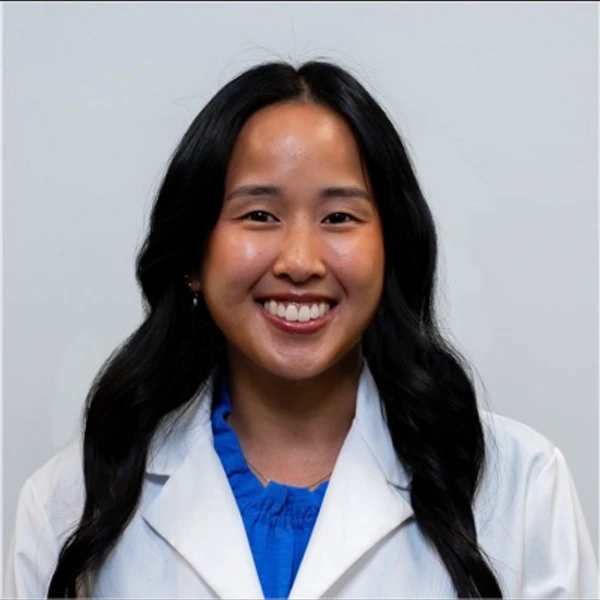
I am Kasie Le, a registered nurse and incoming doctoral student in the Nurse Anesthesiology Program at the University of South Florida. I grew up in Dartmouth, Massachusetts as the daughter of Vietnamese immigrants, and my upbringing shaped everything about who I am and why I chose this path.
I graduated Summa Cum Laude with my Bachelor of Science in Nursing from the University of Massachusetts Dartmouth and have spent the last several years working in the Coronary Care Unit at Charlton Memorial Hospital, where I earned my CCRN certification and have had the opportunity to serve in a charge nurse capacity.
I am passionate about patient advocacy, healthcare equity, and expanding access to care for underserved communities. My long term goals include practicing in cardiac anesthesia, participating in medical mission work, and mentoring future nurses and nurse anesthetists from underrepresented backgrounds.
Outside of work I enjoy spending time with my family, traveling, and volunteering in my community. I am excited to bring my clinical experience, my personal story, and my commitment to equitable care into this next chapter of my career.
Education
University of South Florida-Main Campus
Doctoral degree program (PhD, MD, JD, etc.)Majors:
- Registered Nursing, Nursing Administration, Nursing Research and Clinical Nursing
University of Massachusetts-Dartmouth
Bachelor's degree programMajors:
- Registered Nursing, Nursing Administration, Nursing Research and Clinical Nursing
Miscellaneous
Desired degree level:
Doctoral degree program (PhD, MD, JD, etc.)
Graduate schools of interest:
Transfer schools of interest:
Majors of interest:
- Registered Nursing, Nursing Administration, Nursing Research and Clinical Nursing
Career
Dream career field:
Hospital & Health Care
Dream career goals:
Become a CRNA and run a personal business to provide easier access to underserved communities.
Critical Care Registered Nurse
Southcoast Health2022 – Present4 years
Arts
n/a
Music2009 – 2018
Public services
Volunteering
Southcoast Health — Volunteer2023 – Present
Women in Healthcare Scholarship
I did not choose healthcare because it was practical or because someone told me it was a good career. I chose it because I grew up watching people fall through the cracks of a system that was supposed to catch them, and I could not imagine doing anything other than trying to fix that.
My mother was a nurse in Vietnam, a career she was forced to leave behind when she immigrated to the United States due to the language barrier. She redirected everything into raising her children, sacrificing quietly so that we could have the opportunities she never did. Watching her do that shaped me in ways I am still discovering. Becoming a nurse felt like a way to honor everything she gave up and to carry forward what she started.
That path led me to the Coronary Care Unit, where I have spent years caring for some of the most critically ill patients in the hospital. It led me to obtain my CCRN certification, to mentor newer nurses and students, and to advocate for patients whose voices were being dismissed. It has also led me to pursue my doctorate in nurse anesthesia, a field where I will have the autonomy to practice independently, make critical decisions, and directly influence patient outcomes at one of the most vulnerable moments of their lives.
Nurse anesthesia is a historically male dominated field. The data reflects it, the culture often reflects it, and for a long time the faces in the room reflected it too. As a Vietnamese American woman entering this specialty, I am aware that I will often be in the minority in more ways than one. I do not see that as a barrier. I actually see it as an opportunity to represent something that matters.
Representation in healthcare is not just symbolic. It is clinical. Patients from underserved, immigrant, and minority communities are more likely to feel comfortable, communicate openly, and trust their care team when they see someone who reflects their experience. As a woman of color in a high autonomy clinical role, I have the potential to bridge gaps that go beyond technical skill. I can be the person in the room that a patient never expected to see, and that visibility matters.
Beyond representation, I am committed to using my position to mentor future women and minorities entering the field, to advocate for equitable care in every setting I practice in, and to participate in mission work that brings quality anesthesia to communities that lack access to it. I want to contribute to a version of healthcare that is more diverse, more equitable, and more reflective of the patients it serves.
Issa Foundation HealthCare Scholarship
I thought I understood bias before I truly understood it. I had read about it in textbooks, discussed it in clinical settings, and believed that awareness alone was enough to prevent it from influencing care. It was not until I witnessed it firsthand, at the expense of a patient, that I understood how deeply it can be embedded in the way medicine is practiced.
Early in my career as a critical care nurse, I cared for a patient with a known history of alcohol abuse. When I assessed him, something was off. He was not at his neurological baseline. He was altered in a way that felt different from intoxication or withdrawal, subtle but significant, and inconsistent with how he had presented on my previous assessment. I raised my concern with the provider, who attributed his presentation to alcohol withdrawal and dismissed the need for further workup. The assumption was clear: this was a patient with a history of substance use, and his symptoms had an easy explanation.
I was not satisfied with that answer. I documented my findings carefully, continued to monitor him closely, and advocated again. It took persistence, but eventually a CT scan was ordered. The patient had suffered a stroke. Had that been missed, the consequences could have been irreversible.
That experience shook me. Not because I had done something wrong, but because I saw how quickly a patient's background can color a clinician's judgment. The moment a provider believes they already know the answer, they stop looking for the real one. And in medicine, that assumption can cost someone their life.
What it taught me was that advocacy is not optional. It is not something you do when it is easy or when you are certain. It is something you do when your clinical instincts tell you something is wrong, even when the path of least resistance is to stay quiet. I learned that being a good nurse means being willing to be uncomfortable, to push back respectfully, and to keep showing up for your patient even when others have moved on.
It also deepened my awareness of how stigma operates in healthcare. Patients with histories of substance use, mental illness, or poverty are among the most vulnerable to having their symptoms dismissed or minimized. They are the patients who most need someone in their corner, and they are often the least likely to have one. That realization has shaped how I approach every patient interaction since. I do not allow a diagnosis or a history to define what I look for or what I advocate for.
As I prepare to enter my CRNA program, I carry that lesson with me. The operating room will demand the same vigilance, the same willingness to speak up, and the same commitment to seeing every patient as an individual deserving of the highest standard of care. That experience did not just challenge my assumptions about medicine. It clarified exactly the kind of clinician I intend to be.
Community Health Ambassador Scholarship for Nursing Students
My motivation to pursue nursing began long before I ever set foot in a hospital. My mother was a nurse in Vietnam, a career she was forced to abandon when she immigrated to the United States due to the language barrier. She redirected that energy into raising her five children, making countless sacrifices to ensure we had the opportunities she never did. Watching her pour everything into our futures while setting aside her own aspirations shaped who I am today. Becoming a nurse felt like a way to honor everything she gave up and to carry forward what she started.
Beyond my mother's influence, I have always been drawn to helping others. Growing up as a daughter of immigrants, I understood from an early age what it meant to navigate systems without guidance or support. That upbringing instilled in me a deep empathy for people who feel overlooked or underserved, and nursing felt like the most direct way to channel that into something meaningful. The science behind patient care only deepened that passion, drawing me to the complexity of the human body and the critical thinking it demands.
Those motivations of wanting to help others were reinforced when I underwent my first surgery at eighteen. As the daughter of immigrant parents unfamiliar with the American healthcare system, I faced that experience without proper guidance and made an uninformed decision. In that moment, it was the CRNA caring for me who made all the difference with his calm and approachable demeanor that put me at ease. I left that experience knowing that was the kind of care I wanted to provide to my patients. I wanted to be the person in the room who made someone feel safe when they had every reason to be afraid.
After graduating Summa Cum Laude with my Bachelor of Science in Nursing from the University of Massachusetts Dartmouth, I began my career in the Coronary Care Unit at Charlton Memorial Hospital. Years of caring for critically ill patients, obtaining my CCRN certification, and mentoring newer nurses have only deepened my love for this profession and my commitment to growing within it. Nursing is not just a career. It is a daily reminder of why I chose this path and what I am working toward.
As for how I hope to contribute to my community, my vision extends beyond the bedside. I grew up in the South Coast Massachusetts area and have a deep familiarity with the economic hardships and limited healthcare access that many in my community face. I want to give back through direct patient care, mentorship of future nurses, and participation in community health initiatives that bring care to those who need it most. I also volunteer annually at the Southcoast Health Cancer Care Nicole Podkowa 5K Walk and Run, contributing to an event that supports cancer patients and their families facing financial hardship during treatment.
Looking further ahead, I hope to participate in medical mission work and provide anesthesia care in underserved communities both domestically and internationally. Healthcare is not equally accessible to everyone, and I believe those with the skills and training to make a difference have a responsibility to use them where they are needed most. That belief has guided every decision I have made in my career, and it will continue to guide me for the rest of it.
Bulkthreads.com's "Let's Aim Higher" Scholarship
What I want to build is access. Not a building, not a program with a name on it, but something more fundamental. The kind of access to healthcare that most people take for granted and that too many others have never had.
I grew up watching my parents navigate a system that was not designed for them. As Vietnamese immigrants with limited English and even more limited resources, they faced barriers at every turn. Medical appointments were intimidating. Explanations were incomplete. Decisions were made without full understanding. That experience shaped my understanding of what it means to be underserved, and it is the reason I have spent my entire career advocating for patients who find themselves in that same position.
As a registered nurse in a Coronary Care Unit, I have cared for patients from some of the most vulnerable populations in my community. I have seen what happens when people delay care because they cannot afford it, do not trust the system, or simply do not have access to it. I have also seen what happens when a clinician takes the time to meet a patient where they are, to explain, to advocate, and to ensure that the care provided is equitable regardless of background or circumstance. That difference is everything.
What I am building toward is a career as a Certified Registered Nurse Anesthetist that extends beyond the operating room. I want to practice in underserved settings where access to quality anesthesia care is limited. I want to participate in medical mission work, traveling to communities both domestically and internationally that lack access to safe surgical care. Anesthesia is not a luxury. It is a necessity for safe surgery, and without it, life saving procedures simply do not happen. Building access to that care in communities that have been left behind is one of the most direct contributions I can make.
The impact of this work extends far beyond any individual patient. When underserved communities gain access to safe, equitable healthcare, outcomes improve across generations. Children grow up healthier. Families stay intact. Trust in the medical system is slowly rebuilt. That is the kind of impact that cannot be measured in a single shift or a single procedure, but it accumulates over a career, and it starts with one clinician deciding that access is not a privilege but a right.
I am building toward that. Everything I have done has been in service of that goal. I want to leave the communities I serve better than I found them, and I want to build something that outlasts me.
Andrew Lopez Anesthesia Scholarship
I did not grow up with a roadmap. As the daughter of Vietnamese immigrants who came to this country with little more than determination and a hope for something better, I learned early that the path forward would require me to carve it myself. My childhood looked different from most. While other kids went home after school, my siblings and I went to my mom's nail salon. We did our homework between customers, helped however we could, and learned early that contributing to the family was not optional. It was just what you did.
There were five of us, and in many ways, we raised each other. My parents worked constantly to keep us afloat, which meant we had to grow up faster than most children should. By the time I was old enough to understand what was happening, I was translating for my parents at doctor's appointments and parent teacher conferences, serving as their voice in a system that was not designed for them. Those experiences built something in me that no classroom could teach.
My mother was a nurse in Vietnam, a career she was forced to leave behind when she immigrated to the United States due to the language barrier. She redirected everything into raising her children, sacrificing quietly so that we could have the opportunities she never did. Watching her do that shaped me in ways I am still discovering.
As a first-generation college student, navigating higher education without a blueprint was its own challenge. At the University of Massachusetts Dartmouth, I pursued nursing with the same determination my mother modeled for me, graduating Summa Cum Laude with my Bachelor of Science in Nursing. I worked throughout my education, managed financial pressures that many of my peers did not face, and pushed forward without anyone to show me exactly how it was done. I knew why I was there, and that was enough.
My journey toward nurse anesthesia began taking shape when I was eighteen and underwent my first surgery. With parents unfamiliar with the American healthcare system, I faced that experience without proper guidance and made an uninformed decision to proceed. In that moment, it was the CRNA caring for me who made all the difference. His calm and approachable demeanor put me at ease, and I left that experience knowing that was the kind of care I wanted to provide.
During my senior year of nursing school, I completed an internship at Boston Children's Hospital and had the opportunity to shadow CRNAs and SRNAs in the operating room. Witnessing their role firsthand confirmed that nurse anesthesia was the path I wanted to pursue, and I made the intentional decision to begin my career in critical care to build the clinical foundation the specialty demands. After graduation, I joined the Coronary Care Unit at Charlton Memorial Hospital, where I spent years caring for critically ill patients, obtaining my CCRN certification, mentoring newer nurses, and expanding my knowledge and skill set by caring for patients requiring complex advanced support devices.
I am not naive about the road ahead. CRNA programs are known for their rigor, and I am entering my program as an out-of-state student who will not be able to work during the program. I have never needed the road to be easy. I have only needed a reason to keep going, and my mother gave me that a long time ago. She gave up her career so that I could have one, and everything I have done since has been a reflection of that. I intend to keep it that way.
Skin, Bones, Hearts & Private Parts Scholarship for Nurse Practitioners, Physician Assistants, and Registered Nurse Students
My motivation for pursuing advanced education is deeply personal. I grew up as a daughter of Vietnamese immigrants who sacrificed everything so that their five children could have opportunities they never did. My mother was a nurse in Vietnam, a career she was forced to leave behind when she came to the United States due to the language barrier. Watching her set aside her own ambitions to invest in ours instilled in me a drive to make the most of every opportunity I am given.
That drive brought me to nursing, where I graduated Summa Cum Laude with my Bachelor of Science in Nursing from the University of Massachusetts Dartmouth. It carried me through almost four years of critical care nursing in the Coronary Care Unit at Charlton Memorial Hospital, where I earned my CCRN certification, served in a charge nurse capacity, and cared for some of the most complex patients in the hospital, and it is what is pushing me now toward the highest level of my profession.
My motivation to pursue nurse anesthesia specifically was shaped by a personal experience as a surgical patient at eighteen. Without proper guidance, I made an uninformed decision to proceed with surgery, and it was the CRNA caring for me that day who made me feel safe in a moment of vulnerability. That interaction showed me what it looked like to advocate for a patient at their most exposed, and I have been working toward that role ever since. A clinical internship at Boston Children's Hospital, where I shadowed CRNAs and SRNAs in the operating room, confirmed that this was exactly where I was meant to be.
Advanced education is not just the next step in my career. It is the foundation from which I intend to build something meaningful, practicing in high acuity settings, participating in medical mission work, expanding access to anesthesia care in underserved communities, and mentoring future nurses from backgrounds like mine.
This scholarship would make a significant difference in my ability to get there. The CRNA program at USF is intensive and full-time, and I will not be able to work during the program. As an out of state student from a family with limited resources, the financial burden of a doctoral degree is real. This scholarship would allow me to focus entirely on my education and clinical training, free from the weight of financial stress, so that I can become the clinician and advocate I have been working toward.