user profile avatar

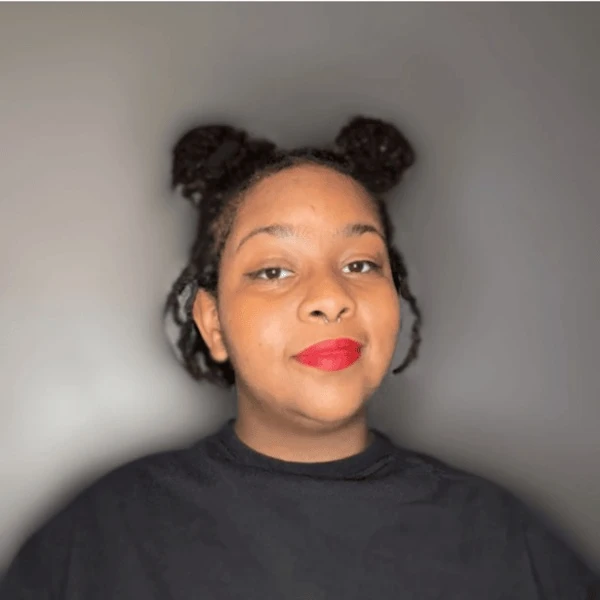
Karlie Elliott

1x

Finalist

Bio

My name is Karlie, and I am an education professional currently pursuing my degree in education, as well as the founder of The Moneá Academy, a growing educational initiative focused on supporting families and developing meaningful learning experiences. As I continue my academic journey, I remain deeply committed to strengthening the field through scholarly excellence and hands-on work. My passion for education is rooted in the belief that every child deserves intentional, thoughtful instruction; every educator deserves strong preparation and meaningful support. Through curriculum development and direct partnership with families, I strive to build learning environments that nurture curiosity, confidence, and lifelong growth. My long-term vision is to establish nature-based school facilities around the world; these accessible spaces will allow children to learn through exploration, connection, and immersive experiences grounded in research and the natural world. Advancing my education is a critical step in equipping me to build these environments with integrity, depth, and sustainability. This scholarship would directly support my continued academic development and expand my capacity to serve future educators and families. I believe that investing in passionate education leaders today creates lasting impact for generations to come.

Education

Purdue University Global

Bachelor's degree program
2025 - 2026
  • Majors:
    • Educational Administration and Supervision
Dallas County Community College District

Associate's degree program
2016 - 2019
  • Majors:
    • Liberal Arts and Sciences, General Studies and Humanities

Miscellaneous

  • Desired degree level:

    Bachelor's degree program

  • Graduate schools of interest:

  • Transfer schools of interest:

  • Majors of interest:

    • Special Education and Teaching
    • Educational Administration and Supervision
  • Not planning to go to medical school
  • Career

    • Dream career field:

      Education

    • Dream career goals:

      Own several nature school facilities for private and homeschooling families.

    • CNA

      Inspired to Care
      2020 – 20211 year
    • Pharmacy Technician

      Walgreens
      2023 – 20252 years

    Arts

    • Victory Temple S.C.M.

      Dance
      2015 – 2018
    • The Moneá Academy

      Videography
      2025 – Present
    • By Karlie Elliott (Entrepreneurship)

      Graphic Art
      2019 – 2024

    Public services

    • Volunteering

      Victory Temple Apostolic Deliverance Ministries — Director of Youth Ministry
      2016 – Present
    • Volunteering

      Desoto ISD — Mathematics Tutor (Mu Alpha Theta)
      2018 – 2020
    • Volunteering

      Desoto ISD — Office Aide
      2018 – 2019
    • Volunteering

      Hospice Plus — Student Caregiver
      2017 – 2018

    Future Interests

    Advocacy

    Politics

    Volunteering

    Philanthropy

    Entrepreneurship

    Marie Humphries Memorial Scholarship
    Some teachers are remembered for their warmth. Others are remembered for their rigor. Mrs. Wright was remembered for both. When I was in elementary school, many students labeled her as mean. She was stern, structured, and unwavering in her expectations. Her classroom was not chaotic, and it certainly was not easy. Yet beneath that firmness was the most caring and dedicated educator I have ever encountered. Mrs. Wright did not lower standards to be liked. She raised us to meet them. I am pursuing a career in teaching because I understand the depth of influence a teacher can have. Mrs. Wright taught me more than grammar and composition in her English class. She taught me discipline. She taught me precision. She taught me that excellence requires effort. Most importantly, she taught me that passion is not always loud or sentimental. Sometimes it looks like correction. Sometimes it looks like consistency. Sometimes it looks like holding a student accountable because you believe they are capable of more. There were moments when her firmness felt intimidating. Yet every assignment was returned with detailed feedback. Every mistake was corrected with intention. She saw potential and refused to let it go undeveloped. At the time, I did not fully understand the care behind her standards. But by the end of the year, every student remembered what was taught in Mrs. Wright’s English class. We remembered because she ensured we mastered it. What impacted me most was the lesson she modeled through her character. She showed me that your way of expressing dedication may be misunderstood. Your unseen preparation, your late hours grading papers, and your quiet commitment to student growth may go unnoticed. Still, you continue. You teach anyway. You care anyway. You show up anyway. And somewhere along the way, you change a life. Her example reshaped my understanding of teaching. I realized that effective educators do not seek approval; they seek impact. They balance compassion with accountability. They understand that structure can be a form of care. That realization stayed with me long after I left her classroom. I am interested in pursuing a career in teaching because I want to embody that same integrity. I want to be an educator who sets high expectations while building strong relationships. I want my students to leave my classroom not only remembering the content, but remembering that someone believed in their ability to achieve it. Whether my approach is immediately celebrated or quietly respected, my goal is lasting influence. Mrs. Wright may never fully know how much she shaped my path. Yet her example continues to guide me. Teaching is not about being the most popular person in the room; it is about being the most purposeful. Because of her, I understand that true impact is not always loud, but it is always lasting. That is the kind of teacher I aspire to become.
    RonranGlee Special Needs Teacher Literary Scholarship
    I did not discover my passion for working with diverse learners in a textbook. I discovered it at my kitchen table. When I began homeschooling my nephews in kindergarten and first grade, one diagnosed with Autism and the other with ADHD, I quickly realized that traditional instruction would not meet their needs. What worked for one overwhelmed the other. What energized one distracted the other. I had to understand how they learned before I could effectively teach them. In doing so, I witnessed something transformative: when instruction aligned with their natural wiring, their confidence flourished. Guiding a student toward a sense of their own presence means helping them recognize and embrace their identity, strengths, and capabilities beyond a diagnosis. Presence is the moment a child understands that their differences do not diminish their value. It is self-awareness grounded in dignity. For students with disabilities, this realization can be life-changing. Too often, they are introduced through labels before their strengths are explored. Homeschooling my nephews required patience, creativity, and deep observation. My nephew with Autism thrived when lessons were structured, visually organized, and connected to his focused interests. Predictability gave him security, and within that structure, he excelled—my nephew with ADHD needed movement, hands-on engagement, and shorter instructional intervals. When allowed to build, move, and physically interact with learning materials, he retained information more effectively. Their differences were not weaknesses. They were distinct cognitive patterns that required thoughtful adaptation. These experiences ignited my commitment to becoming an educator who serves neurodivergent learners with intentionality. I saw firsthand how students blossom when instruction shifts from correction to customization. When an educator asks how a child learns best instead of why they cannot perform in a conventional way, the entire dynamic changes. Individualized instruction is not about lowering expectations; it is about designing access points to excellence. My mission is to cultivate classrooms where students experience competence and self-awareness. I will accomplish this through strength-based strategies, differentiated instruction, and consistent relationship-building. By identifying each learner’s processing style, interests, and motivations, I can design lessons that promote both challenge and success. Repeated experiences of authentic achievement replace frustration with confidence, and confidence nurtures presence. Equally important is fostering self-advocacy. Students must understand their learning profiles and feel empowered to articulate their needs. By involving them in goal setting, reflection, and age-appropriate discussions about accommodations, I will help them transition from passive recipients of support to active participants in their growth. Ownership builds resilience, and resilience strengthens identity. I am passionate about this profession because I have seen the moment when a child realizes they are not behind, but uniquely wired. My nephews taught me that effective teaching begins with listening, observing, and adjusting. By honoring how my students learn and guiding them toward understanding themselves, I will help them develop a true sense of their own presence. When students recognize their worth and ability, they do more than progress academically; they gain the confidence to navigate the world with clarity and courage. "The Dryad of the Glowing Lake" by Karlie M. Elliott In a vast, magical forest stood a luminous lake that shimmered under moonlight. Around it lived a community of woodland teachers, each guiding young forestlings in traditional ways. Yet some children — the fae-touched and the changelings — struggled within the expected rhythms. They heard music others could not, noticed patterns in bark and wind, and spoke in ways that seemed unusual to the rest of the forest. Many teachers mistook their differences for disobedience or distraction. But there was one dryad named Karlie who listened differently. She did not demand that the fae-touched quiet the music in their minds; she asked them to describe it. She did not scold the changelings for tracing endless spirals in the sand; she studied the patterns with them. While others tried to pull the children toward the center of the forest, Karlie led them to the glowing lake, where reflections were clearer. There, she taught them using the rhythm of water, the symmetry of leaves, and the steady pulse of the earth beneath their feet. She discovered that what others called distraction was heightened perception. What others labeled as rigidity was devotion. What others feared as difference was brilliance waiting to be translated. Under her guidance, the fae-touched and changelings began to see themselves not as misplaced, but as magical in their own right. They learned how to navigate the wider forest without losing their nature. And as they grew, they carried the glow of the lake within them — a reminder that they were never shadows, but light shaped uniquely. And so the forest slowly changed, not because the children became like everyone else, but because someone finally taught them as they were. The End.
    Dr. Connie M. Reece Future Teacher Scholarship
    Before I ever stood in front of a classroom, I had already decided I was a teacher. At four years old, I rotated between the names “Mrs. Pink,” “Mrs. Brown,” and “Mrs. Rainbow,” lining up my two-year-old sister to teach her colors, numbers, and the alphabet. What seemed like simple childhood imagination was, in reality, the earliest expression of who I was becoming. I did not just enjoy playing school; I felt purposeful doing it. I was homeschooled during several seasons of my early childhood, and those experiences shaped my love for education profoundly. Learning at home allowed curiosity to guide the day. Lessons were not confined to desks or bells; they were woven into daily life. I experienced firsthand how education could be personal, flexible, and deeply connected to real understanding. Those formative years planted in me the belief that teaching is not simply about delivering content, but about cultivating confidence and curiosity. As I grew older, my imaginary classroom expanded. I would spend hours pretending to manage a room full of students, writing lessons, and explaining concepts aloud as if a class were sitting in front of me. Teaching was never a fleeting childhood phase; it felt natural, instinctive, and deeply aligned with who I was. In high school, however, my focus shifted toward nursing. I admired the structure, stability, and respect associated with the profession. Somewhere along the way, my path split between following a passion and chasing what felt like a fever dream. I graduated from high school and college nearly simultaneously and continued pursuing that dream, convinced it was the responsible choice. On paper, I was successful. Internally, I felt disconnected. I was unhappy, unfulfilled, and confused as to why achievement did not bring clarity. Four years later, when I became pregnant with my firstborn, everything shifted. As I prepared for motherhood and began thinking intentionally about my child’s education and future, I found myself revisiting the very questions that shaped me as a child. What kind of learning environment would nurture his confidence? What kind of instruction would inspire him to think critically and live purposefully? In seeking answers for him, I rediscovered answers for myself. Preparing to homeschool reawakened something that had quietly waited within me. I immersed myself in curriculum planning, child development research, and educational philosophy. For the first time in years, I felt aligned. My purpose and my passion were no longer competing forces; they were working together. In choosing education, I was not abandoning ambition. I was redefining it. I am inspired by the educators who create spaces where children feel seen and capable. I am inspired by my own early homeschool experiences, which demonstrated that education can be both rigorous and relational. Most of all, I am inspired by the responsibility teachers carry — the ability to shape identity, confidence, and possibility in a child’s life. As I pursue my degree in education, I plan to use my experiences to inspire others in several ways. First, I will model lifelong learning. By continuing my formal education while actively building educational initiatives, I demonstrate that growth does not stop at graduation. Second, I will lead with authenticity. I understand what it feels like to pursue a path that looks impressive but feels empty, and I want students and aspiring educators to see that choosing purpose is both courageous and worthwhile. Finally, I will create learning environments that reflect intentionality and innovation, including my long-term vision of establishing nature-based school facilities around the world. These environments will integrate academic rigor with exploration, stewardship, and global awareness. My journey has taught me that inspiration often begins long before we recognize it. The four-year-old who proudly answered to “Mrs. Rainbow” did not understand educational theory or policy, but she understood joy. She understood the connection. She understood the satisfaction of helping someone learn. Today, that same joy is strengthened by experience, reflection, and formal study. Becoming a teacher is not a new dream for me; it is a lifelong calling that I finally dared to embrace. Through my education and leadership, I hope to inspire others to trust their passions, pursue excellence, and recognize the profound influence a teacher can have on generations to come.